 LOS ANGELES – As students, enthusiasts and caretakers of this wonderful medium, we’re keenly aware that radio’s “Golden Age” boasted an incredible array of entertainers and broadcasters.
With lifestyles, technology and society being what they are today, it’s almost inconceivable to imagine that families would actually gather around the radio and attentively listen – and indeed hang onto – each and every word that emanated from that mysterious entertainment-laden box sitting in the living room.
Fundamentally important back then, of course, was a concept known as “Theater Of The Mind.”
No one embodied and personified it better than one of the bigger-than-life talents of that era: Orson Welles.
Most are familiar with his epic “War Of The Worlds.”
Pictures Set In Songs
The list of other outstanding “Mercury Theater” presentations Welles was responsible for is much too lengthy to cite here, but his legendary “Theater Of The Mind” mystique lived on nightly in Los Angeles, where Jim Ladd was a welcome guest for Southern California listeners dating back to 1969 and hosted a regular show on SiriusXM’s Deep Tracks channel the past 11 years.
Theater Of The Mind so perfectly describes what Ladd tried to do, although it’s not radio drama in the pure sense. “What I [attempt] at night is to show you pictures and do that by playing sets of songs,” the (then) highly popular KLOS-FM, Los Angeles 10:00 pm – 2:00 am personality remarked to me. “If you follow the lyric content of each song, as well as the song’s emotional feel, it should tell you a story with a beginning, middle and end. Thus, it’s theater.”
Throwback To Creativity
In addition to providing his special spin to Theater Of The Mind, Ladd was also responsible for keeping another bit of radio history on life-support.
Most air personalities are required to adhere to strictly enforced music lists, but Ladd’s nightly, four-hour, Los Angeles air-shift was a throwback to the days of “free-form” radio.
The result was similar to what existed in April 1967, when a new phenomenon started taking shape. “That was the beginning of FM and this multi-billion dollar industry,” Ladd recalled. “[Free-form] started on a station [KMPX, San Francisco] where the phone was literally disconnected, because they couldn’t pay the bill. [Tom Donahue] had an idea; he went there and it took off. For a while before deregulation, that’s what all FM radio did in any market. Free-form worked great, until they killed the golden goose.”
Right Place, Right Time
Southern California native Ladd was extremely fortunate to have been able to launch his radio career in the country’s second-largest market. “Part of it was timing,” he admitted. “I was at a little station in Long Beach [KNAC-FM] that decided it was going to try this new, hippie, underground thing. They didn’t know what it was, but [the feeling was to] hire some hippies and see if they could make some money with it. I happened to be right there at that time.”
A frustrated musician, who wanted to be a songwriter, Ladd recounted a life-altering conversation he and a buddy had in a car. “My friend said that I should be in radio. I was 19 or 20 at the time and your friends at that age seldom notice anything but themselves. For some reason, that stuck with me. Thank God, FM was in its infancy and they’d take complete novices like me off the street and give us shows. Owners didn’t know anything about the Grateful Dead or The Who, but we did.”
Check Mate
Instead of walking into a studio and following a computer-generated music log, Ladd was given freedom to use his imagination. His only preparation was what was happening in life.
Resulting sharp, clever music sets he composed weren’t written out in advance. “The way I work is to turn the music up loud and get the song working on me,” he commented. “Once [that happens], it keys in my mind what will fit next.”
Such an intricate process included a mental checklist. “I’ve figured out the lyrics will work, but I need to know how the song I’m playing ends and how the next song begins,” he explained. “If I’m playing a balls-out rocker, I can’t go into some acoustic piece. In that way, it’s really like a chess game. I have to plan these things to start every single segue as I’m doing it. That’s the way that works best for me.”
There were nights, however, that Ladd knew that he “[didn’t] have it,” but as he maintained, “I’ve been doing it long enough to put on a good professional show. Sometimes, I don’t have what I’m striving for, which is to make a connection with the audience. Without having to prompt them or explain anything, my audience lights up the phones. They call because they get what I’m doing. Once that connection is made, then look out, because the rocket is taking off.”
Gracefully Handling The Tragedy
Recalling the horrific September 11, 2001 “Attack On America,” Ladd noted that although it was one of the country’s greatest tragedies, “It was easy to immerse myself into something like that. It so moved me that I had no problem thinking of songs to play or what I wanted to say.”
Judy Collins’ version of “Amazing Grace” was the first song he played when he went on the air that night. “Believe it or not, it set the tone for what I did for … the next two weeks.”
As it usually did, the audience – even or perhaps especially in this painful period – stepped up to the plate. “This is the thing about free-form radio that’s so precious to me,” Ladd emphasized. “Nobody called me on 9/11 with an idiot request. When I played sets of 9/11 songs, everybody was calling in with [appropriate] suggestions. Second only to dealing with the tragedy, the hardest part was to know when I could play groups like AC/DC again. I found that very difficult; you can only feel your way through it.”
Loyal Listeners
In his third tour of duty at (then ABC-owned) classic rocker KLOS, Ladd was a legitimate cult figure in the Southland for his work at legendary cross-town rocker KMET.
Southern California listeners were stunned on Valentine’s Day 1987 when the “The Mighty Met” (now Audacy smooth AC KTWV) – became smooth jazz “The Wave.”
Also on Ladd’s impressive resume were stints at Los Angeles outlets KLSX and KEDG.
The notion of an air personality “connecting” with the audience is both elementary and elusive. Ladd was a rare case of a non-drive time music personality who amassed a loyal, vocal following.
Grateful for such audience allegiance, Ladd didn’t take it for granted. “My audience has been that loyal from KMET to KLOS and all the [other] stations in between. My part of the bargain is that I won’t lie to them or let them down by doing a format. I was off the air twice in my career for two years each. That was very difficult, but because I did that, I’ve earned the right to do this and I think the audience responds to that.”
Offered jobs by stations that wanted the “Jim Ladd” name, he opined, “They didn’t understand what that meant. They thought they could just plug in my name, not let me do what I did and it would be the same thing.”
Your Attention Please
Evenings and nights were Ladd’s domain throughout his career. “I wouldn’t want to do middays or afternoon drive,” pointed out the personality known for his “Lord have mercy” exclamations. “Listening habits are such that you can’t sit and listen like you can at night. People are working, picking up the kids and doing life.”
Much like Welles’ Mercury Theater, Ladd’s show required attention. Otherwise, it was just like playing one song after another, without making that all-important connection. “The audience’s side of the bargain is that they have to bring their attention to the show,” he insisted. “I’ve done [6:00 pm – 10:00 pm] in my career and that worked out very well. The show is a bit different, in that, it’s not quite as eclectic. I don’t know if I’d be playing Judy Collins and Johnny Cash in [that time]; maybe – but maybe not.”
Convinced his free-form style could be utilized elsewhere, Ladd, nevertheless, pondered that to his knowledge, “I’m the Alamo – the last guy standing. That’s certainly the case in a major market. The big tragedy is that there are so many talented [personalities] who, although they wouldn’t do the same show that I do, could do free-form radio. We’re losing all that talent. I’m not the only guy in the world who can do it. I’m the one who was stubborn enough to say that I won’t follow a list – I just won’t do it.”
Powerful Trinity
Among those who influenced Ladd’s on-air style were former MTV personality and ex-KEDG program director J.J. Jackson; veteran Los Angeles air talent Raechel Donahue, who went on to do 7:00 pm -12:00 midnight in Denver at KQMT “The Mountain”; longtime KMET personality the late B. Mitchel Reed; KMET’s Pat Kelley; Cynthia Fox; Jack Snyder; and the late, underrated Mary Turner. “The wonderful, beautiful part of free-form radio – and most importantly – at KMET was that it wasn’t about being a star,” Ladd asserted. “What we were doing was our part of the ‘social revolution’ at the time. It was like a triad: The people on the street, the music, and us. We took the message of Dr. [Martin Luther] King and combined it with the music of Bob Dylan.”
One highly significant aspect in noting those former KMET staffers was that they’d each listen to everyone else’s show and it elevated their own game. “I’d hear Cynthia do a great segue, or Mary would do a great segment and that would inspire me,” Ladd enthused. “What I miss most is that kind of camaraderie – it’s just me now. I can’t tune in to hear someone else’s great segue. When I heard one of my colleagues do something that touched me, the first thing I wanted to do was to call them and tell them it was great. The second thing was that – from their subject matter – I got 15 different ideas to use when I got to work that night. That was the beauty of it.”
Role Model
National audiences became aware of the iconic Los Angeles talent through shows such as “Innerview,” “Headsets,” and “Jim Ladd’s Living Room.”
Considerably more than someone who voiced a script for a syndicated show, Ladd spent a great deal of time scrutinizing the fine art of interviewing. “I ripped off just about everything I know about interviewing people from Elliot Mintz,” he confided to me. “Elliott was my role model. He’d interview the Shah of Iran one week and John Lennon & Yoko Ono the following week. He’d talk with everyone in a warm, low-key and intelligent manner. It was completely unlike anything [else] I’d heard at the time and that really impressed me.”
The “Innerview” show had an 11-year run and was carried by 160 stations. “It was the first of its kind,” boasted Ladd, whose other syndication work involved voiceovers for an overseas television show. “I’m very proud of the work we did [on ‘Innerview’]. I did 99% of the interviews in the front room of my house in an artistic community in Laurel Canyon. People would immediately be put in a very comfortable place. It’s not a studio – it’s my home.”
The Work Is The Key
Another reason why people felt at ease was that, instead of focusing on a person’s life, Ladd addressed their work. “They loved that. Rather than talking about how many girls they had, what kind of drugs they did and life backstage, I studied every word of every lyric of the new album they wanted to talk about and grilled them about their songs on the environment. It would require six to eight hours of preparation. Then there was another 20 – 25 hours to write the one-hour show; it was a lot of work.”
Writing became such a worthwhile experience that, in 1991, he penned “Radio Waves: Life And Revolution On The FM Dial.”
As a result of these syndicated projects, this immensely respected rock personality diversified himself; the book became a big hit. “I guess I’m a radio guy who learned how to become a writer,” Ladd mused. “In order to get up enough courage to write my book, I read authors I like. I was required to do a great deal of writing for ‘Innerview’ and would write out what I’d say – which is something I never do [on my live show]. You’d also end up with two hours of tape and pick out what the person was going to say, how I was going to introduce it and what song would follow it.”
A Distant Second
Whenever anyone asked Ladd to name his favorite band, he qualified his answer by separating the Beatles.
The quartet, he stressed, had to be placed in a completely different category.
After that’s been done, he named the Doors as his favorite.
The same applied to his most memorable radio experiences, with KMET being the Beatles’ equivalent. “We were at the right place at the right time with the right people. We loved each other and there’s never been anything else like it.”
Nonetheless, he quickly stated that his favorite time is the next time he was able to sit behind a microphone. “The reason for that is [KLOS’-then program director] Rita Wilde,” he proclaimed. “I don’t know how I got so lucky to have a boss who was [such a great on-air personality] and so supportive. If it weren’t for Rita Wilde, I wouldn’t be on the air – that’s just a fact. I want to keep free-form radio alive for the audience, but I also owe her to make this happen. She’s under a lot of pressure [when it comes to my show]. When I go in at 10:00 pm, the format literally stops. I can’t think of another boss in the world who would understand that.”
Numbers Game
His multi-decade Los Angeles track record and loyal following notwithstanding, Ladd still realized that ratings played a role in dictating his employment; however, as he declared, “Rita is one of the first people I’ve ever worked for in this business I trust when she says the numbers are up or down. Sometimes in my career I’ve found out from people who didn’t work at the station that my show was doing great. When there’s a down book, [management is usually] right there.”
Ultimate People Skills
Certain managers and programmers, he claimed, kept good books a secret from him; however, “Rita calls immediately when I have an up book. If I have a down book, I don’t hear from her; I have to call her. That says volumes to me. We’ll deal with a problem, but she doesn’t want to get me upset. She might tell me that I’m playing too much of this or not enough of that, but she never says anything [threatening]. It’s always from a helpful and suggestive [stance]. When the numbers are good, she leaves me totally alone. From my perspective, you can’t ask for more than that. Her people skills are unbelievable.”
In addition to have wanted to keep free-form radio alive as long as possible, Ladd disclosed that he wanted “to walk away before I can no longer do my job. I don’t know when it will happen, but the next stage in my life will probably be to write fulltime – I’m working on it.”
Contact TALKERS Managing Editor Mike Kinosian at Mike.Kinosian@gmail.com
Share this with your network




 The Miami Marlins announced this morning (2/7) the hiring of Jack McMullen as the lead play-by-play announcer on the Marlins Radio Network. McMullen takes over for Kyle Sielaff, who is the new lead TV play-by-play voice for Marlins games on FanDuel Sports Network. A graduate of the S.I. Newhouse School of Public Communications at Syracuse, McMullen spent the previous three seasons on the radio broadcast for the Pirates’ Triple-A affiliate. Before then, he called games for the Brewster Whitecaps in the Cape Cod League (2018) and the Short Season Auburn Doubledays of the Nationals’ system (’19). The Chicago native’s other experience includes serving as director of podcasting for Just Baseball Media, hosting the network’s flagship show “The Just Baseball Show,” play calling for ESPN+/Learfield and working as part of the broadcast and production teams for various programs during his time at Syracuse. A rotation of analysts will team up with McMullen in the booth: Rod Allen, Jeff Nelson, Gaby Sánchez and Kelly Saco. Joining the mix will be three-time Emmy Award winner and longtime FanDuel Sports Network host and reporter Craig Minervini as well as former Marlins All-Star reliever and SiriusXM MLB analyst A.J. Ramos. McMullen will make his Marlins Radio Network debut on Feb. 22, when the Marlins open Grapefruit League action against the Cardinals at Roger Dean Chevrolet Stadium. He will call every Spring Training and regular-season game on WINZ 940, the Marlins’ English radio flagship station, and develop ancillary Marlins Radio Network content with pregame show host Stephen Strom. “We can’t wait to introduce Jack to the South Florida community as we enter an exciting chapter of Marlins baseball, and we know Jack is the perfect fit to tell our story,” Marlins vice president of public relations and communications Jon Erik Alvarez said. “His broadcast style, baseball knowledge and vast multimedia experience will connect with our listeners and extend the reach beyond the booth as we look to improve upon the recent growth of the Marlins Radio Network.”
 Services include access to top-of-the-line podcasting studios and equipment (audio and video), strategy, program production, editing, guest booking, distribution, paywall options and promotion across PodcastOne’s existing network of podcasts. “As the only public pure-play podcast company in the United States, PodcastOne is uniquely positioned to help brands, businesses and content creators reach their target audiences more effectively while keeping loyal podcast listeners entertained and engaged,” said Jim Lally, head of business development for PodcastOne. “Branded podcasts are financially and logistically challenging for many companies to produce in-house. With the official launch of PodcastOne Pro, we’re able to offer a tailored podcast production solution to our clients that leverages our current infrastructure, which ultimately, drives higher margins, diversifies our revenue streams, and lowers costs for clients.” Coinciding with the launch of PodcastOne Pro, PodcastOne is set to debut its new state of the art podcast production studio in Beverly Hills. To learn more about PodcastOne Pro or get a quote for plans starting at $500, please visit
 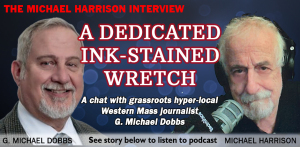 Legendary journalist and all-around local media hero in Western Massachusetts, G. Michael Dobbs, is this week’s guest on the award-winning PodcastOne series, “The Michael Harrison Interview.” Harrison states, “Western Mass is a special place I’ve called home for the past 40 years. Although I have had several simultaneous homes in different parts of the country during this stretch of time, the Springfield, Massachusetts area has played a very important role in my life. And in this beautiful, ‘salt of the earth’ segment of America, my guest is well-known to just about all its civically, socially and politically active citizens. His half-century career has been a testimony to the power and importance of local media… which, as we all know, is rapidly becoming an endangered species.” After decades of service, the recently retired executive editor of Reminder Publishing, continues his multi-faceted career in mass communications. Harrison comments, “I’m not sure he understands the meaning of the word retirement.” In his no-frills-down-to-the-basics career, Dobbs has worked as a newspaper reporter and editor, freelance writer, radio talk show host, college instructor and was the editor of two nationally distributed magazines about animation. He has written seven books to date and continues to write as well as appear as a host for Focus Springfield cable television. Harrison adds, “He has covered hundreds of school board and city council meetings; conducted thousands of interviews with local leaders; knows just about everything involved in how local government operates; and is an expert on cigars, brandy, old films, cartoons, comics, and even strippers. He’s an amazing guy and a quintessential example of the tremendous importance of local, grassroots journalism in sustaining and preserving American freedom and democracy.” The conversation with Dobbs started out with Harrison appearing as a guest on the media practitioner’s local podcast titled, “The Ink-stained Wretch with G. Michael Dobbs.” But, according to Harrison, “The conversation went deep into some very meaty material, so I decided to dip into it and extract some content for my own podcast.” To listen to the podcast in its entirety, please
 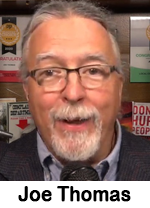 He purchased his own station – WTON, Staunton, VA after serving the Charlottesville market for years as morning host of WCHV. Now he has put his morning talk show into syndication through Talk Media Network. It has already been cleared on WZXI in Lancaster, KY and WTTB on Florida’s ‘Treasure Coast’ (as well as his own WTON in Central Virginia). Joe tells TALKERS, “This is such an honor to work with people like Josh Leng and Willis Damalt at TMN. We’re up every morning to help the new listeners get their day started just like we have been for over 20 years!” He adds, “Just like that ‘other’ guy named Thomas [Jefferson] from Charlottesville, my show promises free speech and independence and I hope that it too spreads across America.” For information about “Joe Thomas in-the-morning,” contact Willis Damalt at TMN. 917-603-7148 or
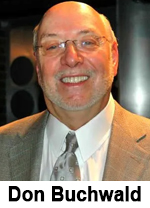 As originally reported by TMZ, well-known talent agent Don Buchwald died this past Monday (7/22) of natural causes at his Massachusetts home, where he was “surrounded by loved ones.” Buchwald formed his bi-coastal agency Don Buchwald & Associates in 1977 with five associates. The firm employs 130 employees who work across many platforms of entertainment and media. His most notable client, of course, was/is Howard Stern, as well as Stern’s longtime co-host, Robin Quivers. According to TMZ – Buchwald represented Stern personally, “while also acting as his manager and publicist. Stern was Don’s single personally-handled client and Howard referred to ‘super-agent Don Buchwald’ over the years on the radio. Buchwald was instrumental in helping Stern land a megadeal at SiriusXM worth an estimated $90 million a year.” Creator of SiriusXM’s Howard Stern Channels, Sabean Media president Tim Sabean posted on X, “I lost my closest pal today. You left an iconic legacy. I miss you with all my heart and soul. RIP my dear friend.” In a similar post, former SiriusXM SVP of sports programming Steve Cohen notes, “RIP my dear Don from Bensonhurst. An incredible friend, mentor and philanthropist. When I was down, you lifted me up. You made me smarter, wiser and taught me to be a deep thinker. Deepest condolences to the Buchwald family.” When Buchwald and Stern first met, they sat down in Buchwald’s office and talked for an hour. In a 2018 interview, Stern told The New York Times, “He turned to me and said, ‘You know, your career could be as big as Johnny Carson’s.’ I thought this guy might be a little bit nuts. But he believed in me from the very beginning, more than I believed in myself.” Having had no interest in being in the spotlight, Buchwald was quoted in that aforementioned article, “I’m not a particularly boastful person.” Don Buchwald was 88 years old.
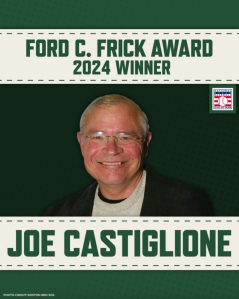 This past Saturday (7/20), Boston Red Sox radio play-by-play announcer Joe Castiglione, whose signature catchphrase is, “Can you believe it,?” was inducted into the Baseball Hall of Fame in Cooperstown, New York. “Joe Castig” received the Ford C. Frick Award for broadcasting excellence. During his acceptance speech, the 77-year-old Hamden, Connecticut native remarked, “Broadcasting baseball is my vocation. It’s the only thing I ever wanted to do, at least since I realized I wasn’t good enough to be a player. At my 50th college reunion, a classmate said to me, ‘You’re the one guy who did exactly what he said he wanted to do,’ and I’m still doing it. What a blessing.” Castiglione’s more than four decades doing Red Sox radio play-by-play marks the longest tenure of any Boston broadcaster on radio or television. In 2004, Castiglione published Broadcast Rites and Sites: I Saw It on the Radio with the Boston Red Sox. Prior to joining the Red Sox broadcasting team in 1983, Castiglione called Cleveland Indians (now Guardians) games (1979) and did some Milwaukee Brewers games two years later.
 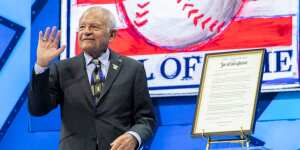 Ford Frick was a driving force behind the creation of the Baseball Hall of Fame and helped foster the relationship between radio and baseball. The Hall of Fame has presented the award every year since 1978. To be considered for the award, an active or retired broadcaster must have a minimum of 10 years of continuous major league broadcast service with a ball club, network or a combination of the two.
 group of individuals and the remarkable brands we have the privilege to represent here in Cleveland, this decision fills me with joy. By making this move, we’ll finally have the opportunity to be fully present in our family’s daily lives and participate in the precious moments as our grandsons, Charlie and Emerson, grow and flourish. On a personal note, this transition opens the door for me to explore passions and interests that have been not-so-patiently waiting on the sidelines for way too long. I’m looking forward to the luxury of my first summer without a job since I was thirteen. Not to mention, I’m very ready to chase ‘the dream’ of achieving a single-digit golf handicap (hey, like I said, a guy can dream).”
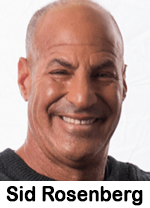 door. I sat down next to him. Seconds later an angry, half-drunk African American guy starts digging his finger into the Jewish man’s chest while yelling, ‘I aint gonna fight for you! I ain’t gonna fight for you! You genocide Jew mother*cker.’Needless to say the Jewish man was scared to death. Noticing that I stood up and proudly proclaimed, ‘I’m Jewish, too!’ I stood next to the Jewish man, arms folded, while the big-mouth bully walked to the end of the car. He continued to rant and holler but he was no longer a physical threat. The scumbag exited the train at the Brooklyn Bridge stop while I sat next to the Jewish man ‘til I got off at Wall Street. He was on his way home to Crown Heights for Shabbat. He said to me, ‘I have no doubt if you didn’t stand up that guy would’ve hurt me. I know who you are. I listen to you. I know you’re a lover of the Jews. I wish people could’ve seen this. Thank you for helping me get home safe for Shabbos. Am Yisrael Chai!’ I will fight for my people despite the potential physical harm to me. God Bless Israel and continue to protect my people!” Don’t miss Sid Rosenberg’s guest appearance on the new installment of the award-winning PodcastOne series, “The Michael Harrison Interview.” He and Harrison candidly discuss the incident and Rosenberg’s position on Israel, Hamas, Gen Z, and NYC crime. It posts tomorrow morning on Talkers.com.
 The Buffalo Broadcasters Association (BBA) has announced this year’s Broadcasting Hall of Fame inductees;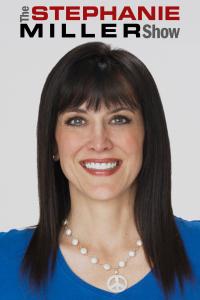

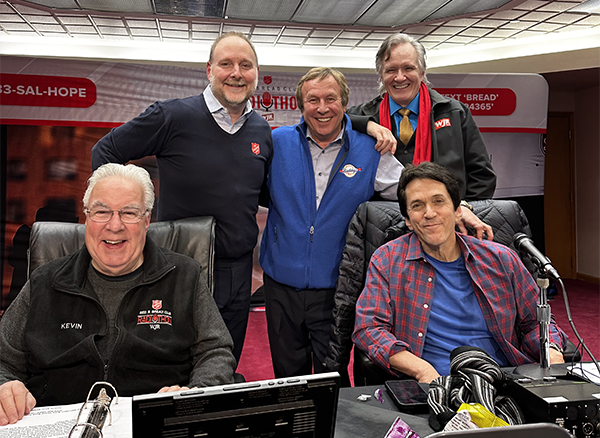
 Moshos. Moshos died on January 11 and today (2/14) would have been his 67th birthday. General manager Joel Oxley says, “George helped me so much when I first started at WTOP 30 some odd years ago. I knew little about production and he let me know it. His gruff demeanor and direct style took a minute to get used to. But it didn’t take long for me to realize this guy with the glint in his eyes was a person who cared. Really cared. About his job and doing it right and more importantly about people. He touched so, so many people and made things better for them. Seems only right to name where he spent so much of his time ‘The George Moshos Production Studio.’”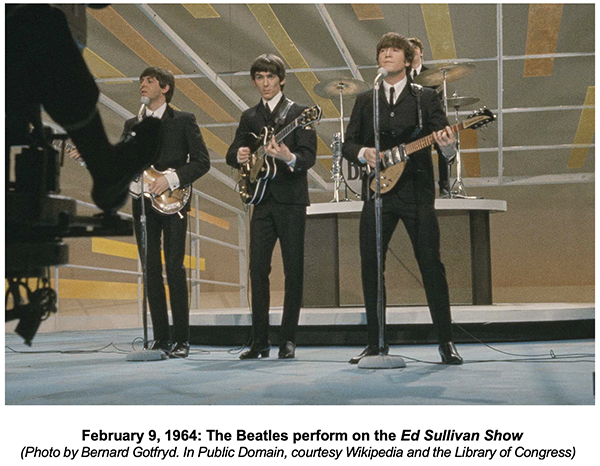
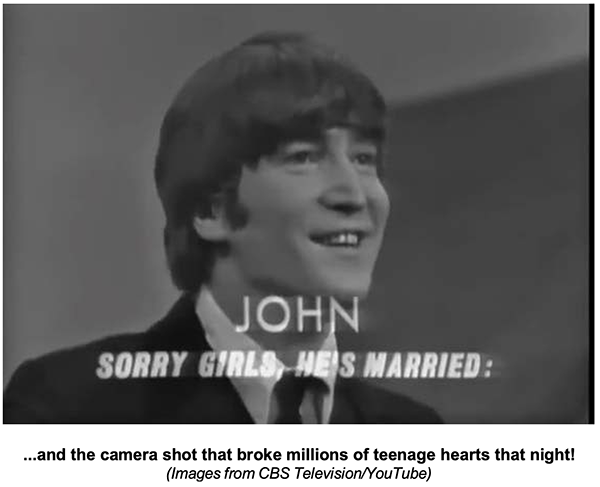
 In early December 1963, America was a very gloomy place. The assassination of President John F. Kennedy on November 22 brought the country to a virtual standstill for four days, and the emotional and psychological hangover lingered for weeks. The nation needed a dose of uplifting energy and fun, and the Beatles were the ideal remedy.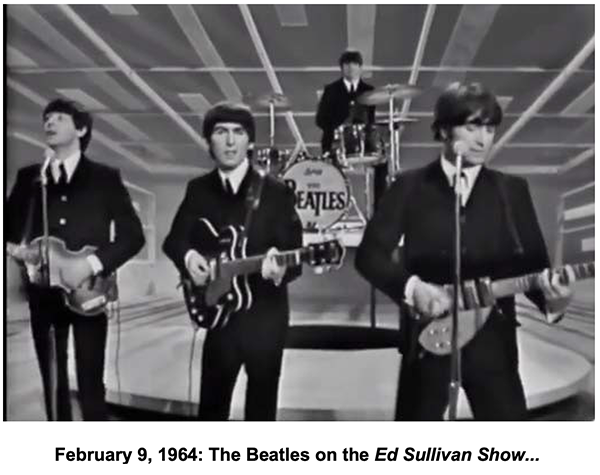
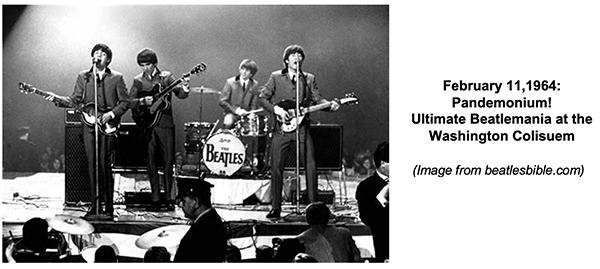
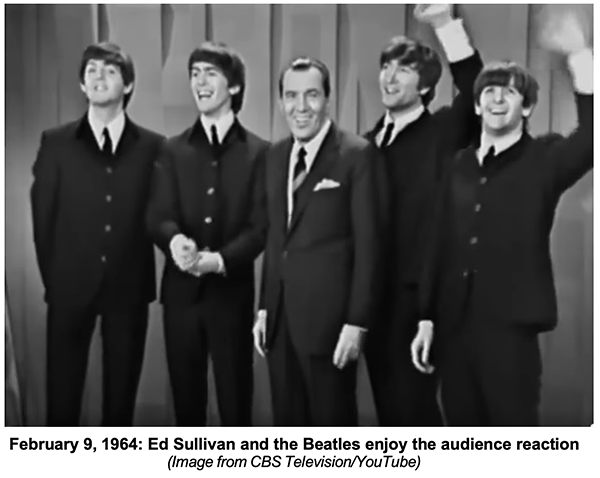
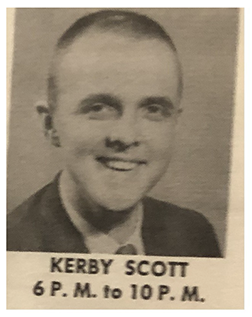 1964 WCAO Promotional Material: “Kerby Scott photo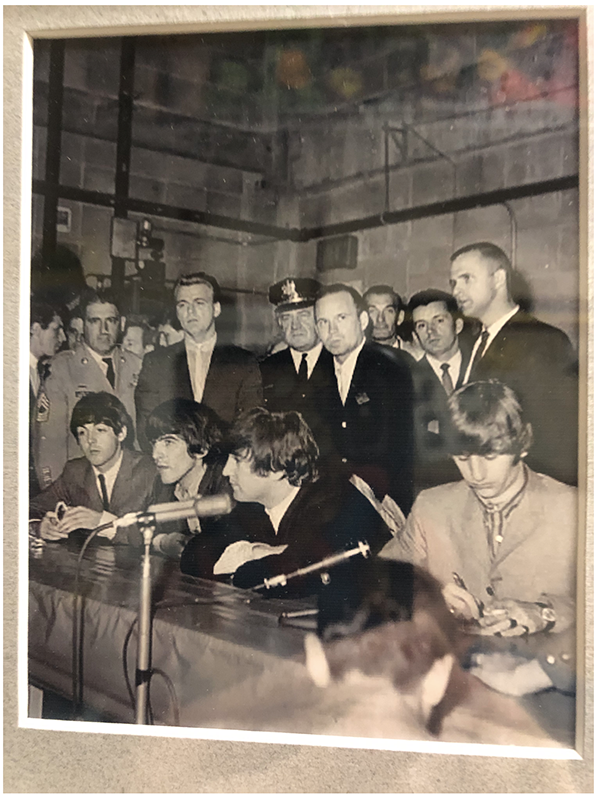
 its inception in 2010. Cook told his listeners, “It’s been a blast with you guys.” Cook is also a sportswriter for the Pittsburgh Post-Gazette. He’ll leave that position after his last column appears on Sunday. Audacy Pittsburgh SVP and market manager Michael Spacciapolli comments, “From the first day ‘93.7 The Fan’ signed on the air, Ron brought instant credibility to the station with, not only with reputation as one of the top columnists in the market, but also a trusted voice that sports fans wanted to hear from. That is a rare combination, and to this day we are fortunate that Ron was here with us from the beginning.”
  Despite his seemingly nonchalant, bad boy on-air persona, David Letterman is exceptionally respectful of broadcasting and its history.
 This column should really be called, “How I got transferred from Buffalo to Tampa.” The storyline will help explain the title and offer you a proven technique that should help you sell and earn more.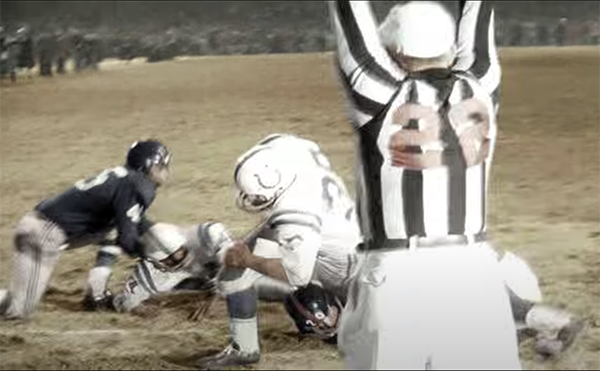
 It was one of those indelible moments in sports history: The 1958 NFL Championship, played on December 28, 1958 at Yankee Stadium in New York. The Baltimore Colts defeated the New York Giants 23-17 in sudden death overtime. 65 years later, the events of that Sunday afternoon still resonate throughout pro sports and sports media.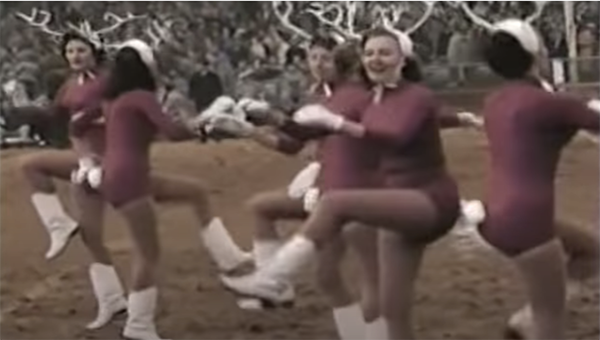
 and help people instead of just jawboning and complaining about everything.’ And she was right. So ‘Gallagher’s Heroes – The Fallen Officers Fund’ was created (which assists the families of law enforcement killed in the line of duty and publishes The First Responders Bible) as well as several other charities we help on an annual basis. Each holiday season we partner with Prison Fellowship and get Christmas presents, Bibles and a personalized message from an incarcerated parent delivered to thousands of children. So far this year, my audience has donated over $160,000 which will benefit 6,400 children of prisoners. Over the last few years, my listeners have contributed over $2.5 million to Prison Fellowship. I’m so humbled and blessed to have such a loving, generous audience. It makes it a joy to come to work. And I get to carry my late wife’s wish in my heart. I’m a lucky guy.” Gallagher is not the only SRN host helping the Prison Fellowship cause. Sebastian Gorka is also working hard to promote the organization’s efforts.
  midday slot. Hardy has also lent his voice and creative talents to various platforms across the station, including the creation of the wildly popular ‘Fuppets’ videos for Felger & Mazz. In addition, he has been the longtime host of the ‘Sports Hub Golf Club’ show and can also be heard on Beasley’s Rock 92.9.” Morning host Fred Toucher says, “I’ve known Hardy and admired his talent for many years. I’m very excited to begin this new chapter and feel revitalized by the new opportunity.” Hardy comments, “As a lifelong radio guy, I’m thrilled for this opportunity. I’m looking forward to working with Fred and the rest of the morning show crew on what I believe will be a great show.” Station PD Rick Radzik states, “Hardy is one of the most talented and creative individuals I have ever worked with in radio. Teaming him with Fred was just a natural fit for our new morning show. I look forward to them providing great content and entertaining our listeners for years to come.”
 You know the routine.
 The lineup includes Westwood One talk hosts Dan Bongino, Chris Plante and Rich Valdes; Starnes Media Group’s Todd Starnes; FOX News Radio’s Guy Benson, Newsmax’s Rob Carson, and longtime Pittsburgh TV and radio personality Wendy Bell. It will also use FOX News Radio for network news. Hispanic Broadcasting president Matthew Velasquez says, “We’re excited to bring Houston listeners a better choice in news/talk radio. The mission of ‘Patriot Talk 920 AM’ is to become the leader in conservative talk radio with programming that reflects our core values of family, faith and freedom.” For more information, contact Steve Lapa at
 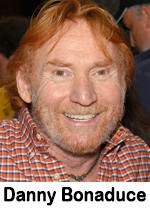 during its time as an FM talk station. KZOK says in its announcement of Bonaduce’s retirement, “Danny’s career in the limelight began at an early age, starting with appearances on ‘Bewitched’ in 1969 that landed him the role of Danny Partridge on the ‘Partridge Show’ from 1970 to 1974. Later, Danny would appear in Corvette Summer with Mark Hamill and many cameo appearances on TV and movies over the years.” He says, “I am the luckiest guy in entertainment. I joined the actors union at age three and with little interruption, I have worked in the industry I love for 60 years. I loved almost every minute of it. I want to thank the loyal fans who have followed me throughout my career, including the last 12 based in Seattle. Thank you to iHeartRadio for believing in me, to my on-air partner Sarah for putting up with me. My thanks to Paul Anderson, my agent for decades who has been my steady guide and business partner.”
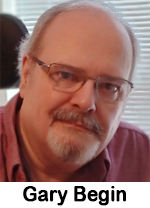
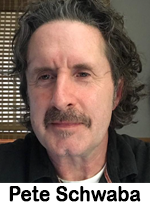 Waukesha. The “Nite Lite With Pete Schwaba” airs from 8:00 pm to 10:00 pm. Schwaba has hosted programs for PBS Wisconsin in addition to his work in the film industry that includes writing for the 2003 film, A Guy Thing, and his own indie comedy film, The Godfather of Green Bay. He also served as a producer on the Jeff Foxworthy TV show, “Are You Smarter Than a Fifth Grader?” He says, “Entertainment, just like sports, helps bring people together, which is more important now than ever. I’m excited to introduce listeners to people I’ve met over the years in the entertainment business, share experiences, and generally celebrate arts and culture in Wisconsin.”
  McCaffrey has been co-host of the “Murph and Mac” show with Brian Murphy, who appears to still be employed with the station. The dismissal of Santangelo spells the end of the evening call-in show that’s been part of the station for the past 51 years. Station program director Adam Copeland– who also co-hosts the afternoon show with Tom Tolbert – said on the program, “It’s been a really difficult day. I love this building, I love this station, I love working with you, Tom, and I’ve listened to you for years. I love a lot of people. I love the guys we let go of today. I’m looking forward to the future, but I really think we need to tip our cap and applaud the work that those guys have done.”
  women in radio with female professionals recognized as leaders in all aspects of the industry. The 2023 class is comprised of broadcast professionals Rosanna Cole, regional traffic manager, Townsquare Media; Caleigh Fisher, director of teammate experience, Good Karma Brands; Kristi Nguyen, director, digital sales & campaign management, Audacy; and Jade Springart, WRIF-FM program director, Beasley Media Group.
 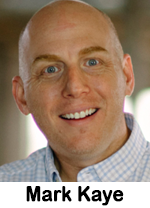 We have a saying around “The Mark Kaye Show” studio:
 team of award-winning journalists brings a fresh perspective to mornings while delivering a perfect mix of news, sports, and entertainment.” Also, station traffic and weather anchor Renee Vitale becomes co-host of “First Thing with Mike Parsons” from 5:00 am to 6:00 am. The station is pairing Detroit Lions great Lomas Brown with WJR’s Sean Baligian for the 6:00 pm to 7:00 pm “Sportswrap with Lomas Brown and Sean Baligian” program. Cumulus Media regional VP and market manager Steve Finateri comments, “‘JR Morning with Guy, Lloyd and Jamie’ plus ‘SportsWrap with Lomas Brown and Sean Baligian’ as bookends to our current big-name local daily shows on WJR has given ‘The Great Voice of The Great Lakes’ more prime time firepower than at any time in the past 20 years!”
 morning show from 1999-2011. Kyle Draper is the Sacramento Kings pre- and post-game host on NBC Sports California and was previously an anchor/host at NBC Sports Boston. Bonneville Sacramento SVP and market manager Steve Cottingim says, “We are excited to continue to elevate the Sactown Sports brand with the addition of ‘The Drive Guys.’ Kevin has been a fabric in the Sacramento community for four decades now and pairing him with Kyle Draper who is a familiar voice to our listeners through the Sacramento Kings broadcast just highlights our commitment to Sacramento sports.”