Industry News

Ron Cook Retires from KDKA-FM, Pittsburgh

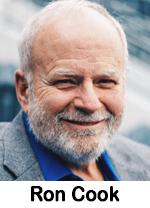
Patch.com reports that KDKA-FM, Pittsburgh “93.7 FM The Fan” air personality Ron Cook announced his retirement from the station yesterday (2/5). Cook is one of the original hosts who joined the station atim its inception in 2010. Cook told his listeners, “It’s been a blast with you guys.” Cook is also a sportswriter for the Pittsburgh Post-Gazette. He’ll leave that position after his last column appears on Sunday. Audacy Pittsburgh SVP and market manager Michael Spacciapolli comments, “From the first day ‘93.7 The Fan’ signed on the air, Ron brought instant credibility to the station with, not only with reputation as one of the top columnists in the market, but also a trusted voice that sports fans wanted to hear from. That is a rare combination, and to this day we are fortunate that Ron was here with us from the beginning.” Read it on Patch here.

Features

Remembering Charles Osgood

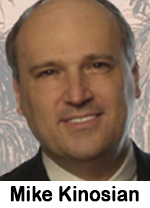
By Mike Kinosian
TALKERS magazine
Managing Editor

imDespite his seemingly nonchalant, bad boy on-air persona, David Letterman is exceptionally respectful of broadcasting and its history.

An easily discernable gleam could be seen in the late-night talk host’s eyes when – in 1993 – he formally announced he was jumping to CBS-TV.

One would be naïve not to think that the astonishingly lucrative payday played a significant part in his exhilaration, but Letterman was genuinely enthusiastic about joining the “Tiffany Network.” The entertainment division helped sculpt that vaulted reputation, but the Eye Network’s image was also greatly enhanced by its stellar news department.

Names of those who’ve graced CBS news broadcasts read like a veritable “Who’s Who” of the industry, with the incomparable Walter Cronkite at the very top.

Additionally, there’s Murrow. Sevareid. Collingwood. Rather. Reasoner. Wallace. Edwards. Kuralt. Safer. Mudd. Bradley. Schieffer. Stahl. Rooney. Burdett. Pauley. Hottelet. Chung. Threlkeld. O’Donnell. That just scratches the surface.

Perhaps no one on that – or any similar – list is more erudite, witty and thought provoking than Charles Osgood (Wood).

In a special April 18, 2005 NAB presentation in Las Vegas, the man who did as much for boosting bowtie sales (far pre-dating Tucker Carlson) received the Paul White Award from the RTNDA.

Established in 1956, the recognition carries on the name of CBS’ first news director.

Illustrious company

Past Paul White Award recipients have included Edward R. Murrow, Dan Rather, Bob Schieffer, Ed Bradley, Tom Brokaw, Ted Koppel, Peter Jennings, and Jane Pauley, who succeeded Osgood on CBS-TV’s “Sunday Morning” in 2016. Osgood humbly noted, “I’ve known about the Paul White Award for a long time and have been there to see others get it. It’s obviously a very distinguished company I join. I was there when [former CBS News Division President] Richard Salant [received] it and certainly regard it with a lot of respect. If you hang around long enough, it finally gets to be your turn.”

There’s a parallel with this recognition and Osgood’s 1990 induction to the NAB Hall of Fame. “[Neither] one is the kind of thing you campaign for,” he remarked. “The first I heard about it is when they called and told me it happened. There’s no tension about it and no disappointment that you didn’t get it.”    

Mistaken identity

Rich, God-given voice with which Osgood was blessed became evident at an early age. “My dad was a textile salesman and executive. His name was Charles Osgood Wood – I’m actually Charles Osgood Wood, the third. I’d answer the phone and the person on the other end would [automatically assume they were talking to my father]. He and I talked almost exactly alike.” 

Somewhat of a built-in schizophrenia existed in the famed broadcaster. A friend with whom he’d frequently play tennis noticed that when the multiple Peabody and Emmy Award winner screwed up he’d say, “Come on Osgood.” As a result, “I’d be harder on ‘Osgood’ than I would be on ‘Wood.’ You don’t talk to yourself when you do something right – you just sort of smile.”

Distinctive difference

Understandably, the natural tendency was to automatically link the instantly likable Osgood to CBS for his impeccable long-running role as voice/writer of CBS Radio’s “The Osgood File” and for hosting duties of CBS-TV’s “Sunday Morning.” In addition, he spent six years (1981-1987) as anchor of “The CBS Sunday Night News.”

Many, however, forget that predating those résumé credits, he toiled for ABC.

When he began there, ABC – as luck would have it – already had an announcer named Charles Woods. “In those days, some staff announcers did newscasts,” Osgood explained. “They hired me, but said they didn’t want to have a Charles Woods and a Charles Wood. When they told me to pick a name, I used my middle name as my last name. It’s worked out well and is a little more distinctive and professional.”

Safe haven

Selection of another type made a great impact on his life, as the broadcaster with the industry’s most stylish writing style was an Economics major at New York’s Fordham University. “I never really had an idea that this is what I was cut out to do,” Osgood candidly stated. “As a result, I never took any writing or editing courses. When I started [in broadcasting], I really hung on by my fingernails and just did it the best way I could think of. It took more than a couple of years to get a sense of what I could do. If I’d started the kinds of things in journalism school that I do now, they would have said, ‘No – that’s not how you do it.’ I would have had it drummed out of me early on.” 

Thankfully though, someone realized a broadcaster existed within Osgood and the New York native became actively involved at Fordham’s campus radio station. “That was my locker – the place I’d go between classes,” he pointed out. “At least in those days, regardless of your [declared major], you really majored in Philosophy. You learned things like ethics, logic and cosmology. That really turned out to be pretty useful for what I’m doing.”

Never was there a moment’s regret for the father of five that he didn’t pursue a career in economics. “I’m not even sure I understood what economics was when I decided to make it my major,” Osgood sheepishly admitted. “I knew it had something to do with money and I thought it would be good to know something about that.” 

Sailing with Uncle Walter

As things eventuated, it was immaterial that Osgood never took any college journalism courses. “I went to the best school of broadcast journalism that you could go to, [because] I got to work with Walter Cronkite and a pretty potent lineup of [other] people,” Osgood asserted. “I was often in the same room and could see how Walter’s mind worked and his idea of telling a story. He’s the most centered guy you’re ever going to meet and is very tough.”

Fabled anchorman Cronkite was also managing editor of “The CBS Evening News,” a responsibility he took very seriously. “He was a newsman and kept asking questions of everybody; I have all the respect in the world for him,” Osgood reverently recalled of Cronkite, who was 92 when he died in 2009. “Within a year after I went to work in the CBS newsroom, I found myself sailing in a boat with Walter Cronkite. I felt like I died and went to heaven.” 

Mid-1950s on-air job at Washington, DC classical outlet WGMS enabled Osgood to display his familiarity with – and dexterity to handle –  names like Nikolay Rimsky-Korsakoff. “I really did like that kind of music,” the long time ASCAP member emphasized. “They [eventually] gave me a job that was like the assistant to the GM. It paid all of about $25 a week, but I learned a little bit about station management. WGMS was sold to RKO General and I ended up being program director and, for a time, co-manager.”

Ahead of its time

Also dotting Osgood’s notable vitae is a 1963 stint as general manager of Hartford’s WHCT, the country’s first pay television station. “It was an over-the-air station that CBS owned at one time. It had a mechanism that would encode both picture and sound.”

Subscribers paid $125 for a decoder that needed to be attached to their television set; however, Osgood readily conceded it wasn’t exactly the ideal system. “Color was starting to come on strong, but this only worked in black and white, [so] we had a few strikes against us going in. We were, however, able to play ‘subsequent first-run’ movies – [films] that hadn’t yet been seen in local theaters.”

A tape inside the decoder recorded what a subscriber watched and customers were sent a bill once a month. “The system as an experiment failed, but it was not a bad idea,” Osgood maintained. “Now, of course, we have pay-per-view television, which is essentially the same thing.” 

Shared versus singular responsibilities

Each Osgood-fronted “Sunday Morning” broadcast concluded with the affable host reminding viewers that he would, “See you on the radio,” which was his way of reinforcing that radio is a visual medium. “You create pictures in your own mind and those are much richer than the ones that can be shown on television,” Osgood contended. “On television, what you see is what you get and [that medium] is very pre-occupied with the picture. There’s often wonderful writing there, but television people don’t tend to think about that or the sound at all.”

Images are their main focus and having had vast experience in each medium, Osgood opined that radio is a much more individual effort. “You decide what you’re going to do; you write it; and you do it. You can take all the credit or blame for whatever you do on radio. Television is a collaborative process. There are producers, writers and photographers. One person really can’t take any bows.”

Demanding schedule

One hour separated each of his four daily “Osgood File” features. The general rule was that Osgood didn’t start writing the next one until he finished delivering the last. “If it takes more than an hour, I’m in a lot of trouble,” he deadpanned. “I have to write it in somewhat less than an hour.”

Preparation for that Monday through Friday workday ritual began at the petrifying time of 2:30 am. “It somehow always feels like a horrible mistake when the alarm goes off then,” Osgood declared in his perfectly inflected trademark delivery. “I’m usually in the office at 4:30 am. I have to get my ducks in a row before [doing the first piece] so I know what I’m going to do the rest of the morning. You spend part of that time reading to see what’s there in the way of tape and to see what news stories are of interest that morning.” 

Newspapers, wire sources and the internet provided plenty of possibilities, so Osgood didn’t start worrying about what he was going to put on paper until he arrived at the office. “The news is a constantly refreshing source of material,” he commented. “If you’re doing something that has to last for a long time, you have a different problem. It’s just a question of what you can get your teeth into.”

Road to Sunday Morning

Four-year tour of duty (1967 – 1971) as morning anchor/reporter at New York City’s all-news WCBS-AM got Osgood accustomed to getting up early; he had the luxury of sleeping in until 4:30 am each Sunday. “You have no idea how much later 4:30 am is than 2:30 am,” he convincingly put forth. “I don’t have to get up early on Saturdays. There are [‘Osgood File’] shows, but they’re repeats of things that were done during the week. It’s a great delight to wake up on a Saturday and then realize I can go back to sleep, but it’s still never that late. I get up by 7:00 am.”

Energetic Osgood actually preferred a slow news day when it came to doing his 90-minute Sunday television broadcast. “I’m certain I’m the only network TV anchor who hopes there’s no news. We’ve worked on the show all week and want to do the broadcast that was planned. Some of our shows have themes or, at least, have connections between the pieces. If there’s a big story, you might have to throw something out and that may – or may not – hold up the following week.”                                                    

Succeeding Charles Kuralt as host of “Sunday Morning” nearly 30 years ago (4/10/1994) was a tough act for Osgood to follow, especially since he viewed “On The Road” legend Kuralt as a great personal hero. “He was one of the best who ever came along,” Osgood succinctly stressed. “Charles was a country boy with that wonderful North Carolina accent and had a way of using the language. I thought he was simply terrific. He taught me a lot, [including] not to imitate or copy what you hear. He was in control of every sentence he put down and had an idea of how he wanted to come across to the audience; he was really brilliant.”

Admiration for his predecessor

No advance notice was given to Osgood that his colleague – who would die of complications from lupus in 1997 at just 62 – was planning to leave the Sunday morning show. “I remember getting up one day at the usual hour and putting on my socks in a dark room,” Osgood recollected. “I had the radio on and heard Charlie had announced his retirement. That was terrible news and it never even occurred to me that CBS might ask me to replace him. For one thing, I was older than Charles [by approximately 20 months]. You don’t replace a person who retires with someone older, but that’s what happened. The real reason I got the job was they needed someone whose first name is Charles.”       

Sunday’s audience was conditioned to expect a high-level broadcast, and Osgood acknowledged that made the transition much easier. “As long as I didn’t try to be Charles and try to do an imitation of him, I thought I’d be okay [provided] the audience would put up with me long enough to get used to me.”

Certain things about the CBS-TV show were the same every week. “When we change something, the audience usually doesn’t like it at first,” Osgood contended. “It was especially daunting for me at the beginning because [Kuralt] was so terrific.” 

All tied up

Play a visual word association game about Osgood and “bowtie” will invariably be the first response, but he viewed that fashion statement as a relatively new choice. “I’ve only been doing it for 20 years,” he quipped tongue-in-cheek.

It all began when he wore a clip-on bowtie to work one day. CBS-TV “Evening News” writer John Mosedale admonished Osgood to never wear a clip-on. “He actually walked me into the men’s room and taught me how to tie a bowtie. When you teach an old dog a new trick, he wants to keep doing it. I wear a bowtie when I do speaking dates or television. The excuse I use for my attire is that I get dressed in the dark.”

Write stuff

This author of six books (the last one, 2004’s “Defending Baltimore Against Enemy Attack”) also formerly wrote a “USA Weekend” column and a King Features’ syndicated column. Moreover, he had a full plate with four daily CBS Radio shows (via Westwood One) and a weekly morning television show. “I always have a book that I’m either thinking about or actually in the process of writing,” CBS’ “Poet In Residence’ disclosed. “I’ve been talking with publishers about several book ideas, but they’re not far enough along to really [discuss] at this point. The [leisure time] thing I do more than anything else is fooling around at the piano; I like doing that.”

Unexpected situations like receiving the Paul White Award; being inducted into the NAB Hall Of Fame; and replacing Charles Kuralt as host of CBS Sunday Morning seemed to be the norm for the 1999 International Radio & Television Society Foundation award winner for Significant Achievement.

Long-range plans

With that as a backdrop, it was noteworthy that Osgood never considered himself to be a permanent replacement for Dan Rather on the “CBS Evening News” – a job that would eventually go to Katie Couric in 2006. “I’m not a candidate for anything,” Osgood vehemently insisted to me in our conversation, “[although] I do think it’s important that the ‘CBS Evening News’ be our flagship show. When they asked Bob Schieffer what he thought about doing ‘The Evening News,’ he said it was something to keep him busy until he was old enough to be on ‘60 Minutes.’”   

More than satisfied to have carried on with his radio and television assignments, Osgood – who had a summer residence in France – didn’t look forward to retirement. “I like vacations, but I like them because they are vacations. It’s nice to get away from work, but that’s only if you’re working. I hope they realize I intend to continue to do this for a long time. If it stops being fun, that’s when it’s time to hang it up.”

Mike Kinosian can be emailed at Mike.Kinosian@gmail.com

Industry Views

Pending Business: Calendar Secrets

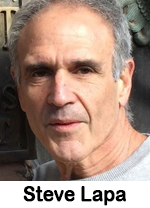
By Steve Lapa
Lapcom Communications Corp
President

imThis column should really be called, “How I got transferred from Buffalo to Tampa.” The storyline will help explain the title and offer you a proven technique that should help you sell and earn more.

Before Zoom, Teams and other video conference platforms that drive today’s daily to-dos, sales teams worked hard to fill the day with “in-person” sales calls. Back then, most managers forgot, or did not account for how weather impacted the number, geography and quality of those money making in-person sales calls, until blizzards, hurricanes and mother nature took her toll on productivity. Those of you who work or have worked in northern markets like Buffalo know all too well what 8 to 12 inches of snow can do to a daily plan. The same holds true for southern markets that experience hurricanes that have devastated communities going back to the hurricanes that nearly destroyed Miami and New Orleans. Now it seems wildfires are becoming a more regular threat in western markets. Having experienced most of the worst, like it or not, weather is an unpredictable yet critical variable in your sales plan.

One of the most destructive blizzards in history hit Buffalo during my first year as a young general manager. Retail contract cancellations, stranded employees, and off-the-air due to frozen antennas were draining revenues. It was December and the calendar was winning. After the ice melted and the snowplows cleared the way, we packaged everything we could before year-end to try and salvage the pacing that was leading to a bonus. The calendar won, annual bonus gone, but the learning curve kicked in.

B.G. (before Google) any research had to be accomplished old school: calls, friends, articles, and experts. We determined the average number of weather impact days, just like the guys in the theme park business. We developed a “real world” budget that accounted for weather days, the accompanying limited staffing, and a set aside percentage of revenues for cancellations.

When we began the year, the “real world” budget was put in place. By November of that year, the radio station had achieved its revenue goal for the full calendar year. The day before Thanksgiving I was summoned to the corporate office and was handed a file with a one-way ticket to Tampa, Florida. Goodbye blizzards, hello hurricanes. As a young manager, the sun was much more inviting than the snow, and I am still in Florida.

The discipline of a sales or planning calendar accompanied by “what if” is a must have.

Oh yes, make sure that pencil has an eraser.

Steve Lapa is the president of Lapcom Communications Corp. based in Palm Beach Gardens, FL. Lapcom is a media sales, marketing, and development consultancy. Contact Steve Lapa via email at: Steve@Lapcomventures.com.

Features

“The Greatest Game Ever Played”

im

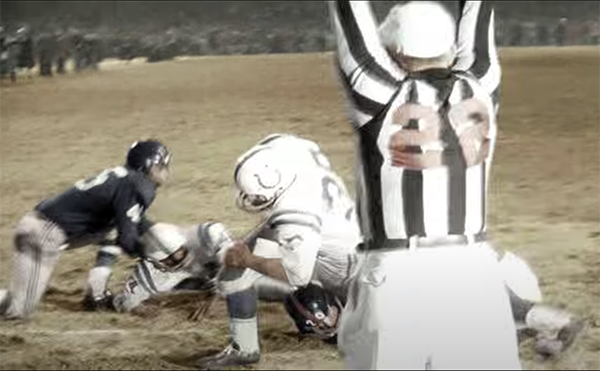
Baltimore’s Alan Ameche plunges over the goal line for the winning touchdown!(courtesy YouTube/NFL Films)

On the field? Maybe. In its impact on pro football and sports broadcasting? Absolutely!

By Mark Wainwright

imIt was one of those indelible moments in sports history: The 1958 NFL Championship, played on December 28, 1958 at Yankee Stadium in New York. The Baltimore Colts defeated the New York Giants 23-17 in sudden death overtime. 65 years later, the events of that Sunday afternoon still resonate throughout pro sports and sports media.

In 1958, the National Football League was far from the huge phenomenon we see today. Americans generally had much more interest in baseball, and during the Fall, college football captured the attention of sports fans on Saturday afternoons. The annual Army/Navy and Harvard/Yale clashes were national news stories, and fans followed the exploits of powerhouses like Notre Dame and Michigan. For most fans, pro football was an afterthought. Even in cities with pro franchises, the NFL clubs often played runner-up to the local baseball teams.

Baltimore and New York were two exceptions. The Colts were upstarts — Baltimore didn’t get an NFL team until 1953 — and the city quickly fell in love with the Colts; on game days, Baltimore’s Memorial Stadium was described as “the world’s largest outdoor insane asylum.” Meanwhile, the Giants had been part of the NFL since 1925, and they were considered the league’s most glamorous team, located in the world’s media capital. Two very different teams, both with passionate fan bases, playing a nationally-televised title game in New York City… indeed, America was destined to notice pro football that day.

Seventeen Pro Football Hall of Fame inductees were in the stadium that afternoon, along with a Heisman Trophy winner (Baltimore running back Alan Ameche). The Colts were led by quarterback Johnny Unitas and defensive end Gino Marchetti. The New York offense revolved around halfback Frank Gifford, while linebacker Sam Huff anchored the defense.

There were all-stars in the broadcast booths, as well. NBC’s national telecast was assigned to Chris Schenkel and Chuck Thompson; both of these gentlemen are now legends of their industry. Joe Bolan and Bill McColgan called the game for NBC’s national radio feed, while Les Keiter did the play-by-play for WCBS Radio in New York. And Bob Wolff did the radio call for Baltimore’s WBAL. Wolff was assisted by an eager teenager who worked as his spotter… a young man named Maury Povich (yes, that guy).

The first half, frankly, wasn’t anywhere near “greatest game” territory. While both defenses played fairly well, the offenses looked sloppy and disorganized, and the two teams combined for six turnovers in the first thirty minutes. The Giants managed only a Pat Summerall field goal, while the Colts — almost in spite of themselves — took a 14-3 lead into halftime. It could have easily been 17-3, but Sam Huff blocked a Baltimore field goal attempt.

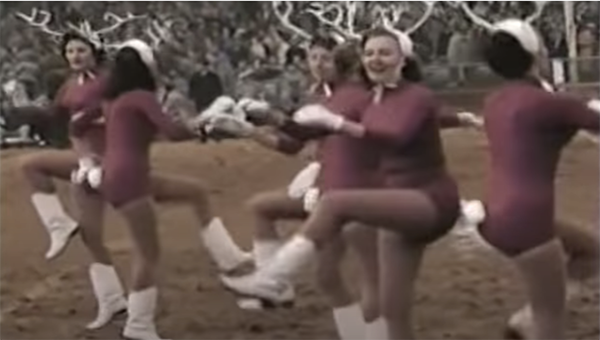
So, what was the halftime entertainment? Over the years, Super Bowl halftimes have featured performers like Lady Gaga and Michael Jackson. What 1950’s superstars would perform in the “super bowl” of 1958? Elvis Presley? Brenda Lee, maybe? Nope. It was the Baltimore Colts Marching Band, with their prancing majorettes looking quite fetching in their red leotards and reindeer antlers…

im

The Baltimore Colts Marching Band majorettes, in “reindeer” mode!  (courtesy YouTube/NFL Films)

Baltimore’s offensive woes continued into the second half. Early on, the Colts drove the ball to New York’s 1-yard line, but Alan Ameche was stopped for no gain on third down, then Ameche was tackled for a loss when he attempted to run wide on fourth down. In an interview decades later, Baltimore’s Lenny Moore revealed that Ameche botched the play; it was supposed to be an option pass, but Ameche didn’t hear Johnny Unitas’ signals correctly, and he ran instead of throwing a short pass to a wide open Colts receiver.

That goal-line stand awakened New York’s offense, and they needed only four plays to score their first touchdown to make it 14-10. The Giants then took a 17-14 lead early in the fourth quarter on a Frank Gifford touchdown reception, and while the Colts responded with two effective drives, they came up empty on both possessions; one ended with a missed field goal, the other ended when Unitas was sacked twice, taking the Colts out of scoring range. The Giants’ offense only needed a first down or two to ice the game, but Frank Gifford was stopped on a critical third down run. For decades, Gifford insisted he made the first down; Baltimore’s Gino Marchetti suffered a badly broken ankle in the pileup, and Gifford often said that amidst the chaos and confusion of tending to Marchetti’s injury, the officials did not spot the ball properly. However, when ESPN restored the footage for a 50th anniversary broadcast in 2008, an accident reconstruction expert analyzed the images and determined that Gifford was, indeed, just short of the first down (more about that ESPN program in our Epilogue). The Giants chose to punt the ball, and the Colts took over on their own 14-yard line.

This was the moment when Johnny Unitas began his ascent to legendary status. With just two minutes left, he moved the Colts downfield quickly. While there were several misfires, he made four critical completions, including three straight passes to his star receiver Raymond Berry. Those last three plays moved the ball 62 yards to the Giants’ 13-yard line, and with just seconds remaining, the Colts rushed Steve Myhra out to attempt a tying field goal. Myhra had struggled with field goal attempts all season, and Baltimore fans held their collective breath until the ball went through the uprights. The fourth quarter ended tied 17-17.

So… what happens next? Many of the players and coaches weren’t sure. It was not unusual for football games to end in a tie, but this game was for the NFL title. Would the teams be declared co-champions? Fortunately, the NFL had recently instituted an overtime rule for championships, and it would be decided on the field. The teams would play pure “sudden death.” The first team to score in any manner would win, and they would play for as long as it took.

The Giants won the toss and chose to receive, but they were not able to mount any kind of drive, and they punted the ball back to the Colts. Unitas now had all the time in the world, and Johnny U methodically moved the Baltimore offense to the New York 8-yard line. It was first-and-goal, and then, suddenly… the NBC Television feed disappeared! Nothing but snow on the screen!

This caused immediate panic in NBC’s control room, not to mention in homes across the nation, as viewers — particularly in Baltimore — bolted from their living rooms and scrambled to find the nearest radio. It was one of the worst possible moments to lose the live feed of a TV broadcast. And then…

A fan ran onto the field! Play was halted for nearly a full minute before New York’s Finest chased him down and escorted him to the sideline. Over the years, there has been endless rumor and speculation about this incident. Photographs show the fan was well-dressed and appeared very cooperative when the cops took him away; he certainly didn’t look like a drunken lout. Who was this guy?

Whoever he was, he is now the stuff of sports broadcasting legend. More than six decades later, it is widely believed that he was an NBC employee who realized the broadcast was interrupted and ran onto the field — or perhaps was told to run onto the field — to delay the game long enough to give the TV crew enough time to find a loose cable and fix the connection. As far as I know, he was never identified and the story has never been confirmed. One hopes the fellow received a bonus and a promotion for his quick thinking!

When the game resumed, the Colts ran two plays to reach third-and-goal from just over a yard away. A field goal attempt might have been the obvious choice, but Baltimore coach Weeb Ewbank was leery of sending a struggling Steve Myhra in to kick. Meanwhile, the coach trusted Unitas completely, and he left Johnny U and the offense on the field. A routine handoff to Alan Ameche secured a 23-17 Baltimore victory.

The game was breaking news nationwide. It was a big topic of Sunday afternoon dinner conversations, and it was headline news on front pages and in sports sections the following day. NFL and television executives soon realized that professional football could become a very valuable property, and they started making plans for increasing television coverage and boosting marketing exposure for the teams, the star players, and the sport overall. And down in Dallas, Lamar Hunt — a son of oil tycoon H.L. Hunt — started thinking about owning his own football team. Those dreams eventually led to his role in establishing the rival American Football League, which merged with the NFL just over a decade later. Historians and sportswriters have studied the 1958 title game, and they generally agree that event was the start of professional football growing into the colossus it has since become. It was the aftermath and the impact  — as much as the drama of the game itself — that led them to calling it “The Greatest Game Ever Played.”

*************************************************************************************************************

EPILOGUE

As I’ve mentioned in previous articles, television did not put a high priority on archiving sports events back then. There is no known videotape of the game; videotape was in its infancy, and while NBC presumably had one or two of the early machines available, it seems nobody bothered racking them up. There is no known kinescope film recording of the television broadcast, either. Fortunately, there was plenty of film footage of the game, both from overhead and from sideline views. This footage was shot by NFL Films, as well as various newsreel cameramen working for different organizations.

On the 50th anniversary of the game in 2008, ESPN produced a special documentary that used the old footage to re-create much of the action. The historic clips were colorized for broadcast, and the action was interspersed with comments and memories from players, fans, and broadcasters who were there. (Sadly, many of these gentlemen have passed away in the fifteen years since.) Most of Bob Wolff’s Baltimore radio broadcast was saved, and the NBC national radio call was saved almost in entirety. This historic audio was used in conjunction with the preserved video. Several versions of the ESPN special can be found on YouTube; here is a link to one of those.

Others have collaborated on an almost-complete reconstruction of the game, using the original newsreel and NFL footage, some of the colorized ESPN content, stock footage, and still photos. The audio portion uses the NBC national radio call by Joe Bolan and Bill McColgan (complete with vintage commercials!). There are several uploads of this project on YouTube, and there is also a version on the Internet Archive, available here. If you’ve never seen any of “The Greatest Game Ever Played,” punch it up on your laptop and enjoy!

Mark Wainwright is a long-time radio personality and voiceover performer. He was most recently the morning host at WSYR in Syracuse; he is also a Baltimore native and life-long Baltimore Colts fan (and he still hasn’t gotten over the Colts leaving town and moving to Indianapolis decades ago!). He can be reached at: markwainwright@earthlink.net

Industry News

SRN’s Mike Gallagher Raises Funds for Prison Fellowship

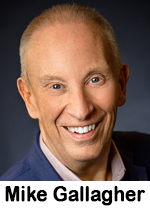
Salem Radio Network nationally syndicated talk radio host Mike Gallagher and his listeners have helped raise funds for the Prison Fellowship this holiday season. Gallagher tells TALKERS magazine, “Years ago, I came home from work one day very grumpy and my wife Denise said, ‘Why don’t you start doing good for people on your show? You could take the passion that your audience has all bottled upim and help people instead of just jawboning and complaining about everything.’ And she was right. So ‘Gallagher’s Heroes – The Fallen Officers Fund’ was created (which assists the families of law enforcement killed in the line of duty and publishes The First Responders Bible) as well as several other charities we help on an annual basis. Each holiday season we partner with Prison Fellowship and get Christmas presents, Bibles and a personalized message from an incarcerated parent delivered to thousands of children. So far this year, my audience has donated over $160,000 which will benefit 6,400 children of prisoners. Over the last few years, my listeners have contributed over $2.5 million to Prison Fellowship. I’m so humbled and blessed to have such a loving, generous audience. It makes it a joy to come to work. And I get to carry my late wife’s wish in my heart. I’m a lucky guy.” Gallagher is not the only SRN host helping the Prison Fellowship cause. Sebastian Gorka is also working hard to promote the organization’s efforts.

Features

Ladd Have Mercy

imLOS ANGELES – As students, enthusiasts and caretakers of this wonderful medium, we’re keenly aware that radio’s “Golden Age” boasted an incredible array of entertainers and broadcasters.

With lifestyles, technology and society being what they are today, it’s almost inconceivable to imagine that families would actually gather around the radio and attentively listen – and indeed hang onto – each and every word that emanated from that mysterious entertainment-laden box sitting in the living room.

Fundamentally important back then, of course, was a concept known as “Theater Of The Mind.”

No one embodied and personified it better than one of the bigger-than-life talents of that era: Orson Welles.

Most are familiar with his epic “War Of The Worlds.”

Pictures Set In Songs

The list of other outstanding “Mercury Theater” presentations Welles was responsible for is much too lengthy to cite here, but his legendary “Theater Of The Mind” mystique lived on nightly in Los Angeles, where Jim Ladd was a welcome guest for Southern California listeners dating back to 1969 and hosted a regular show on SiriusXM’s Deep Tracks channel the past 11 years.

Theater Of The Mind so perfectly describes what Ladd tried to do, although it’s not radio drama in the pure sense. “What I [attempt] at night is to show you pictures and do that by playing sets of songs,” the (then) highly popular KLOS-FM, Los Angeles 10:00 pm – 2:00 am personality remarked to me. “If you follow the lyric content of each song, as well as the song’s emotional feel, it should tell you a story with a beginning, middle and end. Thus, it’s theater.”

Throwback To Creativity

In addition to providing his special spin to Theater Of The Mind, Ladd was also responsible for keeping another bit of radio history on life-support.

Most air personalities are required to adhere to strictly enforced music lists, but Ladd’s nightly, four-hour, Los Angeles air-shift was a throwback to the days of “free-form” radio.

The result was similar to what existed in April 1967, when a new phenomenon started taking shape. “That was the beginning of FM and this multi-billion dollar industry,” Ladd recalled. “[Free-form] started on a station [KMPX, San Francisco] where the phone was literally disconnected, because they couldn’t pay the bill. [Tom Donahue] had an idea; he went there and it took off. For a while before deregulation, that’s what all FM radio did in any market. Free-form worked great, until they killed the golden goose.”

Right Place, Right Time

Southern California native Ladd was extremely fortunate to have been able to launch his radio career in the country’s second-largest market. “Part of it was timing,” he admitted. “I was at a little station in Long Beach [KNAC-FM] that decided it was going to try this new, hippie, underground thing. They didn’t know what it was, but [the feeling was to] hire some hippies and see if they could make some money with it. I happened to be right there at that time.”

A frustrated musician, who wanted to be a songwriter, Ladd recounted a life-altering conversation he and a buddy had in a car. “My friend said that I should be in radio. I was 19 or 20 at the time and your friends at that age seldom notice anything but themselves. For some reason, that stuck with me. Thank God, FM was in its infancy and they’d take complete novices like me off the street and give us shows. Owners didn’t know anything about the Grateful Dead or The Who, but we did.”

Check Mate

Instead of walking into a studio and following a computer-generated music log, Ladd was given freedom to use his imagination. His only preparation was what was happening in life.

Resulting sharp, clever music sets he composed weren’t written out in advance. “The way I work is to turn the music up loud and get the song working on me,” he commented. “Once [that happens], it keys in my mind what will fit next.”

Such an intricate process included a mental checklist. “I’ve figured out the lyrics will work, but I need to know how the song I’m playing ends and how the next song begins,” he explained. “If I’m playing a balls-out rocker, I can’t go into some acoustic piece. In that way, it’s really like a chess game. I have to plan these things to start every single segue as I’m doing it. That’s the way that works best for me.”

There were nights, however, that Ladd knew that he “[didn’t] have it,” but as he maintained, “I’ve been doing it long enough to put on a good professional show. Sometimes, I don’t have what I’m striving for, which is to make a connection with the audience. Without having to prompt them or explain anything, my audience lights up the phones. They call because they get what I’m doing. Once that connection is made, then look out, because the rocket is taking off.”

Gracefully Handling The Tragedy

Recalling the horrific September 11, 2001 “Attack On America,” Ladd noted that although it was one of the country’s greatest tragedies, “It was easy to immerse myself into something like that. It so moved me that I had no problem thinking of songs to play or what I wanted to say.”

Judy Collins’ version of “Amazing Grace” was the first song he played when he went on the air that night. “Believe it or not, it set the tone for what I did for … the next two weeks.”

As it usually did, the audience – even or perhaps especially in this painful period – stepped up to the plate. “This is the thing about free-form radio that’s so precious to me,” Ladd emphasized. “Nobody called me on 9/11 with an idiot request. When I played sets of 9/11 songs, everybody was calling in with [appropriate] suggestions. Second only to dealing with the tragedy, the hardest part was to know when I could play groups like AC/DC again. I found that very difficult; you can only feel your way through it.”

 Loyal Listeners

In his third tour of duty at (then ABC-owned) classic rocker KLOS, Ladd was a legitimate cult figure in the Southland for his work at legendary cross-town rocker KMET.

Southern California listeners were stunned on Valentine’s Day 1987 when the “The Mighty Met” (now Audacy smooth AC KTWV) – became smooth jazz “The Wave.”

Also on Ladd’s impressive resume were stints at Los Angeles outlets KLSX and KEDG.

The notion of an air personality “connecting” with the audience is both elementary and elusive. Ladd was a rare case of a non-drive time music personality who amassed a loyal, vocal following.

Grateful for such audience allegiance, Ladd didn’t take it for granted. “My audience has been that loyal from KMET to KLOS and all the [other] stations in between. My part of the bargain is that I won’t lie to them or let them down by doing a format. I was off the air twice in my career for two years each. That was very difficult, but because I did that, I’ve earned the right to do this and I think the audience responds to that.”

Offered jobs by stations that wanted the “Jim Ladd” name, he opined, “They didn’t understand what that meant. They thought they could just plug in my name, not let me do what I did and it would be the same thing.”

Your Attention Please

Evenings and nights were Ladd’s domain throughout his career. “I wouldn’t want to do middays or afternoon drive,” pointed out the personality known for his “Lord have mercy” exclamations. “Listening habits are such that you can’t sit and listen like you can at night. People are working, picking up the kids and doing life.”

Much like Welles’ Mercury Theater, Ladd’s show required attention. Otherwise, it was just like playing one song after another, without making that all-important connection. “The audience’s side of the bargain is that they have to bring their attention to the show,” he insisted. “I’ve done [6:00 pm – 10:00 pm] in my career and that worked out very well. The show is a bit different, in that, it’s not quite as eclectic. I don’t know if I’d be playing Judy Collins and Johnny Cash in [that time]; maybe – but maybe not.”

Convinced his free-form style could be utilized elsewhere, Ladd, nevertheless, pondered that to his knowledge, “I’m the Alamo – the last guy standing. That’s certainly the case in a major market. The big tragedy is that there are so many talented [personalities] who, although they wouldn’t do the same show that I do, could do free-form radio. We’re losing all that talent. I’m not the only guy in the world who can do it. I’m the one who was stubborn enough to say that I won’t follow a list – I just won’t do it.”

Powerful Trinity

Among those who influenced Ladd’s on-air style were former MTV personality and ex-KEDG program director J.J. Jackson; veteran Los Angeles air talent Raechel Donahue, who went on to do 7:00 pm -12:00 midnight in Denver at KQMT “The Mountain”; longtime KMET personality the late B. Mitchel Reed; KMET’s Pat Kelley; Cynthia Fox; Jack Snyder; and the late, underrated Mary Turner. “The wonderful, beautiful part of free-form radio – and most importantly – at KMET was that it wasn’t about being a star,” Ladd asserted. “What we were doing was our part of the ‘social revolution’ at the time. It was like a triad: The people on the street, the music, and us. We took the message of Dr. [Martin Luther] King and combined it with the music of Bob Dylan.”

One highly significant aspect in noting those former KMET staffers was that they’d each listen to everyone else’s show and it elevated their own game. “I’d hear Cynthia do a great segue, or Mary would do a great segment and that would inspire me,” Ladd enthused. “What I miss most is that kind of camaraderie – it’s just me now. I can’t tune in to hear someone else’s great segue. When I heard one of my colleagues do something that touched me, the first thing I wanted to do was to call them and tell them it was great. The second thing was that – from their subject matter – I got 15 different ideas to use when I got to work that night. That was the beauty of it.”

Role Model

National audiences became aware of the iconic Los Angeles talent through shows such as “Innerview,” “Headsets,” and “Jim Ladd’s Living Room.”

Considerably more than someone who voiced a script for a syndicated show, Ladd spent a great deal of time scrutinizing the fine art of interviewing. “I ripped off just about everything I know about interviewing people from Elliot Mintz,” he confided to me. “Elliott was my role model. He’d interview the Shah of Iran one week and John Lennon & Yoko Ono the following week. He’d talk with everyone in a warm, low-key and intelligent manner. It was completely unlike anything [else] I’d heard at the time and that really impressed me.”

The “Innerview” show had an 11-year run and was carried by 160 stations. “It was the first of its kind,” boasted Ladd, whose other syndication work involved voiceovers for an overseas television show. “I’m very proud of the work we did [on ‘Innerview’]. I did 99% of the interviews in the front room of my house in an artistic community in Laurel Canyon. People would immediately be put in a very comfortable place. It’s not a studio – it’s my home.”

The Work Is The Key

Another reason why people felt at ease was that, instead of focusing on a person’s life, Ladd addressed their work. “They loved that. Rather than talking about how many girls they had, what kind of drugs they did and life backstage, I studied every word of every lyric of the new album they wanted to talk about and grilled them about their songs on the environment. It would require six to eight hours of preparation. Then there was another 20 – 25 hours to write the one-hour show; it was a lot of work.”

Writing became such a worthwhile experience that, in 1991, he penned “Radio Waves: Life And Revolution On The FM Dial.”

As a result of these syndicated projects, this immensely respected rock personality diversified himself; the book became a big hit. “I guess I’m a radio guy who learned how to become a writer,” Ladd mused. “In order to get up enough courage to write my book, I read authors I like. I was required to do a great deal of writing for ‘Innerview’ and would write out what I’d say – which is something I never do [on my live show]. You’d also end up with two hours of tape and pick out what the person was going to say, how I was going to introduce it and what song would follow it.”

A Distant Second

Whenever anyone asked Ladd to name his favorite band, he qualified his answer by separating the Beatles.

The quartet, he stressed, had to be placed in a completely different category.

After that’s been done, he named the Doors as his favorite.

The same applied to his most memorable radio experiences, with KMET being the Beatles’ equivalent. “We were at the right place at the right time with the right people. We loved each other and there’s never been anything else like it.”

Nonetheless, he quickly stated that his favorite time is the next time he was able to sit behind a microphone. “The reason for that is [KLOS’-then program director] Rita Wilde,” he proclaimed. “I don’t know how I got so lucky to have a boss who was [such a great on-air personality] and so supportive. If it weren’t for Rita Wilde, I wouldn’t be on the air – that’s just a fact. I want to keep free-form radio alive for the audience, but I also owe her to make this happen. She’s under a lot of pressure [when it comes to my show]. When I go in at 10:00 pm, the format literally stops. I can’t think of another boss in the world who would understand that.”

Numbers Game

His multi-decade Los Angeles track record and loyal following notwithstanding, Ladd still realized that ratings played a role in dictating his employment; however, as he declared, “Rita is one of the first people I’ve ever worked for in this business I trust when she says the numbers are up or down.  Sometimes in my career I’ve found out from people who didn’t work at the station that my show was doing great. When there’s a down book, [management is usually] right there.”

Ultimate People Skills

Certain managers and programmers, he claimed, kept good books a secret from him; however, “Rita calls immediately when I have an up book. If I have a down book, I don’t hear from her; I have to call her. That says volumes to me. We’ll deal with a problem, but she doesn’t want to get me upset. She might tell me that I’m playing too much of this or not enough of that, but she never says anything [threatening]. It’s always from a helpful and suggestive [stance]. When the numbers are good, she leaves me totally alone. From my perspective, you can’t ask for more than that. Her people skills are unbelievable.”

In addition to have wanted to keep free-form radio alive as long as possible, Ladd disclosed that he wanted “to walk away before I can no longer do my job. I don’t know when it will happen, but the next stage in my life will probably be to write fulltime – I’m working on it.”

Contact TALKERS Managing Editor Mike Kinosian at Mike.Kinosian@gmail.com
Industry News

Robert “Hardy” Poole Named Morning Co-Host at “98.5 The Sports Hub”

Beasley Media Group announces that Robert “Hardy” Poole moves from the midday “Zolak & Bertrand” show to morning drive as the new co-host of the “Toucher & Hardy” show on sports talk WBZ-FM, Boston “98.5 The Sports Hub,” effective January 4. Beasley says, “Over the past eight years, he’s played a key role in propelling the ‘Zolak & Bertrand’ show to unprecedented ratings success in theirim midday slot. Hardy has also lent his voice and creative talents to various platforms across the station, including the creation of the wildly popular ‘Fuppets’ videos for Felger & Mazz. In addition, he has been the longtime host of the ‘Sports Hub Golf Club’ show and can also be heard on Beasley’s Rock 92.9.” Morning host Fred Toucher says, “I’ve known Hardy and admired his talent for many years. I’m very excited to begin this new chapter and feel revitalized by the new opportunity.” Hardy comments, “As a lifelong radio guy, I’m thrilled for this opportunity. I’m looking forward to working with Fred and the rest of the morning show crew on what I believe will be a great show.” Station PD Rick Radzik states, “Hardy is one of the most talented and creative individuals I have ever worked with in radio. Teaming him with Fred was just a natural fit for our new morning show. I look forward to them providing great content and entertaining our listeners for years to come.”

Advice

Six Reasons Radio Listeners Ignore Your Morning Show

By Gary Begin
Sound Advantage Media

imYou know the routine.

Your radio station introduces a new morning show, and you sit back and wait for the magic to happen.

And you wait…and you wait.

Still, the audience doesn’t know them, doesn’t care about them, or knows them and still doesn’t care about them.

Why is this happening?

There are six reasons:

One: Because they’re just not that good

It’s true! Radio managers are not famous for spotting and nurturing talent.

And a result: Being good is hard!

There’s a reason why Howard Stern was fired to the top. There’s a reason why it’s a safer bet to plug in Ryan Seacrest than to take a chance on somebody nobody knows (for better or worse). There’s a reason why the freshest young voice with a unique point of view prefers to launch a YouTube channel rather than work its way up the long, hard slog of the radio ladder.

Radio fans know what they like and don’t like, and everything else will likely fall in the vast, bland, vanilla middle. And while that vast, boring, vanilla middle can be tweaked with a bit of coaching or a new producer, there’s an old saying:

“You can’t polish a turd.”

Two: Because they’re not meaningfully different in a crowded field

Guy’s name and Gal’s name in the show title? Check.

Impeccable technical execution? Check.

Show producer/board op? Check.

What about plugging in all the radio morning show best practices? Check.

The problem with formulas for what makes a great morning show is that every station has access to the same procedures. And when every radio station is playing the same morning show game for the same audience at the same time using versions of the same bits, the audience will default to the show they’ve listened to longest, even if it’s not necessarily the best – because it takes a lot of time and effort to find the “best” and no time or effort at all to succumb to habit.

So why should I change the listening behavior that has served me well for years to sample YOUR show?

Three: Because listeners are barely exposed to them

It’s not only about how long a show has been on the air but also about how much exposure that show has had while it has been on.

I have a saying:

Listeners don’t listen to your morning show today; they listen to every episode of your morning show they have ever heard – today.

In other words, listeners bring their relationships with talent to each listening occasion. This makes intense morning shows powerful: They have a longstanding connection with their fans. It’s also why you can stream a market and listen to the dominant morning show without knowing why it’s so successful.

So, when you envelop your show in music, or the host opens the mic to announce a song, do a live read, announce another contest winner, check the weather, or emote some breezy phrase that dissipates into the radio ether within seven seconds, then the audience has less to know and fewer opportunities to realize it.

Why bother?

Four: Because they’re DJs and not humans

While there’s something comforting about a human voice on the radio, not every voice appears human. I’m not talking about voice-tracking here; I’m talking about content.

Humans have three dimensions – strengths and weaknesses, flaws, and blemishes. All on display.

When those dimensions are not displayed in a movie, we call the character “shallow.” And nobody (willingly) makes friends with shallow beings (although we’re happy to laugh at their expense TV).

Five: Because management doesn’t want a great morning show, they want a cheap morning show to be great

Too often, we’re not aiming for greatness; we’re aiming for extraordinary cheapness.

That’s not how Jimmy Fallon got the “Tonight Show” gig or how excellent radio talent is born. We fool ourselves into thinking the cheap voice can be better if only the audience catches on. And then we are disappointed when they never do.

This is not to say you always get what you pay for, but you certainly never get what you don’t pay for.

I recently ran into an old radio friend – a former morning host – now long out of the business. He was approached by a station in his market to do a weekend gig – live. And for this, he would be paid what he described as “the kind of money I made just out of school.”

Either he will say “no,” or the station will get from him what it’s paying for, which is precisely what it wants and much less than it pretends it wants.

Six: Because “liking them” and “listening to them” are two different things

Your new morning host may be a great guy and a model citizen, but if I’ve got 20 minutes of drive-time, I intend to spend it with the most compelling, entertaining, or informative morning show I can find, not with an audio Boy Scout.

Gary Begin can be reached at garybegin10@gmail.com.

Industry News

Houston’s KYST-AM to Become Conservative News/Talk in January

Hispanic Broadcasting Inc will flip Spanish talk KYST-AM, Houston to English-language news/talk on January 1. The company says, “An all-new sound is coming to talk radio in Houston! Beginning January 1, 2024, an exciting new lineup of conservative talk radio personalities are coming to KYST 920 AM.”im The lineup includes Westwood One talk hosts Dan Bongino, Chris Plante and Rich Valdes; Starnes Media Group’s Todd Starnes; FOX News Radio’s Guy Benson, Newsmax’s Rob Carson, and longtime Pittsburgh TV and radio personality Wendy Bell. It will also use FOX News Radio for network news. Hispanic Broadcasting president Matthew Velasquez says, “We’re excited to bring Houston listeners a better choice in news/talk radio. The mission of ‘Patriot Talk 920 AM’ is to become the leader in conservative talk radio with programming that reflects our core values of family, faith and freedom.” For more information, contact Steve Lapa at Steve@Lapcomventures.com.

Industry News

Danny Bonaduce to Retire from Radio

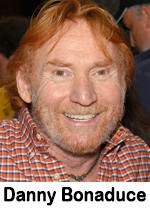
Morning drive radio personality Danny Bonaduce announces he’s retiring from his gig hosting the morning show on iHeartMedia’s classic rock KZOK-FM, Seattle, effective this Friday (12/15).  While Bonaduce worked mostly at music-formatted stations as a host, he worked at KLSX-FM, Los Angelesim during its time as an FM talk station. KZOK says in its announcement of Bonaduce’s retirement, “Danny’s career in the limelight began at an early age, starting with appearances on ‘Bewitched’ in 1969 that landed him the role of Danny Partridge on the ‘Partridge Show’ from 1970 to 1974. Later, Danny would appear in Corvette Summer with Mark Hamill and many cameo appearances on TV and movies over the years.” He says, “I am the luckiest guy in entertainment. I joined the actors union at age three and with little interruption, I have worked in the industry I love for 60 years. I loved almost every minute of it. I want to thank the loyal fans who have followed me throughout my career, including the last 12 based in Seattle. Thank you to iHeartRadio for believing in me, to my on-air partner Sarah for putting up with me. My thanks to Paul Anderson, my agent for decades who has been my steady guide and business partner.”

Industry News

Civic Media Adds New Evening Show to Wisconsin Talk Network

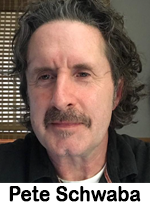
According to a report in the Milwaukee Journal Sentinel, comedian and filmmaker Pete Schwaba is now hosting a nightly talk program on the network of news programs and progressive talk shows that Civic Media is airing on its network of stations in Wisconsin that includes flagship station WAUK-AM,im Waukesha. The “Nite Lite With Pete Schwaba” airs from 8:00 pm to 10:00 pm. Schwaba has hosted programs for PBS Wisconsin in addition to his work in the film industry that includes writing for the 2003 film, A Guy Thing, and his own indie comedy film, The Godfather of Green Bay. He also served as a producer on the Jeff Foxworthy TV show, “Are You Smarter Than a Fifth Grader?” He says, “Entertainment, just like sports, helps bring people together, which is more important now than ever. I’m excited to introduce listeners to people I’ve met over the years in the entertainment business, share experiences, and generally celebrate arts and culture in Wisconsin.” Read the Journal Sentinel piece here.

Industry News

Air Staff Cuts at KNBR, San Francisco

According to numerous reports from Bay Area media outlets, Cumulus Media’s sports talk KNBR, San Francisco has let go a number of staffers, including former programmer Lee Hammer, morning show personality Paul McCaffrey, evening host FP Santangelo, and some in the digital department.im McCaffrey has been co-host of the “Murph and Mac” show with Brian Murphy, who appears to still be employed with the station. The dismissal of Santangelo spells the end of the evening call-in show that’s been part of the station for the past 51 years. Station program director Adam Copeland– who also co-hosts the afternoon show with Tom Tolbert – said on the program, “It’s been a really difficult day. I love this building, I love this station, I love working with you, Tom, and I’ve listened to you for years. I love a lot of people. I love the guys we let go of today. I’m looking forward to the future, but I really think we need to tip our cap and applaud the work that those guys have done.” Read the SFGate piece here.

Industry News

MIW Announces 2023 Mildred Carter Mentoring Class

Mentoring and Inspiring Women in Radio, Inc introduces the MIW Mildred Carter Mentoring Program’s Class of 2023. Now in its 22nd year, this enriching opportunity matches up-and-comingim women in radio with female professionals recognized as leaders in all aspects of the industry. The 2023 class is comprised of broadcast professionals Rosanna Cole, regional traffic manager, Townsquare Media; Caleigh Fisher, director of teammate experience, Good Karma Brands; Kristi Nguyen, director, digital sales & campaign management, Audacy; and Jade Springart, WRIF-FM program director, Beasley Media Group.

Features

Merchandize Your Content!

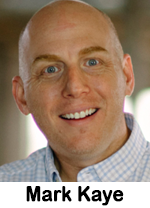
By Mark Kaye
Talk Show Host
Cox Media Group

imWe have a saying around “The Mark Kaye Show” studio:

“If the audience likes it on the air, they’re gonna LOVE it on a t-shirt!”

Just last month, after moving to vacate Speaker Kevin McCarthy, Representative Matt Gaetz turned around to a House Chamber full of angry, howling Congresspeople and bellowed back…

“Oh BOOOO all you want!”

As we played that clip over and over on my show, all I could think was, “This would make a fantastic Halloween t-shirt!”

Within 24 hours our online store was printing and shipping shirts and hoodies with an AI-generated Matt Gaetz cartoon character standing before a chorus of screaming ghosts with his newly coined catchphrase lingering above: “Oh Boo All You Want!”

It was the hottest-selling item so far this year.

When the feds raided Donald Trump’s mansion in South Florida, I had a friend create an “Remember the Alamo” themed logo that prompted listeners to “Remember Mar-A-Lago.”

We still get orders for those weekly.

And it isn’t just clothing…

My current book The Untold Story of Christmas was born of an annual holiday tradition that began on my show. Many of my listeners pleaded for a copy they could share with their families and loved ones. Not wanting to disappoint them, I published a beautifully illustrated book this year and offered it to my fans. It’s already in its second printing and is quickly climbing up the Amazon charts! (I expect it to be #1 by Black Friday!) And the best part is, they are thanking me for making it available to them.

People want to show their support for you in any way they can and they will give you money if you let them.

The richest guys at the Trump rally are Donald Trump and whoever is selling MAGA hats outside.

The merch line at the Taylor Swift concert is longer than the Great Wall of China.

And if you attend a major sporting event without your team’s logo emblazoned on some article of clothing, well, you just look weird.

But merchandise isn’t just an additional stream of revenue, it’s a bond that can connect you and your audience eternally. They love you. They love your show. They love it for the three hours a day you offer it to them. Unless you offer them something tangible that doesn’t drift off into the ether after you turn off the microphone, they can’t show their fandom the other 21 hours of the day.

Your listeners want to wear your merch and read your books while sipping your signature energy drink and watching your bobblehead nodding along with them as they listen to your show.

If you love and value your audience, and want to keep them listening as long as possible, then simply give them what they want. Create tangible representations of your content. Let them be fanatical about your show even when you’re off the air.

Mark Kaye is the morning drive host at Cox Media Group’s WOKV-FM, Jacksonville. His program is syndicated to other CMG news/talk stations in markets around the country. He can be emailed at: markkayeshow@gmail.com. 

Industry News

WJR, Detroit Announces New Drive Time Programming

Cumulus Media announces additions to the morning and afternoon drive dayparts at news/talk WJR, Detroit. First is the all-new “JR Morning with Guy, Lloyd, and Jamie” program airing from 6:00 am to 9:00 am and starring Guy Gordon, Lloyd Jackson, and Jamie Edmonds. The station says, “The dynamicim team of award-winning journalists brings a fresh perspective to mornings while delivering a perfect mix of news, sports, and entertainment.” Also, station traffic and weather anchor Renee Vitale becomes co-host of “First Thing with Mike Parsons” from 5:00 am to 6:00 am. The station is pairing Detroit Lions great Lomas Brown with WJR’s Sean Baligian for the 6:00 pm to 7:00 pm “Sportswrap with Lomas Brown and Sean Baligian” program. Cumulus Media regional VP and market manager Steve Finateri comments, “‘JR Morning with Guy, Lloyd and Jamie’ plus ‘SportsWrap with Lomas Brown and Sean Baligian’ as bookends to our current big-name local daily shows on WJR has given ‘The Great Voice of The Great Lakes’ more prime time firepower than at any time in the past 20 years!”

Industry News

KHTK, Sacramento Unveils New PM Drive Show

Bonneville sports talk outlet KHTK-AM, Sacramento “Sactown Sports 1140AM” launches a new afternoon drive show with Kevin “Whitey” Gleason moving from the midday show and being joined by market sports personality Kyle Draper for “The Drive Guys” airing from 2:00 pm to 6:00 pm. Kevin Gleason recently re-joined “Sactown Sports” and previously was part of the station’s “Rise Guys”im morning show from 1999-2011. Kyle Draper is the Sacramento Kings pre- and post-game host on NBC Sports California and was previously an anchor/host at NBC Sports Boston. Bonneville Sacramento SVP and market manager Steve Cottingim says, “We are excited to continue to elevate the Sactown Sports brand with the addition of ‘The Drive Guys.’ Kevin has been a fabric in the Sacramento community for four decades now and pairing him with Kyle Draper who is a familiar voice to our listeners through the Sacramento Kings broadcast just highlights our commitment to Sacramento sports.”
Industry News

Former Radio Executive Burt Sherwood Dies at 95

Burt Sherwood, whose long career in radio spanned over 70 years including on-air work as a WMCA, New York “Good Guy” in the station’s Top 40 days; general manager of WMAQ, Chicago during its highly rated run as a country station; general manager  at WMEE/WMEF, Fort Wayne; WIBG, Philadelphia; and WNHC-AM, New Haven, died peacefully in hospice care in Sarasota, Florida yesterday (9/21). Sherwood celebrated his 95th birthday this past May. He is survived by his wife Anne, daughter Ellen and son Jason.

Industry Views

Pending Business: A Little Change Can Do You Good

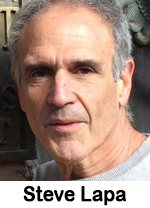
By Steve Lapa
Lapcom Communications Corp
President

imLast week, with little time left on the clock, Disney and Charter Communications made a deal so that Charter customers could continue to watch Disney programming. Phew! Just in time for 15 million Charter cable customers to have access to that 53-year-old American institution called “Monday Night Football.”
It’s amazing how the two sides came together just in time to preserve the TV viewing habits of millions of football fans and all those millions of ad dollars sold into the broadcasts. Although both Disney and Charter lobbed streaming options at viewers to help ease the temporary pain, in the end, cooler heads prevailed, and a deal was struck.

Not so fast, somebody buried a headline.

Just before Labor Day, the Charter guys were claiming the current cable TV bundling model ain’t what it used to be, in effect acknowledging the nearly 5 million people a year who cut the cable. The cable bundle value proposition is changing before our blurry gameday eyes, and more options are becoming accessible every day. Does any of this “I can get this somewhere else” ring familiar?

Try this at home. Ask any Gen Z people you know how often they listen to the radio. (Gen Z are roughly between nine and 26 years old.) Now ask the Millennials you know (roughly 27 to 42 years old). The results will frighten you as you realize the greatest freebie electronic entertainment ever invented is losing the future faster than cord cutters on steroids.

If you have been in the terrestrial radio business for longer than five years, you are aware of the melting ice cube future of radio. Even our friends in the newspaper business are changing with the times, looking for writers who will report specifically on Taylor Swift and Beyonce. They tour the world generating crazy numbers in ticket and music sales. Their appearances and social media impact everything from fashion to politics. How is that for changing a future value proposition?

Sports fan or not, are you in touch with the Coach Prime phenomenon happening at the University of Colorado? The story was featured on the soon-to-be 56-year-old “60 Minutes.”

Deon Sanders is changing college football in Boulder as fans gobble up seats at over $500 a piece.

The point of this column is simple. From cable to pop culture to Coach Prime, leadership is innovating, finding new ways to re-invent and re-package a premise as old as song and sport, a premise much older than the terrestrial radio business. Maybe we can all learn from what we sell.

Steve Lapa is the president of Lapcom Communications Corp. based in Palm Beach Gardens, FL. Lapcom is a media sales, marketing, and development consultancy. Contact Steve Lapa via email at: Steve@Lapcomventures.com.

Industry Views

Pending Business: No Time for the Fat Lady

By Steve Lapa
Lapcom Communications Corp
President

imIf you are a seller in the terrestrial radio business, please listen carefully. That faint voice you hear could be the Fat Lady warming up – old Brunhilde ready to wrap it up and put an end to that long, sad Wagnerian opera, known as traditional, transactional radio sales.

I’m not kidding here, folks.

When one of the big boys on the ownership side starts getting serious about real-time bidding for radio inventory, we are talking GoogleYouTubeAdSense-style modeling and that can move your radio station’s ad inventory faster than the super computers used to create this year’s NFL schedule.

Did you hear about what it takes to appease CBS, NBC, ABC, FOX, Paramount, ESPN, Amazon, and YouTube when they spend $112 billion in rights fees? Let us just say, you can’t please all the buyers all the time, but if you want to please some of the buyers some of the time you forget the sticky notes and call in the super-computer guys. I digress.

Not familiar with the bidding process developed by Google for ads primarily on YouTube videos? It is as easy and as much fun as eBay, Vegas, and your favorite silent charity auction all rolled into one.

Recent estimates put Google’s YouTube ad income at about $30 billion, arguably double the size of the entire commercial radio business. This of course does not include the estimated $165 billion from Google search ads, etc. They know the real-time bidding process better than any of us.

Imagine yourself a radio station owner, like I was, only this time having the daily revenue responsibility of 16 commercials per hour on 25 news/talk radio stations. Even if you focus on Monday-Friday and the traditional 6A-7P model, do your math, then think like a pro. NFL 2023-style supercomputer or old school peddle power? The caveat? Has anyone reading this column spoken to a human seller from the Google bidding platform? OOPS! There goes that Fat Lady again, getting a little louder this time.

Not so fast, Fat Lady, there is a silver lining for the skilled, high-achieving seller in this high stakes, real-time bidding future. Remember, Bugsy Siegel started some of this “bidding” on the Vegas strip in 1946. “Monday Night Football” launched in 1970 moving TV coverage into a multi-billion-dollar ad machine and Google started the online version of all this somewhere in 2005. My point is that fine-tuning for profit takes time and resources. The big boys just gave you a peek behind the curtain and showed you the future. The sellers who worked for me heard this opera in 2007, when one million iPhones were sold. That number now is over 2.3 billion. The future is here and moves fast. Refine your skills daily, learn, grow, and become so valuable to your organization, your name is always at the top of the “Don’t even think about it” list.

Someone please tell the Fat Lady to stop warming up and find a different stage… for now.

Steve Lapa is the president of Lapcom Communications Corp. based in Palm Beach Gardens, FL. Lapcom is a media sales, marketing, and development consultancy. Contact Steve Lapa via email at: Steve@Lapcomventures.com

Industry News

Talk Host Mark Simone Inks New Deal with WOR, New York

New York City talk radio personality Mark Simone signs a new, three-year deal with iHeartMedia’s news/talk 710 WOR to continue hosting the 10:00 am to 12:00 noon show. Simone says, “There’s no betterim place to be in the radio world than iHeartRadio. Thanks to the finest broadcasting executives around, Tom Cuddy, Thea Mitchem and Bernie Weiss for making it all happen. Walking to work every day is like walking through the Radio Hall of Fame. Just to get to my studio, I pass Elvis Duran, Jim Kerr, Charlamagne tha God, Angela Yee and other all-stars.” WOR program director Tom Cuddy adds, “When I joined WOR almost 11 years ago, Mark was my first hire. Since then, it’s been a blast watching Mark grow into becoming the highest-rated radio talk host in his time slot, along with digital numbers that are among the highest in the country.”

EDITOR’S APOLOGY:  The above story about Mark Simone’s new contract at WOR originally ran yesterday (9/5) in TALKERS.  Unfortunately, our art department utilized a combination of hand-rendered illustration, CGI and AI in creating a headline banner image that apparently missed its mark.  The premise was to depict Simone as the proverbial “800 pound gorilla” of New York radio in which his avatar – a Simone lookalike – inspired by the legend of King Kong, was depicted as a determined figure climbing the Empire State Building.  As it turned out, the King Kong reference was not clear to our readers because there was no actual ape depicted and Simone received a large number of emails telling him that TALKERS ran a photo of the wrong guy.  We meant it to be a caricature but our creative plan backfired.  Simone was upset by the image telling TALKERS, “I have had dozens of caricatures done of me in the past. They are usually somewhat cute.  Never had a problem with them. Yours looked hideous and really cheap. When radio people try to do it, they have no skill at it… no one thought it was a caricature and no one thought it was me. The 13 emails I got from radio execs asked me why you used a picture of someone else, so they never thought for a second it was supposed to be a caricature and no one noticed anything to do with the Empire State Building.”  TALKERS publisher Michael Harrison issued the following statement, “Simone is right.  Looking back at it now, with the increased objectivity of having a full day to think it over, I can understand why he was upset, although there was nothing specifically disparaging about the image. It just wasn’t clear that it was meant to be him and that he was supposed to be climbing a building in an iconic scenario.  After all, a media personality’s sound and image are their brand and they must be protective of its depiction.  We have subsequently pulled the banner from the website and replaced it with a more standard format with the same copy but a different graphic (see above).  The irony is Mark Simone and I have been friendly for more than three decades and I’ve often stated that he is one of the greatest and most successful radio personalities in New York and the nation, not to mention a top notch human being. I still think that.  All of us at TALKERS deeply regret this mistake which was the result of an overly-zealous attempt at being creative. In the world of publicity there’s the old saying ‘as long as they spell your name correctly.’ Well, I guess in this case we spelled Mark Simone’s face wrong.”

Industry News

Jacksonville Sheriff Addresses Racially Motivated Slaying on Mark Kaye Show

im

WOKV-FM, Jacksonville-based, syndicated morning drive talk host Mark Kaye (left) scored an interview with Jacksonville, Florida Sheriff T.K. Waters (right) on yesterday’s program (8/28) in which Waters spoke about his telephone conversation with President Joe Biden, told Kaye’s audience that the implication that “regardless of the rhetoric people are spewing, Jacksonville is a great place… and that guy doesn’t represent Jacksonville.”

Industry News

KTUC-AM, Tucson Relaunches as “Freedom 1400”

Cumulus Media announces it is flipping KTUC-AM, Tucson to talk as the all-new “Freedom 1400,” Tucson’s Conservative Talk Station. It had been airing an adult standards format. It is now airing syndicated talk radio shows including FOX News Radio’s “Brian Kilmeade Show” and the “FOX Across America with Jimmy Failla,”im Westwood One’s “Dan Bongino Show” and the “Chris Plante Show,” plus Ben Shaprio and FNC’s Guy Benson. KTUC program director Herb Crowe states, “We’re thrilled to unveil ‘Freedom 1400,’ Tucson’s Conservative Talk Station. As we embark on this exciting journey, we’re committed to providing a platform for open dialogues, diverse viewpoints, and robust discussions that matter to our community. With our esteemed lineup of talk show hosts, we’re confident that ‘Freedom 1400’ will become an essential source of information and insight for our listeners.”

Features

“Hey, Let’s Hang Out Under the Boardwalk!”

Surprisingly, that iconic summertime feel-good song almost never made it to vinyl…


By Mark Wainwright

imConsider the following song titles:

“There Goes My Baby”

“Save the Last Dance For Me”

“On Broadway”

“Up On the Roof”

“Dance With Me”

“This Magic Moment”

You don’t have to be a battle-scarred radio veteran like me, or an older music fan who remembers hearing those songs as a youngster to immediately recognize these as hits recorded by The Drifters. These songs, and all their other successful releases, were constantly played on the air back in the glory days of AM Top-40 radio, and they are still widely heard and enjoyed today, sometimes in surprising settings; “This Magic Moment” recently turned up in a TV commercial for Heinz ketchup. It is scarcely possible to imagine the history of American popular music without these songs.

Now try this little experiment:

Pull YouTube up on your browser, type the words “Under the Boardwalk” in the search box, and see what pops up. You could spend days (seriously) going through all the uploads from folks who posted that favorite Drifters tune, not to mention all the subsequent recordings made over the years. Some of the names will surprise you. Did the Rolling Stones, of all people, actually record “Under the Boardwalk”? Indeed they did, along with folks like Bruce Springsteen (yo, he’s a Jersey Shore guy, why not?). The song has became a standard, a staple of oldies bands and doo-wop vocal groups who continue to perform the song today. And yet, this most iconic of summertime feel-good songs was within hours of never being recorded. The backstory of that episode, along with the odd twists and turns of the group’s history, deserves some attention.

The Drifters (pictured below in an early photo courtesy of YouTube) were a 1950s brainchild of agent and producer George Treadwell, who got his hands on an early version of the group and envisioned them as sort of all-purpose background singers for hire who could be farmed out to provide background vocals for recording sessions, and for featured performers doing live gigs. Treadwell never thought of them as having a set lineup, he figured that vocalists would drift in and out of the group as needed (hence the name). The group became successful in their own right after their 1953 release “Money Honey” (Clyde McPhatter was the lead singer back then), and they never looked back. For more than a decade, hardly a week went by where you wouldn’t see a Drifters tune somewhere on the music charts.

im

Treadwell’s management of the group could be capricious, to say the least. He once purportedly fired the band and replaced them with another new group of singers who then performed a show scheduled for the following night (he might have done something like this more than once). Somehow, it all managed to work out. Dozens of vocalists were part of the group at various times, although when The Drifters were inducted into the Rock and Roll Hall of Fame in 1988, there were seven performers who were cited as critical to the group’s success. I believe Charlie Thomas was the last of these fine singers, and he died in January this year.

“Under the Boardwalk” was written in 1964 by Kenny Young and Arthur Resnick and they offered it to The Drifters, who immediately saw the potential. A recording session was set for May 21, 1964 (already pushing the calendar for summer release), but the night before the session, lead singer Rudy Lewis died of a suspected heroin overdose. George Treadwell and the folks at Atlantic Records really wanted to get the tune out there, so they finally decided to record the song as scheduled. Johnny Moore was called upon to sing the lead vocal; he was the group’s designated backup lead vocalist who would fill in when needed.

One can hardly imagine what these guys were thinking and feeling under the circumstances, but they got through it, Johnny Moore did a superb job, and the final result was amazing. The group actually cut alternate takes of the song. Some radio stations were hesitant to play a record containing the lyric “making love under the boardwalk” (remember, this was 1964), so other takes were done with the replacement line “falling in love under the boardwalk.” It was released in June and was constantly heard on the great AM Top-40 stations of the day, and played incessantly on jukeboxes nationwide. The song spent three weeks at #1 on the Cashbox magazine R&B chart, and got as high as #4 on the Billboard Hot 100 chart. The song would have almost certainly been a Billboard #1, except for a quartet of young Brits who called themselves “The Beatles.” You might recall they also had some pretty good tunes out there at the time.

And the date of that highest Billboard chart position? August 22, 1964. Fifty-nine years ago today.

So now comes the inevitable YouTube link. I think this one is the original track containing the “naughty” lyrics. Turn up the volume and enjoy! (And remember, you should use lotion that has a minimum rating of SPF 30!)

Under the Boardwalk – The Drifters


Mark Wainwright is a veteran radio performer who spent more than 30 years working as a disc jockey, talk show host, and morning personality at well-known radio stations throughout the United States. He was most recently the morning host at WSYR in Syracuse, New York. (He was even a pretty good AM Top-40 jock back in the day, just ask him!) He can be reached through his LinkedIn page or at markwainwright@earthlink.net

Industry Views

Pending Business: TV Knows Best

By Steve Lapa
Lapcom Communications Corp
President

imBulletin: “Linear TV” is no longer the winner.

Linear TV is tech talk for combining over the air and cable TV, and according to Nielsen, July 2023 was the first-time streaming TV was the winner, as streaming captured most TV viewing.

From Netflix to YouTube, we are watching more content on streaming channels than linear TV. You have read about the resurgence in “Suits,” the legal drama that originally aired 2011-2019 and is now drawing 18 billion minutes of viewing on Netflix. Whether those 18 billion minutes are part Meghan Markle curiosity or part writers’ strike, does not matter. Those 18 billion minutes of viewing helped drive streaming viewership to an all-time high. Maybe streaming grabbed a page from that old radio handbook that starts with “Content is King.”

But the companies controlling the streaming ad-free experience on Netflix, Disney, Hulu, etc. seized the opportunity and raised rates. Soon, it will cost you more every month to watch your favorite content ad-free.

Wait a minute! Did I just say the ad-free experience as in commercial free or no interruptions? Did the streaming guys just take another page from the well-worn radio programming handbook and turn the commercial-free model upside down to increase income? Streaming channels will deliver commercial free programming and charge you anywhere from $13.99- $21.99 a month as the fees double and triple depending on when you started your subscription.

How about our friends at Amazon Prime jumping on “Thursday Night Football,” or Apple and Peacock pushing baseball? Do not forget the YouTube NFL packages starting at $250. No, this is not a veiled plug for paid programming, nor is it a critique of the value propositions offered in the streaming world. Time for a long look in the mirror:

— The commercial-free experience began when radio programmers dropped the commercials, programmed longer, commercial-free segments to drive listenership and ratings up. In the short term it worked. My hand is in the air, guilty as charged. Maybe I was one of the lone radio management voices who asked, “Then what, run the spots and drive the audience away? Are we sending the wrong message?” We were dumb. After commercial free came rates, packages, and promotions. None of us said, “Raise the rates when the commercial-free stops!” The streaming guys got it right – just raise the rates.

— There is no older radio programming mantra than “Content is King.” You can name the iconic talents with one word, Howard, Rush, Imus, yet major radio organizations struggle as they search for great, soon-to-be iconic talent. It is faster, easier, and more lucrative to become a Tik-Tok, YouTube, or Instagram star.

These are all just examples of how radio was first in and stopped innovating. There is some good news on the horizon. Facebook is stepping back from the news business as news organizations ban together and ask for compensation. This could be the first chink in Facebook’s 113-billion-dollar ad armor. Maybe not. Either way, the old school top-of-the-hour newscast, or large market all-news radio should be re-imagined, opening the door to the next generation of innovators.

Steve Lapa is the president of Lapcom Communications Corp. based in Palm Beach Gardens, FL. Lapcom is a media sales, marketing, and development consultancy. Contact Steve Lapa via email at: Steve@Lapcomventures.com.

Industry Views

ENOUGH! The Selling Culture Has Failed Radio

By Walter Sabo
Consultant, Sabo Media
A.K.A. Walter Sterling
Radio Host, Sterling On Sunday
Talk Media Network

The creeping culture of sales-determines-all has brought the industry to this moment of despair. The selling culture has failed the medium. It is time to, once again, segregate the sales and programming departments. Take the budgets away from the program directors and inspire them to create exciting UNPREDICTABLE programming.

Earnings calls for most radio companies were held this week. Not pretty. Declarations of the demise of radio are constant, emotional, and desperate. Bleak conditions in the radio industry have occurred before. A review of past crises and how they were overcome is constructive, urgent, and essential.

For example, in 1952, network TV was launched and showed signs of success. NBCABC, and CBS moved their money from radio to TV. Longform radio shows were cancelled leaving stations across the country with a problem. At the time, most radio stations were small shops, usually family-owned, therefore the need to add hours of local programming was a financial challenge. The solution was presented by a programmer.

Todd Storz’ family owned stations in Omaha, Kansas City, Minneapolis, New Orleans, St Louis and Oklahoma City. He was young and obsessed with radio. His stations were losing money and the future, without network show blocks, was uncertain. Todd ate at a diner daily and noticed that even after it closed, the waitresses put their own money in the jukebox to hear the same songs they had heard all day. Hit after hit. Todd created a list of the top 40 songs, built a production sound and put it on his Omaha station. The station was #1 overnight. His top 40 format was aired on his owned stations with the same results.

Ruth Meyer was the program director of WMCA, New York where she established the GOOD GUYS dynasty. Before WMCA Ruth was the PD of Storz’s station in Kansas City. I asked her who did what at Storz and she said, “It was all Todd.” Todd was a programmer who never spent a day in sales. Storz’s programming idea changed and, yes, saved the industry.

When Todd died at 38 years of age his father – a businessman – took over the company. After Todd’s death, the stations died too. Why? Storz station manager Deane Johnson explained, “Todd’s death [and the control of the radio stations falling to Todd’s father] brought about a shift from a ‘programming company’ to a ‘money company.’”

Radio’s next challenge was FM. It is a popular myth that the shift from AM listening to FM was driven by the higher quality of the FM signal. FM’s signal had been available since 1948. No one listened.

You don’t go to iMAX to watch the huge, superior white screen. You go to watch a movie on the huge superior white screen. When the FCC mandated an end to AM/FM simulcasts, the general managers had no idea what to do and isn’t it time for golf?

Obsessed, very young radio fanboy programmers such as Michael Harrison and Allen Shaw joined with frustrated senior programmers like B. Mitchel ReedScott MuniMurray the K and Tom Donahue to EXPERIMENT with new programming techniques. They imagined and implemented progressive rock, free-form, album rock. THEN the crowds came to FM to hear exciting UNPREDICTABLE programming.

In 1966, Tom O’Neil, the founder/chairman of RKO General owned many money-losing, major market stations. The solution? Better sellers? Better sales training? A sales master course? No. The answer was Bill Drake. O’Neil hired Bill Drake and allowed him to create exciting UNPREDICABLE programming. Drake’s programming saved many RKO stations and was copied by hundreds of stations across the country. Drake’s programming saved them, too.

ALL of radio’s challenges today can be solved with programming invented by programmers free to program. Enough with “it’s not in the budget.” Enough with “it will bring in money.” Enough with “it’s good for sales.” Enough with talent having to generate half their salary in billing to be retained. Enough!

Unleash today’s program directors to follow their instincts, their facts and no more having to check with corporate. Why? Because checking with corporate hasn’t worked. Checking with corporate stops the flow of ideas, it freezes them in time. Radio is live, in the moment. When radio programming is frozen in time it MUST failGive up corporate engagement. Let programmers surprise you.

To quote a mentor, ABC Radio Network’s VP Dick McCauley (a sales guy), “A great salesperson is one who has a great product.” He said it a lot.

Walter Sabo was the youngest executive vice president in the history of NBC. He was the programming consultant to RKO General longer than Bill Drake. According to a Sirius corporate EVP, “Sirius exists because of what Walter Sabo did.”  He hosts a Talk Media Network radio show as Walter M. Sterling, “Sterling on Sunday.” Find out more here: www.waltersterlingshow.com  Contact him at walter@sabomedia.com or 646.678.1110