By Matthew B. Harrison
TALKERS, VP/Associate Publisher
Harrison Media Law, Senior Partner
Goodphone Communications, Executive Producer
 When we first covered this case, it felt like only 2024 could invent it – a disgraced congressman, George Santos, selling Cameos and a late-night host, Jimmy Kimmel, buying them under fake names to make a point about truth and ego. A year later, the Second Circuit turned that punchline into precedent. (Read story here: https://talkers.com/2024/12/19/jimmy-kimmels-fair-use-victory-what-it-means-for-content-creators/)
And just to clear the record: this has nothing to do with Jimmy Kimmel’s unrelated dust-up with FCC Commissioner Brendan Carr. Different story, different planet. This one’s about copyright and commentary – and it’s a clear win for both.
The Set-Up
After his expulsion from Congress, George Santos began offering paid video shout-outs on Cameo. Kimmel’s writers sent absurd requests under pseudonyms for a segment called “Will Santos Say It?” – and he did. The show aired those clips to highlight how easily a public figure would say anything for a fee.
(If you want a taste, look up “Jimmy Kimmel Pranks George Santos on Cameo” on YouTube. That’s the kind of transformative satire the court later called “sarcastic criticism and commentary.”)
Santos sued Kimmel, ABC, and Disney for copyright infringement, fraud, and breach of contract, claiming the videos were sold for “personal use.” The district court tossed it; Santos appealed.
The Ruling
On September 15, 2025, the Second Circuit unanimously affirmed the dismissal. The panel said Kimmel’s use was transformative: he turned Santos’s self-promotion into political satire. Even Santos’s complaint described the bit as sarcastic commentary.
Claims of “market harm” fell flat. Airing a few clips on network TV doesn’t compete with Cameo. Embarrassment isn’t economic loss.
And the supposed bad faith – using fake names to order the clips – didn’t undo fair use. The court stuck to the statutory factors: purpose, nature, amount, and effect. Mischief isn’t a fifth one.
The rest of the claims – fraud, contract, enrichment – stayed dismissed as pre-empted or too thin to matter.
Why It Matters
This decision lands as courts wrestle with whether AI’s use of copyrighted works can ever be “transformative.” Santos v. Kimmel shows what that word really means: a human taking existing material and using it to say something new.
Fair use protects meaning, not mimicry. That’s why satire, commentary, and criticism still stand when they have a point.
For media creators, the lesson is simple: transformation beats permission. If you use third-party material, make sure you’re adding perspective – not just recycling content. That, more than any fine print, is what keeps you on the right side of the line.
Matthew B. Harrison is a media and intellectual property attorney who advises radio hosts, content creators, and creative entrepreneurs. He has written extensively on fair use, AI law, and the future of digital rights. Reach him at Matthew@HarrisonMediaLaw.com or read more at TALKERS.com.
Share this with your network


 Award-winning journalist Indira Lakshmanan is the new co-host of “Here & Now,” debuting in Late November alongside Scott Tong and Robin Young. Additionally, Peter O’Dowd, the senior editor who has stepped in regularly as a host for several years on “Here & Now,” takes on a new role as correspondent and regular fill-in host. And international news industry pro Allan Price joins to lead the team as the new executive producer. NPR says that according to Nielsen ratings data, “Here & Now” is the third most-listened-to NPR news program after “Morning Edition” and “All Things Considered.”
 examining the lifelong love affair of a fictional couple from childhood to old age – an emotional roller coaster ride reflecting the romantic ups and downs of a complex relationship. The tear-jerker is a departure from the heavy-hitting social commentaries that have made Gunhill Road a favorite among talk radio hosts and audiences for the past half decade. The intriguing group, formed in the late 1960s, is still going strong with core members Steve Goldrich, Paul Reisch, Brian Koonin, and Michael Harrison. Matthew B. Harrison produces the ensemble’s videos that employ leading-edge techniques and technology. Ms. Farber, who shares lead vocals on the song with Brian Koonin, is a talented singer, songwriter, and instrumentalist with a number of singles, albums and television commercial soundtracks among her credits. She is presently an advocate for the well-being of nursing home residents and organizer of initiatives to bring live music into their lives.
 Catsimatidis and others urged him to exit the mayoral race to give former Governor Andrew Cuomo a better chance of beating Democrat Zohran Mamdani. During his on-air conversation with Rosenberg, Sliwa “accused colleagues of betraying him” and he told Rosenberg WABC is “giving preferable treatment” to Cuomo. Catsimatidis later told the Post, “Regardless of all the news going around, I’ve always said great things about Curtis Sliwa, about how well he knows the city. But in a places like New York City where 70% of New York City are Democrats, the real Democrat is Andrew Cuomo, not Zohran Mamdani and Democrats should vote for Cuomo. Catsimatidis added, “I’ve never asked that he leave the race but recommended that a lot of other people have said he should.” Sliwa said on the air that he’s had to hire private security due to threats against him and his wife. “If anything happens to me or anything happens to my wife, because of this frenzy that I hear constantly coming from some of your colleagues there at WABC, it’s on you guys and you gals. My life is on the line here.” Sliwa’s radio show is currently off the air due to his active political campaign.
  The groaning and moaning that “radio is losing younger demos and will die tomorrow” misses the point. What attracts younger audiences? What has always attracted younger audiences? NEW STUFF. New clothes, shows, slang, ideas… NEW. When you “found” radio, you found a top 40 station that was saturated in the latest music, events and ATTITUDE. Radio remains vital by presenting and celebrating new, shocking, contest prizes, revolutionary ideas, hosts, jocks… NEW.
 Sports’ 24/7 network will continue to deliver unmatched live coverage, expert commentary, and real-time sports programming to millions of listeners nationwide. This extends a partnership between Westwood One and Audacy that first began with the launch of CBS Sports Radio in 2012.” Westwood One will assume programming
  and distribution for the majority of the lineup of syndicated sports programming, including “The Jim Rome Show,” anchoring the 3:00 pm to 6:00 pm ET daypart. Audacy will continue to produce BetMGM Network programs and additional weekend programming as part of the Westwood One Sports roster. The full programming lineup will be announced in the coming weeks. Audacy chief business officer Chris Oliviero comments, “Audacy and Westwood One have a long, storied history of collaboration,
 and today’s evolution of our national sports partnership is that next chapter in our commitment to our hundreds of affiliates, their listeners, and our client partners. Be it local or national, broadcast or digital, opinion content or play by play, we continue to smartly look at ways to enhance our leadership position in sports content.” Westwood One & EVP corporate strategy & development, Cumulus Media Collin Jones adds, “Westwood One Sports has always been synonymous with the biggest moments in sports audio. Launching Westwood One Sports 24/7 programming strengthens that legacy and positions us to deliver unmatched coverage and commentary to fans coast-to-coast. We’re excited to work with Audacy to make this transition seamless and impactful.”
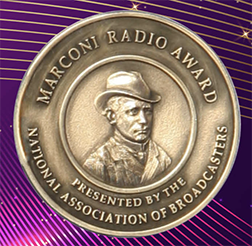 Ballroom on the eve of NAB Show New York. Some of the winners in spoken-word radio formats include: Premiere Networks’ Colin Cowherd for Network/Syndicated Personality of the Year; WJR, Detroit’s Mitch Albom for Large Market Personality of the Year; WHIO-AM/FM, Dayton’s Larry Hansgen for Medium Market Personality of the Year; WWNC, Asheville’s Mark Starling for Small Market Personality of the Year; WBAL-AM, Baltimore for News/Talk Station of the Year; and WXYT-FM, Detroit for Sports Station of the Year.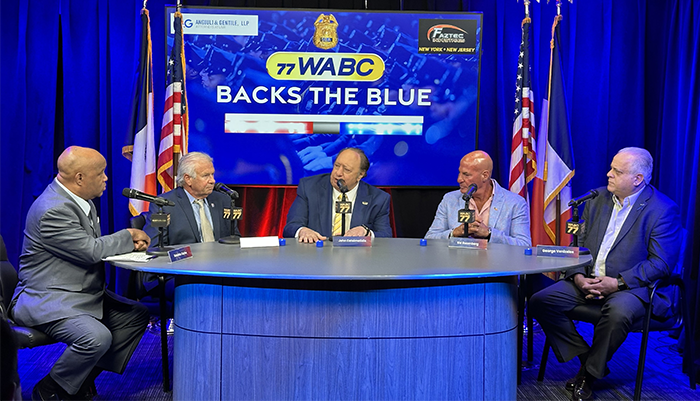
 throughout North America will continue to have access to every NBA game on SiriusXM as well as select WNBA game broadcasts and the exclusive 24/7 SiriusXM NBA Radio channel. Additionally, the SiriusXM app features 30 dedicated NBA team channels, providing official radio commentary for each team.
 Fan’ leading the charge and these powerhouse affiliates joining forces, fans from Green Bay to Duluth can now experience the best local sports conversation anywhere in Wisconsin.” Audacy’s WSSP-FM, Milwaukee “105.7 The Fan” is serving as the network flagship. The daily program lineup include: “Inside Wisconsin Sports” with Trevor Thomas and Josh Albrecht (6:00 am to 9:00 am); “Nine2Noon with Kuhn” with John Kuhn, Ramie Makhlouf, and Brandon Sneide (9:00 am to 12:00 noon); “The Mason Crosby Show” with Mason Crosby, Mitch “Thunder” Nelles and Tommy Wortz 12:00 noon to 2:00 pm); “Wisconsin Sports Daily” with Steve “Sparky” Fifer and Charlie Uczen (2:00 pm to 5:00 pm); and “Wisconsin Sports Wrap Up” hosted by Tommy Wortz (5:00 pm to 6:00 pm). Initial affiliate stations include Midwest Communications’ WNFL, Green Bay WRIG-AM/FM, Wausau; and WDSM-AM, Superior.
 “Saga previously announced its plans to optimize our portfolio of assets, and this is a significant step in doing so. We are committed to evaluating every asset we own while still efficiently and effectively operating our businesses.” The company intends to use a portion of the proceeds from the sale to fund stock buybacks, which may include open market repurchases, public and private block trades or other forms of buybacks. The implementation of any stock buyback program remains at the full discretion of the company’s board of directors.
  revocation of accreditation for Nielsen Audio Diary markets as reported in the RMR and TAPSCAN Web including Bryan College Station, Texas; Hudson Valley; Killeen-Temple, Texas; Odessa- Midland, Texas; Portsmouth-Dover-Rochester, New Hampshire; Reno; and Trenton. At the same time, the MRC has approved accreditations for all of Nielsen’s 28 PPM markets.
 charge inflated prices, according to a report by Reuters. At the heart of the complaint is the charge that Nielsen is providing access to the national broadcast radio ratings only if the client spends a lot of extra money on
  the separate local ratings. Cumulus argues that Nielsen’s policy forces them to buy ratings in U.S. markets where it doesn’t operate stations in order to have the complete national ratings data. Nielsen has stated that Cumulus’ suit is “entirely without merit” and “we will respond accordingly.” The complaint also says Nielsen is “degrading product quality, raising prices without justification and blocking competitors from gaining footholds in the industry.”
  The world of blogs and vlogs has been loaded with largely erroneous news of MTV closing. New owner, Paramount Global, is searching for divisions showing no growth. If MTV is now a liability, it may be a target for a shutdown.
 of the Gods has powered thousands of hours of programming fun. Recently, I saw the latest edition of his book.
 Like many of you, I love “Ancient Aliens” on the History Channel narrated by the formidable Robert Clotworthy. Robert is a great guest on my show, “Sterling Every Damn Night” and he puts up with whatever nonsense that gets tossed at him. Thank you, Robert.
 – A Tribute to Law Enforcement, at its studios in Manhattan that begins with a press conference at 10:00 am followed by a roundtable discussion and lunch. Owner John Catsimatidis will host NYPD commissioner Jessica Tisch, DEA president Scott Munro, and NYPD chief of transit Joseph Gulatta and others.
 provides insights for marketers on how to curate advertising strategies that authentically connect with audiences and build trust in an increasingly fragmented and technology driven world.” The study was fielded through Critical Mass Media for iHeartMedia and found that 82 percent of respondents worry about AI’s societal impact, and 9 in 10 believe it’s important to know the media they consume is created by a real person. iHeartMedia president of insights Lainie Fertick says, “The data shows us that consumers are emotionally driven, digitally fatigued and yearning for authenticity in an increasingly algorithmic world. This is especially critical with rapid technology advancements and the growing use of AI in the media industry. For marketers, it creates both hurdles and unique opportunities to connect with audiences in this new environment.” Key findings from the study include: 1) Children are struggling to be independent in a tech-forward era; 2) Consumers are all online, but they aren’t happy to be there; 3) Trust in online information is at an all-time low; 4)
 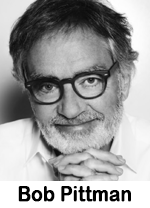 Algorithms rule our lives, and consumers know it; 5) Media is dividing us on current events, but all agree that there’s “something going on with those Epstein files”; and 6) Though 97 percent of consumers know what AI is, with 70 percent actually using AI, distrust remains high. iHeartMedia chairman and CEO Bob Pittman comments, “It’s important for us to remember, as marketers, that we’re in a very delicate position within a turbulent time, both in America and around the world. In a world of digital saturation and AI acceleration, this study reveals that consumers are not just looking for convenience – they’re searching for meaning. Sports, radio, live media and human-led storytelling offer a rare sanctuary of trust, empathy and shared experience. Above all, we must continue listening to Americans more closely than ever before and focus on ways to foster real connection and amplify our collective humanity.”
 legendary Art Lewis on news/talk powerhouse WSGW in Saginaw, Michigan. Art’s show was the first show I’d ever done in talk radio and I’d filled in a time or two before this date. But, on THAT date, the OJ Simpson verdict came in and was announced. I gave my opinion of disbelief. Outlined why I felt that way and the phones melted down for the subsequent three hours. I was in Heaven and realized this is what I was meant to do. I’d done weekend news updates on WSGW before that as I was also finding my way on TV at WEYI (the NBC affiliate) in Saginaw/Flint. But, there was something different about talk radio for me… A few days ago, WSGW brought me back. I am thrilled. Feels like home again. I feel a great kinship with all of my 170+ stations and that will never change. I owe every PD or owner that gives my show and me a shot a ton – but, getting back on WSGW is very special.” Pags adds, Thank you to Jeff Warshaw at Connoisseur Media, Dave Maurer who gave me that first shot back in the day at WSGW, Mark Thomas for bringing me back and great folks like Charlie Rood and Curt Harding who were there back in the day and, of course, Art Lewis who trusted my 29-year-old self with this show when he was off!”
 Every talk host knows the move: play the clip. It might be a moment from late-night TV, a political ad, or a viral post that sets the table for the segment. It’s how commentary comes alive – listeners hear it, react to it, and stay tuned for your take.
 The Museum of Broadcast Communications announces that Kim Komando will serve as emceefor the 2025 Radio Hall of Fame induction ceremony being held on October 30 in Chicago. Radio Hall of Fame co-chair Kraig Kitchin says, “We’re grateful to Kim Komando for helping us to create a most special evening for each of our 2025 inductees. She knows the hard work and dedication it takes to achieve the recognition of such an induction.”

 eldest son, FNC is in the doghouse. Newsmax published an account of the interview which quotes Trump Jr. saying, “Honestly, I don’t watch it anymore because it is so ridiculous. They try so hard to be unbiased that they’re actually biased against conservatives at this point. But this shouldn’t be surprising. These are networks that banned me for two-and-a-half. I’m barely on anymore. I know my father was banned.” However, TALKERS has learned that Donald Trump Jr. appeared on FOX News Channel four times recently – on August 13 and September 3, 11, and 12. He told Salcedo
  “FOX’s approach has left conservatives silenced while Democrats and establishment figures get free rein.” The president recently complained about FNC in a post on Truth Social in which he singled out White House correspondent Peter Doocy for talking to Arizona Senator Mark Kelly about his healthcare agenda. He wrote, “Why is Fox News and Peter Doocy putting on Democrat Senator Mark Kelly to talk about, totally unabated or challenged, Healthcare?” SiriusXM’s Megyn Kelly recently complained about FOX News Channel’s coverage of Charlie Kirk’s slaying, saying, “It’s really bothering me how FOX News is talking about Charlie, like he was theirs — he wasn’t. It’s a lie. Just stop.”
 innovation, and influence across the global audio and broadcasting industry to the Advisory Board. His extensive experience will further strengthen the Radio Awards’ mission to honor groundbreaking storytelling and celebrate excellence across all genres of audio content.” New York Festivals EVP Rose Anderson adds, “Every year, we work with our advisory board and industry thought leaders to make sure that our categories recognize the innovative audio content being created today world-wide and reflect our commitment to the power of the individual voice. With Steve’s addition to the Board, we gain the 360-degree perspective of someone who is on top of all the new developments in the world of sound in our ever-changing and interconnected world.”
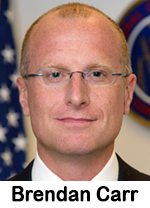 but sources tell Reuters that it would likely be sometime after November. Senate Commerce Committee Chair Ted Cruz criticized Carr for comments he made on the Benny Johnson podcast about late night talk host Jimmy Kimmel’s joke that appeared to threaten ABC/Disney and promise FCC action against the company if it didn’t take action on its own. On his Premiere Networks distributed podcast, “The Verdict with Ted Cruz,” Cruz said of Carr’s comments, “I got to say that’s right out of ‘Goodfellas.’ That’s right out of a Mafioso coming into a bar going, ‘Nice bar you have here. It would be a shame if something happened to it.’” Carr recently said that’s not what he meant and stated, “We don’t want to see weaponization of government by any administration against any perspective – and that’s certainly not what we’re doing here.”