


Monday Memo: Trust is the New Currency
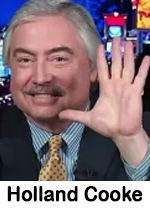
By Holland Cooke
Consultant
It is now the ultimate competitive advantage, and for broadcasters it’s a survival strategy. In The Five-Year Century: Bold Leadership and Accelerated Outcomes in the Age of AI, Mihir Shukla and Nancy Hauge explain how—as artificial intelligence accelerates change and demographics reshape the audience—trust becomes the only durable asset radio and television can bank on.
The book describes a 2026 world where the “twin engines” of growth—population and productivity—have stalled. Birth rates are plunging, workforces are shrinking, and productivity has flatlined across most industries. Meanwhile, AI is compressing decades of innovation into months. This collision creates what the authors call “The Five-Year Century,” in which the pace of change overwhelms institutions built for slower times—broadcasting, for instance.
Radio and television were built on industrial-era assumptions: mass audiences, standardized programming, rigid schedules, and hierarchical decision-making. Those assumptions worked when the audience was broad, predictable, and captive. On February 9, 1964, the Beatles tripled Ed Sullivan’s ratings. Back to the future…
AI is rewriting the rules of content creation, distribution, and consumption. Personalized news feeds, customized ad loads, and algorithmic programming are expectations. Younger audiences don’t wait for a newscast; they expect a feed. They don’t tune in; they scroll. They don’t accept one-size-fits-all; they demand one-size-fits-me.
In this environment, trust becomes the new currency because it’s the one thing AI cannot manufacture.
Broadcasting’s advantage has always been credibility. When a storm hits, people still turn to local radio. When a shelter-in-place alert hits their phone, they still switch on local TV. That instinct is powerful, but it’s not permanent. Trust must be earned continuously, especially as AI-generated misinformation floods the ecosystem.
The book’s chapter on the “Trust Economy” makes a critical point: trust accelerates outcomes. High-trust organizations move faster, innovate more boldly, and adapt more effectively. For broadcasters, trust accelerates audience loyalty, advertiser confidence, and community relevance. But trust now requires new behaviors.
It requires transparency about how AI is used in newsrooms. It requires clarity about what is human judgment and what is machine assistance. It requires authenticity as AI-generated talent becomes increasingly commonplace—and increasingly convincing.
Trust requires broadcasters to lean into what humans do best: context, empathy, moral reasoning, and community connection. The book reminds us that “work worthy of human potential” is work that machines cannot replicate. For broadcasters, that means storytelling, accountability journalism, and the human presence that makes local media local.
By all means, assign AI the routine tasks: editing, logging, transcription, versioning, and production. Then reinvest the human time you save in the relationship between a station and its community. In The Five-Year Century, trust isn’t just a virtue. It’s a conspicuous differentiator. It’s the currency that will determine which broadcasters thrive and which fade into the noise of an algorithmic world. As our industry suffers workforce cutbacks, we risk downsizing trust.
To read two sample chapters and watch a short video interview with the authors, click here.
Holland Cooke is a consultant working at the intersection of broadcasting and the Internet. Follow HC on Twitter @HollandCooke and connect on LinkedIn.
 By Matthew B. Harrison
 “It’s all media,” declared accomplished media executive Jack Griffin when confronted with brand new definitions of content and content distribution. Jack, for years, was president of Meredith Publishing, Time Inc., and The Tribune Company. I met Jack when he was publisher of PARADE magazine. Jack is pragmatic, won’t waste your time and spots BS faster than most humans. We were listening to discussions of the impact of online media versus traditional media, and his line was running out. Jack declared “It’s all media” and the meeting blessedly ended. The phrase haunts me and it is being proven true every second of every day.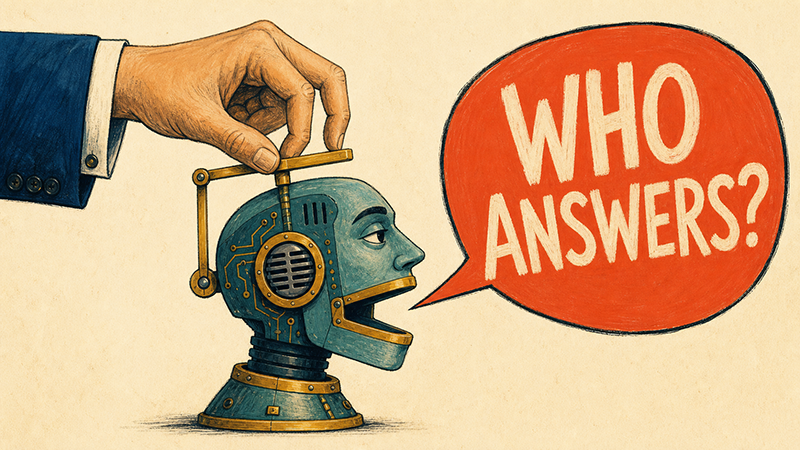
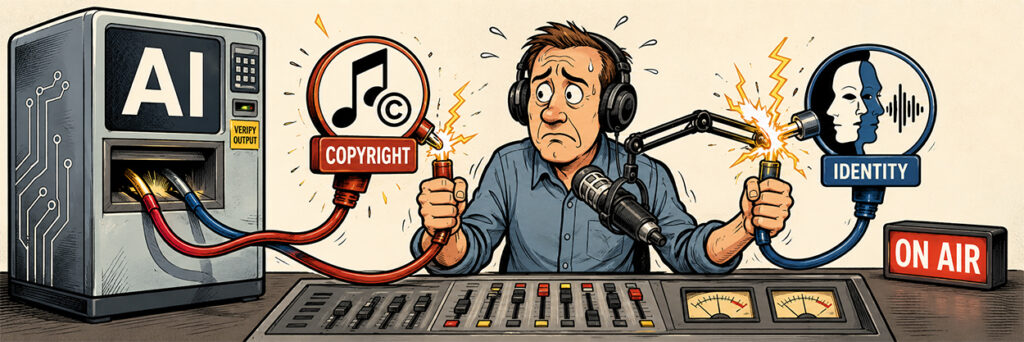
 New laws may hold AI companies responsible, but regulating machine-generated speech presents risks of its own.
 Zimmer will take over the operation of sports talk KOSP-FM “102.1 The Won” and three music brands. It currently owns news/talk KWTO/K227KO and sports talk KBFL-AM/K245CA. Zimmer Communications president John Zimmer says,
 “This is an exciting opportunity to bring together two organizations that share the same values and a deep commitment to local broadcasting. By combining our strengths, we’ll be able to offer advertisers even more effective marketing solutions while continuing to provide the trusted local content our audiences rely on.” Mid-West Family president Mike Paterson adds, “As the local radio and media landscape continues to evolve, bringing these two organizations together creates even greater opportunities for our advertising partners, our communities and especially our employees.”
  In Full Stack Human: The Mindset Upgrade You Need to Stay Human in a World Ruled by Technology (2026, Wiley Books) Dara Simkin and Tane Hunter describe a 2026 media landscape where people face information overload, shrinking attention spans, negativity fatigue, algorithmic manipulation, and constant distraction.
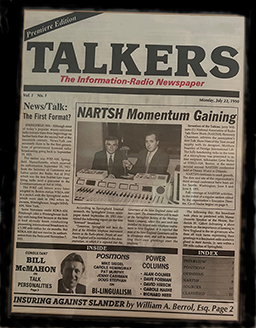 devoted to chronicling the development and growth of what he envisioned as “the coming talk radio phenomenon of the nineties.” The publication went on to publish as a newspaper on newsprint evolving into a glossy magazine and eventually an online publication fully devoted to serving the needs of talk radio and eventually a variety of spoken word platforms that have collectively become known as talk media. TALKERS also contributed to the growth of the field by producing 28 national conventions / conferences in New York and two in Los Angeles, more than 50 groundbreaking radio rows, dozens of talk show host tours of international hot spots, and thousands of hours of spoken word syndicated and online programming. Throughout its colorful history, TALKERS always maintained a neutral position regarding politics except for, as Harrison puts it, “unwavering support of the First Amendment.”
 Senator Darline Graham (R-SC), sister of late Senator Lindsey Graham. FNC says, “During the interview Senator Graham will reflect on her brother’s legacy, the shared values that shaped their family and upbringing and her decision to carry on his public service representing the people of South Carolina following his passing.”
 helped shape Salem Surround into the business it is today through his commitment to our people, our clients, and our local markets. We’re incredibly grateful for everything he’s contributed and wish him the very best in his retirement.” The company says that Christian Kligora, senior director of multimedia sales, will assume interim leadership of Salem Surround’s revenue organization. Additionally, Salem says that William Cosey and Jonathan Greer will continue leading Salem Surround’s operations, fulfillment, and client execution, ensuring continuity for customers, vendors, sales teams, and internal stakeholders.
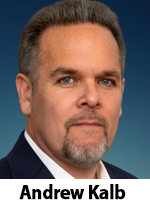 leadership around the priorities that matter most, and I’m confident they will help us move quickly, enhance innovation and stay at the leading edge of a changing media landscape as we build toward the future.”
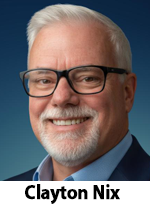 intended to strengthen coordination and execution across our operational functions. Clayton Nix is now chief financial officer. Jones says Nix has become an instrumental member of the executive team in guiding the company’s financial direction, and this title reflects both his growing responsibilities and his impact in shaping our strategic decisions, enhancing partner service and delivering industry insight through reporting and analytics.
 local newsrooms, silence community reporting, and drive-up costs for the American families who depend on local stations for news and emergency alerts. A free and diverse media landscape depends on real limits on how much of the public airwaves any one company can control, and this FCC is now poised to allow local broadcasters to sell those airwaves off to the highest bidder. Congress set the 39 percent national ownership cap in federal law, and only Congress has the authority to raise or eliminate it. The Commission cannot waive away that limit simply because these corporate behemoths want to get out from under it.”
 “Globalization and the deconstruction of community and country, an addictive media system that runs on algorithms we don’t understand and can’t escape, the unpredictability of climate change, Gilded Age-level inequality, and the worry that generative AI will control rather than be controlled by us.”
 radio and digital broadcasting network for Washington State Athletics. “Seattle Sports” program director Kyle Brown says, “We’re thrilled to partner with Washington State University Athletics at such an exciting time, as the new Pac-12 takes shape and the Kirby Moore era begins. This renewed and expanded partnership allows us to deliver even more coverage for Cougar fans through enhanced on-air programming, original video content, and the Seattle Sports app.”
 posture. ABC did not come to the Federal Communications Commission asking for anything. The Commission compelled ABC to file the Petition for Declaratory Ruling at issue here, directing the network to explain why the government. should not dictate which political candidates may appear on The View—even though the Commission itself resolved that very question in ABC’s favor more than two decades ago, ruling in 2002 that The View is a bona fide news program not subject to the equal opportunities requirement.
 If your station is outside the top 50 markets, you already know the pressure points. A mature workforce stretched thin. Fewer applicants for on air and production roles – specifically the younger creators who don’t see radio as their first creative outlet. And a competitive landscape where streaming, satellite, and podcasts divert attention with the gravitational pull of a black hole.
 anniversary by celebrating 250 remarkable Philadelphians whose lives and legacies have shaped the city, the nation, and our history. The event features a live panel discussion moderated by station personality Solomon Jones that includes: Michael Coard, host of Radio Courtroom, attorney, and founder of the Avenging the Ancestors Coalition; Karen Warrington, award-winning news director and arts advocate; Dr. Anthony Monteiro, scholar and founder of The Saturday Free School for Philosophy and Black Liberation; and Rev. Carolyn Cavaness, pastor of Mother Bethel A.M.E. Church.
 to KSDK-TV, St. Louis, Hoffman Media Group recently took majority ownership of Lee Enterprises, which owns the St. Louis Post-Dispatch. David Hoffman said in a statement to
 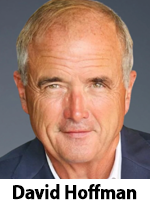 largest print and digital news organizations in the United States. With our planned acquisitions, combined with our existing portfolio of 154 newspapers and our expansion into radio, we expect to become the second-largest media company in the United States by year-end.” Audacy president and CEO Kelli Turner reportedly issued a memo to staff revealing the deal (in which the terms were not disclosed) and stated that Audacy will continue to own and operate the stations until the deal closes and that listeners, advertisers, partners and employees should expect “business as usual” during the approval process.
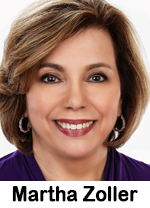 would be retiring from daily talk show hosting later this summer on Jacobs Media’s WDUN-AM/FM, Gainesville, where she presided over a hugely popular midday program since 2019. The decision was made due to heart-related health issues. She planned to remain with the powerful station as an occasional political consultant and commentator. Zoller, the 2023 recipient of the TALKERS “Woman of the Year” award, was an influential figure in Georgia politics having run for Congress in the U.S. 9th District as a Republican in 2012. Before that she served her first stint as a radio talk show host in North Georgia for a number of years. She was also a member of the State Board of Education representing District 9 in Northeast, Georgia in addition to engaging in a number of other community-oriented activities.
 the lines were cut again on Sunday, May 31 aafter a similar incident on April 19. Wendell tells the paper, “This time they must have used a cutting tool of some kind because it was a clean cut on the wire… I think it’s the same group that doesn’t like what’s going on at the radio station.” He adds, “It’s a federal offense because the station is licensed federally by the FCC,” and notes that “a conviction carried a fine of up to $250,000, up to 10 years in prison, and five years of probation.”
 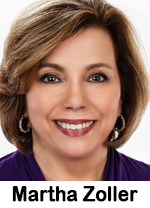 governors, senators, local leaders, neighbors, and listeners who care deeply about their communities. I’ve had a front-row seat to history, politics, and the people who shape North Georgia. I am grateful for every conversation, every caller, and every experience I’ve had on WDUN.” While Zoller is stepping away from the daily program, WDUN listeners will continue to hear her on the station through the Martha Zoller Minute, as well as in her ongoing role as a local political correspondent for WDUN. The station says it will keep the time slot local, with more details to be announced in the coming days about how local voices, local issues, and local conversations will continue to be featured. Jacobs Media Corporation chairman and CEO Jay Jacobs states, “Martha has been a valued colleague, trusted voice, and dear friend to so many of us at WDUN. For decades, she has brought integrity, intelligence, and passion to every conversation, helping listeners better understand the issues that shape our community, our state, and our nation. We are deeply grateful for her service and thrilled that her voice will remain part of the Jacobs Media family through her continued work as our senior political analyst.”
 Detroit and designed to change the media landscape.” The network will feature original sports programming, athlete-led podcasts, live events, entertainment content, music, comedy, and authentic conversations from some of the biggest personalities in sports and culture. Campanelli states, “We’re building a true Detroit-based sports and entertainment platform powered by championship experience, authentic voices, and real relationship. With Tim, Lindsey, Brandon [Dent]and the rest of our incredible team we’re creating something special that fans can genuinely connect with.”
 result is a substantial burden on local newspapers and broadcast stations. New York State Broadcaster Association president David Donovan comments, “By protecting broadcast news operations from unauthorized access by Big Tech, the legislation ensures the economic foundations of producing original, local news by broadcast stations throughout the Empire state. It prohibits using “stealth crawlers” to extract a broadcaster’s news content without permission or payment. In addition, the legislation requires AI systems to disclose when crawlers are employed to extract content from broadcasters.”