By Walter Sabo
A.K.A. Walter M Sterling
WPHT, Philadelphia
Sterling Every Damn Night
Sterling on Sunday Syndicated, TMN
Another Side of Midnight, WABC, New York
 In 1952, the success formula for today’s radio was discovered and put into practice by two hungry entrepreneurs: Todd Storz and Gordon McLendon. Both men owned dying radio stations in medium and major markets. The industry was suffering from a lack of purpose or solutions due to the advent of television which drove the migration of hit network radio shows to television. Lucille Ball, Bob Hope, and Gertrude Berg were on radio first.
Storz and McLendon developed “Top 40” with their own brains and money. Top 40 was research and focus group based, as well as. Storz tried it first in Omaha, then Kansas City and Miami. McLendon in Dallas, Houston, Minneapolis, and New Orleans. The formula was simple but not obvious. Their common-sense solution worked in all formats: music and talk.
Ruth Meyer was Storz’s PD in Kansas City and I worked with her at ABC. She was very clear when outlining the Storz history, “It was all Todd.”
Success ingredients
The formula: Target one demographic. Play their hits – often. Call out the names of as many people in the audience as possible – make the listener a star. Present with enthusiasm. Promote at every local crowd event possible. Repeat.
All of the McLendon and Storz stations grew instantly, usually to number one.
That ingredient list works repeatedly for station after station for decades. But, and here’s the but, all of those ingredients have to be in the recipe. Leave out promotion, for example, or research, and it doesn’t work. But the full ingredient list does work for every single format.
I asked Mickey Luckoff, who ran talker KGO as the number one station in San Francisco for most of our lives, how he selected his on air talk hosts to which he replied, “They all come from top 40 because I can teach them talk but I can’t teach them radio.” His promotions were non-stop and smart, TV campaigns were non-stop and research, yes, research – non-stop!
When Adult Contemporary was evolving, my team was responsible for the NBC FM properties. Corporate finance people who went to Wharton urged me to go slow, layer in expenses when launching this odd new format. I knew layering was a recipe – for failure!!! All the ingredients had to be rolled out at once. In 1981, WYNY in New York had a $2 million dollar cash and a $2 million barter promotion budget. Result, a $3 million profit and a 5 share. Thanks to PD Pete Salant and GM Al Brady Law. We used the Storz/McLendon recipe with AC music and Dr. Ruth, it obviously works.
WGMS-FM was a classical station in Washington, DC. When it was owned by RKO and run by visionary Jerry Lyman, it applied the Storz/McLendon recipe to classical music. Their promos announced that WGMS played “Real Oldies – Your favorites from the 1600s, 1700s and 1800s!” WGMS aired a tight playlist of hits. Special weekends were popular, such as a “Beethoven Weekend” with t-shirt giveaways. The station was a profit monster, top 10 in Washington DC.
Five years ago, WABC-AM was about 28th in NYC as a result of cutting costs, by god the cost cutting was epic and so was the failure. Today, John Catsimatidis, the owner, and Chad Lopez, the president, have grown the station to a 4 share and number eight in New York. An AM talk station, number eight and growing. What? How? They put in all the ingredients. The station is data driven. The talent is live. External paid ads run for WABC almost every single day. The air team goes to local events to meet the crowds. WABC airs live listener music requests and dedications on the weekend with Cousin Bruce Morrow and Joe Piscopo – live. Did I mention live?
Today not history
The team is happy. They are making radio. This isn’t nostalgia. Mr. Cats is a very current based businessman who expects results. Like Storz and McLendon he is an entrepreneur, a private owner deploying common sense. He’s doing what is proven, what works. Bravo.
Conclusion: There is nothing wrong with radio. Just stop. Include every ingredient in the proven recipe; expect stunning results.
Walter Sabo has been a C-Suite action partner for companies such as SiriusXM, Hearst, Press Broadcasting, Gannett, RKO General, and many others. His nightly show “Walter Sterling Every Damn Night” is heard on WPHT, Philadelphia. His syndicated show, “Sterling On Sunday,” from Talk Media Network, airs 10:00 pm-1:00 am ET, and is now in its 10th year of success. He recently began hosting “Another Side of Midnight” weekends on WABC, New York. He can be reached by email at sabowalter@gmail.com or phoned at 646-678-1110.
Share this with your network




 Twitter. In the 2024 Infinite Dial, 19% of the total population in the U.S. are using X – a 30% drop. Edison says, “While The Infinite Dial has recorded many incremental changes over its long history, a 30% change in any metric year-over-year is incredibly rare and noteworthy, acknowledging that in 2022 and 2023 the survey referred to the service as ‘Twitter’ and in 2024 it referred to the service as ‘X (formerly known as Twitter).’ Keep in mind this is not a measure of subscribers or Twitter/X accounts, but a measure of people who say they are ‘currently ever’ using the service. In addition to this overall usage drop, Twitter/X saw declines in monthly and weekly usage.”
  those living in suburban or urban areas. Rural listeners spend 43% of their daily audio listening time with AM/FM radio and radio streams, compared with urban listeners who spend 34% of their time with AM/FM radio and radio streams. Meanwhile, Urban listeners spend over twice as much of their daily audio time with podcasts as rural listeners. Urban listeners spend 13% of their daily audio time with podcasts compared with rural listeners who spend 6% of their daily time with podcasts.” Interestingly, if you combine the AM/FM listening and podcast listening numbers for Urban, Suburban and Rural listeners, these numbers are essentially the same – between 47% and 49%. Edison notes, “It appears that the ‘time budget’ for radio and podcasting combined is consistent across locations; it is just the apportionment of that time that varies.”
 and politics (78%) shows. In addition, 89% of news-focused podcasts (across topics) brought on at least one guest in 2022; 2) Most podcasts aren’t bringing the same guests on over and over. More than 99% of all guests only appeared once on any top podcast in 2022. In addition, about half (49%) of top podcasts brought on at least one guest more than once, and 23% hosted more than five different people more than once. The most common guests represent a range of professional backgrounds, including entertainment figures, scientists, journalists and political commentators. Pew senior computational social scientist Galen Stocking comments, “Our research has shed light on the variety of topics and approaches within the podcasting landscape. Here, we found that most top-ranked podcasts are bringing on guests, and often from a wide range of professional backgrounds. This can add to the perspectives heard on each podcast.”
 Hello from Las Vegas, where your undaunted correspondent dutifully suffered the long, long line snaking through the ballroom corridors at Mandalay Bay for what is, each year, a data feast: the Consumer Technology Association’s “Tech Trends to Watch” presentation.
 word, which is a 55% increase over nine years ago (20%); 2) Spoken word listening at home has grown dramatically: 60% of the total daily audio time spent with spoken word audio is at home, 24% in the car, 13% at work, and 3% at some other location. The time spent listening to spoken word audio at home has grown to 41 daily minutes in 2023 from 27 daily minutes in 2014. Increases in at-home spoken word audio listening are seen across every hour in the listening day; 3) Spoken word listening in-car has shifted post-pandemic, but AM/FM radio remains on top: Of all the daily time spent listening to spoken word audio, time spent listening in the car has declined from 36% in 2014 to 24% in 2023. In the car, 62% of spoken word audio consumed by those in the U.S. age 13+ is to AM/FM radio content, including over the air and streams; 4) For the first time ever, the mobile device is the primary way people listen to spoken word: 39% of spoken word audio consumed daily by those age 13+ in the U.S. is on a mobile device, followed by 35% on an AM/FM radio receiver. At home, 41% of spoken word audio is consumed on a mobile device, and at work, 47% of spoken word is consumed on a mobile device. AM/FM radio receivers still dominate in-car, garnering 60% of the spoken word audio listening there; and 5) Podcasts represent a large and growing share of spoken word listening: Podcasts now represent over one-third (36%) of time spent with spoken word audio. Twenty-eight percent of time spent listening to podcasts goes to NPR/public radio. At home, 40% of spoken-word audio listening goes to podcasts.
 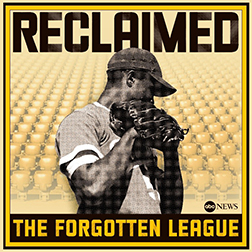 “Turkey” Stearnes, who, along with other Black baseball players in the early 20th century, was shut out of Major League Baseball due to his race. The series explores how America’s pastime was shaped by its history of segregation and the impact Black players have had on the sport. Rose uncovers powerful stories and rarely told history by exploring her own family history and through interviews with living Negro Leagues player Ron Teasley, Negro Leagues Baseball Museum president Bob Kendrick, baseball researcher and Seamheads Negro League Database co-founder Kevin Johnson, and more.
 proposed tags when you make a search; 2) Contains Exactly Search – Search for multiple keywords in the same order (substring) by searching in quotes or clicking ‘Contains exactly: “your search”; 3) Autocomplete – See suggestions of possible terms to complete your search; 4) Autocorrect – View intended results even if you make a typo in your search; 5) Suggestions And Result Preview – See suggestions and categories based on your search results, allowing you to view which elements exist for each song; and 6) Download Files in 24bit 48kHz – You can now request access to download higher resolution audio. Benztown CEO Andreas Sannemann says, “The Benztown libraries have always been on the cutting edge of AI development in sync with music and practical application for imaging directors and audio content creators. We keep pushing the standards to create the best possible product for our clients.”
 children ages 6-12. In addition to parent feedback, the study includes a parent-administered survey of children podcast listeners and is the first-ever comprehensive measurement of the listening habits and preferences of U.S. podcast listeners age 6-12. The webinar will also feature video excerpts from in-home interviews with parents together with their children to highlight what families like about podcasts.”
 monthly podcast listeners started listening as a child, 57% started listening as a teenager and 25% started listening as an adult. This means 73% of Gen Z monthly podcast listeners began listening before the age of 18; 3) Those who began listening earlier in life, listen longer: Gen Z monthly podcast listeners who started listening as a child consume 10.6 hours of podcasts per week; those who started as a teenager consume 7.5 hours per week, and those who started as an adult consume 6.6 hours of podcasts per week. The average for all Gen Z monthly podcast listeners is 7.7 hours per week; and 4) Gen Z act as a result of podcast ads: 82% of Gen Z monthly podcast listeners have taken any action as a result of hearing a podcast advertisement; 70% have either purchased or wanted to purchase the product or service they heard advertised, 61% have visited a company or product website, 44% have used a promo code or discount code mentioned in the podcast, and 42% have recommended a product to a friend or family member.
  an estimated 24 million Gen Z US monthly podcast listeners. Gen Z listeners are also more diverse than the general population of podcast listeners; 2) 66% of Gen Z podcast listeners say they listen to or watch podcasts to stay up to date with the latest topics, and 61% listen/watch to keep up to date with social issues; 3) While many listen to podcasts while multitasking, 82% say that they listen to podcasts while doing nothing else, and this is especially true for Teens (86%). Podcasts are an important way for this generation to unwind and take a break from other media; 4) Over 80% of Gen Z listeners listen to/watch podcasts to relax, about 2 in 3 listen to escape, and over 50% listen to help them understand how they’re feeling about something. Additionally, almost 1 in 3 think that being on social media has had a negative impact on their emotional well-being; and 5) Over 4 in 10 Gen Z listeners (43%) have purchased a product after hearing a podcast ad for it (*among ages 16+), and 1 in 3 have asked someone to buy a product for them.
  was stepping back from his duties, that allowed the station to use internal research to consider the best options to tweak its programming. That resulted in the station naming longtime station reporter and anchor Chris Chandler the new morning host, swapping late morning and afternoon hosts Mark Arum and Eric Von Haessler, and making Shelley Wynter solo host in evenings and giving his former co-host MalaniKai Massey her own Saturday night program. Charles says, “I feel very comfortable that we’ve got the right people in the right slots. We are set to grow our success.”
  American Life. Other radio related podcasts that placed in the top 50 include “The Ben Shapiro Show” (#8), “The Ramsey Show” (#17), and “The Dan Bongino Show” (#25). The latest ranker from Edison Podcast Metrics shows the Top 50 Podcasts based on weekly audience reach and reflects two significant updates to the service that were implemented last year. The sample has been expanded to include weekly podcast listeners age 13-17. This measurement allows podcast producers and networks to understand the teen segment of the Gen Z podcast listeners. The ranker also includes increased sample size, which allows for more recency in reporting and robust cuts of data. The latest ranker includes measurement from the previous two quarters with a total sample size of 10,797 weekly podcast listeners age 13+.
  “They have the time and tools to listen, they like spoken word contest,” and Edison Research president Larry Rosin reminds us, they’re big-money consumers.
 my original idea for over two years now on my national radio and TV shows. Then Congresswoman Marjorie Taylor Greene picked it up and ran with my idea.” Root says the idea is to build a “parallel conservative patriot economy” consisting of conservative-owned businesses and his book lays out the plan. Root adds, “My co-author Nicky Billou (an Iranian immigrant) and our team of researchers spent over a year researching and identifying the 123 most patriotic companies in America to buy from and to invest your savings and retirement accounts in (some are publicly traded).”
  Oh, excuse me, hold on. Here it is! The hourly report from quasi research companies or real research companies like Nielsen declaring that radio is just fine, thank you! Massive surveys (choose one) reveal that radio works! Radio appeals to younger demos! Radio moves product! Radio has more listeners in AM drive than the “Tonight Show” has viewers! A landslide of data proves that after 100 years of success, radio is a viable medium.
 Among Black monthly podcast listeners, 55% are women, but among Black weekly podcast listeners 52% are men; 2) Many Black monthly podcast listeners have begun listening to podcasts recently: 48% have been listening to podcasts less than a year; 27% have been listening less than six months; 3) 34% of Black monthly podcast listeners have stopped listening to a podcast they used to listen to regularly, but creators can address some of the reasons why: 24% of those who stopped listening said it was because the show stopped producing new episodes, 20% said they forgot about the show between seasons, 12% said the host offended them; and 4) Black weekly podcast listeners are more likely to engage with podcast advertisers than the overall U.S. weekly podcast listener: After hearing an ad on a podcast they regularly listen to, 61% of Black weekly podcast listeners (compared with 49% of U.S. weekly podcast listeners) recommended a product to a friend or family member; 68% of Black weekly podcast listeners (compared with 63% of U.S. weekly podcast listeners) gathered more information about a company or product; 52% of Black weekly podcast listeners (compared with 44% of U.S. weekly podcast listeners) purchased a product or service.
  study illuminate how Black Americans consume podcasts, discover podcasts, why they listen, and more. The study is a follow-up to the original
  podcasting, downloaded audio, smart speakers and other sources of audio content… Edison Podcast Metrics measures persons-based listening estimates using frequently updated surveys to provide a complete view of the rapidly growing podcast audience.” Jon Kaiser is head of Nielsen’s agency and advertiser-direct businesses and he says, “The media landscape is evolving quickly and agencies have a vital need to understand how all the media puzzle pieces fit together. Edison’s insights are best-in-class and Nielsen is excited to work together with them to provide media planners and buyers with deep insights into the total audio landscape and the rapidly growing podcasting audience.”

 agencies can use AM/FM radio in their upcoming media plans. Some key points include:1) AM/FM radio has a 64% share of ad-supported audio among registered voters; 2) AM/FM radio has substantial shares (62% to 65%) among Independents, Republicans, and Democrats: 3) Marketers and media agencies significantly underestimate AM/FM radio listening shares and dramatically overestimate Spotify and Pandora audiences; and 4) Digital audio only reaches a third of Americans. With AM/FM radio, reach soars to 73%.
  radio (including AM/FM streams), the historic spoken-word listening leader. Edison adds, “Spoken-word listening time among Americans 13-34 is dominated by podcasts, with 53% of time being spent with that specific platform, versus 23% of time going to AM/FM radio. Radio does rebound among 35–54-year-olds but still falls short with 47% of their spoken-word listening time going to podcasts and 35% going to AM/FM radio. Our story completely changes among Americans ages 55+, who spend the majority of their spoken-word listening time with AM/FM radio, at 55%, and less than one-quarter of their time with podcasts at 22%. The dominance of podcast listening among younger age cohorts can certainly be attributed to their preference for on-demand content that also includes visual elements, qualities specific to podcasts and not radio. AM/FM radio carries a wide variety of spoken-word offerings, ranging from sports play-by-play and sports talk, NPR programming, news and entertainment talk shows, to political talk.”
 is nearly universal among Hispanic (94%) and Black (93%) consumers; 2) AM/FM radio commands more than 80% of all ad-supported audio time in vehicles. Nearly three-quarters of out-of-home radio use during peak drive times occurs in the car, placing brands closest to the point of purchase; 3) however, a significant “perception gap” exists; while marketers often rank radio low for effectiveness, Nielsen data reveals it delivers the highest ROI of any platform trailing only social media; and 4) radio and podcasts combined account for more than 80% of all daily ad-supported audio time, while streaming music accounts for only 15%.
  pharmaceutical brand’s original buy targeting adults 18-54, 100% of the budget was allocated to traditional television, with 87% to broadcast and 13% to cable. This achieved a reach of 39%. By shifting only 5% of the total spend away from the usual go-to television outlets, and into podcasts, reach increased significantly. Reach among those ages 18-54 went from 39% in the old campaign to 55% in the new campaign, a lift of 41%. Note that this is shifting dollars, not adding dollars. The brand reached 26 million additional people without increasing the advertising budget.
 AI is now embedded in the modern newsroom. Not as a headline, not as a novelty, but as infrastructure. It drafts outlines, summarizes complex reporting, surfaces background details, and accelerates prep for live conversations. For media creators operating under relentless deadlines, that efficiency is not theoretical. It is practical and daily.
 purchasing power – backed by a population of nearly 70 million that is a leading ethnicity in growth – has now reached $4.1 trillion and continues to grow more than twice as fast as that of non‑Latinos. iHeartMedia says, “The impact of this can only be measured in global scale: If isolated, the GDP of current U.S. Latinos would rank fifth in the world, having surged from $2.2 trillion in 2015 to $4 trillion.” iHeartLatino president and chief creative officer Enrique Santos says, “Bicultural Latinos are not just an audience — they are a cultural vanguard, driving tastes, trends and conversations across every platform while powering one of the fastest‑growing segments of the U.S. economy and redefining what it means to be American. For brands, the takeaway is clear: culture is the strategy — language is the tactic. Those who lead with cultural intelligence, not just translation, earn more than attention, they earn long-term loyalty and trust.” The study also finds that audio is important to this demographic. The study finds: “Broadcast reaches 9 in 10 Latinos monthly, according to Nielsen, and this new research shows that Bicultural Latino radio listening is diverse – 92 percent listen in English, 78 percent listen in Spanish – and 65 percent of Bicultural Latinos prefer listening to radio/music/podcasts equally in Spanish and English. Additionally, the research shows that 98 percent are listening to music weekly, 63 percent tune into podcasts weekly and 69 percent engage with live sports through audio.”