By Walter Sabo
A.K.A. Walter M Sterling
WPHT, Philadelphia
Sterling Every Damn Night
Sterling on Sunday Syndicated, TMN
 Talk radio has a long incredibly successful run of shows about sex.
SEX SELLS. What happened to shows on radio that talk about sex? In the olden days, numerous shows focused on sex and relationships. Traditionally, time liberates cultural tolerance of conversations about sexual intimacy. Television, films and print have progressed to broaden the variety of subjects welcomed by the audiences.
Our history was lusty:
Dr. Ruth Westheimer launched on WYNY-FM, New York in 1980 on Sunday nights for 15 minutes. She read letters on the air. Quickly the show progressed to one, then two hours taking live phone calls. GM Dan Griffin never blinked. The station was owned by NBC/RCA, which housed the original standards and practices department, a department, not a deeply disliked single corporate attorney. Every week NBC Standards visited my office (I was the EVP in charge of the division not some hack from finance) and Dan Griffin’s office. We invited Standards to share their concerns with Dr. Ruth directly. She was 4’11”, had two bullet wounds in her legs from fighting for the Israeli Army, and two PhDs. That suggestion sent the censors back to their martinis.
After one year, Dr. Ruth, a radio star, was on the cover of PEOPLE and represented by William Morris Talent.
To this day, no one has achieved a higher share of 18–34-year-olds than Dr. Ruth on WYNY. Dr. Ruth was brought to WYNY by Betty Elam and Mitch Lebe. We told Dr. Ruth to say “blow jobs” and “vagina” as often as possible.
Sally Jesse Raphael hosted a show on NBC Talknet for 14 years. Sally’s was a national show about personal relationships and sex. Previously, she had won audience shares on local stations, WMCA, New York and WIOD, Miami. Then she launched 19 years of success on TV talking about relationships and sex!
Dr. Judy Kurianski, Dr. Toni Grant, and Dr. Laura Schlesinger were major, highly paid stars from discussing sex and relationships in highly entertaining shows.
Many top talk stations added relationship shows to their schedule hosted by skilled broadcasters such as on WRKO, Boston’s “Two Chicks Dishing,” Mary Walter on New Jersey 101.5, and Erin Sommers on WTKS, Orlando… “A lot of my friends who don’t like anal sex really enjoy rimming.” Number 1 men 18-34 first book. And, of course, the legendary morning stars such as Bubba the Love Sponge, Steve Dahl, Stevens and Pruitt, and the king, Howard Stern.
Oh, and please no nonsense about advertiser sensitivity to sex talk. Brands are spending billions on “influencers” whose videos run next to images of extreme sex acts and TV shows celebrating drugs, nudity and other good stuff.
Sex talk equals women ratings, younger ratings, engaged listens. This one’s easy.
Walter Sabo has been a C-Suite action partner for companies such as SiriusXM, Hearst, Press Broadcasting, Gannett, RKO General, and many other leading media outlets. His company, HITVIEWS, in 2007, was the first to identify and monetize video influencers. His nightly show “Walter Sterling Every Damn Night” is heard on WPHT, Philadelphia. His syndicated show, “Sterling On Sunday,” from Talk Media Network, airs 10:00 pm-1:00 am ET, and is now in its 10th year of success. He can be reached by email at sabowalter@gmail.com. He can be phoned at 646-678-1110.
Share this with your network



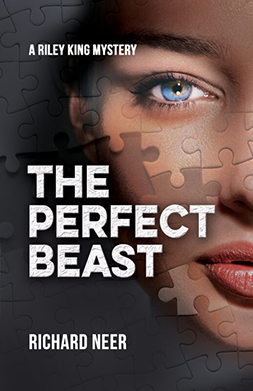 media enthusiasts, including the invasion of AI into the talent job market. Neer first established himself as a heavyweight author in 2001 when he penned the landmark FM: The Rise and Fall of Rock Radio. In The Perfect Beast, Neer poses the question to his fellow broadcasters, “Ever wonder if your job will someday be taken by an AI facsimile of your act?”
  The story also deals with how a commentator’s words can be twisted and misused, resulting in something evil. TALKERS publisher Michael Harrison (who makes an appearance as himself in The Perfect Beast) describes Neer as a media “Renaissance man.” Neer can be contacted for interviews via email at novelistcafe@windstream.net.
 Every media creator knows this moment. You are building a segment, you find the clip that makes the point land, and then the hesitation kicks in. Can I use this? Or am I about to invite a problem that distracts from the work itself?
 available free of charge to the first 200 TALKERS readers who respond to the offer. This valuable resource is packed with contact information to reach Members of Congress and their key staffers.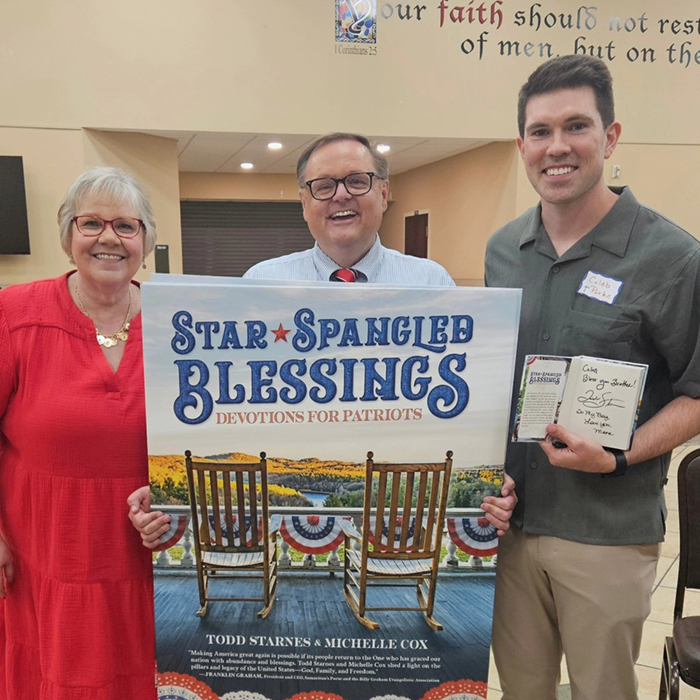
 The book includes access to the Get Clear Career Assessment — a tool to help teens discover their top talents, passions and mission. Coleman says, “Every student has incredible potential, but they often don’t know where to start. This book is about helping them discover their unique strengths and passions — so they can step forward with a clear vision and the confidence to pursue the work they’re meant to do.” Coleman is a three-time bestselling author and a co-host of “The Ramsey Show.” He also hosts “Front Row Seat,” part of The Ramsey Network, that debuted in January and has accrued more than 50 million views. The show “dives deep into the untold truths behind success through unfiltered conversations with top achievers.”
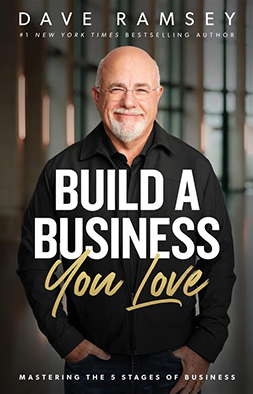 Business You Love is a book in which Ramsey shares the lessons he’s learned starting his business on a card table in his living room and growing it into a $250 million-a-year company. Dave Ramsey says, “For people serious about starting a business, it’s the ride of a lifetime. It will be hard, and it will take longer than expected, but it also offers the opportunity to become a better person as you become a better leader. I hope readers find the courage to keep going, the humility to keep learning and the heart to build something that serves others.”
 man operation to a $250 million-a-year company with over 1,000 employees and a nationally recognized brand. Ramsey says the book draws on his hard-earned lessons, equipping readers at every stage of business to grow themselves, lead their teams and scale their businesses. He says, “Running a business is the hardest thing you’ll ever do, but it can also be the greatest thing you’ve ever done. If you’re not careful, you can wind up hating what you’re trying to build. I’m a guy who’s lived it and made it work — someone who’s messed up a lot and gotten back up after being knocked down. This book isn’t theory. It’s the blueprint for building something you can be proud of.”
  These books have helped me tell stories, prioritize programming initiatives and manage career strategies. If interested in a book the link connects to its page on Amazon.
 Build a Business You Love (Ramsey Press, 2025) by Ramsey Solutions CEO and bestselling author Dave Ramsey is now available for preorder. The book will be released on April 15, 2025. In Build a Business You Love, Ramsey shares his 30-plus years of experience building a business from a one-man operation to a $250 million-a-year business with more than 1,000 employees and a nationally known brand. The book draws on Ramsey’s hard-earned lessons, equipping readers at every stage of business to grow themselves, lead their teams and scale their businesses. “There are a lot of theories out there about how to run a business,” Ramsey tells TALKERS. “But you don’t need more theories. You need to hear from someone who’s lived it and made it work – someone who’s messed up a lot and gotten back up after being knocked down. This book will guide entrepreneurs and small business owners through the real steps they need to grow their business, no matter what stage they’re in.” Dave Ramsey is currently ranked #2 on the TALKERS 2024 “Heavy Hundred.” In Build a Business You Love, he breaks down five key Stages of Business, from being stuck in the daily grind to ready to make your mark in the business world:
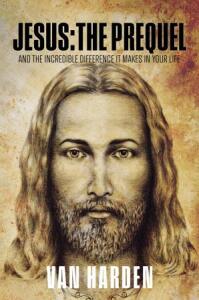 One of talk radio’s most accomplished hosts and programmers, Van Harden has tapped into his long history as a Bible teacher to pen a powerful new book titled Jesus: The Prequel (Xulon Press, 2025). The book examines the question, “Did Jesus exist before He was born in Bethlehem?” “Absolutely!” says Harden, presenting the Biblical evidence of who Jesus was and what He was doing long before we were born and before He was born as a baby in Bethlehem. There is a listing of these things and an explanation of why any of this matters to anyone, especially the reader.
 Van Harden is nationally known for his books, inventions and creative radio broadcasts. He recently retired from a 50-year broadcast career, 35 of which was as morning host and PD of heritage station WHO Radio, in Des Moines, where Ronald Reagan spent many of his early radio years. During his leadership, the station won 13 national Marconi Awards, five of which were awarded to him personally for his morning show. However, Harden tells TALKERS, “The most important thing to me has been my 40 years as a Bible teacher. I speak to many groups, secular and otherwise.” Harden insists on teaching right out of the Bible, which he calls our “Owner’s Manual.” He and his wife Becky live in his childhood home in Iowa. He has three grown children and eight grandchildren. To book an interview with Van Harden please click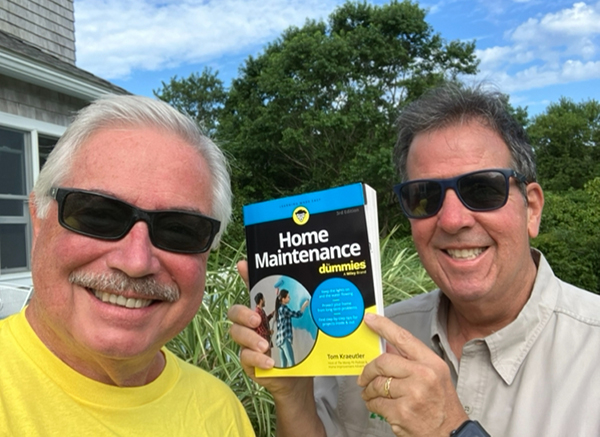
 To be an expert in marketing requires expertise in how memory works. Early in my consultant practice, I studied and read every book I could find on the processes of memory. The best book is Effective Frequency: The Relationship Between Frequency and Advertising Effectiveness. Put simply, how many times does a consumer have to hear a message before it has impact? The book, a collection of studies, is the foundation for every qualitative study in the field today.
 Growing a brand is a memory game. Which message will a target consumer value, remember it and take it to the cash register? The answer is not complicated but it is complex.
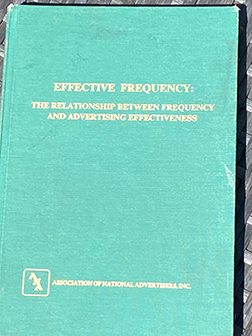 about all the science any of us have been tutored in on the subject of effective frequency.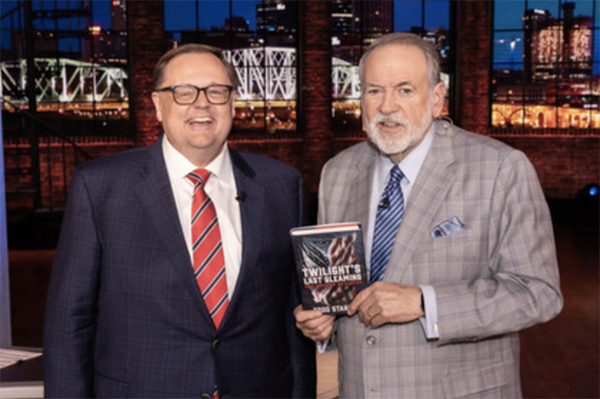
 Before the bound copy arrived – at which point all work stopped – Arbitron would send “Advances.” Even those topline numbers ground things to a halt, and had some PDs doing cartwheels, others out on the ledge. ‘Seems quaint now.
 announces the publication of his eighth book. Titled, Twilight’s Last Gleaming: Can America Be Saved? (Post Hill Press 2023), is in the pre-order phase. The introduction to the book was written by former President Donald Trump. Starnes is available for interviews by emailing Grace Baker at
  conservative political parties have been captured by the same left-wing influences that set the agenda and frame the debate in so many institutions, including the media, academia and the corporate world. Drawing on her 10 years of service in Tory governments – when she often found herself to be the only conservative in the room – the scrappy champion of limited government and individual freedom exposes the threat of the massive, unaccountable administrative state and the complacent political and corporate establishment.”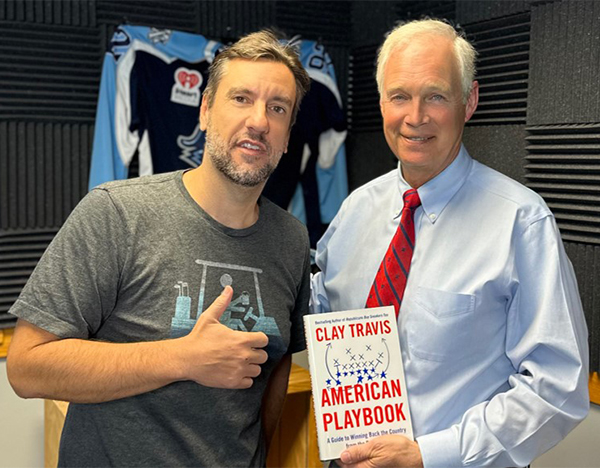
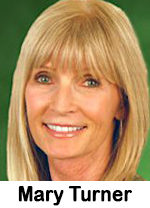 Westwood One syndicated series “Off The Record With Mary Turner” in which she presented interviews with and personality profiles of some of the biggest musical stars of the day. Turner and Pattiz were married in the early 80s and the two shared what friends described as a happy relationship until his death this past December at 79 due to throat cancer. Turner had her own health issue battling substance abuse in the early 90s, which she bravely overcame. She became a UCLA-certified drug and alcohol counselor and received a Ph.D. in clinical psychology. She went on to be appointed chairwoman of the Betty Ford Center at Eisenhower Hospital in Rancho Mirage. TALKERS publisher Michael Harrison, who worked with Turner at both KMET and Westwood One says, “Mary Turner was one of the main pillars upon which the great KMET was built. Nicknamed ‘The Burner,’ she was a pioneer in album rock radio and an iconic role model for women in the industry. She was solid on the air – providing music fans a panoramic window into the culture. She related to artists with an authenticity that engendered trust and they really opened up to her.” As of press time, further details on this story are not available.
 talk radio is the main reason why. He says, “My new book is out for 48 hours and already it’s a #1 bestseller in many categories at Amazon. And to what do I credit my success at going so quickly to #1? Talk radio. In past 48 hours I’ve been a guest on 30 talk radio shows… plus of course, I’ve promoted my book on my own national radio show. Talk radio works!” Root is an ardent Donald Trump supporter who says the former president linked to his recent opinion piece titled, “Democrats Want to Indict & Arrest President Trump. They Want a War? Let’s Give it to Them” in one of his recent posts on Truth Social.
 my original idea for over two years now on my national radio and TV shows. Then Congresswoman Marjorie Taylor Greene picked it up and ran with my idea.” Root says the idea is to build a “parallel conservative patriot economy” consisting of conservative-owned businesses and his book lays out the plan. Root adds, “My co-author Nicky Billou (an Iranian immigrant) and our team of researchers spent over a year researching and identifying the 123 most patriotic companies in America to buy from and to invest your savings and retirement accounts in (some are publicly traded).”
 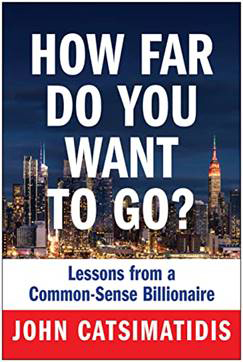 Go? Lessons from a Common-Sense Billionaire (Matt Holt, 2023), in which he reveals how his instincts and common sense propelled him to massive business success. In the book, Catsimatidis shares his dynamic story, from his beginnings in the grocery business to entering the political arena, including a New York City mayoral campaign. He says, “The American dream doesn’t come with an instruction manual – or even a sign to let you know when you’ve arrived at the finish line. I’m far from finished. Buying WABC and launching Red Apple Media and the Red Apple Audio Networks has been a dream come true. I wrote How Far Do You Want to Go? to help others with an entrepreneurial spirit achieve success.”
 sportsbook branded radio station in the country.” Hubbard Seattle market manager Trip Reeb says, “We’re thrilled to bring this first-of-its-kind partnership to this market and radio industry. Building on our long and successful partnership with Tulalip Resort Casino allows for countless cross promotional opportunities as well as the ability to capitalize on the rapid expansion we’ve seen in the sports betting space, as well as the specialized sports betting content VSiN delivers.”

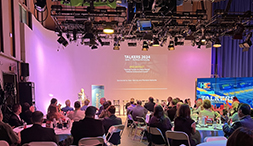 News/talk, sports talk, all-news, and general talk will be amply covered. There will be over 50 top industry speakers, and registration is limited to insure intimacy. Attendance at the conference is only open to members of the working media and directly associated industries as well as students enrolled in accredited learning institutions. All attendees will be required to register in advance on the phone payable by credit card. Because attendance will be limited, the conference is again expected to
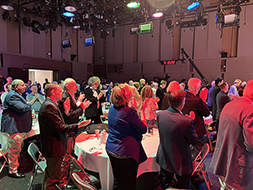 be an early sellout. The all-inclusive registration fee covering convention events, exhibits, food, and services for the day is $260. However, attendees can take advantage of the early bird fee of $150 available until 5:00 pm ET on Friday, April 3. All registrations are non-refundable. This power-packed, one-day event is being presented in association with Hofstra’s multi-award-winning station, WRHU Radio and the school’s Lawrence Herbert School of Communication.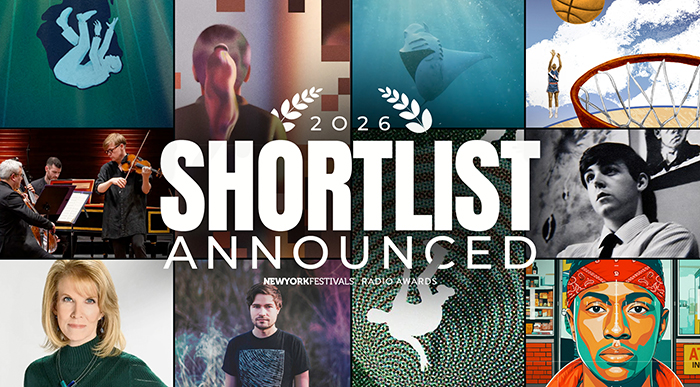
 documentary, breaking news, entertainment, and music, submitted by global networks, production companies, and independent storytellers.” Submissions of note include programs from Alabama Media Group, Bloomberg, CBS News, ESPN, NPR, and SiriusXM. Award-winning entries will be announced during the New York Festivals 2026 Storytellers Gala virtual event on May 21. The virtual event will include featured global audio and video highlights, award winners’ acceptance speeches from around the world, and up-close and personal spotlights featuring some of radio and television’s most respected storytellers.
  If you work in radio, you’ve heard every flavor of AI anxiety. Some fear it will wipe out jobs. Others treat it like a super shortcut – cranking-out spots, promos, and proposals faster and cheaper. Kate O’Neill’s
  Let’s start with what NOT to do, The 7 Deadly Sins Of Small Business Advertising:
 among adults has surged from just 6% of audio listening in 2015 to 23% in 2025. The two factors responsible for his are new people listening to podcasts (reach) and existing podcast consumers listening more (frequency). Das says that additional listening is replacing other behaviors. “Nearly four in 10 podcast listeners say the time they spend with podcasts is replacing time spent scrolling social media. Another 34% say it’s replacing time spent listening to streaming music.” Das cites data indicating that “U.S. adults spend an average of 103 minutes per day listening to podcasts, outpacing TikTok (77 minutes), Facebook (69 minutes), and Instagram (65 minutes); and “Podcast listening surpassed streaming music in 2023, and now commands an 11 point share advantage in daily digital ad-supported audio listening.”
 If you work in radio, you’ve heard every flavor of AI anxiety. Some fear it will wipe out jobs. Others treat it like a super shortcut – cranking-out spots, promos, and proposals faster and cheaper. Kate O’Neill’s “