Industry Views

SABO SEZ: There is a Need for New

By Walter Sabo
a.k.a. Walter Sterling, Host
WPHT, Philadelphia, “Walter Sterling Every Damn Night”
TMN syndicated, “Sterling on Sunday”

imgThe groaning and moaning that “radio is losing younger demos and will die tomorrow” misses the point. What attracts younger audiences? What has always attracted younger audiences? NEW STUFF. New clothes, shows, slang, ideas… NEW. When you “found” radio, you found a top 40 station that was saturated in the latest music, events and ATTITUDE. Radio remains vital by presenting and celebrating new, shocking, contest prizes, revolutionary ideas, hosts, jocks… NEW.

Radio is good at “new.” “New” is hard for other media. A key advantage of radio over other media is the ability for a programmer or host to think of a new idea on the way to work and air that idea that day. TV, print, outdoor can’t do that.

When radio fails to present “new” it sinks lower into the media landscape. Radio is ubiquitous and only rises in the community’s consciousness when it presents “new.” When radio broadcasts predictable, consistent content hour after hour it suffers a grim listener review, “Oh I don’t listen to the radio.” Or, worse, “I don’t listen to the radio much.” 

Word of mouth is not generated by playing “10 in a row” or yelling at the Democrats. Expected content cannot cause a listener to say to a friend, “Did you hear…?” Only surprises, outrageous POV and the unexpected claim precious top of mind awareness.

Walter Sabo has been a C-Suite action partner for companies such as SiriusXM, Hearst, Press Broadcasting, Gannett, RKO General and many other leading media outlets. His company HITVIEWS, in 2007, was the first to identify and monetize video influencers.. His nightly show “Walter Sterling Every Damn Night” is heard on WPHT, Philadelphia. His syndicated show, “Sterling On Sunday,” from Talk Media Network, airs 10:00 pm-1:00 am ET, and is now in its 10th year of success. He can be reached by email at sabowalter@gmail.com.

Industry Views

Monday Memo: USA Facts

By Holland Cooke
Consultant

imgMicrosoft CEO Steve Ballmer retired with enough do-re-mi to indulge two passions. He bought the NBA Los Angeles Clippers (for a record $2 billion). And he built USAFacts: “a not-for-profit resource rooted in publicly available data, free from spin or politics.” From its mission statement:

— “Find the numbers: We tap into hundreds of databases at the federal, state, and local level. If it’s tracked, we’ll find it. If it’s not, we’ll tell you that, too.”
— “Put them in context: A stat without context is no better than an opinion. We analyze trends over time so you can see the whole story.”
— “Bring them to life: We turn the numbers into insights you can actually use. No jargon, no spin. Just charts, graphics, and data.”

im

With so much of talk radio and cable news and social media pandering with affirmation, actual actionable information can differentiate your show or podcast from others that merely entertain outrage. Well-worth a bookmark in your show prep routine.

Holland Cooke (HollandCooke.com) is a media consultant working at the intersection of broadcasting and the Internet. Follow HC on Twitter @HollandCooke

Industry Views

SABO SEZ: MTV Closes?

By Walter Sabo
a.k.a. Walter Sterling, Host
WPHT, Philadelphia, “Walter Sterling Every Damn Night”
TMN syndicated, “Sterling on Sunday”

imgThe world of blogs and vlogs has been loaded with largely erroneous news of MTV closing. New owner, Paramount Global, is searching for divisions showing no growth. If MTV is now a liability, it may be a target for a shutdown.

Yes, MTV is closing five of its music channels in the UK and Ireland: MTV Music, MTV 80s, MTV 90s, Club MTV, and MTV Live. The channels will cease broadcasting at the end of 2025, with the final day of transmission being December 31. This decision is due to shifting viewing habits towards streaming platforms and cost-cutting measures by the parent company, Paramount Global. MTV HD will remain on air but will shift focus from music videos to reality programming.

However, MTV U.S. is not closing. MTV in the United Kingdom IS. It is closing by December 31, 2025. They also run MTV HD in the UK, that channel remains open. Two missing letters, U and K, caused an explosion of misinformation.

Punctuation causes similar mistakes.

As a talk media person, you are well aware of Erich von Daniken. His stunning book, Chariotsimg of the Gods has powered thousands of hours of programming fun. Recently, I saw the latest edition of his book.

imgLike many of you, I love “Ancient Aliens” on the History Channel narrated by the formidable Robert Clotworthy. Robert is a great guest on my show, “Sterling Every Damn Night” and he puts up with whatever nonsense that gets tossed at him. Thank you, Robert.

Since von Daniken’s book is so vital to the “Ancient Alien” landscape, I’m curious when was the title of the book changed from the first edition? Next time he’s on the show I’ve got to ask Mr. Clotworthy when did a transporter beam carry away the question mark!?

Walter Sabo has been a C-Suite action partner for companies such as SiriusXM, Hearst, Press Broadcasting, Gannett, RKO General and many other leading media outlets. His company HITVIEWS, in 2007, was the first to identify and monetize video influencers.. His nightly show “Walter Sterling Every Damn Night” is heard on WPHT, Philadelphia. His syndicated show, “Sterling On Sunday,” from Talk Media Network, airs 10:00 pm-1:00 am ET, and is now in its 10th year of success. He can be reached by email at sabowalter@gmail.com.

Industry Views

Why “Play the Clip” Still Matters

By Matthew B. Harrison
TALKERS, VP/Associate Publisher
Harrison Media Law, Senior Partner
Goodphone Communications, Executive Producer

imgEvery talk host knows the move: play the clip. It might be a moment from late-night TV, a political ad, or a viral post that sets the table for the segment. It’s how commentary comes alive – listeners hear it, react to it, and stay tuned for your take.

That simple act is powered by a fragile piece of legal machinery known as the Fair Use Balancing Act. Without it, half of talk radio, podcasting, and online news/talk commentary wouldn’t exist. Fair Use allows creators to quote, parody, or critique copyrighted material without permission – but only when the new use transforms the old. It’s the backbone of what we now call “react” or “remix” culture.

Fair use isn’t a license; it’s a defense. When you rely on it, you admit you used someone else’s work and trust that a judge will see your purpose – criticism, news, education – as transformative. That’s a high-wire act few think about when the mic is hot.

The doctrine works on a sliding scale: courts weigh four factors – purpose, nature, amount, and market effect. In plain English, they ask, Did you change the meaning? Did you take too much? Did you cost the owner money? There are neither checklists nor guarantees.

That flexibility is what makes American media vibrant – and also what keeps lawyers busy. Each decision takes time, context, and money. The price of creative freedom is uncertainty.

The same logic now drives the debate over AI training and voice cloning. Machines don’t “comment” on your broadcast; they absorb it. And if courts treat that as transformative analysis instead of reproduction, the next generation of “hosts” may not need microphones at all.

For broadcasters, that’s the new frontier: your archives, tone, and phrasing are training data. Once ingested, they can be repurposed, remixed, and re-voiced without violating traditional copyright rules. The Fair Use Balancing Act may protect innovation – but it rarely protects the innovator.

Fair use was designed to keep culture evolving, not to leave creators behind. It balances a creator’s right to profit against society’s right to build upon shared work. But balance only works if both sides know the weight they’re carrying.

Every time you play the clip, remember you’re exercising one of the oldest and most essential freedoms in media. Just make sure the next voice that plays you is doing the same thing – for the right reasons, and under the same rules.

Matthew B. Harrison is a media and intellectual property attorney who advises radio hosts, content creators, and creative entrepreneurs. He has written extensively on fair use, AI law, and the future of digital rights. Reach him at Matthew@HarrisonMediaLaw.com

Industry Views

Monday Memo: Podcasting Pitfalls (and How to Avoid Them)

By Holland Cooke
Consultant

imgThe most common mistake podcasters make is assuming the microphone alone creates an audience. Too many would-be hosts hit Record without a clear strategy for WHY they’re doing a show, WHO it’s for, and what makes it DIFFERENT from millions of other podcasts.

Here’s where radio people have an edge. They already understand what makes audio work, fundamentals instructive to pure-play podcasters:

Know your listener. The #1 podcasting error is failing to define the audience. A show that tries to appeal to “everyone” ends up resonating with no one. In radio, you wouldn’t program an AC station to please hard rock fans; the same logic applies here. Create a mental picture of your ideal listener and talk to that person… as an individual. A radio show might have thousands of listeners, but they’re listening one-at-a-time. Podcasting is even more intimate. It’s the opposite of “Hi everybody.”

im

Prep like it matters. Many podcasters think conversation is enough. But even the loosest-sounding successful shows are tightly structured. Radio taught you this already: segments, clocks, and story arcs keep things moving. Format your podcast.

Edit ruthlessly. The average podcast listener has thousands of options. Rambling is death. Trimming, pacing interviews, and cutting inside jokes shows respect for your listener’s time. Walking-the-walk, TALKERS publisher Michael Harrison takes a mere 44 seconds to explain in this video.

Be consistent. If your show drops sporadically, you won’t build loyalty. Listeners want reliability, whether weekly, biweekly, or monthly. Radio wouldn’t move a morning show around the schedule; don’t do it with your podcast.

Think discoverability. A podcast isn’t a “Field of Dreams” (if you build it, they will come). Great audio needs marketing: social media clips, smart SEO in show notes, cross-promotion, and ideally, visibility on your broadcast platforms.

Make it about them, not you. This is the big one. Too many podcasts are self-indulgent — hosts talking about what interests them. Successful shows flip the script: What does my audience care about, and how can I deliver it in a way only I can?

The bottom line: Radio has invested 100 years doing what podcasting is just learning — creating focused, disciplined, listener-first audio. Bring those habits with you, and you’ll click, while others are still figuring it out.

Holland Cooke (HollandCooke.com) is a media consultant working at the intersection of broadcasting and the Internet. Follow HC on Twitter @HollandCooke

Industry Views

When Satire Stands Its Ground

By Matthew B. Harrison
TALKERS, VP/Associate Publisher
Harrison Media Law, Senior Partner
Goodphone Communications, Executive Producer

imgWhen we first covered this case, it felt like only 2024 could invent it – a disgraced congressman, George Santos, selling Cameos and a late-night host, Jimmy Kimmel, buying them under fake names to make a point about truth and ego. A year later, the Second Circuit turned that punchline into precedent. (Read story here: https://talkers.com/2024/12/19/jimmy-kimmels-fair-use-victory-what-it-means-for-content-creators/)
And just to clear the record: this has nothing to do with Jimmy Kimmel’s unrelated dust-up with FCC Commissioner Brendan Carr. Different story, different planet. This one’s about copyright and commentary – and it’s a clear win for both.

The Set-Up

After his expulsion from Congress, George Santos began offering paid video shout-outs on Cameo. Kimmel’s writers sent absurd requests under pseudonyms for a segment called “Will Santos Say It?” – and he did. The show aired those clips to highlight how easily a public figure would say anything for a fee.

(If you want a taste, look up “Jimmy Kimmel Pranks George Santos on Cameo” on YouTube. That’s the kind of transformative satire the court later called “sarcastic criticism and commentary.”)

Santos sued Kimmel, ABC, and Disney for copyright infringement, fraud, and breach of contract, claiming the videos were sold for “personal use.” The district court tossed it; Santos appealed.

The Ruling

On September 15, 2025, the Second Circuit unanimously affirmed the dismissal. The panel said Kimmel’s use was transformative: he turned Santos’s self-promotion into political satire. Even Santos’s complaint described the bit as sarcastic commentary.

Claims of “market harm” fell flat. Airing a few clips on network TV doesn’t compete with Cameo. Embarrassment isn’t economic loss.

And the supposed bad faith – using fake names to order the clips – didn’t undo fair use. The court stuck to the statutory factors: purpose, nature, amount, and effect. Mischief isn’t a fifth one.

The rest of the claims – fraud, contract, enrichment – stayed dismissed as pre-empted or too thin to matter.

Why It Matters

This decision lands as courts wrestle with whether AI’s use of copyrighted works can ever be “transformative.” Santos v. Kimmel shows what that word really means: a human taking existing material and using it to say something new.

Fair use protects meaning, not mimicry. That’s why satire, commentary, and criticism still stand when they have a point.

For media creators, the lesson is simple: transformation beats permission. If you use third-party material, make sure you’re adding perspective – not just recycling content. That, more than any fine print, is what keeps you on the right side of the line.

Matthew B. Harrison is a media and intellectual property attorney who advises radio hosts, content creators, and creative entrepreneurs. He has written extensively on fair use, AI law, and the future of digital rights. Reach him at Matthew@HarrisonMediaLaw.com or read more at TALKERS.com.

Industry Views

Monday Memo: Social Media Checklist for Radio

By Holland Cooke
Consultant

imgThese aren’t just bulletin boards. They’re extensions of your station, where listeners expect to be acknowledged and advertisers expect to see results.

Michelle Krasniak’s “Social Media Marketing All-in-One For Dummies,” 6th Edition (Wiley, 2025) really is “9 Books in One.” Haven’t got time for all 739 pages? I’ve boiled-it-down to five fundamentals that tee-up useful brainstorming.

Her core message: stop treating social media as a sideline. It is as important to your brand as what comes out of the transmitter. And it’s sponsorable.

Here are five fundamentals:

Pick your platforms wisely.You don’t need to be everywhere. As our superstar traffic reporter Bob Marbourg used to say when I managed WTOP: “Pick your lane and stay with it.” Figure out where your target listeners already spend time and go-deep there. For most stations that’s Facebook and Instagram, but TikTok and YouTube Shorts are big with younger demos.

im

  • Treat it as programming. Every social post is content marketing. That means it needs the same creativity and discipline as an on-air break. Recycle strategically: a morning show prank becomes a 15-second Reel, a newscast becomes “WXXX News Now, Top Stories.”
  • Post consistently. Social media isn’t set-it-and-forget-it. Build an editorial calendar. Balance evergreen content (i.e., music trivia or host Q&As) with timely, trending posts. Post predictably.
  • Measure what matters. Stop obsessing over likes. Engagement — comments, shares, saves, direct messages — is where the action is. Track what kinds of posts spark conversation and what falls flat. Advertisers will also expect hard numbers, so get comfortable with analytics.
  • Bring advertisers along. Clients want more than a schedule of spots. They want campaigns that include social media integration — from sponsored live streams to Instagram Reels with product tie-ins. Package these with on-air buys and show ROI with real data.

Krasniak stresses that “content is everywhere” — the trick is connecting the dots. For stations, that means breaking down silos between the studio, the stream, and the screen. Social feeds aren’t bulletin boards. They’re extensions of the studio, where listeners expect to be acknowledged and advertisers expect to see results.

Bottom line: Social media done right isn’t an add-on; it’s table stakes. If your station isn’t treating it with the same rigor as on-air programming, you’re leaving audience and revenue on the table.

Holland Cooke (HollandCooke.com) is a media consultant working at the intersection of broadcasting and the Internet. Follow HC on Twitter @HollandCooke

Industry Views

SABO SEZ: Learn the Habits of Power and Success

By Walter Sabo
a.k.a. Walter Sterling, Host
WPHT, Philadelphia, “Walter Sterling Every Damn Night”
TMN syndicated, “Sterling on Sunday”

imgAs a media consultant, my team has had the privilege of being engaged extensively by members of the C-Suite. Becoming a member of the C-Suite is a common goal. To get into any group, acceptance often depends on acting and appearing like established members. Here are some of the actions observed of business masters whom we consulted:
Arrive First

Let’s start with Walter Anderson, CEO PARADE magazine. PARADE was then owned by Newhouse and was the most-read publication in the English language with 30-million-plus readers. Walter Anderson was a rock star. For years he was an award-winning editor and proud of his publication. He was a gifted leader. Smart writers and graphic designers want to work for Anderson. He’s that guy! It was an honor to have lunch with him… always at the Four Seasons.

Lunch at 12:30 pm. I’d arrive at 12:25 pm – Anderson was well seated. Lunch at 12:30, I’d arrive at 12:15 pm and Anderson was well seated. I had to arrive at 11:30 am to “beat” him to the 12:30 pm table. When I finally arrived at 11:30, he was startled that I arrived first. Score! I shared this story with the manager of the Four Seasons, Julian Niccolini. Julian smiled and said, “The most powerful person always arrives first.”

Arriving first is control, preemptive and, yes, powerful. Arrive first in all actions. The first one in a room can rearrange the chairs and name plates. Arriving first for a meeting gives a person a moral upper hand!

Answer Emails Fast

Our clients have included a long list of CEOs, presidents, and CBOs. Who answers their emails first? The most powerful: Bob Pittman, CEO, iHeartMedia; Julie Talbott, president, Premiere Networks; Kelli Turner, CEO, Audacy; Bob McAllan, CEO, Press Broadcasting; Joe Clayton (deceased), CEO Sirius; Scott Greenstein, president, SiriusXM; Kraig Kitchin, CEO, Soundmind; Tim McCarthy, CEO, Broadcasters Foundation; Alan Shaw, CEO, Centennial Broadcasting; and Chris Oliviero, CBO, Audacy all answer their email super fast. (There are other contacts who answer fast, but this is the CEO/president list.) Most of the other CEOs and presidents who answer late or not at all are bankrupt.

Thank You First

Powerful people send thank you notes – fast. After an event, they send thank you to the host before going to bed. Powerful execs study when people in their industry get an award or promotion and then write notes of congratulations – and stamp it. No emails. Those real letters are saved – forever. Thank you, Cathy Black!

 Know Thy Numbers

Powerful executives are never vague about numbers. Vagueness invites suspicion and erodes confidence. BUT, the powerful are not driven by the numbers. The numbers are not front and center in conversations.

RKO chairman Tom O’Neil hired my company to consult all of their radio stations. Tom was charming, in charge, and larger than life. RKO owned Frontier Airlines. Over lunch, he casually mentioned the passenger load on Frontier that day. He knew those numbers and the ratings for WOR midday. Pass the bread.

Once a year, PARADE and all Newhouse pubs presented their business plans to the Newhouse brothers directly. Participating in that meeting, I saw that the Newhouses expected the CEOs to know their numbers. The CEOs of their pubs presented the numbers. No CFOs, no accountants, and no business managers were allowed in the business plan meetings. CEO direct to owner.

C-Suite members show up first, answer emails fast, know their numbers cold and send thank you notes.

Walter Sabo has been a C-Suite action partner for companies such as SiriusXM, Hearst, Press Broadcasting, Gannett, RKO General and many other leading media outlets. His company HITVIEWS, in 2007, was the first to identify and monetize video influencers.. His nightly show “Walter Sterling Every Damn Night” is heard on WPHT, Philadelphia. His syndicated show, “Sterling On Sunday,” from Talk Media Network, airs 10:00 pm-1:00 am ET, and is now in its 10th year of success. He can be reached by email at sabowalter@gmail.com.

Industry Views

A Little Less Lonely


img

By Todd Starnes
Talk Host / Station Owner
KWAM, Memphis

An elderly man came to my book signing this past weekend in Waterloo, Iowa. The old-timer told me he listens to my radio show every day on KXEL.

He said his beloved wife had recently passed away – and he “missed her something terrible.”

The gentleman then handed me my book and asked if I would autograph it. And he asked if it wouldn’t be too much trouble for me to write his wife’s name in the pages – which I did.

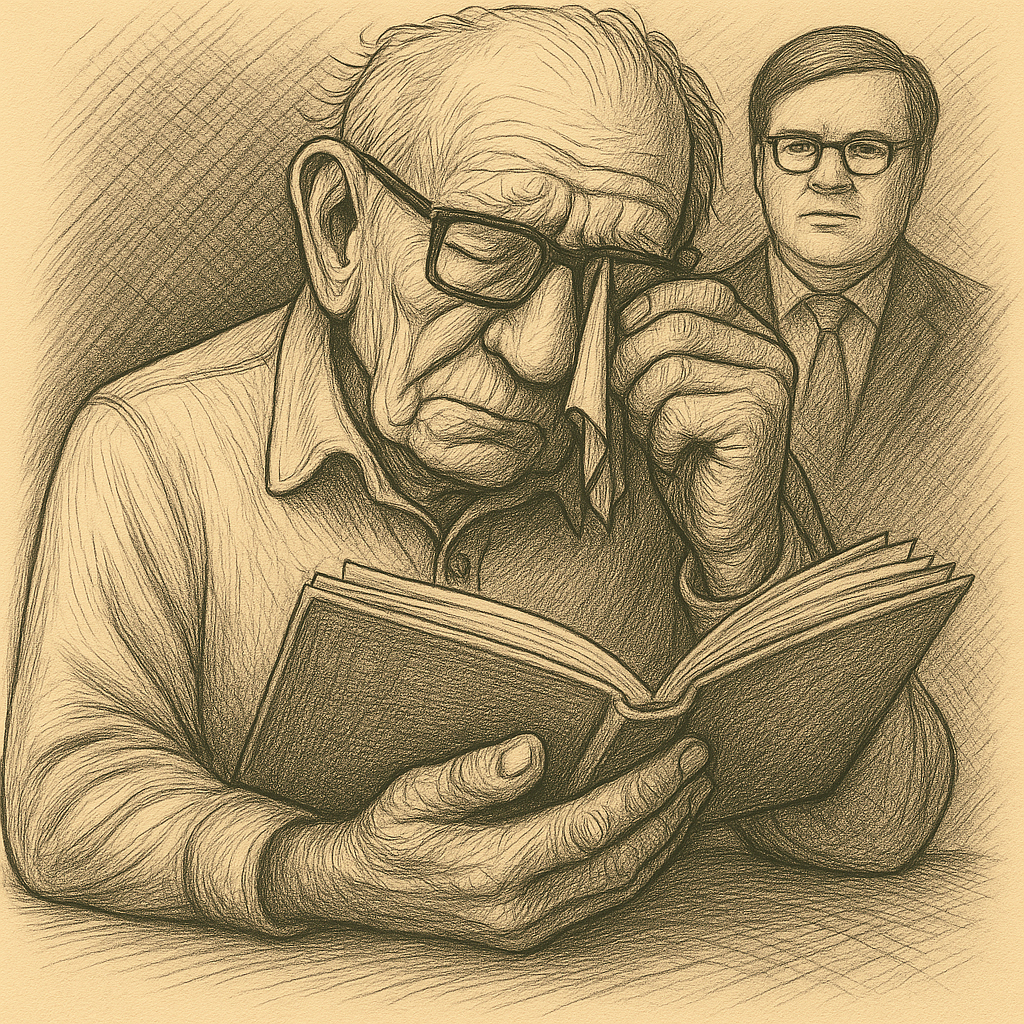
We chatted for a few more minutes and then I shook his hand, and he walked away. At that point, I noticed he opened the book and paused for a moment – staring at his wife’s name – and he pulled out a handkerchief and wiped away the tears.

This is why I love radio – the friendships that are formed over the airwaves. That voice on the radio who makes the lonely days a little less lonely.

Todd Starnes is the CEO of Starnes Media Group, owners of KWAM, Memphis and syndicators of his TALKERS Heavy Hundred daily national radio talk show.  He can be reached via email at todd@starnesmediagroup.com.  

Industry Views

Monday Memo: Replay it. Reuse it. Re-sell it.

By Holland Cooke
Consultant

imgSure, radio’s superpower is that we’re live. But 75% of all advertising dollars are now spent on digital. And Netflix, YouTube, and podcast platforms have conditioned consumers to expect that their content will wait for them (“on-demand”), not the other way around (“linear,” meaning real-time on-air). If your best content disappears the moment it airs, you’re leaking value. Think: time-shifted, searchable, and shareable.

Repackaging doesn’t just mean repeating

Is posting airchecks – whole hours – your news/talk station’s only on-demand offering? Hey, why not. It’s easy, and – mathematically – no listener hears everything live. So, archiving offers convenience.

But few people sit through a whole hour, even when listening live, as Nielsen’s 3-minute gimmick reminds us. So do what music stations do, because music rights issues force them to: Extract chunks of what aired.

im

— Smart stations, in every format, are curating familiar recurring morning show bits.

  • — From interviews: Was there an “Aha!” moment, the-one-thing-said that was most impactful/helpful/surprising/quotable? Maybe even a few standout moments? Just one is fine. Be choosy, rather than posting for the sake of posting.
  • — From host monologues, excerpt the passage that makes the point in-a-nutshell. Like Sean Hannity’s shortform morning bit, a lift from the previous day’s live show. Give yours a title, i.e., “Mike in a Minute,” “Randy’s Rant,” “Tell me I’m wrong,” whatever. And if a caller crystallized – or challenged – the host’s take, include a bite. These features are hors d’oeuvres, nibbles from those whole segments you have also posted for those interested to devour.
  • — If you are doing solid local news, CONGRATULATIONS. You’re conspicuous, as newspapers tailspin and because TV stations’ coverage tends to come later in the day. So consider repurposing the morning’s top local stories into a short daily update.
  • Don’t just clip and post. Package and brand. Give all-of-the-above your station’s imaging feel. A series with a name is easier to remember, easier to sell, and more likely to be shared.

The juice is worth the squeeze

Repackaged content does more than just fill your feeds:

  • — It increases time spent with your brand.
  • — It creates more occasions of listening, whichever way works best for the listener. BE ON PHONES.
  • — It opens up new monetization opportunities. Sponsors love targeted content and are buying digital. Sell them yours.

The bottom line? Yours. Future-proof your station.

Holland Cooke (HollandCooke.com) is a media consultant working at the intersection of broadcasting and the Internet. Follow HC on Twitter @HollandCooke

Industry Views

When Borrowed Becomes Stolen: The Fair Use Line for Talk Hosts and Podcasters

By Matthew B. Harrison
TALKERS, VP/Associate Publisher
Harrison Media Law, Senior Partner
Goodphone Communications, Executive Producer

imgJimmy Kimmel’s first monologue back after the recent suspension had the audience laughing and gasping, and, in the hands of countless radio hosts and podcasters, replaying. Within hours, clips of his bit weren’t just being shared online. They were being chopped up, (re)framed, and (re)analyzed as if they were original show content. For listeners, that remix feels fresh. For lawyers, it is a fair use minefield.

Playing the Clip, Owning the Take

Audiences increasingly expect their favorite talkers to “play the clip,” whether it is from Kimmel, Stephen Colbert, Sid Rosenberg, or Charlamagne tha God on The Breakfast Club (a show that seems to go viral every other week), and then add their own color commentary, the kind of play-by-play that makes it feel like the home team is calling the action. That format works. It gives context, tone, and a sense of immediacy that no transcript can match. Done right, it is what transforms a broadcast from just a recap into a fulfilling cultural conversation.

But with every replay comes a risk. Fair use does not mean free use. Courts weigh factors like how much of the original work you used, whether your purpose was transformative, and whether your use cuts into the market value of the original. Playing a short excerpt of Kimmel’s joke before riffing on it? Likely fair. Running half the monologue and treating it as your A-block? That edges into trouble, both legally and from a programming perspective. Why would anyone want to hear your take if your “take” is mostly replaying someone else? That is not adding to the common zeitgeist; it is just echoing it.

The Podcaster and Broadcaster Dilemma

Radio hosts have long leaned on “newsworthiness” as a shield. Podcasters often assume the same rules apply. But here is the distinction: news clips and comedy bits are not treated equally in court. A station rebroadcasting a press conference is serving public information. A podcast re-airing Kimmel is competing directly with Kimmel’s own clips on YouTube. One informs, the other risks replacing.

And while linking to ABC or YouTube is a courtesy, just as crediting them in the video itself might be, it does not replace the traffic (and ad dollars) Kimmel’s team expects. The law does not guarantee creators compensation for commentary, but judges do consider market harm. If your listeners stop watching the original because your show already gave them the “best parts,” you have tilted the scale against yourself. John Oliver is often credited (though no one seems able to find the clip): “People are always going to say stupid things, and you’re always going to be able to make jokes about that, but it should be the last thing you add in, because it is the easiest thing.”

Whether he actually said it or not almost proves the point. Recycling someone else’s words without context is the laziest move in the book. And if you cannot find the source? That is about as meta as fair use gets.

The Takeaway

Here is the smart play: use less and say more. A 20-second clip followed by two minutes of commentary is transformative. A five-minute clip with a shrug and a chuckle is not. Audiences do not tune in to hear Kimmel again. They tune in to hear what you think about Kimmel. The moment you let someone else’s content carry your show, you lose both legal ground and creative authority.

Matthew B. Harrison is a media and intellectual property attorney who advises radio hosts, content creators, and creative entrepreneurs. He has written extensively on fair use, AI law, and the future of digital rights. Reach him at Matthew@HarrisonMediaLaw.com or read more at TALKERS.com.

Industry Views

SABO SEZ: Prescience from the Past

By Walter Sabo
a.k.a. Walter Sterling, Host
WPHT, Philadelphia, “Walter Sterling Every Damn Night”
TMN syndicated, “Sterling on Sunday”

imgHave you noticed a profile pattern for the mass shooters and political assassins? 20-30 years old. Living at home or close.

Here’s a deep dive, highly predictive profile that was written by a true radio GREAT:

“He’s a crown prince as a teenager. A crown prince when he suddenly finds his crown gone and he’s just a commoner and he must enter the next stage of life – well I’ll tell you what happens:  He generally doesn’t, that’s why you have a new generation of guys who have not taken on family or familiar responsibilities.

They are not about to give up the Crown Prince role and so we have a whole new generation of porn readers who will forever and ever and ever be catered to, and they get to the point where they cater to themselves. Many of them never grow up.

There is more than one guy who is 30 years old today who is totally, completely being supported by his mother and father. And as a matter of course, because he is after all a Crown Prince and a Crown Prince has prerogatives and one of them is to live off the family larder, he will continue to do this throughout most of his life.

This is a very new thing in America, and I say we have not seen the end of it. We’ve only seen the very beginning of it now. He who is really searching for identity.

I’m gonna make a suggestion here. I will suggest that this man is a dangerous man. Any man who has been suppressed, any man who has lost identity is a man who is prone to take up with wild, divergent, and often quite dangerous and irrational political crusades merrily to give himself his own identity, something, some charge that he can ride on.”

Jean Shepherd
WOR Radio Star
Author, A Christmas Story
from audiobook, LIFE IS, 1965

Walter Sabo has been a C Suite action partner for companies such as SiriusXM, Hearst, Press Broadcasting, Gannett, RKO General and many other leading media outlets. His company HITVIEWS, in 2007, was the first to identify and monetize video influencers.. His nightly show “Walter Sterling Every Damn Night” is heard on WPHT, Philadelphia. His syndicated show, “Sterling On Sunday,” from Talk Media Network, airs 10:00 pm-1:00 am ET, and is now in its 10th year of success. He can be reached by email at sabowalter@gmail.com.

Industry Views

Monday Memo: Boo!

By Holland Cooke
Consultant

imgDon’t let Halloween sneak-up on you. The only holiday Americans spend more for is Christmas. So – to seem more in-touch than your robotic and/or non-local audio competitors – plan something spook-tacular.

DJs will play all the occasion-pertinent songs, good bumpers if you’re a talker. For you, the living, this mash was meant too.

— Do an event? A “safe space” parents can bring costumed kiddos? Maybe to benefit a local charity?

im

— Or a grown-ups-only party? 😉Sell a sponsorship. Try a big-box liquor store; or if your bash is at a bar, they might line-up a booze brand from the distributor.
— Costume suggestions? In years past, this has been a productive call-in topic. With family budgets tight now, those pop-up costume stores are less-affordable to some; and many funsters are imagination-challenged. Back when we “went to the movies,” Harry Potter-level characters were more obvious.
— Sell Halloween Safety Tips, PSA-sounding commercials. It’s a low-price way to give new advertisers a taste, and another way for existing advertisers to show-up.

Copy points:

1. Make sure costume masks don’t block your kids’ vision.
2. Go out early, stay in groups.
3. Warn young boys & ghouls not to run into the street from between parked cars.
4. Stick with well-lit streets in your neighborhood.
5. Give young trick-or-treaters flashlights.
6. Stay on sidewalks or walk facing traffic.
7. Tell children not to eat anything before getting home, so you can inspect goodies.

Holland Cooke (HollandCooke.com) is a media consultant working at the intersection of broadcasting and the Internet. Follow HC on Twitter @HollandCooke

Industry Views Sarugami

When AI Fools the Host: Mistake, Missed Opportunity, or Legal Minefield?

By Matthew B. Harrison
TALKERS, VP/Associate Publisher
Harrison Media Law, Senior Partner
Goodphone Communications, Executive Producer

imgCharlie Kirk’s tragic assassination shook the talk radio world. Emotions were raw, and broadcasters across the spectrum tried to capture that moment for their audiences. Charles Heller of KVOI in Tucson shared in these pages yesterday (9/16) how he, in that haze of grief, played what he thought were tribute songs by Ed Sheeran and Adele. Only later did he realize they were AI-generated.

Heller deserves credit for admitting his mistake. Many would have quietly moved on, but he turned the incident into a public reflection on accuracy and the challenges of this new AI age. That honesty does not weaken him – it underscores his credibility. Audiences trust the host who owns a mistake more than the one who hides it. In this business, candor is currency.

Still, the programmer in me sees an on-air opportunity. Imagine a segment called “AI or Authentic?” – play generated songs alongside real ones and invite the audience to decide. It could be informative and fun: interactive, funny, and a perfect spotlight on the very problem that fooled him. I’m sure there are folks out there who have already done this.

Here’s where the lawyer in me speaks up. Falling for a convincing fake is a mistake, not malice. For public figures like Adele or Sheeran, defamation requires proof that a host knew something was false or acted recklessly. A one-off error doesn’t reach that bar.

But liability doesn’t end there. Misattribution can raise right-of-publicity concerns. Saying Adele recorded a song she didn’t isn’t defamatory – but it can still be an unauthorized use of her persona. Intent doesn’t always matter. The safer route is clear labeling: “This may be AI.”

For those of us behind the glass, the lesson is simple: mistakes happen. But doubling down without context? That’s how little errors become legal problems. The law is forgiving of a slip in judgment. It is less forgiving if the same content is repackaged as fact without transparency.

Heller’s story isn’t embarrassing – it’s instructive. In the AI era, every broadcaster faces the same challenge: how to verify what feels authentic. The answer isn’t to shy away from the technology. It’s to make sure you control the punchline – not the algorithm.

Matthew B. Harrison is a media and intellectual property attorney who advises radio hosts, content creators, and creative entrepreneurs. He has written extensively on fair use, AI law, and the future of digital rights. Reach him at Matthew@HarrisonMediaLaw.com or read more at staging.talkers.com/.

Industry Views

An Attack on One Is an Attack on All: Why the Radio Industry Must Respond

By Larry O’Connor
Talk Radio Host
WMAL-FM, Washington, DC

imgIn the wake of Charlie Kirk’s murder, one would expect every company that owns a talk radio station, every network that syndicates conservative voices, and every corporation that employs talk radio hosts to issue a unified statement of defiance. This was not just an attack on Charlie; it was an attack on the entire industry of talk radio, on the free exchange of ideas, and on the First Amendment itself. Yet, shockingly, most of these companies have remained silent. That silence is unacceptable. At a moment like this, the industry should stand shoulder to shoulder and declare to the world: we will not be intimidated, we will not be silenced, and we will never abandon the microphone.


We Will Not Be Silenced

The news of Charlie Kirk’s brutal murder has shaken us to our core. For those of us behind a microphone each day, it was not just an attack on a friend, a colleague, or a leader – it was an attack on our entire industry, our movement, and the very principle of free speech.

Charlie was more than a conservative activist. He was a broadcaster, a communicator, a man who understood the power of radio and its unmatched ability to reach Americans where they live, work, and drive. He embraced our medium because he knew it could bypass the gatekeepers and speak truth directly to millions. And for that reason – because he was effective, fearless, and unrelenting – he was targeted.

Let’s be clear: this was not random violence. This was political violence. It was meant to silence a voice. And in silencing that voice, it was meant to intimidate the rest of us. To scare us into pulling our punches. To warn us that telling the truth has consequences.

Well, here’s the truth: we will not be intimidated, and we will not be silenced.

Conservative talk radio is the last truly free public square in America. We don’t answer to corporate boardrooms in New York or Silicon Valley. We answer to our listeners – the American people. Every morning and every afternoon, millions tune in because they know they will hear what the mainstream media refuses to cover. They come to us because they trust us to tell it straight. And if anyone thinks the murder of Charlie Kirk is going to drive us off the airwaves, they don’t understand who we are.

The history of talk radio is the history of resilience. From Rush Limbaugh to Charlie Kirk, our voices have endured smear campaigns, advertiser boycotts, government threats, and now, tragically, deadly violence. Yet every time they try to shut us down, we come back stronger. Every time they think they’ve broken us, our audience grows.

Charlie’s death is a wound, but it is also a call to arms – not with weapons, but with words. Words of truth. Words of conviction. Words that cannot be cancelled, cannot be censored, and cannot be silenced by fear.

As an industry, we stand together today. Whether you broadcast from a major market station or a small-town affiliate, whether your show runs nationally or locally, we are united. Charlie’s microphone may have been forced into silence, but ours will burn brighter because of it. We will carry his message, his courage, and his relentless pursuit of truth forward.

To Charlie’s family, we grieve with you. To our listeners, we stand with you. And to those who think violence can silence ideas: you are wrong. The ideas of liberty, faith, and American exceptionalism will ring louder than ever.

Charlie Kirk is gone, but the cause he championed lives on. His voice echoes in every one of ours. And we will keep talking. We will keep broadcasting. We will keep fighting – together.

Because in the end, freedom always wins.

Larry OConnor is the morning drive host at Cumulus Media’s WMAL-FM, Washington, DC. He can be emailed at stagerightblogger@gmail.com.

Industry Views

Won’t Get Fooled Again (Hopefully)

By Charles Heller
Talk Host / Account Executive
KVOI, Tucson

imgGrief for the loss of Charlie Kirk is palpable around the world. Broadcasters who interviewed him or had anything to do with the Turning Point organization were deeply touched by his tragic death.

Sunday, I played a tribute song to Charlie Kirk that I thought was by English singer/songwriter Ed Sheeran. Later I played one supposedly by Adelle. It seemed rather strange that they could produce and publish songs in three days, but I could find no evidence on YouTube that they were artificially generated. I should have looked a little further in my research before I stated on air that the songs were authentic. How can I be in talk radio for 27 years, be 68, and that naïve?

The fact is that I wanted to believe it was true. I overcame cognitive dissonance by wanting to believe that these two great artists would do tributes to someone I hold in high esteem. On reflection, I should have thought about the likelihood that either of them would write such songs…

In putting these thoughts to paper (electrons, anyway…) I found dozens of tribute songs to Charlie Kirk from many famous voices, and now I notice that most of them are “generated content.” That really made me re-evaluate my method of bringing facts to the audience, a job I feel as a calling as much as a profession. It forces me to question the authenticity of everything I bring to the microphone. My desire to believe that those songs were real, overcame my natural skepticism. I lost, as they say in self-defense instruction, “situational awareness.” (I’ve been a state certified CCW instructor for 31 years.)

I came to radio through print journalism, having run my high school newspaper as managing editor (The Lane Warrior) with a circulation of 5,000. We printed it in house too, back when it was still done hot type. The Chicago Tribune sponsored my Junior Achievement Company, and my associations there got me a job. I spent time in the newsroom while still in high school, learning a lot about how a real paper is made. They cared a lot about accuracy, and it stuck with me. I used to smoke my pipe at the city desk with Clarence Paige. (Wow have things changed…)

Fast-forward 50 years, and now I sit behind the microphone of four talk radio programs on KVOI, engineering and hosting by myself, alone in the building with the exception of my broadcast dog, Charger. It’s an awesome responsibility, bringing infotainment to an audience, but the age of AI now causes me to ask, is everything I put out, correct? I’ve said on air for a long time, “I don’t need to be right, but need to be correct.” Am I alone in this concern for accuracy? Give me your thoughts, please.

Charles Heller is in his 27th year on air, hosting “Swap Shop,” “Liberty Watch,” “America Armed & Free,” and “America’s Fabric,” on Bustos Media’s KVOI-AM, Tucson. During the week he is a seller, producing his own spots. Charger is a seven-year-old rescue from the Humane Society who prefers AM Radio. He’d especially like to communicate with people who do other swap type shows. charles@libertywatchradio.com

Industry Views

SABO SEZ: Keep the Valuables

By Walter Sabo
a.k.a. Walter Sterling, Host
WPHT, Philadelphia, “Walter Sterling Every Damn Night”
TMN syndicated, “Sterling on Sunday”

imgAmazon learned that there are high volume sales for specific categories of products. High demand equals high value to the seller. Items such as diapers, printer ink, staplers, batteries, etc. Being brilliant, Amazon created “Amazon Basics.” Same products, white labeled. Amazon doesn’t manufacture batteries; they just slap their logos on what America needs most.  That’s why Mr. Bezos has a bigger boat than you.

Radio listeners have high demand for basic elements. The demand for these ingredients is often based on need rather than preference. Needed ingredients delivered by radio represent high value to the radio industry:

– Weather reports

– Traffic reports

– Is everything ok? News reports

– News bulletins

– Local news

– Closings

The first sign of trouble was when radio stations chose to promote a cable channel by presenting “Weather Channel Weather.” Tip: research shows the most respected source of weather is the National Weather Service and a station can pull that for free, any time. No disrespect to the Weather Channel but, can’t radio do weather? Giving away that position to TV is foolish.

Weather is even more important than one might think. Yes, a listener can get it from multiple online sources, but the listener is listening to the radio. The listener needs the weather NOW, live, local. Failing to do weather forces the listener to leave you. (That’s why, on the local and national “Sterling” show, we have meteorologist, Dr. Dave Eiser and Brad Your Grandma’s weatherman presenting the weather through the program.)

Do a Google trend search. Compare WEATHER, SEX, JESUS, TRUMP. Weather will win.

TRAFFIC. An argument I lost was with a 50kw station that had the traffic image because they had a traffic copter. To save $200,000 they were going to take it down. I said, “Fire me but don’t take down the copter.” They took it down. The reason to do traffic is not 100% to give traffic reports, it is – more importantly – to prove that the station is live, and to prove the station sees everything. Breaking news will compel listeners to check with the station that can report it from the air, live!

There is no reason to stop doing traffic and weather because an all-news station is doing it. Those are essential must-have elements for all listeners regardless of format. If we want to own the dashboard, it is best to present top-of-mind information to drivers. Live!

FOX News seems to present a “Bulletin” every few minutes… FOX NEWS ALERT. A radio station doesn’t have to follow the AP Style Guide to define “bulletin.” You can air a bulletin or an alert whenever you want. Urgent, compelling, turn up the radio. Pulling the listener in with sounders, big intros, all that stuff claims your position as the source of better-know-it information.

WHAT HAS HAPPENED. By stripping a station of the costs of bulletins, weather, traffic, and local news we have made radio less valuable. Those “costs” were/are investments in content valued by listeners.  Too many stations have trashed essential ingredients for the sake of a false economy. Radio revenues go down each quarter as stations cut costs each quarter.

Walter Sabo has been a C Suite action partner for companies such as SiriusXM, Hearst, Press Broadcasting, Gannett, RKO General and many other leading media outlets. His company HITVIEWS, in 2007, was the first to identify and monetize video influencers.. His nightly show “Walter Sterling Every Damn Night” is heard on WPHT, Philadelphia. His syndicated show, “Sterling On Sunday,” from Talk Media Network, airs 10:00 pm-1:00 am ET, and is now in its 10th year of success. He can be reached by email at sabowalter@gmail.com.

Industry Views

The Opportunity Before Radio: Boldness with Balance

imgIn an opinion piece for TALKERS, radio pro Erik Cudd writes, “In such a time as this, because radio is the medium I know best and love most, I write this appeal to those influential in news/talk. My hope is that you will step forward once again as the architects and innovators you have always been and raise a rallying cry for this unique moment. The freedoms and ambitions that make the format so vital also create challenges. By design, it invites sharp opinions, spirited disagreement, and cultural edge. Those qualities are its strengths. But in our current climate, they also carry the risk of drifting into tribalism and rhetoric that can spill over into something more dangerous. This is not an implication that I believe news/talk is responsible for the death of Charlie Kirk. I would like to be crystal clear. What I am saying is that a perfect storm has been gathering for many years, and no one can deny the polarized, charged landscape we now inhabit. And that storm is not radio’s sole responsibility.” Read Erik Cudd’s entire piece here.

Industry Views

Monday Memo: Stakeholder Whispering

By Holland Cooke
Consultant

imgRadio programmers and sales managers know the drill: The GM drops an idea, a client makes a request, or a listener offers feedback – and the reflex is to jump straight into execution. But what if the real opportunity lies not in what’s asked for, but in what’s actually needed?

That’s the premise of Bill Shander’s new book, Stakeholder Whispering: Uncover What People Need Before Doing What They Ask (Wiley, 2025). Though written for a broad business audience, its lessons resonate in broadcasting, where competing priorities and fast-moving decisions are the norm.

Shander reckons that traditional “stakeholder management” sounds paternal – corralling people to fit our plans. Instead, “stakeholder engagement,” gives them a seat at the table. This “whispering” is a deeper, two-way collaboration where probing questions and active listening uncover hidden needs and surface better solutions.

im

For broadcasters, this can be transformative. Consider sales. If an advertiser wants “a morning drive schedule,” a reflexive seller builds a package and fires back a rate card. But a whisperer pauses and asks: Why morning drive? Who exactly are you trying to reach? What outcome would make this buy successful for you? The conversation shifts from spots and cost to outcomes and value.

Programming is no different. Listeners may say they “want more music” or “less negativity” from talk radio. Whispering means listening past the literal request to the sentiment beneath. Is it about mood, pace, or trust? The host or PD who engages at that level isn’t surrendering control – they’re co-creating an experience listeners feel invested in.

The book also emphasizes “loss aversion” – the tendency to resist change for fear of losing control. Whispering reduces defensiveness by letting stakeholders feel ownership of solutions. In a station environment, that might mean involving talent in shaping format tweaks, or framing sales proposals as shared discoveries rather than dictates.

Stakeholder whispering is a reminder to slow down, listen more deeply, and help others articulate what they really need. For radio, it may be the difference between just checking a box and creating lasting value on both sides of the mic.

Holland Cooke (HollandCooke.com) is a media consultant working at the intersection of broadcasting and the Internet. Follow HC on Twitter @HollandCooke

Industry Views

The Opportunity Before Radio: Boldness with Balance

By Erik Cudd

imgFrom my teenage years to today, radio has been the career of my adult life. When I first began listening in my teens, I was drawn less to the music and more to the conversation. I tuned into stations not for my favorite songs, but because I enjoyed hearing people talk, debate, and share ideas. Over my lifetime, I have seen many changes in the medium. The news/talk format, in particular, has always fascinated me for its mix of news, commentary, and immediacy.

In such a time as this, because radio is the medium I know best and love most, I write this appeal to those influential in news/talk. My hope is that you will step forward once again as the architects and innovators you have always been, and raise a rallying cry for this unique moment. The freedoms and ambitions that make the format so vital also create challenges. By design, it invites sharp opinions, spirited disagreement, and cultural edge. Those qualities are its strengths. But in our current climate, they also carry the risk of drifting into tribalism and rhetoric that can spill over into something more dangerous.

This is not an implication that I believe news/talk is responsible for the death of Charlie Kirk. I would like to be crystal clear. What I am saying is that a perfect storm has been gathering for many years, and no one can deny the polarized, charged landscape we now inhabit. And that storm is not radio’s sole responsibility. Television, social media, and digital platforms have found their profit margins in spaces that thrive on provocation. Cable news leans on conflict. Social media algorithms reward outrage. Digital outlets chase clicks and controversy. Radio is part of this broader ecosystem, not apart from it. And while no single medium created our current atmosphere, each has a role to play in reflecting on its impact and considering how best to move forward.

This is not about drawing a simple line between “toxic” and “non-toxic” content. Such judgments are rarely clear, and program directors deserve the benefit of the doubt. Yet it may be worth asking whether radio, like all media, could benefit from a renewed look at how editorial choices can help keep conversations as civil and constructive as possible. Debate and controversy will always be part of the medium, but escalation does not need to be the only outcome.

The September 10 tragedy underscored this in more ways than one. Beyond the event itself, the aftermath played out across digital spaces, where ordinary citizens made comments that, while protected speech, resulted in lost jobs, reputational damage, and news coverage. The lesson is not that speech should be curtailed, but that our civic discourse is increasingly fragile. And because radio is one of the most intimate and influential media, its choices ripple outward into that discourse in profound ways.

Audiences are noticing. As someone in my early 50s, squarely within talk radio’s target demographic, I should be a loyal listener. Yet I find myself tuning in less often, not from a lack of loyalty, but because I long to hear more voices who can thoughtfully engage both sides of an issue, giving each perspective a fair hearing and treating every listener as though their view matters. That is why I believe there may be room to pull back a bit, to allow for more variety, nuance, and genuine curiosity in how issues are approached.

Serious does not mean boring. Civility does not mean dull. Across platforms, authenticity and curiosity consistently earn audiences. Podcasts like SmartLess and Armchair Expert succeed not by stoking outrage but by elevating storytelling and connection. Public affairs series such as Frontline and American Experience continue to attract loyal audiences through rigorous, measured reporting. Nonfiction authors like Malcolm Gladwell and Brené Brown demonstrate that thoughtful exploration can reach mass audiences. These examples are proof that depth and balance can succeed when executed with energy and creativity.

Radio is uniquely positioned to do the same. The path forward is not retreat from controversy but innovation. Maybe it begins by encouraging new hosts who bring curiosity, empathy, and an equal openness to both sides of an issue, alongside conviction. It could include piloting alternative formats in off-peak slots where experimentation can thrive. It will require recalibrating success metrics to value loyalty, digital engagement, and cross-platform trust, not just short-term spikes. And it may also mean weaving national voices together with local conversations so that stations strengthen both their reach and their roots.

I do not write this from a high perch. I write as a member of the audience who also walked the halls of the station and still believes in the power of the medium. My words are not meant as accusation but as an open hand in friendship. What I am asking is simple: perhaps it is time for a more purposeful, deliberate engagement of conversation in the conference room. To sit together and ask if everything that airs is doing what it should. To take a long, hard look at whether anything might need to be discussed, reconsidered, or rebalanced in light of what we have all just witnessed.

Radio, because of its intimacy and reach, is uniquely positioned to lead by example. By being more proactive in its own yard, radio could encourage the same self-reflection across media, and even among the public itself. That is not retreat. That is leadership.

Radio still matters. Its intimacy can at times divide, but it can also renew. The question is not whether talk radio will remain bold, it always will, but whether it can channel that boldness in a way that builds the public square rather than fractures it.

The opportunity is here: to prove that freedom and responsibility can coexist, and that doing so is good for the culture, and good for the business.

Erik Cudd has worked in radio and media since 1991. He can be emailed at erik@cudd.us. 

Industry Views

Are Your AI Logos Actually Kryptonite?

By Matthew B. Harrison
TALKERS, VP/Associate Publisher
Harrison Media Law, Senior Partner
Goodphone Communications, Executive Producer

imgSuperman just flew into court – not against Lex Luthor, but against Midjourney. Warner Bros. Discovery is suing the AI platform, accusing it of stealing the studio’s crown jewels: Superman, Batman, Wonder Woman, Scooby-Doo, Bugs Bunny, and more.

At first glance, you might shrug. “That’s Warner Bros. vs. Silicon Valley – what does it have to do with my talk media show?” Here’s the answer: everything. If you or your producer are using Midjourney, DALL·E, or Stable Diffusion for logos, promos, or podcast cover art, you’re standing in the same blast radius.

AI Isn’t Neutral Paint

The romance of AI graphics is speed and cost. Need a logo in five minutes? A flyer for a station event? A podcast cover? Fire up an AI tool and you’re done.

But those images don’t come from a blank canvas. They come from models trained on copyrighted works – often without permission. Warner Bros. alleges that Midjourney not only trained on its characters but knowingly let users download knockoff versions.

If Warner wins – or even squeezes a settlement – AI platforms will clamp down. Suddenly, the “free” art you’ve been posting may not just vanish; it may become a liability.

Too Small to Matter? Think Again

Here’s the legal catch: infringement claims don’t scale by size. A podcaster with a Facebook page is just as liable as a network if the artwork copies protected content.

It’s easy to imagine a rival, competitor, or ex-producer spotting an AI-made graphic that looks “too much like” something else – and firing off a takedown. Once that happens, you’re judged not by intent but by what you published.

Unlike FCC guardrails for on-air speech, there’s no regulator to clarify. This is civil court. You versus the claimant – and the billable hours start immediately.

Even Elon Musk Just Got Burned

Neuralink – Elon Musk’s brain-computer startup – just lost its bid to trademark the words “Telepathy” and “Telekinesis.” Someone else filed first.

If Musk’s lawyers can’t secure simple branding terms, what chance does your station or company have if you wait until after launch to file your new show name? Timing isn’t just strategy; it’s survival.

The Playbook

  1. Audit Your AI Use. Know which graphics and promos are AI-generated, and from what platform.
  2. File Early. Register show names and logos before the launch hype.
  3. Budget for Ownership. A real designer who assigns you copyright is safer than a bot with murky training data.

The Bottom Line

AI may feel like a shortcut, but in media law it’s a trapdoor. If Warner Bros. will defend Superman from an AI platform, they won’t ignore your podcast artwork if it looks too much like the Man of Steel.

Big or small, broadcaster or podcaster – if your AI Superman looks like theirs, you’re flying straight into Kryptonite.

Matthew B. Harrison is a media and intellectual property attorney who advises radio hosts, content creators, and creative entrepreneurs. He has written extensively on fair use, AI law, and the future of digital rights. Reach him at Matthew@HarrisonMediaLaw.com or read more at TALKERS.com.

Industry Views

Monday Memo: Water You Known For?

By Holland Cooke
Consultant

imgMy kitchen faucet wouldn’t shut off. It died, of old age. Things start doing that when your “new” house turns 25.

With replacement hardware inbound from – where else? – Amazon, we’re coping, filling pitchers in the first-floor loo. Yet, days later, we still reach for the broken kitchen faucet, force-of-habit.

WHAT IF someone pushes your station’s button, or goes to download your podcast, and nothing comes out?im

What are you known-for? What would be missed if you weren’t still doing it?

Explain that-you-do what-you-do-well, things listeners thirst for, especially things they can only get from you. And make every effort to deliver.

Holland Cooke (HollandCooke.com) is a media consultant working at the intersection of broadcasting and the Internet. Follow HC on Twitter @HollandCooke

Industry Views

Commercial Copy for Careworn Consumers

By Holland Cooke
Constulant

imgWhy I love going on sales calls with station reps: Meeting retailers, who have SUCH a feel for their customers’ (our listeners’) mindset. Following-up last week’s column exploring the societal angst we are living through, this week’s will recommend technique for scripting in what psychologists call the Age of Outrage Fatigue.

Emotional bandwidth is down. Skepticism is up. And the old tricks – hyperbole, urgency, shouty headlines – are backfiring. People aren’t just tuning-out content they disagree with; they’re tuning-out tone. They crave calm. Clarity. Credibility.

To cut-through:

— Clear beats clever. Instead of “Don’t sweat it – we’ve got your ducts in a row!” Try “Get your AC fixed today, and sleep comfortably tonight.”

im

— Ditch the drama. Instead of: “Drowning in debt?” Try: “Make a fresh start.”

— Frame your offer as an upgrade, not a fix for failure. Instead of: “Will you EVER be able to retire?” Try: “Plan your next chapter, on your terms.”

— Empathize, don’t exaggerate. People trust what feels human. Empty hype gets filtered out fast. “There’s never been a better time to buy a car!” goes in-one-ear-and-out-the-other.

— Earn attention quickly. The first sentence matters more than ever. Make it a question that includes “you” and/or “your” which describes the consumer situation that your advertiser can cure. “Is your money doing what you want it to?”

— Use specifics, not superlatives. “Best ever!” means nothing. Numbers and proof points build confidence.

— If you’re scripting with AI, rewrite to weed-out clichés. Restaurant spots that tout “a relaxing atmosphere” are verbal Styrofoam.

— Respect their time. Use short sentences. Bullet points. Clear next steps. Happy outcomes.

Today’s most effective copywriting calms the reader. It offers clarity in a crowded, chaotic world.

Holland Cooke (HollandCooke.com) is a media consultant working at the intersection of broadcasting and the Internet. Follow HC on Twitter @HollandCooke

Industry Views

Fair Use in 2025: The Courts Draw New Lines

By Matthew B. Harrison
TALKERSVP/Associate Publisher
Harrison Media Law, Senior Partner
Goodphone Communications, Executive Producer

imgImagine an AI trained on millions of books – and a federal judge saying that’s fair use. That’s exactly what happened this summer in Bartz v. Anthropic, a case now shaping how creators, publishers, and tech giants fight over the limits of copyright.

Judges in California have sent a strong signal: training large language models (LLMs) on copyrighted works can qualify as fair use if the material is lawfully obtained. In Bartz, Judge William Alsup compared Anthropic’s use of purchased books to an author learning from past works. That kind of transformation, he said, doesn’t substitute for the original.

But Alsup drew a hard line against piracy. If a dataset includes books from unauthorized “shadow libraries,” the fair use defense disappears. Those claims are still heading to trial in December, underscoring that source matters just as much as purpose.

Two days later, Judge Vince Chhabria reached a similar conclusion in Kadrey v. Meta. He called Meta’s training “highly transformative,” but dismissed the lawsuit because the authors failed to show real market harm. Together, the rulings show that transformation is a strong shield, but it isn’t absolute. Market evidence and lawful acquisition remain decisive.

AI training fights aren’t limited to novelists. The New York Times v. OpenAI case is pressing forward after a judge refused to dismiss claims that OpenAI and Microsoft undermined the paper’s market by absorbing its reporting into AI products. And in Hollywood, Disney and Universal are suing Midjourney, alleging its system lets users generate characters like Spider-Man or Shrek – raising the unsettled question of whether AI outputs themselves can infringe.

The lesson is straightforward: fair use is evolving, but not limitless. Courts are leaning toward protecting transformative uses of content—particularly when it’s lawfully sourced – but remain wary of piracy and economic harm.

That means media professionals can’t assume that sharing content online makes it free for training. Courts consistently recognize that free journalism, interviews, and broadcasts still carry market value through advertising, sponsorship, and brand equity. If AI systems cut into those markets, the fair use defense weakens.

For now, creators should watch the December Anthropic trial and the Midjourney litigation closely. The courts have blessed AI’s right to learn – but they haven’t yet decided how far those lessons can travel once the outputs begin to look and feel like the originals.

Matthew B. Harrison is a media and intellectual property attorney who advises radio hosts, content creators, and creative entrepreneurs. He has written extensively on fair use, AI law, and the future of digital rights. Reach him at Matthew@HarrisonMediaLaw.com

Industry Views

SABO SEZ: What You Need to Know About the “Law of 200”

By Walter Sabo
a.k.a. Walter Sterling, Host
WPHT, Philadelphia, “Walter Sterling Every Damn Night”
and TMN syndicated, “Sterling on Sunday”

imgThe risk is real. Suggesting that a technique used with great success in the recent past might be beneficial to the present is a perilous course. Is the idea out of touch with today’s reality? Is the author ignoring current trends?

A factual current event from which our industry and our lives suffer: Sales are down. Sales for the radio industry are down every quarter.

Hard research-and-math-people will point to the usual causes. Add to that list the fact that the same dollars that bought spots priced at X for the big morning show are being fed into podcasts for 10 percent of X. But podcasts are digital! Therefore, they are sexy to Wall Street. The result of that dollar transfer is quarterly investor calls featuring CEOs declaring that “digital is a sweet spot.” Actually, “digital” is a cheap whore but back to the topic:

Methods deployed to sell radio today are not working. Salespeople work hard, but the strategies they are given are weak. That’s why sales are down – every quarter. Spreadsheets, ROI, CPP, programmatic are elegant math-major systems. But our product is not math. Our product is emotion. Match sales techniques to the product. Tap the power of emotion.

Everything is ultimately purchased from our emotions. Everything.  Case in point: Joe Girard* understands cars better than anyone in history. No, no, don’t be dismissive of Joe because he was a car salesman; cars are very expensive. Cars have impacted you and your family for years. Cars make you feel great or awful. Powerful purchase.

Happy Birthday! One month a year, Joe would mail out a birthday card to all of his past customers and all of his prospects. All of them. In the same month. One out of 12 recipients were thrilled that Joe remembered their birthday! The other 11 would call Joe and tell him that he had their birthday date wrong. They called Joe. A car salesman.

Joe gave all of them information on the phone about the latest models and deals for… a new car. They called Joe.

The Law of 200. Catholic funeral masses hand out prayer cards featuring a photo of the deceased. Ask a priest how many cards are printed. The answer is 200. Caterers will tell you that the standard number of wedding guests is… 200!

Seems we know 200 people who will come to our wedding and our funeral. Major life events. Buying a car is a major, emotional life event. Joe realized that if he sold a good car, 200 people would learn that the customer was satisfied.

OR 200 were not happy. He gave all car buyers a box, a box of his business cards. 200 cards. He urged customers to hand out Joe’s cards to their friends.

Do those 22-year-old time buyers still want concert tickets, merchandise, meals, autographs, meet and greets? Before the power point presentation starts, book the good seats.

Yes, our product is emotion driven. How many arguments have you had about music repetition? New music? Controversial topics? Borderline morning show jokes? Those are emotional not intellectual discussions. There’s our power – in the center of the rink. Put the commercial on the mat.

How to Sell Anything to Anybody by Joe Girard https://a.co/d/fTpuzoZ

Walter Sabo has been a C Suite action partner for companies such as SiriusXM, Hearst, Press Broadcasting, Gannett, RKO General and many other leading media outlets. His company HITVIEWS, in 2007, was the first to identify and monetize video influencers.. His nightly show “Walter Sterling Every Damn Night” is heard on WPHT, Philadelphia. His syndicated show, “Sterling On Sunday,” from Talk Media Network, airs 10:00 pm-1:00 am ET, and is now in its 10th year of success. He can be reached by email at sabowalter@gmail.com.

Industry Views

When “Sharing” Becomes Stealing: TALKERS’ 90-Second Lesson in Fair Use

By Matthew B. Harrison

TALKERS, VP/Associate Publisher
Harrison Media Law, Senior Partner
Goodphone Communications, Executive Producer

imgNinety seconds. That’s all it took. One of the interviews on the TALKERS Media Channel – shot, edited, and published by us – appeared elsewhere online, chopped into jumpy cuts, overlaid with AI-generated video game clips, and slapped with a clickbait title. The credit? A link. The essence of the interview? Repurposed for someone else’s traffic.

TALKERS owns the copyright. Taking 90 seconds of continuous audio and re-editing it is infringement.

Could they argue fair use? Maybe, but the factors cut against them:

  • Purpose: Clickbait, not commentary or parody.
  • Nature: Original journalism leans protective.
  • Amount: Ninety seconds may be the “heart” of the work.
  • Market Effect: If reposts draw views, ad revenue, or SEO, that’s harm.

And here’s the key point: posting free content doesn’t erase its market value. Free journalism still generates reputation, sponsorships, and ad dollars. Courts consistently reject the idea that “free” means “up for grabs.”

Enforcement options exist. A DMCA notice can clear a repost quickly. Repeat offenders risk bans. On-screen branding makes copying obvious, and licenses can set terms like “share with credit, no remix.”

But here’s the hard truth: a takedown won’t stop the AI problem. Once a clip circulates, it’s scraped into datasets training text-to-video and voice models. Deleting the repost doesn’t erase cached or mirrored copies. Think of it like pouring a glass of water into the ocean – you can’t get it back. And to make matters worse, enforcement doesn’t stop at U.S. borders. Different countries have different copyright rules, making “justice” slow, uneven, and rarely satisfying.

That TALKERS interview may now live inside billions of fragments teaching machines how people speak. You can win the takedown battle and still lose the training war. Courts are only starting to address whether scraping is infringement. For now, once it’s ingested, it’s permanent.

Creators face a constant tension: content must spread to grow, but unchecked sharing erodes control. The challenge in 2025 is drawing that line before your work becomes someone else’s “content.”

The law is still on your side – but vigilance matters. Use takedowns when necessary. Brand so the source is clear. Define sharing terms up front. And remember: free doesn’t mean worthless.

The real question isn’t just “Is it fair use?” It’s “Who controls the story?”

Matthew B. Harrison is a media and intellectual property attorney who advises radio hosts, content creators, and creative entrepreneurs. He has written extensively on fair use, AI law, and the future of digital rights. Reach him at Matthew@HarrisonMediaLaw.com

Industry Views

Monday Memo: Unmet Needs?

By Holland Cooke
Consultant

imgLast week’s column previewed “CeaseFire,” C-SPAN’s antidote to the caricature cable news shouting match. Thanks to all who offered feedback when we wondered “WHAT IF…?” for talk radio.

Recent report from Reuters Institute for the Study of Journalism: People are disabling news alerts, “either because they feel they get too many or because they are not useful.”

People are anxious. Even a robot can read-the-room, as I learned by asking ChatGPT: “In USA society generally, list unmet needs.” Among them:

Belonging Without Division

— People crave community but are tired of being forced to choose sides.
— Unmet need: A way to feel connected and purposeful without being tribalized by politics, race, class, or ideology.

Trusted, Nuanced Information

— There’s information overload, but trust is at an all-time low.
— Unmet need: Sources that feel both credible and fair-minded, without sensationalism, bias, or agenda-chasing.

Civility in Public Discourse

— Public conversation often feels like a battleground.
— Unmet need: Spaces — digital or real-world — where disagreement is safe, not destructive or humiliating.

im

Mental & Emotional Support

— Rising anxiety, loneliness, and burnout affect people across all ages.
— Unmet need: Accessible, non-stigmatized mental health support, including community-based emotional infrastructure (not just therapy apps).

Work That Feels Worthwhile

— Many jobs pay the bills but feel meaningless.
— Unmet need: Opportunities to do work that’s valued, not just productive — where dignity and contribution matter as much as output.

Financial Security That Isn’t Fragile

— Even middle-class households feel one emergency away from disaster.
— Unmet need: Stability and predictability — not just income, but housing, healthcare, and retirement that won’t evaporate with one bad break.

Intergenerational Connection

— Older and younger generations increasingly live in separate realities.
— Unmet need: Meaningful contact across age lines, where wisdom flows both directions — not just tech tutoring and nursing homes.

Shared Purpose

— Many feel like they’re drifting — or living someone else’s script.
— Unmet need: A sense of contribution to something bigger than self, not through ideology but through everyday roles, responsibilities, and relationships.

Consider as you pose call-in topics and choose interview guests.

Holland Cooke (HollandCooke.com) is a media consultant working at the intersection of broadcasting and the Internet. Follow HC on Twitter @HollandCooke

Industry Views

Could Your Own Podcast Become Your AI Competitor?

By Matthew B. Harrison
TALKERS, VP/Associate Publisher
Harrison Media Law, Senior Partner
Goodphone Communications, Executive Producer

mattybharrisonImagine a listener “talking” to an AI version of you – trained entirely on your old episodes. The bot knows your cadence, your phrases, even your voice. It sounds like you, but it isn’t you.

This isn’t science fiction. With enough content, it’s technically feasible today. A determined developer could transcribe archives, fine-tune a language model, and overlay a cloned voice. The result wouldn’t be perfect, but it would be recognizable.

Whether that’s legal is another question – one circling directly around fair use.

Why It Matters

For most content creators, archives are their most valuable asset. Yet many contracts with networks, distributors, or hosting platforms quietly grant broad rights to use recordings in “new technologies.” That language, once ignored, could be the legal hook to justify training without your permission.

Fair use is the fallback defense. Tech companies argue training is transformative – they aren’t re-broadcasting your show, only using it to teach a machine. But fair use also weighs market harm. If “AI You” pulls listeners or sponsors away from the real thing, that argument weakens considerably.

Not Just Theory

Other industries are already here. AI has generated convincing tracks of Frank Sinatra singing pop hits and “new” stories written in the style of Jane Austen. If that can be done with a few books or albums, thousands of podcast episodes provide more than enough material to train a “host model.”

Talk media is especially vulnerable because its product is already conversational. The line between “fan remix” and “AI imitation” isn’t as wide as it seems.

What You Can Do

This isn’t about panic – it’s about preparation.

— Review your contracts: confirm you own your recordings and transcripts.
— Register your work: enforceable rights are stronger rights.
— Decide your stance: licensing your archives for training might be an opportunity – if you control it.
— Emphasize authenticity: audiences still value the human behind the mic.

The Takeaway

Could your podcast be turned into your competitor? Yes, in theory. Will it happen to you? That depends on your contracts, your protections, and the choices you make.

Fair use may ultimately decide these battles, but “fair” is not the same as safe. Consider this example a reminder: in the AI era, your archive is not just history – it is raw material.

Matthew B. Harrison is a media and intellectual property attorney who advises radio hosts, content creators, and creative entrepreneurs. He has written extensively on fair use, AI law, and the future of digital rights. Reach him at Matthew@HarrisonMediaLaw.com or read more at TALKERS.com.

Industry Views

The Annual (Radio Station) Physical

By Jonathan Little
TroyResearch
President

imgAn annual physical is a wise idea. Doc asks, “How are you doing?”. Then he or she asks some detailed questions based on your medical history. Then “how have you been feeling? Any issues?” Doc always orders blood draws to see what might be lurking. Is the statin drug keeping your cholesterol in check? Are you getting plenty of exercise, plenty of sleep? How’s your diet? Over the years, I’ve visited about my health with at least a dozen different doctors. I’m convinced that the good ones always ask good questions and then listen carefully. Good questioner – good listener. That’s the doc I can respect and put my trust in. 

If you operate a radio station, your station could benefit from an annual physical. You already know how it’s doing based on ratings, revenue, and profit. Your listeners know how you’re doing for them personally because they’re the users of your radio product. Is it pleasing, challenging, inspiring or annoying, irritating, and easily ignored with a click? If you ask them, they’ll tell you. You should ask them at least once a year. 

TroyResearch has been in the business of asking listeners what they think for 27 years. We recently teamed up with Midwest Communications, Inc., in Green Bay to conduct an exploratory research project with their news/talk station WTAQ. TroyResearch’s association with MCI goes back nearly 27 years, doing music and perceptual research for the Duke Wright music stations. The WTAQ project was something new. Our goal was to discover what actionable data the opinions of loyal listeners might produce. TroyResearch worked with VP Programming Jeff McCarthy and Operations Manager Jason Hillery to develop a 25-question study. 

Survey respondents were recruited over the air and were encouraged to go to the WTAQ website to take a brief survey. Clearly, we wanted to hear from P1’s, those listeners who produce 60%+ of reported listening. Their answers provided a clear picture of WTAQ loyalists – what they like, what they don’t like, their political affiliation, their listening behaviors (radio, podcasts, TV news, cable news, etc.), favorite news outlets, trustworthiness of news outlets, their thoughts about protests becoming riots, and their favorite podcasts to mention a few. 

More than 200 respondents, Persons 18+, completed the WTAQ perceptual study. (32% 18-54, 68% 55+). With Jeff’s and Jason’s permission, we share some results. 

Political Affiliation

1% Democrat
78% Republican
15% Independent
6% Other, like Libertarian, Socialist

In car listening

80% Local radio
10% Satellite radio
6% Streaming services like Spotify
3% Podcasts
1% Other like personal playlists 

Listening to WTAQ, which simulcasts

76% FM
9% AM
8% Streaming from WTAQ app
6% Streaming from a smart device
1% Streaming from WTAQ.com

Where do you get your news? (Select all that apply)

93% Radio
46% Broadcast TV (local channels)
41% Cable news like Fox, CNN, MSNBC
29% Social Media like X, Facebook, Tiktok
16% Internet news like NY Post, Washington Post
10% Newspaper
12% Other 

Your primary news source

58% Radio
15% Cable news like Fox, CNN, MSNBC
8% Broadcast TV (local channels)
7% Internet news like NY Post, Washington Post
7% Social Media like X, Facebook, Tiktok
3% Other
1% Newspaper

When does a protest/demonstration become a riot? (Select all that apply)

85%+ When protesters strike police, throw projectiles, set fires, do property damage
75% When protesters spit on police officers
60% When protesters burn the American flag
37% When protesters curse at police officers

Do you listen to podcasts?

23% Frequently
29% Occasionally
35% Rarely
13% Never

What podcast platform do you use? (Select all that apply)

32% YouTube
25% Spotify
19% iHeart
19% Apple
10% Amazon
2% Rumble
1% The Blaze
1% Daily Wire 

As a broadcaster that reports news and information, WTAQ is interested in knowing how trustworthy you consider the reporting presented by these companies. (1 = very untrustworthy, 5 = very trustworthy)

4.43 WTAQ Radio, Green Bay
3.78 Fox News
3.59 Fox 11, Green Bay
2.92 WBAY, Channel 2, Green Bay
2.83 WFRV, Channel 5, Green Bay
2.77 WHBY Radio, Appleton
2.71 NBC 26, Green Bay
2.22 Green Bay Press Gazette
2.01 Wisconsin State Journal
1.99 Milwaukee Journal Sentinel
1.46 MSNBC
1.37 CNN 

WTAQ asked the 0-10 Customer Endorsement Score question – “On a scale of 0-10 how likely would you be to recommend WTAQ to a friend or colleague?” Those scores reflect the listeners’ opinions of how the station is doing and it’s a forecast of WTAQ’s future. As a rule, a CES of 50 or higher indicates a healthy and sustainable product. WTAQ scored a strong 73 Customer Endorsement Score. 

VP Jeff McCarthy and OM Jason Hillery are pleased with the results of this exploratory study. The WTAQ Sales Team is delighted with the data. 

Good questioner … Good listener! WTAQ asked good questions. And now their leadership team is “listening” to the answers and determining what adjustments, if any, may result in improved ratings, revenue, and profit, on the way to an 80 Customer Endorsement Score with the next WTAQ study. 

Jonathan Little is president of TroyResearch. He can be phoned at 608-219-1077 or emailed via: jlittle@troyresearch.net

Industry Views

Monday Memo: CeaseFire

By Holland Cooke
Consultant

imgAs TV touts its perennial New Fall Season, our DVR is already set to “record series” so we can pick-up where the “Matlock” sequel left-us-hanging; and for a third season of quirky “Elsbeth” (a closet reboot, the female “Columbo”). And where I live – where everyone seems to know everyone – we are salivating for “The Real Housewives of Rhode Island.”

Enduring as its hourglass, “The Days of Our Lives” – which NBC punted to Peacock – is renewed for season #61. As Max reverts to the HBO brand, “The White Lotus” will be back for its 4th. “American Idol” will vet a 24th crop of crooners; “America’s Funniest Home Videos” will share a 36th batch of bloopers; and America’s argument will remain unresolved on every channel… except one.

im

Nonprofit C-SPAN – the Switzerland of cable news – presents “CeaseFire,” a weekly show where “Democrats and Republicans come together to solve problems and discuss the great challenges facing our nation… during a time when division and dysfunction dominate the national conversation.”

And who better to U-turn the “Crossfire” template that pits partisan pundits against each other than the suit who oversaw it, longtime CNN EVP and Washington bureau chief Sam Feist, now C-SPAN CEO. “In a media landscape that too often rewards outrage over understanding,” he reckons “‘CeaseFire’ stands out by showing what respectful, principled conversation looks like.”

“Like sands through the hourglass,” radio’s talk format was an early 1990s Revolution. Now – like the AM band it buttressed as long as possible – WHAT IF…

Holland Cooke (HollandCooke.com) is a media consultant working at the intersection of broadcasting and the Internet. Follow HC on Twitter @HollandCooke

Industry Views

SABO SEZ: The Future Will Include a Need for Talk Show Hosts

By Walter Sabo
a.k.a. Walter Sterling, Host
WPHT, Philadelphia, “Walter Sterling Every Damn Night”
And TMN syndicated, “Sterling on Sunday”

imgThe problem with technocrats is they believe computer programs and machines solve all problems. A technocrat in charge of a business will it kill it, for sure.  For example, once a movie theatre is automated, not requiring a pesky projectionist or even a snack counter attendant, you and I would still not buy a ticket – unless the theater was showing an actual MOVIE!

A radio company can “invest” in automation systems like Wide-orbit, saving an outrageous 15 bucks an hour for a “board op” or NexGen or NewsBoss. None of those systems win a single Nielsen meter.

The future of the radio medium is determined by its ability to attract an audience. Audience is obviously not built by technology but by compelling hosts. This phenomenon is eternal. For over 100 years, listeners have been attracted by personalities, ideas, information, songs, jokes, passion.

PREDICTION: Tech, AI will not replace any truly talented talk radio host by a mile.

One More Thought: Write a Letter

What can a host do to secure their essential participation beyond prepping a show? Write a letter! My Dad was a retailer who bought a lot of radio time. In his office he had a credenza of awards, family photos, and… framed letters from radio personalities. Spending hours in the car with a radio voice turns that voice into a star. Receiving a letter from a star is a life event. My Dad framed the letters he got from his favorite radio stars who hosted the shows he sponsored.

All the damn spots we air are actually invitations to send fan mail to the advertisers. Cheesy, yes, but the autograph industry is robust. The more ways a host engages with advertisers and listeners (touchpoints), the more secure their job becomes.

Walter Sabo has been a C Suite action partner for companies such as SiriusXM, Hearst, Press Broadcasting, Gannett, RKO General and many other leading media outlets. His company HITVIEWS, in 2007, was the first to identify and monetize video influencers.. His nightly show “Walter Sterling Every Damn Night” is heard on WPHT, Philadelphia. His syndicated show, “Sterling On Sunday,” from Talk Media Network, airs 10:00 pm-1:00 am ET, and is now in its 10th year of success. He can be reached by email at sabowalter@gmail.com.

Industry Views

Who Said That? A Practical Guide to Voice Imitation Risk

By Matthew B. Harrison
TALKERS, VP/Associate Publisher
Harrison Media Law, Senior Partner
Goodphone Communications, Executive Producer

imgArtificial intelligence now makes it possible to replicate a human voice with striking accuracy. For broadcasters, podcasters, and content creators, the central question is: When does using or imitating a voice become a legal problem? The answer depends on the person being imitated, the purpose of the use, and the rights attached to that voice. Below is a six-bucket framework to help evaluate the risk.

Bucket 1 – Human Imitation of a Living Person
Example: In Midler v. Ford Motor Co. (1988), Ford hired a singer to imitate Bette Midler’s voice for a commercial after she declined. Legal focus: Right of publicity, false endorsement, misappropriation of identity. Risk: High – especially for commercial use without parody or commentary.

Bucket 2 – AI Cloning of a Living Person
Example: AI trained on hours of a broadcaster’s work generates new scripts in that broadcaster’s voice. Legal focus: Same as Bucket 1, plus emerging AI laws in several states. Risk: Very high – AI makes imitation faster, more precise, and harder to defend as coincidental.

Bucket 3 – AI Cloning of a Deceased Person Within Post-Mortem Publicity Window
Example: An AI-generated George Carlin special, written by humans but performed in a Carlin voice model. Legal focus: Post-mortem right of publicity, lasting 20–100 years depending on the state. Risk: High without estate authorization, even if marketed as a tribute.

Bucket 4 – Historical/Public Domain Figures
Example: Voicing George Washington in an original script. Legal focus: Minimal – rights generally end at death and do not extend for centuries. Risk: Low unless portrayal implies a false endorsement of a current product or service.

Bucket 5 – Corporate Library Owner Using AI to Create New Content
Example: A company acquires a complete host archive, such as Howard Stern’s, and uses AI to create new programming in that voice. Legal focus: Copyright in recordings is separate from publicity rights in the voice. Owning the archive does not automatically permit new performances in that voice. Risk: High without explicit contractual rights to name, likeness, and voice for future works.

Bucket 6 – Inspired-By Voice Not Clearly Identifiable as a Specific Person
Example: An AI voice styled as “a gravelly, old-school talk radio host” without matching a real person. Legal focus: Minimal unless resemblance convinces listeners it is a specific individual. Risk: Low to moderate, depending on closeness to a real identity.

Decision Path
Before using a recognizable voice, ask: 1. Is the person living or deceased? 2. If deceased, are they within their state’s post-mortem publicity period? 3. Is the voice a deliberate imitation? 4. Do you have written permission? 5. Is the purpose parody, commentary, or other transformative use?

Takeaways
Talent: Protect your voice rights in contracts, including AI uses. Buyers: Archive ownership does not guarantee the right to generate new voice content. Creators: Parody and commentary may help, but they are not blanket defenses. As voice cloning becomes more accessible, securing clear rights before production remains the safest path. The cost of permission is almost always less than the cost of defending a lawsuit.

Matthew B. Harrison is a media and intellectual property attorney who advises radio hosts, content creators, and creative entrepreneurs. He has written extensively on fair use, AI law, and the future of digital rights. Reach him at Matthew@HarrisonMediaLaw.com or read more at TALKERS.com