Industry Views

The Uniqueness of the American Radio Talk Show Host

By Walter Sabo
Consultant, Sabo Media
A.K.A. Walter Sterling
Radio Host, Sterling on Sunday

Talk show talent, program directors, show producers and broadcast business decision-makers represent the core readership of this publication. Sometimes we are so close to something that we fail to see it for what it really is. That is the case of the “talk show host” in American radio. Michael Harrison refers to the often-shameless targeting of audiences as “the daily dance of affirmation.” I view the daily process of radio talk show hosting at its very core, as “the daily dance of freedom.”

Talk show hosts are a rare breed and endangered species who enjoy a unique freedom in American radio. Hosts can actually talk about whatever they want! Of course, they are subject to both the rewards and consequences of this freedom – but the process of doing a live talk show, sparked by opinion and controversy, is so spontaneous and uniquely dynamic that it cannot be controlled on a minute-to-minute level without losing the flavor that makes it so special and long-lived.

During a decade as a top-five market and network talk show host, no one has ever told me what to talk about. And for zillions of years as a programming executive prior to that, I never told a host what to talk about on their next show.

Talk hosts are granted remarkable radio freedom!  Music jocks haven’t had that freedom since the 1960s. Music jocks have to get up the courage to ask permission to merely change the order of songs on their play list. Talk show hosts “own” three or four hours a day on a significant station or stations to say whatever they wish. That’s amazing! At first that freedom was a daunting, humbling challenge for me. However, I have been guided by my experience in programming or having launched some of the world’s most successful talk stations.

Based on that experience from both sides of the mic, here’s what works: Talk can entertain a listener of any age and demographic if the host talks about the listener’s day. I talk about my day framed for a listener, one listener – water in the basement, trouble with the sister-in-law, the parent-teacher conference, more trouble with the sister-in-law, the check engine light in the car never wants to go out, life at Walmart. I talk from a place of trust.

Trust that events that poke the landscape of our lives are a very big deal. Trust that I will never find the “right” topic on any editorial page. Trust that you, dear listener, already know who you are going to vote for in any election and that this English major does not have the magic wand to change your mind. Trust that my on-air opinion must never waiver or we have no show.

Listen to talk shows and stations that reach demos under 50:  WMMS, Cleveland; KFI’s John and KenCasey Bartholomew at WBAP, Dallas; KMBZ, Kansas City; KFBK, Sacramento; the Elvis Duran Show; and streaming with Bubba the Love Sponge or Phil Hendrie. Those successful shows embrace the scope of conversation two best friends would have on the phone today. If two best friends would discuss a topic, why wouldn’t you share it on the air? If two best friends would never discuss it, why would you ever put it on the air?

Walter Sabo, consultant, can be contacted at Sabo Media: walter@sabomedia.com. Direct phone: 646-678-1110.  Check out www.waltersterlingshow.com. 

Industry Views

Pending Business: AI Meets Sales

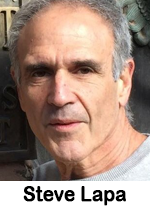
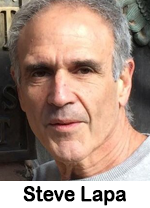
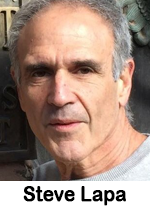
By Steve Lapa
Lapcom Communications Corp
President

Talk radio - PodcastHave you picked up the most recent buzz around Artificial Intelligence? It’s hard to miss it.

Seems like the AI buzz is getting louder as more companies face the pressure to improve efficiency and profitability during this roller coaster economy. From Silicon Valley’s tens of thousands of layoffs to Steak ‘n’ Shake closing 30 locations, the heat is on.

Companies vested in the terrestrial radio business have known this pressure for years as we function in a world of single-digit growth and AM radio stations going dark as the real estate is worth more than the FCC license. For the first time, some of the players on the podcast side are feeling the financial heat as the congested podcast world fights for highly competitive ad dollars.

How can AI be a resource in the broadcast radio and podcast ad sales world? Here are two examples of what could be around the corner on your next sales email, Zoom or from the office phone pitch.

— AI audio/phone recognition. Imagine software tracking your phone pitch or Zoom call collecting phrases that identify rate objections, efficiency objections, competitive objections, talent objections, even content objections. Management teams skilled in reviewing the “phrase data” analyze everything from the number of times the objection is raised to the category or tenure of advertiser raising the objection(s). Fast forward to solutions. If your team is made up of multiple sellers with various levels of experience and similar objection(s) appear frequently, management responses and adjustments happen faster, with less stress as the numbers tell the story, not the seller in a confessional. Those adjustments appear in coaching bubbles on your screen as you engage.

— AI shows us the phrase that pays. By now you should know many of the key words and phrases that are sales friendly, grab attention and move you to a close. As well as the opposite – those dreaded turn-off words that turn a warm conversation into stone-cold ghosting. What if the AI software interfaces with your emails? AI could be programmed to identify the key phrases that help close a deal as well as those that are deal busters. I once attended a sales seminar that coached away from using the word “contract.” Not a good takeaway for me. All I could imagine was the legal team slapping their foreheads.

Something tells me the AI software discussed already exists working in the field somewhere helping a sales team become more efficient and crushing the earnings barrier. It’s only a question of when our radio/audio world will be smart enough to adapt the tools for a smarter sales path.

Steve Lapa is the president of Lapcom Communications Corp. based in Palm Beach Gardens, FL. Lapcom is a media sales, marketing, and development consultancy. Contact Steve Lapa via email at: Steve@Lapcomventures.com

Industry Views

Monday Memo: The Conscious Shopper

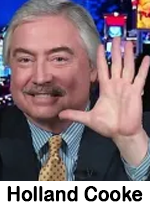
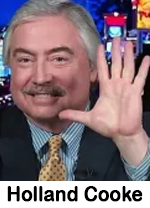
By Holland Cooke
Consultant

Joe Pags - Talkers MagazineWhenever possible, USA consumers will pay cash, and they’re paying-down credit card balances, per recently released Ipsos polling data.

Already coping with inflation and wary of a 2023 recession, consumers are in “need” vs “want” mode. They’re choosing generics and store brands and favoring purchases “made of high-quality and longer-lasting materials.”

One conspicuous exception to this growing frugality jumps-off the page…

Americans have a yen for vacation, if little else

“Alongside declining consumer confidence levels in the U.S., Ipsos online community members believe most of their cost-saving behaviors from the summer will continue, aside from cutting back on travel. Specifically, compared to the summer of 2022, they feel they are less likely to hold back on taking trips outside the home or making travel plans. After living through years of lockdowns and restrictions, they say travel isn’t something they are willing to give up in 2023.”

Sales lead: Local travel agents

Local radio is still local businesses’ best friend defending against e-commerce competitors, and personal service is the silver bullet. Travel is an Internet DYI remorse category, after disappointing experiences squandered bargain shoppers’ precious vacation time and money.

Hear the copy? Travel agents who have taken tour wholesalers’ junkets can recommend in a seductive anecdotal fashion. They describe meals in mouth-watering detail. “After all we’ve been through the last couple years, you’ve earned it! And I will personally see to all the details.”

And brainstorm which other local businesses sell the “experiences” that consumers, increasingly, choose over “things?” It’s a clear trend that cuts-across all demographics.

DJs, talk hosts, remaining promotion people and local newscasters: Read the room.

This IPSOS report is a free PDF download that takes listeners’ temperature.

Holland Cooke (HollandCooke.com) is a consultant working at the intersection of broadcasting and the Internet. He is the author of the E-book and FREE on-air radio features Inflation Hacks: Save Those Benjamins;” and “Spot-On: Commercial Copy Points That Earned The Benjamins,” a FREE download; and “Multiply Your Podcast Subscribers, Without Buying Clicks,” available from Talkers books.  Follow HC on Twitter @HollandCooke

Industry Views

NAB Out of Step on Non-Competes

By Walter Sabo
Consultant, Sabo Media
A.K.A. Walter Sterling
Radio Host, Sterling on Sunday

It’s tough enough for radio talent to navigate stable careers in these days of consolidated station ownership, personnel cutbacks and drastic salary reductions – but the NAB’s newly stated stance on non-competes adds insult to injury and is out of step with the interests of beleaguered professionals still hanging on for dear life in the programming sector of this industry. I understand that the National Association of Broadcasters is at heart a lobbying group representing the interests of the medium’s ownership but, c’mon – non-competes really are of another era and egregiously unfair.

This week the NAB announced that they were not in favor of the FTC ruling to ban non-compete clauses that prevent radio talent from crossing the street. The FTC is proposing the ban on non-competes for a broad section of industries compelling dozens of industry lobbies to sign a letter to Congress in opposition to the ban.

The lobbyists’ letter says that the FTC’s rule would invalidate millions of contracts around the country that courts, scholars, and economists have found entirely reasonable and beneficial for both businesses and employees. “Accordingly, we ask you (Congress) to exercise your oversight and appropriations authority to closely examine the FTC’s proposed rule-making.”

Government interference with the practices of any industry, especially in the area of freedom of competition, is never a good idea. The NAB and other industries believe banning non-competes constitutes FTC overreach. And that is a solid argument. However, the NAB also suggests that broadcasters present a unique case for non-compete clauses due to the “substantial investments broadcasters make in promoting on-air talent.” That’s where they are grossly behind the times.

Maybe in TV. But it has been decades since any radio company has made any investment in promoting their on-air talent. Do you have a $500 “name” jingle? Where are the billboards? Whatever happened to TV and newspaper ads?

Non-competes are deployed in most industries to protect trade secrets. All of radio’s trade secrets are on the air!

Walter Sabo, consultant, can be contacted at Sabo Media: walter@sabomedia.com. Direct phone: 646-678-1110.  Check out www.waltersterlingshow.com.

Industry Views

The Daily Dance of Affirmation

By Michael Harrison
Publisher
TALKERS

Talkers Magazine - Talk radioThe embarrassing situation and accompanying financial vulnerability being faced by our colleagues at FOX News is a high-profile example of the consequences of audience “targeting” that has become the common positioning strategy in today’s competitive media marketplace.  The process is simple: You give the specifically targeted audience what it wants, not necessarily what it needs, even if what it wants is of dubious quality or unhealthy and – in the case of political talk media – untrue. It is a problematic, unsavory practice that has been brewing in our industry for years and, in the case of FOX, the proverbial toxicity has just hit the fan.

However, those in both the talk and print media, who are sanctimoniously gloating over FOX’s self-imposed misfortune, had better take a real hard look at themselves in the mirror. The strategy of serving up red meat to highly defined core audiences is practiced almost religiously by both the left and the right (not to mention purveyors of sports talk, specialty subjects and even music) – and the tolerance for talent deviation from this course by management has dwindled to almost zero. Today’s overworked and fear-driven managers have no stomach for audience complaints or ratings dips resulting from hosts saying things that do not resonate with the almighty “core.”

Smart programmers over the decades (and I’ve known some) understand that doggedly super-serving the low-hanging fruit of the core eventually yields diminishing returns. You wind up with a happier-but-shrinking audience of increasingly off-kilter zealots who eventually viciously turn on you when you stop feeding them the red meat they crave in what I call the daily dance of affirmation. It is that philosophical gray area between flat out lying or simply being wrong. What it comes down to is this inconvenient truth: programming for ratings, sponsorship support and audience approval isn’t simple.

Heaven help the progressive host who finds fault with Saint Biden or the conservative host who goes against the insidiously pervasive Trump factor. Or the sports talk show host who complains about the downside of betting. Or the music jock who actually engages in music criticism. This is the industry’s elephant in the room.

It’s time to acknowledge the beast.

Michael Harrison is the publisher of TALKERS.  He can be reached by email at michael@talkers.com.

Industry Views

Maximizing Impact for Sponsors

By Michael Berry
Host, The Michael Berry Show
KTRH, Houston – iHeartRadio
Independent Syndication

Growing up in a small town, “word of mouth” was the most powerful form of advertising. It could make – or break – a business.  Malcolm Gladwell’s important Tipping Point book explained that movements, pandemics, and other things that “catch on” do so because of the influence of “connectors” – people who are asked for their opinion. Today, the media world likes to call them “influencers.”

For 17 years, I’ve entertained listeners on the radio and on podcast. Our show has built what many in the industry tell me is an impressive business model. Like Gladwell, I created our own vocabulary and I am strident in enforcing the use of it. Because words matter. I explain to companies that they are our “sponsors,” not “advertisers.” I explain that they put their name behind our show, just as I do for them. In a commercial break stop-set that will be several “commercials” for “advertisers,” but only a couple of my “endorsements.” I don’t speak for a company unless I believe in what they do and how they do it. Likewise, I encourage listeners to send me feedback on their experience with my show’s sponsors. I forward those to the sponsors, either with a request that they address the shortcoming in the service or an attaboy for a job well done.

Listeners tune in to radio, particularly talk radio, to hear the opinions of the host. The host’s opinion matters. If he shares his opinion on movies he likes, foods he enjoys, political candidates he supports, that opinion can affect what the audience does. It is also true that – if his recommendation is trusted by the listener – it can affect the choices the audience makes when they buy something or hire someone to perform a service. But it has to be an “endorsement.”

The radio industry, for many, many years, failed to recognize the value and power of an endorsement. Sellers would sell advertising to clients and get the on-air talent to read the copy points the client (or agency) wrote. Often listlessly, just reading. That is not an endorsement. It is not a host suggesting to his audience where he would personally buy a new door for his home, or take his wife for dinner. If, however, the “read” (a term that reflects that the host is simply reading words someone else wrote) were instead an endorsement, he wouldn’t need all those details. Instead, with just the name of the company, and the owner, and the phone number, as well as what category they are in, he would be able to speak for 30 seconds about why that business is special, why he would (and hopefully has already) use them.

An endorsement is a stamp of approval. It says you believe in someone or something. If an endorsement is really an endorsement, it doesn’t need new copy points to be “freshened up.” It doesn’t include discount offers, seasonal sales, “get in quick before they run out” scares, or other silly tricks Americans long ago learned to ignore. Using that language kills credibility. If I ask you where I should buy my car, and you have a dealer you believe in, you’ll refer me to them, and, if you really like them, call them yourself and ask them to take care of me. “Hook me up” as the kids say. I’m not going anywhere else after an endorsement like that.

Radio (and podcast) has a big future, because of the connection audiences have with hosts. Why abuse that connection? Why cheapen it? Sales reps should understand that and make it part of their pitch. My best sales reps literally dial up companies in industries I identify and start with the question, “Do you listen to The Michael Berry Show?” If the answer is no, I don’t want them as sponsors. I want folks who understand why I’m controversial, why my audience listeners, what my values are.

Radio and podcast’s future is dependent on a sound business model that understands what makes us special, unique, and better than other forms of media.

Here is my list of suggestions to sellers and hosts, in hopes of facilitating better results for show sponsors:

— Sellers should never pitch a client without asking the talent first.

— Talent should not endorse a company without researching and approving them.

— Talent should tell sellers what sorts of things they WANT to endorse. Guns, cigars, home improvement, cars, medical. The best endorsement is something the talent will use himself. An avid gun owner is going to present a very compelling (and effective/profitable) endorsement for a gun range he visits once a week. Look at how weight loss sponsors have profited when the host follows their program and endorses it on air.

— If a sponsor isn’t committed to a yearlong relationship, don’t do it.  It ruins credibility to change the endorsement inside the same category. Again, credibility is everything.

— Talent should develop personal relationships with sponsors. They can help listeners this way and the sponsors become show content.

— The value of talent to the station is far more than just ratings. Half my audience is 55+, so the 18-34 or 25-54 rating is less useful to me.  But when show sponsors stay on air for 10 or more years, it is a ringing endorsement that what we do works. They vote with their dollars. The whole point of ratings was to show agencies how many people listened, in hopes that that vast listening audience would respond to the commercials they hear, thus monetizing the show, right? Why not go straight to the “dollars in (from the sponsor), dollars out (listeners spending money with sponsors)” model?  Show sponsors who get tangible results from their partnership with talent don’t cancel their buy.

— Openly discuss how much money a talent brings into the station. The programming side of radio loves to talk about things that don’t generate dollars, while the sales side is often disconnected from the actual product they are selling.  Fix that.

Michael Berry is a longtime, high-ranking member of the TALKERS Heavy Hundred. He’s heard daily on KTRH, Houston and across the country on his own independent network.  Michael Berry can be emailed at michael@michaelberryshow.com.

Industry Views

Monday Memo: 5 Ws + $

By Holland Cooke
Consultant

Joe Pags - Talkers MagazineLocal news sponsorship is an opportunity to “fish for whales,” institutional advertisers who can associate with something special. And, well-done, local news sure is special, because:

New-tech audio competitors don’t do it, and most AM/FM broadcast hours are now robotic.

Newspapers are in a tailspin swapping print dollars for digital dimes; and their – and TV stations’ – websites aren’t as portable as radio.

And it’s easier to add occasions of listening than to extend duration-per. Translation: There’s very little we do can keep someone in a parked car with the key on Accessories.

First things first: Plan NOW for The Big Story. In a recent column here I outlined the “break the glass” plan you should prep.

 As for day-to-day local news:

Who are you talking to? Habitual radio users – especially news/talk – are older-than-younger. Think Baby Boomers (born 1946-1964), who control most retail spending. And report information that matters to people with children of any age living at home (super-spenders) and people driving (what’s happening right now, and what threatens to block their path). Think “car radio” for busy people and you won’t turn-off anyone sitting-stiller.

What: INFLATION, health and safety, “survival information” (weather = news). Jim Farley, my successor managing WTOP, Washington, hung a sign in the newsroom: “WGAS,” his litmus test for relevance, “Who Gives A Shit?”

Where: What’s happening within your signal pattern? And when everyone’s buzzing about a big story elsewhere, localize by asking pertinent sources “if it happened here?” and Man-on-the-Street interviews (local accents) reacting.

When: What JUST happened…what’s happening right NOW…what happens NEXT. When you’re wall-to-wall, do frequent resets, because people believe your promos, and are tuning-in to know. Other times, specific goal: Each newscast sounds different than the last.

Why it matters to your listener: News people I coach will chisel this onto my tombstone: Report consequence, not process. Don’t give me the minutes of the City Council meeting, tell me how what-was-discussed will impact me. Rewrite press releases, which aren’t easy on the ear (“The public is asked…”), tend to be process-laden, and are often self-congratulatory.

Longtime ABC News executive Av Westin, one of two industry icons we lost in 2022: “I believe the audience at dinner time wants to know the answers to three very important questions: Is the world safe? Is my hometown and my home safe? If my wife and children are safe, what has happened in the past 24 hours to make them better off or to amuse them?”

Tips:

— Emulate your network’s writing style.

— HIGHLY recommended reading: “Writing Broadcast News: Shorter, Sharper, Stronger” by Mervin Block.

— Rewrite to favor The Magic Words “you” and “your” and avoid third-person-plural (words like “residents”). Instead of “Business owners interested in applying for these loans should contact…” say “If you’re a business owner…”

— Arrange with a local TV station (“our news partner NBC28”) to use their sound, in exchange for attribution (which will enhance their standing and serve to promote their newscasts).

I am encouraged by how much 2022 work sought me out, asking that I review stations’ local news copy, and work with the local newscasters whose work can habituate listeners and make money.

Make your work count twice.

— When you’re covering a meeting or event, ask people there something else too. “How are YOU feeling inflation?”

— Say WHERE you gathered comments. “We spoke to shoppers leaving Star Market in West Springfield.”

Al Primo, inventor of “Eyewitness News,” who also passed away last year: “People can tell their stories better than we can write them.”

Holland Cooke (HollandCooke.com) is a consultant working at the intersection of broadcasting and the Internet. He is the author of the E-book and FREE on-air radio features Inflation Hacks: Save Those Benjamins;” and “Spot-On: Commercial Copy Points That Earned The Benjamins,” a FREE download; and “Multiply Your Podcast Subscribers, Without Buying Clicks,” available from Talkers books.  Follow HC on Twitter @HollandCooke

Industry Views

Pending Business: How Are We Doing?

By Steve Lapa
Lapcom Communications Corp
President

Talkers Magazine - Talk radioHow might we better serve you in the future? How would you rate our service?

These are two common questions you will see on many restaurant info cards as you pay for your meal. After all, the restaurant business is fundamentally based on great food and great service at a reasonable price. Think about this: If either of those two basic components, food (product) and service are missing, you are outta there!

Our radio/audio sales business is based on the same thing: great product and great service at a reasonable price. Yet, why is it you will never find yourself or a manager asking those questions as a part of your regular follow-up or follow-through routine? Oh sure, there is the ever-present pre-sell, “How can we help?” as your advertiser mutters, “lower rates,” under their breath. But seriously, no one above or below your pay grade can process or properly evaluate the answers to the two service questions posed, let alone act intelligently on the response. Could it be we still think our sales and management roles are rooted in show business and if we put on a great show delivering great ratings the advertisers will follow?

Some advertisers will show up, others need to be sold. With Zoom, Teams, programmatic, AI and other initiatives gaining more and more traction, the service improvements in salesmanship is becoming a lost art.

Time to hit the pause button, step back and learn from our friends in one of the oldest business categories on planet earth: hospitality. Let’s learn.

— Ask for feedback as you “serve.” Since my first meeting, my mantra for sellers and sales management was and still is, “How are we doing?” Go back to your winning and losing sales calls. Even managers should review meetings that did or did not move sales and ask, “How can I better serve______?”

— One step at a time. If you could improve just one thing to better serve an advertiser, what would it be? What could it be? Do you even know?

— Do you care? Ouch! Now that is a hard core, in-your-face question. Comfort zones are just so easy to occupy, we rarely push forward.

My real-world experience happened years ago when I asked our advertisers what we could do better to serve them. Many host-read advertisers wanted times sent to them in advance so they could hear the talent in real time. Every one of those advertisers became longterm fans. Do you send your advertisers host-read times in advance? Sometimes, it’s the little improvements that win big dollars when it counts.

Steve Lapa is the president of Lapcom Communications Corp. based in Palm Beach Gardens, FL. Lapcom is a media sales, marketing, and development consultancy. Contact Steve Lapa via email at: Steve@Lapcomventures.com

Industry Views

The Power of Magical Contesting

By Walter Sabo
Consultant, Sabo Media
A.K.A. Walter Sterling
Radio Host, Sterling on Sunday

Radio is good at contests. TV and print suck at contests. However, when listeners are asked why they tune to radio, contests are at the bottom of the list.

Contests are at the bottom because the question is not worded correctly. Dozens of focus groups reveal that nobody admits to entering radio contests. Wrong question. We changed the question: “Most people enter radio station contests, which ones have you entered?

Nine out of 10 hands shot up – all groups all demos. Every time.  That’s not the news. The news is that all participants STILL HAD THE PRIZE.  Yes, they kept it as a valued treasure.

The contesters remembered the station, the time they won and the DJ, even if they won 20 years ago. Why? Because it was their brush with show business magic. Radio makes magic. The more magic radio makes, the greater its engagement with listeners.

There is no magic awarding “$1,000 in our national contest.” Imagine following the $1,000 station promo with a news story about $2 billion Powerball drawings. Radio cannot compete for prize money, but radio can compete with magic. Yes, the research will show that most people want to win cash, but radio can’t give away enough cash to be memorable or emotional. Radio can make magic with creativity for very little money.

At the end of this column I’ll share with you the most magical contest ever produced by a radio station. To make magic first dive into the list of needs in a person’s mind. In 1974! I launched the first PAY YOUR RENT OR MORTGAGE contest. It was on WOR-FM in New York City.  Every winner came to the station to pick up their check and made the same statement, “I bet no one else had a bigger rent.” The rent or mortgage payment looms so large in our collective brain that it is overwhelming. What else looms large in your listener’s brain -solve the need, award the prize. Turn the $1,000 cash from corporate into something cool and top of mind.

For true engagement, award a specific element from your station or show. For example, Robert Clotworthy is the VO announcer on History Channel’s Ancient Aliens and The Curse of Oak Island. You know the voice. Clotworthy is a frequent guest on my show, “Sterling on Sunday.”  As a prize, we offer Robert to voice your voice mail greeting: “IS PETER A REMNANT FROM OUR DISTANT PAST? ANCIENT ALIEN THEORISTS SAY…LEAVE A MESSAGE.”

Every winner will be asked by their friends “How did you get that???”

Three keys to a successful contest: The prize, the prize, the prize. Very important: The magic of the right prize benefits the overall appeal of the station to every listener, not just contest players. That urgent suggestion is rooted in this astonishing fact first revealed by early PPM data: Contest players are primarily contest players. The PPM measures actual people and actual behaviors. Most contest players float to ANY station offering contest prizes. When the contest is over, the players migrate to the next station offering a contest prize.

This is the most magical contest ever produced, please listen to the whole, humbling aircheck. https://youtu.be/yt3io2nFlt4

 Walter Sabo, consultant, can be contacted at Sabo Media: walter@sabomedia.com. Direct phone: 646-678-1110.  Check out www.waltersterlingshow.com.

Industry Views

Pending Business: Being Realistic About Podcast Revenue

By Steve Lapa
Lapcom Communications Corp
President

It looks like the podcast business is hitting those ever-present speedbumps.

No, I am not predicting a demise. I’m just asking why there weren’t a few more hardball questions.

If you sell or manage with eyes wide open, you’ve already read what the February 15 New York Times article chronicled. The cutbacks, drops, and hiring freezes hitting the double-digit-growth podcast business has some in the radio business saying, “Told ya so.”

Who has the chutzpah to say that to Tom Brady and Michael Strahan of Religion of Sports, or Michelle Obama of “The Michelle Obama Podcast?” When your bank account is on fumes, you speak the economic truth. The formula of star power driving unique audio content didn’t instantly convert to super-sized audience levels attracting super-sized revenue. What did VOX, Spotify, Amazon, NPR and other well-respected players miss?

— Never assume, (because assuming…) An out-of-the-box assumption listeners would pay for content to create a separate income stream, didn’t really take. Even the most aggressive marketer would think twice before assuming that listeners generating millions of downloads of free podcasts would suddenly pay to listen. Maybe a select few passionate followers would, but could you change the historic perceived value of the masses? When it comes to paywalls for play, be sure to test, adjust, and re-test before you project income.

— Ad sales sell out levels. A typical podcast has about a quarter of the inventory available in a typical hour of most news/talk and sports talk programs. Yet despite podcasts with limited inventory and higher CPM for host-read ads inside the podcasts, the projections from those well-respected companies tanked. The reason is elegantly simple. Too much podcast inventory chasing too few dollars.

— It’s the economy, stupid. Thank you, political strategist James Carville. The story goes the phrase was on a sign in Bill Clinton’s campaign headquarters and helped Clinton beat Geroge Bush in 1992. Did any of the gurus consider the economy?

— Who would have thought print newspaper sales have something in common with podcasts? Did anyone consider the impact of endless ad inventory becoming a commodity despite celebrity content? Never easy to predict which celebs will convert from the big screen or TV to podcast audio.

I had the privilege of producing cast members of Discovery’s “American Chopper” in a 39-episode podcast series. Even those crazy motorcycle dudes were challenged bringing their millions of TV and online fans to the podcast world. Hindsight is 20/20. Let’s never stop learning so we can always aim for higher earnings.

Steve Lapa is the president of Lapcom Communications Corp. based in Palm Beach Gardens, FL. Lapcom is a media sales, marketing, and development consultancy. Contact Steve Lapa via email at: Steve@Lapcomventures.com

Industry Views

Monday Memo: Sound Popular

By Holland Cooke
Consultant

Joe Pags - Talkers MagazineWeekend ask-the-expert shows can be a powerful marketing tool. In a recent column, I outlined how attorneys – an industry where supply exceeds demand – can differentiate from competitors’ look-alike billboards and often-tacky TV spots.

And, well-coached, brokered weekend hours can drum up lots of business for financial advisors, and how-to hosts fielding calls on a variety of other topics. For years, an EXTERMINATOR has done Saturday mornings on WPRO-AM, Providence, and the guy’s a rock star.

Tip for weekend warriors: Record every call you take. Build a library.

— With a trove of pre-recorded calls, you can recycle previous live calls, to get-the-ball-rolling, and steer the conversation into your lane. And sounding so popular implies your authority.

— With all we do to make your weekend show “appointment listening,” you don’t want to disappear when you’re on vacation.

— When you assemble the show that airs in your absence, do include the appropriate disclaimer, but avoid the “Best of” cliché that screams “re-run.” Instead of simply repeating a previous show intact, make it a true best-of, with calls that were on-topic and particularly helpful.

— And rather than repeatedly saying “Don’t’ call,” let the board op thank those who do call (off-air); or if calls ring-through to voicemail, use it to collect callbacks, deepening your collection.

— You can also repurpose calls into topical FAQ podcasts, to-which you Tweet links, and promote on-air and to your email database.

Holland Cooke (HollandCooke.com) is a consultant working at the intersection of broadcasting and the Internet. He is the author of “Multiply Your Podcast Subscribers, Without Buying Clicks,” available from Talkers books; and “Spot-On: Commercial Copy Points That Earned The Benjamins,” a FREE download; and the E-book and FREE on-air radio features Inflation Hacks: Save Those Benjamins.” Follow HC on Twitter @HollandCooke

Industry Views

Pending Business: Your Trial Balloon

By Steve Lapa
Lapcom Communications Corp
President

Talk radio - Talkers MagazineIf you float a trial balloon, expect it to be shot down.

And to make the story driving the news headlines a better metaphor for our sales world, it should be noted that gathering information is always part of our mission. Sellers and managers should be floating trial sales balloons all the time.

Consider how many times we talk to our best advertisers to float an idea, a package, picking up a known talent or play-by-play rights to a popular team. But here is where the news story and our sales world take different forks in the road. Although the woods are full of downed sales balloons, it’s a good thing. Because in our sales world downed trial balloons mean we’re trying new things, communicating with our advertisers and not rocking along in the comfort zone. It also means some of these trial balloons make it to reality and become innovative ideas and viable sales opportunities.

I have certainly floated my share. There is a strategy behind floating a trial sales balloon to help you get the result you need. How do you improve the odds of a trial balloon becoming a sales reality? Here are some field tested tips:

— Determine your goals before you start. It’s so important to know what you’re looking for. Pricing input? Viability? Excitement? Sometimes sellers are so excited they misread the advertiser’s enthusiasm level. The reverse is also true. Sellers can be lukewarm as they focus on the transaction ahead instead of the first stage advertiser input.

— Ask permission. This is very important yet most sellers and managers never think about the advertiser reaction. What if they just don’t want to be surveyed? Always ask first.

— Confirm the confidence. Be sure everyone in your loop understands the trust you show in seeking their input.

— Keep your “ask” simple. You are asking for input. The simpler the ask, the cleaner the input.

— No commitments. Be clear the conversation you are having is early-stage preliminary to test the waters only. You are not even close to asking for a commitment, just sharing ideas and looking for input.

— Who wants to know? Be ready with the right answer.

Sellers and managers have been in the trial balloon business since the first ad was sold. Be sure to review your pre-flight check list before launching that next trial balloon.

Steve Lapa is the president of Lapcom Communications Corp. based in Palm Beach Gardens, FL. Lapcom is a media sales, marketing, and development consultancy. Contact Steve Lapa via email at: Steve@Lapcomventures.com

Industry Views

Monday Memo: Even a Robot Knows!

By Holland Cooke
Consultant

I asked ChatGPT, “What IS ChatGPT?”

Instant reply: “ChatGPT is a pre-trained language model developed by OpenAI. It uses advanced natural language processing techniques to generate human-like text responses to questions and prompts, based on patterns it learned from a massive amount of text data. It is designed to assist with a wide range of tasks, including answering questions, generating creative writing, and translating text between languages. ChatGPT is built using the GPT (Generative Pre-trained Transformer) architecture, which has been state-of-the-art in many NLP tasks.”

If ever there was an elevator speech that sounded robotic, that’s it. But pick almost any other topic, and – quicker than you’re expecting, ChatGPT scours the Internet – and most of what it spits-back can seem eerily conversational. Including my question about conversation itself: “What DJ or talk show host habits do listeners find most annoying?” Mere moments later…

“Here are some habits that listeners may find annoying in DJs or talk show hosts:

— Interrupting guests or co-hosts: Listening to a conversation that is constantly being cut off can be frustrating for listeners.

— Talking over music: A DJ who talks over the music can detract from the listening experience for music lovers.

— Shouting or excessive enthusiasm: An over-the-top delivery style can come across as insincere or artificial to listeners.

— Unnecessary repetition: Repeating the same jokes, phrases, or segments repeatedly can quickly become tiresome for listeners.

— Lack of preparation: A lack of research or preparation can lead to awkward silences, missed opportunities, or inaccurate information.

— Poor phone manners: Rude or abrupt treatment of callers can be off-putting to listeners and impact the overall tone of the show.

— Ignoring listener feedback: Failing to respond to listener feedback or questions can make listeners feel unvalued and disengaged.

— Being too political: Focusing exclusively on political topics or taking a one-sided approach can alienate listeners with differing opinions.

— Playing too many commercials: Excessive commercial breaks can make the listening experience feel repetitive or disjointed.”

With most AM/FM broadcast hours now automated, syndicated, and voice-tracked, even a robot knows what it takes to keep our fellow humans from wandering-off to less-cluttered music streams and greater topical variety that podcasts offer.

Holland Cooke (HollandCooke.com) is a consultant working at the intersection of broadcasting and the Internet. He is the author of “Multiply Your Podcast Subscribers, Without Buying Clicks,” available from Talkers books; and “Spot-On: Commercial Copy Points That Earned The Benjamins,” a FREE download; and the E-book and FREE on-air radio features Inflation Hacks: Save Those Benjamins.” Follow HC on Twitter @HollandCooke

Industry Views

When Crisis Strikes

By Steve Lapa
Lapcom Communications Corp
President

Can you define “crisis?”

Let’s start with “highly challenging,” move to “difficult,” layer in “nonstop pressure” and quickly fast forward to “intense circumstances.”

This is just from the outside looking in. From the inside looking out the crisis owns the clock and the emotions of its victims. Nothing else matters until the crisis is resolved.

Chances are your sales meetings have never addressed how to work with a local advertiser who is experiencing a marketing crisis. And that is because most managers have minimal experience working through a local advertiser’s marketing crisis.

Large-scale businesses typically coordinate consulting firms, experts, and major ad agencies. Think Tylenol, Chipotle, even VW. But chances are your local direct advertiser may not have the time to coordinate a full-blown crisis management team and responding to their call is now in your in box.

Recently, I found myself knee-deep in executing a plan to help manage a large-scale crisis. The experience was an eye-opener. Hopefully, you can learn from what is next. Here are suggested steps:

— Communication is critical. Listen carefully, be empathetic, clarify all goals that may be hazy and finally get a clear understanding of any timelines.

— Collaborate. Be clear with everyone on your team about the situation. Review internal protocols for copy, production, available inventory, and pricing.

— Long-Term vs. Short-Term. When an advertiser needs to get the word out quickly and efficiently, the temptation to raise rates or forced packaging is real. It is guaranteed that your advertiser will remember the team that grabbed an oar to help guide them to a safe harbor as opposed to the team that grabbed a hammer to nail the budget to the wall.

— Coordinate. Stay in contact with your advertiser. Remember, the crisis owns the clock and your client is focused on solving the crisis, so common sense counts.

— When in doubt take the simple route. If copy is a problem, suggest options. If credit is a problem, suggest a plan. If a talent balks, come up with a back-up. In a crisis, hurdles become mountains and climbing mountains takes months of training. Keep the solution path simple and easy to navigate.

— This too shall pass. Your goal in any local marketing crisis should be to become an ally, a trusted, dependable resource so that when the crisis passes your relationship is cemented.

Take a minute to review and expand on those six take-aways. Selling in a crisis environment is rarely a simple experience. Hopefully, you will be a little better prepared when a marketing crisis strikes.

Steve Lapa is the president of Lapcom Communications Corp. based in Palm Beach Gardens, FL. Lapcom is a media sales, marketing, and development consultancy. Contact Steve Lapa via email at: Steve@Lapcomventures.com

Industry Views

Monday Memo: “Try this…”

By Holland Cooke
Consultant

Companies hire consultants to avoid experiments. We improve results by customizing and implementing Best Practices proven elsewhere. So, I’m about to break a rule, because advertisers in a super-opportune category have become a noisy blur.

Personal Injury: The gift that keeps-on-giving

Legal representation of purported victims of fender benders, slip-and-fall accidents, and other “injuries caused by the negligent, careless, or reckless actions of others” is an industry in which supply exceeds demand. Thus, all the outdoor and TV advertising. And too little radio.

In the Providence, RI TV market I watch at home, this category stands shoulder-to-shoulder with look-alike automotive spots in sheer dollars over-spent. And their message is the same on billboards:

— The attorney’s head shot (also a real estate agent cliché); and

— 6-figure settlements touted.

Because they’re all shouting the same thing, they resort to tactics:

— Attorney Rob Levine is “The Heavy Hitter,” and runs enough TV that viewers in Southern New England can sing the jingle: “The Heavy Hitter is the one for you. Call one-eight-hundred-law-one-two-two-two.” To his credit, it’s a different phone number than his web site offers, so he can track TV results.

— Easier to remember: Bottaro Law: 777-7777.

Watching local Las Vegas TV while at CES recently was a deep dive into Law advertising. The pitch from several I saw was we charge less, like a shameless radio competitor dropping-trou’ to get the entire buy.

If we don’t win, you don’t pay

 “What are your rights? What is your case worth?” Possibly a cash amount divisible-by-3, if that’s the attorney’s contingency.

Those expensive nationally syndicated TV spots (customized for the local firm) depict fearful insurance executives eager to settle. And the attorney may threaten that, “if they don’t, we’ll beat ‘em in court.” Baloney, that’s the last thing the lawyer wants. Too time-consuming and risking a losing verdict.

Like radio commercials, attorneys’ inventory is perishable

— We can’t sell yesterday’s empty spot avail; and lawyers’ closing opportunity is “B.I.S.,” Butts In Seats for that free, no-obligation consultation, in-person, where the seller goes for the close.

— If nobody was sitting in that chair today (“intake”), no sale.

— And that’s how attorneys are missing a bet not using radio.

“The lawyer is in, the meter is off”

 That’s the proposition when they field listener calls in brokered weekend talk radio shows.

— DONE RIGHT, these shows can run-rings-around TV and outdoor ROI.

— Forgive caps lock in that last sentence, but it’s a crying shame how – at too many stations – the audition for pay-for-play weekend talkers is the-check-didn’t-bounce. One of the things I do for client stations is coach-up weekend warriors — in hosting fundamentals that are second-nature to us — but not to non-career broadcasters. Results = renewals. Otherwise brokered hosts churn, a management distraction, and upsetting listening habits.

— Occasionally, in markets where I don’t even have a client station, I’m working with lawyers (and real estate agents, financial advisors, foodies, and other ask-the-expert hosts), because nobody at the station is doing airchecks with them.

— No billboard or tacky TV spot can humanize the attorney – and demonstrate the comforting counsel – like eavesdropping on a conversation with a caller’s relatable situation.

Think “sales funnel”


We know how to make the phone ring, specific dance steps. The more callers, the better.

— When lines are full, screeners can choose callers whose dilemma is in the attorney’s lane. If, for instance, the host specializes in Personal Injury (or “Family Law,” translation divorce; or another specialty), calls about real estate transactions are off-topic.

— Do this right, and – before the host can offer – callers will often ask “May I call you in the office on Monday?”

Admittedly, this is an experiment…

…because I am frustrated witnessing all this noisy me-too advertising.

Personal Injury cases are he-said-she-said. So try this, and tell me if it works.

— Sales 101: That first call is Needs Assessment, right? Know the prospect’s pain.

— Yet too many radio reps resemble Herb Tarlek, telling the station’s story. Amoeba-shaped coverage maps and ratings rankers and rate cards all look alike…like Law firm marketing.

— I’m telling any attorney willing to listen to make four words the centerpiece of the marketing message, and they’re the same four words that turn callers into clients for weekend talkers: “Tell me what happened.”

The Free Prize Inside: Podcasts

Lifting weekend calls to repurpose as on-demand audio is digital marketing value-added.

Holland Cooke (HollandCooke.com) is a consultant working at the intersection of broadcasting and the Internet. He is the author of “Multiply Your Podcast Subscribers, Without Buying Clicks,” available from Talkers books; and “Spot-On: Commercial Copy Points That Earned The Benjamins,” a FREE download; and the E-book and FREE on-air radio features Inflation Hacks: Save Those Benjamins.” Follow HC on Twitter @HollandCooke

Industry Views

Stop Throwing Away Weekends

By Walter Sabo
A.K.A. Walter Sterling
Radio Host

Every radio sales presentation should start with one powerful number. This number – often found under the Sphinx – will dazzle any buyer, but is rarely revealed. The number is Homes Using Radio (HUR). Once upon a time it was part of the conversation. HUR shows how many people are using radio at any given time, a total number.

Studying hour-by-hour HUR reveals the most surprising fact: Saturday 10:00 am – 3:00 pm is the second-most, listening-to-radio daypart after Monday – Friday morning drive. If a station suffers in total weekly audience, the first culprit is often squandering Saturday 10-3!

John Catisimatidis, owner of WABC, New York has taken the station from the depths of despair and turned it into a strong contender. His first act as owner was to dump the paid-for weekend programming and replace it with live, local shows. You could trace the ratings jump on WABC to the moment he placed live shows on Saturday midday.

Bart Walsh, a very successful Washington, DC general manager taught me the secret of Saturday midday. He explained that if Saturday midday’s share is higher than the station’s overall total week share, the next book will go up. If it is lower than the total share, the next book will go down. Amazingly this phenomenon has always proven to be true. I always paid attention to Bart because when he ran WKYS it had a higher percentage of profit than anything else owned by RCA and when he and Donnie Simpson ran it, the station was always #1, 12+.  Bart never expensed lunch – or anything else.

The puzzler is that weekends on radio are a built-in win. Americans love weekends. Weekends conjure good feelings and offer discretionary time. Smart stations tap the positive imagery of weekends. Imagine how easy and cheap it would be for a talk station to talk up weekends!

Become the go-to source of weekend activity information. Give away fun prizes that are all weekend related. Go shopping. Share information about local sales and retailer events. The result will be – guaranteed – a significant jump in Monday AM drive cume.

Walter Sabo is a long-time radio industry consultant and thought leader.  He hosts and produces a network radio show titled “Sterling on Sunday” 10:00 pm-1:00 am ET.  www.waltersterlingshow.com.   walter@sabomedia.com

Industry Views

Is Eliminating AM Radio from EVs a Serious Threat to Talk Radio?

An in-depth article by automotive writer Dale Buss published today (2/2) in Forbes is adding volume to radio industry chatter about the seemingly ominous trend toward elimination of AM radio from the dashboard of electric cars based on the premise that the already-static-sensitive band’s listenability would be obliterated by these vehicles’ intense electromagnetic fields. The article titled, EV Makers Are Eliminating AM Radio, Infringing On Iconic Medium, quotes TALKERS founder Michael Harrison who also contributed to some of the piece’s “background” information and premises. In the article, Harrison supports the observation that the sale of EVs constitutes a small fraction of the current automotive marketplace and it will be years before they achieve a critical mass to impact the health of AM radio. In the meantime, Harrison asserted at this morning’s meeting of the TALKERS editorial board, “There are far more immediate existential threats to AM radio, not to mention FM radio, with which the broadcasting industry must contend.” He points out, “Relevance and identity! AM radio being dumped from dashboards is an innocuous thing to worry about. FM radio will be dumped from the dashboard as well… the entire idea of a radio-exclusive appliance is on the verge of obsolescence… and we’re not just talking about electric vehicles – we’re talking about all vehicles! We’re faced with an all-encompassing computer system at the fingertips and voice control of the driver and passengers.” Harrison continues, “In the meantime, today’s media consumers are savvy enough to know how to find their entertainment and information brands via the combination of Bluetooth and smartphone. Thus, the challenge facing both AM and FM radio – two increasingly irrelevant designations – is to maintain the importance, distinguishability and brand of the medium itself – R-A-D-I-O – and not let it get lost in an endless ocean of options available to the potential audience.” Read the Forbes piece here.

Industry Views

Pending Business: Don’t Take Your Air Talent for Granted

By Steve Lapa
Lapcom Communications Corp
President

I’ll bet dollars to doughnuts the updated sales facts below are nowhere to be found in your radio station’s collateral material. This bold challenge is in front of you today as a wakeup call before the calendar becomes your frenemy.

The traditional calendarized selling events are about to begin starting with Valentine’s Day and you need to be current. Ratings, on-air lineup, and outside marketing may be out of your control but sharpening your selling skills and updating presentation materials is totally a selfie.

I’ve used many “wow” stats on sales calls – sometimes together, sometimes separately – but they’re always an important part of the pitch. Radio metric showstoppers with local appeal are mission critical in today’s fast-moving sales environment. Here’s a three-point, freshen-up to be integrated strategically when packaging or in stand-alone radio presentations. Use them or lose them, but at least choose to consider them.

— Nearly 80% of listeners say they would try a product or service recommended by their favorite radio personality, so says The Power of Local Radio Personalities study published by Katz last year. Now that is one heavy duty number! Careful about making this a universal, across-the-board statistic. Recommending a retirement community to the Gen Z audience is a non-starter. But when the radio talent is talking to that 55+ crowd in the right talk radio environment, that sound you hear is the phone lighting up with leads. When great creative is delivered by a great radio personality the audience comes alive.

— “79% of on-line searches are initially prompted with hearing an ad on radio,” according to Harvard Media, a Canadian marketing firm. The hard number may seem high for many of us, but the concept of using radio to enhance a multi-platform campaign, especially at the local level, is a tried-and-true formula. Call the concept what you will – media mix, multi-channel/platform – consistent messaging across the board delivers results.

— Digital disconnects. Ad blockers are in. According to a recent Hubspot survey update, 64% of ad blocker users say ads are intrusive while another 54% say ads are disruptive. Talk about negativity compared to the nearly 80% of radio listeners who consider their favorite personalities a trusted friend. We all want to hear what our friends have to say!

Chances are your basic sales materials are 2022 rollovers. Freshen up your look and give yourself a new reason to make the next call.

Steve Lapa is the president of Lapcom Communications Corp. based in Palm Beach Gardens, FL. Lapcom is a media sales, marketing, and development consultancy. Contact Steve Lapa via email at: Steve@Lapcomventures.com

Industry Views

Monday Memo: Baseball Bonanza, Part 2

By Holland Cooke
Consultant

In last week’s column, we outlined the playbook for selling radio’s 2023 baseball season. This week, how smart stations leverage the franchise to build Time Spent Listening.

Plan now to OWN the games

They’re also on SiriusXM, where you can decide which team’s feed you want to hear. And “The MLB is back on TuneIn, and this year TuneIn Premium is the destination for all things baseball. With a Premium plan, listeners get access to live play-by-play of every single game — with no blackouts.” Here in New England the NESN 360 app, “in partnership with the Boston Red Sox, the Boston Bruins and Major League Baseball,” $30 per month, “with a first-month promotional price of $1.”

So – post-exclusivity – what’s an AM/FM affiliate to do?

— Goal: Be KNOWN FOR having the games, by embracing the team. Waving the flag conspicuously, regardless of where fans hear it, can score you diary credit. Don’t quote me.

— During Spring Training, I’m wary of airing games Mon-Fri 6A-7P. But nights and weekends, why not? It’s conspicuous, also useful in diary markets, where ratings measure what’s NOTICED. And, hey, in March, every team is in first place.

— Can you go to Arizona or Florida? Admittedly not-inexpensive but ask your team network about Spring Training packages and arrangements. Some stations bring advertisers who commit early, hosted by the rep who sold the most.

— As Opening Day approaches, count-it-down in your on-hour ID. Then…


Avoid the banana syndrome

 Use baseball to recycle audience in and out of games.

— Dumbest-thing-I-hear-most-often on baseball stations: During the game, when the network calls for a station ID, the station announces that it’s “your [name-of-team] station. Ugh. It’s like printing the word “banana” on the yellow peel.

— Your station’s on-hour ID – in any hour – is beachfront property. It’s where you sign your name, where you explain yourself to listeners you’ve trained to “check-in for a quick FOX News update, every hour, throughout your busy day.” Games invite listeners who might not otherwise cume your station, so use those 10 seconds to tell them why/when to come back for something else useful.

— “CATCH-up when you WAKE-up, with a quick morning update and your AccuWeather forecast, on your ONLY local news radio, [dial positions, call letters, city of license].” Opportune, since the game might be the last thing they near at night.

— Then in NON-game hours, use top-of-hour to wave the flag. Plug team-and-time of the next game you’ll air.

Holland Cooke (HollandCooke.com) is a consultant working at the intersection of broadcasting and the Internet. He is the author of “Multiply Your Podcast Subscribers, Without Buying Clicks,” available from Talkers books; and “Spot-On: Commercial Copy Points That Earned The Benjamins,” a FREE download; and the E-book and FREE on-air radio features Inflation Hacks: Save Those Benjamins.” Follow HC on Twitter @HollandCooke

Industry Views

Remaining Optimistic About Radio

By Walter Sabo
A.K.A. Walter Sterling
Radio Host

An article in the Los Angeles Times shows a picture of a radio DJ next to a control board boasting the headline, THE RESURGENCE OF RADIO. Dateline: 1982.  This headline appears in various forms every few months in articles and blogs throughout the country. Writers discover radio! The power of radio! The popularity of radio! Why is radio either dying or being rediscovered when neither is true?

Recent artifacts: Every single press release from Nielsen reveals that radio is doing fine thank you. After decades of promoting its television clients and bashing radio, now that Nielsen measures radio – son of a gun – radio is thriving, it’s alive, it’s growing, it’s a success. Nielsen’s tone is one of surprise that radio attracts large, loyal audiences.

Why is radio’s 100 years of success a revelation rather an assumption? First it is because radio is ubiquitous. Walk into a store, radio. Turn on the car, radio. Wake up, radio. The sound of radio has always been everywhere and continues to be everywhere. Maybe once a year I go to a gym and hear Spotify, but I have to ask an employee where that music is coming from and they are never sure! Television is not everywhere; it has to be turned on. Magazines, websites, books, direct mail have to be considered and then opened. Not ubiquitous. Radio’s ubiquity renders it invisible on the media landscape. Radio wins by losing.

Radio salespeople sell radio to negotiators, time buyers. The job of a negotiator is to criticize and devalue the product being pitched. That’s their job. A salesperson spends nine hours a day with negotiators telling them that their product is at death’s door. To a radio salesperson, every day is a bad day. They become immersed in the pessimism of radio’s future.

“Do you realize that most 19-year-olds discover new music from the Internet?” declares a time buyer to a radio salesperson. Oddly, the fact that 19-year-olds occasionally find new music on other audio media is a dark mark against proven radio. Until this moment, the location of new music discovery had never been a deal point for the Honda dealer time buyer. But, boy this “discovery” business is charts-and-graphs serious!

To perform as a programmer or talent in radio one must be an optimist about its future. A programmer or host is intimate with listener response to their work. Radio stars see the millions and millions, and millions of dollars raised for quality charities every single year by their words, their appeal — their credibility. TV stations and newspapers rarely conduct fund drives. Have you ever heard a local TV anchor ask for donations for – anything? No, probably because it wouldn’t work as well as a pitch from the morning host on your station. A powerful, yet unseen, spokesperson can be quite persuasive to a listener to donate their money to a charity.

SiriusXM satellite radio’s lead investors, Apollo and Blackstone jointly engaged me to consult the company on site for many years. During that time, I became well-acquainted with the initiatives of all-digital audio platforms: AudibleAmazonPandoraSpotifyGoogle and many others.

At digital media conferences spokespeople for those companies would sit on panels and bash the dinosaurs called AM and FM. However, those same companies insisted on branding themselves as… radio! Spotify RADIO. Pandora RADIO!

Walter Sabo is a long-time radio industry consultant and thought leader.  He hosts and produces a network radio show titled “Sterling on Sunday” 10:00 pm-1:00 am ET.  www.waltersterlingshow.com.   walter@sabomedia.com

Industry Views

WICC, Bridgeport Star Lisa Wexler Guests on Harrison Podcast

Lisa Wexler, a woman of many accomplishments and talents, is this week’s guest on the award-winning PodcastOne series, “The Michael Harrison Interview.” Wexler hosts the daily 10:00 am to 12:00 noon show on Connoisseur Broadcasting’s western Connecticut news/talk giant WICC, Bridgeport. In 2013, she was elected Westport/Weston Connecticut Probate Judge – and re-elected two more consecutive times as a Republican and recently a fourth time as a Democrat…. all by wide margins. Wexler has been the recipient of numerous broadcasting awards and accolades, including the prestigious Gracie Award. She is a graduate of Johns Hopkins University and the New York University School of Law. She is admitted to the New York and Connecticut Bars. She co-wrote the international best-seller, Secrets of a Jewish Mother (Penguin/Dutton, 2010) with her mother, Gloria Kamen (an advice columnist) and her sister, Jill Zarin (one of the original Housewives of New York City). Listen to the podcast here

Industry Views

How to Justify Your Ad Rates

By Steve Lapa
Lapcom Communications Corp
President

Why did the chicken cross the road?  To go to the bank!

Have you been to the supermarket lately? The dairy section where eggs are typically available is looking more and more empty. I shop at the biggest supermarket chain in Florida where a dozen and half eggs cost $8.70, or $5.70 a dozen.

The price of a dozen large eggs has gone up from around $2 to nearly $5. So where are all those rich chickens? Some families are raising their own chickens to beat the high cost of eggs. Others are looking for alternatives to the traditional supply chain, like buying eggs directly from the farm. Talk about adopting the farm-to-table concept! Why haven’t we all adopted an alternative to that simple protein packed egg? Later for the nutrition questions and suggestions, for now let’s learn the basic lessons in this game of chicken or the expensive egg.

1)         Classic supply and demand. Welcome, Captain Obvious. Demand stays constant, supply goes down, prices go up. What’s in your pricing formula?

2)         We are creatures of habit. Unless you have an allergy or other medical prohibition, chances are you’ve been eating eggs as a source of protein since childhood. Most will pay more to stay with the same tried-and-true rather research an alternative. How are you motivating your prospects to move away from habitual buying to trying your station/concept today?

3)         What happens when supply improves? Once accustomed to paying more, we may never see that $2 dozen again. Let’s face it, most radio stations never sell out 100% of their inventory. So how do you keep that value proposition high year-round through various economic cycles.

4)         One year in the making. The price of those now expensive eggs increased 60% in a year. Do you have a mid-term or long-term strategy or are you still stuck on making the month?

5)         The rationale. Our skyrocketing price of eggs is being reported as the result of an avian flu. Almost anyone can understand that cause and effect equation. How about your sales strategy? Is yours that easy to understand?

Maybe this “eggcersize” seems a bit of a stretch. But consider this simple reality. The price of almost everything has increased, yet my radio friends still struggle with price management. It’s the same for almost every audio-based medium. Let’s not chicken out of the innovative pricing approaches we need during this challenging economy.

Steve Lapa is the president of Lapcom Communications Corp. based in Palm Beach Gardens, FL. Lapcom is a media sales, marketing, and development consultancy. Contact Steve Lapa via email at: Steve@Lapcomventures.com

Industry Views

Monday Memo: Baseball Bonanza

By Holland Cooke
Consultant

As The Beatles sang, “It’s been a long, cold, lonely winter.” Baseball – even Spring Training while it’s still chilly in March – says “Here Comes the Sun.” That’s what baseball means… to listeners.

To local advertisers, it’s an opportunity for The Little Guy to sound big. In the words of one GM – who has made a pile of money selling baseball – “It’s ego and envy.”

Sales: It’s a thing, not a number

 The sponsorship package cannot be quantified on a-cost-per-ANYTHING basis. It’s not “efficient” in agency terms, but baseball is powerful “reputation appropriation.” Translation: Advertisers can tell the world they’re big-enough for baseball.

— The rapid-response plumber, the roofing repair guy, and the lumber yard or hardware store or any independent local retailer slugging-it-out against big box competitors can be part of the Astros or the Braves or the Cardinals or the Dodgers or the Rangers or the Giants brand.

— Low-hanging fruit: Prospects who are, personally, fans. For decades, we’ve been telling reps at conservative talk stations to pitch businesses that fly big American flags. So which local retailers do you know to be baseball fanatics?

— Milk the value-added stuff affiliates get. Include some tickets in the package. Take ‘em to a game and bring ‘em up to the broadcast booth for a selfie with the radio team. Can you rent a sky box for a game and throw a client party?

— Make a list of guys-who-own-guy-stuff businesses. Home improvement and auto repair have always been opportune.

— Second and third-generation retailers might family-feud about other things. But grandfather AND father AND son can agree on this expenditure lots quicker than you can get consensus about a ROS spot package on “Kiss” or “Lite” or “Magic.”

— Baseball is a high-affinity branding opportunity. I don’t know when I will need to buy a tire…because nails lurk. But I already know where I’ll buy it, because they advertise in Red Sox games. And get this! All year long, that particular advertiser says, in all his commercials, in a thick Boston accent, “You go, Red Saux!”

— Warm list: Who’s advertising on stadium signage? That’s an ego clue. But it’s just branding. Radio can add-value to that expense by “telling your story,” and adding a call-to-action.

— Baseball = beer, so prospect DUI defense attorneys, and auto body shops. 😉

— Reps: You’re not calling from KXXX. You’re calling from Padres Radio. The team logo is in your email and sales material.

— Way-back-when: As Mickey Mantle launched one into the cheap seats, Mel Allen would proclaim it “another Ballentine Blast!” Back to the future: I’ve been at games where everyone there got a free something because the team did such-and-such. Can you invent a cool feature for local sponsorship? Every listener who says they heard ___ gets free ____ the next day.

IMPORTANT: Update copy as the season progresses. This is a franchise, not plug-N-play programming that babysits nights and weekends. Nothing says auto-pilot and disserves clients like spots and promos that crow “Baseball is back!” in July.

I was the Motor-Mouth Manager

War story: I programmed WTOP, Washington in the 1980s, long before there were Washington Nationals. We were your Orioles Baseball Station; and I was managing a union shop…but I ended up joining AFTRA because our announcers were newscasters who couldn’t say “Mid-Atlantic Milk Marketing Association” as rapidly as I, an ex-1970s Top 40 DJ.

— So – believe it or not – the company paid my initiation fee. And every time there was a change in that 65 seconds-of-copy-crammed-into the 60-second opening billboard that ticked-off all the sponsors, I got ‘em all in, and I got $10-something in my Pension & Welfare Fund. Sweet. But I digress…

— To OUR ear, that whole word salad sounds hellishly rushed. But to ADVERTISERS, it’s like having your caricature on the wall at the see-and-be-seen steak house. Every business named there is a someone, associated with everyone else there. They’re part of a local Orioles or Mariners or Mets Baseball Who’s Who. And everyone who isn’t isn’t.

— I’ve been on calls with reps closing baseball packages because “It’s worth it just for the promos!” So, include sponsor mentions in ROS promos.

— That said, sell enough in-game frequency to be heard. Two or three spots per game won’t be.

Next week: Avoiding the most common error I hear baseball stations make.

Holland Cooke (HollandCooke.com) is a consultant working at the intersection of broadcasting and the Internet. He is the author of “Multiply Your Podcast Subscribers, Without Buying Clicks,” available from Talkers books; and “Spot-On: Commercial Copy Points That Earned The Benjamins,” a FREE download; and the E-book and FREE on-air radio features Inflation Hacks: Save Those Benjamins.” Follow HC on Twitter @HollandCooke

Industry Views

Stars and Their Platforms

By Walter Sabo
Host/Producer, Sterling on Sunday
Media Consultant

Lucille Ball earned 50 shares with her classic TV series, “I Love Lucy.” Every year during her summer hiatus she would make a movie. Name a Lucille Ball movie.

Lucy was the all-time star of television but couldn’t open a movie. Each medium creates its own stars and rarely does a star transfer from one medium to another.

Some examples: “NYPD Blue” first season star David Caruso couldn’t wait to break out from TV and become a movie star. He recently retired from 10 years of work on the TV show “CSI Miami.” Exceptions? Maybe three: Michael J FoxWill SmithSteve McQueen.

The phenomenon of single medium stardom is true throughout all crafts. Great magazine writers struggle to turn in a publishable book. Book authors are challenged to condense their thoughts to 1,000 words. Megyn Kelly is a cable star but couldn’t cross the golden bridge to broadcast TV.

Every year a local TV weather person bugs the local talk station to fill-in on a talk show over a holiday. How does it go? Beware the fifth minute. After five minutes all of the passionate feelings the TV talent has about their pet topic have been expressed. With two hours and 55 minutes to go, the local weatherman is in trouble hosting an unscripted radio show. Where is the prompter? Where are the phone calls? But put a radio morning host on TV and the results are just as awful. The radio host looks fat because they have no idea how to dress for TV, they don’t understand the cue lights on the cameras and the prompter is confusing.

Which brings us to the relationship between radio and podcasting

One of the burdensome falsehoods of the moment is that radio talent should be churning out original content podcasts. It’s just audio right? Radio is good at talking! Podcasting has fostered its own stable of stars including Joe RoganAdam CarollaAnna Farris and Ben Shapiro (I know he’s a radio guy, but he’s a better podcaster). To a listener, the production styles of a podcast and live radio are strikingly similar, but you know that the production environments are completely different. Talent who intuitively understand on-demand audience preferences thrive hosting commercial-free podcasts. Radio talent excel within the disposable, often-interrupted flow of a live broadcast. Podcasts allow for thinking time, pausing, editing, correcting and fancy production beds. Live radio? You just better get to the next thing. The mindset of a podcast star versus a radio star must of necessity be appropriate to their unique performance stage.

Most radio managers have met with resistance when asking their talent to make original content podcasts. (Not air checks.) Radio talent is right to resist! Creating a very good radio show is demanding and often exhausting. After three or more hours on the air, no performer has the energy to hop into a production chair and attract a million downloads. Tragically mandatory podcast dictates leave little opportunity for talent to say, “I can’t do a podcast well. I’m a radio performer and isn’t that what you hired me for?” My goodness – such a radio talent would be labelled insubordinate, not a team player, and not part of the future!!!

To be productive and on-brand podcasts offered by a radio station should be hosted by podcast stars. The odds of a radio star creating a winning podcast are about the same as finding a Lucille Ball hit movie.

Walter Sabo is a long-time radio industry consultant and thought leader.  He hosts and produces a network radio show titled “Sterling on Sunday” 10:00 pm-1:00 am ET.  www.waltersterlingshow.com.   walter@sabomedia.com

Industry Views

Dr. Murray Sabrin Guests on Harrison Podcast

One of the most prolific talk radio interviewees of the past three decades, Murray Sabrin, Ph.D. is this week’s guest on the award-winning PodcastOne series, “The Michael Harrison Interview.” Sabrin is professor emeritus of finance at Ramapo College of New Jersey.  Sabrin, who made New Jersey political history in 1997 for his groundbreaking third-party gubernatorial candidacy as the Libertarian Party nominee, is widely recognized as one of America’s leading voices on libertarian ideology. Harrison and Sabrin take a deep-dive into the ongoing problems of our times – inflation, health care, endless wars, excessive taxation, illegal immigration, and the alleged erosion of civil liberties under the crushing overreach of big government. Harrison, a First Amendment advocate who maintains a neutral partisan philosophy, says, “Libertarianism is an ideology with which I do not necessarily fully agree in terms of practical application – but one that I support as a guideline to keeping the unwieldy task of running 21st century America within the compass direction and spirit intended by the Founding Fathers.” Harrison wrote the foreword in Sabrin’s latest Amazon paperback best-seller, From Immigrant to Public Intellectual: An American Story (Talkers Books, 2022). The book follows Sabrin’s rise as an immigrant child with humble beginnings to forge a stellar career as an educator, author, history-making third party political candidate and media influencer. To listen to the podcast in its entirety, please click here.

Industry Views

Local News Matters Most

By Holland Cooke
Consultant

Why? Done right, it makes you special. Because new-tech audio competitors don’t do local news, and with most broadcast radio hours now robotic.

“Why waste your time with AM/FM radio?”

Responding to that recent SiriusXM Marketing campaign, NAB president & CEO Curtis LeGeyt:

  • “Unlike our competitors, listeners do not need to fork over a monthly subscription fee, purchase a program or afford an expensive mobile data plan.”
  • “During times of emergency, Americans are not told to turn to SiriusXM for lifeline information. They are not going to get emergency alerts, hear up-to-the-minute reporting or find out where to get help on Pandora or Spotify. No other audio medium can replicate our service when lives are in danger.”
  • “Broadcast radio also provides an engine for economic activity. When local businesses want to get the word out about their goods and services, local radio stations provide an affordable way for them to advertise and reach the consumers who live in their area.”

These are not “normal” times

  • When Trump was on the front burner, his controversies alone changed daypart-to-daypart, even hour-to-hour. The talk part of the news/talk format remains largely static, no minds change. But our news content is dynamic.
  • In a monsoon in Las Vegas (NOT a misprint) someone drowned; and video of rain cascading through the ceiling onto blackjack tables at Planet Hollywood went-viral. We prayed as Kentucky drowned and Buffalo got snowed-under. After tumbleweeds piled-up around her Colorado home blocking windows and doors, Marlies Gross told AccuWeather: “We have so many fires here, and we have a drought and those tumbleweeds, they would just go up and explode into flames all over, and we probably would go with it.”
  • After 2+ years of arguing about vaccines, Polio is back and COVID is back again’ and RSV isn’t just a kid thing. Increasingly noticeable in my travels: Without being required to, people are re-masking.

It’s easier to add Occasions than Duration-per

Translation: There’s little we can do to keep someone sitting in a parked car with the key on Accessories. And AM/FM has never had more competition. So, to keep ‘em coming back, keep telling them something they can’t hear elsewhere, and make it sound different than last hour.

And TELL THEM that’s what you do:

  • “Are you on-the-road? Stay up-to-speed with us!”
  • “What happened since breakfast? We’ll tell you before dinner.”
  • “Stay close to the news.”

Be known for knowing. And tell them when and how you’ll tell them, on various devices.

Holland Cooke (HollandCooke.com) is a consultant working at the intersection of broadcasting and the Internet. He is the author of “Multiply Your Podcast Subscribers, Without Buying Clicks,” available from Talkers books; and “Spot-On: Commercial Copy Points That Earned The Benjamins,” a FREE download; and the E-book and FREE on-air radio features Inflation Hacks: Save Those Benjamins.” Follow HC on Twitter @HollandCooke 

Industry Views

Pending Business: Package for Profit

By Steve Lapa
Lapcom Communications Corp
President

Is it just me, or has packaging become a lost art?

What was once a go-to revenue builder, has become a function of muscle memory and is presented with the enthusiasm of watching paint dry. Am I getting at least a “maybe?” If so, and you feel like the packaging treadmill is going to wearing you down, let’s regroup. For the manager and ultimately the seller, every package must answer four basic questions:

  • That is the (revenue) goal?
  • What is the timeline?
  • What is the unique factor?
  • If it fails to sell, do we drop it or revise?

Now let’s review the 10 basic packages:

  • New Business. You should have a simple new business package available each quarter that can either be sold as is or serve as a start point.
  • Event Tie-In. Like the title says, this package will help your advertiser benefit from an event your station is tied into or sponsoring.
  • New On-Air Talent. This is where you show the value-based opportunity to work with a new talent in your lineup.
  • Special Programming. Every radio format will run a special program of some kind during the year. From election coverage and exclusive interviews to countdowns, just package and sell.
  • Slow Season. Is there a special package offered on a limited basis to help power through when business hits a red light?
  • Sports. Needs no definition, just a little updated creative thinking.
  • Calendar Holidays. This is the gift that never stops giving. Mother’s Day, Christmas, Valentine’s Day, Thanksgiving, come every year. What’s new in your package?
  • Base Programming. News, Traffic, Weather, if your radio station offers the basic service elements, talk to your programming people for new packaging ideas.
  • Emergency Programming. With direct coordination of programming, emergency programming offering special weather, disaster or other community-oriented programming can always open a new door. Remember this type of programming is always a spotlight for radio’s immediacy.
  • Bundling your digital and social media assets can help move the needle with local advertisers. I’m not advocating a giveaway, just suggesting competitive thinking in the fast moving, high growth digital advertising universe.

Back to where we started. This is the simple takeaway: Packaging is the art and science of selling with a value component that easily answers the question, “Why buy now?”

Steve Lapa is the president of Lapcom Communications Corp. based in Palm Beach Gardens, FL. Lapcom is a media sales, marketing, and development consultancy. Contact Steve Lapa via email at: Steve@Lapcomventures.com

Industry Views

Radio’s Valuable Asset

TALKERS publisher Michael Harrison says one of the most valuable assets possessed by the radio industry, at this juncture, is the actual word radio itself regardless of which platform carries its content. At this morning’s TALKERS editorial board meeting, Harrison stated, “The rush to abandon the word radio in favor of audio is short-sighted, foolish and a case of throwing the baby out with the bathwater. This trend is indicative of a major blind spot regarding the basics of media theory and the delicate three-way relationship between form, content and institutional branding.”  Harrison continued, “The rush to convert the ‘magical’ business and products of radio to the utilitarian term audio is akin to the motion picture industry theoretically abandoning the words filmmovie or cinema in favor of video… or the journalism industry trading in the word news for information or data… or the automobile industry ditching the word car for vehicle.”  Harrison concludes, “Looking back, maybe the captains of the railroad industry should have stayed in the train business after all and focused on modernizing and improving it as opposed to getting hung up on transportation and winding up with nothing.”

Industry Views

SABO SEZ: RECEPTIONISTS AND GROUND INTELLIGENCE – Be nice to the human at the front desk (if there is still one).

By Walter Sabo
Producer/Host
Sterling on Sunday
Media Consultant

When thinking about the changes in the radio industry I’ve seen during my career, I’m dragged to memories of the lobby of WXLO-FM in New York (WOR’s FM sister).  The station was on the second floor of 1440 Broadway. WOR-AM was on the 24th and 23rd floors.  In technical terms, the place was a dump. Dirty linoleum. Ancient office furniture.  The original ceiling was spray painted black to hide the fact that it was not an acoustic drop down ceiling. Not one window in the place. BUT the signal was the best on the FM band. WXLO was the first station to hire me almost out of college. I needed a summer job between my junior and senior year but WXLO did not have summer jobs.  The general manager, Arthur Adler offered me a full time job which I accepted immediately.

For my on-boarding process Arthur walked me to the fluorescent sales area and pointed to an empty cubicle.  Then, he vanished. Next his secretary escorted me to the personnel department many flights up.  I was seated next to an official person who was gathering many forms for me to fill out. These forms included the all-important TUITION REIMBURSEMENT form which compelled RKO General (the station’s then-owner) to pay for my last semester in college. (I attended Rutgers at night and had the credits transferred to my diploma school, Syracuse University.) On the official person’s desk sat a three-ring binder wide opened to the KHJ (Los Angeles) TALENT page.  Wide open. Staring at me, beckoning, teasing me to look. What could I do? Robert W Morgan, morning man, HIGH five figures a year.  The Real Don Steele, PM drive mid-five figures. Every other jock was paid AFTRA scale.  It was a crash course in radio economics and I wasn’t even a legal adult.  But I digress. Now for the point.

A few days later the front door on the second floor was banging. The receptionist, a kind, timid person, hit the intercom key and asked who was knocking?  Even back then, at 40th and Broadway visitors were a high security issue. That door was locked for about a million good reasons. Who was at the door?  A “menacing” man in a fancy suit and perfect hair said his name, but the receptionist did not recognize him or his name. He repeated,  “I’m THE PRESIDENT OF THE COMPANY.”  That’s what he said.  But he wasn’t. He was the vice president.  I learned a lot then too.

A receptionist is not just the gatekeeper to the business. He/she could be the gatekeeper to your career, or fortune. That is, of course, if the establishment you are visiting still has a receptionist.  My brother, the smart one, is a financial big shot. Highly respected, oddly humble. Companies come to him for funding. Executives seeking financial backing sit with his receptionist for an unusually long time. When the visitors are invited from the lobby to the conference room, they are ALL invited into the conference room – including the receptionist. The meeting starts with my brother asking the “receptionist” for her impressions of the guests.  Then it is revealed that the receptionist is actually a high ranking, decision-making executive.

The second floor receptionist at WXLO let her feelings about the boisterous vice president be known and said VP was not titled for long. Dumb companies have eliminated receptionists and instead greet visitors with touch tone wall phones and posted extensions directories.  The loss of ground intelligence is significant – especially if the station is located in a high-priced downtown office building designed to impress.

Plus a lot of executives waste time running to the door to get food orders. False economy.

Walter Sabo is a long-time radio industry consultant and thought leader.  He hosts and produces a network radio show titled “Sterling on Sunday” 10:00 pm-1:00 am ET.  www.waltersterlingshow.com.   walter@sabomedia.com

Industry Views

Pending Business: The Endorsement Ad

By Steve Lapa
Lapcom Communications Corp
President

The question is simple. The answer took me years of trial and error to come up with.

“How do you set prices for an endorsement ad?”

This simple question came up during a recent interview I did for a sports website. Sellers and managers be forewarned, price must balance the scale with value and selling the value of a true endorsement ad. There’s lots to the digest in that least sentence. The price=value concept, a “true” endorsement, and selling & managing the endorsement ad.

I digress, back to the fresh-from-the-field experience of how to develop a pricing strategy. There are four universal components and a possible fifth and sixth for your consideration.

Click here to read more of this story…