


Industry Views

Pending Business: The Fastest Billboards

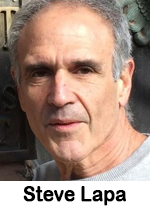
By Steve Lapa
Lapcom Communications Corp
President

imUntil NASA approves company logos on rockets, the fastest billboards an advertiser can buy move at over 200 miles per hour, weigh less than seven ounces and are three-hundredths of an inch thick.

Who wants fast-moving billboards? The longer you can read the message the better, right? Not a problem when a marketer identifies a hard-to-reach target combined with an engaging new opportunity. No, these are not the colorful logos you see on NASCAR vehicles or the old school logos on Formula 1 cars. These are the new-age digital billboards on Formula 1 race cars.

These new billboards are the first of their kind, strategically placed on Formula 1 cars. These magnificent machines, featured at races around the world, can reach speeds of nearly 250 miles per hour. When a race car is moving that fast every ounce of weight counts, hence the paper-thin design. You see (excuse the pun) it is all about a camera angle and what the viewer sees when TV coverage cuts to that strategically placed camera and over 2 million viewers are looking on. Angles count.

Formula 1 racing not a threat to local radio ad sales, you say? Not yet, but when over 13 million people watch the top 12 Grand Prix races worldwide, it’s just a matter of time. The Formula 1 billboard lessons for local sellers and managers are not simple “how many calls, how many closes?” The Formula 1 billboard story is about:

— Sales and marketing innovation in a sport that is nearly 130 years old. The idea of creating a paper-thin, super lightweight digital billboard is an amazing accomplishment.

— Try again. How many times have you pitched a package to an advertiser who told you what was wrong with your package, only to lead to frustration at not winning the business? Can your manager quickly adapt to the advertisers’ needs? Managers, please read that last sentence carefully. The designers of the digital billboard were sent back to the drawing board until the weight and thickness worked for these incredible race machines.

— While you are thinking about getting your pitch together, somebody is already moving forward. In plain English: you snooze, you lose.

— Collaboration is the way to win. It took sellers working with engineers, working with marketers to make the concept work. How about you? Are you comfortable selling in collaboration with teammates?

The sales and marketing innovation clock never stops. How about you? Is your learning clock still ticking?

Steve Lapa is the president of Lapcom Communications Corp. based in Palm Beach Gardens, FL. Lapcom is a media sales, marketing, and development consultancy. Contact Steve Lapa via email at: Steve@Lapcomventures.com. Steve Lapa will be moderating the “Generating Revenue” panel at TALKERS 2023 on Friday, June 2 at Hofstra University.

Industry Views

The Birth of the Car Radio

By Walter Sabo
Consultant, Sabo Media
A.K.A. Walter Sterling
Radio Host, Sterling on Sunday

imA beautiful night. Paul Galvin and William Lear took their girlfriends to a romantic look-out view. Paul asked, “Isn’t this great?” His girlfriend replied, “It would better if we could hear music.”

That set Galvin and Lear on a mission to get entertainment into the car. A car radio. They were tinkerers. Galvin owned a failed battery manufacturing company. Lear and Galvin were smart but broke.

They ultimately invented a prototype radio for the car, but it was massive and complicated. No car battery could power it, the radio required its own big battery which was stored under the seat. The antenna was netting covering the roof. Their biggest challenge was static generated by the car’s starter, transmission, battery, lights – you name it. Galvin and Lear traced each source to correct the trouble-making components one by one. Parts of the radio had to be placed in different locations throughout the car. For example, the receiver was mounted on the engine, the controls on the dash.

Finally, still broke, they drove their Studebaker loaded with radio to the bank to apply for a loan to back the venture. The banker agreed to test drive the car for a night. Unfortunately, it caught fire in his garage and no loan was granted. Next Galvin traveled 800 hundred miles to a radio manufacturer convention. He sat outside the convention hall, played the radio loud and attracted enough orders for the radio to continue his quest.

The trouble continued. It was an expensive install: $600 for a $3,000 car. Many people thought it was dangerous to listen to the radio in the car – a distraction. Municipalities tried to ban it fearing it was a driver attention hazard. Supporters of the ban argued that many types of radio programming could put drivers to sleep. Surveys showed most Americans believed car radios were dangerous.

Oh, and the name they gave the device was horrible: 7FT1. Galvin came up with a new name that was both descriptive and synched with the times, Motorola. Partner William Lear went on the invent the Lear Jet.

Chevrolet installed the first reasonably priced Motorola radios in the early 1920s.

The objections were overcome by an initiative of the Radio Manufacturers Association: They argued that car radios actually helped people become better drivers. They pointed out that radios informed drivers about hazardous road conditions that lie ahead and weather conditions that may disrupt their travel. Supporters of car radios also said that radios actually helped to keep drivers awake when they became drowsy.

Conclusion: Are they nuts? A car can park itself but can’t handle an AM radio, those tech challenges were solved in 1920 – by the inventors of the Lear Jet and of your cell phone. Are manufacturers looking for a “display allowance?” Satellite radio was launched by paying zillions for a slot in the dash. Do carmakers want that for AM radios? Forget the EAS which nobody has ever heard and wasn’t activated during 9/11 in New York City. Weather, traffic, gospel, more gospel, compelling talk shows. (One Cleveland AM station runs the SAME Al Sharpton show from dusk Fridays till dawn Monday.) The better the shows, well, the better.

Sure, write your Member of Congress but you will find more vigilant allies among the preachers. You may recall that in the 1990s there was great debate about the proper deployment of the UHF spectrum. Allegedly, at his inauguration President Bill Clinton shook the hand of UHF TV icon, Billy Graham, who looked the president in the eye and said, “Don’t take away my TV stations.”

Walter Sabo was the youngest Executive Vice President in the history of NBC. The youngest VP in the history of ABC. He was a consultant to RKO General longer than Bill Drake. Walter was the in-house consultant to Sirius for eight years. He has never written a resume. Contact him at walter@sabomedia.com. or mobile 646-678-1110. Hear Walter Sterling at www.waltersterlingshow.comMeet Walter Sabo at TALKERS 2023 on Friday, June 2.

Industry Views

Monday Memo: Verbs?

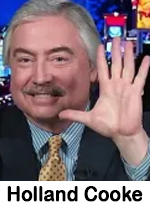
By Holland Cooke
Consultant

imWarning: The Commonwealth of Massachusetts certified me to teach high school English, in the early 1970s, the last year certifications were for life. Though I was lured-away by VU-meter hypnosis, I still carry a red pen. And radio news has it running-dry.

This story was about a love triangle shooting.

— Here’s what listeners heard — read this aloud: “The woman’s husband arrested the wounded man taken to the hospital.”

— Here are the facts the writer obscured: Police arrested the woman’s husband, the accused shooter. The person he shot was hospitalized.

— As-is, the ear was told something very different when half-sentences ran-together.

Another example: “A cruise ship expected to take Americans out of Lebanon today.”

— I think he meant: “A cruise ship is expected to take Americans out of Lebanon today.”

— But the missing verb, the time zone difference, and the chaos in Lebanon were such that – as written — listeners could have inferred the copy to mean that a cruise ship was-expected-to evacuate Americans…until something went wrong.

im

Translation?

“A young mother murdered the suspect found dead.”

Huh?

“Woods asked directly about his future on the tour.”

It’s unclear whether this sentence means:

— Tiger Woods was asking about his future…OR…

— He was asked-about it.

Even a robot knows better

When I typed “Missing verbs confuse the ear,” ChatGPT replied:

“Yes, missing verbs can make sentences unclear and confusing to the listener or reader. Verbs are important components of a sentence as they express the action, state, or occurrence of the subject. They help to convey the intended meaning of the sentence and to show how different elements of the sentence relate to each other.”

And finally…

Never verb nouns.

KIDDING.

Old English teacher joke.

Holland Cooke (HollandCooke.com) is a consultant working at the intersection of broadcasting and the Internet. He is the author of “Multiply Your Podcast Subscribers, Without Buying Clicks,” available from Talkers books; and “Spot-On: Commercial Copy Points That Earned The Benjamins,” a FREE download; and the E-book and FREE on-air radio features “Inflation Hacks: Save Those Benjamins.” Follow HC on Twitter @HollandCooke

Industry Views

Pending Business: Get Your Head Straight

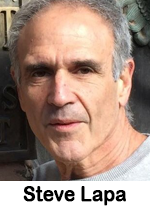
By Steve Lapa
Lapcom Communications Corp
President

imAre you a multiplatform juggler? If you sell or manage for a radio station, the answer is yes.

Why? Because it’s been part of the radio ad sales DNA since radio advertising shrunk to single digit growth.

Maybe someone reading this column can research or remember the last time radio industry pre-pandemic ad sales grew at double digits. It’s a tough putt, for sure.

Radio sellers were the first to reach across the aisle and “cross-sell” event sponsorships, concert tie-ins, publications, prize catalogues, bridal fairs, recruitment fairs, half-off fairs, sports and leisure tie-ins, hurricane guides, meet and greets, and it all started with a simple concept called a “remote.”

Radio ad sales strategy has come a long way since the first five-year plan had no projected double-digit growth. Even worse was the negative growth forecast for many markets. I remember that famous local market slogan “last one out, please turn off the lights.”

Those simple, linear, fun-to-present packages that required nothing more than easy-to-follow graphics, reasonable pricing, and a testimonial letter required little training, re-skilling, and new technical understanding. The toughest questions were about electrical outlets, display details, and when do we load in?

Covid killed some of those income generators, but you can add in pre-pandemic tired, low-energy sellers and managers taking concepts for granted as the final nail in the coffin.

Wait a minute. Aren’t brides still making decisions? Is inflation driving us back to coupons and looking for daily deals? Seems like sports-related advertising always thrives, right?

Some concepts will return, others will be reimagined, and a few are gone forever. Back to the future. Digital and social media sales will shape your sales future whether you like it or not. The digital/social media growth trend is moving at a non-stop, double-digit pace, pushing every competitive sales team to learn more and sell faster.

Smart, energetic thinkers are planning the next move, reshaping the past for what will sell tomorrow. It’s been almost 25 years since the first Blackberry phone. Sometimes innovation leaves iconic concepts in the dust. Here is where all of this goes. Get your attitude ready to learn and earn.

— Your glass is never full. The next time a manager introduces a new opportunity open your thinking

— Ask questions. Remember “new” is a powerful sales world door opener. Be sure YOU know how this new opportunity works. Leave your ego outside the sales meeting.

— Local advertisers like a competitive edge. Procter & Gamble built the most successful package goods marketing in the world with “New and Improved.” Learn from the legacy winners.

Managers and sellers want to win new business. Are you prepared to learn how?

Steve Lapa is the president of Lapcom Communications Corp. based in Palm Beach Gardens, FL. Lapcom is a media sales, marketing, and development consultancy. Contact Steve Lapa via email at: Steve@Lapcomventures.com. Steve Lapa will be moderating the “Generating Revenue” panel at TALKERS 2023 on Friday, June 2 at Hofstra University.

Industry Views

Premature Ejection

By Michael Harrison
TALKERS
Publisher

imThere are media and there are media. There are platforms and there are platforms. Not all cultural artifacts are equal in terms of their utilitarian versus cultural value. Damn the tone-deaf corporate bean counters who are ripping the heart out of the spirit that gives humanity its life force! Marketplace obsolescence should not solely be determined by profit and loss. With all due respect to the idea of public service, what about the concept of loyalty? Shame on the automobile industry! Not only is it turning its back on the needs of millions of people, it is in the process of betraying one of its historic partners in not only commerce – but romance and glory. In other words, the automobile industry owes the radio industry a huge debt. The relationship between cars and radios goes a century deep and has been nothing less than a two-way street. Yes, auto industry, don’t be so hasty to save a few bucks by rushing AM (and then FM) radio out the door. You might just find in the long run that “radio” outlasts the private “car” as a fixture of human activity.

A radio is not a cassette, CD, or 8-track player. A radio is a magic box that embodies a century of culture during which it spun the idea that taking a car ride is a lot more soulful than spending time getting from point A to B via the subway, bus, or plane. The car has been the perfect radio-listening chamber and radio has returned the favor in spades with its music and DJs glorifying everything from little deuce coups to Cadillacs to the T-Bird that daddy took away – not to mention bolstering the ubiquitous culture of automobiles with traffic reports, news, weather, and endless references to this particular form of transportation as being a key component of what it is to be a member of society. Radio has provided the car biz with a century long, non-stop free or generously bonused commercial!

From a purely economic position of self-interest and greed, it is understandable why car manufacturers might consider AM radios expendable and are eager to toss them out like the aforementioned obsolete devices of music conveyance.  So, what if millions of people still listen to it and DEPEND on it for free speech, religious expression, ethnic connection, demographic habit and public safety. Couldn’t the car manufacturers wait another decade before turning its back on such an important – and still vital – relationship?

Hey auto industry, be careful what you’re doing. You’re severely mistaken if you think your poop doesn’t stink and your place in our rapidly changing society is guaranteed. You might find rolling along in this brave new world without radio turns out to be a very dangerous road.

Michael Harrison is the publisher of TALKERS and can be reached via email at michael@talkers.com. Meet Michael Harrison at TALKERS 2023 on Friday, June 2 at Hofstra University.

Industry Views

Pending Business: Obstacles to Sales Productivity

By Steve Lapa
Lapcom Communications Corp
President

imWhat will hurt your chances of sales success more, graduating from a low-ranked college or attending too many inefficient sales meetings?

Not exactly a trick question, but enough to make you stop and think.

Remember when having a top-tier college degree was all that mattered? A recent article in the L.A.Times recalled the classic 1999 study that proved where you received your college degree really didn’t affect your career, except for maybe the networking part, maybe not. The bottom line is you don’t need a degree from Harvard to earn a respectable income as a top seller or manager in the media industry.

On the other hand, attend or lead too many inefficient sales meetings and the result may be a career killer.

The recently released 2023 Microsoft Work Trend Report is a wakeup call for every seller and manager in any business, especially ours. The top five “Obstacles to Productivity” in the report read like a what-not-to-do if you are a leader or hope to lead a sales team in the future. There are even a few warning signs if you are a team member struggling to cope with rudderless sales meetings. Let’s review some takeaways from the report and learn how to right the ship before you take on too much water.

— Goals. Every meeting should have clear, simple, actionable goals presented in an easy-to-understand form. The seller should know exactly what action points to implement to improve performance. Can you check the box?

— Perspired or inspired? Every week I talk to a seller working for one of the larger broadcast groups who feels the ready, fire, aim of product overload. Many radio station sellers can sell anything in any market that belongs to the company represented. Would a sales rep at Home Depot in Florida sell you a snow shovel with the same expertise as a rep in Buffalo? How come the biggest companies in the radio business barely surviving on the NYSE don’t learn from the companies that sell at almost $300 a share.

— Soft sales = more meetings. Seriously? In the age of Zoom, Teams, etc. the 2023 Microsoft Work Trend Report still identified “Too many meetings” as one of the top 5 obstacles to productivity. Can we all just hit the pause button on old-school command and control meeting overload? There is a difference between re-skilling and repeating old material. There is a difference between re-strategizing and re-selling a rejected concept.

The AM radio business is in the emergency room in desperate need of a fresh approach to sales. FM radio could be next. Are you looking forward to your next sales meeting?

Steve Lapa is the president of Lapcom Communications Corp. based in Palm Beach Gardens, FL. Lapcom is a media sales, marketing, and development consultancy. Contact Steve Lapa via email at: Steve@Lapcomventures.com. Steve Lapa will be moderating the “Generating Revenue” panel at TALKERS 2023 on Friday, June 2 at Hofstra University.

Industry Views

Monday Memo: Apple Heaven and Hell

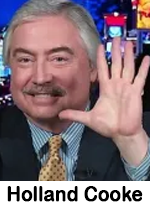
By Holland Cooke
Consultant

imEver lost your phone? It’s an instant sick, sinking feeling. It’s quaint to even call it a “phone,” because it’s…everything. Including us. Like the transistor radio Boomers toted in our youth, it’s audio in your pocket.

For broadcasters and podcasters, a smartphone can be the whole toolbox. MOVIES are being shot on the newest iPhone. The cameras and editing apps are that good. TV and radio can go live, anywhere there’s a signal. And, like Alexa, Siri is conversant. Dictation isn’t just a convenient voice-to-text appliance. It makes lots of apps lots handier, and safer while driving. So, when, suddenly, my phone couldn’t hear me anymore, I went Code Red.

“Testing…testing…”

First triage: Google. But when I satisfied myself that all my settings were as they should be, I needed a person. As expected, the patient expert on Apple’s Support line had a thick foreign accent and great people skills. She had me repeating all the steps Google recommended, and told me I had to update my OS. When repeated attempts failed, I needed in-person handholding, a/k/a The Genius Bar.

Just TRY calling an Apple Store. The local number for the Providence Place Mall location rings in Texas I was told, after I cheated by reaching out to a friend who works for Apple and got me in the door. The irony is painful: They sell telephones but can’t answer one.

im

Antiques Roadshow

I’ll seem my age if it’s 2023, and I’m still toting iPhone 8. Hey, it worked…until it didn’t. And the Genius Bar person explained that it had missed too many OS updates to ever catch-up. And when she ran diagnostics, enough other issues warranted the handoff to sales.

Dazzling as the latest-greatest are, I went with SE, same size/shape/appearance as the 8 being retired. It snapped right into the decorative Block Island cover case that had saved the old phone from so many drops. In the survey Apple emailed later that day, I couldn’t say enough about Matty, the sales guy who walked me through setting-up the new phone. All better now, and although it’s now sans SIM card, the retired 8 phone is a spare tire. If I want to talk to it, I’ll need earbuds. But it’s an otherwise functional iPod that will Facetime, Email, you-name-it, via WiFi.

So then?

With most AM/FM broadcast hours now automated or syndicated, stations that make local human connections will be conspicuous; and niche-topic podcasts will ooze “community.”

I write lots of commercials, and – where pertinent – we assure that “you won’t land in voicemail.” And we’ll emphasize one-on-one support. Here’s how one client – the voice you hear is the owner, whose stations are 100 miles from Dallas – sells expensive cameras, at a store in Dallas: http://getonthenet.com/CompetitiveCameras.mp3

Holland Cooke (HollandCooke.com) is a consultant working at the intersection of broadcasting and the Internet. He is the author of “Multiply Your Podcast Subscribers, Without Buying Clicks,” available from Talkers books; and “Spot-On: Commercial Copy Points That Earned The Benjamins,” a FREE download; and the E-book and FREE on-air radio features Inflation Hacks: Save Those Benjamins.” Follow HC on Twitter @HollandCooke

Industry Views

Attracting Younger Demos

By Walter Sabo
Consultant, Sabo Media
A.K.A. Walter Sterling
Radio Host, Sterling on Sunday

Reaching younger listeners requires a combination of topics, pacing, and production values. As a consultant, when launching talk stations the client had an opportunity to identify the target demo.  Based on their target, the station was built to own that demo.  To attract a specific target, they followed these steps:

— Identify the target listener: sex, age, preferences and which stations are they currently listening to?

— Commit to attract the specific listener 24/7. A music station can’t win if it plays Taylor Swift in the morning and Pavarotti at night. Consistency of all format elements delivers a consistent audience profile.

— Topics. From experience, younger listeners have no time for theoretical discussions of politics or the contents of the op-ed page. Any op-ed page. Topics must be based on urgent, current eye-level aspects of a younger person’s life in order to attract them to a radio show. On “Sterling On Sunday” I mentioned that my 14-year-old daughter was going into the slime business. That was followed by 10 lines lit of 30-year-old fathers who were coaching their 14-year-olds on managing a – slime business!

Respect that whatever topic the target listener cares about is an important, serious topic. 

— Production. The competition for younger listeners are music stations. The production on your station should be as good or better than any music station. That means, no stale promos, they have to be freshened every day, or every hour.

— Pace. Match the pace of the life of your target listener. If you want to reach a 30-year-old (and you can), remember that they have to drop off the kids at school, get milk, take the back way to get to work on time and make that call to the dentist – all between a given moment and your next weather report. Kudos to Bill Wills morning host on WTAM, Cleveland who delivers a fast-fast-paced show – worth a listen.

When taking phone calls, screen them for age. Let the caller say one thing and then bye. The more calls you take the more calls you’ll get. The shorter the calls, the younger the callers will be. And PLEASE do not thank callers for “holding on.”

Walter Sabo was the youngest Executive Vice President in the history of NBC. The youngest VP in the history of ABC. He was a consultant to RKO General longer than Bill Drake. Walter was the in house consultant to Sirius for eight years. He has never written a resume. Contact him at walter@sabomedia.com. or mobile 646-678-1110. Hear Walter Sterling at www.waltersterlingshow.comMeet Walter Sabo at TALKERS 2023 on Friday, June 2.

Industry Views

Monday Memo: Twitter Technique

By Holland Cooke
Consultant

imTik-Tok is hot (largely among users too young to be heavy AM/FM listeners) and it’s in-the-news (about its possible ban). And, yes, Facebook remains T-Rex in the social media jungle. But people on Twitter seem to live there.

— Twitter is a useful right-now prompt, because Tweets stack-up, so there’s less value alerting Followers to what’s up much later today or tomorrow.

— Like any contact, there’s a quality/quantity trade-off. You will get a feel for how-much-is-too-much when you see your Followers number drop. So, think before you Tweet. You’ll never get un-Followed for something you didn’t Tweet.

— Best of all, like other social media, Twitter is…social. Conversations begin and spread. And any of your Followers can re-Tweet your message to all their Followers, and any of them could re-Tweet it too. Going-viral like that is powerful peer-to-peer endorsement, particularly if you’re a podcaster, because subscriptions are the ballgame.

im

REAL opportune: links and attachments.

— AM/FM transmitters are audio-only and only in real-time. But you can Tweet-out a photo or video or a link to online content. Research demonstrates that third-party content you share gets re-Tweeted more than content about yourself.

— Possibly the most-useful Tweets about your radio work are “snack-size” single-topic aircheck clips. Especially opportune: guest interview excerpts that enable listeners. “Car Coach Lauren Fix has three tips BEFORE your summer road trip.” Why expose that useful programming content only to those who happened to be listening live?

— Tweeting in that fashion not only conforms to listeners’ on-demand media preference, it puts your audio back in the pocket, where radio used to be.

Twitter does double-duty BEFORE your show.

— Note how SiriusXM/CNN host Michael Smerconish tees-up topics with quick videos and polls. People like being-asked. A real estate agent whose weekend show I coach uses Twitter “to ask an opinion on a light fixture, a paint color, an appliance.” She notes that “on HGTV’s website, they have a section called ‘Rate My Remodel.’ Regular folks send in pictures of a recent remodel that they did, and others comment. People love this stuff.” So, start a conversation that takes wings. When you read posted comments on-air, you sound accessible and popular.

— And Twitter’s characters-limit is a useful discipline. You’re pre-scripting your concise, inviting show open.

Holland Cooke (HollandCooke.com) is a consultant working at the intersection of broadcasting and the Internet. He is the author “Multiply Your Podcast Subscribers, Without Buying Clicks,” available from Talkers books; and “Spot-On: Commercial Copy Points That Earned The Benjamins,” a FREE download; and the E-book and FREE on-air radio features Inflation Hacks: Save Those Benjamins.” Follow HC on Twitter @HollandCooke

Industry Views

Pending Business: Father’s Day

By Steve Lapa
Lapcom Communications Corp
President

imYou have still have six weeks to make Father’s Day your sales success. Stop taking for granted, this always undersold 100-plus-years-old celebration.

Father’s Day is a $20 billion business that rarely dominates a radio sales meeting. Did you have a full sales meeting devoted to selling into the Father’s Day gift giving cycle?

Your most valuable sales asset, your on-air personalities, can be helpful in brainstorming, collaborating, even creating unique sales opportunities. They know their audience.

The National Retail Foundation projects only an $80 difference in the average gift spends between Mother’s Day and Father’s Day. Still the typical radio ad sales team rarely takes the time necessary when it comes to brainstorming this annual opportunity. Unlike Mother’s Day where “natural” categories like flowers, candy, dinner, spa days, even jewelry make the annual target list, what does your target list look like for Father’s Day? How creative is your Father’s Day planning… especially since neckties are still out?

Could it be because Father’s Day was hatched in Spokane, Washington as a complement to its senior partner, Mother’s Day?

It really doesn’t matter. These takeaways may help guide your thinking as you approach any holiday marketing. Let’s start with a Father’s Day profile that should broaden your thinking:

— Forget the old school. Consider this: 81% of gift givers are looking for “unique” or “experience” oriented gifts. A true opportunity to open your prospecting targets. Would Dad enjoy a weekend staycation?

— Like it or not online shopping is becoming the norm, yet when it comes to Father’s Day, nearly 50% are still shopping at retail locations. Another reason to freshen up that prospecting list.

— Despite inflation, 76% of Americans will celebrate Father’s Day.

— The average spend is projected at $171. Not exactly Christmas numbers, but welcome income to any retailer.

Sellers and managers often overlook obvious income opportunities that could come easily. Chances are your local talent have a connection to Father’s Day that could make a difference on a sales call. Don’t overlook the opportunities right in front of you as you approach the next sales call.

Happy Father’s Day!

Steve Lapa is the president of Lapcom Communications Corp. based in Palm Beach Gardens, FL. Lapcom is a media sales, marketing, and development consultancy. Contact Steve Lapa via email at: Steve@Lapcomventures.com. Steve Lapa will be moderating the “Generating Revenue” panel at TALKERS 2023 on Friday, June 2 at Hofstra University.

Industry Views

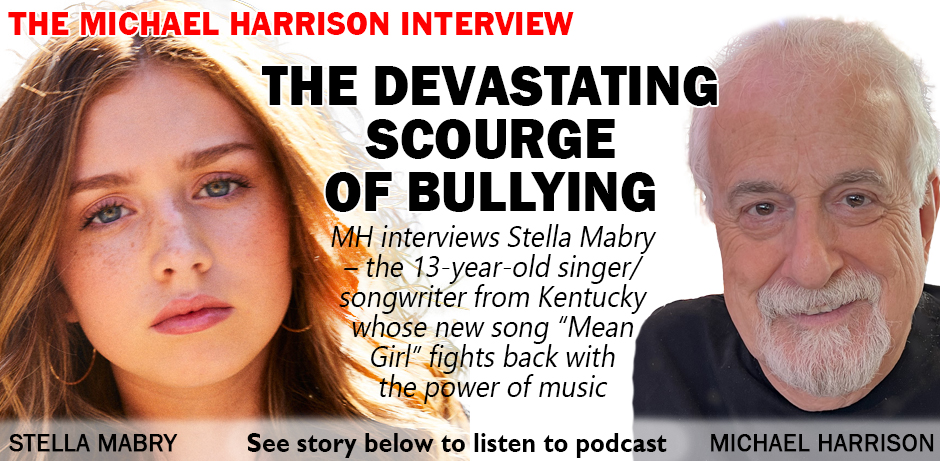
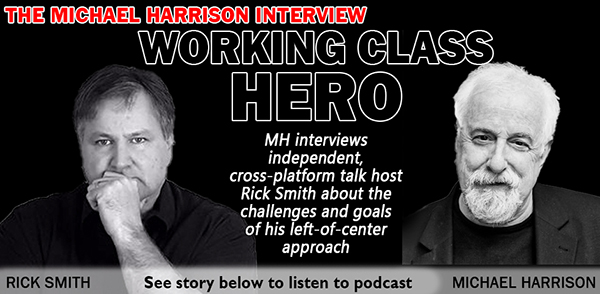
Radio Sales Pro Steve Lapa is This Week’s Guest on Harrison Podcast

One of the radio industry’s most respected experts on sales and marketing, consultant Steve Lapa, is this week’s guest on the award-winning PodcastOne series, “The Michael Harrison Interview.” Lapa is presidentim of South Florida-based Lapcom Communications Corporation – a consultation and marketing firm that specializes in helping radio stations and program providers stay afloat financially and actually thrive in these uncertain times of digital media disruption. imHis career goes back more than four decades during which he has served in various management capacities at some of the nation’s biggest radio and television operations in addition to working with major names in talent. Harrison and Lapa engage in a productive chat about the existential challenges facing radio as well as some of the age-old techniques of sales and marketing that withstand the test of time. Lapa, who will be moderating the sales panel at the forthcoming TALKERS 2023 conference on June 2, states, “We have to get radio out of the emergency room and into recovery.” Listen to the podcast in its entirety here.

Industry Views

Saga Communications Q1 Net Revenue Rises 1.3%

First quarter 2023 operating results for Saga Communications reveal net revenue of $25.3 million, an increase of 1.3% over the same period in 2022. Net income fell from $1.2 million in Q1 of 2022 to $920,000 in the first quarter of this year. The company says, “Station operating expense increased $1.1 million for theim quarter to $21.7 million compared to the same period last year. A significant part of the increase in station operating expense for the quarter was due to a $272 thousand increase in our self-insured health care costs and a $446 thousand increase in employee compensation, including payroll taxes at the station level. After a number of years of holding the company’s compensation expenses flat, we decided that adjustments in our employee compensation were warranted in consideration of the economic times and inflationary environment.”

Industry Views

Monday Memo: Weekend 101

By Holland Cooke
Consultant

imIt’s the most effective tactic in marketing: Free samples. And the attorneys, financial advisors, real estate agents, veterinarians, and other ask-the-expert hosts who broker time for weekend call-in shows can drum up lots of new business…IF they execute well.

It’s a big “if,” because they’re not career broadcasters. So, technique that’s second nature to us is news to them. And because, at too many stations, there’s little or no coaching. Here are some of the fundamentals I convey to weekenders at client stations, and brokering hosts elsewhere who aren’t getting aircheck support:

— Plan each show. Re-write any news-about-your-topic or other material you will read, rather than reading verbatim paragraph-length excerpts from newspaper clippings or other source material you found on the Internet or elsewhere. That stuff wasn’t written for the ear. Put it into your own words. Practice aloud, to yourself, before the show.

— Remember: YOU are the expert. It’s Greek to them. So, avoid lingo and acronyms. Instead of percentages (“36%”) use fractions (“just over a third”).

— Listen carefully to the caller’s question. Don’t interrupt unduly…but don’t let ‘em ramble either. Once they’ve asked a question or described their situation, recommend what they should do.  Listeners in similar situations will relate.

im

Do’s and Don’ts:

— DON’T squander time at the beginning of the show with long hellos, or small talk about the weather (which aired at the end of the newscast just before your show began), or other off-topic blah-blah-blah.

— DO introduce yourself, and succinctly explain how you can help the listener. I tell weekenders I coach to begin with their elevator speech: “I’m Chuck Thompson, from Chuck’s Auto Repair, and I’m here to help you get more miles out of the-car-you’ve-already-paid-for.” If your business has a slogan, that should also be the mantra for your radio show, to keep your on-air message consistent with your other marketing.

— DON’T wait! Give out the call-in number right-off-the-top, even if your first segment is an interview or you tee-up a topic by reading news/product reviews/etc. During that segment, your call screener can be lining-up callers.

— DO solicit calls overtly. And announce the phone number real slowly, like you’re reading the winning lottery number. Say “call me right now.” And at the end of each call (unless all the lines are lit), offer that “that opens up a line for you,” and re-announce the phone number.

— DO get to the phones ASAP, best caller first. Callers call when they hear other callers, so nothing explains that it’s a call-in advice show like you answering callers’ questions with helpful advice.

— DON’T assume that anyone but you hears your whole show. Listeners constantly tune-in. So DO re-set throughout the hour. Come out of each commercial break as though the show was just beginning. “Welcome back to ‘Larry Explains the Law.’ I’m attorney Larry Jamieson, answering your legal questions right now on WXXX. So, call me! [phone number, nice and slowly, twice].”

All of the above is host technique. And there’s another character, behind the scenes, whose method is critical to brokered hosts’ return on investment: the call screener. Share with yours my 6-minute video at SolidGoldWeekend.com, where I also explain how to warm-up slow phones.

Holland Cooke (HollandCooke.com) is a consultant working at the intersection of broadcasting and the Internet. He is the author “Spot-On: Commercial Copy Points That Earned The Benjamins,” a FREE download; and the E-book and FREE on-air radio features Inflation Hacks: Save Those Benjamins;” and “Multiply Your Podcast Subscribers, Without Buying Clicks,” available from Talkers books.  Follow HC on Twitter @HollandCooke
Industry Views

Pending Business: Harnessing Desperation

By Steve Lapa
Lapcom Communications Corp
President

imAre you desperate enough to be a superstar seller or great manager?

Fellow fans of the NBA, especially all of us based in Miami or Milwaukee, know the name Giannis Antetokounmpo. The 28-year-old, 6’ 11”, 240-pound NBA superstar is affectionately nicknamed the Greek Freak, reflecting his Greek-Nigerian roots. In the past few days, his words dominated the sports news cycle. An emotional two-minute response to a question posed by the Milwaukee Bucks beat reporter Eric Nehm set off a viral frenzy.

Not a basketball fan? Antetokounmpo has 15 million Instagram and 3 million Twitter followers who know him well. Giannis Antetokounmpo, who earns about $40 million a year playing basketball, was asked by Nehm if he felt his team’s 2023 playoff performance was a failure as they lost to the lower seeded Miami Heat and were eliminated from the 2023 NBA playoffs.

Antetokounmpo’s answer was so riveting even a competing owner, the super shark himself—Mark Cuban – complimented Giannis in front of Cuban’s own 9 million Twitter followers.

In just over two minutes in the setting of a globally broadcast press conference, the Greek Freak explained how he does not process “failure.” His brain computes performance, goals, and achievement. Failure is not part of his competitive world, getting closer to his goal is. In a previous interview, Giannis described the desperation he feels from the fear of losing everything he has achieved is his motivation. The NBA MVP ego part is great, but for him it’s about the feed your family, make your parents proud part. Wow! A star performer who is honest enough to share how desperation pushes his performance meter for fear of losing it all.

How can sellers and managers relate when most are focused on “make the month?” Let’s start here:

  • What motivates you? Is it the money, the challenge, the ego gratification of a job well done?
  • Are you the hardest working seller or manager in the organization? Do you still waste your time lobbying for an “E” for effort?
  • How do you process not winning the business? Failure or one step closer on the next opportunity?
  • Are you focused on improving an important aspect of your performance? Commitment to improving is mission critical to every aspiring star.

Next time your motivation meter is low, search for a most memorable 2-minute motivator courtesy of Giannis Antetokounmpo.

Steve Lapa is the president of Lapcom Communications Corp. based in Palm Beach Gardens, FL. Lapcom is a media sales, marketing, and development consultancy. Contact Steve Lapa via email at: Steve@Lapcomventures.com. Steve Lappa will be moderating the “Generating Revenue” panel at TALKERS 2023 on Friday, June 2 at Hofstra University.

Industry Views

The Power of Live and Unpredictable

By Walter Sabo
Consultant, Sabo Media
A.K.A. Walter Sterling
Radio Host, Sterling on Sunday

imThe decision to change WABC from music to talk back in 1982 was not made by corporate, it was made by its then-program directorJay Clark. Corporate was hoping he would approve the change, “they” lobbied for it, but the call was the ultimate responsibility of the program director. The business plan for WABC as a talk station predicted it to be profitable in year 10. (That’s because KABC, Los Angeles took 10 years to turn a profit.) As it turned out, WABC turned a profit in year 11.

At the time of the WABC format change back in the early 80s, the role of a program director was to be a disruptor. They were expected to cause trouble, get headlines, keep the energy coming out of the speakers up-up-up. It was my experience that the best program directors were extremely unpleasant, difficult people. They knew how to stir up their world on and off the air.

They did not get along with sales: “I’ll get you ratings, you go sell them” was the essence of their relationship with sales!

As co-worker relationships within radio stations became more important than results, the industry suffered. The death knell was the first time a program director dismissed a new idea by saying, “It’s not in the budget.” Until that tragic moment, good/great program directors would greet new ideas with, “They will just have to give us the money.”

The primary reason radio is losing younger demos is not technology, it’s the show. Technology attracts no audience. No one goes to a movie theatre to see a blank white screen no matter how good they may find the air conditioning and popcorn. If younger listeners are listening to another audio medium it’s because the show is UNPREDICTABLE, new, energetic, fun or on-demand.

Radio of any genre can be unpredictable, new, energetic, fun and on-demand. (Request lines built top 40. But what happened to them?) The actions of unpredictability are free.

Those unpleasant, autonomous program directors often earned more money than any general manager and more than almost any program director working today. A lot more. Why? Because radio stations attracted cume by acting as a 24/7 barker. The barker sizzle came from the single mind of the program director.

The programming mind that wins by disruption is not limited to top 40. For example, classical music WGMS in Washington featured promos declaring that “WGMS plays real oldies,” “mostly Mozart” and “Celebrate the bicentennial and Beethoven’s birthday.”  Unexpected programming proves that radio is live and “LIVE” is the most powerful word in electronic media.

Walter Sabo was the youngest Executive Vice President in the history of NBC. The youngest VP in the history of ABC. He was a consultant to RKO General longer than Bill Drake. Walter was the in house consultant to Sirius for eight years. He has never written a resume. Contact him at walter@sabomedia.com. or mobile 646-678-1110. Hear Walter Sterling at www.waltersterlingshow.comMeet Walter Sabo at TALKERS 2023 on Friday, June 2.

Industry Views

They Simply Don’t Like You

By Michael Harrison
TALKERS
Publisher

imaMany years ago, I received a late-night call from a legendary radio talk show host who had just been let go by management at the iconic major market station where he had been presiding over the airwaves for several decades. His ratings had begun to downtrend a bit, but he still was a big draw for audience and advertisers. He was one of the biggest names in talk radio history and his still-sizable audience loved him. Thus, the unexpected news of his severance blindsided him with a wallop and surprised the heck out of the biz.  Everyone was buzzing about it.

The usually jaunty and confident personality asked me in an uncharacteristically despondent tone of voice, “Why do you think they fired me?”

My initial response, “I don’t know.”

He answered, “C’mon, you know everything… why do you think they fired me?”

“What does it matter what I think?  I’m not sure you really want to know my opinion about this.”

“No I do, I do… tell me the truth.”

Tapping into Aaron Sorkin, I quipped, “You can’t handle the truth!”

“No I can! Dammit! Tell me what you think.”

I took a deep breath and answered, “In my opinion, they let you go… because they don’t like you.”

“What?” he replied with irritation. “You’re kidding!!”

“No, I’m not kidding.  They don’t like you and they’re using your minor ratings downslide and the subjective determination that you are no longer a fresh new voice as an excuse to get rid of you.”

I then attempted to explain to him that quite often in this business, when the question arises, should he stay or should he go, whether it is a matter of ratings, budget, or heated controversy – it comes down to the margins. Do they like you or do they dislike you?

“That’s not true!” he blurted with anger, “They LOVE me! I’m very popular with management and my co-workers. When I walk around the halls the people adore me!”

“I’m afraid they don’t… you are disliked at the station. That’s what I hear.” And that was the last time we spoke.

Fast forward to the two major buzzes currently emanating from FOX.  Everyone’s speculating about why the company dumped the mononymic talker widely known as Tucker. IMHO, it comes down to the moral of the above tale. They don’t like him.  Or more specifically, among the widespread rumors of “they,” Rupert Murdoch doesn’t like him. So much for the adage content is king. In today’s media business and perhaps all the way back to Gutenberg, platform is king. Or at least co-king.

And by the way, also IMHO – in a related story – the simple reason FOX settled with Dominion? Murdoch didn’t want to go through the discomfort and inconvenience of personally testifying in court. Everything else is filler.

Michael Harrison is the publisher of TALKERS.  He can be contacted at michael@talkers.com. You can meet Michael Harrison at TALKERS 2023 on June 2 at Hofstra University.

Industry Views

Pending Business: You

By Steve Lapa
Lapcom Communications Corp
President

I’m one of the lucky ones. In my marketing work I get to speak with radio/audio sellers and managers around the country at companies privately and publicly owned, as well as that increasingly rare breed – the radio station owner/operator. They all share one common fault. Yes, I said fault. Can you guess what it is? Probably not, because you too may share the same fault.

I’m one of the lucky ones as I was warned about this early in my career. Before we look in the mirror, let’s recall what Harry Beckwith said in his 2011 book, You, Inc. His premise was, “The first thing you sell is yourself.” Having trained hundreds of high achievers, my experience is that premise is one of the most subjective statements you will ever hear. How do you sell yourself with grace and humility? How does your ability to sell yourself stand head and shoulders above the next seller on the Zoom call or in the advertiser’s office without over-the-top braggadocio? While on calls with one high achiever, there was always a pause point where that seller took a side bar that started with, “Believe me, I’ve been working for ____ for __years…..” Sound familiar?

After a few calls on the same advertiser, the tenure pitch gets stale. The focus on “me” gets confused with building credibility through proven performance. Sorry, but You, Inc needs an update.

You see the missing link – the fault most sellers and managers share – is the lack of investment in “You.” In plain English, most sellers and managers fail to invest in themselves. We fail to recognize it takes a financial and time investment to keep our skills sharp, our minds focused on performance, and our teams coordinated with a win-win attitude.

There is a reason why high-level tennis professionals work and compete under the watchful eyes of well-compensated coaches and trainers. Pick a competitive career, from sports to entertainment, and somewhere in the mix you will find a coach, mentor, or trainer paid to help improve performance. But rarely will you find a seller or manager in the highly competitive radio/audio sales space investing in improving performance. Sorry to all you managers reading this, but who is coaching you?

Books, seminars, videos, online programs were and are still part of “stay sharp, stay current” training. Sales and managing sales departments is a moving target with change built into every day. Recruitment, strategy and digital dynamics move ahead with or without you. It is never too late to understand the investment necessary in “You” to keep sales and sales management skills improving every day.

Steve Lapa is the president of Lapcom Communications Corp. based in Palm Beach Gardens, FL. Lapcom is a media sales, marketing, and development consultancy. Contact Steve Lapa via email at: Steve@Lapcomventures.com. Steve Lapa will be moderating the “Generating Revenue” panel at TALKERS 2023 on Friday, June 2 at Hofstra University.

Industry Views

Monday Memo: Hearing is Believing

By Holland Cooke
Consultant

Every time I visit a station, I meet with sales, and I leave ’em a thumb drive of “spots that have produced results elsewhere, for businesses just like yours,” magic words on local direct retail sales calls. Help yourself to these, all of which produced results.

— Key Lending Solutions and AdvantaClean demonstrate using unscripted client interview sound bites and minimal announce copy.

— Here’s a straight pitch I wrote for the guy who maintains my home water system.

— When local retailers are defending against lower-cost big box competitors, local radio can be their best friend. Here’s a spot I produced that differentiates based on service.

Here’s the spot that had been airing when the client said “It’s not working.” I asked the rep: “Can we make it a 60 instead of a 30?” And I asked her to send me the jingle, and to interview the client and his customers on her smartphone, and send me the raw audio. Here’s the spot that got the advertiser to renew.

— Here are two spots I wrote for a tech retailer, one pitching convenience/security systems, the other pitching Home Theater.

Sure…A-B-C, “Always Be Closing.” But successful reps I’ve seen in action make that first call the C-N-A, “Client Needs Assessment,” 20 questions, ideally capturing the interview audio for use as you hear above. And they begin the second call saying, “Based on what you told me…” and hit Play.

Some things are easier to demonstrate than describe. And if you’re on-air talent who also sells, you are advantaged.

Holland Cooke (HollandCooke.com) is a consultant working at the intersection of broadcasting and the Internet. He is the author “Spot-On: Commercial Copy Points That Earned The Benjamins,” a FREE download; and the E-book and FREE on-air radio features Inflation Hacks: Save Those Benjamins;” and “Multiply Your Podcast Subscribers, Without Buying Clicks,” available from Talkers books.  Follow HC on Twitter @HollandCooke
Industry Views

Better Than a Tornado – What You Can Control

By Walter Sabo
Consultant, Sabo Media
A.K.A. Walter Sterling
Radio Host, Sterling on Sunday

The whining is non-stop. Many in radio mourn the advent of consolidation, corporate dictates, staff cuts. They miss the way the industry was – before.

A few reminders about – before. Half the radio stations in the U.S. lost money. Voice tracking? Yes, it was called automation, analog automation and it was a technical nightmare. The meta forces that control our industry today were not created by your current boss. They were created by irresponsible venture capitalists who only looked at the fifth-year projections. A budget projected to the fifth year is at best a guess, but it is most probably a lie.

What can you control? If you are a host, you can control your next show. If you are a program director, you can control your next promo, next break, next collection of shows. You control the product and that makes you the most powerful person in the radio ecosystem. You control the product. Let’s improve the product right now. Listeners know or believe that all radio is live. Live means surprises, the unexpected, the urgent!

— Prep the surprises. Rather than sourcing the New York PostDaily Mail and your local newspaper, try throwing them away for just a day and tap brand new, unexpected sources. Search “Siberia news” and “Alaska news.”  You will be stunned at the unique menu of stories and fresh material. Surprise! Did you know the biggest challenge in Siberia is rampant forest fires? How about the fact that melting permafrost has given up well preserved woolly mammoths and new breeds of humanoids? Live means surprise.

— Build the stage. Your station or network has a vast, digital production library that you don’t use. Take the time to sit with that library for a whole day and let your creativity explore the sounds and SFX. You will discover new beds, sounders and dramatic effects to build your show’s image and present the unexpected. Already use production? Scrap it and start fresh.

— Water in the basement is the most urgent news in a listener’s life. Not the debt ceiling or January 6. Water in the basement! Other urgent news is: The moving van is two days late. The mother in-law is speaking. Logan died on “Succession.” Give yourself permission to talk about what happened to you over the weekend rather than what happened in Washington, DC.

Your current list of topics is old news, no surprises, nothing urgent. Stop, it’s not working. The typical talk radio topics reach people who typically cannot stand up to change the dial. Surprises, the unexpected and the urgent could boost the survival probability of the AM band — better than a tornado.

Walter Sabo was the youngest Executive Vice President in the history of NBC. The youngest VP in the history of ABC. He was a consultant to RKO General longer than Bill Drake. Walter was the in house consultant to Sirius for eight years. He has never written a resume. Contact him at walter@sabomedia.com. or mobile 646-678-1110. Hear Walter Sterling at www.waltersterlingshow.comMeet Walter Sabo at TALKERS 2023 on Friday, June 2.

Industry Views

Monday Memo: NAB Show 2023

By Holland Cooke
Consultant

The first thing we heard was an earful from NAB president & CEO Curtis LeGeyt regarding automakers dropping AM receivers from new cars: “This is an issue we consider to be absolutely existential.”

Quoting Nielsen’s Fall 2022 survey results, Cumulus/Westwood One chief insights officer Pierre Bouvard ticked-off what he called “82 million reasons to keep AM radio in cars”

— 82,346,800 Americans listen to AM radio monthly.

— One out of three American radio listeners are reached monthly by AM radio.

— 57% of the AM radio audience listens to news/talk stations, the very outlets that Americans turn to in times of crisis and breaking local news.


As he presented “The State of Media, Audio and Marketing,” attendees were screen-shooting every slide in Pierre’s deck, so he offered to share (PBouvard@WestwoodOne.com). This must-see data explains and validates what he calls “The Two Jobs of Marketing: Converting Existing Demand and Creating Future Demand,” powerful ammo station reps can use to nudge advertisers who only tout special sales to instead use radio on-an-ongoing-basis.

— “If an apple orchard represents a brand’s entire customer base, converting existing demand = picking ripe apples (customers that are ‘in market’).” Those are, for instance, what he called the “3% who are looking to buy a car right now,” who will respond to the dealer’s caricature sale spots. As for the other 97%…

“If an apple orchard represents a brand’s entire customer base, creating future demand = planting new trees. It takes time and patience for new trees to bear fruit.” Thus, the worth of “emotional messaging that is designed to stand out and be enjoyed by consumers, creating positive memories of our brand that will influence future purchase decisions.”


Help Wanted!

Two discussions I took part in during the Small-Medium Market Forum echoed a unison I’m hearing everywhere: Where do we find on-air talent and salespeople?

— In the talent roundtable Mike McVay led, participants tended to think-young, swapping ideas for identifying entry-level candidates, possibly now podcasting. Or think-older. One participant mentioned a retired schoolteacher, comfortably pensioned, now cheerfully on-air, working fewer than 40 hours.

— The part-timer’s opportunity also came up on the sales side, in a roundtable led by Midwest Communications’ president Peter Tanz. As with industry in general post-pandemic, flexible arrangements help. And Tanz urged “Use your air, with ‘more cowbell.’” Meaning not only advertise for sellers on-air (where you’ll be talking to people who know the station); and he also suggested airing Employee Recognition salutes, of off-air staffers, which make the station sound like an appreciative employer.

— I read attendees a Help Wanted-Sales spot that has been productive at client stations, which I’ll share with you too. Simply Email me at talkradio@hollandcooke.com

Holland Cooke (HollandCooke.com) is a consultant working at the intersection of broadcasting and the Internet. He is the author “Spot-On: Commercial Copy Points That Earned The Benjamins,” a FREE download; and the E-book and FREE on-air radio features Inflation Hacks: Save Those Benjamins;” and “Multiply Your Podcast Subscribers, Without Buying Clicks,” available from Talkers books.  Follow HC on Twitter @HollandCooke

Industry Views

Pending Business: NAB – Never Assume the Basics

By Steve Lapa
Lapcom Communications Corp
President

Welcome to the NAB edition of Pending Business.

Wait, not that NAB. I am talking about the NAB that affects every manager and seller in the broadcast business, especially radio. This NAB is all about Never Assume the Basics.

Timing could not be better. Borrell and Associates just released a report that validates the Covid pandemic-driven changes in the local advertising marketplace. The shifts are so big, they most likely will change the ad world for a long time. The report shows the measurable local advertising marketplace is now at approximately $143 billion dollars. If you believe the numbers in the report, 67% of local ad dollars are placed in digital media advertising. Simple math says 33% of local ad dollars are now split, radio, TV, all print, outdoor and direct mail. Now that is a genuine showstopper!

These numbers are a tough pill to swallow, especially for those of us who remember the days when (print) newspapers were the king of the hill of local ad dollars. Whether you accept the numbers or not, the trend is your friend, and no manager or seller wants to be left behind. The major drivers behind this seismic shift in local ad dollars are the giants of social/digital media. Members of what TV personality Jim Cramer calls the FANG set – Facebook, Amazon, Google – you know what I am talking about. The shift in local dollars happened and continues happening right before our collective ears and eyes. Some of us are changing with the flow, others are still satisfied just reading a competitive radio monitor report during the Monday morning sales meeting.

Let us pause right here and get back to the danger of assuming the basics. You know what assuming can do, so let us regroup. Zoom back and take a treetop view of how you reconcile the basics of:

— local ad budgets

— sales prospecting

— packaging

What’s changed in your approach to prospecting? What NEW information and new businesses are you targeting? How has your competitive information flow adjusted to reflect local market changes? What is the newest package concept in your sales arsenal? Are you up to speed on the newer social and digital media initiatives in your local market?

Make no mistake, I am not advocating breaking the foundation. Yet we cannot ignore market dynamics. Some companies are driving change and growing in the digital/social media ad space, while others are slower. The great Teddy Roosevelt said “Lead, Follow, or Get Out of the Way!” Leadership is never easy. When it comes to sales, it should be a constant goal. Do not let anyone push you out of the way.

Steve Lapa is the president of Lapcom Communications Corp. based in Palm Beach Gardens, FL. Lapcom is a media sales, marketing, and development consultancy. Contact Steve Lapa via email at: Steve@Lapcomventures.com. Steve Lappa will be moderating the “Generating Revenue” panel at TALKERS 2023 on Friday, June 2 at Hofstra University.

Industry Views

Pending Business: How Would Elon Musk Price Radio?

By Steve Lapa
Lapcom Communications Corp
President

Theory vs. practice is always a fun exercise. What happens when someone is bold enough to step out and break the mold to achieve their goals? Do you stop and learn, or do you simply stay in your comfort zone and take a pass?

The headline was “Tesla Drops Prices Again” and they beat their quarterly sales goal. Do you drop your prices to make your sales goals? We are not talking about summer specials, weekend paid programming, or sports packages. Tesla made flat-out price reductions to roll the dice on volume, confident in the product and the marketplace to drive volume for the second time this year.

Ever visited a Tesla store? You will be shown a price card. Every time I asked a question, they tapped a keyboard. No real selling, just facts. Let us do a deeper Tesla-style analysis.


Why drop prices when you have nearly two-thirds of the EV market? Is it because your competition is gaining on you? Because you will miss your quarterly projections and you don’t like losing? Because an incentive to buy is about to expire (government credit)? Because you are a world class disruptor? Because you know by lowering prices you will own the news cycle? Because there is still room for old school price wars to stimulate demand and distract the competition?

Survey says, all of the above. How about the opposite? What if Tesla’s strategy was like what most of the radio managers and sellers reading this article would do? The “urgency” trigger. “Buy today, because prices will go up on ______.” The radio/audio “urgency” pitch strategy is so predictable – seasonal, political window, a change in management policy, sell-out level. Heck, Teslas are on back order and they still dropped prices. WWED? What would Elon do? Probably fire us via Twitter. Back to earth and our highly competitive radio/audio world. Here are the takeaways.

— Know your competition. My current experience in one of America’s largest radio markets is price strategy IS driving volume and helping a great radio station make goals. The higher-rated competitor is standing still as the business shifts.

— You don’t have to be loud to be a disruptor. Sitting Bull won by knowing how to sell his idea. He organized, collaborated and was patient. He won by quietly disrupting then got loud when the timing was perfect.

— Do your homework. “Urgency” as a price lever has been around since the Mad Men ran Madison Avenue. Have you ever reviewed how your urgency plan can be maximized? Or is the strategy played out?

— Who Cares? If you lower rates today until New Year’s Eve, will the rate reduction create enough local market buzz to drive the volume to beat your goals? You can always raise rates once your foundation is comfortably in place. Oops! Did I just demonstrate real world grid card selling?

Steve Lapa is the president of Lapcom Communications Corp. based in Palm Beach Gardens, FL. Lapcom is a media sales, marketing, and development consultancy. Contact Steve Lapa via email at: Steve@Lapcomventures.com. Steve Lappa will be moderating the “Generating Revenue” panel at TALKERS 2023 on Friday, June 2 at Hofstra University.

Industry Views

Monday Memo: Fender Bender Part Deux

By Holland Cooke
Consultant

National TV advertising sells things, local radio advertising sells services. And in a recent column here, we outlined the opportunity to exploit what, in my experience, is “the gift that keeps on giving” – the Personal Injury sub-category. Attorneys courting fender-bender, and other settlement cases are an industry in which supply exceeds demand, and for which radio can be super-opportune.

And long before the he-said/she-said is settled, there’s another local service category that’s a radio staple: Auto Body. Distracted driving alone has been good for business. So, help yourself to this copy, which has pulled well for a number of stations I work with.

Note: One announcer I sent this to asked, “Is this a 30 or a 60?” It’s a 60, but less copy than the 60+ seconds that too many spots rush-through. “Let it breathe,” I told him. And you can hear how effective his read was at http://getonthenet.com/AutoBody.mp3

Here’s your fill-in-the-blanks script:

GRAB A PEN.
I’M GOING TO GIVE YOU A PHONE NUMBER I HOPE YOU NEVER HAVE TO CALL.
IT’S THE NUMBER FOR _____ AUTO BODY. _____ AUTO BODY
THEY DO AUTO BODY WORK…NOTHING *BUT* AUTO BODY WORK.
HOPEFULLY, YOU’LL NEVER HAVE TO CALL THEM.
BUT IF YOU *DO* GET-INTO-AN-ACCIDENT, THIS IS THE NUMBER YOU WANT IN YOUR GLOVE COMPARTMENT.
[number, real slowly]
YOU’LL WANT THAT HANDY BECAUSE, SUDDENLY – RIGHT THERE AT THE CRASH – YOU’LL BE GETTING LOTS OF “ADVICE.”
TOW TRUCKS JUST…SHOW UP.
SO JUST SAY THREE WORDS: _____ AUTO BODY.
_____ AUTO BODY IS THE AUTO BODY *SPECIALIST*.
NOT A NEW CAR DEALER WHO DOES BODY WORK AS A PROFITABLE SIDELINE.
AND THEY WORK FOR *YOU*, NOT THE INSURANCE COMPANY.
HERE’S THAT NUMBER AGAIN:
[number, real slowly]
_____ AUTO BODY IS THE AUTO BODY *SPECIALIST*.

Holland Cooke (HollandCooke.com) is a consultant working at the intersection of broadcasting and the Internet. He is the author “Spot-On: Commercial Copy Points That Earned The Benjamins,” a FREE download; and the E-book and FREE on-air radio features Inflation Hacks: Save Those Benjamins;” and “Multiply Your Podcast Subscribers, Without Buying Clicks,” available from Talkers books.  Follow HC on Twitter @HollandCooke

Industry Views

How to Bounce Back and Get a Job

By Walter Sabo
Consultant, Sabo Media
A.K.A. Walter Sterling
Radio Host, Sterling on Sunday

A shocking number of highly qualified broadcasters have lost their jobs.  The venture capitalists that financed the big radio companies are the people who should be fired, but that’s the next column. Let’s get you a job.

When you lose a job there are three actions that will help you land the next job.

— For the first few days, say nothing. Don’t post on social media, don’t answer the phone. You will say something very wrong.

— Every word from you should be that the company that fired you is a great company and you were proud to be there.

— File for unemployment. It’s your money.

Get the Job

— Resumes are a waste of time. I’ve never written one. Focus on the exact job you want, identify the decision maker (which is never in HR) and study. Learn everything you can about the target company and their problems. Write a solution plan. Identify exactly how you can be of service to your potential employer.

— Go to the gym. Just go. A lifetime of pizza delivery doesn’t look great! Get busy. The busier you are the faster you’ll get the job you want. Goodwill, the Salvation Army, and Dollar Tree will hire you today. Get into the stream of work life, it will change your energy.

— In your solution plan, write out how you will help your new employer. The more knowledge you show of your “new” job and company, the more flattered and impressed the decision-maker will be. No one will hire you because you need a job, they will hire you because you will solve a problem. Your plan and solutions will probably be very wrong. It doesn’t matter. You have demonstrated a sincere, studied interest in the company and have made a remarkable effort. Then they have to deal with you. A plan in a three-ring binder cannot be filed. Your plan will sit on the top of a credenza and every time an exec walks into that office, there you are at eye level!

— When you get the interview, show up 20 minutes before the meeting (not an hour). Check out in advance how the employees of the company dress and dress like that. This is no time for self-expression. After the interview, send thank you notes to everyone you met on real paper with a real postal stamp, no emails.

— The goal is to start doing the job weeks or months before you are actually hired. Bring a sales order. Write a positive critique from a listening monitor. Show up at a remote and help.

— TIP. Your odds of landing a job are much greater if you aim for one in the city where you now live.

— Go to the gym.

Walter Sabo was the youngest Executive Vice President in the history of NBC. The youngest VP in the history of ABC. He was a consultant to RKO General longer than Bill Drake. Walter was the in house consultant to Sirius for eight years. He has never written a resume. Contact him at walter@sabomedia.com. or mobile 646-678-1110. Hear Walter Sterling at www.waltersterlingshow.comMeet Walter Sabo at TALKERS 2023 on Friday, June 2.

Industry Views

Pending Business: Planning & Organization

By Steve Lapa
Lapcom Communications Corp
President

On a scale of one to 10, where would you rank yourself on planning and organization?

If you are the #1 seller on your team, how do you rank your ability to plan and organize? If you are working your way to the top, how prepared and organized does the #1 seller on your team look?

Planning and organization don’t mean every hour is filled. Top-tier sellers know interruptions are a given. Demands change on a moment’s notice and change is a constant. The day-to-day selling environment is rarely a walk in the park.

The underlying question is how do you prepare to plan? How do you evaluate the opportunity flow to determine what to emphasize and what to abandon? Which projects do you add, and which ones do you delete?

These are tough calls – these drop/adds – as you painstakingly review time, effort, and emotional attachment in each of your sales projects. But here is the good news. All of us, every seller and every manager, can use fresh eyes on planning and organizational skills. To that end, here is my simple gift to you. A timeline of 13 upcoming sales opportunity events that should be income generators. Let us liberally countdown the sales lead time from today, Monday, March 27 to many of the income producing events that drive your sales calendar. Your specific station may not directly tie-in, however, many of your local sponsors are planning right now. So, let us get busy:

Mother’s Day              6 weeks
Memorial Day             7 weeks
Father’s Day               12 weeks
Independence Day      14 weeks
College Football         22 weeks (Season kickoff)
Labor Day                   23 weeks
NFL                            24 weeks (Season kickoff)
Halloween                   31 weeks
Election Day               32 weeks
Veterans Day              32 weeks
Thanksgiving              34 weeks
Christmas                    38 weeks
New Year’s Eve          39 weeks

There sits the 2023 friend or foe selling calendar before your eyes. Do you have the historics, wins/losses and opportunities organized? How about your competitors? What about newer digital and social media integrations that may need more lead time? Is there any turnover in decision makers at key accounts? Ready to wake up and smell the coffee?

Every high achiever knows, everyone wants to win. But are you properly prepared and positioned to win? Another three minutes of planning a day goes a long way!

Steve Lapa is the president of Lapcom Communications Corp. based in Palm Beach Gardens, FL. Lapcom is a media sales, marketing, and development consultancy. Contact Steve Lapa via email at: Steve@Lapcomventures.com. Steve Lappa will be moderating the “Generating Revenue” panel at TALKERS 2023 on Friday, June 2 at Hofstra University. 

Industry Views

Monday Memo: Avoid Sounding Like a Medical Examiner

By Holland Cooke
Consultant

We’ve seen autopsies depicted on various cop shows. As the doctor dispassionately probes the deceased, he or she is dictating into an audio recorder: “I’m opening up the chest cavity…”

That’s how some talk hosts sound, narrating their own process, rather than projecting the listener’s stake in topic du jour.

— Instead of: “This gas stove ban is something I want to talk about.”

— Ask: “Should you be fined for installing – or replacing – your gas stove? Let’s talk about it! (phone number)”

— Instead of: “We’ll be talking about the fiscal impact of immigration.”

— Say: “How much money are illegal immigrants taking out of your pocket?  More than you think, according to our guest…”

Said another way: Less “I,” “me.” More “you,” and “your,” The Magic Words.

Holland Cooke (HollandCooke.com) is a consultant working at the intersection of broadcasting and the Internet. He is the author of the E-book and FREE on-air radio features Inflation Hacks: Save Those Benjamins;” and “Spot-On: Commercial Copy Points That Earned The Benjamins,” a FREE download; and “Multiply Your Podcast Subscribers, Without Buying Clicks,” available from Talkers Books.  Follow HC on Twitter @HollandCooke

Industry Views

The Power of Appealing to Aspiration

By Walter Sabo
Consultant, Sabo Media
A.K.A. Walter Sterling
Radio Host, Sterling on Sunday

WABC - Bruce MorrowIt was a cruel trick. Hulu started streaming “For the People” from Shondaland Productions last month and I bit. It is a show about Manhattan, ambition and really well-tailored clothes. Then I looked at the more information tab and discovered that the show was cancelled… in 2018. Crushed. Two seasons on ABC. Cancelled.

Why have I fallen so hard for a show about the lawyers of the United States District Court for the Southern District of New York? Two reasons: “For the People” is aspirational TV (at least to me) like, “Diners, Drive-ins and Dives.” Every character in “For the People” has an enviable 20s-in-Manhattan lifestyle. It is easy for me to embrace the warm pool fantasy of a good job, cool sushi bars, easy sex. I also miss a character in the show named Kate Littlejohn played by Susannah Flood. She says what needs to be said and does not care what people think of her in the workplace! That’s my aspiration too!

“Diners, Drive-ins and Dives” is also aspirational (again, at least to me). The star, Guy Fieri, lives off the grid and off the menu. He eats any deep-fried dish he wants in the kitchen with the chef for free! I eat Lipitor. I aspire to be Guy Fieri, a man who has no negative consequences for his cardiac arrest diet.

When a show taps into your aspirations on any level, it becomes your show. Radio entertainment did that for you, that’s why you work in radio! You and I can do that for a listener. The founding Top 40 jocks tapped the aspirations of teens every day. Dewey Phillips on WHBQ, Alan Freed on 1010 WINS, Bruce Morrow on WABC and many more. What did they do? They said the names of their listeners for hours and hours, they formed an exclusive club of cool kids. These pioneers compelled their listener to buy the record, the ticket and come to the dance.

“Hey cousin, you’re captured.”  Bruce Morrow said that phrase MILLONS of times going into breaks. He captured the listener behind the velvet rope of coolness and that’s where they aspired to be and to remain.

The moment you share a story your listeners absolutely relate to, they will aspire to join your club. Say a listener’s name, and you instantly become a part of their personal history. Radio’s star making power is radio’s magic. Secretly, every listener wants to be a star, make their aspiration come true and you have a listener for life. Or, as the pedantic say… a P1!

Walter Sabo, consultant, can be contacted at Sabo Media: walter@sabomedia.com. Direct phone: 646-678-1110.  Check out www.waltersterlingshow.com. Meet Walter Sabo at TALKERS 2023 on June 2 at Hofstra University.

Industry Views

Monday Memo: Who? When?

By Holland Cooke
Consultant

Does anybody really know what time it is? Does anybody really care? YES.

— Myth: Call letters are less important in PPM markets than in diary markets, where that diary is a memory test.

— Fact: Call letters and timechecks are MORE important in metered markets, because there aren’t enough meters. Every…single…one…matters a LOT. And awareness drives use.

Sure, listeners wear watches, and tote smartphones, and there’s a clock in the dashboard. We’re not timechecking because they don’t know.

— Timechecks help make the station habit-forming. They teach listeners what-we-do-when.

— Timechecks imply that busy people (the ones advertisers want as customers) will be on-time if they listen. “WINS News Time…” on New York’s iconic All-News station sets a tempo.

— And timechecks are local information. Syndicated hosts forced to say “[minutes] before the hour” remind us that they’re somewhere else.

Graphics - Logo

In its 1960s Top 40 heyday, WABC’s promos boasted that more people listened every week “than any other station in North America!” And shortly before his untimely death, retired PD Rick Sklar told me the simple secret of his success.

— He compared the Arbitron ratings diary to “that little blue book you got in school when there was a quiz. There are two questions on the quiz: What did you listen to? And when did you listen?”

— Back then, most stations used turntables, but WABC already played music on carts. And right there, at the end of the song, there was a WABC jingle, and an ear-splitting “DING!” because timechecks were “WABC Chime-Time.”

— So “we gave them the answers to the quiz,” by DJ-proofing the station. Even if the jock was going song-to-song, he had to jump-in and timecheck.

And you are…?

Holland Cooke (HollandCooke.com) is a consultant working at the intersection of broadcasting and the Internet. He is the author of the E-book and FREE on-air radio features Inflation Hacks: Save Those Benjamins;” and “Spot-On: Commercial Copy Points That Earned The Benjamins,” a FREE download; and “Multiply Your Podcast Subscribers, Without Buying Clicks,” available from Talkers books.  Follow HC on Twitter @HollandCooke

Industry Views

Pending Business: The News Cycle

By Steve Lapa
Lapcom Communications Corp
President

Photography - BroadcastingIt is an unpredictable thing, this news cycle that drives the headlines.

One day we’re talking about the shortcomings in the American banking system, the next day we’re talking about the ramifications of criminally indicting a past president of the United States. Will somebody please grab a copy of the Constitution? We may need a panel of experts to talk us through what this all means to those of us paying crazy prices for eggs.

The news cycle is spinning faster these days and your news/talk programming should prove to be the go-to source to take a short break from March Madness and slow the news cycle down. Please do not be sidetracked about selling through the negativity that may accompany many of these story lines. As a seller or sales manager, your singular objective is to connect the value of an engaged audience to match your advertiser’s goals, moving the sales process to a natural, positive conclusion. In plain English, stay focused on the goal and close your deals. Let’s review some basics.

— Complex issues are nothing new. Your tenured talk radio hosts have built their careers by helping loyal listeners gain a better understanding of the headlines driving the news cycle.

— Loyalty is the key. Like it or not, criminally indicting a former president of the United States has never happened before. It is complicated to say the least and your audience will trust your on-air talents to present the facts, opinions, and discussion. What does it all mean to me? The audience has been here before and chances are your on-air talent has delivered the clarity and focus they needed when it counted the most.

— Community check-in. Talk radio is the #1 source for your audience to get a better feel for how the community is reacting. That electronic, now digital water cooler is in overdrive. What is everyone thinking?

— The unfolding drama. Let’s face it, we all have an opinion and we all enjoy speculating on what’s next. Talk radio is the perfect forum where your audience will weigh in every day.

When your talk show hosts are front and center, doing what they do best in a meaningful and entertaining way, your advertisers experience the benefits of what only your great talk radio hosts can deliver.

Steve Lapa is the president of Lapcom Communications Corp. based in Palm Beach Gardens, FL. Lapcom is a media sales, marketing, and development consultancy. Contact Steve Lapa via email at: Steve@Lapcomventures.com

Industry Views

According to Research…

By Walter Sabo
Consultant, Sabo Media
A.K.A. Walter Sterling
Radio Host, Sterling on Sunday

Oh, excuse me, hold on. Here it is! The hourly report from quasi research companies or real research companies like Nielsen declaring that radio is just fine, thank you! Massive surveys (choose one) reveal that radio works! Radio appeals to younger demos! Radio moves product! Radio has more listeners in AM drive than the “Tonight Show” has viewers! A landslide of data proves that after 100 years of success, radio is a viable medium.

Crazy stuff.

As both a radio executive and host, I don’t need to know that radio works. I see the sales results from your show and from “Sterling On Sunday.” No advertiser gives us money for the heck of it. The checks clear; there’s your proof. The research that is desperately needed would support innovative, disruptive programming. Radio will grow its place in American media by surprising listeners with new formats, new forms of presentation and things that are… new.

Radio exists today because of innovations like Top 40! Urban! Progressive Rock! AOR! Modern Country! FM Talk! and The Seven-Second Delay!

Today, however, there is nothing harder than selling a radio executive a new idea. Any new idea. It is hard for a very good reason. Radio stations are major investments and failure is expensive. In 1977, the most expensive radio stations in history sold for $11 million. (WMAL/WRQX-FM, Washington DC.) In absolute dollars, experimentation was a minor financial risk. Risk would be manageable if owners had sophisticated research tools to test new ideas.

State-of-the-art new product research is required to take radio safely onto the golden path to innovation. How’s your research and development budget? Oh.

Each television network invests about $100 million a year in developing and testing new shows. Those networks deploy stunning techniques to find and test new ideas. There will be new formats and techniques when the collective “we” is finally convinced that radio is a success. Then our research investments can be focused on cutting-edge product research tools that can guarantee a successful pilot season and future.

Walter Sabo, consultant, can be contacted at Sabo Media: walter@sabomedia.com. Direct phone: 646-678-1110.  Check out www.waltersterlingshow.com. Meet Walter Sabo at TALKERS 2023 on June 2 at Hofstra University.

Industry Views

Pending Business: What’s a Sale?

By Steve Lapa
Lapcom Communications Corp
President

Let’s take a lesson from arguably the greatest college basketball coach of all time: John Wooden.

The coach wanted every UCLA player on the same page, so he took time in meetings to explain the proper way to put on those old school basketball socks. You know, the ones that came up to mid-calf, usually double stripped at the top. There was a clear method to Wooden’s genius. Taking meeting time to show budding superstars like Kareem Abdul Jabbar and Bill Walton something so fundamental achieved several goals.

 — Fundamentals count. There is nothing more basic than how to properly put on your socks and mastering the basics wins.

— Short cut the basics and you will suffer. Having worn those socks through thousands of school yard games myself, rush the process and painful blisters follow.

— Every player starts every practice, every game the same way.

Every year I would conduct one sales meeting asking my team to answer the question, “Can you define a sale?” I know, that’s way too basic for sellers earning six figures. It’s an embarrassing waste of time for the tenured sellers who had proven themselves in the field every day. Was I wasting the time of those newer team members who were looking forward to the highest commission rate in the market?

Try it. Chances are you will get so many different answers your sales team will seem like a Cirque du Soleil act.

There IS a simple, legal definition of a sale. It all starts with an “exchange.” Once you dissect the definition and focus on the dynamics of the “exchange” you will understand how and why a sale is a process that needs constant care.

Most sellers and managers move right past that critical dynamic. You know the one that requires confidence from both the buyer and the seller. That one dynamic, the exchange between confident buyer and seller goes back to 1626 when it was rumored Peter Minuit bought Manhattan Island for 60 guilders or $24.

There is something to be said for getting all sellers on the same page by starting with the basics.

John Wooden’s record 11 national championships still stands. I figured if it worked for the greatest college basketball coach of all time, it could work for me. Emphasizing the basics should work for you too!

Enjoy the Madness this March.

Steve Lapa is the president of Lapcom Communications Corp. based in Palm Beach Gardens, FL. Lapcom is a media sales, marketing, and development consultancy. Contact Steve Lapa via email at: Steve@Lapcomventures.com

Industry Views

Monday Memo: Ditch the DJ Voice

By Holland Cooke
Consultant

Tip: If you’re auditioning for voiceover work, call yourself a “voice actor,” not an announcer.

The sound-alike DJ caricature delivery blends-into the blah-blah-blah that advertisers need to cut-through. Which explains why TV and movies actors are heard on so many national TV ads.

Listen carefully. You’ve heard George Clooney for Budweiser, Julia Roberts for Nationwide Insurance, Morgan Freeman for Visa. Tim Allen invites you to “Pure Michigan,” John Goodman pitches Dunkin, and Rashida Jones says fly Southwest. Not on-camera endorsements, unidentified voice-overs, with unaffected delivery. Network radio spots for The Home Depot? Actor John Lucas NAILS ‘em (pun intended).

Listen to the scene-setting voice-overs that “Magnum PI” star Jay Hernandez does within episodes, every bit as intimate as his predecessor Tom Selleck’s were in the 1980s version. Those Florida Orange Juice commercials Selleck V/O’d a while back sounded so effortless.

And maybe that’s the key. Don’t announce-AT-me, just tell me.

Holland Cooke (HollandCooke.com) is a consultant working at the intersection of broadcasting and the Internet. He is the author of the E-book and FREE on-air radio features Inflation Hacks: Save Those Benjamins;” and “Spot-On: Commercial Copy Points That Earned The Benjamins,” a FREE download; and “Multiply Your Podcast Subscribers, Without Buying Clicks,” available from Talkers books.  Follow HC on Twitter @HollandCooke