

Pending Business: In Car
By Steve Lapa
Lapcom Communications Corp
President
 What happened to us? Unless we move quickly, the radio business stands to lose the final frontier: in-car listening.
The numbers tell a riveting story.
The good news is 92% of Americans listen to the radio every week.
The bad news, according to Edison Research, is only 68% of homes have a radio. All of us who were trained on the 90%-plus penetration of in-home radios are officially out of touch. The in-home radio listening experience is fading fast and there is no trend in sight to reverse it. Smart speakers aside, that bedside clock radio that helped millions wake up every morning is a silent reminder of days past. That 90%-plus penetration number will soon be the domain of Smart TV as 91% of homes have internet. That’s more homes than have radios.
The good news is 73% of drivers listen to the radio in the car.
Nearly three out of every four drivers tune in. The bad news is emerging retail media will soon be the final purchase influencer, online and on location. By 2025 more ad dollars (nearly $47 billion) are projected to be invested in retail media than TV. If you are still pitching, “in-car radio is the last purchase influence before the shopper steps into the store,” you are joining the growing group of outdated radio sellers. Let’s stop the head-in-the-sand approach and review what will have better sales power in the current landscape.
1. In-car listening is typically a shared attention experience. Adjust your commercials to work in the in-car environment. Simplify the messaging, repeat critical sales points, make the call to action easy to understand and implement.
2. Frequency sells. Forever the foundation of solid radio sales, repetition works, and compelling messaging can be commuter friendly.
3. Do your homework. If your community relies on several major industries, learn how the new remote workforce impacts in car listening. Different commute patterns may be in play. Know your marketplace before you suggest a schedule.
4. Seasonal trends. Summer is here. What changes are impacting your market?
Is there a go-to resource for advertiser info on your station website?
Some things will never change:
1. Auto is typically the #1 ad category. One of the best places to start the sales cycle of buying or leasing a new car is in the car of that money draining repair clunker and radio is right there!
2. Three out of four commuters drive alone and when you have someone one-on-one messaging will be heard.
3. In-car radio listening still is and always will be that uniquely personal experience.
Finally, owners and top-level management must learn to help sellers adjust to ever changing world of how to work with radio advertisers to meet the consumer where they are today.
Steve Lapa is the president of Lapcom Communications Corp. based in Palm Beach Gardens, FL. Lapcom is a media sales, marketing, and development consultancy. Contact Steve Lapa via email at: Steve@Lapcomventures.com
 Because you can? Because you aren’t doing AM/FM radio? Because you are on radio, but can’t-do-there what you can-do podcasting? Because you are making money podcasting?
 This week, I started a five-night show on Audacy’s WPHT, Philadelphia. Thank you, market president David Yadgaroff. Because of my tenure in the industry, I received a flattering, humbling number of emails from colleagues in radio. THANK YOU. The support and encouragement are appreciated and certainly needed!
 Does anyone care anymore?
 Actor Hugh Grant’s Tweet called it “The destruction of the human experience. Courtesy of Silicon Valley.” He was reacting to Apple’s
 There is something about 40.
 Ratings – and advertisers’ results – reward what listeners remember, what sticks-out, not clichés that blend-in. So, avoid blah-blah-blah such as…
 To be an expert in marketing requires expertise in how memory works. Early in my consultant practice, I studied and read every book I could find on the processes of memory. The best book is Effective Frequency: The Relationship Between Frequency and Advertising Effectiveness. Put simply, how many times does a consumer have to hear a message before it has impact? The book, a collection of studies, is the foundation for every qualitative study in the field today.
 It’s complicated, this whole Federal Trade Commission ruling potentially banning the non-compete. Considering where you stand on the non-compete concept, it’s really all about evaluating the five “C” profile of your media business.
 APPLAUSE for Daniel Centofanti, a good egg, known to several generations of Southern New Englanders as “Giovanni,” mornings on WPRO-FM, Providence… until today, the 50th anniversary of the station’s format flip from Beautiful Music to CHR.
 Time to thank the lawyers in the Donald Trump trial for once again proving beyond any doubt the power of talk radio.
 I asked ChatGPT: “Vendors are now offering radio stations a service that delivers advertising commercial copy generated by AI. Because AI draws from what’s already been done, this risks sound-alike scripts. Is there a list of commercial clichés users should instruct AI to exclude?”
 Growing a brand is a memory game. Which message will a target consumer value, remember it and take it to the cash register? The answer is not complicated but it is complex.
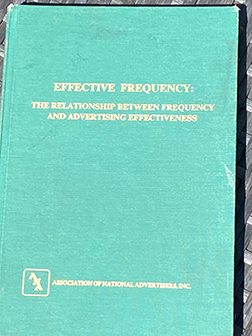 about all the science any of us have been tutored in on the subject of effective frequency.
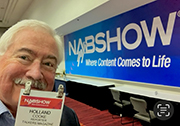 If you’re looking to jump-start – or optimize – your video interview technique, this session alone was worth the trip to Las Vegas. Washington-based video content strategist/producer/interviewer
  The media headlines are dizzying these days, yet they all share one common thread. See if you can solve this puzzle.
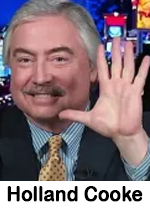 Having written thousands of commercials and promos, I’ve become a copy connoisseur. And, admittedly, a tough grader when it comes to delivery. Sell me and you’re good.
 The work-life balance concept is up for a new spin. Let us start in California.
 It seems every hour Nielsen and Pierre Bouvard of Cumulus fame (formerly of Westwood One) put out a release stating that radio is just fine, thank you. Radio is more persuasive than TV, direct mail, streaming and print. Radio is a proven success for over 100 years. Most of the buildings housing Procter & Gamble were built on radio – not TV – advertising success. Happily, P&G realized radio’s clout and is now a dominant radio advertiser – again!
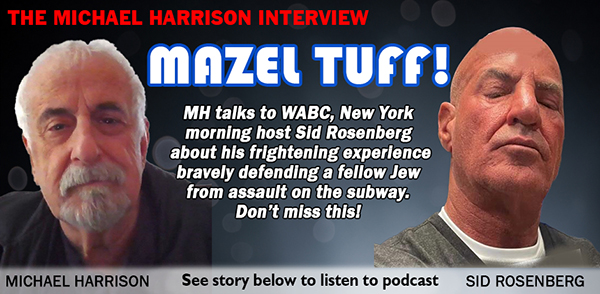
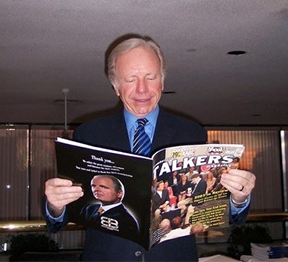 week’s installment of the award-winning PodcastOne series, “The Michael Harrison Interview.” The program includes an archived interview conducted with Lieberman in 2018 for the podcast which offers valuable insight into his perspective on the Electoral College and the presidency of Donald Trump among other historic issues. Harrison describes the late senator and former VP candidate as, “one of the last true American statesmen of the modern era.”
  The thing about outstanding performance is there is one key trait in the performer we can all agree on. It was on full display in front of millions during the past two weeks. It shows up every time an athlete takes the game to new levels, or an artist moves us out of our seats and collective comfort zone.