By Pamela Garber, LMHC
Grand Central Counseling Group
New York
 In a piece I recently wrote for TALKERS I encouraged talk show hosts and producers to book more guests from the mental health profession to provide much-needed relief from the alarming level of anxiety afflicting American society. Since then, the non-stop news cycle, replete with the media pushing people’s buttons to keep them sucked in, has me further convinced this need would benefit the medium as well as the public. Win-win.
People today are negatively impacted by fear, pressure, disgust and confusion. Pressure to keep up with runaway technology. Fear of crushing financial responsibilities and institutional betrayal. Anger over ever-lurking danger from scams, identity theft, and violent assault on the street. Confusion over rapidly changing values, diminishment of ethics, and contentious relationships.
The result: talk radio listeners (as well as potential ones) are drowning in anxiety.
Where does the tumult of an increasingly noisy and uncertain world reach a daily crescendo? On news/talk radio, of course. That unto itself is not a bad thing. The airing of news and views in the public marketplace of ideas is both therapeutic and a healthy exercise of our First Amendment rights. It is also grimly entertaining.
However, as both a therapist in practice for over two decades and a guest on many talk show interviews, I strongly believe that people need an occasional “spoonful” of relief to “help the medicine go down.” It’s not that I’m advocating sugar coating the content. But even just acknowledging the problems real people are facing from a human perspective can alleviate pain.
Mile markers to the rescue
My experience as a running enthusiast evokes a talk radio reference to the “mile markers” that dot the paths of long-distance races.
It was at mile 18 in the New York Marathon when I first yearned for a mile marker. Mile markers are those coveted little stations along the running races where everyone who extends their arm to offer runners a cup of water or Gatorade is Florence Nightingale to each participant who grabs the “reward.”
A little mile marker has such a big impact on going the distance in races (and in life). Life is hilly, sometimes suddenly downhill, with sprints and injuries, struggling to keep pace, and pretending to be slow. Mile markers in real life give us a boost. That occasional mental health expert popping up every now and then as a news/talk radio element can put things in context, offer solutions, and stop the spread of those deadly words: “I can’t listen to this anymore; It make me too anxious.”
Check out this talk radio hit, “Close My Ears,” by Gunhill Road by clicking here.
Pamela Garber, LMHC is a practicing therapist based in NYC and South Florida and a longtime guest mental health commentator on radio and television news programs across the nation. She can be contacted by phone at 646-745-6709 or email at Pamelagarber@gmail.com. Her website is Grandcentralcounselinggroup.com.




 capabilities, we’re enabling KSE to scale its digital offering and drive stronger, more measurable results for its clients. This partnership is a powerful example of how media companies can evolve and win in a performance-driven marketplace.” Townsquare launched their Media Partnerships division in 2024 in which it provides a white-label service that equips other local media companies with the digital advertising solutions that have fueled Townsquare’s own growth and success, with digital now comprising over 50% of Townsquare’s total revenue and profit. KSE Radio SVP and general manager Joel Clary says, “Kroenke Sports and Entertainment is excited to partner with Townsquare Ignite for all of our entertainment assets in the Denver market. Townsquare has the best digital solutions in the radio industry and a proven track record of delivering great results to clients.”
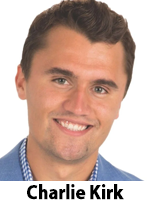 court today (4/17) Friday when his lawyers will argue that biased coverage is tainting potential jurors in his aggravated murder case. According to Audacy’s report, media organizations, prosecutors and Kirk’s widow, Erika, want the court to allow cameras. They argue the best way to guard against the misinformation and conspiracy theories that concern Robinson’s defense team is to make the process transparent.
 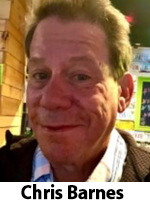 “I had a good run. I spent every cent I ever made… I would have rather saved some, but you can’t take it with you. I love you all. Thank you so much.” Barnes began his radio career in the 1980s at WEOK-WPDH in Poughkeepsie, followed by a nearly four-year run as an afternoon news anchor and reporter for WGHQ-WBPM in Kingston. He served as morning news anchor and news director for WSYR, Syracuse; worked at “All News 99.1 WNEW” in Washington, DC, as well as with USA Today Channel on SiriusXM in Washington; FOX News Radio in New York; and The Blaze Radio Network in Washington. DC.
  previously disclosed Plan of Reorganization. Cumulus Media president and CEO Mary G. Berner says, “When we initiated this prepackaged restructuring in March, we did so with a clear objective: to right-size our balance sheet to support long-term success. The court’s prompt approval of our plan keeps us firmly on track to eliminate approximately $600 million in debt and positions us to emerge with a significantly stronger financial foundation. We look forward to completing the restructuring and emerging as a well-capitalized company, better equipped to compete in the evolving audio landscape.”
 sports insight, humor, and a natural storyteller’s instinct that resonates far beyond the studio. Station programming operations manager Paul Mason comments, “Ron is a game‑changer. He brings energy, curiosity, and joy to everything he touches. Watching his growth – not just as a broadcaster, but as a leader and connector – has been incredible. His ceiling truly doesn’t exist, and we’re excited to see what this next chapter brings.” In addition to his work with “104.5 The Zone,” Slay serves as a college basketball analyst for ESPN and the SEC Network.
 the defining moments of 1776 – from the leadership of Benjamin Franklin and John Adams to the actions of the Continental Congress and George Washington’s crossing of the Delaware. These messages will be complemented by live and recorded interviews throughout 2026, featuring special guests sharing stories and perspectives tied to America’s founding and evolution. Beasley chief communications officer Heidi Raphael adds, “At this pivotal time in our nation’s history, Philadelphia holds an especially unique and powerful place in telling America’s story. Through our Community of Caring Initiative, we’re proud to share that story across our platforms – connecting our audiences to the past while celebrating what lies ahead.”
 information for farmers and ranchers and we are looking to double down on our efforts to bring that information to them through our radio affiliate partners. I am honored that we are able to grow the AOA footprint and expand to include a weekend offering that will continue to tell the story of agriculture, one conversation at a time.” Agriculture of America” debuted in 2018 by the team at FARM in conjunction with National Association of Farm Broadcasting Hall of Fame broadcaster Mike Adams featuring interviews and conversations with agricultural leaders, members of congress, market analysts, newsmakers and more and has grown into a nationally syndicated radio show heard on over 70 affiliate radio stations and SiriusXM Rural Radio 147 every weekday.
 accepted $15,899,000 in aggregate principal amount of such tenders in accordance with the terms of the Tender Offer. On March 30, 2026, the company completed the purchase of $15,899,000 in aggregate principal amount of the Existing First Lien Notes pursuant to the Tender Offer. As of 5:00 pm on April 15, 2026, approximately 98% of the aggregate principal amount of the Existing Second Lien Notes have validly tendered in the Exchange Offer and provided consents to the proposed amendments to the Existing Second Lien Notes Indenture.
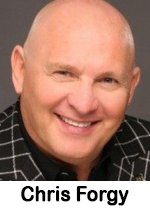 Christopher S. Forgy had fully resumed his regular duties following a medical leave that began on February 13. The company adds that during his intermittent recovery from open heart surgery, Forgy remained available for consultation, led the company’s fourth-quarter and year-end 2025 call on March 12, 2026, and the executive team, headed by COO Wayne Leland and CFO Samuel D. Bush, maintained operational continuity.
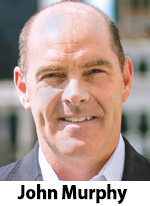 role with Crossover, Murphy will work to secure new content as well as to expand the company’s client portfolio. Crossover managing member Sue Freund says, “We’ve known and worked with John for many years; his excellent relationships throughout the content and advertising communities make him a tremendous addition to our team in building strategic partnerships with clients, agencies, and content providers as we continue to grow. He has a proven track record of building high-performing sales organizations, monetizing premium content, and delivering performance-driven advertising solutions for brands, agencies and media partners.” Murphy comments, “I’m excited to be joining Crossover Media Group. The team has built a strong reputation for delivering results-driven solutions for both creators and advertisers, and I look forward to contributing to that momentum. There’s a clear opportunity to unlock new growth across partnerships, and I’m eager to help scale the business while driving meaningful value for clients.”
 show is hosted by Carl “Killer Carl” Brown and has been on the air for almost a decade and is part of the John Frederick Radio Network. Seaboard marketing solutions consultant Bob Stei says, “We welcome all shows that affiliates will desire. Carl seems to put his own views and thoughts first, and they are not based on just ideology. That is refreshing.” The program currently airs on stations throughout America including WJFM, Richmond; WJFV, Norfolk; WBRG, Lynchburg; and WLMB, Atlanta.
 Ryan will continue calling live 49ers games, as well as pre-and post-game shows. Cumulus regional VP Larry Blumhagen comments, “We at KNBR are tremendously excited to continue this valued partnership with the Niners. We have a wonderful relationship with the organization and its people, and they are truly a partner to us in connecting their fans with all the gameday action they love and demand. We look forward to continuing to provide 49ers fans with outstanding game day coverage on all KNBR platforms from AM/FM to streaming.”
 way for the reorganization to move to the next step – approval from the Federal Communications Commission. When fully consummated, the plan will have eliminated $592 million of debt for Cumulus and puts control of the company into the hands of secured creditors. A new board of directors will be elected and although current executive management may remain in their positions, it is entirely up to the new board of directors to determine the company’s officers.
 understate the immense sales effect power of creative. Some 122 marketers placed creative as the third most important contributor toward driving sales behind targeting and brand. But the reality based on analysis of 450 ad campaigns indicates creative is far and away the most important driver of sales. Both marketers and agencies place the greatest importance on targeting. Experts caution that too narrow targeting is ineffective.
  treatment schedule. Edmonds, 42, said the diagnosis came unexpectedly about two months ago and described it on the air as a ‘total gut punch.’ A mother of a young daughter, she acknowledged the fear that followed the discovery but said she is confident in her care team and treatment plan at Henry Ford Health. Edmonds told listeners she has already begun chemotherapy and believes she will get through the process.” Edmonds says her oncologist emphasized the importance of consistent sleep and recovery during chemotherapy. She made clear that the change is temporary and that she plans to remain connected to WJR and its audience as she is able while focusing on her health.
 Commission states in part, “Due to economic conditions in the market, the licensee was forced to take the station off the air temporarily. The licensee respectfully requests special temporary authority for the station to remain silent. The licensee will promptly notify the Commission when it is able to resume station operations.” Townsquare also operates news/talk KFYO in the Lubbock market.
  Broadcasting and ESPN Arkansas, which will now serve all the Fort Smith, Hot Springs, Northwest Arkansas, Harrison, Mountain Home, and much of Eastern Oklahoma. Top rated KISR will continue to serve the River Valley from just below its previous dial position, moving to 93.1 FM.” ESPN Arkansas general manager Tommy Craft adds, “We are excited to expand and grow the footprint and coverage areas of our ESPN Arkansas radio stations. The addition of a 100,000-watt station to our roster of current stations is a true game changer. Fred Baker and KISR have spent more than 55 years building something that is far more than just a radio station for so many people, and we are humbled to be able to continue that kind of commitment to listeners. We live in a state where the sports we love and the daily conversations about the teams we follow matter. The opportunity to expand our coverage so that more of the great people in Arkansas can join in the conversation with our live and local sports talk radio shows is a thrill, and we cannot wait to get started.”