By Pamela Garber, LMHC
Grand Central Counseling Group
New York
 In a piece I recently wrote for TALKERS I encouraged talk show hosts and producers to book more guests from the mental health profession to provide much-needed relief from the alarming level of anxiety afflicting American society. Since then, the non-stop news cycle, replete with the media pushing people’s buttons to keep them sucked in, has me further convinced this need would benefit the medium as well as the public. Win-win.
People today are negatively impacted by fear, pressure, disgust and confusion. Pressure to keep up with runaway technology. Fear of crushing financial responsibilities and institutional betrayal. Anger over ever-lurking danger from scams, identity theft, and violent assault on the street. Confusion over rapidly changing values, diminishment of ethics, and contentious relationships.
The result: talk radio listeners (as well as potential ones) are drowning in anxiety.
Where does the tumult of an increasingly noisy and uncertain world reach a daily crescendo? On news/talk radio, of course. That unto itself is not a bad thing. The airing of news and views in the public marketplace of ideas is both therapeutic and a healthy exercise of our First Amendment rights. It is also grimly entertaining.
However, as both a therapist in practice for over two decades and a guest on many talk show interviews, I strongly believe that people need an occasional “spoonful” of relief to “help the medicine go down.” It’s not that I’m advocating sugar coating the content. But even just acknowledging the problems real people are facing from a human perspective can alleviate pain.
Mile markers to the rescue
My experience as a running enthusiast evokes a talk radio reference to the “mile markers” that dot the paths of long-distance races.
It was at mile 18 in the New York Marathon when I first yearned for a mile marker. Mile markers are those coveted little stations along the running races where everyone who extends their arm to offer runners a cup of water or Gatorade is Florence Nightingale to each participant who grabs the “reward.”
A little mile marker has such a big impact on going the distance in races (and in life). Life is hilly, sometimes suddenly downhill, with sprints and injuries, struggling to keep pace, and pretending to be slow. Mile markers in real life give us a boost. That occasional mental health expert popping up every now and then as a news/talk radio element can put things in context, offer solutions, and stop the spread of those deadly words: “I can’t listen to this anymore; It make me too anxious.”
Check out this talk radio hit, “Close My Ears,” by Gunhill Road by clicking here.
Pamela Garber, LMHC is a practicing therapist based in NYC and South Florida and a longtime guest mental health commentator on radio and television news programs across the nation. She can be contacted by phone at 646-745-6709 or email at Pamelagarber@gmail.com. Her website is Grandcentralcounselinggroup.com.



 downloads for participating networks – and “The Joe Rogan Experience” is #1, followed by audiochuck’s “Crime Junkie” at #2 and The New York Times’ “The Daily” at #3. Other podcasts of interest to TALKERS readers include: “The Tucker Carlson Podcast” at #19, “The Ramsey Show” at #30, “The Ben Shapiro Show” at #34, “The Megyn Kelly Show” at #43, and “The Dan Bongino Show” at #66. Triton also notes in this quarterly report that the top podcast categories by reach remain Comedy (43.6%), News (23.7%), and Society & Culture (21.2%). See the report here.
  Kevin Kinkead at Crossing Broad reports, The station will be ending local weekday programming at 6:00 pm, airing a two-hour “best of” show from 6 to 8, and then shifting to national programming afterward. That’s according to super-secret sources. It means the Fanatic will broadcast its normal daypart lineup – Kincade and Salciunas in the morning, Marks and Brace middays, and then ‘Unfiltered’ with Bill Colarulo and Ricky Bo in the afternoon, but there will no longer be Fanatic hosts doing local shows after 6 p.m. For instance, no Kevin Cooney or Brendan Gunn on the evening shift, which had been generically branded as “Philly Sports Tonight.”
 Former WXYT-FM, Detroit talk host and Motor City sportswriter Pat Caputo died on Thursday (5/7) after a battle with pancreatic cancer at the age of 67. Caputo hosted in several dayparts on 97.1 The Ticket during his time with the station. He also was a contributor to WJBK-TV, Detroit. But he was initially known in the Detroit market writing for the Oakland Press from 1983 through 2020.
  advertisers are currently buying audio programmatically, up two times from 2022 (41%); 2) The most used programmatic audio demand-side platforms are Google Display & Video 360, The Trade Desk, and Amazon DSP; 3) Among publishers, the most utilized supply-side platforms for digital audio ads are Google Ad Manager, distantly followed by Amazon Publisher Services, Open X, and PubMatic; 4) Among those who purchase podcasts, Google DV360, The Trade Desk, and Amazon’s DSP are the most utilized demand-side platforms; and 5) Recent announcements from Amazon Ads indicate a major expansion of over-the-air AM/FM radio and audio advertising capabilities within the Amazon Demand Side Platform. Regarding that last point, the study notes that those moves “focus on bridging the gap between traditional broadcast AM/FM radio and digital, programmatic buying, allowing advertisers to use Amazon’s first-party signals for targeting and measurement.”
  and meet monthly goals through effective outside sales techniques; Develop new business through selling commercial advertising time and other station products by reaching out to local businesses and other advertisers; Create and present advertising strategies and ideas for local businesses incorporating radio, online and digital mediums; Provide input on sales promotion ideas to sales management; and more.
  Awards will be announced during a dinner program on Tuesday, October 20, 2026, at the Edison Ballroom the night before NAB Show New York being held on October 21 – 22. The Marconi Radio Award finalists are selected by an independent body of broadcasters and will be announced in summer 2026. All nominations must be submitted through the NAB member portal.
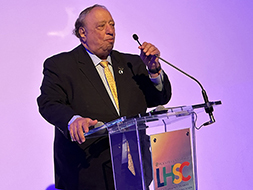 University on Long Island. TALKERS publisher Michael Harrison states, “The selection of ‘Cats’ as keynoter is in keeping with one of the major themes of this year’s edition of the iconic industry event – radio, talk media, and entrepreneurism. John Catsimatidis is presently setting the greatest example of entrepreneurism at work in giving an injection of much needed energy, focus and life to the medium of radio.” Harrison will serve as facilitator of the presentation in a Q&A / interview style format – a role he has played before with the dynamic billionaire media, grocery, and energy mogul.
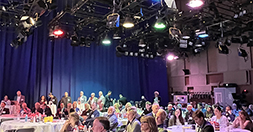 Catsimatidis will be joined by more than 60 speakers comprised of legendary industry figures as well as fresh faces and rising stars. A detailed agenda including speakers and schedule – a “who’s who” of industry luminaries – will be posted in TALKERS this coming Tuesday (4/28). See the link below for the names of all speakers booked to date.
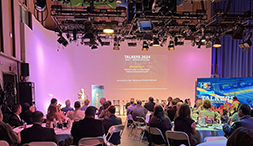 Harrison continues, “This important conference will illuminate the forward path of the expanding talk media universe, including all aspects of digital communications from AI and podcasting to streaming networks. As has been its tradition, this latest TALKERS conference will approach the onrushing future of the talk business from a radio perspective. This crucial gathering will cover the new undeniable realities of the radio business for those who not only want to survive but thrive as well. It will be about opportunities, networking, and entrepreneurism for individuals in talent, programming, sales, marketing, and management who are serious about staying in the game.”
 requests for comment. The report states, “Liberty SiriusXM Group, once an affiliate of John Malone’s media empire, formerly held significant stakes in both companies. But it eventually sold its stake in iHeartMedia, primarily a broadcast radio company, and split off its ownership of SiriusXM, the satellite radio company, into a separate entity.” The story goes on to underscore that the talks are in the early stages, and a deal may not take place.
  government studies report most commutes are a solo affair. In the car, Honda drivers cannot be reached by social media, online video, or any digital platform while commuting to work. What are the audio habits of Honda drivers in all locations (home, work, vehicle, and some other place)? Edison examined audience shares among Honda drivers to ad-supported audio platforms at home, in the car, at work, and some other place. In all locations, Honda drivers devote 62% of all their ad-supported audio time spent to AM/FM radio.”
  radio industry and listeners. Voting for inductees begins Friday (4/24) and runs through May 8. The top six vote recipients will gain induction as part of the 2026 Radio Hall of Fame Induction class. The additional inductees that will make up the induction class will be selected by the Radio Hall of Fame Nominating Committee. Spoken-word nominees include: Boomer Esiason, Joey Reynolds, John & Ken, and Larry Elder.
 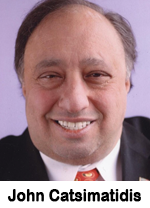 a financial backer of the table tennis phenom played by Timothée Chalamet in the film. Safdie told Vanity Fair he liked Catsimatidis’ ‘larger-than-life regional businessman’ look, which he noticed when the mogul ran for New York City mayor in 2013.” Interestingly, a key focus in the piece is on Catsimatidis’ ownership of news/talker 77WABC. He writes, “Catsimatidis made millions from buying New York real estate on the cheap in the 1970s when the city was in deep economic trouble. So, he recognized a bargain when his Red Apple Media group bought WABC for $12 million from Cumulus Media.”
  newscast that some 700 stations respected enough to put on their air. Schwalb tells the Tribune, “Conversations have been going on since the announcement, and I think we get closer and closer to a decision every day. But we have to be very careful and be very diligent about making sure the product that we select is going to make sense from a listener perspective and a revenue perspective as well… CBS has been a great top-of-the-hour news piece for a long time, but it’s a very small percentage of what we do in a given hour between business, traffic and weather together on the eights, local news – the strongest local newsroom in Chicago radio.”
  Ian Furness Show,” which moves to an earlier start by an hour. The Seattle Times notes that Bell has covered the Seahawks for the Tacoma News Tribune since 2014, and Kidd is an executive producer with KJR who co-hosts the “Seahawks Man 2 Man” podcast. Bell comments about working Kidd, saying, “We have great rapport. I value his input. He’s a Seattle kid, born and raised, and a Coug. He’s a little younger than I am, so that gives another perspective.”
  court today (4/17) Friday when his lawyers will argue that biased coverage is tainting potential jurors in his aggravated murder case. According to Audacy’s report, media organizations, prosecutors and Kirk’s widow, Erika, want the court to allow cameras. They argue the best way to guard against the misinformation and conspiracy theories that concern Robinson’s defense team is to make the process transparent.
 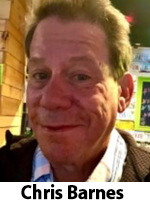 “I had a good run. I spent every cent I ever made… I would have rather saved some, but you can’t take it with you. I love you all. Thank you so much.” Barnes began his radio career in the 1980s at WEOK-WPDH in Poughkeepsie, followed by a nearly four-year run as an afternoon news anchor and reporter for WGHQ-WBPM in Kingston. He served as morning news anchor and news director for WSYR, Syracuse; worked at “All News 99.1 WNEW” in Washington, DC, as well as with USA Today Channel on SiriusXM in Washington; FOX News Radio in New York; and The Blaze Radio Network in Washington. DC.
  understate the immense sales effect power of creative. Some 122 marketers placed creative as the third most important contributor toward driving sales behind targeting and brand. But the reality based on analysis of 450 ad campaigns indicates creative is far and away the most important driver of sales. Both marketers and agencies place the greatest importance on targeting. Experts caution that too narrow targeting is ineffective.
  Commission states in part, “Due to economic conditions in the market, the licensee was forced to take the station off the air temporarily. The licensee respectfully requests special temporary authority for the station to remain silent. The licensee will promptly notify the Commission when it is able to resume station operations.” Townsquare also operates news/talk KFYO in the Lubbock market.
  news content, report on breaking news events, serve as board operator for special programming, and produce special projects and programming as assigned. This position does feature regular hours of board operator work, writing, producing, as well as anchoring newscasts. On occasion the position will offer extra hours during the week to cover shifts for those who are ill or on vacation.
  assault and harassment after an alleged incident involving his fiancé. According to several Philadelphia media outlets, Missanelli allegedly slapped his fiancé during a “scuffle” in which she allegedly struck him in the chest. Missanelli has a preliminary court hearing on April 22. Missanelli’s long career in sports talk included time spent with both WIP and WPEN “97.5 The Fanatic.” He left WPEN during a round of staffing cuts last summer.
  agencies can use AM/FM radio in their upcoming media plans. Some key points include:1) AM/FM radio has a 64% share of ad-supported audio among registered voters; 2) AM/FM radio has substantial shares (62% to 65%) among Independents, Republicans, and Democrats: 3) Marketers and media agencies significantly underestimate AM/FM radio listening shares and dramatically overestimate Spotify and Pandora audiences; and 4) Digital audio only reaches a third of Americans. With AM/FM radio, reach soars to 73%.
  U.S. newspapers has shrunk, but right now it accounts for less than 10% of total revenue. In fact, “Revenue from that cohort has declined 25% over the past few years, while revenue from tech companies has grown roughly 200%.” The story goes on to note, “Over the past few years, the AP’s business has evolved to become less reliant on local newspaper revenue and more reliant on a broader set of customers, including digital outlets, broadcasters and non-news companies.”