


SABO SEZ: Top 40 is Always the Answer
By Walter Sabo
a.k.a. Walter Sterling, Host
WPHT, Philadelphia, “Walter Sterling Every Damn Night”
And TMN syndicated, “Sterling on Sunday”
 Reviewing radio’s challenges:
— Trouble attracting and growing younger demos
— Trouble appealing to youth-oriented advertisers
— Trouble generating excitement in our culture
— Trouble owning a seat in the news media
— Trouble attracting out of college/high school employees
in sales, management on air.
The answer is: Top 40 or, if you must, CHR. The answer has always been Top 40.
The brilliant Allen Shaw, president ABC FM Radio, CEO Beasley Broadcasting, CEO/owner Centennial, said, “And Top 40 will always have an important place in radio because it plays the most popular music therefore it will always have an audience.”
In reviewing Spring Nielsens, it is hard to find a Top 40 station that is #1 6+ in any city. Consider how odd that is. Since 1955 there have been hundreds of Top 40 stations that attracted dominant shares of audience.
No, not audience: fans. Passionate fans because music is passion. New music is more passion. Cultural pebbles between the songs dropped by passionate radio stars compel even more passion.
Big contests. Big promotions. Breaking music trends. Huge voices. Pounding jingles. Prizes: Trips to see Taylor Swift in the studio – in England. A week off from school, on us! Free pizza for 50 of your friends – for a year. A new red, customized Z-93 car in your driveway on your birthday. Ed Sheeran plays your prom! A limo to school on opening day. Big Time Rush sings at your street fair.
Alex Warren writes a song for you – and performs it for you. Gift certificates for CAMEO. The Apple package… an iPhone, iPad and MacBook Air.
Media Buyer: Hop on the station yacht this summer, let’s go for a sunset party cruise. One buyer wins this custom Mustang. Wherever you go on vacation, tab’s on us.
Excited? Radio is good at contesting, better than any other medium. Excitement in thin air is what radio does… well, used to do.
Of course radio is a low choice among fresh grads, 18-24s, and media buyers. Radio stopped making the best radio, stunning, pulsing, sexy, unpredictable. We stopped rolling out the red carpet: Hot, current, daring, dangerous… Top 40.
You were drawn to radio because of Top 40. Make that.
Walter Sabo has been a C Suite action partner for companies such as SiriusXM, Hearst, Press Broadcasting, Gannett, RKO General and many other leading media outlets. His company HITVIEWS, in 2007, was the first to identify and monetize video influencers.. His nightly show “Walter Sterling Every Damn Night” is heard on WPHT, Philadelphia. His syndicated show, “Sterling On Sunday,” from Talk Media Network, airs 10:00 pm-1:00 am ET, and is now in its 10th year of success. He can be reached by email at sabowalter@gmail.com.
 media users, and linear TV viewers. Ad-supported audio listeners are more likely to be Amazon Prime members, spend more, and were more aware of Amazon Prime Day 2025; 2) Ad-supported audio (AM/FM radio, music streaming, and podcasts) are ideal media platforms for retailers and e-commerce brands: Heavy audio listeners are more likely to shop online. Heavy AM/FM radio and podcast listeners spend more online than TV viewers; 3) AM/FM radio makes your TV better – “20 gets you 50”: A 20% shift of a TV media budget to AM/FM radio generates a +50% increase in campaign reach. Nielsen Media Impact campaign optimizations reveal shifting media weight to AM/FM radio generates significantly more reach, especially among younger 18-49 demographics. AM/FM radio does an extraordinary job in increasing campaign reach among light TV viewers who will not see retailer TV ads; and 4) Audio holiday AM/FM radio campaigns work: Consumers exposed to an Amazon holiday AM/FM radio campaign have higher brand equity (awareness, ad recall, prior purchase, and purchase intent). Nielsen sales effect studies reveal AM/FM radio campaigns for retailers generate significant return on advertising spend: $15 dollars of incremental sales for every dollar of AM/FM radio advertising.
 have ever consumed a podcast, 55% have consumed a podcast in the last month, and 40% have consumed a podcast in the last week, each measure being an all-time high; 2) Video podcast consumption has redefined the podcast landscape: Over half (51%) of the U.S. 12+ population has ever watched a video podcast; 37% have watched a video podcast in the last month and 26% have watched a video podcast in the last week. Those who actively watch video podcasts are younger and more diverse than those who only listen to audio-only podcasts; and 3) Podcasts offer high engagement and trust from listeners: 88% of weekly podcast consumers agree that hearing ads is a fair price to pay for free content; 68% say they don’t mind hearing ads on podcasts. You can see
  live in the 12:00 noon to 3:00 pm daypart. The show will be simulcast live on Disney+ every day and on ESPN+ during select weeks in the year. In addition to his weekday show, Eisen brings his full podcast lineup from The Rich Eisen Podcast Network to ESPN platforms. Eisen says, “Once we struck a deal with Disney for the video version of The Rich Eisen Show, it made complete sense to migrate the audio version to ESPN Radio, where I got started in the terrestrial radio world almost 30 years ago. It’s just another way to return to my roots with my old and now new friends at ESPN and GKB. I couldn’t be more excited about our future together on multiple platforms.”
 Conventional industry wisdom: “If our morning star leaves, we’re dead. How could we replace them?”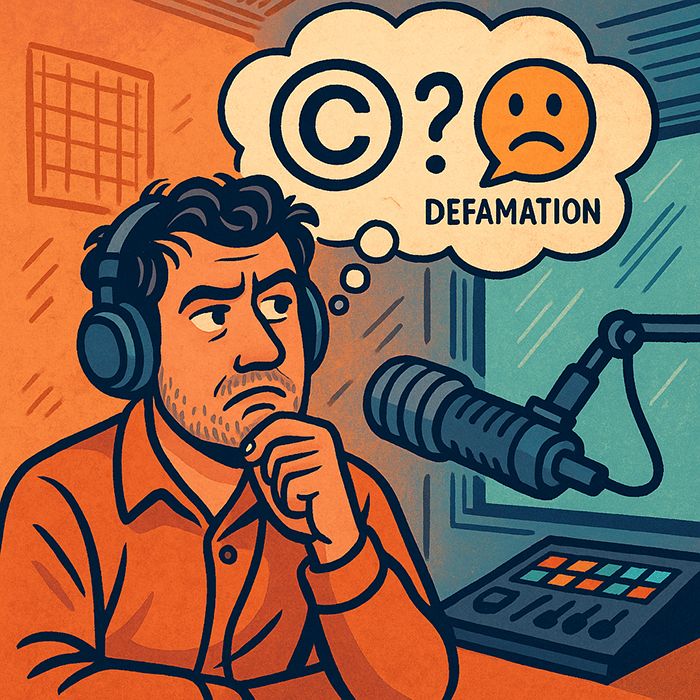
 A radio (or video podcast) host grabs a viral clip, tosses in some sharp commentary, and shares it online. The goal? Make some noise. The result? A takedown notice for copyright infringement – and then a letter threatening a defamation suit.
 to elevating Black culture and storytelling across podcast and video platforms” that will serve as the exclusive home for both the Amplified Voices Podcast Network and the soon-to-launch Amplified Voices TV. Superadio and AURN CEO Chesley Maddox-Dorsey says, “This launch represents a powerful evolution in our mission to serve Black audiences. By creating three distinct digital destinations – AURN.com, Superadio.com and AmplifiedVoices.com – we are sharpening our focus to better meet the needs of our listeners, viewers and content distributors.”
 There are two broad categories of thought: Task. Creative. When in creative mode, a person innovates, imagines, plans, and solves problems. An idea bank is a bank! Money grows from the results of imagination: new products, new music, new formats, new sales strategies. Business growth depends on new!
 marketers about perceived media effectiveness in which radio came in last place, behind all measured traditional and digital media types. According to Nielsen’s global ROI benchmarks, radio delivers the second highest return for advertisers, second only to social media. Nielsen’s ROI benchmarks show radio delivers higher returns for advertisers than all other other traditional media. While radio is perceived to be less effective than digital media, it delivers an ROI +30% higher than video and display, and +70% higher than search and CTV.
  move to appease the Administration and secure regulatory approval of a major transaction currently pending before the FCC. For months, it has been clear that this lawsuit was entirely meritless, just like the complaint now before the Commission. The transcript and video of the 60 Minutes interview with Vice President Harris show no evidence of wrongdoing, only the standard editorial judgments used across the news industry to ensure clarity and brevity. Had Paramount chosen to fight this in court, they would have prevailed on the facts and the law. But instead of standing on principle, Paramount opted for a payout. That decision now casts a long shadow over the integrity of the transaction pending before the FCC. Given the extraordinary public interest in this deal, the novel legal questions raised by the lawsuit and its resolution, and the repeated calls from lawmakers for transparency, I once again urge the FCC to bring this matter before the full Commission for a vote. Approving this transaction behind closed doors and under the cover of bureaucratic process would be a shameful outcome that denies the American people the transparency and accountability they deserve, especially when press freedom is at stake.”
 for our station. Your material is used throughout the day on several different broadcasts. This individual in this position is also an overall ambassador for our brand, and is expected to also work at special events, and alongside our sales staff promote the station to Northwest Newsradio clients. The perfect candidate has a minimum of two years’ experience in large market media, is proficient and aggressive in social media, is an excellent writer, and embraces using digital platforms (podcasting, streaming audio, streaming video) to promote the Northwest Newsradio brand. Candidates need to submit an audio demonstration of their on-air ability with their resume, along with a sample of radio news writing. Candidates should also be prepared to take a writing test if requested.
  featured live each night from 6:00 pm to 8:00 pm ET. Root says, “Tens of millions of die-hard Trump supporters go to theGatewayPundit.com 24/7 for the news and opinions that you won’t find in the mainstream media. It’s the perfect platform and synergy for my podcast. This is a marriage made in heaven. My daily podcast offers raw truth, the most exciting content for MAGA fans, and the most intense, passionate, combative, controversial, in-your-face, high-energy show anywhere in American media, combined with the biggest personality, and the loudest MAGA mouth on the planet. My show takes your breath away. It’s two hours of ‘pedal to the metal, balls to the walls,’ without taking a breath.”
 provide cultural, social, and political commentary across all FOX News Media platforms. Cooper launched her podcast, “The Brett Cooper Show” in January 2025. From 2022-2024, Cooper hosted “The Comments Section,” a video podcast on The Daily Wire.
 The drive to stream video of radio shows has always been risky. Remember your shock when you first saw one of your radio heroes? Video streaming can present a constant disconnect between the show in the listener’s head and the show on the stream. Many stations make the disconnect worse by streaming terrible video images. Combine the trauma of how a host really looks with a dreary TV show and the package cannot benefit the relationship between station and listener/viewer.
 right, two shows… one on the radio, one on the stream. Seamless and fun.
 throughout the Patriots season. Andrews will also be featured on The Sports Hub Patriots Radio Network Pregame Show and will co-host a video podcast with Alex Barth. WBZ-FM program director Rick Radzik says, “David’s leadership and deep understanding of the game made him a standout on the field, and we’re excited to bring that same level of insight and authenticity to our listeners. He’s a natural fit for our lineup and the perfect voice to help break down the season from a player perspective.” Andrews comments, “I’ve enjoyed a great relationship with ‘The Sports Hub’ since coming to New England 10 years ago. I’m looking forward to providing my analysis and perspective across the station’s various platforms this season.”
 manager Liz Mayer says, “There is no denying that YouTube is playing an important role in the podcast ecosystem, especially when it comes to discovering new podcasts. However, over half of weekly podcast consumers indicate they consume via audio primarily. So, while the new video capabilities are exciting and need to be focused on, the industry can’t forget that it’s what consumers are hearing that is most important.” Highlights from the report include: 1) Audio remains the primary mode of podcast consumption (58%) despite growing video options; 2) YouTube is the leading podcast platform, yet it is not a walled garden as consumers listen to podcasts across multiple platforms; 3) Podcast discovery: YouTube is the place to be found; 44% of new podcast audiences started listening on YouTube; 4) Downloads and listens underestimate the actual audience: The current download impression model fails to account for co-listening; and 5) Why podcast advertising works so well: Podcasts hosts are three times more influential than social media influencers.
  At first, I thought it was a joke. When I realized there were serious people having serious meetings about the joke, it became both horrific and symptomatic
 Dozens of brand-new audio hardware and software companies have been launched during the past 20 years. These start-ups are usually funded by venture capital money. VC money is not invested to return a profit, it’s poured in to – pour it in. Their money is “different” than the cashflow that fuels your business. Start-up money buys time to profit.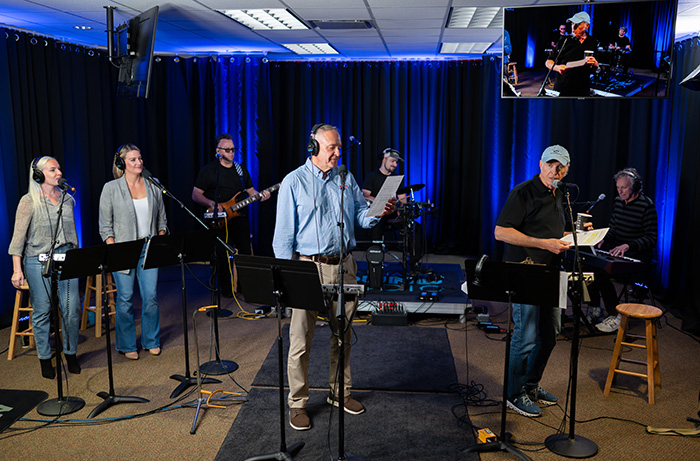
 TALKERS publisher Michael Harrison introduced the term in the 1990s, inviting us to think-beyond the real-time audio we were sending up those towers. What he described seemed conceptual, even futuristic, back then, when we were still logging-onto AOL via dial-up (screech).
 Right now, dozens of well-suited, over-priced, unpleasant lawyers are fighting in Hollywood over the title credit their client should receive on a movie, TV show, or book cover. Placement within the credit roll at the end of a show is a battleground of egos and legalities. Part of the process of securing proper credit is governed by multiple union rules negotiated by multiple unions and corporate dictates of corporate masters. (You don’t get to be CEO of Paramount by being a nice guy.)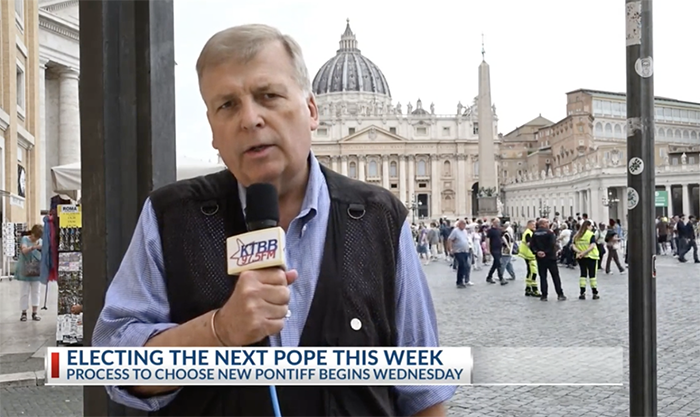
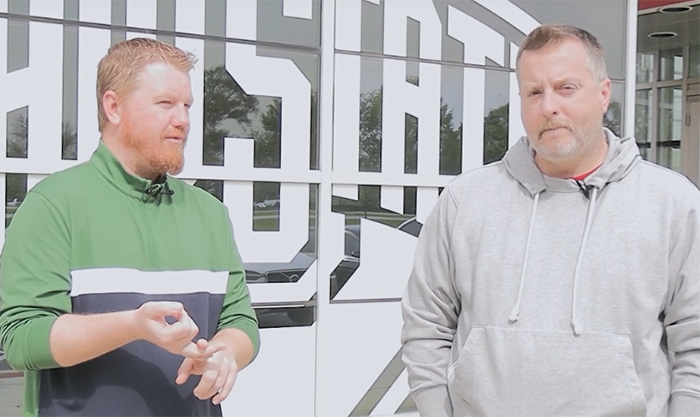
 Geary says, “FOX News Media and SiriusXM are leaders in news and entertainment programming respectively, and we are delighted to bring to the market a bundle of our streaming services that offers exceptional consumer value. FOX Nation’s library of original video programming and SiriusXM’s vast offering of music for every mood and moment, live sports from every major league, plus entertainment and news combine to make a highly attractive streaming audio and video bundle.”
 voracious consumers of movies in the theater and films on streaming services. They are first to see a movie in the theater on opening weekend and when films debut on streaming services; and 2) Versus linear TV viewers, audio listeners are far more likely to see movies in the theater and indicate a greater willingness to watch content. Looking at data about marketing moves and streaming video, the study finds that 1) Linear TV advertising spend for theatrical releases and video streaming brands is 30X audio. Despite this, TV viewers show low awareness of new films and low interest in upcoming films and streaming service subscriptions; and 2) Audio (AM/FM radio, streaming audio, and podcasts) should become a much greater allocation in the entertainment marketing media plan. Reallocating 20% of linear TV theatrical and streaming video media plans to AM/FM radio doubles campaign reach with no additional cost.
  “It won’t work on FM.” Country. Country was predicted to be a failing format for the FM band. At the dawn of FM proliferation in the 1970s, the future of the band was viewed with fear and skepticism. Why wouldn’t country music work on the FM band? The conventional chatter said that “country needs to be on AM because truckers drive long distances and AM signals cover long distances. FM does not.”
 Global, the parent company of CBS, have begun charging what’s known as ‘reverse’ retransmission fees to broadcasters. The networks demand a share of broadcasters’ revenue for the right to use their content. This practice was once unheard of, but some networks now regularly require more than 100% of broadcasters’ retransmission fees as ‘reverse’ fees, leaving broadcasters to sustain themselves solely on whatever ad sales they can make with their limited inventory (also capped by the networks, and often amounts to only a few minutes of airtime per hour). This funnels more and more money out of local markets and local journalism and into the hands of mega media corporations, who threaten broadcasters with content blackouts if they don’t get sky-high payouts.” They go on to argue that the “problem gets even worse with providers like YouTube TV and Hulu Live. Under their affiliate agreements with the networks, local affiliates can’t even negotiate for online providers to carry the content. The networks do it for them and pay the affiliates whatever they deem reasonable (sometimes, nothing). This gives the networks total control over streaming distribution while robbing local stations of revenue and autonomy in the rapidly growing online video space. What was once a mechanism to support hometown news is now a corporate racket. Instead of investing in local reporters, meteorologists, and producers, local broadcasters’ funds are siphoned to bloated national newsrooms that churn out anti-Trump propaganda and woke talking points. Meanwhile, higher cable bills pass the cost to everyday Americans.”