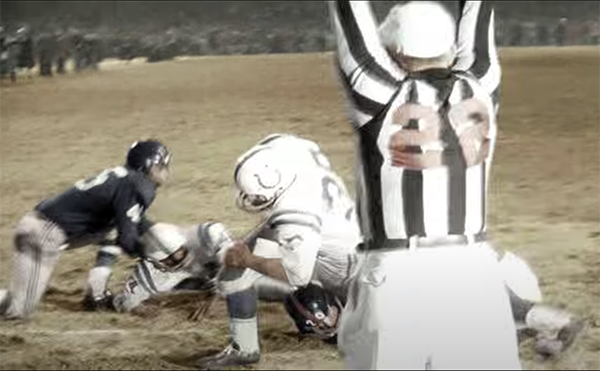
Baltimore’s Alan Ameche plunges over the goal line for the winning touchdown!(courtesy YouTube/NFL Films)
On the field? Maybe. In its impact on pro football and sports broadcasting? Absolutely!
By Mark Wainwright
 It was one of those indelible moments in sports history: The 1958 NFL Championship, played on December 28, 1958 at Yankee Stadium in New York. The Baltimore Colts defeated the New York Giants 23-17 in sudden death overtime. 65 years later, the events of that Sunday afternoon still resonate throughout pro sports and sports media.
In 1958, the National Football League was far from the huge phenomenon we see today. Americans generally had much more interest in baseball, and during the Fall, college football captured the attention of sports fans on Saturday afternoons. The annual Army/Navy and Harvard/Yale clashes were national news stories, and fans followed the exploits of powerhouses like Notre Dame and Michigan. For most fans, pro football was an afterthought. Even in cities with pro franchises, the NFL clubs often played runner-up to the local baseball teams.
Baltimore and New York were two exceptions. The Colts were upstarts — Baltimore didn’t get an NFL team until 1953 — and the city quickly fell in love with the Colts; on game days, Baltimore’s Memorial Stadium was described as “the world’s largest outdoor insane asylum.” Meanwhile, the Giants had been part of the NFL since 1925, and they were considered the league’s most glamorous team, located in the world’s media capital. Two very different teams, both with passionate fan bases, playing a nationally-televised title game in New York City… indeed, America was destined to notice pro football that day.
Seventeen Pro Football Hall of Fame inductees were in the stadium that afternoon, along with a Heisman Trophy winner (Baltimore running back Alan Ameche). The Colts were led by quarterback Johnny Unitas and defensive end Gino Marchetti. The New York offense revolved around halfback Frank Gifford, while linebacker Sam Huff anchored the defense.
There were all-stars in the broadcast booths, as well. NBC’s national telecast was assigned to Chris Schenkel and Chuck Thompson; both of these gentlemen are now legends of their industry. Joe Bolan and Bill McColgan called the game for NBC’s national radio feed, while Les Keiter did the play-by-play for WCBS Radio in New York. And Bob Wolff did the radio call for Baltimore’s WBAL. Wolff was assisted by an eager teenager who worked as his spotter… a young man named Maury Povich (yes, that guy).
The first half, frankly, wasn’t anywhere near “greatest game” territory. While both defenses played fairly well, the offenses looked sloppy and disorganized, and the two teams combined for six turnovers in the first thirty minutes. The Giants managed only a Pat Summerall field goal, while the Colts — almost in spite of themselves — took a 14-3 lead into halftime. It could have easily been 17-3, but Sam Huff blocked a Baltimore field goal attempt.
So, what was the halftime entertainment? Over the years, Super Bowl halftimes have featured performers like Lady Gaga and Michael Jackson. What 1950’s superstars would perform in the “super bowl” of 1958? Elvis Presley? Brenda Lee, maybe? Nope. It was the Baltimore Colts Marching Band, with their prancing majorettes looking quite fetching in their red leotards and reindeer antlers…
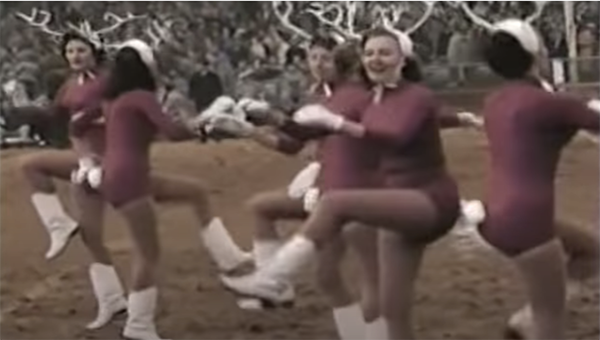
The Baltimore Colts Marching Band majorettes, in “reindeer” mode! (courtesy YouTube/NFL Films)
Baltimore’s offensive woes continued into the second half. Early on, the Colts drove the ball to New York’s 1-yard line, but Alan Ameche was stopped for no gain on third down, then Ameche was tackled for a loss when he attempted to run wide on fourth down. In an interview decades later, Baltimore’s Lenny Moore revealed that Ameche botched the play; it was supposed to be an option pass, but Ameche didn’t hear Johnny Unitas’ signals correctly, and he ran instead of throwing a short pass to a wide open Colts receiver.
That goal-line stand awakened New York’s offense, and they needed only four plays to score their first touchdown to make it 14-10. The Giants then took a 17-14 lead early in the fourth quarter on a Frank Gifford touchdown reception, and while the Colts responded with two effective drives, they came up empty on both possessions; one ended with a missed field goal, the other ended when Unitas was sacked twice, taking the Colts out of scoring range. The Giants’ offense only needed a first down or two to ice the game, but Frank Gifford was stopped on a critical third down run. For decades, Gifford insisted he made the first down; Baltimore’s Gino Marchetti suffered a badly broken ankle in the pileup, and Gifford often said that amidst the chaos and confusion of tending to Marchetti’s injury, the officials did not spot the ball properly. However, when ESPN restored the footage for a 50th anniversary broadcast in 2008, an accident reconstruction expert analyzed the images and determined that Gifford was, indeed, just short of the first down (more about that ESPN program in our Epilogue). The Giants chose to punt the ball, and the Colts took over on their own 14-yard line.
This was the moment when Johnny Unitas began his ascent to legendary status. With just two minutes left, he moved the Colts downfield quickly. While there were several misfires, he made four critical completions, including three straight passes to his star receiver Raymond Berry. Those last three plays moved the ball 62 yards to the Giants’ 13-yard line, and with just seconds remaining, the Colts rushed Steve Myhra out to attempt a tying field goal. Myhra had struggled with field goal attempts all season, and Baltimore fans held their collective breath until the ball went through the uprights. The fourth quarter ended tied 17-17.
So… what happens next? Many of the players and coaches weren’t sure. It was not unusual for football games to end in a tie, but this game was for the NFL title. Would the teams be declared co-champions? Fortunately, the NFL had recently instituted an overtime rule for championships, and it would be decided on the field. The teams would play pure “sudden death.” The first team to score in any manner would win, and they would play for as long as it took.
The Giants won the toss and chose to receive, but they were not able to mount any kind of drive, and they punted the ball back to the Colts. Unitas now had all the time in the world, and Johnny U methodically moved the Baltimore offense to the New York 8-yard line. It was first-and-goal, and then, suddenly… the NBC Television feed disappeared! Nothing but snow on the screen!
This caused immediate panic in NBC’s control room, not to mention in homes across the nation, as viewers — particularly in Baltimore — bolted from their living rooms and scrambled to find the nearest radio. It was one of the worst possible moments to lose the live feed of a TV broadcast. And then…
A fan ran onto the field! Play was halted for nearly a full minute before New York’s Finest chased him down and escorted him to the sideline. Over the years, there has been endless rumor and speculation about this incident. Photographs show the fan was well-dressed and appeared very cooperative when the cops took him away; he certainly didn’t look like a drunken lout. Who was this guy?
Whoever he was, he is now the stuff of sports broadcasting legend. More than six decades later, it is widely believed that he was an NBC employee who realized the broadcast was interrupted and ran onto the field — or perhaps was told to run onto the field — to delay the game long enough to give the TV crew enough time to find a loose cable and fix the connection. As far as I know, he was never identified and the story has never been confirmed. One hopes the fellow received a bonus and a promotion for his quick thinking!
When the game resumed, the Colts ran two plays to reach third-and-goal from just over a yard away. A field goal attempt might have been the obvious choice, but Baltimore coach Weeb Ewbank was leery of sending a struggling Steve Myhra in to kick. Meanwhile, the coach trusted Unitas completely, and he left Johnny U and the offense on the field. A routine handoff to Alan Ameche secured a 23-17 Baltimore victory.
The game was breaking news nationwide. It was a big topic of Sunday afternoon dinner conversations, and it was headline news on front pages and in sports sections the following day. NFL and television executives soon realized that professional football could become a very valuable property, and they started making plans for increasing television coverage and boosting marketing exposure for the teams, the star players, and the sport overall. And down in Dallas, Lamar Hunt — a son of oil tycoon H.L. Hunt — started thinking about owning his own football team. Those dreams eventually led to his role in establishing the rival American Football League, which merged with the NFL just over a decade later. Historians and sportswriters have studied the 1958 title game, and they generally agree that event was the start of professional football growing into the colossus it has since become. It was the aftermath and the impact — as much as the drama of the game itself — that led them to calling it “The Greatest Game Ever Played.”
*************************************************************************************************************
EPILOGUE
As I’ve mentioned in previous articles, television did not put a high priority on archiving sports events back then. There is no known videotape of the game; videotape was in its infancy, and while NBC presumably had one or two of the early machines available, it seems nobody bothered racking them up. There is no known kinescope film recording of the television broadcast, either. Fortunately, there was plenty of film footage of the game, both from overhead and from sideline views. This footage was shot by NFL Films, as well as various newsreel cameramen working for different organizations.
On the 50th anniversary of the game in 2008, ESPN produced a special documentary that used the old footage to re-create much of the action. The historic clips were colorized for broadcast, and the action was interspersed with comments and memories from players, fans, and broadcasters who were there. (Sadly, many of these gentlemen have passed away in the fifteen years since.) Most of Bob Wolff’s Baltimore radio broadcast was saved, and the NBC national radio call was saved almost in entirety. This historic audio was used in conjunction with the preserved video. Several versions of the ESPN special can be found on YouTube; here is a link to one of those.
Others have collaborated on an almost-complete reconstruction of the game, using the original newsreel and NFL footage, some of the colorized ESPN content, stock footage, and still photos. The audio portion uses the NBC national radio call by Joe Bolan and Bill McColgan (complete with vintage commercials!). There are several uploads of this project on YouTube, and there is also a version on the Internet Archive, available here. If you’ve never seen any of “The Greatest Game Ever Played,” punch it up on your laptop and enjoy!
Mark Wainwright is a long-time radio personality and voiceover performer. He was most recently the morning host at WSYR in Syracuse; he is also a Baltimore native and life-long Baltimore Colts fan (and he still hasn’t gotten over the Colts leaving town and moving to Indianapolis decades ago!). He can be reached at: markwainwright@earthlink.net
Share this with your network



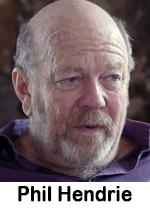 other platforms. Titled, Hendrie, and produced by Freestyle Digital Media and directed by Patrick Reynolds, the film features people like Hendrie’s one-time program director David Hall as well as comedians and Hollywood figures talking about the unique radio program Hendrie launched in 1990 in which he held kooky conversations with offbeat characters – all played by Hendrie himself – in real time. Hendrie tells KCAL-TV, “It was completely original… and it satirized something that I thought needed satirizing – talk radio.”
  1. Financial solvency laws. Consolidation is not the problem; it actually saved the radio industry. The problem is the 1986 rule change that dropped financial solvency requirements for station ownership. Prior to 1986, stations could not be purchased with debt. A potential owner had to prove that they could meet the expenses of a station through the duration of its license. Once the financial efficacy rule was dropped and stations could be purchased with debt, the industry was financially decimated. Prediction: Financial solvency laws will be re-instated.
 last night (3/11). The event was also exclusively video streamed on iHeartRadio’s YouTube channel and broadcast across iHeartMedia radio stations nationwide and on the iHeartRadio app. Winners were named in 32 categories, including Podcast of the Year, which went to “New Heights.” Entertainer Lilly Singh presented the award to co-hosts Jason Kelce and Travis Kelce, who accepted the honor via video.
 Original ideas are golden and rare. Here are five ideas worth stealing because of their novelty, success and oh-wow factor!
 also bestowed its 2024 Edward F. McLaughlin Lifetime Achievement Award upon Emmy-winning news anchor Deborah Norville. The annual gala is a major fundraiser for the BFoA, which provides financial assistance to broadcasters in acute need. One of last night’s most poignant moments was a video of Foundation grant recipient Terrie Commare bravely sharing of the death of her TV general sales manager husband Luke Commare losing his life to brain cancer and how the BFoA stepped in with a monthly grant to help the family make ends meet.
  challenges. The mix of diverse and insightful voices on this year’s boards will continue the important work of prioritizing recognition, connection and education of women across all facets of media.” The officer roles include: Katina Arnold, chair, VP, corporate communications, ESPN; Monica Bloom, incoming/vice chair, chief marketing officer, MHz Choice | Topic Streaming; Annie Howell, immediate past chair, chief communications officer, Hallmark Media; Catherine Badalamente, treasurer, president & CEO, Graham Media Group; and Marie Tedesco, treasurer-elect, CFO, Beasley Broadcast Group. New to the board of directors are: Isabel Lara, chief communications officer, NPR; Jaclyn Levin, president, Shriver Media and founder, Liminal Space Media; Christine Moran, head of creator partnerships, Electrify Video Partners; and Debra O’Connell, president, news group and networks, Disney Entertainment.
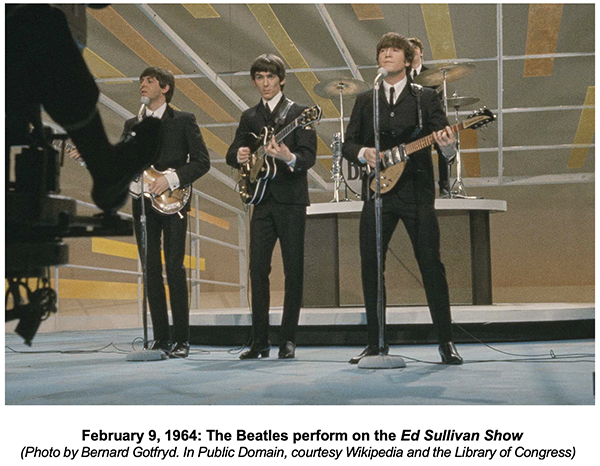
 In early December 1963, America was a very gloomy place. The assassination of President John F. Kennedy on November 22 brought the country to a virtual standstill for four days, and the emotional and psychological hangover lingered for weeks. The nation needed a dose of uplifting energy and fun, and the Beatles were the ideal remedy.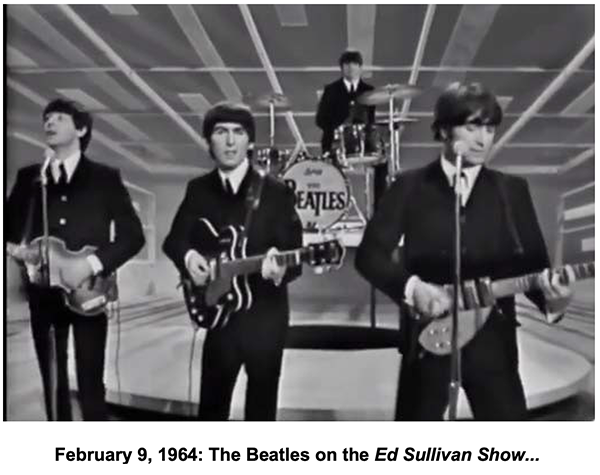
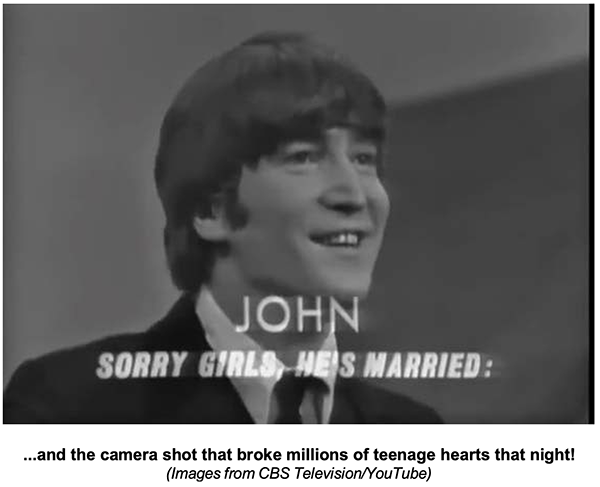
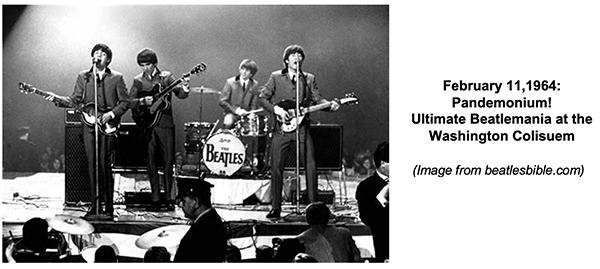
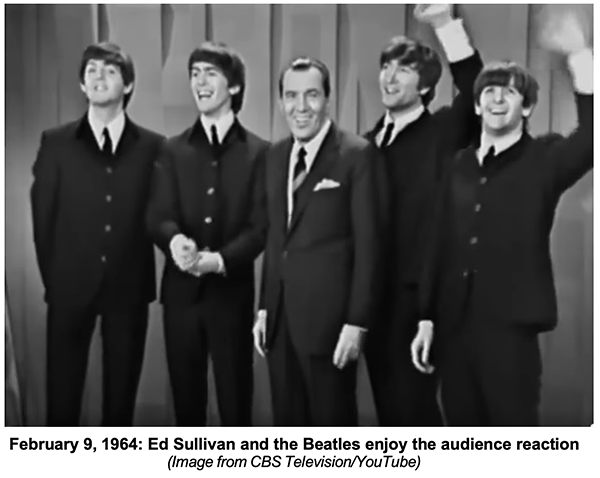
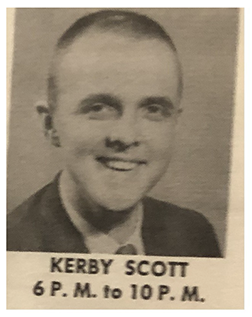 1964 WCAO Promotional Material: “Kerby Scott photo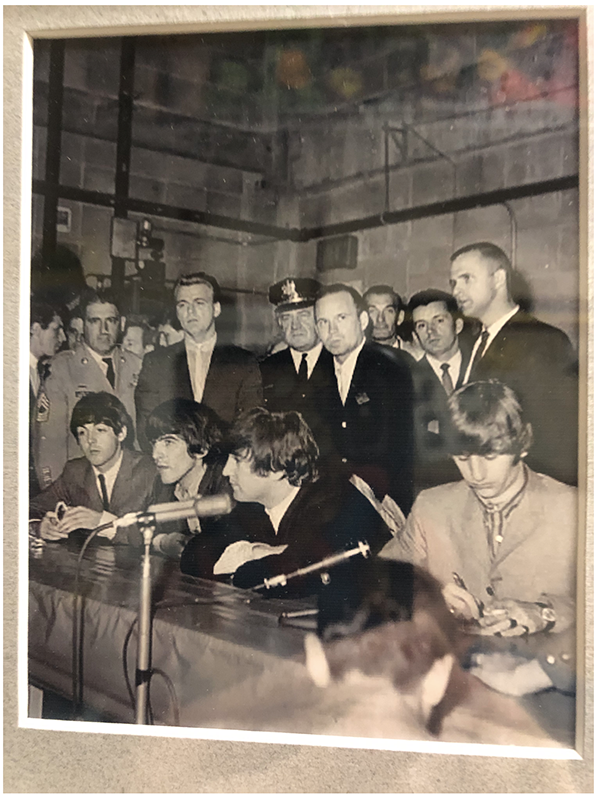
 Now that every single thing is a political argument, the angry social media conversation about Taylor Swift is unsurprising. And with the Super Bowl looming, the decibel level amps-up.
 video stream in partnership with YouTube on the iHeartRadio Channel. Podcast fans help decide the winner of the Podcast of the Year by voting online at iHeartPodcastAwards.com now through February 18. This year’s nominees include “Crime Junkie,” “The Daily,” “My Favorite Murder,” “New Heights,” “Normal Gossip,” “On Purpose with Jay Shetty,” “The Retrievals,” “Scamanda,” “SmartLess” and “Wiser Than Me with Julia Louis-Dreyfus.” iHeartMedia Digital Audio Group CEO Conal Byrne says, “As the podcast industry continues to rapidly grow, this past year has clearly proven that podcasters are always innovating in the audio space and finding new ways to reach and engage new audiences. The nominees for the 2024 iHeartPodcast Awards reflect the results of honing that creativity and we’re thrilled to celebrate and once again empower these creators and elevate the podcast industry together live in person at SXSW.”
  NO ONE has done more to elevate the status and improve the working conditions of on-air talent as much as Howard Stern.
 Let’s talk streaming because I don’t get what is happening. Maybe you do.
 Acknowledging that this publication is fiercely non-partisan and that I – in my role as a broadcaster – am basically the same, I offer the following, not as a political opinion piece, but rather a personal observation based on experience that might shed light on the deeper nature of a large segment of the American population prone to listen to talk radio.
 here to stay.” In order to get compensation from these multichannel video programming distributors, Newsmax shuttered its free steaming channel on November 1. Interestingly, Ruddy tells Cablefax that contrary to what people might assume, the arrival of Donald Trump on the political scene didn’t help Newsmax’s efforts. “I think President Trump has added great difficulty to Newsmax because there’s so much hostility in the industry and world against him. The media establishment, but also in the cable industry, he’s not a really liked figure. We were having more success I felt before he was elected in 2016. I think we probably would have gotten more carriage earlier had he not been elected… We try to reach out to both sides. While we have a lot of pro-Trump stuff, we also have people like Rick Santorum. He has been you know very critical of him through the years and he’s now our leading political adviser… Our night leads with Greta Van Susteren, and she’s not a polarizing figure.”
  Sears used to sell everything. Tractors, tires, insurance, investments, chickens. In 2004, Sears was the dominant retailer in America. By the end of the decade, it was feverishly closing stores and dying.
 Week” coverage, will be staged before a live audience – February 5 through 9 on the Fontainebleau Las Vegas third floor Oasis Pool Deck. Patrick says, “Every year when we plan where to take the show for this week – the biggest week in sports – we look to try something new, something fresh and the Fontainebleau is the newest and freshest spot in Las Vegas. The coolest part of this partnership is that over the past few months the people at the Fontainebleau have sent us pictures and videos of the final stages of development. We got a sneak peek. This place is cutting edge with a big nod to old school Vegas throughout. We can’t wait to get out there to do the show, see the fans and enjoy the property.”
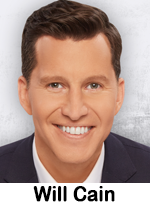 The program is also being produced for national syndication on terrestrial radio as well as being available on the FOX News YouTube channel. The program will tackle the latest headlines from Cain’s unique perspective along with thought-provoking longform interviews with leading figures and live calls from viewers and listeners. Cain comments, “This is it! This is what I want to be a part of in our national conversation. More. More engagement, more debate, more dangerous conversations, more free thinking, more fun.”
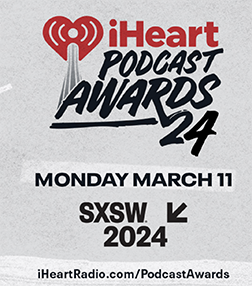 The awards “honor the best and most innovative industry podcasts and creators of 2023.” The ceremony will broadcast live on select iHeartMedia radio stations nationwide, through the iHeartRadio app and via a video stream in partnership with YouTube on iHeartRadio’s YouTube Channel. iHeartMedia Digital Audio Group CEO Conal Byrne comments, “Each year we look forward to celebrating the podcast industry’s most groundbreaking and innovative voices as the medium continues to evolve and explode. Over the past few years, SXSW has become a dynamic and effective setting for us to host many of our interactive podcast panels, discussions, and experiences. There’s no better location to bring this celebratory industry event back, live and in person, than Austin at South by Southwest.”
 Inventors from around the world are in Las Vegas this week for CES2024.
 individual who has made invaluable contributions to the television and radio industries and will be presented to Norville during the Golden Mic gala and fundraiser on March 4 at the Plaza Hotel in New York City. BFoA chair Scott Herman says, “Deborah is an accomplished broadcaster who has selflessly given a tremendous amount of time and energy to the Broadcasters Foundation. She has led the way on several initiatives, including using her talents on the Foundation’s video and serving as host of the Golden Mic Award gala numerous times. It is our privilege to honor Deborah’s achievements and contributions to broadcasting.” For more information or to reserve a seat or table at the Golden Mic Award gala and fundraiser, please contact the Broadcasters Foundation at 212-373-8250 or
  This column should really be called, “How I got transferred from Buffalo to Tampa.” The storyline will help explain the title and offer you a proven technique that should help you sell and earn more.
 Research shows that readers to trade publications like articles with five bullet points. Here are my five bullet points for 2024. If these were to be deployed, you could be thriving by the end of the year. These actions would increase sales and audience share.
 midday slot. Hardy has also lent his voice and creative talents to various platforms across the station, including the creation of the wildly popular ‘Fuppets’ videos for Felger & Mazz. In addition, he has been the longtime host of the ‘Sports Hub Golf Club’ show and can also be heard on Beasley’s Rock 92.9.” Morning host Fred Toucher says, “I’ve known Hardy and admired his talent for many years. I’m very excited to begin this new chapter and feel revitalized by the new opportunity.” Hardy comments, “As a lifelong radio guy, I’m thrilled for this opportunity. I’m looking forward to working with Fred and the rest of the morning show crew on what I believe will be a great show.” Station PD Rick Radzik states, “Hardy is one of the most talented and creative individuals I have ever worked with in radio. Teaming him with Fred was just a natural fit for our new morning show. I look forward to them providing great content and entertaining our listeners for years to come.”
 San Francisco will now be available on the Audacy app. CBS Stations says that CBS Local’s video streaming services are No. 1 overall in markets where they go head-to-head with other network competitors, according to data from Comscore. Audacy SVP digital audio content Tim Clarke comments, “We are thrilled to announce our strategic partnership with CBS Stations, expanding our commitment to delivering high-quality, locally relevant content to our listeners. This collaboration will give our listeners unparalleled access to timely and trusted news from major cities nationwide.”