Industry News

Portland’s “The Fan” Gets New FM Signal; Harrah Named Brand Manager

Audacy’s sports talk KFXX-AM “1080 The Fan” gets a full-market FM signal as the company drops the AC format on KRSK-FM and begins simulcasting on the 105.1 FM frequency, effective today (7/22). Additionally, the station announces that longtime station host Dusty Harrah adds brand manager duties following theimg retirement of Jeff Austin. The station the serves as flagship for University of Oregon Ducks football, men’s and women’s basketball and baseball. Along with these changes, the station unveils a tweaked program schedule that includes the debut of “The Firm of Harris and Marang,” airing daily from 10:00 pm to 1:00 pm and hosted by Danny Marang and Patrick Harris; “Dirt and Sprague” extending their show an hour from 6:00 am to 10:00 am; and “The Happy Hour with Luke Andersen” airing weekdays from 2:00 pm to 3:00 pm. Audacy Portland SVP and market manager Ryan Cooley says, “We’re incredibly excited to bring ‘The FAN’ to the FM dial. This move is long overdue and all about delivering a better listening experience for our audience with clearer sound and great content our fans know and love. For the first time in our history, our entire primetime on-air lineup will be 100% local and led by our new brand manager, Dusty Harrah, a native Oregonian.”

Industry News

Lenz to Lead iHeartMedia Milwaukee

iHeartMedia promotes Dan Lenz market president for its Milwaukee operations. Lenz has been serving asimg SVP of sales for the station group. This move comes after the recent retirement of Jeff Tyler. iHeartMedia division president Nick Gnau comments, “Over the past two years, Dan has consistently demonstrated exceptional performance and a deep understanding of the market, earning him this well-deserved promotion to market president. His leadership as the sales lead has been instrumental to our success, and we are confident that both our team and partners will benefit even more from his expanded role.”

Industry News

Chris Fillar Joins Mornings at WWJ, Detroit

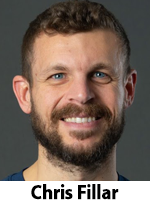
Audacy names Chris Fillar the new morning show co-anchor on all-news WWJ, Detroit “Newsradio 950,” where he joins Jackie Paige for the 5:00 am to 10:00 am program. Fillar has been delivering sports updatesimg for WWJ and sports talk WXYT-FM “97.1 The Ticket” since 2018. Audacy Detroit SVP and market manager Debbie Kenyon says, “We are excited to have Chris bring his passion and energy to the morning show. Chris and Jackie are a powerful team, and we’re confident they’ll make an impact every morning while connecting with our listeners.” Fillar comments, “I’m ecstatic to take on this new role alongside Jackie and the entire fantastic morning newsroom at WWJ. It’s an honor to wake up and deliver trusted news to our listeners, and I’m humbled to work with such a great team!”

Industry Views

Michael Harrison Interviews C. Crane CEO Jessica Crotty About the Future of the AM/FM Receiver and Radio-Oriented Devices

img

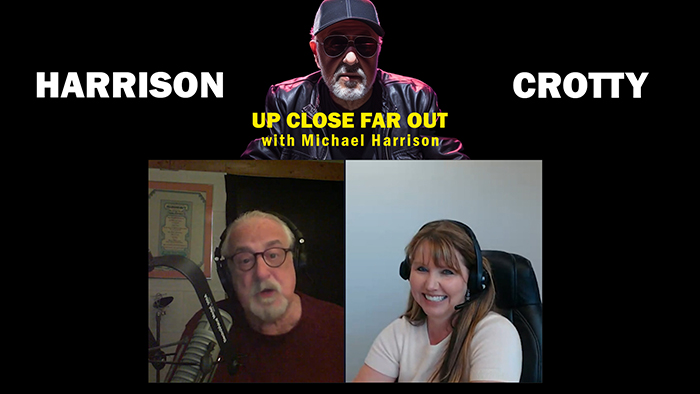
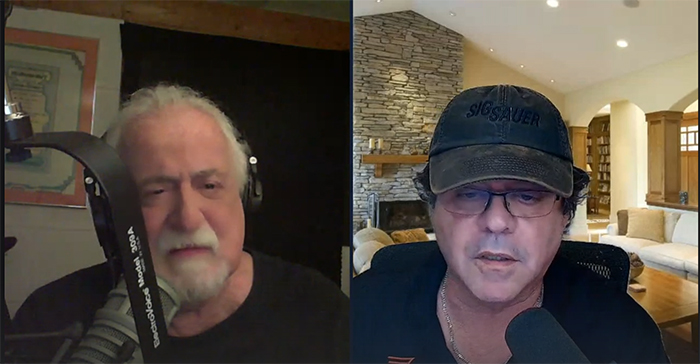
In its latest post (7/2), “Up Close Far Out” – a YouTube video series hosted by TALKERS publisher Michael Harrison – takes a deep dive into the rapidly evolving world of radio, examining the state of the radio device itself – the actual appliance – from the perspective of those on the front line of its development, manufacturing, marketing and distribution.

What is the state of the gizmos we call “radios” in the early decades of the digital era?

Is radio an obsolete technology on its last legs or is the device going through an exciting evolution in terms of its technology, content and broader societal purpose going forward into a brave new world?

What is the difference between “radio” and the broader term “audio?”

What impact does the prospect of ongoing tariff wars have upon the domestic radio manufacturing industry?  And what exactly does it take to move back and develop a new product such as a modern radio in the USA?

Harrison’s guest, Jessica Crotty, is an important player in that industry. She is the CEO of a small, but highly influential, Northern California-based company – C. Crane – that for more than three decades has specialized in manufacturing, aggregating, distributing and marketing radios and radio-oriented devices for the platform’s most ardent fans.

The company’s focus on radio literally began as a “mom & pop” operation by draftsman, designer and electronics engineer Bob Crane, his wife Sue, and Grandma Faye who ran the fledgling business at the kitchen table of their home north of the “Redwoods Curtain.”

Since selling their first AM antenna, C. Crane has grown into a nationally respected “boutique” electronics company. They have developed several outstanding radios to serve radio listeners who prefer information, talk radio and audio tuned for voice clarity. After several near 7.0 earthquakes, in 1992 they added radio and light products that would become essentials during an emergency event anywhere in the country.

Jessica Crotty launched her professional career with C. Crane almost three decades ago working her way through the ranks from customer service all the way up to being CEO and a company principal.

Crotty and Harrison engage in a candid, information-packed conversation exploring the evolving technical and cultural intersection between radio’s glorious past, underrated present, and potentially impactful, but somewhat ambiguous, future. If you are interested in radio as a broadcaster or a fan, you do not want to miss this interview.

To view the video in its entirety, please click here.

Industry News

Audacy’s KRLD and Texas State Network Providing Flood Information

Audacy says that its Dallas news/talk station KRLD-AM “NewsRadio 1080” and Austin news/talk KJCE-AM have been keeping Texans informed since the deadly floods began in the early morning of July 4. The company says that “NewsRadio 1080” and Texas State Networks reporter Christopher Fox has beenimg tirelessly reporting from along the river between Kerrville and Centerpoint, Texas, “delivering succinct and informative reports on NewsRadio 1080, additional Audacy stations, and various CBS affiliates across the country. His Texas State Network reporting includes hourly newscasts reaching over 100 affiliates in 86 markets.” KRLD brand manager and Audacy news/talk foremat vice president Drew Anderssen says, “‘NewsRadio 1080’has been a critical lifeline for Texans. Our commitment to timely and essential news, weather and traffic information never wavered in the early days of this tragedy, over the 4th of July holiday weekend, and we are committed to continuing our compassionate and impactful coverage in the days ahead.”

Industry News

FCC Commissioner Gomez Criticizes Paramount-Trump Settlement

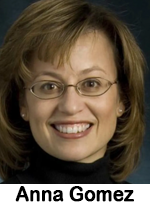
FCC Commissioner Anna M. Gomez is calling out Paramount for its settlement with Donald Trump over what she calls “a meritless lawsuit regarding a CBS News interview last year.” Gomez says, “This moment marks a dangerous precedent for the First Amendment, and it should alarm anyone who values a free and independent press. Despite repeated attempts to deny the obvious, this Paramount Payout is a desperateimg move to appease the Administration and secure regulatory approval of a major transaction currently pending before the FCC. For months, it has been clear that this lawsuit was entirely meritless, just like the complaint now before the Commission. The transcript and video of the 60 Minutes interview with Vice President Harris show no evidence of wrongdoing, only the standard editorial judgments used across the news industry to ensure clarity and brevity. Had Paramount chosen to fight this in court, they would have prevailed on the facts and the law. But instead of standing on principle, Paramount opted for a payout. That decision now casts a long shadow over the integrity of the transaction pending before the FCC. Given the extraordinary public interest in this deal, the novel legal questions raised by the lawsuit and its resolution, and the repeated calls from lawmakers for transparency, I once again urge the FCC to bring this matter before the full Commission for a vote. Approving this transaction behind closed doors and under the cover of bureaucratic process would be a shameful outcome that denies the American people the transparency and accountability they deserve, especially when press freedom is at stake.”

Industry News

KNCU, Newport, Oregon Relaunches as Sports Talker

KORE Broadcasting is relaunching KNCU-FM, Newport, Oregon as a sports talk outlet under the brand “FOX Sports Newport.” KORE Broadcasting acquired the station from Dave Miller and flips the station fromimg the country format Hank FM. In addition to FOX Sports Radio content, the station also features Portland, Oregon based “The Bald-Faced Truth with John Canzano” and local show “Danny and Justin,” airing from 2:00 pm to 3:00 pm daily. Station manager Steve Woodward comments, “We’re excited to bring high-quality sports radio to the Oregon Coast. KNCU has one of the strongest sports lineups in the entire state. We hope to be your #1 choice for sports on the coast.”

Industry News

MIW Announced 3rd Annual Speak Up! Mentorship Program

Mentoring and Inspiring Women in Radio, Inc announces the launch of the third annual “Speak Up!” Mentorship Program in partnership with Media Staffing Network. The application window opens today and will remain open through Friday, July 18, 2025. Created in honor of the late Laurie Kahn, founder of Media Staffing Network and a tireless advocate for women in media, Speak Up! is a year-long mentorship initiativeimg designed for women working in small to medium radio markets across any department. One deserving candidate will be selected to receive personalized coaching and mentorship from MIW’s network of experienced female executives as well as certified coaches from Media Staffing Network. MIW Board president Sheila Kirby says, “MIW is proud to continue honoring Laurie Kahn’s legacy through the Speak Up! Program. Each year, we have the opportunity to support emerging female leaders and help them find their voice and path to growth in our industry. This program represents the very heart of our mission.”Get more information and apply here.

Industry News

Jim Lerch Exiting WSKO

Syracuse sports talk host Jim Lerch is exiting Cumulus Media sports talk outlet WSKO-AM, Syracuse after 23 years. CNYCentral reports that Lerch, host of “The Manchild Show with Boy Green,” is exiting afterimg today’s program as he transitions to a digital platform. Lerch is quoted saying, “When I started this back in 2002, I never thought I’d last nearly a quarter of a century on the radio. It’s been my life’s pleasure entertaining and interacting with our incredible listeners over two decades of Syracuse sports history and I look forward to my new journey as a digital sports content host.” See the CNYCentral story here.

Industry Views

SABO SEZ: Do You Really Think the Back of Your Head is Worth Watching?

By Walter Sabo
a.k.a. Walter Sterling, Host
WPHT, Philadelphia, “Walter Sterling Every Damn Night”
and TMN syndicated, “Sterling on Sunday”

imgThe drive to stream video of radio shows has always been risky. Remember your shock when you first saw one of your radio heroes? Video streaming can present a constant disconnect between the show in the listener’s head and the show on the stream. Many stations make the disconnect worse by streaming terrible video images. Combine the trauma of how a host really looks with a dreary TV show and the package cannot benefit the relationship between station and listener/viewer.

Too many stations stream from one or two fixed cameras in the studio. That picture looks like a police interrogation room. Some stations embarrassingly use one camera on a two person show. The result is a shot of the face of one host and the back of the head of the other, for the entire show. OMG.

Done right, video should enhance the listening experience, it should make the hosts more attractive, more engaging, and more entertaining.

Mistake: Many radio hosts ignore the cameras during spot breaks. These hosts go silent during spots, giving a viewer absolutely no reason to stream. Obviously, if one sits in silence during the break the image presented is pure boredom. On the radio, the listener hears commercials. On their stream they see a silent radio host doing nothing. Double disappointment.

Producing video that enhances a radio show experience takes planning and commitment. One technically simple way to make video work for a host is to address the audience directly during commercial breaks. One on one. The moment a break starts, smart hosts and anchors address the camera and candidly speak with the viewer. Their conversation is topical, urgent and fun.

Engaging the viewer during radio commercial breaks provides added value to a stream and a reason to watch.

Some examples worth watching are found in these links:

— B-93, Grand Rapids morning host Aly Mac never stops talking with streaming viewers. She does itimg right, two shows… one on the radio, one on the stream. Seamless and fun.
— WPHT produces a TV show with switching, graphics that flows with the radio show.
— Baylee Martin is a TV anchor who could teach the industry how to conduct an on-air show enhanced by the stream.  Hearst should sell schedules in her stream content. Have a look, she’s a streaming savant.

When streaming, consider if the video stream is helping or hurting the radio show. If the “reveal” is the back of a head, hurting!

Walter Sabo has been a C Suite action partner for companies such as SiriusXM, Hearst, Press Broadcasting, Gannett, RKO General and many other leading media outlets. His company HITVIEWS, in 2007, was the first to identify and monetize video influencers.. His nightly show “Walter Sterling Every Damn Night” is heard on WPHT, Philadelphia. His syndicated show, “Sterling On Sunday,” from Talk Media Network, airs 10:00 pm-1:00 am ET, and is now in its 10th year of success. He can be reached by email at sabowalter@gmail.com.

Job Opportunity

Lotus Seattle Seeks Promotions Staffers

Lotus Seattle Corp is seeking staff for its part-time Promotions Event Staff ON-CALL team members to work at station events and represent stations in a positive, professional manner. Lotus says, “This is a great opportunity to earn extra money by working at various stations’ events including local sporting events,img community events, retail/client events, local fairs and more. You will meet new people and engage with the public. Plus, interact with multi-media marketing pros to get an edge on your career with real world experience. This is a great job for all ages over the age of 18. If you are retired, a veteran, looking to fill some time on the weekends, in college looking for some extra part-time work or interested in the radio and television industry this is a great opportunity.” The position pays $21 per hour. Send your resume here.

Industry News

WABC Owner John Catsimatidis Honored at Fair Media Council Folio Awards

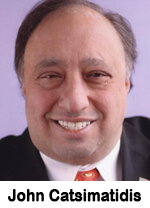
John Catsimatidis, owner of Red Apple Media Group and WABC, New York, was honored with the 2025 Distinguished Service Award for WABC Radio, New York, from the Fair Media Council Folio Awards lastimg Thursday (6/12) in New York City. The Distinguished Service Award was presented to WABC Radio in recognition of a century of broadcasting leadership and its continued role as a vital force in American media. During his acceptance speech, Catsimatidis stated, “92% of the American people believed what Walter Cronkite said, and I think news has to get back to that situation and that’s what we’re doing at WABC.” He added, “I am honored to accept the Distinguished Service Award on behalf of WABC Radio, Margo [Catsimatidis], Chad [Lopez], and the entire team. We are committed to common sense, presenting all sides of a story, and letting the listeners decide.”

Industry Views

Neutraliars: The Platforms That Edit Like Publishers but Hide Behind Neutrality

By Matthew B. Harrison
TALKERS, VP/Associate Publisher
Harrison Legal Group, Senior Partner
Goodphone Communications, Executive Producer

imgIn the golden age of broadcasting, the rules were clear. If you edited the message, you owned the consequences. That was the tradeoff for editorial control. But today’s digital platforms – YouTube, X, TikTok, Instagram – have rewritten that deal. Broadcasters and those who operate within the FCC regulatory framework are paying the price.

These companies claim to be neutral conduits for our content. But behind the curtain, they make choices that mirror the editorial judgment of any news director: flagging clips, muting interviews, throttling reach, and shadow banning accounts. All while insisting they bear no responsibility for the content they carry.

They want the control of publishers without the accountability. I call them neutraliars.

A “neutraliar” is a platform that claims neutrality while quietly shaping public discourse. It edits without transparency, enforces vague rules inconsistently, and hides bias behind shifting community standards.

Broadcasters understand the weight of editorial power. Reputation, liability, and trust come with every decision. But platforms operate under a different set of rules. They remove content for “context violations,” downgrade interviews for being “borderline,” and rarely offer explanations. No appeals. No accountability.

This isn’t just technical policy – it’s a legal strategy. Under Section 230 of the Communications Decency Act, platforms enjoy broad immunity from liability related to user content. What was originally intended to allow moderation of obscene or unlawful material has become a catch-all defense for everything short of outright defamation or criminal conduct.

These companies act like editors when it suits them, curating and prioritizing content. But when challenged, they retreat behind the label of “neutral platform.” Courts, regulators, and lawmakers have mostly let it slide.

But broadcasters shouldn’t.

Neutraliars are distorting the public square. Not through overt censorship, but through asymmetry. Traditional broadcasters play by clear rules – standards of fairness, disclosure, and attribution. Meanwhile, tech platforms make unseen decisions that influence whether a segment is heard, seen, or quietly buried.

So, what’s the practical takeaway?

Don’t confuse distribution with trust.

Just because a platform carries your content doesn’t mean it supports your voice. Every upload is subject to algorithms, undisclosed enforcement criteria, and decisions made by people you’ll never meet. The clip you expected to go viral. Silenced. The balanced debate you aired. Removed for tone. The satire? Flagged for potential harm.

The smarter approach is to diversify your presence. Own your archive. Use direct communication tools – e-mail lists, podcast feeds, and websites you control. Syndicate broadly but never rely solely on one platform. Monitor takedowns and unexplained drops in engagement. These signals matter.

Platforms will continue to call themselves neutral as long as it protects their business model. But we know better. If a company edits content like a publisher and silences creators like a censor, it should be treated like both.

And when you get the inevitable takedown notice wrapped in vague policy language and polished PR spin, keep one word in mind.

Neutraliars.

Matthew B. Harrison is a media and intellectual property attorney who advises radio hosts, content creators, and creative entrepreneurs. He has written extensively on fair use, AI law, and the future of digital rights. Reach him at HarrisonMediaLaw.com or read more at TALKERS.com.

Industry News

Woodward Taps DeGroot to Lead Wisconsin Stations

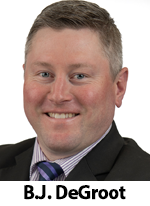
Woodward Communications names B.J. DeGroot market manager for its six-station cluster in Northeast Wisconsin that includes news/talk WHBY and sports talk WSCO-AM/W237AA “The Score” in Appleton. DeGroot has been serving as brand manager for WHBY and “The Score.” Woodward says that DeGroot’s understanding of the local market and his success in brand management has prepared him to lead thisimg diverse group of stations. DeGroot comments, “Leading the entire portfolio of Woodward Community Media stations in Northeast Wisconsin is a significant honor. I’m committed to working with our talented local teams to continue delivering relevant content and strengthening our connection with the community.” The company also announces that Kelly Radandt, who was named director of broadcast in November 2024, will oversee broadcast brands across both Northeast Wisconsin and the company’s Springfield, Illinois stations. DeGroot and Kevin O’Dea, market manager of Springfield, will both report to Radandt. Radandt comments, “This expanded role presents a unique opportunity to unify our broadcast efforts and innovate across markets. I am eager to contribute to Woodward Community Media’s continued success and evolution. Onward!”

Industry Views

Is That Even Legal? Talk Radio in the Age of Deepfake Voices: Where Fair Use Ends and the Law Steps In

By Matthew B. Harrison
TALKERS, VP/Associate Publisher
Harrison Legal Group, Senior Partner
Goodphone Communications, Executive Producer

imgIn early 2024, voters in New Hampshire got strange robocalls. The voice sounded just like President Joe Biden, telling people not to vote in the primary. But it wasn’t him. It was an AI clone of his voice – sent out to confuse voters.

The calls were meant to mislead, not entertain. The response was quick. The FCC banned AI robocalls. State officials launched investigations. Still, a big question remains for radio and podcast creators:

Is using an AI cloned voice of a real person ever legal?

This question hits hard for talk radio, where satire, parody, and political commentary are daily staples. And the line between creative expression and illegal impersonation is starting to blur.

It’s already happening online. AI-generated clips of Howard Stern have popped up on TikTok and Reddit, making him say things he never actually said. They’re not airing on the radio yet – but they could be soon.

Then came a major moment. In 2024, a group called Dudesy released a fake comedy special called, “I’m Glad I’m Dead,” using AI to copy the voice and style of the late George Carlin. The hour-long show sounded uncannily like Carlin, and the creators claimed it was a tribute. His daughter, Kelly Carlin, strongly disagreed. The Carlin estate sued, calling it theft, not parody. That lawsuit could shape how courts treat voice cloning for years.

The danger isn’t just legal – it’s reputational. A cloned voice can be used to create fake outrage, fake interviews, or fake endorsements. Even if meant as satire, if it’s too realistic, it can do real damage.

So, what does fair use actually protect? It covers commentary, criticism, parody, education, and news. But a voice isn’t just creative work – it’s part of someone’s identity. That’s where the right of publicity comes in. It protects how your name, image, and voice are used, especially in commercial settings.

If a fake voice confuses listeners, suggests false approval, or harms someone’s brand, fair use probably won’t apply. And if it doesn’t clearly comment on the real person, it’s not parody – it’s just impersonation.

For talk show hosts and podcasters, here’s the bottom line: use caution. If you’re using AI voices, make it obvious they’re fake. Add labels. Give context. And best of all, avoid cloning real people unless you have their OK.

Fair use is a shield – but it’s not a free pass. When content feels deceptive, the law – and your audience – may not be forgiving.

Matthew B. Harrison is a media and intellectual property attorney who advises radio hosts, content creators, and creative entrepreneurs. He has written extensively on fair use, AI law, and the future of digital rights. Reach him at Harrison Legal Group or read more at TALKERS.com.

Industry News

Bertrand Celebrates 40 Years with WGN, Chicago

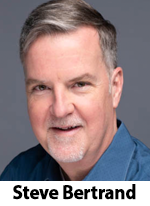
Nexstar Media’s WGN Radio announces that afternoon news anchor Steve Bertrand celebrates his 40th anniversary with the station today (6/3). Bertrand has hosted several shows and anchored news on nearly every part of the clock during his tenure with WGN. Station VP and general manager Mary Sandberg Boyleimg states, “Steve has shared his entire broadcasting career with the WGN Radio audience and built respect, trust, and friendships along the way. It’s a special relationship and four decades deserves recognition.” Bertrand started at WGN Radio as an intern and was hired full-time in 1985. He has been in the news anchor chair since 1992. Bertrand reflects, “Growing up in a small town, I always had my eye on moving to the big city. Never during those years of daydreaming would I have imagined the career I’ve had at WGN Radio. I have worked with, and still do work with, some of the best in radio. I’m so grateful. And lucky. Back in the day, many people might have considered my fantasy a pipe dream. But, it turns out, dreams can come true.”

Industry News

KSL-AM/FM, Salt Lake City Announces New Late Morning Show

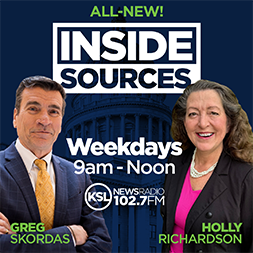
Bonneville International’s news/talk KSL NewsRadio in Salt Lake City unveils a new late morning show titled “Inside Sources” and hosted by Greg Skordas and Dr. Holly Richardson. This comes after the recent departure of Dave Noriega and the announced retirement of Debbie Dujanovic whoimg together hosted the “Dave & Dujanovic” show. Dr. Holly Richardson is a former state legislator who currently serves as editor of Utah Policy and a columnist for the Deseret News. Greg Skordas is a defense attorney, former prosecutor, and former candidate for Utah Attorney General. Bonneville president and COO Tanya Vea says, “This reflects our commitment to provide Utahns with smart, solution-oriented news and analysis. Greg and Holly bring a rare depth of expertise, perspective, and connection to our community, and we’re thrilled to welcome them to the KSL NewsRadio lineup.” KSL program director Kevin Larue adds, “Our evolving lineup reflects what KSL NewsRadio stands for—credible voices, engaging conversations, and a deep connection to the community. No matter the topic or the time of day, our listeners know we have them covered.”

Industry News

KMOX, St. Louis Recounts Last Weekend’s Tornado

When an EF-3 tornado swept through the St. Louis area last weekend, Audacy’s news/talk KMOX was able to stay on the air and provide critical community service. Recounting how events unfolded last weekend, the station says engineer Kyle Hammer was monitoring the approaching system when he noticed a transmitter site in the storm’s path lost commercial power, automatically switching toimg generator backup. About 35 minutes later the tornado moved through the city. It took Hammer about 90 minutes to go three miles through downed tress and power lines to get to the FM transmitter site and get it back on the air. Audacy SVP and market manager Becky Domyan says, “I want to give a huge shout-out to the entire team at KMOX for outstanding, minute-by-minute coverage on the storms. I can’t reiterate how much this information was life-saving, and big kudos to news brand manager Beth Coghlan for leading her team through this calmly and accurately.” Domyan adds, “I actually was driving on Mason Road near Lindbergh when it hit, and I have driven through storms many times. For the first time in my life, in this situation, I was terrified. At that moment, I tuned into KMOX to get an idea of where the storm was, so I knew what I needed to do to be safe. In times like this, we are there to provide information that truly saves lives. I couldn’t be prouder of everyone on our team.”

Industry News

FCC Chair Carr Testifies Before House Subcommittee

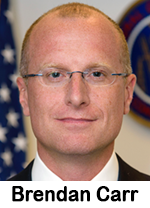
Federal Communications Commission Chairman Brendan Carr testified before the subcommittee on financial services and general government yesterday and updated the committee on a number of issues, including his efforts to deregulate, saying, “Right now, the FCC is doing a top to bottom review of every rule, regulation, and guidance document for the purpose of eliminating unnecessaryimg regulatory burdens. We received great feedback from a range of stakeholders already and plan on eliminating onerous, antiquated, and unlawful requirements across the board.” Carr added, “And we have been delivering these results with a focus on efficiency. At the beginning of Fiscal Year 2025, the FCC employed 1,461 full-time employees. As of April 28, 2025, the FCC employed 1,383 full-time employees. The difference over the last six months can be attributed to many factors, including FCC employees who took advantage of the early retirement window opened by my predecessor, the deferred resignation program offered by President Trump, and natural turnover. The agency is well positioned to continue carrying out its statutory mission for the remainder of Fiscal Year 2025 and beyond.”

Industry News

Connoisseur Media to Acquire Alpha Media’s Debt

The filing with the FCC for Connoisseur Media to acquire the radio stations and other assets of Alpha Media is now public and Jeffrey Warshaw’s Connoiusseur is not paying cash for Alpha Media; it is instead assuming the company’s debt. The complicated deal announced back on May 5 will result inimg current Alpha Media shareholders retaining their interest in the company but ceding control to Connoisseur. Under the terms of the deal, Alpha shareholders will reorganize into a new company which will become part of Connoisseur in exchange for a 3.75% equity stake in Connoisseur, plus two warrants to allow them to acquire more equity – one for 5% at $30 million valuation and the other for up to 5% at $70 million valuation. Connoisseur is acquiring new credit facilities to finance the retirement of Alpha debt plus a new, revolving credit line. Connoisseur is operating the Alpha under an LMA and when the deal closes, the new Connoisseur will own and operate 218 stations in 47 markets.

Industry Views

Monday Memo: Music Lessons For Talk Radio

By Holland Cooke
Consultant
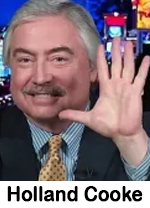
imgMusic radio’s competitors were vinyl, then tape, then CDs – before smartphone streaming and satellite radio offered more portability and variety. And before consolidation, broadcasters were under less of the revenue pressure that now commercializes many stations beyond listeners’ tolerance. TALKERS NAB Show coverage included Edison Research founder Larry Rosin lamenting “many, many [music] stations now loading all their spots into two interminable breaks per hour.” I cringe hearing FMs struggle to remain among listeners’ music appliances. And I fret that monologue-heavy talk radio is relinquishing interactive dialogue to social media.

Before moving to all-news, and eventually news/talk, I worked in music formats less-structured than today’s. So now I hear music radio as an outsider, more like a consumer. Which got me wondering: How does my format sound to music consultants? So, I asked several whose work I respect.

Beware the one-joke act

Mike McVay reckons that “listeners want to know a little bit about a lot of things,” a point other colleagues echo. Explaining that “music radio is all about variety,” adult contemporary specialist Gary Berkowitz: “To me, listeners are tired of all this political back and forth. Sure, it has its place, but it’s like if music radio only played five different artists!” Jon Holiday – who customizes station playlists for a variety of formats – asks “are talk listeners getting what they want?” Calling some formats “very artist-heavy,” he thinks stations were right to play so much Taylor Swift in 2024, certainly her year. And 2025 sure is Trump’s, but Holiday calls “banging the same drum all day, every day” the most common flaw he hears on talk radio.

McVay says listeners like “stories that pull on their heart strings. It’s why “NBC Nightly News” ends with a touching story. It’s not fluff. It’s information relief.” He also recommends topics you are likely to overhear at the next table during lunch: “Discretionary Time Information” (binge-worthy shows on Apple+, Max, Netflix). Health. And – lately more than ever – what Mike calls “purse” stories (think: eggs). Been to Costco? On weekends it’s mobbed. Ask any member and they’ll recite a shopping list of Kirkland-brand bargains.

Play the hits

 When Gary Berkowitz – then an accomplished music programmer – took over stately WJR, he “approached it like it was a music station, the only difference was my ‘songs’ were my personalities, news coverage and, at the time, play-by-play of all the major Detroit teams.” He bought a jingle package “to ‘decorate’ the station;” and “got ‘JR involved with everything that was happening in Detroit. All I did was put it all together and present it like my top-40 upbringing taught me.”

I can relate. Before I programmed all-news WTOP, Washington, I had no news experience. I came from a music FM. The WTOP staff I inherited was impressive, and their work was solid, but the station wasn’t “programmed enough.” I was sent there to convert Cume to Average Quarter Hour – the blocking-and-tackling formatics fundamental to music radio. We owned “the Top news…instantly” image, and we said those very words LOTS. But research told us that traffic and weather were “the hits;” and how we presented them moved the needle.

im

Great talkers are great listeners 

In every transaction, consumers now expect to interact; and “listeners like to hear others’ voices,” Mike McVay observes: “When the audience is comfortable enough to weigh in with an opinion, their own story, or a reaction, you’ve created a ‘friend circle.’” Jon Holiday tells morning shows he works with to “take time going into breaks to be topical and interact with callers.” And engage by texting and social media. And don’t just push-TO listeners. Be quick to REPLY, and you will make them feel special. 

Yet, in three decades coaching talk hosts, the most unwelcome word I say seems to be “callers.” Imitating gifted Rush Limbaugh, many hosts are prone to windy monologue, rather than inviting the busy dialogue that makes a station sound popular (something local advertisers notice). DJs deftly weaving interactivity into music shows often sound more inviting than sermonizing talkers. Holiday remembers El Rushbo as “a master at having fun, particularly in his early days as a syndicated personality.”

Prescription: Local 

Twenty years ago at the TALKERS conference, publisher Michael Harrison’s advice was elegantly simple: “Give them something they can’t get anywhere else.” Especially now, with so many non-local audio competitors. Regardless of format, helpful local information can increase Occasions of Tune-In per week.

Simply doing local news is a start. But does yours enable the listener by telling what an item means to him or her? On any given day, what you’re overhearing at lunch is something big that’s happening somewhere else. Can you explain the local impact? “National news needs to mean something to me, my community, my region or state,” according to McVay.

With weather so erratic in so many places, owning that image is gold. If you’re news/talk, don’t assume that you’re the market’s weather station. If you’re music, don’t assume you can’t be. Noting typical news/talk demographics, Jon Holiday surmises that, “as we get older, we seem to be more interested in weather.”

And as successful music stations have always done, show up! Gary Berkowitz had WJR go all-in on Detroit’s Thanksgiving Day parade, “with our people all over the parade route. It was better than the TV coverage!”

Holland Cooke (HollandCooke.com) is a consultant working the intersection of broadcasting and the Internet. Follow HC on Twitter @HollandCooke and connect on LinkedIn

Industry News

New York Adds to Budget for Public Radio

New York State Senate passed a $254 billion state budget for 2025-2026 that includes an additional $4 million for public radio stations. New York Public Radio reports that the funding is over and above the $14 million the state gives to public broadcasting, $13 million of which goes to TV stations. The additional allocation was proposed by State Senator Brad Hoylman-Sigal amidst attempts in Washington to cut federal funding for public broadcasting through the Corporation for Public Broadcasting. NYPR president and CEO LaFontaine Oliver says, “We’re deeply grateful to State Senator Brad Hoylman-Sigal for his vision and leadership in proposing this additional funding and to Governor Kathy Hochul, State Senator Andrea Stewart-Cousins, Speaker Carl Heastie, and the entire New York State Legislature for their support.”

Industry News

Music/Video Anthem Celebrating Talk Radio Continues to Gather Thousands of Worldwide Views and Downloads

img

Gunhill Road, the perennial pop music ensemble that has attracted more than half a million worldwide followers with its growing repertoire of issue-oriented songs and music videos, is enjoying notable traction with its latest release, “Don’t Stop Talking,” an anthem celebrating talk radio. “Don’t Stop Talking” is an uplifting and infectiously catchy tune about the vital role talk radio plays in supporting American freedom of speech and the First Amendment.  Non-partisan lyrics ring out: “As long as you’ve got a voice, don’t ever stop!” and “As long as you’ve got the truth, don’t ever stop!”  The original composition co-written and performed by core band members Steve Goldrich, Paul Reisch, Brian Koonin, and Michael Harrison encourages dedicated talk radio practitioners to keep up the good work and valuable service they provide the nation. The images accompanying the music include a dynamic montage of more than 85 individual radio talk hosts in the process of doing their shows. Matthew B. Harrison, who produced the video visual components states, “Gunhill Road has achieved enormous internet recognition around the nation and world – much of it fueled by the attention and exposure its unique songs and videos have received on talk radio. This amazing piece is the group’s way of giving back.” To view the video in its entirety, please click talkradioforever.com. To arrange an interview with Michael Harrison about the song and talk radio’s vital role in the marketplace of ideas, please email info@talkers.com.  Another recent Gunhill Road release titled “Idiots” presents a stinging non-partisan commentary about the dangers inherent in a democracy populated by an ignorant and disengaged public. This song/video has already gathered more than 200,000 online views and downloads worldwide – also fueled largely by talk radio airplay and attention. It can be viewed at www.idiotsvideo.com.  For more information about Gunhill Road please visit www.GunhillRoadMusic.com.

Industry News

Cumulus Media Q1 Revenue Falls 6.4%

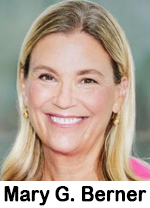
Cumulus Media reports its operating results for the first quarter of 2025 and says net revenue was $187.3 million, a decline of 6.4% from the same period in 2024. The company’s net loss increased to $32.4 million compared to the net loss of $14.2 million it reported in Q1 of 2024. Cumulus presidentimg and CEO Mary Berner says, “For the first quarter, we delivered revenue in line with pacing guidance despite worsening economic headwinds reflecting, among other things, the imposition of tariffs that have depressed both imgconsumer and advertiser sentiment. However, with that backdrop, what remains constant is our relentless focus on actions to mitigate the impacts of the macro environment. For example, we accelerated growth in our digital marketing services business, which was up 30% for the quarter; leveraged our entire platform to capture demand opportunities; and drove additional annualized cost reductions of $7.5 million. Moving forward, we will continue to execute these strategies while simultaneously working to fundamentally transform the way we use and leverage our key assets.”