Features
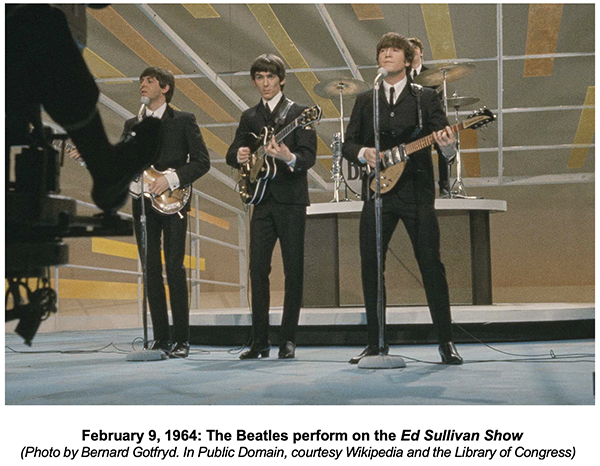
On a February night in 1964, a veteran TV host and four young musicians from England changed music, broadcasting, popular culture… they changed everything.
By Mark Wainwright
 In early December 1963, America was a very gloomy place. The assassination of President John F. Kennedy on November 22 brought the country to a virtual standstill for four days, and the emotional and psychological hangover lingered for weeks. The nation needed a dose of uplifting energy and fun, and the Beatles were the ideal remedy.
The Beatles were hardly newcomers. They had already been a successful act in the UK and mainland Europe (especially in Germany) for several years; oddly, they never got much traction in the United States. They had released a handful of songs in the US on smaller, independent record labels as far back as 1962, but they received little attention.
“She Loves You,” one of their early signature songs, was a failure when it was first released here in 1963. Dick Clark tried to feature it on “American Bandstand,” but the young dancers on his show didn’t know what to make of it and rated it poorly. But as the year went on, their popularity in England dramatically turned into a phenomenon that featured wildly enthusiastic crowds of screaming teenage girls. No one seems to be able to pinpoint what the catalyst was, but their already established popularity quickly grew into what became known as “Beatlemania.”
The Beatles first appeared on American TV on network news broadcasts. NBC’s “Huntley-Brinkley Report” aired a segment about the Beatles and Beatlemania in England on November 18,1963. Edwin Newman was the correspondent, and he and his colleagues were rather dismissive of the group, their music, and their young fans. Meanwhile, over at CBS, Walter Cronkite’s take was more generous. Their reporter in London, Alexander Kendrick, was pretty condescending as well, but Cronkite liked the segment when he saw it on the “CBS Morning News” on November 22 and planned to run it on his evening newscast. Sadly, what happened in Dallas hours later preempted everything.
A few weeks later, Cronkite thought his viewers could use a lift from the gloom that had descended upon the country, and he thought that segment would be a nice diversion. He ran it on his newscast on December 10, and that story really got the nation’s attention.
Young America was soon clamoring for everything Beatles. Radio stations dug up the records that hadn’t been successful and started playing them constantly. Beatles paraphernalia was heavily marketed and sold well. Capitol Records released “I Want to Hold Your Hand” in the United States on December 26 — the boys finally had a deal with a major record company in the US — and by New Year’s Eve, it was already a hit. It was the first of six Beatles’ songs that reached #1 on the Billboard “Hot 100” chart in 1964.
Meanwhile, Ed Sullivan was the host/master of ceremonies of a long-running CBS variety show that dominated the Sunday night ratings for years. Unlike most of his contemporaries, he was happy to present many of the early stars of rock-and-roll; Elvis Presley, Buddy Holly, and Jackie Wilson were among the pioneering artists of the new music genre who got their first major television exposure on Sullivan’s program.
Sullivan heard about the Beatles, saw them receive a tumultuous reception at Heathrow Airport in London, saw the CBS news segment, and was determined to present them on his show. Whatever he thought of their music, he respected talent and knew a hot act when he saw one.
A deal was quickly arranged between Sullivan and Brian Epstein, the Beatles’ long-time manager. Sullivan would bring them to the United States for three consecutive Sunday night shows. The February 16 performance would be broadcast live from the Deauville Hotel in Miami Beach, the third appearance on February 23 would be taped in advance. But the first of the three, a live performance on the Ed Sullivan Show February 9, was the one most anticipated. The two New York shows would be presented at the studio venue now known as the “Ed Sullivan Theater.”
When word got out, the demand for tickets was insane. CBS received more than 50,000 ticket requests (the tickets were free) for a studio theater that held 728. Getting one of the tickets was largely a matter of luck. Numerous notables and VIPs called upon favors owed and contacts at CBS to get tickets for their daughters (or granddaughters). Only a few succeeded.
When the Beatles arrived in New York on a Pan Am 707, they were greeted by a near-hysterical crowd of teenage girls (this had become a routine occurrence). They needed a police escort to get into Manhattan, and they needed a phalanx of New York cops to get them in and out of their hotel. All of this, of course, was breathlessly reported in the news media.
They arrived at the theater on Saturday, February 8, for a lighting and sound check and a brief rehearsal. George Harrison was recovering from a throat infection and was still tired and feverish, so he stayed at the hotel to rest, while a member of their entourage and a CBS production assistant took turns as stand-ins for George.
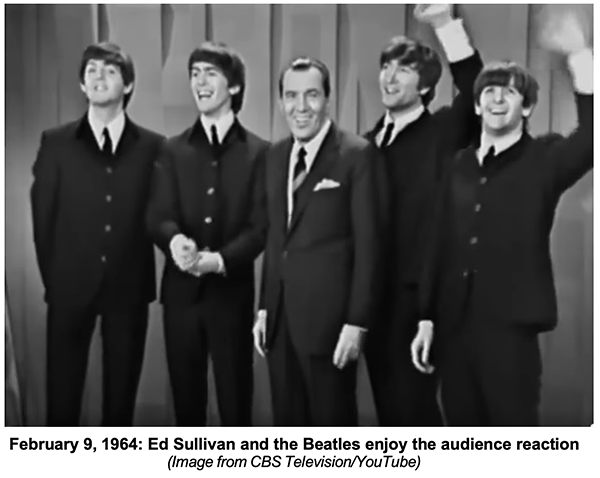
The following evening, at 8:00 pm Eastern Time, the “Ed Sullivan Show” went on the air, and shortly after the opening credits, Sullivan came on stage and offered a few brief remarks about the Beatles and their spectacular overnight success (“overnight” at least as far as Americans were concerned). Then… “Ladies and Gentlemen… THE BEATLES!” The theater erupted.
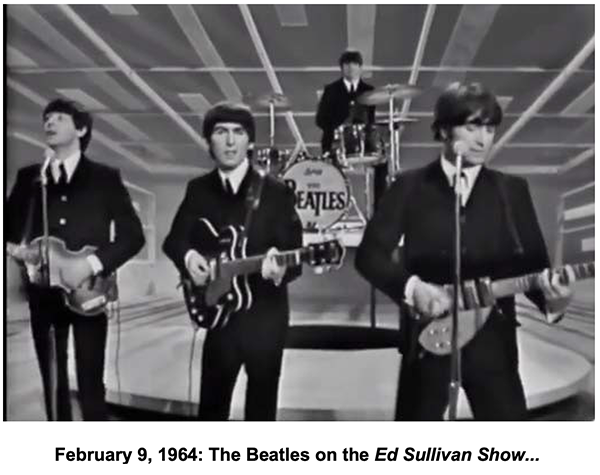
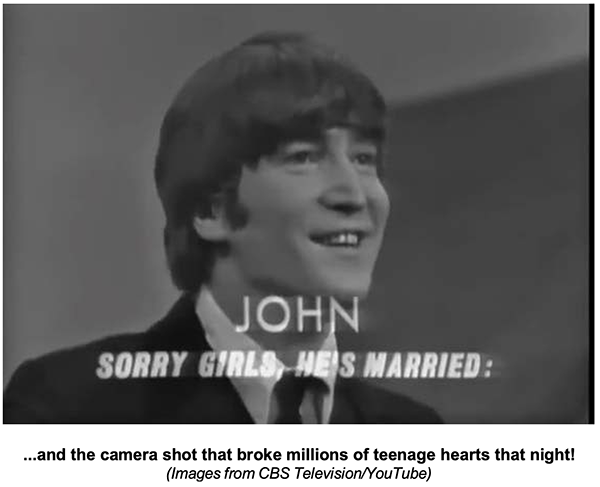
This moment led to one of the enduring music/broadcasting history trivia questions: What was the first song the Beatles performed live on their first “Ed Sullivan Show” appearance? No, it wasn’t “She Loves You” or “I Want to Hold Your Hand” (although they did those later in the show). Hint: while it was one of their most popular early songs, it was never officially released as a single. Okay, it was “All My Loving,” track #6 on side one of their iconic Meet the Beatles! album.
The ratings for the show were unprecedented. More than 73 million viewers – 39% of the country’s population – saw the performance. The broadcast drew a 60 share, which meant that 60% of American TV households were tuned in. Ed Sullivan always had pretty good ratings, but this was more than triple the size of his usual audience.
The Beatles were far from finishing their first American visit. Brian Epstein had managed to squeeze a couple of concert appearances into their tight schedule. One of those took place in Washington, DC two nights later, at the old Washington Coliseum. The old barn had seen some big events in its history, but nothing like this. The folks who owned and managed the building had barely heard of the group, but a concert promoter in the region convinced them to book a show. There was minimal promotion and advertising, but it wasn’t necessary. The tickets sold out in only a few hours.
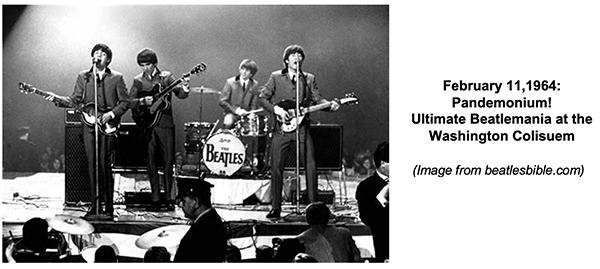
It turned out to be one of the most intense and intimidating concert environments ever seen, and is still regarded as such. The Beatles performed one of their few (maybe their only?) concerts “in the round,” on a small stage at the center of the arena, placed where the boxing ring would normally be situated. The building was packed with 8,092 ticket holders, most of them (as usual) screaming teenagers, with the front rows only a few feet from the stage. Imagine the frenzy in Ed Sullivan’s studio theater, now multiplied by a factor of ten. Fortunately, nothing really serious occurred, and the band handled the situation flawlessly, even making adjustments on the fly to handle audio and microphone issues…although it’s hard to believe they could even hear themselves amidst the screaming. They returned to New York to perform at Carnegie Hall the following day, then flew to Florida to spend a few days before returning to England. They returned for a North American concert tour in late summer. That tour was much better organized and promoted, although Beatlemania had not subsided at all, and the receptions they received were just as frenzied as their earlier appearances.
Typically, in an article like this, you would see links to various sources on the web. It would be superfluous here. There are countless sources of audio, video, photographs, and text of all these events and many others relating to that weekend in 1964. They are easily accessed on YouTube and other online locations. You can use one of the popular search engines or simply type a few key words into the YouTube search bar. All sorts of material will pop up; you’ll never run out of stuff to enjoy. If you are looking for maximum available audio and video quality, there are many downloads and DVD’s available from Amazon and other merchants.
The Beatles’ first weekend in America – particularly that first appearance on the “Ed Sullivan Show” – is widely regarded as a sort of cultural watershed that ignited Beatlemania here and opened America to other performers of the “British Invasion” era… artists like the Rolling Stones, the Dave Clark Five, Dusty Springfield, and many others. Many sociologists and cultural historians have opined that the Beatles coming to the United States was (at least in a pop culture sense) the beginning of the era that we now commonly view as “The Sixties.” Indeed, a veteran television host and four young musicians from the UK changed everything that night.
EPILOGUE
If their first “Ed Sullivan Show” performance was the “penthouse suite” of their first visit to America, the foundations of that structure were the countless radio stations around the United States that highlighted the band and played their music incessantly. There are endless stories about the big AM Top-40 stations of that era, their star disc jockeys, and their various encounters with the Beatles, both on and off the air.
I was a youngster in Baltimore at that time, and I was already hooked on radio and everything about it. I was a big fan of AM Top-40 powerhouse WCAO. The “Big 60” was the radio station for young Baltimore in that era, and their on-air staff were all celebrities in the community. Noted radio entrepreneur Kerby Confer was a WCAO disc jockey then, using the name “Kerby Scott” on the air.
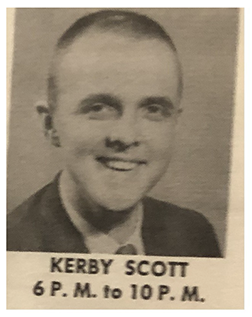 1964 WCAO Promotional Material: “Kerby Scott photo
(Photo courtesy Kerby Confer)
I recently spoke with Kerby Confer (almost two hours on the phone!) and reminisced about that era and WCAO’s role in it. When the Beatles took the train from New York to their gig in Washington, one of Kerby’s colleagues, veteran WCAO newsman Frank Luber, managed to board the train when it stopped at Pennsylvania Station in Baltimore and recorded an interview with the Beatles. The tape was brought back to the station and aired.
If WCAO was already immersed in Beatlemania, that episode had the station and its staff absolutely swimming in it. Kerby Confer told me that moment influenced his life and his career in ways he didn’t fully appreciate at the time. He said he was just another guy doing pretty well on the air in Baltimore, but that moment led to him becoming Baltimore’s “Fifth Beatle.” Wait, what? Baltimore’s “Fifth Beatle?”How did that come about?
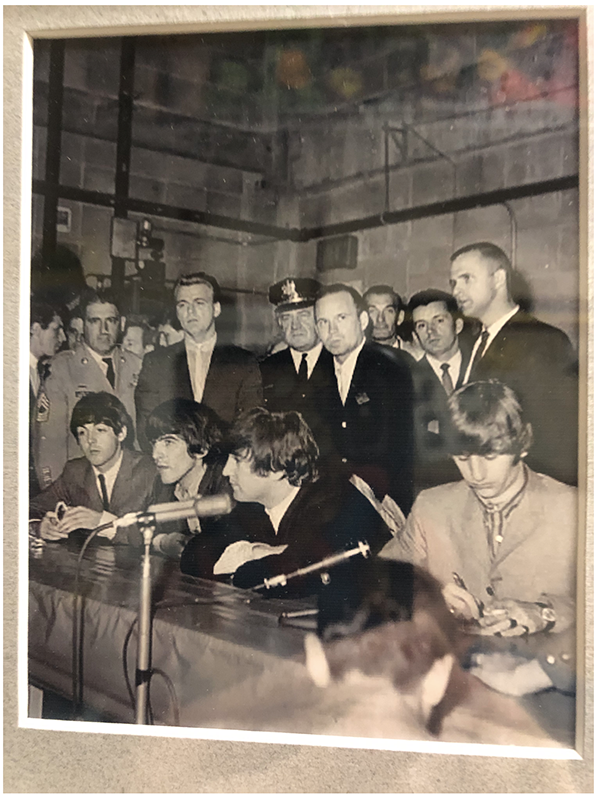
September, 1964: The Beatles and Baltimore media. “Kerby Scott” Confer is at the far right, directly behind Ringo (Photo courtesy Kerby Confer)
As it turned out, Kerby Scott soon became the host of WCAO’s “Liverpool Hour,” an evening program in conjunction with his regular on-air work at the station. The program featured the music of the Beatles and the many other artists who came out of the UK at that time.
Kerby usually wore his hair short in a buzz cut, but Paul Rodgers – his lifelong friend, WCAO colleague, and business partner later – convinced him to grow his hair out enough to solidify the “Fifth Beatle” persona. Kerby eventually sported a very restrained Beatles-style haircut to complete the image (I don’t think he kept the haircut for very long). He was an obvious choice to emcee one of the Beatles’ shows when they performed at the Baltimore Civic Center in September of 1964, and he later hosted “The Kerby Scott Show” on WBAL-TV; it was a dance party program, Baltimore’s version of Dick Clark’s show “American Bandstand,” and I believe it was eventually syndicated elsewhere. Before long, Kerby Confer moved over to the business side of radio in management and ownership. He was very successful in that endeavor, and still owns and operates many radio stations today.
So, Kerby Scott Confer and Mark Wainwright were just two more young radio guys whose lives and careers were influenced by that first Beatles weekend in the United States. It bears repeating: a veteran television host and four young musicians from England changed everything on the night of February 9,1964.
Mark Wainwright is a long-time radio personality, talk show host, and voiceover performer who has worked on the air at numerous respected radio stations around the United States. He was most recentlythe morning host at WSYR in Syracuse, New York. A Baltimore native, Mark currently resides inSaratoga County, New York. He can be reached at: markwainwright@earthlink.net
Share this with your network



 as “Two Pros and a Cup of Joe” and “The Dan Patrick Show,” the station will air “Inside New Orleans with Eric Asher” from 4:00 pm to 6:00 pm, followed by “All Access with Ken Trahan” from 6:00 pm to 7:00 pm. Cumulus Media New Orleans RVP and market manager Pat Galloway says, “The love and passion of New Orleans’ sports fans is amazing. It starts in the playgrounds and ends up in the Superdome and Smoothie King Center, and now we can talk about it all the time on the all-new ‘106.1 The Ticket.’”
 “Lip Service,” “Chiquis and Chill,” “Dear Chelsea with Chelsea Handler,” “The Nikki Glaser Podcast,” “The Psychology of Your 20s,” “Reasonably Shady,” “Therapy for Black Girls,” “There Are No Girls On The Internet with Bridget Todd,” “Very Special Episodes with Dana Schwartz,” and “Womanica.” Each of these shows will feature women sharing their personal stories of shattering stereotypes, creating opportunities, and inspiring the next generation to find their own voice and share it with the world.
 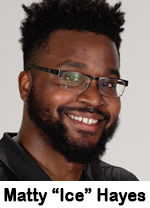 Rothman) program and as host of “The Fan” pregame show every gameday Saturday in the fall. Hayes says, “‘The Fan’ has been my home for 10 years and I’m very excited to continue working at a station that has been a part of my life for so long.” WBNS station manager Cody Welling comments, “Matt has been working extremely hard developing his broadcast talents. We value his point-of-view on topics, and is the perfect duo for our highly rated midday show, ‘Rothman and Ice.’ I’m happy that Columbus sports fans will be able to access Matt Hayes for years to come each weekday, and on college football gamedays.”
  Effect’s most popular personalities for a day full of live podcast tapings and informative discussions aimed at aspiring podcasters in the Black community. He says, “We are proud to return to Atlanta for the second year in a row to showcase the talent across our network, and some of the biggest shows in podcasting. Through culture-defining storytelling, unique brand partnerships, compelling panel discussions, special live podcast recordings and more, we are inviting everyone to experience the power of The Black Effect and the many ways Black creators are driving the culture forward.”
 Radio programming is like any business. Our best prospects are existing customers (getting people already listening to listen more often). And – without spending a dime on outside promotion – we can if the station is known-for-knowing. Set the expectation that we have listeners’ backs and optimize the information we deliver.
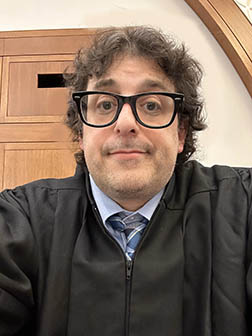 competition last evening (2/22) at the 1st Circuit Court of Appeals in Boston, MA. The American Bar Association, Law Student Division holds a number of annual national moot court competitions. One such event, the National Appellate Advocacy Competition, emphasizes the development of oral advocacy skills through a realistic appellate advocacy experience with moot court competitors participating in a hypothetical appeal to the United States Supreme Court. This year’s legal question focused on the Communications Decency Act – “Section 230” – and the applications of the exception from liability of internet service providers for the acts of third parties to the realistic scenario of a journalist’s photo/turned meme being used in advertising (CBD, ED treatment, gambling) without permission or compensation in violation of applicable state right of publicity statutes. Harrison tells TALKERS, “We are at one of those sensitive times in history where technology is changing at a quicker pace than the legal system and legislators can keep up with – particularly at the consequential juncture of big tech and mass communications. I was impressed and heartened by the articulateness and grasp of the Section 230 issue displayed by the law students arguing before me.”
  When reviewing our industry’s awards such as the Crystals or Marconis there are two categories missing. They are: “Best New” and “Best Innovation.” Imagine if winners were announced for these prizes:
 If you’re a news/talk station, don’t assume that you own “news radio” in your market. Imaging is important, but it merely talks-the-talk. You walk-the-walk with local news copy that delivers what solid commercial copy does: benefits. Just doing local news makes you special. But do listeners simply hear a station voice… reading something? Are you merely… accurate? Or do you deliver “take-home pay,” unwrapping the story to tell the listener something useful?
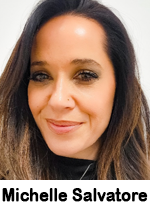 says, “Back in Spring of 2009, during the chaos and sleepless nights involved in launching this national media company, the media gods sent me an angel in the form of Michelle Salvatore. Michelle faced down every challenge, worked tirelessly and with good cheer, and set a gold standard of excellence for not only Compass Media Networks, but our industry. We love and will miss Michelle dearly. Our goal is to build upon the greatness she created as we move ahead into the next chapter of our evolution.” Salvatore comments, “Working at Compass Media Networks literally changed my life for the better. I was able to travel the globe, producing games throughout the United States, Latin America and Europe, and had the chance to work with incredibly talented, passionate, and kind people. I am forever grateful to my dear friends at Compass Media Networks.”
 spot. But the big story is the rise of WSE Originals’ “New Heights with Jason and Travis Kelce” shooting from #67 in the Q3 2023 report to #6 in the Q4 chart. (The show was not in the top 100 in the Q2 2023 survey.) Edison says the show starring Taylor Swift’s boyfriend Travis Kelce “gained four and a half times the number of listeners and saw a change in composition to 50% female listeners.” Other noteworthy moves from radio-related podcasts include The DailyWire’s “The Ben Shapiro Show” rising from #17 in Q3 to #9 in Q4 and Cumulus Podcasts Network’s “The Dan Bongino Show” climbing from #29 in Q3 to #26 in Q4. Edison’s Q4 2023 ranker was conducted from October 9, 2023 to December 23, 2023, and is based on surveys of 5,356 weekly podcast listeners age 13+.
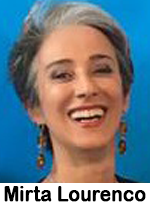 the automobile industry has intelligently responded. The issue however is much larger. As UNESCO’s chief of section for media development and society, Mirta Lourenco puts it, ‘The free flow and easily accessible information provided by terrestrial radio supports the spirit of the First Amendment via the concept of media pluralism and more. This expands to a valid concern about privacy rights – which is equally important to freedom and democracy. With GPS and internet platforms simultaneously in our cars, we are turning the enormous power to invade the privacy of individuals over to a mere handful of Big Tech giants. They know what and who we listen to, including where, when and how we travel.’” Harrison adds, “Finally, I am compelled as a lifelong radio broadcaster and publisher of a major trade journal to protect the viability of radio stations as a going concern and the well-being of their owners, employees, and listeners.”
 Super Bowl LVIII could have been the best ever.
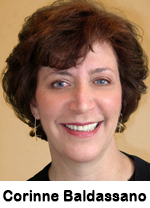 roles in management in both music and news at such stations as New York’s WHN (in news) and WPLJ (as music director). Among the highlights in her remarkable career, she served as the ABC group’s first female program director at KAUM-FM, Houston and as PD at the Boston Globe’s WSAI-FM, Cincinnati. At one point she was vice president of programming for the ABC Radio Networks. Other senior managerial stops include Watermark production studio (American Top 40 and American Country Countdown), United Stations, and as senior vice president of programming for Sony-Warner’s radio division, SW Networks. Baldassano was a co-founder and an initial board member of the Mentoring and Inspiring Women, Inc group, which sprang from the first list of women honored by Radio Ink in 1998 (on which she was included). She tells TALKERS, “In my years at Take On The Day, LLC, I built wonderful relationships with advertisers, affiliates, SiriusXM, multiple charities and Dr. Laura Schlessinger’s loyal listeners. I am truly grateful for the years spent with Dr. Laura and Geoff Rich, as the company grew and diversified into live theatrical shows nationwide, podcasts, online stores that benefited Children of Fallen Patriots Foundation, and much more. We had a great time, and I have nothing but warm wishes for their continued success as we all move on to new chapters.” She adds, “As one of the co-founders and a former board member, I will continue to work closely with Mentoring and Inspiring Women in Radio, Inc, where I serve as a key mentor to amazing women rising to be the next generation of leaders in radio. It’s one of the most important things I’ve ever done, and I get inspired by these women each and every day.” Baldassano can be emailed at
 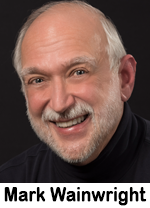 Radio personality, talk host, and voiceover performer Mark Wainwright writes today (2/9) in a piece for TALKERS magazine about the 60th anniversary of The Beatles’ appearance on “The Ed Sullivan Show” on February 9, 1964. He writes, “In early December 1963, America was a very gloomy place. The assassination of President John F. Kennedy on November 22 brought the country to a virtual standstill for four days, and the emotional and psychological hangover lingered for weeks. The nation needed a dose of uplifting energy and fun, and the Beatles were the ideal remedy.” As he notes, the arrival of The Beatles in America and their appearance on the popular Sunday night TV show “changed everything.”
 For several years I’ve had the surprising privilege of serving as a member of the nominating committee of the Radio Hall of Fame. How does the process work? Let me clear up some of the mystery. FAQ:
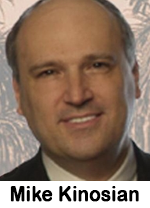 Today, TALKERS magazine managing editor Mike Kinosian does a deep-dive into the recent performances of the news/talk format during Nielsen Audio’s “Holiday” PPM ratings period. He writes, “Last week, we recapped how all-news stations have recently performed in (volatile) ‘Holiday’ survey periods. As a companion piece, the data summarizes ratings performances of news/talk stations in the two most recent ‘Holiday’ sweeps.”
 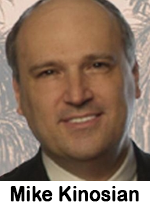 Today, TALKERS magazine managing editor Mike Kinosian does a deep-dive into the recent performances of the all-news format during Nielsen Audio’s “Holiday” PPM ratings period. He writes, “Ever since Arbitron (now Nielsen Audio) instituted the Portable People Meter as ratings currency in 2007, the ‘Holiday’ ratings period has been a veritable goldmine for stations employing the wall-to-wall Christmas music programming strategy. Adult contemporary comprises the overwhelming majority of those outlets. Usually substantial, however, is the negative impact on many other formats in ‘Holiday’ sweeps.”
 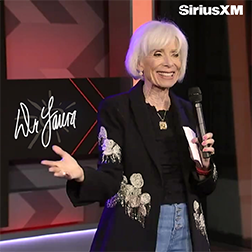 follows a multi-year advertising sales and production partnership between the two organizations. Terms were not announced. Crossover Media Group managing member Sue Freund states, “Throughout her more than four decades in talk radio and now podcasting, Dr. Laura has amassed an enormous following with her frank, direct, captivating style, which is sometimes provocative, always interesting and insightful, and never dull. After many years of working with her and her team at Take On The Day, we’re proud to expand our relationship and commitment to her programs, and to continue to grow our presence as a leading partner to the nation’s top audio-talk hosts.” Take On The Day LLC president Geoff Rich comments, “Crossover Media Group’s investment in Take On The Day adds so much to our ability to reach more listeners and help more sponsors. With Sue and her partners Ron Hartenbaum and Scott Calka joining the management team, we are supercharging the future of the Dr. Laura programming and brand.”
 served as the sole lifeline during times of crisis like 9/11, Hurricane Sandy, and other major storms and floods,” Gottheimer has sent a letter to the National Highway Traffic Safety Administration, urging them to require auto manufacturers that exclude AM radio reception from their motor vehicles to display a safety warning in the car’s window sticker that should read: “Warning: No AM Radio. Vehicle Unsafe in Certain Emergencies.” Gottheimer is also a supporter of the AM Radio for Every Vehicle Act that would require auto manufacturers to keep AM radio in vehicles, without charging customers extra for it. Gottheimer says, “Buying a car without AM radio is like buying a car without an emergency parking brake. You may not use it every day, but you’ll be glad you have it if your brakes ever go out.”
 He’s been co-hosting the weekend “Mark and Kichen Show” with Ben Kichen at WEEI. Dondero says, “Obviously I’ve learned a ton from him (Kichen), about the radio business, talking in general. And I’ll say this: Ben Kichen is a star and an underrated talent in this business, whether you’ve heard of him or not. And it has been an absolute joy and pleasure to work with him on the air for almost seven years.”
 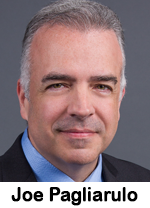 Multimedia’s KNDK- AM/FM, Langdon and KXPO-AM/FM, Grafton, North Dakota add the program to their lineups. “The Joe Pags Show,” hosted by Joe Pagliarulo, is based at flagship WOAI, San Antonio where Pagliarulo and iHeartMedia recently signed an extension through 2026. The program is now heard on more than 170 markets across the country. Joe Pags comments, “I’m incredibly excited to welcome Tampa, Tucson and North Dakota listeners to the show to start off the 2024 presidential election year.”
 Sears used to sell everything. Tractors, tires, insurance, investments, chickens. In 2004, Sears was the dominant retailer in America. By the end of the decade, it was feverishly closing stores and dying.
 had begun switching off automatic downloads for users who haven’t listened to five episodes of a show in the last two weeks. But while few users noticed the shift, some of the biggest podcasts in the world saw their official listener numbers drop dramatically. Long-running shows that publish frequently were hit particularly hard. A user who listened to a show like The New York Times’ ‘The Daily’ a few times, subscribed, but stopped listening would continue to count as a download indefinitely. Even better under the old rules: For people who listened to a show, dropped off for a while, but started listening again later, Apple would automatically download every show in between. The arrangement drove big download numbers, a crucial metric for ad sales and a sign of the vast reach of podcasts as a medium.”