By Bill Bartholomew
Talk Host/Podcaster/Journalist/Musician
 Folks in the Gen Z and millennial demographics are heavily engaged in political issues, care about news in their communities and the world, and are constantly bombarded with content. So why are they less likely to tune into and interact with news/talk radio than older demographics?
Talk radio has historically skewed older, and from an ad portfolio standpoint, is often targeted at the coveted 35-54 and 55+ demographics. However, in a world where social media influencers and podcasters supply information to millions of young consumers, news/talk radio should be able to effectively compete for the ears of younger generations in a comparable, if not expanded way.
For all of the anecdotal and hard evidence that terrestrial radio may be trending in a downward direction, the format continues to have a vast reach. It is convenient to engage with it in automobiles, and occasionally in home or office settings. Yet, while younger generations listen to radio, news/talk is not the format that they turn to by and large.
Unlike many digital-first content producers, radio retains a unique quality: authority. By virtue of editorial standards, FCC regulation and brand – things that social media and podcasts often lack – radio has the unique ability to deliver credible, vetted, nuanced and universally trustworthy content that can instantaneously adapt to meet the needs of the moment. This is true in everything from natural disasters to rapidly evolving breaking news stories, providing a channel for immediate, reactionary insight and analysis.
There are several steps that news/talk radio should pursue in earnest to adapt to the current climate of content consumption, particularly by younger listeners, that can reach, and most importantly, retain broader, younger, more diverse and more engaged audiences.
- Introduce younger people into the conversation.
Too often, Gen Z and millennials are skewered by older hosts, mocked for their perceived naivety, unchecked optimism and me-first approach. While some of these qualities can be accurate, that approach reflects a disconnect between older generations and the experience of younger ones. Millennials and Gen Z have grown up in a post-9/11 world replete with “endless wars”, the fallout from the 2008 financial crisis, runaway student debt, a massive housing crisis, the mental health stressors of social media, Covid19’s impact on traditional youth experiences, climate change, a deeply bifurcated political environment and a constantly evolving quest for social justice. Through these experiences, younger generations offer an important perspective that should be assigned the same news value as experts from older generations.
Are you discussing shifts towards electric vehicles? Bring on someone from Gen Z to share their perspective on why steps towards carbon neutrality are important to them. Engaging a conversation on the president’s approval rating? Perhaps younger conservative and leftist voices should be included in the conversation. Discussing immigration? How about the perspective of a younger member of a Latino organization?
By giving younger generations and more diverse guests a platform, stations can simultaneously expand their content and reach. With consistency, the station’s brand will become more familiar to younger potential listeners who may be inclined to tune in to hear someone who shares their identity and perspective on – here’s that word again – a platform of authority. Let the guest do the work of establishing the credibility and importance of your station or talk show to younger audiences by posting about their appearance on social media, sharing audio clips and mentioning to their peers. It will build familiarity and trust among those generations, who in turn, will begin to tune in on a more regular basis.
Stations should also consider bringing more younger, competent voices into on-air roles, whether that be through reporting, segments, fill-in hosts, weekend shows or full-time hosts.
- Meet the audience where they are: their phones.
As mentioned above, the convenience of simply turning on AM/FM radio is highly appealing in automobiles, though as Apple Carplay continues to adapt and evolve, digital-first content is likely to become as simple and convenient in the near future.
Talk radio needs to make consuming their product on smartphones as simple and direct as turning on a traditional radio. This means no clunky websites, no lengthy pre-roll spots, a reliable stream connection and a “one touch” means of turning on and off the station. This should also mean expanding talk shows to high-quality video livestreams, following in the footsteps of the top YouTube and Twitch performers; developing unique content for TikTok and Instagram; building podcasts that are focused on specific issues, and; providing interaction via text and chat.
Radio has the ability to be the ultimate livestreamer, social media influencer and podcaster, but rarely harnesses these platforms in a meaningful way.
It is not enough to simply strive to “expand a digital presence”; stations and shows must engage in the hard work of building platform-specific content with their brands.
- Music, cultural references and themes for the modern age.
A few weeks ago on a seemingly benign episode of the TV show FOX NFL Sunday, panelists Jimmy Johnson and Terry Bradshaw offered an example of the type of cultural adaptation that sophisticated writers and producers provide their brands. While describing a fight between two football players, Mr. Johnson said something to the effect of “when it comes to these two, what’s that Taylor Swift song?”, and then in synch with Mr. Bradshaw, “bad blood!”. It is highly unlikely that these two 70+ men listen to Taylor Swift’s music with any regularity or would simultaneously pull the “Bad Blood” reference. Yet, with excellent preparation that played into the greater cultural moment as well as the specific, current Taylor Swift/NFL overlap, in a six-second span, FOX NFL Sunday was able to give the illusion that their panelists are contemporary, hip and plugged into “what is going on”. Is your station or show plugged into what’s going on? Do you use contemporary music for bumps? Are your images – including headshots and social content – modern, interesting and engaging or are they more akin to a miscellaneous real estate agent? You are a performer in an entertainment business that, while certainly paying homage to the past and lineage of the industry, must be contemporary in aural and visual presentation. This goes for everything from wardrobe on video and in photo to fonts on graphic design.
How often do you or your producer read Pitchfork to learn about new music that is breaking this week? How often do you or your producer read Variety to understand major trends that are happening in the broader entertainment industry? What live events are you broadcasting from, covering and building partnerships with? You should strive to be cutting edge.
- We need a friend now more than ever.
This is something that goes for all audiences, but particularly for younger ones. It’s OK, in fact, great to be yourself, present yourself from your generation and retain the authoritative stance that has built your brand. Take a look at the success that sports talker Mike Francesa enjoyed by leaning into his persona – and in turn – developing legions of younger listeners that fell in love with his dad-like delivery and frequent meltdowns.
Few things are as uncomfortable to see as a 40+ person dressing or acting like a teenager. Younger listeners want that senior, experienced, trusted friend to entertain them, inform them, and at times, tell them that everything is going to be OK. You can help make sense of the world for younger audiences, something that is absolutely essential in the modern era.
Through attracting younger listeners by including them in the conversation, effectively delivering content on smartphones, presenting a cutting-edge entertainment product and continuing to serve as a trusted friend, news/talk radio can greatly expand its reach, relevance and revenue.
To that point, some younger listeners who discover a radio station or show via any of the above entry points will likely work backwards to the traditional AM/FM dial. Like the resurgence of vinyl records, AM radio in particular has the opportunity to become a hip delivery format for discerning younger listeners.
The big question is: are radio companies, stations and hosts prepared to do the hard work of reimaging their product?
Share this with your network


 financial struggles and looks more broadly at how radio as a legacy medium is facing “the same headwinds as other traditional media.” Carman adds, “Stations are losing their grip on younger audiences, and advertisers are tuning out. Fresh sources of revenue, like podcasts and streaming audio, are going to new contenders such as Spotify Technology SA or just failing to make up for the lost radio ad dollars.” The U.S. radio business has always touted its reach, but according to Lauren Russo, EVP at ad buyer Horizon Media, broadcast radio faces real problems. “The broadcast marketplace is extremely soft for ’23 and similarly for ’24. The overall audio ecosystem continues to grow from a streaming and podcasting perspective, but at the expense of broadcasts.” Read the Bloomberg piece here.
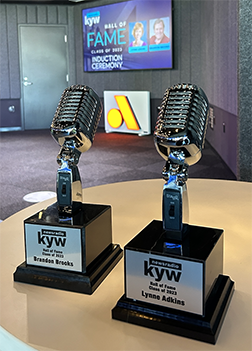 Newsradio staff and join other distinct Hall of Famers, including NBC News’ Andrea Mitchell and longtime suburban bureau chief Jay Lloyd. Lynne Adkins spent 34 years as an anchor, reporter and mentor at KYW Newsradio. Brandon Brooks was the voice of news in Philadelphia for more than 30 years. He first came to KYW Newsradio as a part-time anchor and reporter in 1989. Audacy Philadelphia SVP and market manager David Yadgaroff states, “This honor is long overdue for these two inductees who have devoted over three decades of their lives to being reliable news sources for the Philadelphia region. Not only has their professionalism set a high standard for our content, but their extensive backgrounds have taught the next generation of KYW Newsradio broadcasters to aspire to a new level.”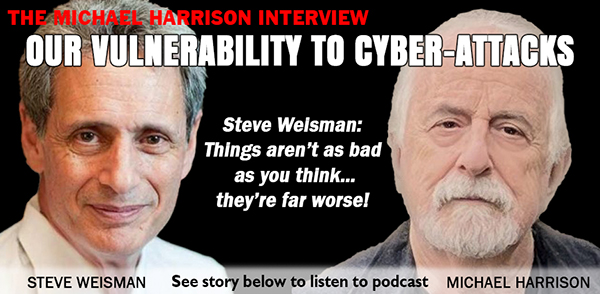
 company says, “The numbers don’t lie. America’s military heroes are struggling with money. A recent survey conducted by Wounded Warrior Project finds six in 10 veterans did not have enough money to make ends meet at some point in the past year. The survey also finds the rising cost of goods is the top-rated source of financial strain.” Dave Ramsey comments, “Veterans who’ve selflessly served to protect our freedom deserve to feel freedom for themselves and their families. It’s not just about financial education; it’s about transformation. Winning with money takes sacrifice, perseverance and determination — qualities veterans know all about. We’ll give them the tools, and they’ll get it done.”
 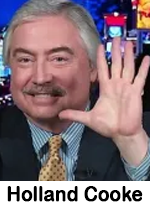 I am always impressed when I see-and-hear radio and TV stations swapping product.
 programming includes Premiere Networks’ “The Clay Travis & Buck Sexton Show” and “The Jesse Kelly Show,” as well as programming from Westwood One. iHeartMedia SVP of programming Jason Carr says, “We’re excited to bring ‘The Patriot’ to Vero Beach with local talk and news from ‘The Brian Mudd Show’ and some of the biggest names in national talk radio. ‘The Patriot’ will super-serve the growing Vero Beach community, with the most up-to-date news, weather and sports updates, including sources like FOX News and the Florida News Network.”
 advertising. In 2016 and 2017, direct response represented the vast majority of podcast advertising. From 2018 to 2021, the proportion of podcast ad spend was equally split between brand and direct response.” The post says there are four major implications of the shift to podcast brand advertising: 1) Targeting will become much broader: Wide campaign reach will become the priority with a goal of “being known before you’re needed”; 2) Creative will shift to become more entertaining and emotion based: The objective will be to stir passions and create positive feelings and associations with ads that people find interesting and enjoyable; 3) Brand safety and suitability measurement will become more crucial: Firms like Barometer will become powerful resources to help marketers find the right context for their campaigns with nuanced data; and 4) Measurement will focus on how well campaigns build memories to ensure brands are “easy to mind and easy to find”: Key performance indicators are brand awareness, brand consideration, and brand preference.
  Ready to go back to the future?
 In May 2007, I was enjoying the brand-new app called YouTube. Still independently owned, still relatively unknown. Some of the videos pulled millions of viewers, more viewers than enjoyed by ESPN or any cable network. More interesting, the videos with high counts were not made by NBC or ESPN or any traditional video source. High view count videos were being made by people with no experience in traditional media, they were experimenters producing in their basements and bedrooms.
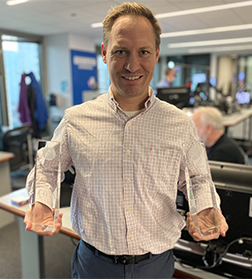 shooting”; Best Hard News Story – “The latest from Highland Park following the Fourth of July parade shooting” for news director Ryan Burrow (pictured holding two of the awards) and talk host John Williams; Best Radio Personality – John Williams; Best Radio Series or Documentary – “Ukraine-Russia War: Russia launches an attack on Lviv” (11/15/2022) for Bob Sirott, Joseph Lindsley, Joe Romano, Hayley Boyd; and Best Sportscaster – Dave Eanet. WGN Radio VP and general manager Mary Sandberg Boyle says, “These awards from the IBA serve as a compelling testament to our station’s ability to provide vital information to our local community during critical times. The collaboration between Channel 9, NewsNation, and our own newsroom proves the strength of our combined resources, ensuring that we remain a trusted source of news for Chicagoland.”
 It may seem impossible, but you need to stay in your lane.
 As your friends get fired and on-air hosts are replaced with WideOrbit and Profitable Software, the mournful refrain is to unfairly blame consolidation. Consolidation has, in fact, made the medium financially viable and brought hundreds of individual stations from a river of red ink to the glow of black ink. Prior to consolidation, over half the radio stations in the U.S. lost money – year after year. Not a secret stat, those numbers were revealed annually by the NAB.
 audience. Salem Church Products creates and distributes resources for churches and ministries in the areas of church media, worship, children’s ministry, preaching, teaching and employment through online resources including WorshipHouse Media, SermonSearch, ChurchStaffing, Children’s Ministry Deals and many others. Salem COO David Evans says, “We are proud of the Church Products business we have built over the years. What started with a single website – SermonSearch – has grown into a successful organization providing valuable resources and services to local churches and their pastors. Any time we look to sell a business, we look for organizations that share our passion and that can take that business to the next level. Gloo is just such an organization and we couldn’t be more thrilled.”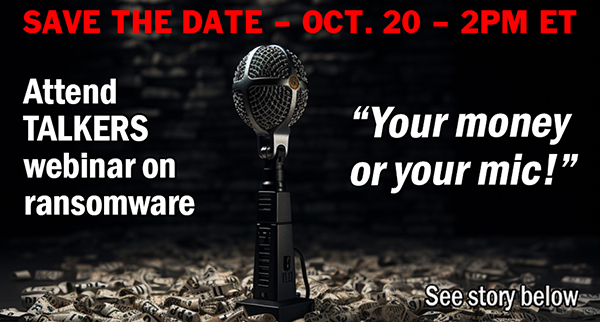
 radio and media company personnel focusing on where broadcasters are vulnerable and steps that should be taken to become more secure as well as comply with federal regulations. The 90-minute webinar will take place on Friday, October 20 at 2:00 pm ET.
 Radio plans to reduce its workforce by 12% due to a “free fall in the advertising market.” The source is a memo to staffers from NYPR CEO LaFontaine Oliver. The story goes on to note that the organization employs about 340 full- and part-time workers at WNYC, classical WQXR, and the Gothamist news site.
  Hollywood and the nation in 2015 when Jill Blackstone, a respected television talk show producer, was accused of killing her disabled sister Wendy and their rescue dogs. While Jill Blackstone claimed the deaths were caused by accidental carbon monoxide poisoning, police believe she produced the scene to make it look like an accident. Although the case against Jill Blackstone ended with a no contest plea deal, a new anonymous source has come forward to release evidence never before made public, so that the real story of what happened to Wendy Blackstone, and the secrets being kept by the Blackstone family, can finally be revealed.
 Attention news/talk radio sellers! Get ready to meet your new best friend… and it is not who you think it is.
 journalists “ask tough, but respectful questions to get answers,” and 61% say it is very important they fact-check those candidates. RTDNA president and CEO Dan Shelley comments, “In our highly polarized society, Americans need to rely on their trusted local sources of news to get the facts about candidates, campaigns and other political issues. These findings offer a clear roadmap to ensure local reporters and news managers are providing voters with the information they crave to make critical decisions in the voting booth.” Other data from the study reflects news consumers’ attitudes about news organizations, finding that 47% of those surveyed said they were in strong agreement that the information they get from local news sources is accurate and correct. That number drops to 41% when local news outlets cover political issues. It also found that just 39% of people were in strong agreement that local news sources were balanced and represented all sides of an issue.
  radio brand – will not continue the lease after it expires on August 31, 2024. Good Karma owns WEPN-AM, New York and company chief Craig Karmazin tells the Post, “We’re committed to serving the New York sports fan and with the combination of our AM signal, the ESPN New York app, podcasts, smart speakers, YES and other additional audio and video distribution, investing in an FM signal was not relevant in the way it was a decade ago.” The piece states the lease price for the signal is “in the $12.5 million per year range.” It also reports that sources indicate Emmis is seeking roughly $50 million in a purchase deal.
 If you are a seller in the terrestrial radio business, please listen carefully. That faint voice you hear could be the Fat Lady warming up – old Brunhilde ready to wrap it up and put an end to that long, sad Wagnerian opera, known as traditional, transactional radio sales.
 recently director of sales at the company’s Beaumont, Texas/Lake Charles, Louisiana operations. The cluster includes news/talk WJCW-AM, sports talk WXSM-AM and two music brands. Walker says, “I’m extremely excited to be joining our Tri-Cities team. Cumulus Media is a great company to be a part of, supporting its employees with many great resources for our success. I’m looking forward to the opportunity to serve our Tri-Cities team, advertisers, and community. I have family in the market and can’t wait to call Tri-Cities home.”

 Times Square, New York City. Attendees will hear from experts on everything mental health, panels, live podcasting, and breakout rooms including the podcast “MEternal,” that addresses the complexities of the Black maternal health crisis. Charlamagne Tha God says, “The Mental Wealth Expo was created for anyone who knows they need to start on their healing journey, but don’t know the first place to begin. It’s a day for folks to get exposed to mental health experts and resources that can get them on the right path and they get to receive this information for free! It is truly a blessing to be able to do this for a third consecutive year.”
 Westwood One’s “Dan Bongino Show” and the “Chris Plante Show,” plus Ben Shaprio and FNC’s Guy Benson. KTUC program director Herb Crowe states, “We’re thrilled to unveil ‘Freedom 1400,’ Tucson’s Conservative Talk Station. As we embark on this exciting journey, we’re committed to providing a platform for open dialogues, diverse viewpoints, and robust discussions that matter to our community. With our esteemed lineup of talk show hosts, we’re confident that ‘Freedom 1400’ will become an essential source of information and insight for our listeners.”
 in 1979 from the University of Georgia with a degree in Journalism from the prestigious Grady School of Journalism, she worked in the corporate world and met a payroll. She is a wife, mother and a grandmother. She’s stayed at home and juggled children and working priorities. She says there is no glass ceiling and women can have it all, just not at the same time. A life-long learner, she completed her MA in Political Science in 2021 at the University of Georgia’s School of Politics and International Affairs. Her thesis was on women’s electoral success in the GOP. During her formidable broadcasting career in the Peach State, she has pivoted between holding positions on key talk stations and performing stints in politics and the public sector. These include being state director of field offices for Governor Brian Kemp. She’s also worked for Senator David Perdue in senior staff positions. In addition to her daily duties at WDUN, Zoller serves on the Georgia State Board of Education. TALKERS publisher Michael Harrison says, “Martha Zoller is a perfect ‘go-to’ guest to discuss the Georgia Trump indictment. She’s an independent Republican and moderate conservative without an ax to grind. I have always found her to be an extremely credible source for political discussion of the hot issues – now with the Trump Georgia story boiling on the front burner, she is a talk show treasure for her industry colleagues.” To arrange an interview or set up a connection with Martha Zoller, contact Victoria Jones at DC Radio Company at 917-865-3991 or