By Matthew B. Harrison
TALKERS, VP/Associate Publisher
Harrison Legal Group, Senior Partner
Goodphone Communications, Executive Producer
 For years, “protect your name and likeness” sounded like lawyer advice in search of a problem. Abstract. Defensive. Easy to ignore. That worked when misuse required effort, intent, and a human decision-maker willing to cross a line.
AI changed that.
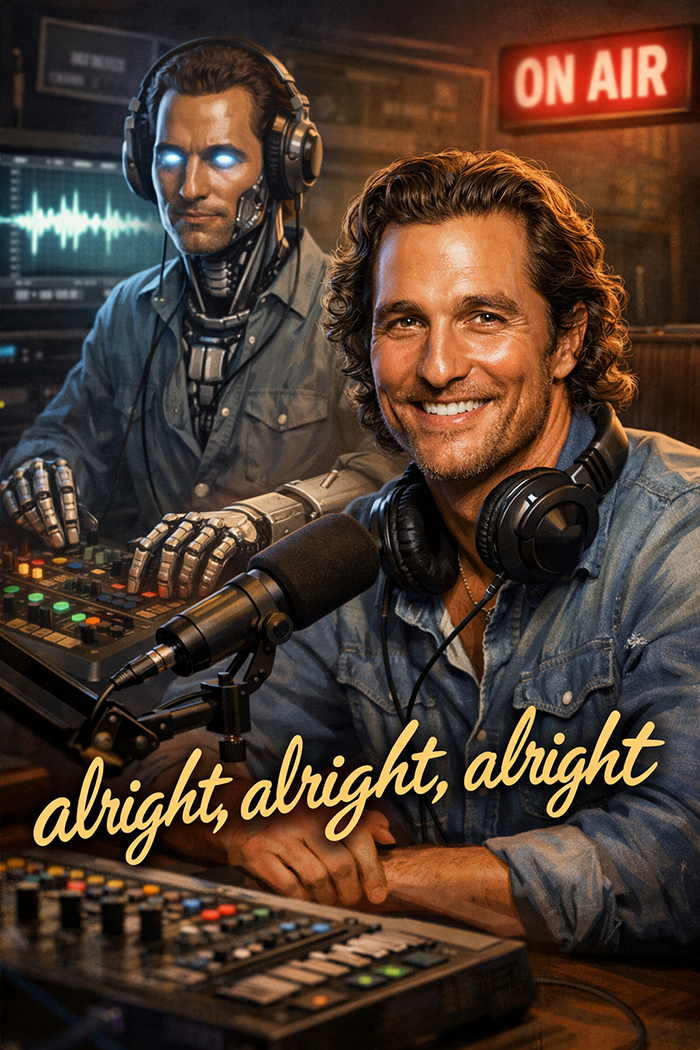
When Matthew McConaughey began trademarking his name and persona-linked phrases (“alright, alright, alright”), it was not celebrity vanity. It was an acknowledgment that identity has become a transferable commodity, whether the person attached to it consents or not.
A voice is no longer just expressive. It is functional. It can be sampled, trained, replicated, and redeployed at scale. Not as a parody. Not as commentary. As a substitute. When a synthetic version of you can narrate ads, read copy, or deliver endorsements you never approved, the injury is not hypothetical. It is economic.
We have already seen this play out. In the past two years, synthetic versions of well-known voices have been used to sell products the real person never endorsed, often through social media ad networks. These were not deep-fake jokes or parody videos. They were commercial voice reads. The pitch was simple: if it sounds credible, it converts. By the time the real speaker objected, the ad had already run, the money had moved, and responsibility had dissolved into a stack of platform disclaimers.
This is where many creators misunderstand trademark law. They think it is about logos and merchandise. It is not. Trademarks protect source identification. Meaning, if the public associates a name, phrase, or expression with you as the origin, that association has legal weight. McConaughey’s filings reflect that reality. Certain phrases signal him instantly. That signaling function has value, and trademark law is designed to prevent identity capture before confusion spreads.
Right of publicity laws still matter. They protect against unauthorized commercial use of name, image, and often voice. But they are largely reactive. Trademarks allow creators to draw boundaries in advance, before identity becomes unmoored from its source.
This is not a celebrity problem. Local radio hosts, podcasters, commentators, and long-form interviewers trade on recognition and trust every day. AI does not care about fame tiers. It cares about recognizable signals.
You do not need to trademark everything. You do need to know what actually signifies you, and decide whether to protect it, because in an AI-driven media economy, failing to define your identity does not preserve flexibility. It invites identity capture.
Matthew B. Harrison is a media and intellectual property attorney who advises radio hosts, content creators, and creative entrepreneurs. He has written extensively on fair use, AI law, and the future of digital rights. Reach him at Matthew@HarrisonLegalGroup.com or read more at TALKERS.com.



 eight stations in Minnesota. The second deal transfers 17 signals in a number of small markets in the state of Missouri to Carter Media Too, LLC., a Carrollton, Missouri‑based limited liability company led by the Carter Media family. Carter Media Too also operates three radio stations in Missouri plus the streaming platform, MidVid.com. Exclusive broker Kalil & Co says Miles and Michael Carter expressed their enthusiasm for expanding the organization’s footprint and restoring a strong local presence in news, weather, sports, and agriculture.
 recent trends towards fragmentation facilitate or inhibit the ability of local broadcast television stations to meet their public interest obligations, including their production of local news and reporting? In what ways is the marketplace continuing to evolve and how will future changes impact consumer access to free over-the-air news and information, including public safety information?”
 dominant spoken-word audio listening platform, but it was fully sixty-five percentage points higher than podcasts, which accounted for 10% of listening time back then. Quarter by quarter and year over year, time spent using AM/FM radio to listen to spoken-word audio has declined significantly and shifted to time spent with podcasts. As of Q4 2025, 40% of time spent listening to spoken-word is now spent with podcasts and 39% of time is spent with AM/FM radio. Not only does radio not beat podcasts by a significant margin, it now trails the on-demand platform for spoken-word audio listening.”
 patriotic, pro-America content that celebrates the American journey and inspires its citizens by highlighting the historic accomplishments of this great nation from our founding through the Trump Administration today.” Carr adds, “On July 4, 2026, America will celebrate the 250th Anniversary of the signing of the Declaration of Independence. That revolutionary document set forth our founding principles – including Life, Liberty, and the pursuit of Happiness – and put America on a collision course with destiny. Over the following centuries, the American story has defined modern history and spread freedom, opportunity, and prosperity across the globe. As America’s 250th anniversary approaches, it is important to reflect on the ideals and events that have defined our past while keeping an eye towards our country’s bright future. The White House is leading our national celebration of this historic event with the Salute to America 250 Task Force, which calls on the federal government, among others, to mark this momentous occasion. As part of this effort, I am calling on broadcasters to pledge to provide programming that promotes civic education, national pride, and our shared history.” Carr shares some examples stations could use, including:
 times per week – Monday through Wednesday – and will be available on both YouTube and Rumble in digital video format with future expansion on other platforms. The company adds, “For the first time, Levin will offer audiences access to original digital video content via an ad-supported model, instead of a subscriber paywall. ‘Liberty’s Voice with Mark Levin’ will present exclusive, in-depth commentary from one of America’s most influential constitutional scholars and political thinkers. Sharing his intellectual rigor, brilliant wit, and signature passion, Levin will draw on history, economics, law, and philosophy as he goes beyond the headlines to examine the ideas and principles that shaped the United States – and the forces challenging them today. Each episode will deliver substantive analysis of current events, grounded in the founding ideals of liberty, limited government, and individual sovereignty, while exposing the dangers of centralized power and historical amnesia.”
  documentary explores the extraordinary life and career of Billy Preston, one of the most influential yet often overlooked musicians in modern music history. Barclay is widely known for his prolific, award-winning work directing major television series, including ‘NYPD Blue,’ ‘The West Wing,’ ‘Sons of Anarchy,’ and ‘ER,’ bringing both historical insight and emotional depth to Preston’s story.” WURD president and CEO Sara M. Lomax says, “Many people know Billy Preston’s music without knowing Billy Preston’s story. His work is woven into some of the most recognizable music ever recorded, yet his life and legacy are not widely understood. This is exactly why we celebrate Black History Month — to recognize the artists, innovators and cultural figures whose influence we experience every day, even when their stories remain untold.”
 Robertson states, “Expanding WDAE’s heritage brand strengthens our long-standing broadcast and marketing partnerships with the Tampa Bay Rays, Buccaneers, Lightning, Florida Gators and USF Bulls. This evolution also reflects our continued commitment to serving Tampa Bay listeners across multiple platforms.” WDAE program director and midday host Nick Wize adds, “I am beyond excited for Tampa Bay sports fans. This is a championship market, and we’re delivering a strong, engaging lineup that brings fans closer to the teams and conversations they care about most.”
 the Lakeland-Winter Haven, Florida market from Hall Communications. The deal includes news/talk WLKF-AM (but not its current FM translator W244BJ at 96.7 MHz) country WPVC, and adult hits WONN-AM and its translators W296CS at 107.1 FM and W240DB at 95.9 FM. MARC Radio says it expects the deal to close in May, pending FCC approval.
 “‘Outspoken’ has built a devoted following by tackling Arizona’s biggest political, social and cultural issues with insight, humor and a willingness to challenge conventional thinking. The expanded time slot allows the show to dig deeper into the stories shaping the state and the nation, while continuing to engage listeners and viewers through spirited conversation. The change will help position KTAR News’ marquee afternoon drive show during a pivotal election year in front of larger audiences, bringing the hosts’ signature blend of bold opinions, sharp analysis and lively debate to the heart of the drive‑time lineup. Outspoken will continue to push the conversation forward with exclusive guests and the Faceoff roundtable conversation every Wednesday.” The station also brings back “Arizona’s Evening News,” hosted by Becky Lynn and Joe Huizenga, from 6:00 pm to 7:00 pm. It will keep listeners and viewers tuned into local programming with a news program focused on in-depth conversation. Bonneville says the new program schedule reflects the end of the two-year run of The Chris & Joe Show in the 2:00 pm to 4:00 pm daypart with the departure of talk host Chris Merrill.
  deal to provide a one-minute news update hosted by one of the network’s anchors to over 15,000 taxis across the country, including in New York City. In a January 21 letter to Mamdani and Taxi and Limousine Commissioner Midori Valdivia, Hoylman-Sigal stated the cabs should not carry Newsmax because of its “politically charged content.” The letter went further, stating Newsmax “is not a credible news source for New Yorkers. I urge you to summarily suspend the NYC Taxi and Limousine Commission’s partnership with Curb… and demand that Curb cease its collaboration with Newsmax as a condition of licensure given the platform’s history of misinformation and disingenuous reporting.” Newsmax says, “This is a pure act of censorship targeting a news organization reaching over 50 million Americans regularly. Newsmax plays it straight and that drives the far left crazy.”
  listening to the 10k flamethrower, with a history dating back to 1947, that blankets the Santa Cruz / Monterey / Salinas market and most of the Central California coast. Since acquiring the station, Zwerling has operated it hands-on as a conservative-leaning news-talker featuring a carefully crafted balance between local programming with a parade of hometown personalities (including local superstar Dave Michaels) and a menu of leading syndicated talent. It was one of the original affiliates of Rush Limbaugh and carried the iconic show until his passing in 2021. Zwerling tells
  TALKERS, “Back then I was 39 years old and never dreamed I’d last this long as a real broadcaster.” TALKERS publisher Michael Harrison – a longtime fan of KSCO – stated, “Congratulations to Michael Zwerling and all the folks at one of America’s most colorful radio stations, for keeping the spirit of independent local broadcasting alive through the many obstacles and changes that have proven challenging for the practitioners of this wonderful industry. They are champions of a major slice of grassroots Americana represented by the modern era of talk radio.” Today, KSCO maintains its powerful presence in the world-famous market at 1080 AM with the addition of three FM translator signals at 104.1, 95.7, and 107.9. The station still broadcasts from a historic art deco building located on the beach in Santa Cruz and continues to surprise its listeners with unexpected twists and turns in what Harrison describes as “one of radio’s longest running reality shows.”
 station general manager John Gallagher states. Bringing Amy Jacobson back to the station fills a huge void for our audience. She has been relentless in her quest for the truth, and she gets answers that our listeners need to hear. Jeanne Ives (right) is one of the most politically connected people in the state of Illinois. She brings a wealth of knowledge regarding so many issues that affect everyone within our listening area. I am looking forward to the in-depth conversation and new perspective this team will offer.” Ives says, “I am thankful and excited to be a part of the Salem family. Information is power and Amy and I want to bring the ‘Real Story’ on policy along with informed commentary from years of experience knowing the players and politicians to our listeners. We want listeners to be informed, so they can hold the politicians accountable.” Amy Jacobson adds, “I am thrilled to be returning home to ‘AM 560 The Answer.’ Jeanne and I will be part of the strongest conservative lineup in Chicago radio! As many of you know, life takes some unexpected turns, but when you love what you do, the signal always finds its way back.”
 end-to-end, cloud-native operating system designed specifically for radio… powered by a suite of proprietary AI technologies that master, schedule, produce, and deliver each station directly to a Super Hi-Fi playout device at the transmitter.” Warshaw says, “Our mission is to have the best live and local radio experience in every market across America and Super Hi-Fi’s unique capabilities will allow us to do that in ways the industry just didn’t have before. We’re excited to work with them to drive forward and deliver the most compelling radio products in the industry.”
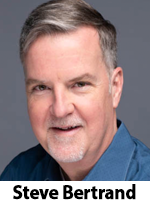 with the Lifetime Achievement Award, an honor designated contributions to local news. Bertrand has been a trusted voice on WGN Radio for four decades, anchoring news since 1992 and earning the confidence of generations of Chicago listeners. Over his career, he covered many of the most significant local and national events of the past 40 years while mentoring colleagues and helping define the standard for excellence in local radio journalism. His retirement in 2025 marks the culmination of a lifetime dedicated to informing the public and strengthening the role of local news.”
  gathering – will take place February 19-21 at the Sheraton Times Square Hotel in midtown Manhattan.
 audience engagement – a considerable value add for Cumulus Media and its stakeholders and an important next step in the development of advanced capabilities for the audio sector.” Cumulus adds that Eon Media is an award-winning technology company for media that harnesses state-of-the-art artificial intelligence that is fully built in-house to extract metadata from media assets, including segments, stories, categories, audio transcription, music recognition, people mentioned, demographics, and much more. Cumulus Media president and CEO Mary G. Berner says, “We are excited to join forces with Eon Media to create innovative solutions that will provide Cumulus Media with access to new market opportunities and untapped monetization paths. Importantly, this partnership will significantly enhance our ability to drive greater discoverability. By expanding touchpoints and engagement opportunities, we ensure our listeners and audiences can connect with our content more easily and more often than ever.”
 Podcast” joins SiriusXM’s The Megyn Kelly Channel for same-day distribution of Carolla’s daily show, Tuesdays through Fridays at 7:00 am – 9:00 am ET. PodcastOne co-founder Kit Gray states, “PodcastOne is thrilled to extend our relationship with Adam and his ‘The Adam Carolla Show.’ Adam has paved the way for podcasters around the globe and his podcast is continuously growing with audiences and with advertisers. We’re proud to be working alongside one of the greatest in the business as he sets the tone for success in the genre.”
 commercially unreasonable rate for its Nationwide Report may cause it to have to do away with the Nationwide Report altogether. This testimony accompanied Nielsen’s request for a stay pending appeal as it appeals to the Second Circuit. This is the latest in action in Cumulus’ suit alleging that
  Nielsen is illegally leveraging its dominance over national and local radio audience data to stifle rivals and charge inflated prices. Judge Vargas denied the stay pending appeal but did grant an administrative stay will be in effect only until January 16, 2026, to allow Nielsen time to file a motion for a stay in the Second Circuit Court of Appeals. Tunkel’s testimony states that the order would cause Nielsen “significant irreparable harm if required to comply with the Court’s ruling during the pendency of Nielsen’s appeal… As a result, Nielsen would not be able to apply that policy in any of the at least ten negotiations with clients that Nielsen expects to have in 2026. If Nielsen is unable to apply the Network Policy, then it will be hindered in its ability to ensure that it can recover the costs of collecting the local radio-ratings data that make up the Nationwide report and spread those costs appropriately across the customers that use the products generated from those joint costs. If Nielsen cannot recover these costs, then it may have to retire the Nationwide report, similar to when Nielsen retired its other national data product, RADAR. If it does not retire the Nationwide report, it may have to pass a higher share of the costs of collecting local data on to other customers, including local radio stations, hurting Nielsen’s negotiating position with respect to those customers, as well as those customers themselves.”