
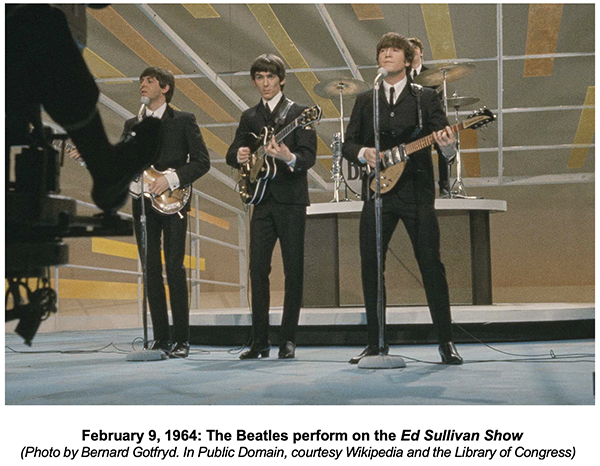
“Ladies and Gentlemen… THE BEATLES!”
On a February night in 1964, a veteran TV host and four young musicians from England changed music, broadcasting, popular culture… they changed everything.
By Mark Wainwright
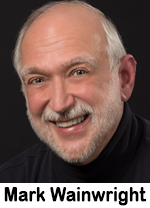 In early December 1963, America was a very gloomy place. The assassination of President John F. Kennedy on November 22 brought the country to a virtual standstill for four days, and the emotional and psychological hangover lingered for weeks. The nation needed a dose of uplifting energy and fun, and the Beatles were the ideal remedy.
The Beatles were hardly newcomers. They had already been a successful act in the UK and mainland Europe (especially in Germany) for several years; oddly, they never got much traction in the United States. They had released a handful of songs in the US on smaller, independent record labels as far back as 1962, but they received little attention.
“She Loves You,” one of their early signature songs, was a failure when it was first released here in 1963. Dick Clark tried to feature it on “American Bandstand,” but the young dancers on his show didn’t know what to make of it and rated it poorly. But as the year went on, their popularity in England dramatically turned into a phenomenon that featured wildly enthusiastic crowds of screaming teenage girls. No one seems to be able to pinpoint what the catalyst was, but their already established popularity quickly grew into what became known as “Beatlemania.”
The Beatles first appeared on American TV on network news broadcasts. NBC’s “Huntley-Brinkley Report” aired a segment about the Beatles and Beatlemania in England on November 18,1963. Edwin Newman was the correspondent, and he and his colleagues were rather dismissive of the group, their music, and their young fans. Meanwhile, over at CBS, Walter Cronkite’s take was more generous. Their reporter in London, Alexander Kendrick, was pretty condescending as well, but Cronkite liked the segment when he saw it on the “CBS Morning News” on November 22 and planned to run it on his evening newscast. Sadly, what happened in Dallas hours later preempted everything.
A few weeks later, Cronkite thought his viewers could use a lift from the gloom that had descended upon the country, and he thought that segment would be a nice diversion. He ran it on his newscast on December 10, and that story really got the nation’s attention.
Young America was soon clamoring for everything Beatles. Radio stations dug up the records that hadn’t been successful and started playing them constantly. Beatles paraphernalia was heavily marketed and sold well. Capitol Records released “I Want to Hold Your Hand” in the United States on December 26 — the boys finally had a deal with a major record company in the US — and by New Year’s Eve, it was already a hit. It was the first of six Beatles’ songs that reached #1 on the Billboard “Hot 100” chart in 1964.
Meanwhile, Ed Sullivan was the host/master of ceremonies of a long-running CBS variety show that dominated the Sunday night ratings for years. Unlike most of his contemporaries, he was happy to present many of the early stars of rock-and-roll; Elvis Presley, Buddy Holly, and Jackie Wilson were among the pioneering artists of the new music genre who got their first major television exposure on Sullivan’s program.
Sullivan heard about the Beatles, saw them receive a tumultuous reception at Heathrow Airport in London, saw the CBS news segment, and was determined to present them on his show. Whatever he thought of their music, he respected talent and knew a hot act when he saw one.
A deal was quickly arranged between Sullivan and Brian Epstein, the Beatles’ long-time manager. Sullivan would bring them to the United States for three consecutive Sunday night shows. The February 16 performance would be broadcast live from the Deauville Hotel in Miami Beach, the third appearance on February 23 would be taped in advance. But the first of the three, a live performance on the Ed Sullivan Show February 9, was the one most anticipated. The two New York shows would be presented at the studio venue now known as the “Ed Sullivan Theater.”
When word got out, the demand for tickets was insane. CBS received more than 50,000 ticket requests (the tickets were free) for a studio theater that held 728. Getting one of the tickets was largely a matter of luck. Numerous notables and VIPs called upon favors owed and contacts at CBS to get tickets for their daughters (or granddaughters). Only a few succeeded.
When the Beatles arrived in New York on a Pan Am 707, they were greeted by a near-hysterical crowd of teenage girls (this had become a routine occurrence). They needed a police escort to get into Manhattan, and they needed a phalanx of New York cops to get them in and out of their hotel. All of this, of course, was breathlessly reported in the news media.
They arrived at the theater on Saturday, February 8, for a lighting and sound check and a brief rehearsal. George Harrison was recovering from a throat infection and was still tired and feverish, so he stayed at the hotel to rest, while a member of their entourage and a CBS production assistant took turns as stand-ins for George.
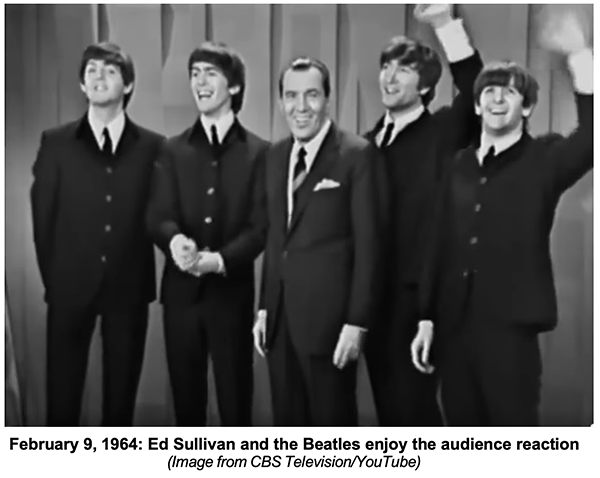
The following evening, at 8:00 pm Eastern Time, the “Ed Sullivan Show” went on the air, and shortly after the opening credits, Sullivan came on stage and offered a few brief remarks about the Beatles and their spectacular overnight success (“overnight” at least as far as Americans were concerned). Then… “Ladies and Gentlemen… THE BEATLES!” The theater erupted.
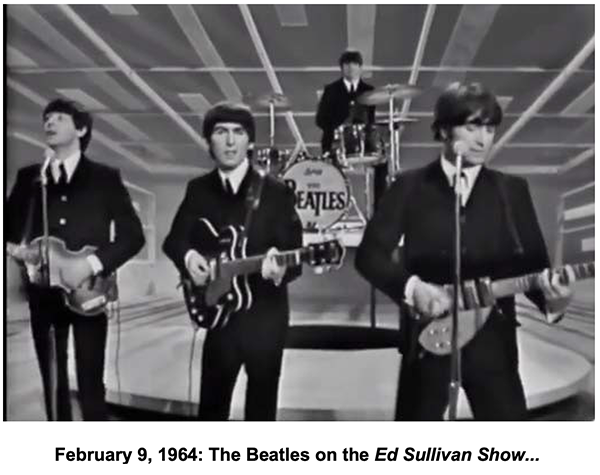
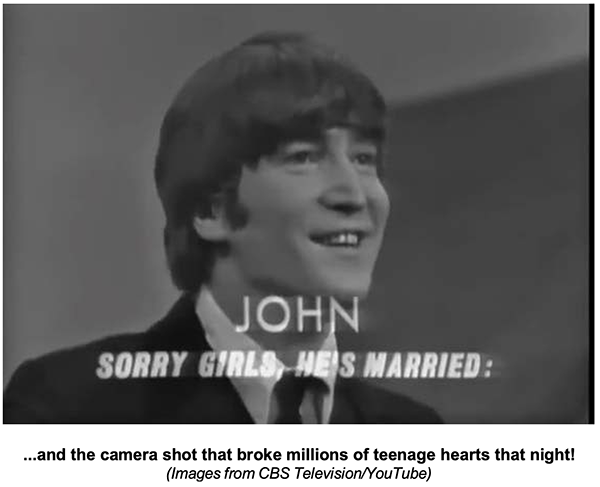
This moment led to one of the enduring music/broadcasting history trivia questions: What was the first song the Beatles performed live on their first “Ed Sullivan Show” appearance? No, it wasn’t “She Loves You” or “I Want to Hold Your Hand” (although they did those later in the show). Hint: while it was one of their most popular early songs, it was never officially released as a single. Okay, it was “All My Loving,” track #6 on side one of their iconic Meet the Beatles! album.
The ratings for the show were unprecedented. More than 73 million viewers – 39% of the country’s population – saw the performance. The broadcast drew a 60 share, which meant that 60% of American TV households were tuned in. Ed Sullivan always had pretty good ratings, but this was more than triple the size of his usual audience.
The Beatles were far from finishing their first American visit. Brian Epstein had managed to squeeze a couple of concert appearances into their tight schedule. One of those took place in Washington, DC two nights later, at the old Washington Coliseum. The old barn had seen some big events in its history, but nothing like this. The folks who owned and managed the building had barely heard of the group, but a concert promoter in the region convinced them to book a show. There was minimal promotion and advertising, but it wasn’t necessary. The tickets sold out in only a few hours.
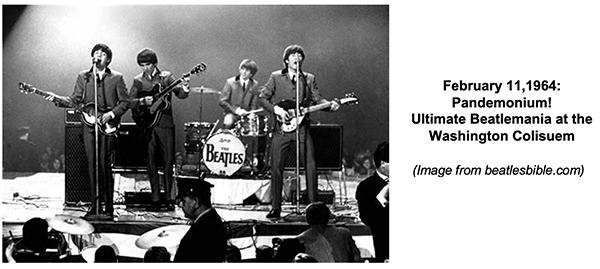
It turned out to be one of the most intense and intimidating concert environments ever seen, and is still regarded as such. The Beatles performed one of their few (maybe their only?) concerts “in the round,” on a small stage at the center of the arena, placed where the boxing ring would normally be situated. The building was packed with 8,092 ticket holders, most of them (as usual) screaming teenagers, with the front rows only a few feet from the stage. Imagine the frenzy in Ed Sullivan’s studio theater, now multiplied by a factor of ten. Fortunately, nothing really serious occurred, and the band handled the situation flawlessly, even making adjustments on the fly to handle audio and microphone issues…although it’s hard to believe they could even hear themselves amidst the screaming. They returned to New York to perform at Carnegie Hall the following day, then flew to Florida to spend a few days before returning to England. They returned for a North American concert tour in late summer. That tour was much better organized and promoted, although Beatlemania had not subsided at all, and the receptions they received were just as frenzied as their earlier appearances.
Typically, in an article like this, you would see links to various sources on the web. It would be superfluous here. There are countless sources of audio, video, photographs, and text of all these events and many others relating to that weekend in 1964. They are easily accessed on YouTube and other online locations. You can use one of the popular search engines or simply type a few key words into the YouTube search bar. All sorts of material will pop up; you’ll never run out of stuff to enjoy. If you are looking for maximum available audio and video quality, there are many downloads and DVD’s available from Amazon and other merchants.
The Beatles’ first weekend in America – particularly that first appearance on the “Ed Sullivan Show” – is widely regarded as a sort of cultural watershed that ignited Beatlemania here and opened America to other performers of the “British Invasion” era… artists like the Rolling Stones, the Dave Clark Five, Dusty Springfield, and many others. Many sociologists and cultural historians have opined that the Beatles coming to the United States was (at least in a pop culture sense) the beginning of the era that we now commonly view as “The Sixties.” Indeed, a veteran television host and four young musicians from the UK changed everything that night.
EPILOGUE
If their first “Ed Sullivan Show” performance was the “penthouse suite” of their first visit to America, the foundations of that structure were the countless radio stations around the United States that highlighted the band and played their music incessantly. There are endless stories about the big AM Top-40 stations of that era, their star disc jockeys, and their various encounters with the Beatles, both on and off the air.
I was a youngster in Baltimore at that time, and I was already hooked on radio and everything about it. I was a big fan of AM Top-40 powerhouse WCAO. The “Big 60” was the radio station for young Baltimore in that era, and their on-air staff were all celebrities in the community. Noted radio entrepreneur Kerby Confer was a WCAO disc jockey then, using the name “Kerby Scott” on the air.
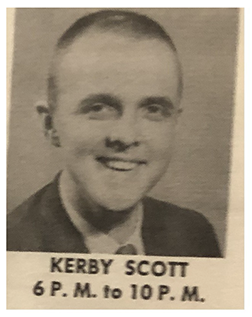 1964 WCAO Promotional Material: “Kerby Scott photo
(Photo courtesy Kerby Confer)
I recently spoke with Kerby Confer (almost two hours on the phone!) and reminisced about that era and WCAO’s role in it. When the Beatles took the train from New York to their gig in Washington, one of Kerby’s colleagues, veteran WCAO newsman Frank Luber, managed to board the train when it stopped at Pennsylvania Station in Baltimore and recorded an interview with the Beatles. The tape was brought back to the station and aired.
If WCAO was already immersed in Beatlemania, that episode had the station and its staff absolutely swimming in it. Kerby Confer told me that moment influenced his life and his career in ways he didn’t fully appreciate at the time. He said he was just another guy doing pretty well on the air in Baltimore, but that moment led to him becoming Baltimore’s “Fifth Beatle.” Wait, what? Baltimore’s “Fifth Beatle?”How did that come about?
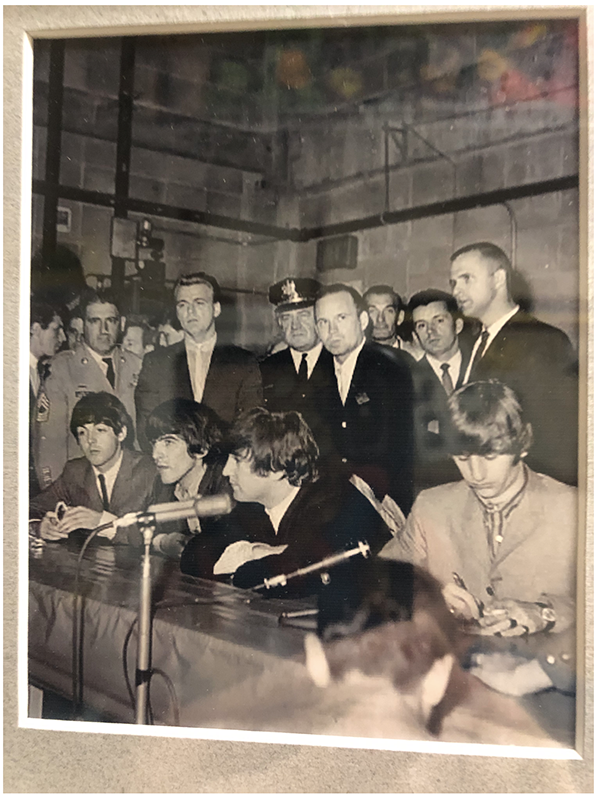
September, 1964: The Beatles and Baltimore media. “Kerby Scott” Confer is at the far right, directly behind Ringo (Photo courtesy Kerby Confer)
As it turned out, Kerby Scott soon became the host of WCAO’s “Liverpool Hour,” an evening program in conjunction with his regular on-air work at the station. The program featured the music of the Beatles and the many other artists who came out of the UK at that time.
Kerby usually wore his hair short in a buzz cut, but Paul Rodgers – his lifelong friend, WCAO colleague, and business partner later – convinced him to grow his hair out enough to solidify the “Fifth Beatle” persona. Kerby eventually sported a very restrained Beatles-style haircut to complete the image (I don’t think he kept the haircut for very long). He was an obvious choice to emcee one of the Beatles’ shows when they performed at the Baltimore Civic Center in September of 1964, and he later hosted “The Kerby Scott Show” on WBAL-TV; it was a dance party program, Baltimore’s version of Dick Clark’s show “American Bandstand,” and I believe it was eventually syndicated elsewhere. Before long, Kerby Confer moved over to the business side of radio in management and ownership. He was very successful in that endeavor, and still owns and operates many radio stations today.
So, Kerby Scott Confer and Mark Wainwright were just two more young radio guys whose lives and careers were influenced by that first Beatles weekend in the United States. It bears repeating: a veteran television host and four young musicians from England changed everything on the night of February 9,1964.
Mark Wainwright is a long-time radio personality, talk show host, and voiceover performer who has worked on the air at numerous respected radio stations around the United States. He was most recentlythe morning host at WSYR in Syracuse, New York. A Baltimore native, Mark currently resides inSaratoga County, New York. He can be reached at: markwainwright@earthlink.net
 largest share of listening, accounting for more than one-third of daily time with audio among those age 13+. The vast majority of that listening (31%) is to AM/FM over-the-air signals.” (The other 5% comes from radio streams.) Behind AM/FM in listening is streaming music (20%), YouTube (14%), podcasts (11%), SiriusXM (8%), owned music (4%), TV music channels (3%), audiobooks (3%) and other (1%).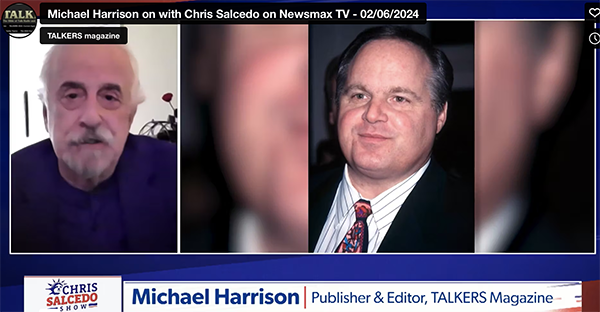
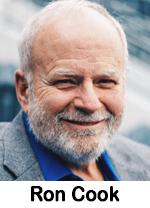 its inception in 2010. Cook told his listeners, “It’s been a blast with you guys.” Cook is also a sportswriter for the Pittsburgh Post-Gazette. He’ll leave that position after his last column appears on Sunday. Audacy Pittsburgh SVP and market manager Michael Spacciapolli comments, “From the first day ‘93.7 The Fan’ signed on the air, Ron brought instant credibility to the station with, not only with reputation as one of the top columnists in the market, but also a trusted voice that sports fans wanted to hear from. That is a rare combination, and to this day we are fortunate that Ron was here with us from the beginning.”
  RAB in 2000 to help create databases and programming as RAB.com was emerging on the internet. Since then, she has designed RAB’s proprietary systems touching nearly every aspect of RAB services and operations including, RAB’s CRM product Account Manager, GoCart (RAB’s e-commerce platform), training and education management platform and Radio Mercury Awards’ database and entry platform. Promoted in July 2023, Madison Wright is the director of events and communications for RAB, intertwining her passions for public relations, social media and creating “memory-making moments” with her love for radio. RAB president and CEO Erica Farber states, “RAB is proud and delighted to promote all three dedicated and accomplished team members. I am truly excited to see how they will continue to grow professionally and super serve RAB’s membership.”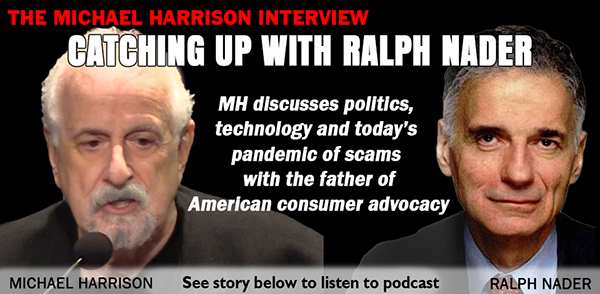
 Other notable findings: 1) Older Americans and women are listening to podcasts at a faster rate, with a 22% increase in listeners over the age of 55 and a 19% increase in female listeners 18+ over the past two years; 2) Top podcast genres of 2023 were News (22% of downloads), True Crime (18%), and Comedy (15%). Of True Crime podcast listeners, 67% were female, of Comedy podcast listeners 62% were male, and of News podcast listeners 58% were male; 3) The top sales networks of 2023 in the Triton U.S. Podcast Ranker were SiriusXM Podcast Network at #1, NPR at #2, and Wondery at #3. The top podcast of the year was “NPR News Now.” Triton Digital SVP measurement products & strategy Daryl Battaglia says, “2023 was another year of significant growth for the podcast industry, and with increasing female and over 55+ audiences, we can expect more content production to serve those groups in the coming year. As podcast listenership continues to rise and reach new audiences, we’ll continue to provide our customers with in-depth insights around podcast consumption and listener habits in the coming year.”
  back episodes published before they subscribed. Since many if not most of those were never listened to, the data about listening habits was inaccurate. As the blog notes, podcasts that publish frequently will be most affected. “This is a crucial reset for the podcast industry, a much-needed rightsizing of audience data. This is a defining moment advertisers and podcast creators should both welcome. As hosts look at their downloads and reach for the Advil, they should know Apple is putting the podcast industry on the road to more accurate data. Better audience data inspires more confidence among advertisers and agencies.” Another new feature in iOS 17 is that users who haven’t listened to five downloaded episodes over the past two weeks will stop getting automatically downloaded podcasts.
  During his CBS career, he appeared on every CBS News program including “CBS Morning News,” the “CBS Evening News with Dan Rather” and the “CBS Sunday Night News.” For almost 46 years he produced his nationally syndicated radio feature, “The Osgood File,” from which he signed off with his signature phrase, “I’ll see you on the radio.” As Osgood was preparing to retire from “CBS Morning News” in 2016, he was a guest on TALKERS magazine founder Michael Harrison’s podcast.
 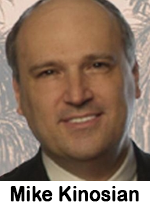 Holiday 2023 PPM Data – Information for the Holiday 2023 ratings period (December 7, 2023 – January 3, 2024) has been released for New York, Los Angeles, Chicago, San Francisco, Dallas, Houston, Atlanta, Philadelphia, Nassau-Suffolk (Long Island), Riverside-San Bernardino-Ontario, San Jose, and Middlesex-Somerset-Union (New Jersey).
 audio service provides radio stations access to NewsNation content. The NewsNation Audio Network will offer an ongoing, daily service of audio clips featuring coverage from its reporters and breaking news stories from across the nation and around the globe. Radio newsrooms can sign up for access at NewsNationAudio.com. Audio can be downloaded at NewsNationAudio.com or can be delivered directly to newsroom systems including NewsBoss.”
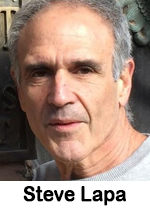 Let’s talk streaming because I don’t get what is happening. Maybe you do.
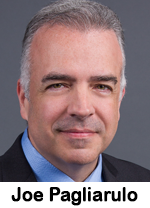 Multimedia’s KNDK- AM/FM, Langdon and KXPO-AM/FM, Grafton, North Dakota add the program to their lineups. “The Joe Pags Show,” hosted by Joe Pagliarulo, is based at flagship WOAI, San Antonio where Pagliarulo and iHeartMedia recently signed an extension through 2026. The program is now heard on more than 170 markets across the country. Joe Pags comments, “I’m incredibly excited to welcome Tampa, Tucson and North Dakota listeners to the show to start off the 2024 presidential election year.”
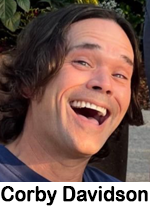 Ticket radio station as a kid, and I knew within about 5 seconds it’s where I wanted to be. It was a magical place. The energy was off the charts. I was hooked. From intern, to overnight board op, to fill in producer to full time producer, to host… it didn’t matter what I did there, it just mattered that I WAS THERE. Well here we are, 30 years down the road, and I’m still here. And I still have a blast every single day, and it’s still such a magical place. I know I’m lucky. So I just signed a 5 year deal, ensuring I will begin and end my work life there. Love my team, love our show, and love that place. Cheers to you, good P1s, Let’s go.”
 ticker symbol SALM. Salem Media Group previously traded on NASDAQ. Yahoo!Finance writes, “Trading on the OTCQX Market offers companies efficient, cost-effective access to the U.S. capital markets. Streamlined market requirements for OTCQX are designed to help companies lower the cost and complexity of being publicly traded, while providing transparent trading for their investors. To qualify for OTCQX, companies must meet high financial standards, follow best practice corporate governance, and demonstrate compliance with applicable securities laws.”
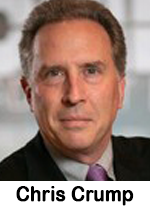 Yellowtec, will be discussing new developments and TALKERS founder Michael Harrison will be chatting about the forthcoming United Nations’
 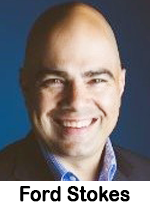 Radio Network. This is a significant step up for us, and we are ready to help more people! By airing our radio show weekly on JFRN, we will be able to help more great Americans and their loved ones.” John Fredericks comments, “Adding an informative investing and retirement planning show to our growing radio network was important to us. We want to provide important information to help people better protect and grow their hard-earned money during this difficult time in our country, politically and economically. Ford’s show is at the next level. He shares important information as a licensed financial advisor that Americans can apply to their retirement plans every week.”
 here to stay.” In order to get compensation from these multichannel video programming distributors, Newsmax shuttered its free steaming channel on November 1. Interestingly, Ruddy tells Cablefax that contrary to what people might assume, the arrival of Donald Trump on the political scene didn’t help Newsmax’s efforts. “I think President Trump has added great difficulty to Newsmax because there’s so much hostility in the industry and world against him. The media establishment, but also in the cable industry, he’s not a really liked figure. We were having more success I felt before he was elected in 2016. I think we probably would have gotten more carriage earlier had he not been elected… We try to reach out to both sides. While we have a lot of pro-Trump stuff, we also have people like Rick Santorum. He has been you know very critical of him through the years and he’s now our leading political adviser… Our night leads with Greta Van Susteren, and she’s not a polarizing figure.”
  more ads that communicate dry features/benefits. Additionally, research indicates that converting existing demand and creating future demand require different creative/copy approaches and different media strategies. Converting existing demand is most efficiently achieved by tightly targeting those “in the market” with rational messaging of product and price information that persuades them to choose the advertiser’s product over others. Creating future demand is most efficiently achieved by targeting very broad audiences of “all category buyers” with emotional messaging that is designed to stand out and be enjoyed by consumers, creating positive memories of the brand that will influence future purchase decisions. Finally, podcast consumers are invested in the success of their favorite shows. Half of weekly podcasts consumers said they wouldn’t mind a couple of extra ads per show so their favorite podcasts could continue.
  The company says that the initiative will achieve these objectives with a robust schedule of climate-themed broadcasts and special programming during the next 12 months, four free community events (one per quarter), two town halls broadcast nationally from Los Angeles, and a savvy social media and marketing campaign. KBLA says its public and private partners in this initiative include: LADWP, Metro, the Port of Los Angeles, CalEndow, California Community Foundation, the Sierra Club, the South Coast Air Quality Management District and others who will join the campaign in Q2, Q3 and Q4. Chief visionary officer and nationally
 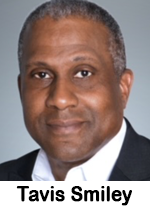 syndicated talk host Tavis Smiley says, “The harsher impacts of climate change weigh heavily on communities of color. In these underserved communities, families are less likely to have air conditioning, shade trees, bus shelters, water and energy effective appliances and other infrastructure that’s critical to mitigate a changing climate. As the most ‘trusted, credible and reliable’ media source in Southern California for African Americans and beyond, our talk station is committed to do more than just talk in these troubled times. There is a clear connection between Dr. King’s moral consistence on the notion of reverence for human life or the interconnected nature of life and the future of our world house. On this MLK holiday weekend, KBLA assigns itself the task of elevating the climate conversation by amplifying the voices of those who are most impacted by the climate catastrophes we are all witnessing in real time. In a real sense, climate is king.”
 Sears used to sell everything. Tractors, tires, insurance, investments, chickens. In 2004, Sears was the dominant retailer in America. By the end of the decade, it was feverishly closing stores and dying.
 had begun switching off automatic downloads for users who haven’t listened to five episodes of a show in the last two weeks. But while few users noticed the shift, some of the biggest podcasts in the world saw their official listener numbers drop dramatically. Long-running shows that publish frequently were hit particularly hard. A user who listened to a show like The New York Times’ ‘The Daily’ a few times, subscribed, but stopped listening would continue to count as a download indefinitely. Even better under the old rules: For people who listened to a show, dropped off for a while, but started listening again later, Apple would automatically download every show in between. The arrangement drove big download numbers, a crucial metric for ad sales and a sign of the vast reach of podcasts as a medium.”