


Neutraliars: The Platforms That Edit Like Publishers but Hide Behind Neutrality
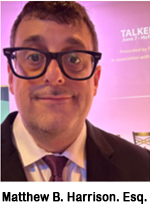
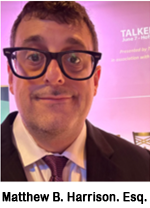
By Matthew B. Harrison
TALKERS, VP/Associate Publisher
Harrison Legal Group, Senior Partner
Goodphone Communications, Executive Producer
 In the golden age of broadcasting, the rules were clear. If you edited the message, you owned the consequences. That was the tradeoff for editorial control. But today’s digital platforms – YouTube, X, TikTok, Instagram – have rewritten that deal. Broadcasters and those who operate within the FCC regulatory framework are paying the price.
These companies claim to be neutral conduits for our content. But behind the curtain, they make choices that mirror the editorial judgment of any news director: flagging clips, muting interviews, throttling reach, and shadow banning accounts. All while insisting they bear no responsibility for the content they carry.
They want the control of publishers without the accountability. I call them neutraliars.
A “neutraliar” is a platform that claims neutrality while quietly shaping public discourse. It edits without transparency, enforces vague rules inconsistently, and hides bias behind shifting community standards.
Broadcasters understand the weight of editorial power. Reputation, liability, and trust come with every decision. But platforms operate under a different set of rules. They remove content for “context violations,” downgrade interviews for being “borderline,” and rarely offer explanations. No appeals. No accountability.
This isn’t just technical policy – it’s a legal strategy. Under Section 230 of the Communications Decency Act, platforms enjoy broad immunity from liability related to user content. What was originally intended to allow moderation of obscene or unlawful material has become a catch-all defense for everything short of outright defamation or criminal conduct.
These companies act like editors when it suits them, curating and prioritizing content. But when challenged, they retreat behind the label of “neutral platform.” Courts, regulators, and lawmakers have mostly let it slide.
But broadcasters shouldn’t.
Neutraliars are distorting the public square. Not through overt censorship, but through asymmetry. Traditional broadcasters play by clear rules – standards of fairness, disclosure, and attribution. Meanwhile, tech platforms make unseen decisions that influence whether a segment is heard, seen, or quietly buried.
So, what’s the practical takeaway?
Don’t confuse distribution with trust.
Just because a platform carries your content doesn’t mean it supports your voice. Every upload is subject to algorithms, undisclosed enforcement criteria, and decisions made by people you’ll never meet. The clip you expected to go viral. Silenced. The balanced debate you aired. Removed for tone. The satire? Flagged for potential harm.
The smarter approach is to diversify your presence. Own your archive. Use direct communication tools – e-mail lists, podcast feeds, and websites you control. Syndicate broadly but never rely solely on one platform. Monitor takedowns and unexplained drops in engagement. These signals matter.
Platforms will continue to call themselves neutral as long as it protects their business model. But we know better. If a company edits content like a publisher and silences creators like a censor, it should be treated like both.
And when you get the inevitable takedown notice wrapped in vague policy language and polished PR spin, keep one word in mind.
Neutraliars.
Matthew B. Harrison is a media and intellectual property attorney who advises radio hosts, content creators, and creative entrepreneurs. He has written extensively on fair use, AI law, and the future of digital rights. Reach him at HarrisonMediaLaw.com or read more at TALKERS.com.
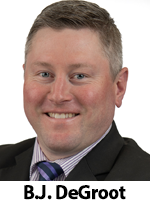 diverse group of stations. DeGroot comments, “Leading the entire portfolio of Woodward Community Media stations in Northeast Wisconsin is a significant honor. I’m committed to working with our talented local teams to continue delivering relevant content and strengthening our connection with the community.” The company also announces that Kelly Radandt, who was named director of broadcast in November 2024, will oversee broadcast brands across both Northeast Wisconsin and the company’s Springfield, Illinois stations. DeGroot and Kevin O’Dea, market manager of Springfield, will both report to Radandt. Radandt comments, “This expanded role presents a unique opportunity to unify our broadcast efforts and innovate across markets. I am eager to contribute to Woodward Community Media’s continued success and evolution. Onward!”
 When Georgia-based nationally syndicated radio personality, and Second Amendment advocate Mark Walters (longtime host of “Armed American Radio”) learned that ChatGPT had falsely claimed he was involved in a criminal embezzlement scheme, he did what few in the media world have dared to do. Walters stood up when others were silent, and took on an incredibly powerful tech company, one of the biggest in the world, in a court of law.
 that the KNBR “‘Papa and Silver’ midday show signed off from the 750 Battery St. studios just before 2:00 pm. After a break, the ‘Dirty Work’ afternoon show went live from Daly City.” The story notes that sports talk KNBR was originally KPO-AM when it launched on April 17, 1922 with its tower on top of the Hale Brothers department store at 901 Market Street.
  Dozens of brand-new audio hardware and software companies have been launched during the past 20 years. These start-ups are usually funded by venture capital money. VC money is not invested to return a profit, it’s poured in to – pour it in. Their money is “different” than the cashflow that fuels your business. Start-up money buys time to profit.
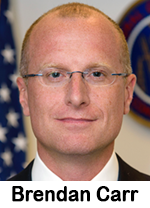 regulatory burdens. We received great feedback from a range of stakeholders already and plan on eliminating onerous, antiquated, and unlawful requirements across the board.” Carr added, “And we have been delivering these results with a focus on efficiency. At the beginning of Fiscal Year 2025, the FCC employed 1,461 full-time employees. As of April 28, 2025, the FCC employed 1,383 full-time employees. The difference over the last six months can be attributed to many factors, including FCC employees who took advantage of the early retirement window opened by my predecessor, the deferred resignation program offered by President Trump, and natural turnover. The agency is well positioned to continue carrying out its statutory mission for the remainder of Fiscal Year 2025 and beyond.”
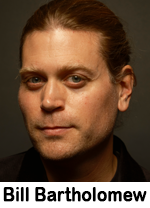 hasn’t committed to the run by opening a campaign account but confirms to the paper he’s seriously considering challenging incumbent Sabina Matos. The story notes that Matos’ 2023 run for congress was marred by a “signature-collecting scandal that led to a campaign worker being charged with a felony.” Bartholomew is the producer and sometimes fill-in host for WPRO’s “Dan Yorke Show.”
  Lou Information Station.” The station’s new lineup includes: “IN YOUR CITY Show” with Kelley Lamm and Gordon Montgomery; “Hot Take Central” with Jim Hayes& Cam Janssen; “Sounds of STL” with Tony Patrico; the nationally syndicated program “The Ramsey Show” and more. Big Toe Media says the station will be “a dynamic new content platform designed to deliver fresh, relevant, and engaging daily programming focused on the news, sports, culture, and conversations that matter to most of the St. Louis community. The press release adds that “The Lou Information Station” is a “modern media platform built for how St. Louis consumes content in 2025 with live and on-demand shows via YouTube, Apple Podcasts, Spotify, and all major podcast platforms.”
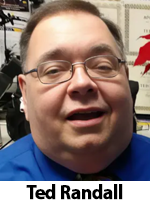 signals including WQKR, WAMG, WCOR, WRMX, WSM-AM, WSM-FM, WZPC – Power Country 102.9, WFCM / Moody Radio, WJKM, and more. He also served with Cumulus and as chief engineer for 5 Star Radio in Clarksville. During his time with WSM-AM, he also served as an announcer for the Grand Ole Opry. Randall managed and operated WJKM for five years and served as chief engineer for Cromwell Radio (now Cromwell Media) for over 20 years, overseeing engineering for ten stations in the greater Nashville area. Randall’s son, Matt Aaron, serves as a broadcast engineer for Ramsey Solutions.
  expectations: core radio advertising finished at -12.4% excluding digital, and Cable TV advertising was -6.3%. Our cable TV ratings stabilized significantly in the first quarter of 2025 and are performing in line with our 2025 budget. Second quarter core radio advertising pacings have weakened over the past several weeks and are now -8.7%. Our first quarter 2025 digital revenues were down 16.1% driven by expected weakness in streaming and podcasting revenues. Based on our year-to-date performance, we reaffirm our full year guidance of $75 million in Adjusted EBITDA. Our cumulative debt repurchases so far in 2025 are $88.6 million at an average price of 53.9%, resulting in reduced gross debt of $495.9 million, and we currently have approximately $79.8 million of cash on hand. In a challenging marketplace, our focus remains on controlling costs, managing leverage and retaining a strong liquidity position.”
 “It won’t work on FM.” Country. Country was predicted to be a failing format for the FM band. At the dawn of FM proliferation in the 1970s, the future of the band was viewed with fear and skepticism. Why wouldn’t country music work on the FM band? The conventional chatter said that “country needs to be on AM because truckers drive long distances and AM signals cover long distances. FM does not.”
 When a blogger found “no biography, or further information about the woman who is supposedly presenting this show,” it forced Australian Radio Network to
 towns across the country, “bringing viewers unparalleled access and insight to the people, places and issues that make up America.” FOX News Media EVP of morning programming & program development Megan Albano says, “For nearly 30 years, Steve has been a force on the curvy couch with his signature smile and wit. His relationship with our audience is unmatched and we are looking forward to him taking his trademark style from the couch to cities across America’s heartland where he will co-host from diners to pickleball courts and more and finally not have to drive across the George Washington Bridge at 3:30 am every morning.”
  ransomware attack involved unauthorized access to its network resulting in the exposure employee data including names, Social Security numbers, direct deposit details, W-2 tax information, and home addresses. The attack is being attributed to Cactus, a known ransomware gang. The organization says it stole 2.5 terabytes of data and posted a sample of documents to back its claims. The report goes on to say that Urban One maintains no financial account information or electronic medical records were compromised.
  marketing efforts, including brand/design, research, B2B marketing/activation and corporate communications. The company says she will also continue to focus on sales enablement and supporting Audacy’s local and national sales. Most recently, she served as EVP marketing solutions & strategy.
 freedoms enshrined in the First Amendment and fighting back against what she calls the Trump administration’s ongoing campaign of censorship and control. Gomez says, “Since the founding of our country, the First Amendment has protected our fundamental right to speak freely and hold power to account. Today, the greatest threat to that freedom is coming from our own government. Silencing dissenting voices is not a show of strength – it’s a sign of fear. We must continue to speak out against this growing campaign of censorship and control before this dangerous new normal becomes the status quo.”
 increasing 19.2% YoY to $62.1 billion, now accounting for 24% of total ad revenue, and that Podcast advertising revenues show a strong YoY growth of 26.4%, a significant acceleration from 5.5% last year. IAB adds, “This growth was fueled by shifting consumer media habits, with cord-cutting driving greater engagement with on-demand audio, and podcasts emerging as a key platform for political advertisers seeking to connect with voters ahead of the election.” Overall, digital audio – including podcasting – has continued to grow, earning $7.6 billion in revenue with an 8.5% YoY growth from FY23 which is a slowdown in growth compared to last year’s 18.9% rate. Podcasting however saw
  state and local information. Earl Ingram, host of “The Earl Ingram Show,” will join “Mornings with Pat Kreitlow” on 540AM WAUK in Milwaukee and appear as a regular guest on other network shows. In other moves, “Matenaer On Air” with Jane Matenaer and Greg Bach shifts one hour earlier, airing from 9:00 am to 11:00 am. “The Thom Hartmann Program” returns to its live air time (11:00 am to 2:00 pm). “The Todd Allbaugh Show” moves to 2:00 pm to 4:00 pm and “The Maggie Daun Show” now airs from 4:00 pm to 6:00 pm. Civic Media CEO Sage Weil says, “We are excited to bring a more robust and flexible morning show to the state, and to reposition our best shows to serve our uniquely Wisconsin audience. This new approach will provide the flexibility to spotlight our local voices that focus on what is happening in our local communities, from Earl Ingram in Milwaukee to Chad Holmes in Wausau, and to share that content both on and off the air.”
 agreement under which Trump Jr. and Salem will work together to develop a series of high-impact promotional and growth initiatives. At the same time, Salem enters into a strategic agreement with Lara Trump to collaborate on business growth in the digital podcast space, advertiser partnerships, and content innovation. Both Trumps become significant stakeholders in Salem Media. Salem CEO David Santrella states, “These aren’t just partnerships, they’re power moves. Donald Trump Jr. and Lara Trump bring credibility, energy, and the kind of megaphone that moves markets and shapes public opinion. Their alignment with Salem signals a massive leap forward in our ability to lead the next era of conservative media. Donald Trump Jr. and Lara Trump aren’t just becoming business partners with Salem, they now also have significant ownership stakes in the company with a major incentive to grow shareholder value which in turn will drive the stock price. It’s definitely an exciting time to be a Salem shareholder.”
 Advertiser Perceptions surveyed 301 marketers and media agencies on the sales generated by each of the five sales drivers and as they have for the past six surveys, those surveyed had an average % of perception of creative’s contribution toward driving sales around 20%. But the reality according to one study is that creative’s contribution toward driving sales is actually about 49%. Quatical principle Marc Binkley says, “Creative is the closest thing we have to a silver bullet… it’s a way to supercharge budgets. Emotional, well-branded creative is a way to be more memorable. The goal isn’t just awareness, it’s being memorable in as many buying situations as possible.”