By Matthew B. Harrison
TALKERS, VP/Associate Publisher
Harrison Legal Group, Senior Partner
Goodphone Communications, Executive Producer
 AI is now embedded in the modern newsroom. Not as a headline, not as a novelty, but as infrastructure. It drafts outlines, summarizes complex reporting, surfaces background details, and accelerates prep for live conversations. For media creators operating under relentless deadlines, that efficiency is not theoretical. It is practical and daily.
That reality raises a quiet but consequential legal question. When AI contributes to your research, what does verification now require?
Professional hosts are not reading raw chatbot answers on air and calling it journalism. That caricature misses the real issue. What is actually happening is subtler and far more common.
AI now sits inside research workflows. Producers use it for background. Hosts use it to summarize reporting. Teams use it to outline controversies or draft rundowns. Most of the time, it works. Sometimes, however, it invents.
When that invention involves a real person and a serious allegation, the legal analysis looks familiar.
For public figures, defamation requires proof of actual malice – knowledge of falsity or reckless disregard for truth. For private figures, negligence is usually enough. In both cases, the focus is not on the tool. It is on the content creator’s conduct.
AI does not change the elements. It changes the context in which reasonableness is judged.
Courts have long held that repeating a defamatory statement can create liability, even if someone else said it first. If you rely on a blog, and that blog relied on AI, and the allegation is false, the question becomes whether your reliance was reasonable.
Was the source reputable? Was the claim inherently improbable? Were there obvious red flags? Was contradictory information readily available?
AI’s reputation for “hallucinating” facts now forms part of that backdrop. Widespread awareness that these systems can fabricate citations, merge identities, or invent accusations becomes relevant when a court evaluates your verification choices.
This does not mean using AI indicates reckless disregard. It means using AI does not excuse skipping verification when the stakes are high.
The more specific and damaging the claim, the greater the duty to confirm it through independent, reliable sources. Not another prompt. Not a circular reference to the same unverified blog. Rather, a primary record, official statement, or established reporting.
Documentation matters. If challenged, being able to show that you checked multiple sources before broadcast can be decisive.
None of this is new doctrine. What is new is how seamlessly AI blends into ordinary research habits. That integration makes it easier to forget that the legal question is still about human judgment.
The law will not ask whether your workflow was efficient. It will ask whether your conduct was reasonable under the circumstances.
In the age of AI, verification is not a courtesy. It is risk management.
Matthew B. Harrison is a media and intellectual property attorney who advises radio hosts, content creators, and creative entrepreneurs. He has written extensively on fair use, AI law, and the future of digital rights. Reach him at Matthew@HarrisonLegalGroup.com or read more at TALKERS.com.


 field with global technology platforms.” He underscored broadcasters’ unique and essential role in public safety, civic engagement and strengthening local democracy. Additionally, broadcasters heard from key policymakers shaping broadcast policy, including Sen. Ed Markey (D-MA), who spoke about the enduring value of broadcast radio and his leadership on the bipartisan effort to pass the AM Radio for Every Vehicle Act… and U.S. Rep. Richard Hudson (R-NC), chairman of the House Energy and Commerce Subcommittee on Communications and Technology, who spoke about the need for broadcast ownership rules to reflect today’s landscape and the importance of keeping AM radio in cars.

 patriotic, pro-America content that celebrates the American journey and inspires its citizens by highlighting the historic accomplishments of this great nation from our founding through the Trump Administration today.” Carr adds, “On July 4, 2026, America will celebrate the 250th Anniversary of the signing of the Declaration of Independence. That revolutionary document set forth our founding principles – including Life, Liberty, and the pursuit of Happiness – and put America on a collision course with destiny. Over the following centuries, the American story has defined modern history and spread freedom, opportunity, and prosperity across the globe. As America’s 250th anniversary approaches, it is important to reflect on the ideals and events that have defined our past while keeping an eye towards our country’s bright future. The White House is leading our national celebration of this historic event with the Salute to America 250 Task Force, which calls on the federal government, among others, to mark this momentous occasion. As part of this effort, I am calling on broadcasters to pledge to provide programming that promotes civic education, national pride, and our shared history.” Carr shares some examples stations could use, including:
 radio industry (and its related fields) seeks to connect with and develop a next generation of professional practitioners as well as engaged audiences. TALKERS is honored to again provide financial support, encouragement, experience, and advice to the dedicated organizers of this very special event.
 to television and radio programming. After the back-and-forth between The Late Show’s Stephen Colbert and CBS attorneys over the interview with U.S. Senate candidate U.S. Rep. James Talarico that did not air on CBS television but was pushed out on the show’s social media accounts instead, broadcasters – including news/talk radio programmers and hosts – may be confused about how the equal time rule is being applied.
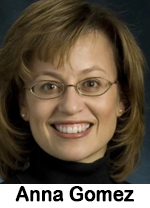 FCC has no lawful authority to pressure broadcasters for political purposes or to create a climate that chills free expression. CBS is fully protected under the First Amendment to determine what interviews it airs, which makes its decision to yield to political pressure all the more disappointing. It is no secret that Paramount, CBS’s parent company, has regulatory matters before the government, but corporate interests cannot justify retreating from airing newsworthy content. The FCC is powerless to impose restrictions on protected speech, and any attempt to intimidate broadcasters into self-censorship undermines both press freedom and public trust. I once again urge broadcasters and their parent companies to stand firm against these unlawful pressures and continue exercising their constitutional right to speak freely and without government interference.”
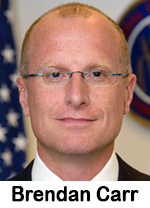 Republican or Democrat. Often, Democratic candidates balk at being interviewed by conservative hosts for fear they will not get a “friendly” interview as their Republican opponent might have. Regardless, the law is about equal time, and the matter late night shows are dealing with is assuming they qualify for the “bona fide news” exemption that excuses them from the equal time rule. Chairman Carr’s position is there is no blanket exemption; it is taken on a case-by-case basis.
 interview due to potential implications under the Federal Communications Commission’s “equal time” rule. The rule requires broadcast licensees to provide equal opportunities to legally qualified candidates for public office if one candidate is given airtime.
 be celebrated on-air and transform their classrooms with a $5,000 DonorsChoose gift card. iHeartMedia president of programming operations and digital music says, “iHeartRadio’s ‘Thank a Teacher’ aims to shine a light on the quiet and positive work happening in classrooms across the country and to offer a very public thank you to the teachers who are doing so much.” Over the course of the contest 60,000 teachers were nominated for $50,000 in gift cards shared by the 10 final winners.
  TALKERS magazine, the leading trade publication serving America’s professional broadcast talk radio and associated digital communities since 1990, is pleased to participate as the presenting sponsor of the forthcoming Intercollegiate Broadcasting System (IBS) conference for the second consecutive year.
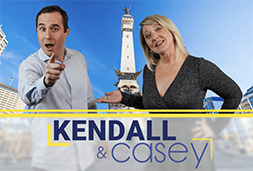 last 9 years. Being your voice, using my platform to speak up for you, to take on the powerful, the connected, the politicians, has been the greatest honor of my professional life. You have responded with incredible ratings and support of our advertisers that stood behind me. In the process we have formed an unbreakable bond. In the end, the show was always about us. In a battle together. I also want to thank those of you who have written letters in support of me the last 3 weeks. I was so moved by the outcry demanding this beautiful thing we’ve forged together keep going at the place we made it happen. If you want the answers why it will not occur, that’s a question for Urban One. We have some amazing things coming soon! Our bond is so much bigger than any singular platform or frequency. You have proven that in recent weeks. I can’t wait to tell you all about our new opportunities together in the near future. In the meantime, thank you for all YOU have given to me the last 9 years. Your loyalty and dedication allowed me to live out my boyhood dream. I will never be able to thank you enough.” Kendall hasn’t publicized his plans for the future but appears to be leaning toward a digital platform as he’s continuing to post Indiana and Indianapolis news via social media.
 LLC. Separately it is filing to sell KOOO-FM to Nebraska Public Media. This is NRG Media’s second deal with Usher Media. In November of last year, it agreed to sell its Tri-Cities, Nebraska station group to Usher for $3.75 million. Company officer Alan Usher comments, “This acquisition is a statement of belief in Omaha and in Nebraska. Local radio matters. Local leadership matters. We are committed to building a broadcast presence that reflects the strength of this community and delivers real value to the businesses and people who call it home.” Kalil & Co. was the exclusive broker for this deal.
 talking a little bit more on WABC radio in the near future.” That has become reality as Red Apple Media announces the launch of “The Pulse of the People,” starring Cuomo. The one-hour show premiered yesterday (2/1) at 5:00 pm. Catsimatidis states, “Today on WABC Radio we are introducing a new program, ‘The Pulse of the People,’ hosted by former Governor Andrew Cuomo. The show will focus on listener calls and open discussion about the issues, concerns, and views of New Yorkers. WABC Radio believes in bipartisan conversation and thoughtful discussion of solutions, and we invite listeners to tune in and be part of the discussion.” Cuomo comments, “This is a moment when our country has rarely felt more divided, politics more polarizing, and public discourse more toxic. ‘The Pulse of the People’ is about cutting through the noise and the rancor to have real, substantive, fact-based conversations about the issues that actually affect people’s lives. I’ve spent my career focused on making government work and getting results, and that’s the same straightforward, problem-solving approach I’ll bring to this program.”
 required that construction was to have begun in 2025, but village officials agreed to push the deadline back to September of 2017. The Daily Herald story reports, “Nexstar Media Group’s original plans called for selling off the southern 35 acres of the 102-acre property for a three-building data center campus, ancillary electrical substation, and six public pickleball courts to be leased to the Elk Grove Park District. The primary 750-foot radio tower and its 250-foot backup were to be demolished, replaced and relocated slightly to the north, while the small building that houses the station’s transmitters and backup studio would have remained intact.” Nexstar says the transmitter move would not affect listeners’ ability to hear the station.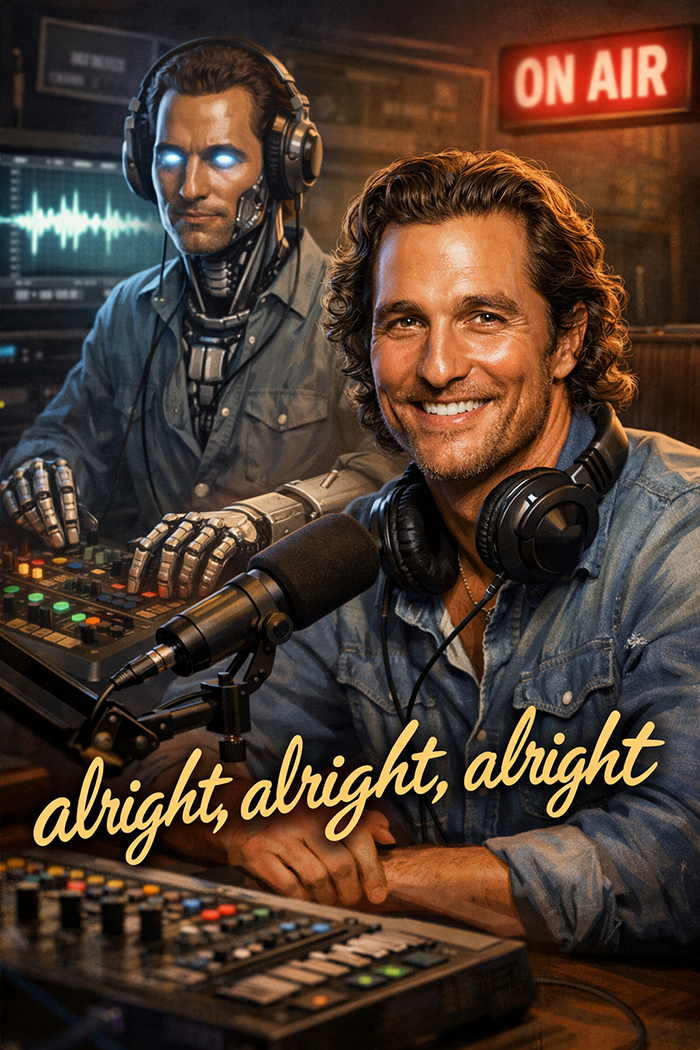
 For years, “protect your name and likeness” sounded like lawyer advice in search of a problem. Abstract. Defensive. Easy to ignore. That worked when misuse required effort, intent, and a human decision-maker willing to cross a line.
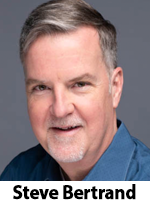 with the Lifetime Achievement Award, an honor designated contributions to local news. Bertrand has been a trusted voice on WGN Radio for four decades, anchoring news since 1992 and earning the confidence of generations of Chicago listeners. Over his career, he covered many of the most significant local and national events of the past 40 years while mentoring colleagues and helping define the standard for excellence in local radio journalism. His retirement in 2025 marks the culmination of a lifetime dedicated to informing the public and strengthening the role of local news.”
  Providence market outlet for Audacy’s sports talk WEEI-FM, Boston for more than two decades. Audacy closed the WVEI offices in 2023. Ocean State Media president and CEO Pam Johnston says they are spending $4.9 million on the new FM. “From an operational and financial standpoint, we are going to be financing the cost of this frequency, which will allow us to eventually sell all the frequencies that we currently have. And so over time we believe that this transaction actually is going to pay for itself.” She says making it easier for listeners is important, “One signal reaching much farther than our current series of five different signals, a greater experience where you don’t have to change the channel as you move your way through Rhode Island and southeastern Massachusetts.”
 serve in the public interest, the FCC yesterday issued a Guidance on Political Equal Opportunities Requirement for Broadcast Television Stations. While the memorandum is written to television stations, it obvious applies to radio stations as well. The memo ultimately addresses the 1959 order that exempts broadcasters from providing equal time to qualified candidates on any: (1) bona fide newscast; (2) bona fide news interview; (3) bona fidenews documentary (if the appearance of the candidate is incidental to the presentation of the subject or subjects covered by the news documentary); or (4) on-the-spot coverage of bona fide news events (including but not limited to political conventions and activities incidental thereto). Programs such as “The Tonight Show” and “The View” are cited as entertainment shows in which an interview segment can qualify as a bona fide news interview. Regarding this, the memo concludes with two important paragraphs:
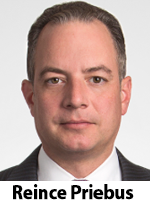 (1/20) on make his debut on FOX News Channel’s “Hannity.” Priebus is a former Republican National Committee chairman and served as White House chief of staff to Donald Trump in 2017. He currently is president of Michael Best & Friedrich LLP, chairman of Michael Best Strategies and is a senior adviser to Centerview Partners. He also holds roles on President Trump’s Intelligence Advisory and Oversight boards.
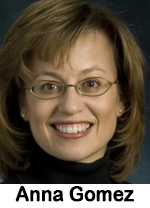 the way the commission is operating. She took issue with FCC Chair Brendan Carr’s interpretation of how the Commission should ensure that licensees operate in the public interest. She stated, “For months, this FCC has asserted an apparent roving mandate to police speech that this Administration does not like, invoking an undefined and unchecked concept known as the ‘public interest’ standard.
 competition local radio stations today face for audiences and vital advertising revenues from online and satellite content providers and digital ad platforms not subject to any comparable restrictions on their scale and scope; the dire negative effects that consumer and advertiser substitution of competing digital audio content and advertising for traditional radio has had on the listenership and advertising revenues garnered by local radio stations, including in mid-sized and small markets; and how the retention of asymmetric ownership restrictions has prevented radio broadcasters from gaining local scale to take advantage of important economic efficiencies, obtain investment capital, and better compete for audiences and advertising revenues, and thus enhance – or even maintain – their provision of news, emergency information, and valued entertainment and sports programming in local communities across the country at no cost to the public.” Responding to testimony from musicFirst Coalition and the Future of Music Coalition – referred to as the Coalitions – NAB writes, “First, the fact that the Coalitions continue to hold themselves out as protectors of small, local independent broadcasters not just borders on the absurd but crosses over into full-blown absurdity. The Coalitions represent the interests of the music industry, which is dominated by three consolidated international record labels. Compared to even the largest radio station groups, the giant record labels are the 800-pound gorillas of the music world. Those three labels earn billions more in revenue than the approximately 11,000 full-power commercial AM/FM stations combined. As NAB earlier reported, the three major music companies jointly generated about $2.9 million per hour in 2023. In remarkable contrast, in 2023 and 2024 the vast majority of radio stations garnered less – and often much less – than $2.9 million per year in advertising revenues. Needless to say, the Coalitions have never explained how local radio stations earning such low levels of revenue (and even lower, if any, profits) are supposed to keep talented employees and provide high quality programming, including popular music, sports, and informational programming, such as weather updates and emergency information, OTA and free to the public without achieving increased local scale, greater economic efficiencies, and more robust ad revenues.