Executives from Triton Digital – a global technology and services leader to the digital audio, podcast, and broadcast radio industries – are providing TALKERS readers  with their insights into how audio marketing spending will evolve, how YouTube is impacting the podcasting industry, the growth of contextual targeting tools, and more for the coming year:
• Sharon Taylor, EVP podcast and content delivery: Brands and publishers will respond to a heightened focus on brand suitability by adopting tailored, podcast-specific solutions that integrate contextual curation tools.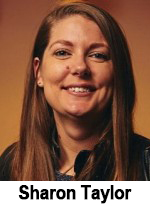 These tools will not only proactively guide brands on optimal content alignment but also streamline ad buying processes through automation and data-driven insights, reducing the need for extensive manual intervention. This approach will power precise content targeting and scale reach effectively, all while ensuring brand messages align seamlessly with the right contexts and audiences.
• Stephanie Donovan, chief revenue officer: The global advertising industry will exceed one trillion dollars by year’s end and is poised for continued growth in 2025, fueled by economic expansion across the United States, Australia and regions like Europe and Southeast Asia.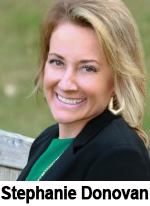 Digital audio marketing spend worldwide will increase 10% next year, in part due to key drivers including the rise of contextual targeting, allowing advertisers to immerse their message within relevant content, and utilizing the growing versatility of dynamic audio insertion to make scaling campaigns more efficient. Additionally, the rapid growth of influencer marketing on TikTok and X is cooling, with marketers increasing spend on podcasts where creators can cultivate more meaningful audience connections. This growth in audio spending will heighten the insistence for transparency as advertisers demand greater visibility into performance metrics and content alignment to ensure trust and accountability. This convergence will solidify audio’s position as a successful channel for integrated marketing strategies worldwide.
• Daryl Battaglia, SVP measurement: In 2025, the number of podcast listeners will grow at a faster rate than in previous years. 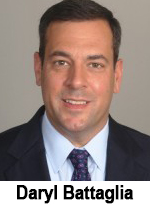 While podcasting will remain fundamentally audio-first, driven by convenience and flexibility, consumers now have more options for how they discover and consume content. YouTube is bringing in new, first-time podcast consumers with a different audience profile. In some cases, they are watching shorter length content or on additional devices other than mobile. Informed by insights about their audience, publishers and creators will be able to deliver an engaged experience across listening platforms and devices, and grow reach.
• Ben Masse, chief product officer: The audio advertising industry will integrate AI more into their tech stack to scale campaigns and audience targeting.  More specifically, the focus will be on enabling humans to automate tasks so they can focus on strategy. AI will be leveraged to drive more effective and efficient spending, including helping achieve yield for publishers and meaningful campaign outcomes for advertisers, as well as content analysis and audience insights. This tech shift will put a bigger emphasis on having robust data-backed insights on audiences, content, and campaign performance.
• Emanuele Rampichini, head of engineering: The podcasting industry will see publishers increasingly diversify into subscription-based revenues and build deeper relationships with dedicated audiences while reducing reliance on traditional ad models.  This approach will be particularly transformative for long-tail podcasters and creators with smaller followings, offering a sustainable revenue stream that can be both a growth and retention strategy. For creators with niche audiences, subscriptions provide a viable alternative to ads and ensure the lion’s share of the revenue goes directly to the creator. As platforms invest more in these tools, creators will be able to engage directly with their subscribers through integrated communication features and eliminate the need for third-party tools. This evolution promises to empower indie creators by streamlining their workflows and enhancing their ability to cultivate loyal audiences.
• Rebecca Dalby, vice president of demand: The demand for precision in audio advertising is growing, making nuanced and contextual targeting more essential than ever. As advertisers prioritize accurate audience engagement, the shift toward contextual targeting is gaining significant traction. This trend is expected to drive more ad dollars into solutions that deliver measurable results. Innovative technology that amplifies the ability to connect with highly specific audiences at scale and helps meet advertisers’ evolving expectations will win. For publishers, this surge in demand for targeted ad placements unlocks exciting opportunities to expand inventory and enhance reach through strategic partnerships within digital audio networks.
Triton Digital, LLC is a worldwide digital audio technology and advertising company. For more info visit TritonDigital.com.


 The “Inauguration: 2025” special is available to radio stations for download upon request. Stations may contact:
  The extended deadline is February 6, 2025, while the regular deadline, with no additional fee, is January 30, 2025. The Gracie Awards, presented by AWMF, has recognized programming and individual excellence by women across all media for five decades. A full list of the categories, including new categories for 2025 can be found HERE. The Gracie Awards Gala will be May 20 at the Four Seasons Beverly Wilshire hotel and the Gracie Awards Luncheon will be held on June 18 at Cipriani 42nd Street, New York. The 2025 Gracie Awards entry eligibility air dates are from January 1, 2024, through December 31, 2024. Entry details, including pricing and updated categories, can be viewed at
  Newsweek has added 660 AM The Answer (KSKY) in Dallas as an affiliate for its conservative syndicated program, “The Josh Hammer Show.” Hammer is Newsweek‘s senior editor-at-large. The one-hour weekly show, which began as a podcast, will air on the Salem station Saturdays at 7:00 pm.
 Brian Lawlor, president, Scripps Sports, has been named the recipient of the Broadcasters Foundation of America (BFOA) 2025 Golden Mic Award, to be presented at the annual black-tie fundraiser on Monday, March 10 at the Plaza Hotel in New York City.
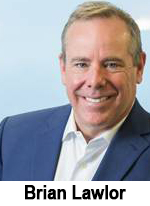 The BFOA is the only charity devoted exclusively to helping broadcasters in need from illness or tragedy…..
 Veteran broadcaster Michelle Jerson‘s weekly one-hour travel/parenting program “Passport Mommy” has been added to WPHT,Philadelphia on Saturdays at 12:00 noon. The informational and entertaining show is distributed by Radio America.Stations interested can contact Jennifer Dedes at Radio America: jdedes@radioameria.com…..iHeartMedia announced (1/13) the latest podcast programming for iHeart Women’s Sports. Eight new shows will launch on the network in early 2025 featuring renowned female athletes like Ashlyn Harris, Mel Reid, Lexie Brown and more. The new expanded lineup further emphasizes iHeartMedia’s stated commitment to bringing equitable media coverage to women’s sports…..TALKERS publisher Michael Harrison is available to do interviews on talk shows across the nation to discuss the latest music video release by Gunhill Road (the perennial pop music ensemble in which he is a member) – an anthemic tribute to talk radio – which has been gathering tens of thousands of views and downloads around the globe. Harrison talks about the state of talk radio in 2025 and its continuing importance as a vital communications/cultural venue. Harrison can be reached via email at info@talkers.com. To view the video, please click
  FOX News Media (FNM) will unveil a series of programming changes across FOX News Channel (FNC) and FOX Business Network (FBN), announced FNM CEO Suzanne Scott. Beginning on January 21, FOX & Friends Weekend co-host Will Cain will take over the 4 PM/ET weekday timeslot on FNC with “The Will Cain Show.” FOX News contributor Charlie Hurt will replace Cain as co-host of “FOX & Friends Weekend” beginning January 18. “The Fox Report” and “The Big Weekend Show” will both expand to two hours on Saturdays and Sundays also starting on January 18. Additionally, FBN’s Dagen McDowell will join “The Big Money Show” which will expand from 12:00 noon – 2:00 pm ET on weekdays beginning on January 27 while she also continues to co-host “The Bottom Line” (6:00 – 7:00 pm ET). In making the announcement, Scott said, “As the media landscape continues to evolve, we are always looking to innovate our programming lineup to meet the needs of our viewers, and we are confident the new lineup will best position FOX News Media for the future. Will Cain brings years of experience to the 4:00 pm hour as an accomplished broadcaster and a lawyer and we look forward to adding his insights to what will no doubt be another historic news cycle ahead this year.”
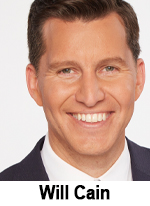 Cain added, “It has been an honor to wake up with America these past four years and I am thrilled to apply my background in news, law, entertainment and business to help our viewers better understand the headlines through thought-provoking content and analysis every weekday afternoon.”
 David Chadwick, senior pastor of Moments of Hope Church and host of “The David Chadwick Show,” one of WBT’s longest-running local programs, reflects, “In 2020, amidst the Covid crisis, Bo Thompson, Pat McCrory and I were talking in the studio at WBT and asking, ‘What can we do to help those in need?’ I knew that Moments of Hope Church had a generous congregation, and I recognized the incredible reach of WBT’s 50,000-watt mic. That conversation sparked the idea of a matching gift from MOHC and WBT to ask its listeners to match the gift during the Christmas season. Since then, the partnership between MOHC, WBT, and all the WBT personalities has raised over $1 million to help feed children in the Charlotte area and, this past year, to help rebuild the lives of victims of hurricane Helene in western North Carolina. It has been an honor to use the gifts that God has given both organizations to help and serve others in need. It truly is more blessed to give than to receive.”
  WBT program director, Mike Schaefer, adds: “WBT’s commitment to ‘Lead Local’ goes beyond delivering news and information. For nearly 103 years, this station has been woven into the fabric of Charlotte, and helping those in need is at the core of our mission. Partnering with David and his congregation to serve the most vulnerable among us aligns perfectly with our mission.” Radio One Charlotte and Richmond RVP/GM, Marsha Landess echoed these sentiments: “We are proud to use the WBT platform to support the incredible work that David and his congregation have done. Since 2020, this partnership has demonstrated the power of community, especially in a crisis like Hurricane Helene. Raising over $1M for those in need is a testament to what we can achieve together. We are grateful for the opportunity to give back to the community we are so proud to be a part of.” The David Chadwick Show airs Sundays from 8:00 am – 9:00 am on WBT, further underscoring the potential productivity of local weekend programming.
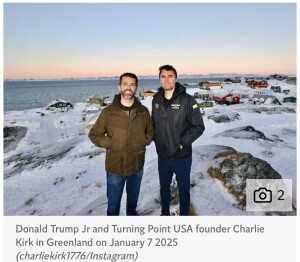 As President-elect Donald J. Trump continues to raise the possibility of annexing or buying Greenland for strategic military purposes (yesterday’s number one talk topic), Salem Radio Network host Charlie Kirk (above, right) is accompanying the President-elect’s son Donald Trump, Jr. (above, left) on a fact-finding trip to Nuuk, the capital of Greenland. Kirk – whose Turning Point action organization mobilized to turn out conservative voters last November – is credited within Trump circles with helping move the needle for GOP victory in key battleground states including Arizona and Wisconsin.
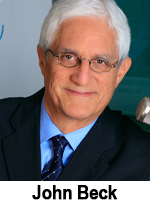 iHeartMedia St. Louis and Indianapolis announced (1/7) a leadership transition as seasoned media veteran, John Beck, serving as market and area president for nearly four years, embarks on the next chapter of his career. “I want to sincerely thank all of my colleagues, St. Louis and Indy leaders, and iHeart corporate leadership for giving me a chance to make a difference in St. Louis and Indianapolis,” Beck tells TALKERS. “It has been an amazing four years full of accomplishments. I will truly miss working with my iHeart family. I will now have more time to devote to my own family, consulting business, legislative advocacy and the various charities civic organizations that mean so much to me.” John Karpinski, division president, iHeartMedia adds, “We are deeply grateful for John’s remarkable contributions to iHeartMedia. His leadership has boosted ratings, enhanced our culture and improved revenue in both St. Louis and Indianapolis. He has also been a fierce advocate for the entire radio industry, championing our cause in state capitals and Washington, D.C. We appreciate all he has done for us and his communities.” Following a distinguished broadcasting career with more than 40 years of radio industry experience, Beck will continue operating his media consulting service, John Beck Media Strategies. He will also remain a trustee of the National Association of Broadcasters Political Action Committee (NABPAC), Legislative Chair of the Missouri Broadcasters Association, along with other charitable and civic involvements. No replacement has been named for Beck as of press time.
 FOX Sports Radio Features Live Broadcast from Orange Bowl. FOX Sports Radio’s “Two Pros and Cup of Joe” with (pictured above l-r) Brady Quinn, LaVar Arrington and Jonas Knox will broadcast live from Fort Lauderdale, beginning this morning (1/8), as part of the network’s coverage of the Orange Bowl featuring a matchup between Quinn’s alma mater Notre Dame and Arrington’s alma mater Penn State tomorrow (1/9).
  With a spot in the National Championship on the line for the Fighting Irish and Nittany Lions, “Two Pros and a Cup of Joe” will bring all the excitement before, during and after the game as the show broadcasts live from 6:00 am – 9:00 am ET at Le Meridien Dania Beach, the media hotel for the game, from January 8 – 10, 2025. “Two Pros and a Cup of Joe” featuring Quinn – former Notre Dame Quarterback who set 36 single-season and career records, and was a first-round draft pick; LaVar Arrington – College Football Hall of Famer, three-time Pro Bowl Linebacker and No. 2 overall draft pick; and sports radio veteran Jonas Knox is available nationwide on more than 380 stations, in addition to FOX Sports Radio’s channel on iHeartRadio and www.FOXSportsRadio.com.
 iHeartMedia, the and the National Football League (NFL) today (1/8) announced an extension to the exclusive partnership that first launched the
  The long-running, liberty-based syndicated show “ArmedAmericanRadio” and its sister property “AARDailyDefense,” owned and hosted by one of the nation’s leading Second Amendment advocates, Mark Walters, continues to add affiliates. Walters kicks off 2025 on a roll with new affiliates: KLID-AM, Poplar Bluff, MO; WBNR, Beacon, NY; WKDP-AM Corbin/Lexington, KY; WKDP-FM, Corbin/Lexington KY; KOMY-AM, Santa Cruz, CA; WLNA-AM, Peekskill, NY; WAJZ-FM, Albany, NY; and WGHQ-AM, Poughkeepsie, NY. Walters, among his many civic activities, is on the Board of Directors of the Citizens Committee for the Right to Keep and Bear Arms.
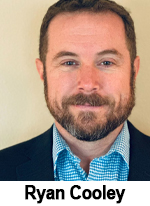 Audacy has named (1/6) Ryan Cooley Senior Vice President and Market Manager of its Portland, OR market. In this role, Cooley will oversee the market’s portfolio of brands including 1080 The Fan (KFXX-AM), 92.3 KGON (KGON-FM), ESPN 910 (KMTT-AM), 94/7 Alternative Portland (KNRK-FM), Bella 105 (KRSK-FM), 99.5 The Wolf (KWJJ-FM), 97.1 Charlie (KYCH-FM), CHANNEL Q (KRSK-HD2) and 94/7 Too (KNRK-HD2). “Ryan’s leadership, extensive broadcast experience and love for the Portland community make him a valuable asset to the market,” said Doug Abernethy, regional president, Audacy. “We look forward to seeing him take on this new role and guide the Portland team to achieve even greater success.” “I’m honored to be named Audacy Portland’s next Senior Vice President and Market Manager. I started with this incredible group of stations 20 years ago and being entrusted with the opportunity to help this team reach its full potential is something I don’t take lightly,” said Cooley. “This team is truly special; these radio stations are iconic and the people here are the heart of everything we do. Together, we’re excited to build on this legacy and continue shaping the future of radio in Portland.” Cooley began his career at Audacy in 2005 as a sales associate and climbed the ranks leading teams in Portland, Boston and San Francisco. He helped launch 95.7 The Game in San Francisco (KGMZ-FM) and directed new business development and account growth for WEEI (WEEI-FM) in Boston. Additional roles include account executive, local sales manager, general sales manager and, most recently, director of sales.
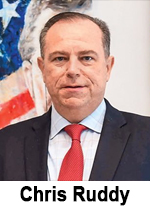 Newsmax Raises $150 Million in Pre-IPO Plan.* Newsmax CEO Christopher Ruddy reports “We did it!” According to the ascending multi-platform news organization’s founder, “When we announced our plan to go public, we also announced our plan to raise $150 million in Preferred Shares before we became listed.” Ruddy tells TALKERS, “I am glad to report Newsmax hit the $150 million* mark over the Christmas-New Year’s holiday. In fact, we have raised $153 million*, having exceeded our target by $3 million. And we have thousands of investors who are still in the process of buying Preferred Shares!
 So, Newsmax has decided to extend our offering to $175 million – an increase of $25 million above our target raise.” Ruddy concludes, “Newsmax expects to close on the remaining $22 million remaining very soon.”
 “Throughout my career, I’ve been passionate about elevating radio technology and helping the industry understand the critical role of metadata, especially in the digital dashboard,” Jurison tells TALKERS. “Joining Quu is an incredible opportunity to build on that mission. I’m eager to contribute to this talented team’s efforts to strengthen radio stations’ relationships with their listeners and advertising clients.” “Alan’s innovative mindset and technical expertise make him an exceptional addition to Quu,” said Steve Newberry, CEO of Quu. “His vision aligns perfectly with our goals to help radio boost ratings and generate new revenue through visual solutions that engage and retain audiences.” Alan will be at CES in Las Vegas this week, where he looks forward to connecting with industry peers. Interested in meeting up? Contact Alan at
 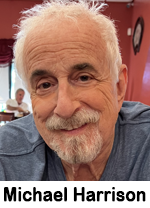 Welcome to 2025… TALKERS 35th year! Everything seems to be moving faster and faster as we hurtle deeper into the 21st century and what is turning out to be a “brave new world” even for Gen-Z. Each year at this time, I am invariably asked by broadcasters, reporters, and friends, “What do you think we’ll be talking about in the new year ahead?” And each year I give the same answer: THE UNEXPECTED.
 BIN: Black Information Network, the 24/7 comprehensive national audio news network specializing in what it describes as “objective, accurate and trusted continual news with a Black voice and perspective,” today (1/6) announced Terry Foxx has joined as VP, news and content effective immediately. In his new role, Foxx will be responsible for the day-to-day leadership of BIN: Black Information Network’s newsroom and its team of journalists, with a focus on development of news content and original programming. “I am excited to have Terry join BIN: Black Information Network,” said Tony Coles, the network’s president. “In today’s rapidly changing media landscape, the role of news in shaping public discourse has never been more important. We’re confident his contributions will strengthen our position as a leader in delivering inclusive and impactful news and content to our audiences.” Prior to his new role with BIN, Foxx served as regional director of talk programming for iHeartMedia Austin/San Antonio. His career includes roles at KUT-FM, University of Texas, and major stations such as WPLJ-FM, New York; B96, Chicago; KKDA-FM, Dallas; and WZGC-FM, Atlanta.
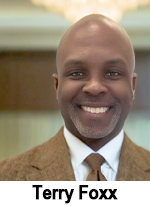 “I am thrilled to contribute to the growth and success of BIN: Black Information Network,” Foxx tells TALKERS. “BIN is a vital platform for amplifying diverse voices and delivering trusted, relevant news to our communities. This is an exciting opportunity to make a meaningful impact and further strengthen the connection between BIN and the audiences we serve.” BIN is distributed nationally through the iHeartRadio app, available across more than 250 platforms and 2,000 devices, as well as on local AM/FM broadcast radio stations across America, including Atlanta, Chicago, New York City, Philadelphia, Washington, D.C.
 With nearly 30 years of experience in journalism, Lenzi has held roles as morning editor, managing editor, and most recently, news director and program director at KNWN/KOMO. He led coverage of major events such as the 2009 Lakewood Police shooting, the 2014 KOMO TV helicopter crash, and the 2020 police dispersal of the Seattle CHOP Zone. Bonneville Seattle SVP/ market manager Cathy Cangiano tells TALKERS she’s eager for Lenzi to come aboard. “Frank’s extensive experience and proven leadership in the industry make him the perfect fit for our team. His dedication to journalistic excellence and his ability to inspire and lead will keep our newsroom standards high. We look forward to the fresh perspectives and innovative ideas he will bring to KIRO.”
  Bryan Buckalew, KIRO program director, echoed those sentiments. “Frank has a deep commitment to keeping audiences informed and connected. I’m confident he’ll be a great addition to our team.” Lenzi comments, “KIRO has always been the gold standard for radio journalism not only in the Seattle market, but across the country. It is an honor to lead this fine team of veteran broadcasters.” Lenzi will replace outgoing news director Charlie Harger, who will take over as host of “Seattle’s Morning News” on KIRO in January.


 Michael Harrison describes WISN as “one of talk radio’s pound-for-pound ratings champions.” The new programming lineup features well-known, highly rated show hosts who have decades of broadcasting experience and achievement in the Milwaukee market. “WISN is one of the great success stories in the radio industry over the past decade, in terms of both ratings and overall influence,” said Jeff Tyler, area president for HeartMedia Wisconsin. “We are confident that this latest evolution of WISN’s powerful lineup will meet and exceed the expectations of our listeners and our sponsors.”
 Services include access to top-of-the-line podcasting studios and equipment (audio and video), strategy, program production, editing, guest booking, distribution, paywall options and promotion across PodcastOne’s existing network of podcasts. “As the only public pure-play podcast company in the United States, PodcastOne is uniquely positioned to help brands, businesses and content creators reach their target audiences more effectively while keeping loyal podcast listeners entertained and engaged,” said Jim Lally, head of business development for PodcastOne. “Branded podcasts are financially and logistically challenging for many companies to produce in-house. With the official launch of PodcastOne Pro, we’re able to offer a tailored podcast production solution to our clients that leverages our current infrastructure, which ultimately, drives higher margins, diversifies our revenue streams, and lowers costs for clients.” Coinciding with the launch of PodcastOne Pro, PodcastOne is set to debut its new state of the art podcast production studio in Beverly Hills. To learn more about PodcastOne Pro or get a quote for plans starting at $500, please visit
  SiriusXM announced yesterday (12/5) the launch of the “Women’s Empowerment Network,” a new podcast network executive produced by SiriusXM Urban View host and Pulitzer Prize-winning journalist Karen Hunter. Launching on Monday, December 9, the “Women’s Empowerment Network” will debut with two new podcasts, with more original content set to premiere in the coming months. Available on the SiriusXM app and all other major podcast platforms, “The Women’s Empowerment Network” will offer a variety of new original shows, which will feature interviews with influential women from various industries and backgrounds, self-improvement tips, financial advice, mental health discussions, and more news relevant to women’s lives and careers.
 The network will also spotlight stories of resilience, activism, entrepreneurship, and community, with a focus on uplifting women in all walks of life. Among the first podcasts to premiere under the network is
  a daily podcast designed specifically to help women navigate the complex and evolving financial landscape. Hosted by a team of renowned financial experts, including Dr. Tonya Evans (cryptocurrency and intellectual property), Dr. Tisa Silver Canady (financial wellness and student loan debt eradication), Jacquette Timmons (financial behaviorist), and Ruchi Pinniger (financial coach and founder of “Watch Her Prosper”), this podcast will offer listeners practical advice and insights to help them make informed financial decisions and build lasting wealth. “The Women’s Empowerment Network is a destination where women can come together and be heard in ways that are authentic, uplifting, and transformative,” said Karen Hunter. “I’ve always believed in the power of women supporting each other, and I’m excited to have this new platform where we can rise together.” “Karen has a great talent for identifying emerging voices and building communities through audio,” Dave Gorab, VP/GM of SiriusXM’s talk programming. “I’m excited to see Karen’s vision for a new podcast network thrive while it has a meaningful impact on all who listen.” In addition to her new podcast, Hunter will continue to host “The Karen Hunter Show” weekdays from 3-6pm ET on Urban View channel 126.
 Newsmax launched on DIRECTV Latin America’s leading media technology company in connectivity and entertainment in the region – one recognized for its multi-platform experience. The distribution move comes as millions around the globe are tracking news about the recent presidential election and the upcoming administration of President-elect Donald Trump.