By Bill Bartholomew
Talk Host/Podcaster/Journalist/Musician
 Folks in the Gen Z and millennial demographics are heavily engaged in political issues, care about news in their communities and the world, and are constantly bombarded with content. So why are they less likely to tune into and interact with news/talk radio than older demographics?
Talk radio has historically skewed older, and from an ad portfolio standpoint, is often targeted at the coveted 35-54 and 55+ demographics. However, in a world where social media influencers and podcasters supply information to millions of young consumers, news/talk radio should be able to effectively compete for the ears of younger generations in a comparable, if not expanded way.
For all of the anecdotal and hard evidence that terrestrial radio may be trending in a downward direction, the format continues to have a vast reach. It is convenient to engage with it in automobiles, and occasionally in home or office settings. Yet, while younger generations listen to radio, news/talk is not the format that they turn to by and large.
Unlike many digital-first content producers, radio retains a unique quality: authority. By virtue of editorial standards, FCC regulation and brand – things that social media and podcasts often lack – radio has the unique ability to deliver credible, vetted, nuanced and universally trustworthy content that can instantaneously adapt to meet the needs of the moment. This is true in everything from natural disasters to rapidly evolving breaking news stories, providing a channel for immediate, reactionary insight and analysis.
There are several steps that news/talk radio should pursue in earnest to adapt to the current climate of content consumption, particularly by younger listeners, that can reach, and most importantly, retain broader, younger, more diverse and more engaged audiences.
- Introduce younger people into the conversation.
Too often, Gen Z and millennials are skewered by older hosts, mocked for their perceived naivety, unchecked optimism and me-first approach. While some of these qualities can be accurate, that approach reflects a disconnect between older generations and the experience of younger ones. Millennials and Gen Z have grown up in a post-9/11 world replete with “endless wars”, the fallout from the 2008 financial crisis, runaway student debt, a massive housing crisis, the mental health stressors of social media, Covid19’s impact on traditional youth experiences, climate change, a deeply bifurcated political environment and a constantly evolving quest for social justice. Through these experiences, younger generations offer an important perspective that should be assigned the same news value as experts from older generations.
Are you discussing shifts towards electric vehicles? Bring on someone from Gen Z to share their perspective on why steps towards carbon neutrality are important to them. Engaging a conversation on the president’s approval rating? Perhaps younger conservative and leftist voices should be included in the conversation. Discussing immigration? How about the perspective of a younger member of a Latino organization?
By giving younger generations and more diverse guests a platform, stations can simultaneously expand their content and reach. With consistency, the station’s brand will become more familiar to younger potential listeners who may be inclined to tune in to hear someone who shares their identity and perspective on – here’s that word again – a platform of authority. Let the guest do the work of establishing the credibility and importance of your station or talk show to younger audiences by posting about their appearance on social media, sharing audio clips and mentioning to their peers. It will build familiarity and trust among those generations, who in turn, will begin to tune in on a more regular basis.
Stations should also consider bringing more younger, competent voices into on-air roles, whether that be through reporting, segments, fill-in hosts, weekend shows or full-time hosts.
- Meet the audience where they are: their phones.
As mentioned above, the convenience of simply turning on AM/FM radio is highly appealing in automobiles, though as Apple Carplay continues to adapt and evolve, digital-first content is likely to become as simple and convenient in the near future.
Talk radio needs to make consuming their product on smartphones as simple and direct as turning on a traditional radio. This means no clunky websites, no lengthy pre-roll spots, a reliable stream connection and a “one touch” means of turning on and off the station. This should also mean expanding talk shows to high-quality video livestreams, following in the footsteps of the top YouTube and Twitch performers; developing unique content for TikTok and Instagram; building podcasts that are focused on specific issues, and; providing interaction via text and chat.
Radio has the ability to be the ultimate livestreamer, social media influencer and podcaster, but rarely harnesses these platforms in a meaningful way.
It is not enough to simply strive to “expand a digital presence”; stations and shows must engage in the hard work of building platform-specific content with their brands.
- Music, cultural references and themes for the modern age.
A few weeks ago on a seemingly benign episode of the TV show FOX NFL Sunday, panelists Jimmy Johnson and Terry Bradshaw offered an example of the type of cultural adaptation that sophisticated writers and producers provide their brands. While describing a fight between two football players, Mr. Johnson said something to the effect of “when it comes to these two, what’s that Taylor Swift song?”, and then in synch with Mr. Bradshaw, “bad blood!”. It is highly unlikely that these two 70+ men listen to Taylor Swift’s music with any regularity or would simultaneously pull the “Bad Blood” reference. Yet, with excellent preparation that played into the greater cultural moment as well as the specific, current Taylor Swift/NFL overlap, in a six-second span, FOX NFL Sunday was able to give the illusion that their panelists are contemporary, hip and plugged into “what is going on”. Is your station or show plugged into what’s going on? Do you use contemporary music for bumps? Are your images – including headshots and social content – modern, interesting and engaging or are they more akin to a miscellaneous real estate agent? You are a performer in an entertainment business that, while certainly paying homage to the past and lineage of the industry, must be contemporary in aural and visual presentation. This goes for everything from wardrobe on video and in photo to fonts on graphic design.
How often do you or your producer read Pitchfork to learn about new music that is breaking this week? How often do you or your producer read Variety to understand major trends that are happening in the broader entertainment industry? What live events are you broadcasting from, covering and building partnerships with? You should strive to be cutting edge.
- We need a friend now more than ever.
This is something that goes for all audiences, but particularly for younger ones. It’s OK, in fact, great to be yourself, present yourself from your generation and retain the authoritative stance that has built your brand. Take a look at the success that sports talker Mike Francesa enjoyed by leaning into his persona – and in turn – developing legions of younger listeners that fell in love with his dad-like delivery and frequent meltdowns.
Few things are as uncomfortable to see as a 40+ person dressing or acting like a teenager. Younger listeners want that senior, experienced, trusted friend to entertain them, inform them, and at times, tell them that everything is going to be OK. You can help make sense of the world for younger audiences, something that is absolutely essential in the modern era.
Through attracting younger listeners by including them in the conversation, effectively delivering content on smartphones, presenting a cutting-edge entertainment product and continuing to serve as a trusted friend, news/talk radio can greatly expand its reach, relevance and revenue.
To that point, some younger listeners who discover a radio station or show via any of the above entry points will likely work backwards to the traditional AM/FM dial. Like the resurgence of vinyl records, AM radio in particular has the opportunity to become a hip delivery format for discerning younger listeners.
The big question is: are radio companies, stations and hosts prepared to do the hard work of reimaging their product?
Share this with your network



 Here’s actual news copy, from Joe Connolly’s business report one morning on WCBS, NY: “One third of all domestic flights are now late, by an average of one hour.”
 word, which is a 55% increase over nine years ago (20%); 2) Spoken word listening at home has grown dramatically: 60% of the total daily audio time spent with spoken word audio is at home, 24% in the car, 13% at work, and 3% at some other location. The time spent listening to spoken word audio at home has grown to 41 daily minutes in 2023 from 27 daily minutes in 2014. Increases in at-home spoken word audio listening are seen across every hour in the listening day; 3) Spoken word listening in-car has shifted post-pandemic, but AM/FM radio remains on top: Of all the daily time spent listening to spoken word audio, time spent listening in the car has declined from 36% in 2014 to 24% in 2023. In the car, 62% of spoken word audio consumed by those in the U.S. age 13+ is to AM/FM radio content, including over the air and streams; 4) For the first time ever, the mobile device is the primary way people listen to spoken word: 39% of spoken word audio consumed daily by those age 13+ in the U.S. is on a mobile device, followed by 35% on an AM/FM radio receiver. At home, 41% of spoken word audio is consumed on a mobile device, and at work, 47% of spoken word is consumed on a mobile device. AM/FM radio receivers still dominate in-car, garnering 60% of the spoken word audio listening there; and 5) Podcasts represent a large and growing share of spoken word listening: Podcasts now represent over one-third (36%) of time spent with spoken word audio. Twenty-eight percent of time spent listening to podcasts goes to NPR/public radio. At home, 40% of spoken-word audio listening goes to podcasts.
  Bakersfield and Spokane. In his new role as SVP of programming, Jarquin will be responsible for the oversight of programming and promotions across all Pacific Area iHeartMedia stations. iHeartMedia Pacific Area president Steve Darnell says, “Angel has a successful track record programming some of the most dynamic station brands in the market. His creativity, leadership and background on-air make him perfectly positioned to lead our station programming to connect with listeners throughout the Pacific Area.”
 $145.7 million, down 7.1% year-over-year. Audacy president and CEO David J. Field states, “Audacy’s third quarter net revenues declined 5.6%, in-line with our quarterly guidance as ad market conditions have remained challenging, particularly on national business. Cash operating expenses were down 2%. We gained revenue share in the quarter, most significantly in radio in which we have achieved accelerating share growth since the start of the year. We also delivered solid gains in radio ratings share and digital audience metrics while making important progress on our tech roadmap and meaningful expense savings to improve our current and future business model. Fourth quarter is currently pacing down 9% on an as reported basis and down 4% on a same-station, ex-political basis. We expect Q4 total revenues to decline by high single digits and costs to decline by high single digits. As noted in our recent public filings, we remain in constructive conversations with our lenders to recapitalize the company’s balance sheet to establish a strong financial footing and position the company to capitalize effectively on our growth opportunities. Notwithstanding current challenges, Audacy has established a strong position as a scaled, leading multi-platform audio content and entertainment company distinguished by our exclusive premium content and top positions across the country’s largest markets. We salute our team for their strong work delivering solid growth against our key performance metrics and serving our listeners and customers with excellence.”
 didn’t have a stroke or a heart attack and I don’t have a brain tumor or anything like it. Turns out it’s just one of those unexplained things that happen and very likely will never happen again. I’ve been cleared to return to work but have decided to call it a career. I’m 72, I’ve been in radio for 54 years, and for the past 42 years, I’ve been getting out of bed in the middle of the night to go to work. I just discovered I like sleeping in a bit. I will miss the daily enjoyment of the job and especially the people with whom I worked. And, thanks most of all to those of you who listened each morning and found some informational and entertainment value mornings on KLIF. Nothing lasts forever but I’m going to try. Stay well, y’all. Love your life. This is the month for giving thanks.”
  We all need to learn how to fall back. This is not about daylight saving, retreating, or backpedaling. This is about learning from the most valuable brand in tech, the oracle, and the best practices all of us in sales and management must learn to apply.
 I am always impressed when I see-and-hear radio and TV stations swapping product.
 announce that I will be back on the air with my new show called ‘What’s On Tap?’ This hourlong show is set to air on most weeknights at 6: 00 pm barring conflicts with Bucks & Brewers games, featuring culture and creativity in Wisconsin and around the world.” The show launched last night and featured content from Maxx’s recent trip to England in which she interviewed Sue Harvey of The Beatles landmark Strawberry Field in Liverpool as well as an audio tour of the Beatles-themed Airbnb in Green Bay. Maxx most recently co-hosted the station’s late morning show with host Steve Scaffidi.
 News for its podcasts from John Solomon, Victor Davis Hanson, and “Bauer and Rose” on the SPN platform. The agreement allows Salem to market and sell the podcasts to its array of advertisers and provide additional promotional support. Salem SVP Phil Boyce says, “John Solomon and his team are a perfect fit for Salem and will provide an additional layer of news credibility to the stories he covers. When you add Victor Davis Hanson’s podcasts, and those of Bauer and Rose, it makes the partnership complete.” Solomon comments, “Salem Podcast Network has amassed one of the most formidable audiences and lineups in the industry. We are excited to be joining the team and introducing our news and analysis to a whole new audience.”
 deductible donations to the Guardian Fund. Corporate donations can be given to the Angel Initiative, which is also tax deductible. BFoA chairman Scott Herman states, “Life can change in a heartbeat, and exorbitant medical bills can leave one of our colleagues in broadcasting in desperate need of assistance. I’m asking everyone in radio and television to consider a donation, in any amount, so that we can continue to provide assistance to those in our industry who need it most.”
  ECHO box technology. He says, “GCN’s Adam Miller explains that their ECHO Files can easily be synced with most radio automation systems for easy delay broadcast with no new hardware needed and about fifteen minutes setup time! There is no need to have staff do daily chores like pulling files manually from an FTP or website. Those days are done! For live affiliates GCN has their ECHO Box that comes pre-programmed for the shows the affiliate carries. The ECHO Box can also do delay broadcast. They are sending these out with priority to stations that take the largest number of live hours, but eventually all live affiliates will receive them as dozens more of the very small ECHO Boxes will be coming in early November.” Affiliates with questions can call Adam Miller at 612-695-5982.
  programming includes Premiere Networks’ “The Clay Travis & Buck Sexton Show” and “The Jesse Kelly Show,” as well as programming from Westwood One. iHeartMedia SVP of programming Jason Carr says, “We’re excited to bring ‘The Patriot’ to Vero Beach with local talk and news from ‘The Brian Mudd Show’ and some of the biggest names in national talk radio. ‘The Patriot’ will super-serve the growing Vero Beach community, with the most up-to-date news, weather and sports updates, including sources like FOX News and the Florida News Network.”
 the achievement of the market’s total sales goal. Mems comes to Audacy from his most recent post as president of the Central Illinois Media group. Audacy St. Louis SVP of sales Becky Domyan states, “We are happy to add Charles and his vast experience of media sales and client support to our team. I have no doubt that he will drive exceptional results for our collection of brands.”
 Feel busy? Try keeping-up with these four:
 In May 2007, I was enjoying the brand-new app called YouTube. Still independently owned, still relatively unknown. Some of the videos pulled millions of viewers, more viewers than enjoyed by ESPN or any cable network. More interesting, the videos with high counts were not made by NBC or ESPN or any traditional video source. High view count videos were being made by people with no experience in traditional media, they were experimenters producing in their basements and bedrooms.
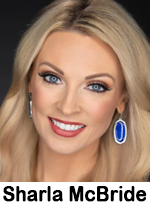 McBride most recently served with CBS affiliate WUSA-TV, Washington DC where she served as a news and sports anchor. McBride says, “I am excited to join an incredibly talented team at Newsmax and look forward to bringing Americans the stories that matter each morning. It has been my dream to work for network news, and I feel my 17 years of anchoring experience have prepared me for this new role of co-hosting ‘Wake Up America.’ It’s an absolute honor!”