Industry News

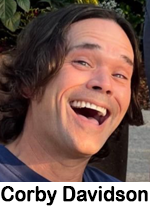
KTCK-AM/FM, Dallas-Fort Worth Host Corby Davidson Inks Extension

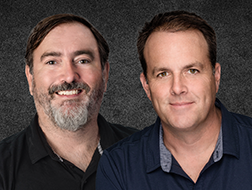
Dallas sports talk personality Corby Davidson – who co-hosts the afternoon drive “The Hardline” show with Bob Sturm and Dave Lane at Cumulus Media’s KTCK-AM/FM, Dallas-Fort Worth – announces on X that he’s signed a new, five-year deal with the station. He tweets, “30 years ago I walked into theim Ticket radio station as a kid, and I knew within about 5 seconds it’s where I wanted to be. It was a magical place. The energy was off the charts. I was hooked. From intern, to overnight board op, to fill in producer to full time producer, to host… it didn’t matter what I did there, it just mattered that I WAS THERE. Well here we are, 30 years down the road, and I’m still here. And I still have a blast every single day, and it’s still such a magical place. I know I’m lucky. So I just signed a 5 year deal, ensuring I will begin and end my work life there. Love my team, love our show, and love that place. Cheers to you, good P1s, Let’s go.”

Industry Views

SABO SEZ: City to Town – A Perspective on Trump Voters

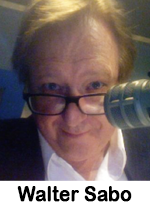
By Walter Sabo
Consultant, Sabo Media Implementers
A.K.A. Walter Sterling
Radio Host, “Sterling On Sunday”
Talk Media Network

imAcknowledging that this publication is fiercely non-partisan and that I – in my role as a broadcaster – am basically the same, I offer the following, not as a political opinion piece, but rather a personal observation based on experience that might shed light on the deeper nature of a large segment of the American population prone to listen to talk radio.

A few years ago, I moved from Manhattan to Shaker Heights, Ohio. Geraldo Rivera made the same journey for the same reason; our wives went to Shaker High. In our brides’ minds, that’s enough reason to return.

During the period of the Donald Trump presidency, a new phenomenon was sweeping the East and West Coasts: People who did not vote for Trump demonized and marginalized those who did. Lifelong friendships were ended by anti-Trump individuals who merely suspected a friend was pro-Trump, often with little evidence. Celebrities threatened to leave the country if Trump became or remained president. They would flee to Canada, without any consideration of whether or not Canadians wanted them!  

At first, I would ask anti-Trump people if they had actually voted for Hillary Clinton? That question was inevitably met with an icy glare, but no answer. They hadn’t. Anti-Trumpers were seething, ignited by their guilt that they assumed Clinton would win and therefore making their voting participation unnecessary. What else could explain the fevered emotion against a president – on his FIRST day in office? Trump hadn’t done anything to anger Scarlett Johansson into leading an angry insurrection mob. But she did. Day one.

Living in Ohio, I have spent time with hundreds of Trump voters and learned something valuable. Trump supporters do not match the level of passion in support of the president as those who hate him. Not even close. The disparity is stunning.

No Trump voter has threatened to leave the country if a Democrat wins. No Trump voter has said, “I hate all Biden voters, I wish they would die,” as Howard Stern has said about them. No Trump voter refuses to befriend a Joe Biden voter just because, hey, if we’re friends we are friends.

Yes, Trump voters go to the polls for him because of – his policies. And what are those? The Ohio parents and workers I know matter-of-factly want Trump first and foremost so they can afford gasoline and heating oil. When the price of gas went up, parents had to cut down on after school activities, school competitions and distant playdates, they just couldn’t afford the trip. They can’t hop on the bus to Chelsea Piers. They don’t care if it’s Trump specifically, they just want cheaper gas – sir can you do that?

Next, they vote for the candidate who will support safe neighborhoods, cheaper meat, cheaper milk, their kid in the Marines home for the holidays, Israel, better schools.

I learned this from parents waiting for dance class and band practice to end. Patient parents proud of their kids. They weren’t chanting for Trump or bashing Biden. They just want enough gas to get home.

I’ve learned that many people who hate Trump voters do so while getting into an Uber, a taxi, bus, or subway. They don’t own a car. They buy food for one, not for five times seven days a week. They don’t have to go to three different food stores to get the cheapest items… they just hit Food Emporium ($6.98 a gallon of milk). In Ohio, $2.29 a gallon, Walmart.

Of course, there are other issues swirling around Trump and Biden – but right now most deplorable Ohioans have to pick up the kid at school on time, let their child buy one toy at Dollar Tree, I said one, and hope there is enough spaghetti for dinner.

Walter Sabo was a founding architect of SiriusXM and began the recruitment of Howard Stern. He has consulted RKO General, PARADE magazine, Hearst Broadcasting, Press Broadcasting, and other premium brands. He launched the first company to engage online video influencers, Hitviews. As an executive, he was EVP of NBC FM RADIO giving Dr. Ruth Westheimer her first media job and fostering the creation of adult contemporary. As VP ABC Radio Networks, Sabo hired Ringo Starr to be a DJ for a 24-hour special.

Industry News

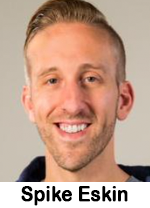
Spike Eskin to Return to Philly as WIP PM Drive Co-Host

Audacy announces that Spike Eskin will return to sports talk WIP-FM, Philadelphia “SportsRadio 94WIP” as afternoon drive co-host alongside Ike Reese and on-air producer Jack Fritz. Eskin will leave his current position as vice president of programming for WFAN, New York and CBS Sports Radio andim re-join WIP once a successor is named. Audacy says a nationwide search is currently underway. The WIP co-host position opened after Jon Marks announced his exit from the station for personal reasons in December. Audacy Philadelphia SVP and market manager David Yadgaroff says, “We’re very excited to bring Spike home to Philadelphia and SportsRadio 94WIP. This is a unique opportunity to add a great talent with a long history in our marketplace to one of our most popular dayparts, and we’re looking forward to having Spike reunite with his longtime friend and colleague Ike Reese and Jack Fritz to shape the future of afternoon drive at WIP.” Eskin comments, “I am thrilled to be able to work with Ike and Jack in afternoons at 94WIP. It’s now the third job of a lifetime I’ve had the opportunity to do. Leaving WFAN and CBS Sports Radio is an incredibly difficult decision. I’m surrounded by talented, great people, and it’s been an amazing experience. I’d like to thank David Yadgaroff, Jeff Sottolano and Rod Lakin for this opportunity, and Chris Oliviero for my time in New York.”

Industry News

Comrex Offers Free Gagl Trial

Comrex – the company that has been making innovative tools that allow broadcasters and content creators worldwide to connect with their audiences from anywhere – is offering free 30-day Gagl accounts to make it easy for broadcasters from around the world to share each other’s programming, join in on live talk shows, and demonstrate the power of radio in celebration of World Radio Day onim February 13. Comrex says, “Tens of thousands of Comrex customers go ‘live and local’ every day to bring radio to life for their listeners. Customers that already have a Comrex IP audio codec can use Gagl to connect to their existing hardware. Broadcasters in the US that don’t have a Comrex ACCESS or BRIC-Link IP audio codec can even request free demo hardware if they would like to participate. Restrictions apply.” Comrex adds that using Gagl is as simple as clicking a link from an email. It opens a web browser on a phone or computer and connects with up to five other users. As long as the broadcasters are using headphones, everyone hears each other and the host back in the studio. Audio quality is much better than most web conferencing applications, and there is no complicated setup. For more information, contact Comrex at 800-237-1776 or email info@comrex.com.

Industry News

KBLA, Los Angeles Kicks Off Year-Long Climate Justice Campaign

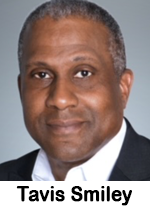
SmileyAudioMedia, Inc announces that flagship station KBLA, Los Angeles “Talk 1580 AM” is launching a $2 million, 12-month Climate Justice Campaign with four clear objectives: center the voices of communities of color in the climate conversation, connect at-risk fellow citizens with advocacy organizations, increase climate health literacy, and highlight frontline climate justice crusaders of color.im The company says that the initiative will achieve these objectives with a robust schedule of climate-themed broadcasts and special programming during the next 12 months, four free community events (one per quarter), two town halls broadcast nationally from Los Angeles, and a savvy social media and marketing campaign. KBLA says its public and private partners in this initiative include: LADWP, Metro, the Port of Los Angeles, CalEndow, California Community Foundation, the Sierra Club, the South Coast Air Quality Management District and others who will join the campaign in Q2, Q3 and Q4. Chief visionary officer and nationally imsyndicated talk host Tavis Smiley says, “The harsher impacts of climate change weigh heavily on communities of color. In these underserved communities, families are less likely to have air conditioning, shade trees, bus shelters, water and energy effective appliances and other infrastructure that’s critical to mitigate a changing climate. As the most ‘trusted, credible and reliable’ media source in Southern California for African Americans and beyond, our talk station is committed to do more than just talk in these troubled times. There is a clear connection between Dr. King’s moral consistence on the notion of reverence for human life or the interconnected nature of life and the future of our world house. On this MLK holiday weekend, KBLA assigns itself the task of elevating the climate conversation by amplifying the voices of those who are most impacted by the climate catastrophes we are all witnessing in real time. In a real sense, climate is king.”

Industry News

“Paper Boys” at Dinner

im

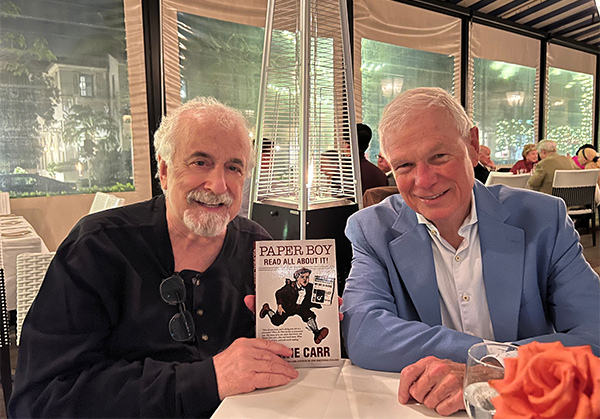
Legendary New England radio talk show host/newspaper reporter-columnist/prolific author Howie Carr (right) and TALKERS publisher Michael Harrison (left) shared dinner and conversation last night (1/14) at the renowned hotspot Trevini in Palm Beach, Florida where they discussed Carr’s forthcoming guest appearance on the award-winning podcast, “The Michael Harrison Interview” and Carr’s latest bestseller, Paper Boy: Read All About It (2023 Frandel, LLC). The book is a fascinating memoir following Carr’s life in the media “from the early days at Boston City Hall to hanging out at Mar-a-Lago with President Donald Trump.” Carr is heard daily across New England on his HCRN syndicated four-hour radio show, an hour of which is carried on the Newsmax streaming service. He is also a long-running columnist for the Boston Herald.

Industry News

13 Ideas to Celebrate World Radio Day 2024

By Michael Harrison
Founder
TALKERS

imThe United Nations and its specialized agency, the United Nations Educational, Scientific and Cultural Organization (UNESCO) have given the radio industry all around the globe an invaluable gift. It’s called “World Radio Day 2024.” Now in its 13th installment, WRD takes place annually on February 13 with the purpose of spotlighting the accomplishments, importance, and ongoing relevance of the radio medium as it evolves deeper into the 21st century. This year’s theme is “Radio: A Century Informing, Educating and Entertaining.” By officially designating the platform as worthy of its own officially sanctioned UN International Day, the august world body has recognized, spotlighted, and endorsed radio’s continuing relevance and potential for being a vital force for the betterment of humanity.

On a global level, the scope of radio is huge. However, we, practitioners of radio in America, face formidable challenges keeping the spirit and uniqueness of the platform viable as both a business and iconic connector as it faces the growing risk of simply getting lost in the noise and distractions of the ceaselessly evolving digital era. I strongly encourage my American colleagues to embrace WRD 2024 for the fabulous opportunity it offers our industry to make a compelling case for the ongoing importance and positive impact of radio to inform, educate and entertain.

Please read and consider any or all of the following “13 Ideas to Celebrate World Radio Day 2024” posted on the UNESCO website and in TALKERS magazine.

1. World Radio Day Minutes. Air the UNESCO package of 20 pre-produced “World Radio Day Minutes”. They are 60-second audios discussing interesting aspects of the radio medium during its first 100 years of service to humanity. The texts figure in their descriptions so that you have the option of producing your own episodes in other languages. These short-form audios can be programmed on a schedule of your choosing leading up to and on February 13, World Radio Day (WRD). You can run them as non-commercial announcements or offer them for local sponsorships.

2. Talk Shows Celebrating Radio. Program (pre-produced or live) talk shows with local and national experts talking about the importance of radio for quality information, highlighting its 100-year history and continuing relevance. Recruit legendary and retired radio personalities known to your audience to participate in these programs supplemented by real clips from the past to be aired leading up to or on February 13.

3. World Radio Day 2024 Live Event.  Schedule a live indoor or outdoor event (depending upon climate) on February 13 celebrating World Radio Day 2024. Invite listeners free (or charge admission in conjunction with a charity). Feature a panel discussion about the relevance of the entire audio sector in a changing media world as well as local legends telling stories about their service to the public through radio. Supplement it with display tables presenting local businesses and sponsors. Consider holding it on a local college or university campus in conjunction with the school’s communication department. Organize a group of diverse stations (either under one corporate umbrella/cluster or actual competing ones) to join forces in support of information, entertainment and education through radio in general. The results will be beneficial for everyone involved.

4. World Radio Day 2024 Sponsorship with Local Consumer Electronics Store/Chain. Arrange a sales promotion with a local store or chain of stores within your market to offer listeners a significant one-day discount (February 13) on all AM/FM radios and radio-related equipment.

5. International Dialogue. Schedule interviews/conversations (either live or prerecorded) with your broadcast colleagues from other countries to compare and contrast the history and strength of radio in their respective countries on or leading up to February 13. These shows can be simulcast on both stations or simply be one host interviewing another.  For Partnership Opportunities, please check here which stations or partners around the world are interested in collaborative programming and you could contact now.

6. The Greatest “Radio Songs” of All Time.   There are songs in almost every pop music format that contain the word “radio” in them or refer to the medium of radio.  Highlight the “Greatest Radio Songs of All Time” into your playlist intermittently or as a “countdown show” on February 13 in commemoration of World Radio Day 2024. This is an easy and simple way to highlight World Radio Day and create a fun and entertaining programming element.

7. Visit to a Radio Station. Offer guided tours of your facilities to listeners or local school classes leading up to and on February 13 in celebration of World Radio Day 2024. This will be an effective outreach to a younger generation of new listeners and create community goodwill.

8. Radio and Emergencies. Emphasize radio’s impact as an informational public safety net entering its second century of service. Use World Radio Day 2024 as a reason to talk about and remind listeners of the value of the medium to provide a lifeline to the public when the electricity goes out and the internet goes down. There are numerous examples in just the past year alone to draw from in terms of earthquakes, wildfires, and storms in which radio news helped people in distress in real time. This is also a talking point in the current issue about some automobile manufacturers choosing to not equip new car models with AM radios.

9. Theater of the Mind. Use World Radio Day 2024 as a focal point for radio being the “Theater of the Mind” by producing your own locally produced radio dramas and airing them on February 13. You’ll provide intelligent entertainment, support cultural expression, and stimulate listener interest.

10. Radio, the Original Interactive Mass Medium. Recognize radio’s claim to the title “The Original Interactive Mass Medium” and “The Original Social Media” by using these phrases as often as appropriately possible on February 13. Radio pioneered the concept of taking live calls from listeners on the air to give opinions and receive advice in addition to playing musical requests and announcing dedications in real-time on the air. Highlight the interaction with listeners.

11. Take Me Out to the Stadium. Radio was the first mass medium to provide live, real-time play-by-play coverage of sporting events. The history of radio’s connection to sports is deep and rich. There is a lot of colorful sports broadcasting history to discuss in celebration of World Radio Day 2024 and nourish vibrant conversations.

12. Podcasts. Post several new and timely podcasts featuring quality conversations and panel discussions with experts and leaders in the radio profession from around the world as supplemental World Radio Day 2024 content on your station or network website.  You can also generate your own podcasts and programs about radio for placement on your website or general distribution.

13. Positive and Pro-Active – Accomplishment, Pride and Hope. World Radio Day 2024 provides you with a supportive platform and focal point to pursue business, civic and social relationships within your community, and protect free, independent, pluralistic radio.  WRD 2024 symbolizes radio’s century of accomplishment, pride in the present and hope for the future.  Celebrate World Radio Day 2024 spreading this optimistic perspective leading up to, during and following February 13.

For more information, visit https://www.unesco.org/en/days/world-radio

Michael Harrison is a legendary American broadcaster who has served as executive advisor to UNESCO for World Radio Day 2024. He can be contacted via email at michael@talkers.com.

Industry News

iHeartMedia Central Florida’s Barbara Latham to Retire

Longtime iHeartMedia Central Florida executive and current area president Barbara Latham will retire, effective March 29. The 39-year iHeartMedia veteran has served as region president for Central Florida that includes talk WTKS-FM and news/talk WFLF-AM in Orlando, plus numerous music brands since April 2021. iHeartMedia division president Tom McConnell states, “Barb has excelled in multiple roles throughout her tenured career at iHeart. Although we will miss her leadership and strategic thinking, we wish her nothing but the best as she begins this exciting new chapter.” Latham says, “I am so excited about this new chapter in my life. Thirty-nine years flew by! I’m happy to have worked for iHeart for almost four decades, and I’m honored to have had the opportunity to work with and lead a tremendous team of professionals and iconic brands.”

Industry News

TALKERS News Notes

Audacy sports talk KRLD-FM, Dallas-Fort Worth “105.3 The Fan” announces a multi-year extension to its flagship broadcast and digital partnership with the MLB’s world-champion Texas Rangers through 2027. As part of the extended partnership, English broadcasts of Rangers baseball will continue to be heard on “105.3 The Fan” and streamed digitally via the Audacy app for fans within the Rangers broadcast territory.

PodcastOne announces the January 24 premiere of “Varnamtown,” a limited eight-episode true crime genre podcast from Epic Magazine, Picture Perfect Federation and Full Picture. Hosted by Golden Globe Award winning actor Kyle MacLachlan and investigative journalist Joshua Davis, the series tells the little-known story of a small fishing village in North Carolina that reputedly did a deal with drug kingpin Pablo Escobar.

Audacy and Amy Poehler’s Paper Kite Podcasts announce the launch of “The Chris Chatman Do-Over,” an improvised comedy podcast series starring actor, comedian, writer, director, and producer Ike Barinholtz. In the series, Barinholtz plays controversial shock jock Chris Chatman striving to improve his reputation after his hit podcast is canceled. Guest stars include Fred Armisen, Ashley Nicole Black, Jessica St. Clair, Ego Nwodim, Busy Philipps, and Alice Stanley, Jr.

iHeartMedia and Charlamagne Tha God announce that the podcast “Woman Evolve with Sarah Jakes Roberts” joins The Black Effect Podcast Network. Charlamagne Tha God says, “The way she is able to showcase the intersectionality between GOD, faith, the word and how to navigate our mental health is extremely powerful. It is a privilege and honor to partner with ‘Woman Evolve’ and assist in amplifying her life changing messages.”

AdLarge announces today that “Infertile AF” has joined the company’s podcast portfolio. The program is hosted by New Jersey-based journalist, author and mother of two, Ali Prato, who keeps it “very real” while diving into the messy, frustrating, painful, absurd and sometimes humorous journey to have a baby. Or in some cases, to not have a baby.

The Alliance for Women in Media Foundation extends the deadline to submit entries for the 49th Annual Gracie Awards through January 25 (11:59 pm ET). The regular deadline, with no additional fee, is January 18 (11:59 pm ET). The Gracie Awards, presented by AWMF, has recognized programming and individual achievement by women across all media for nearly five decades. Submissions from television, streaming, radio, audio, and digital media are encouraged.

Industry News

TALKERS News Notes

The new radio program, “Lou Dobbs Tonight,” officially launched on the John Fredericks Media Network. The program airs daily from 7:00 pm to 8:00 pm ET. JFMN says, the program “will provide a platform for robust discussions on politics, culture, and current affairs. The show aims to engage listeners in conversations that challenge conventional narratives and offer a fresh perspective on the issues that matter most. It is a radio news/talk show for lovers of America!”

Triton Digital announces its integration with Amazon Publisher Services, expanding access to premium audio inventory at scale for Amazon DSP advertisers. Triton says, “This integration enables Amazon Ads’ unique interactive audio ads on Alexa-enabled devices to appear across shared APS and Triton Digital publishers, delivering an engaging advertising experience to listeners and enhanced inventory monetization to publishers.”

CNN Audio says award-winning journalist and CNN chief medical correspondent Dr. Sanjay  Gupta “will delve deeper into how weight fits into our understanding of what it means to be healthy in the ninth season of his podcast, ‘Chasing  Life  with Dr.  Sanjay  Gupta,’ beginning January 16.”

AdLarge announces its partnership with Fable & Folly Podcast Network for exclusive ad sales. AdLarge says, “This partnership underscores AdLarge’s dedication to amplifying underrepresented voices within the podcast community. With over 100 audio fiction podcasts, featuring compelling stories ranging from small town conspiracies, to sci-fi comedies, to Dungeons & Dragons improv, the Fable & Folly Network pushes the boundaries of representation in media.”

Industry Views

Monday Memo: Hello from Las Vegas!

By Holland Cooke
Consultant

imThis week, more than a hundred thousand inventors, investors, and techy-nerds from over 150 countries swarm Sin City for CES2024. You’ll be seeing all about it all this week on network newscasts and cable news channels and social media.

And yes, there are square miles of products being introduced here, the “Consumer Electronics” that were the roots of this event. But the big buzz this year will be Artificial Intelligence, at which we-the-legacy-media are looking at over our shoulder, as ChatGPT et al and text-to-speech are augmenting – in some cases displacing – human radio and television talent.

im

After we’ve spent decades learning how to use his software – Bill Gates tells Inc. magazine that – soon – we won’t need to. He describes your “agent,” your A.I. assistant, a constant companion, in your earbud, that has what Gates calls “a rich understanding of your life.” Think Alexa or Siri…on steroids.

Want to send an email? Just start talking. You’ll never miss a birthday, and you’ll know about flight delays and weather and traffic tangles without checking. And YOUR agent will know your FRIENDS’ agents. Even Gates admits that these virtual social secretaries could faux pas: “Suppose you want to see a friend. If YOUR agent talks to THEIRS, you DON’T want it to say, ‘she’s seeing other friends Tuesday and you’re not included.’” Oops.

Sure, it’s gadget heaven here. And some of these TVs are so big that I can’t figure out how they’d get through the door at home. But, year after year lately, services upstage things at CES. This year’s keynoters include the CEO of L’Oréal and Hyundai and Best Buy and Walmart and executives from McDonalds and Northwestern Mutual and Walmart, as technology changes almost every aspect of life every day.

How big is CES? Even the sprawling Las Vegas Convention Center isn’t big-enough. There will be exhibits and sessions up and down The Strip, so I’ll be getting-in my steps. And I’m reporting for TALKERS readers, every day this week. Help yourself to today’s report here: http://getonthenet.com/CES2024-Monday.mp3. It can air until Friday. And I’ll be posting daily 60-second reports you can download at HollandCooke.com.

Holland Cooke (HollandCooke.com) is a consultant working at the intersection of broadcasting and the Internet. He is the author of “Close Like Crazy: Local Direct Leads, Pitches & Specs That Earned the Benjamins” and “Confidential: Negotiation Checklist for Weekend Talk Radio.” Follow HC on Twitter @HollandCooke

Industry News

TALKERS News Notes

The WOKV-FM, Jacksonville-based Mark Kaye Show did a bit on Friday (1/5) in which U.S. Representative Aaron Bean from Florida’s Fourth Congressional District appeared to “take over” the show to “discuss the grim truth about Joe Biden’s open border crisis in Texas.” Bean traveled to the border recently as part of a congressional delegation led by Speaker of the House Mike Johnson. The bit continued as “eventually, Mark Kaye was able to regain control of the show, but only by agreeing to a sit-down interview hosted by Congressman Bean. Kaye said ‘It was really weird being a guest on my own show.’”

WABC, New York presented a special program on Saturday (1/6) at 4:00 pm titled, “The Left vs The Right with Anthony Weiner and John Catsimatidis.” As the show name implies, Weiner and Catsimatidis debated current events including the U.S. migrant crisis and more.

Key Networks enters into an agreement with Digitent Podcasts to serve as ad sales representative for the health and wellness influencer and podcast network. Key Networks president of sales Jason Wilberding says, “The timing for our Digitent partnership couldn’t be better, as health and wellness are top of mind in the new year for consumers and for so many of our advertisers. The highly influential Digitent hosts are eager to voice for endemic and lifestyle brands and the Key Networks team is excited for the myriad of possibilities in 2024 and beyond!”

NuVoodoo Media Services announces that it is appointing media sales pro Matt Parvis to the newly created position vice president of sales. Parvis will report to NuVoodoo founder and president Carolyn Gilbert and will be based in Los Angeles. Parvis joins NuVoodoo after 25 years as vice president of sales for AllAccess.com.

Industry Views

SABO SEZ: Five Golden Actions for 2024

By Walter Sabo
Consultant, Sabo Media Implementers
A.K.A. Walter Sterling
Radio Host, “Sterling On Sunday”
Talk Media Network

imResearch shows that readers to trade publications like articles with five bullet points. Here are my five bullet points for 2024. If these were to be deployed, you could be thriving by the end of the year. These actions would increase sales and audience share.

1. Radio should be easy to buy. It’s not. Easy fix: Look at your website. Based on the website how would you buy time on your station? It should be as simple as a realtor’s website. Put up pictures of your salespeople with ALL of their real contact information – not a FORM. Offer their email and cell number. Offer a “tour” of the offerings with information about the talent and the audience. What does the host sell best? How about a very brief audio message from each host to your potential advertiser?
2. Every medium creates its own stars. Example – David Caruso, good on TV, bad in movies. Your hosts, good on radio, lousy at original podcasts.  Sure, edit up the interviews or bits and make them into a podcast. But don’t ask a host to get off the air and make brand new content for a podcast. Engage locals who are good at making original podcasts and offer them a stage.
3. Sell the biggest number. Your morning show probably has more listeners than the “Tonight Show” has viewers in your city. 1010 WINS has more listeners in New York than FOX News has viewers nationwide. Go check. Those are the numbers that put radio in perspective!  Stop selling the smallest number, TIME SPENT LISTENING. Who came up with that!?
4. Don’t make potential advertisers jump through hoops. If you have spent your career in programming, you may not know the tyranny of MEDIA CREDIT. New radio advertiser: Good buy, high rate, longterm business. Sounds great. Not so fast. At most companies, new business still has to go through the gauntlet of a MEDIA CREDIT CHECK. End that.
5. What’s wrong with the hosts? Many hosts use a content formula that MUST generate a diminishing audience size and older and older and older demos.  Repeat. WHY? If you start to trust that what you talk about socially, with your friends, your audience will grow and grow younger. Be more like Bruce Collins, PD at WBAP, Dallas. Bruce just hired James Parker who has been featured for years on “Sterling On Sunday.” James is going to talk about life, fatherhood and funny. He joins “New Jersey 101.5” alumnus, Casey Bartholomew, 10:00 am – 12:00 noon, who talks about life, fatherhood and funny.  It’s working so well that WBAP will now be simulcast on Class C2 FM, KLIF.

Five bullet points. Goals: HAPPY NEW YEAR!

Walter Sabo was a founding architect of SiriusXM and began the recruitment of Howard Stern. He has consulted RKO General, PARADE magazine, Hearst Broadcasting, Press Broadcasting, and other premium brands. He launched the first company to engage online video influencers, Hitviews. As an executive, he was EVP of NBC FM RADIO giving Dr. Ruth Westheimer her first media job and fostering the creation of adult contemporary. As VP ABC Radio Networks, Sabo hired Ringo Starr to be a DJ for a 24-hour special.

Features

“The Greatest Game Ever Played”

im

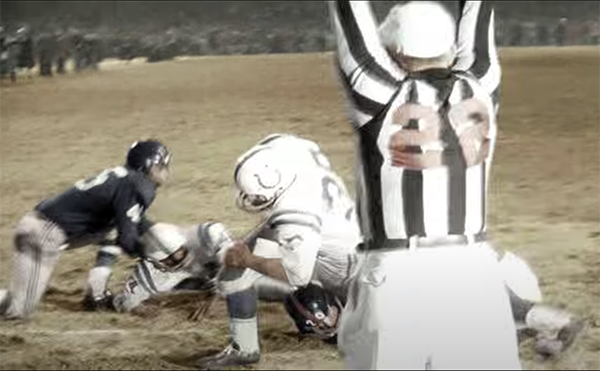
Baltimore’s Alan Ameche plunges over the goal line for the winning touchdown!(courtesy YouTube/NFL Films)

On the field? Maybe. In its impact on pro football and sports broadcasting? Absolutely!

By Mark Wainwright

imIt was one of those indelible moments in sports history: The 1958 NFL Championship, played on December 28, 1958 at Yankee Stadium in New York. The Baltimore Colts defeated the New York Giants 23-17 in sudden death overtime. 65 years later, the events of that Sunday afternoon still resonate throughout pro sports and sports media.

In 1958, the National Football League was far from the huge phenomenon we see today. Americans generally had much more interest in baseball, and during the Fall, college football captured the attention of sports fans on Saturday afternoons. The annual Army/Navy and Harvard/Yale clashes were national news stories, and fans followed the exploits of powerhouses like Notre Dame and Michigan. For most fans, pro football was an afterthought. Even in cities with pro franchises, the NFL clubs often played runner-up to the local baseball teams.

Baltimore and New York were two exceptions. The Colts were upstarts — Baltimore didn’t get an NFL team until 1953 — and the city quickly fell in love with the Colts; on game days, Baltimore’s Memorial Stadium was described as “the world’s largest outdoor insane asylum.” Meanwhile, the Giants had been part of the NFL since 1925, and they were considered the league’s most glamorous team, located in the world’s media capital. Two very different teams, both with passionate fan bases, playing a nationally-televised title game in New York City… indeed, America was destined to notice pro football that day.

Seventeen Pro Football Hall of Fame inductees were in the stadium that afternoon, along with a Heisman Trophy winner (Baltimore running back Alan Ameche). The Colts were led by quarterback Johnny Unitas and defensive end Gino Marchetti. The New York offense revolved around halfback Frank Gifford, while linebacker Sam Huff anchored the defense.

There were all-stars in the broadcast booths, as well. NBC’s national telecast was assigned to Chris Schenkel and Chuck Thompson; both of these gentlemen are now legends of their industry. Joe Bolan and Bill McColgan called the game for NBC’s national radio feed, while Les Keiter did the play-by-play for WCBS Radio in New York. And Bob Wolff did the radio call for Baltimore’s WBAL. Wolff was assisted by an eager teenager who worked as his spotter… a young man named Maury Povich (yes, that guy).

The first half, frankly, wasn’t anywhere near “greatest game” territory. While both defenses played fairly well, the offenses looked sloppy and disorganized, and the two teams combined for six turnovers in the first thirty minutes. The Giants managed only a Pat Summerall field goal, while the Colts — almost in spite of themselves — took a 14-3 lead into halftime. It could have easily been 17-3, but Sam Huff blocked a Baltimore field goal attempt.

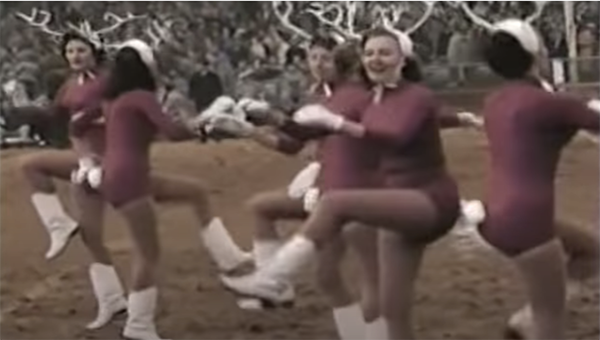
So, what was the halftime entertainment? Over the years, Super Bowl halftimes have featured performers like Lady Gaga and Michael Jackson. What 1950’s superstars would perform in the “super bowl” of 1958? Elvis Presley? Brenda Lee, maybe? Nope. It was the Baltimore Colts Marching Band, with their prancing majorettes looking quite fetching in their red leotards and reindeer antlers…

im

The Baltimore Colts Marching Band majorettes, in “reindeer” mode!  (courtesy YouTube/NFL Films)

Baltimore’s offensive woes continued into the second half. Early on, the Colts drove the ball to New York’s 1-yard line, but Alan Ameche was stopped for no gain on third down, then Ameche was tackled for a loss when he attempted to run wide on fourth down. In an interview decades later, Baltimore’s Lenny Moore revealed that Ameche botched the play; it was supposed to be an option pass, but Ameche didn’t hear Johnny Unitas’ signals correctly, and he ran instead of throwing a short pass to a wide open Colts receiver.

That goal-line stand awakened New York’s offense, and they needed only four plays to score their first touchdown to make it 14-10. The Giants then took a 17-14 lead early in the fourth quarter on a Frank Gifford touchdown reception, and while the Colts responded with two effective drives, they came up empty on both possessions; one ended with a missed field goal, the other ended when Unitas was sacked twice, taking the Colts out of scoring range. The Giants’ offense only needed a first down or two to ice the game, but Frank Gifford was stopped on a critical third down run. For decades, Gifford insisted he made the first down; Baltimore’s Gino Marchetti suffered a badly broken ankle in the pileup, and Gifford often said that amidst the chaos and confusion of tending to Marchetti’s injury, the officials did not spot the ball properly. However, when ESPN restored the footage for a 50th anniversary broadcast in 2008, an accident reconstruction expert analyzed the images and determined that Gifford was, indeed, just short of the first down (more about that ESPN program in our Epilogue). The Giants chose to punt the ball, and the Colts took over on their own 14-yard line.

This was the moment when Johnny Unitas began his ascent to legendary status. With just two minutes left, he moved the Colts downfield quickly. While there were several misfires, he made four critical completions, including three straight passes to his star receiver Raymond Berry. Those last three plays moved the ball 62 yards to the Giants’ 13-yard line, and with just seconds remaining, the Colts rushed Steve Myhra out to attempt a tying field goal. Myhra had struggled with field goal attempts all season, and Baltimore fans held their collective breath until the ball went through the uprights. The fourth quarter ended tied 17-17.

So… what happens next? Many of the players and coaches weren’t sure. It was not unusual for football games to end in a tie, but this game was for the NFL title. Would the teams be declared co-champions? Fortunately, the NFL had recently instituted an overtime rule for championships, and it would be decided on the field. The teams would play pure “sudden death.” The first team to score in any manner would win, and they would play for as long as it took.

The Giants won the toss and chose to receive, but they were not able to mount any kind of drive, and they punted the ball back to the Colts. Unitas now had all the time in the world, and Johnny U methodically moved the Baltimore offense to the New York 8-yard line. It was first-and-goal, and then, suddenly… the NBC Television feed disappeared! Nothing but snow on the screen!

This caused immediate panic in NBC’s control room, not to mention in homes across the nation, as viewers — particularly in Baltimore — bolted from their living rooms and scrambled to find the nearest radio. It was one of the worst possible moments to lose the live feed of a TV broadcast. And then…

A fan ran onto the field! Play was halted for nearly a full minute before New York’s Finest chased him down and escorted him to the sideline. Over the years, there has been endless rumor and speculation about this incident. Photographs show the fan was well-dressed and appeared very cooperative when the cops took him away; he certainly didn’t look like a drunken lout. Who was this guy?

Whoever he was, he is now the stuff of sports broadcasting legend. More than six decades later, it is widely believed that he was an NBC employee who realized the broadcast was interrupted and ran onto the field — or perhaps was told to run onto the field — to delay the game long enough to give the TV crew enough time to find a loose cable and fix the connection. As far as I know, he was never identified and the story has never been confirmed. One hopes the fellow received a bonus and a promotion for his quick thinking!

When the game resumed, the Colts ran two plays to reach third-and-goal from just over a yard away. A field goal attempt might have been the obvious choice, but Baltimore coach Weeb Ewbank was leery of sending a struggling Steve Myhra in to kick. Meanwhile, the coach trusted Unitas completely, and he left Johnny U and the offense on the field. A routine handoff to Alan Ameche secured a 23-17 Baltimore victory.

The game was breaking news nationwide. It was a big topic of Sunday afternoon dinner conversations, and it was headline news on front pages and in sports sections the following day. NFL and television executives soon realized that professional football could become a very valuable property, and they started making plans for increasing television coverage and boosting marketing exposure for the teams, the star players, and the sport overall. And down in Dallas, Lamar Hunt — a son of oil tycoon H.L. Hunt — started thinking about owning his own football team. Those dreams eventually led to his role in establishing the rival American Football League, which merged with the NFL just over a decade later. Historians and sportswriters have studied the 1958 title game, and they generally agree that event was the start of professional football growing into the colossus it has since become. It was the aftermath and the impact  — as much as the drama of the game itself — that led them to calling it “The Greatest Game Ever Played.”

*************************************************************************************************************

EPILOGUE

As I’ve mentioned in previous articles, television did not put a high priority on archiving sports events back then. There is no known videotape of the game; videotape was in its infancy, and while NBC presumably had one or two of the early machines available, it seems nobody bothered racking them up. There is no known kinescope film recording of the television broadcast, either. Fortunately, there was plenty of film footage of the game, both from overhead and from sideline views. This footage was shot by NFL Films, as well as various newsreel cameramen working for different organizations.

On the 50th anniversary of the game in 2008, ESPN produced a special documentary that used the old footage to re-create much of the action. The historic clips were colorized for broadcast, and the action was interspersed with comments and memories from players, fans, and broadcasters who were there. (Sadly, many of these gentlemen have passed away in the fifteen years since.) Most of Bob Wolff’s Baltimore radio broadcast was saved, and the NBC national radio call was saved almost in entirety. This historic audio was used in conjunction with the preserved video. Several versions of the ESPN special can be found on YouTube; here is a link to one of those.

Others have collaborated on an almost-complete reconstruction of the game, using the original newsreel and NFL footage, some of the colorized ESPN content, stock footage, and still photos. The audio portion uses the NBC national radio call by Joe Bolan and Bill McColgan (complete with vintage commercials!). There are several uploads of this project on YouTube, and there is also a version on the Internet Archive, available here. If you’ve never seen any of “The Greatest Game Ever Played,” punch it up on your laptop and enjoy!

Mark Wainwright is a long-time radio personality and voiceover performer. He was most recently the morning host at WSYR in Syracuse; he is also a Baltimore native and life-long Baltimore Colts fan (and he still hasn’t gotten over the Colts leaving town and moving to Indianapolis decades ago!). He can be reached at: markwainwright@earthlink.net

Industry Views

Pending Business: Welcome to 2024

By Steve Lapa
Lapcom Communications Corp
President

imWhat do your New Year’s resolutions look like?

Chances are your resolutions included what I call the old reliable “mores.” Earn more, save more, exercise more, eat more of the healthier foods. Sound familiar? Do you break down the resolutions into daily goals? As in here is what I need to do today to meet my goals and fulfill my resolutions. How about the “less” category? Do you spend any time thinking about what you want to do less often? Let us start with some obvious candidates.

A recent survey by Frequence.com indicated 84% of respondents in marketing and advertising felt stress on the job. Maybe the other 16% had just taken their morning meds. Seriously, can you blame the stressed-out thousands who have spent a career working for companies that stand on the brink of financial peril, delist from the stock exchange, or initiate short-notice personnel cuts? Has anyone in the radio business reading this column ever experienced a fully stress-free experience for over 36 waking hours? If it is not work, maybe it is friends, family, travel issues, or anything else that you simply cannot stop thinking about.

“Less” resolution #1. Less stress on the job, unless you are in the parachute business or an air-traffic controller or emergency room doctor in New York or Chicago, you get where I am going with this.

The same survey showed 72% of respondents work for organizations expecting them to deliver more with less support. The last time I worked for a broadcast company that provided me with my own dedicated assistant, the Cowboys won the Super Bowl in the first ever televised in prime time. Please raise your hand if you are a seller or sales manager with your own dedicated assistant. Anybody? How about in the past 10 years?

“Less” resolution #2. Less is more. The slogan takes on new life in the remote work environment that is a norm for many in the media buyer-seller relationship. Everyone in the chain is being asked to do more, reach increased goals, and perform to a higher standard with less support. You are either on the income money flow line or the expense side. Pick your lane and try your best to deliver measurable results.

Technology is driving change in every corner of the workplace. New strategies and technologies designed to monetize media impressions are part of our culture. Surveys show anywhere from 52-70% of sellers and marketers are challenged with keeping up.

“Less” resolution #3. Prioritize your upskilling. Pick the one area that will allow you to hit your most important “more” goals and master it. Never stop learning, just adjust your learning curve to what works best for you.

Here’s to a more productive and prosperous New Year!

Steve Lapa is the president of Lapcom Communications Corp. based in Palm Beach Gardens, FL. Lapcom is a media sales, marketing, and development consultancy. Contact Steve Lapa via email at: Steve@Lapcomventures.com.

Features

Ladd Have Mercy

imLOS ANGELES – As students, enthusiasts and caretakers of this wonderful medium, we’re keenly aware that radio’s “Golden Age” boasted an incredible array of entertainers and broadcasters.

With lifestyles, technology and society being what they are today, it’s almost inconceivable to imagine that families would actually gather around the radio and attentively listen – and indeed hang onto – each and every word that emanated from that mysterious entertainment-laden box sitting in the living room.

Fundamentally important back then, of course, was a concept known as “Theater Of The Mind.”

No one embodied and personified it better than one of the bigger-than-life talents of that era: Orson Welles.

Most are familiar with his epic “War Of The Worlds.”

Pictures Set In Songs

The list of other outstanding “Mercury Theater” presentations Welles was responsible for is much too lengthy to cite here, but his legendary “Theater Of The Mind” mystique lived on nightly in Los Angeles, where Jim Ladd was a welcome guest for Southern California listeners dating back to 1969 and hosted a regular show on SiriusXM’s Deep Tracks channel the past 11 years.

Theater Of The Mind so perfectly describes what Ladd tried to do, although it’s not radio drama in the pure sense. “What I [attempt] at night is to show you pictures and do that by playing sets of songs,” the (then) highly popular KLOS-FM, Los Angeles 10:00 pm – 2:00 am personality remarked to me. “If you follow the lyric content of each song, as well as the song’s emotional feel, it should tell you a story with a beginning, middle and end. Thus, it’s theater.”

Throwback To Creativity

In addition to providing his special spin to Theater Of The Mind, Ladd was also responsible for keeping another bit of radio history on life-support.

Most air personalities are required to adhere to strictly enforced music lists, but Ladd’s nightly, four-hour, Los Angeles air-shift was a throwback to the days of “free-form” radio.

The result was similar to what existed in April 1967, when a new phenomenon started taking shape. “That was the beginning of FM and this multi-billion dollar industry,” Ladd recalled. “[Free-form] started on a station [KMPX, San Francisco] where the phone was literally disconnected, because they couldn’t pay the bill. [Tom Donahue] had an idea; he went there and it took off. For a while before deregulation, that’s what all FM radio did in any market. Free-form worked great, until they killed the golden goose.”

Right Place, Right Time

Southern California native Ladd was extremely fortunate to have been able to launch his radio career in the country’s second-largest market. “Part of it was timing,” he admitted. “I was at a little station in Long Beach [KNAC-FM] that decided it was going to try this new, hippie, underground thing. They didn’t know what it was, but [the feeling was to] hire some hippies and see if they could make some money with it. I happened to be right there at that time.”

A frustrated musician, who wanted to be a songwriter, Ladd recounted a life-altering conversation he and a buddy had in a car. “My friend said that I should be in radio. I was 19 or 20 at the time and your friends at that age seldom notice anything but themselves. For some reason, that stuck with me. Thank God, FM was in its infancy and they’d take complete novices like me off the street and give us shows. Owners didn’t know anything about the Grateful Dead or The Who, but we did.”

Check Mate

Instead of walking into a studio and following a computer-generated music log, Ladd was given freedom to use his imagination. His only preparation was what was happening in life.

Resulting sharp, clever music sets he composed weren’t written out in advance. “The way I work is to turn the music up loud and get the song working on me,” he commented. “Once [that happens], it keys in my mind what will fit next.”

Such an intricate process included a mental checklist. “I’ve figured out the lyrics will work, but I need to know how the song I’m playing ends and how the next song begins,” he explained. “If I’m playing a balls-out rocker, I can’t go into some acoustic piece. In that way, it’s really like a chess game. I have to plan these things to start every single segue as I’m doing it. That’s the way that works best for me.”

There were nights, however, that Ladd knew that he “[didn’t] have it,” but as he maintained, “I’ve been doing it long enough to put on a good professional show. Sometimes, I don’t have what I’m striving for, which is to make a connection with the audience. Without having to prompt them or explain anything, my audience lights up the phones. They call because they get what I’m doing. Once that connection is made, then look out, because the rocket is taking off.”

Gracefully Handling The Tragedy

Recalling the horrific September 11, 2001 “Attack On America,” Ladd noted that although it was one of the country’s greatest tragedies, “It was easy to immerse myself into something like that. It so moved me that I had no problem thinking of songs to play or what I wanted to say.”

Judy Collins’ version of “Amazing Grace” was the first song he played when he went on the air that night. “Believe it or not, it set the tone for what I did for … the next two weeks.”

As it usually did, the audience – even or perhaps especially in this painful period – stepped up to the plate. “This is the thing about free-form radio that’s so precious to me,” Ladd emphasized. “Nobody called me on 9/11 with an idiot request. When I played sets of 9/11 songs, everybody was calling in with [appropriate] suggestions. Second only to dealing with the tragedy, the hardest part was to know when I could play groups like AC/DC again. I found that very difficult; you can only feel your way through it.”

 Loyal Listeners

In his third tour of duty at (then ABC-owned) classic rocker KLOS, Ladd was a legitimate cult figure in the Southland for his work at legendary cross-town rocker KMET.

Southern California listeners were stunned on Valentine’s Day 1987 when the “The Mighty Met” (now Audacy smooth AC KTWV) – became smooth jazz “The Wave.”

Also on Ladd’s impressive resume were stints at Los Angeles outlets KLSX and KEDG.

The notion of an air personality “connecting” with the audience is both elementary and elusive. Ladd was a rare case of a non-drive time music personality who amassed a loyal, vocal following.

Grateful for such audience allegiance, Ladd didn’t take it for granted. “My audience has been that loyal from KMET to KLOS and all the [other] stations in between. My part of the bargain is that I won’t lie to them or let them down by doing a format. I was off the air twice in my career for two years each. That was very difficult, but because I did that, I’ve earned the right to do this and I think the audience responds to that.”

Offered jobs by stations that wanted the “Jim Ladd” name, he opined, “They didn’t understand what that meant. They thought they could just plug in my name, not let me do what I did and it would be the same thing.”

Your Attention Please

Evenings and nights were Ladd’s domain throughout his career. “I wouldn’t want to do middays or afternoon drive,” pointed out the personality known for his “Lord have mercy” exclamations. “Listening habits are such that you can’t sit and listen like you can at night. People are working, picking up the kids and doing life.”

Much like Welles’ Mercury Theater, Ladd’s show required attention. Otherwise, it was just like playing one song after another, without making that all-important connection. “The audience’s side of the bargain is that they have to bring their attention to the show,” he insisted. “I’ve done [6:00 pm – 10:00 pm] in my career and that worked out very well. The show is a bit different, in that, it’s not quite as eclectic. I don’t know if I’d be playing Judy Collins and Johnny Cash in [that time]; maybe – but maybe not.”

Convinced his free-form style could be utilized elsewhere, Ladd, nevertheless, pondered that to his knowledge, “I’m the Alamo – the last guy standing. That’s certainly the case in a major market. The big tragedy is that there are so many talented [personalities] who, although they wouldn’t do the same show that I do, could do free-form radio. We’re losing all that talent. I’m not the only guy in the world who can do it. I’m the one who was stubborn enough to say that I won’t follow a list – I just won’t do it.”

Powerful Trinity

Among those who influenced Ladd’s on-air style were former MTV personality and ex-KEDG program director J.J. Jackson; veteran Los Angeles air talent Raechel Donahue, who went on to do 7:00 pm -12:00 midnight in Denver at KQMT “The Mountain”; longtime KMET personality the late B. Mitchel Reed; KMET’s Pat Kelley; Cynthia Fox; Jack Snyder; and the late, underrated Mary Turner. “The wonderful, beautiful part of free-form radio – and most importantly – at KMET was that it wasn’t about being a star,” Ladd asserted. “What we were doing was our part of the ‘social revolution’ at the time. It was like a triad: The people on the street, the music, and us. We took the message of Dr. [Martin Luther] King and combined it with the music of Bob Dylan.”

One highly significant aspect in noting those former KMET staffers was that they’d each listen to everyone else’s show and it elevated their own game. “I’d hear Cynthia do a great segue, or Mary would do a great segment and that would inspire me,” Ladd enthused. “What I miss most is that kind of camaraderie – it’s just me now. I can’t tune in to hear someone else’s great segue. When I heard one of my colleagues do something that touched me, the first thing I wanted to do was to call them and tell them it was great. The second thing was that – from their subject matter – I got 15 different ideas to use when I got to work that night. That was the beauty of it.”

Role Model

National audiences became aware of the iconic Los Angeles talent through shows such as “Innerview,” “Headsets,” and “Jim Ladd’s Living Room.”

Considerably more than someone who voiced a script for a syndicated show, Ladd spent a great deal of time scrutinizing the fine art of interviewing. “I ripped off just about everything I know about interviewing people from Elliot Mintz,” he confided to me. “Elliott was my role model. He’d interview the Shah of Iran one week and John Lennon & Yoko Ono the following week. He’d talk with everyone in a warm, low-key and intelligent manner. It was completely unlike anything [else] I’d heard at the time and that really impressed me.”

The “Innerview” show had an 11-year run and was carried by 160 stations. “It was the first of its kind,” boasted Ladd, whose other syndication work involved voiceovers for an overseas television show. “I’m very proud of the work we did [on ‘Innerview’]. I did 99% of the interviews in the front room of my house in an artistic community in Laurel Canyon. People would immediately be put in a very comfortable place. It’s not a studio – it’s my home.”

The Work Is The Key

Another reason why people felt at ease was that, instead of focusing on a person’s life, Ladd addressed their work. “They loved that. Rather than talking about how many girls they had, what kind of drugs they did and life backstage, I studied every word of every lyric of the new album they wanted to talk about and grilled them about their songs on the environment. It would require six to eight hours of preparation. Then there was another 20 – 25 hours to write the one-hour show; it was a lot of work.”

Writing became such a worthwhile experience that, in 1991, he penned “Radio Waves: Life And Revolution On The FM Dial.”

As a result of these syndicated projects, this immensely respected rock personality diversified himself; the book became a big hit. “I guess I’m a radio guy who learned how to become a writer,” Ladd mused. “In order to get up enough courage to write my book, I read authors I like. I was required to do a great deal of writing for ‘Innerview’ and would write out what I’d say – which is something I never do [on my live show]. You’d also end up with two hours of tape and pick out what the person was going to say, how I was going to introduce it and what song would follow it.”

A Distant Second

Whenever anyone asked Ladd to name his favorite band, he qualified his answer by separating the Beatles.

The quartet, he stressed, had to be placed in a completely different category.

After that’s been done, he named the Doors as his favorite.

The same applied to his most memorable radio experiences, with KMET being the Beatles’ equivalent. “We were at the right place at the right time with the right people. We loved each other and there’s never been anything else like it.”

Nonetheless, he quickly stated that his favorite time is the next time he was able to sit behind a microphone. “The reason for that is [KLOS’-then program director] Rita Wilde,” he proclaimed. “I don’t know how I got so lucky to have a boss who was [such a great on-air personality] and so supportive. If it weren’t for Rita Wilde, I wouldn’t be on the air – that’s just a fact. I want to keep free-form radio alive for the audience, but I also owe her to make this happen. She’s under a lot of pressure [when it comes to my show]. When I go in at 10:00 pm, the format literally stops. I can’t think of another boss in the world who would understand that.”

Numbers Game

His multi-decade Los Angeles track record and loyal following notwithstanding, Ladd still realized that ratings played a role in dictating his employment; however, as he declared, “Rita is one of the first people I’ve ever worked for in this business I trust when she says the numbers are up or down.  Sometimes in my career I’ve found out from people who didn’t work at the station that my show was doing great. When there’s a down book, [management is usually] right there.”

Ultimate People Skills

Certain managers and programmers, he claimed, kept good books a secret from him; however, “Rita calls immediately when I have an up book. If I have a down book, I don’t hear from her; I have to call her. That says volumes to me. We’ll deal with a problem, but she doesn’t want to get me upset. She might tell me that I’m playing too much of this or not enough of that, but she never says anything [threatening]. It’s always from a helpful and suggestive [stance]. When the numbers are good, she leaves me totally alone. From my perspective, you can’t ask for more than that. Her people skills are unbelievable.”

In addition to have wanted to keep free-form radio alive as long as possible, Ladd disclosed that he wanted “to walk away before I can no longer do my job. I don’t know when it will happen, but the next stage in my life will probably be to write fulltime – I’m working on it.”

Contact TALKERS Managing Editor Mike Kinosian at Mike.Kinosian@gmail.com
Industry News

Robert “Hardy” Poole Named Morning Co-Host at “98.5 The Sports Hub”

Beasley Media Group announces that Robert “Hardy” Poole moves from the midday “Zolak & Bertrand” show to morning drive as the new co-host of the “Toucher & Hardy” show on sports talk WBZ-FM, Boston “98.5 The Sports Hub,” effective January 4. Beasley says, “Over the past eight years, he’s played a key role in propelling the ‘Zolak & Bertrand’ show to unprecedented ratings success in theirim midday slot. Hardy has also lent his voice and creative talents to various platforms across the station, including the creation of the wildly popular ‘Fuppets’ videos for Felger & Mazz. In addition, he has been the longtime host of the ‘Sports Hub Golf Club’ show and can also be heard on Beasley’s Rock 92.9.” Morning host Fred Toucher says, “I’ve known Hardy and admired his talent for many years. I’m very excited to begin this new chapter and feel revitalized by the new opportunity.” Hardy comments, “As a lifelong radio guy, I’m thrilled for this opportunity. I’m looking forward to working with Fred and the rest of the morning show crew on what I believe will be a great show.” Station PD Rick Radzik states, “Hardy is one of the most talented and creative individuals I have ever worked with in radio. Teaming him with Fred was just a natural fit for our new morning show. I look forward to them providing great content and entertaining our listeners for years to come.”
Industry Views

Monday Memo: CES2024, Help Yourself

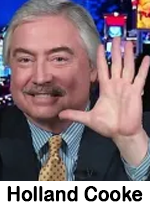
By Holland Cooke
Consultant

imIt’s massive, it’s mind-boggling, and we-the-workin’-press are under strict instructions NOT to call it “The Consumer Electronics Show.” Lotsa luck. 100 thousand+ of us from 150+ countries will descend upon the sprawling Las Vegas Convention Center and other venues up-and-down The Strip.


This long-running expo has evolved from “stereos” and VCRs and drones and smartphones and other thing-in-a-box products, to the new media which are broadcasters’ friends and foes. Yes, CES is still gadget heaven, but Artificial Intelligence – and how it will soon change everyday life – will be the big buzz this year.

im

TV network newscasts and cable news channels cover this event heavily, and you can too. Again, next month, I am offering TALKERS subscribers free daily 60-second radio reports, for air January 8-12, also OK for stream cover-up spots. There’s NO paperwork and NO national sponsor. So, if you sell a local sponsorship, keep the money.

You can hear a sample report (from CES2023), a spec you can use to pitch, at HollandCooke.com, where I will post daily reports the-night-before air.

Holland Cooke (HollandCooke.com) is a consultant working at the intersection of broadcasting and the Internet. He is the author of “Close Like Crazy: Local Direct Leads, Pitches & Specs That Earned the Benjamins” and “Confidential: Negotiation Checklist for Weekend Talk Radio.” Follow HC on Twitter @HollandCooke

Industry News

WJR, Detroit Cuts Sean Baligian Loose

Detroit sports talk personality Sean Baligian exits Cumulus Media’s news/talk WJR where he’d been co-hosting the nightly “Sportswrap” show with Lomas Brown. The Detroit News’ Tony Paul reports thatim Baligian is the victim of budget cuts at the station. Baligian has worked at several Motor City sports talk stations during his career and has been with WJR for the past seven years in various capacities. Baligian, who says he might be done with radio, tells the News that getting let go is hard to put into words. “The worst part is what it does to your family. I think they’re always waiting for the other shoe to drop, and that sucks. You feel like a failure… I know the life that I chose. And I mean it when I say I’m not bitter. This is the road I decided to go down.” Meanwhile, Lomas Brown is hosting the “Sportswrap” program solo.
Industry News

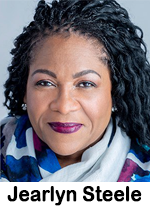
Longtime WCCO, Minneapolis Host Jearlyn Steele Signs Off

Bring Me the News reports that longtime Sunday evening host Jearlyn Steele ends her weekly show,im “Steele Talkn’” after 27 years on the air at Audacy’s WCCO-AM, Minneapolis. She told listeners on last Sunday’s final program. Steele made the announcement during her final broadcast on Sunday, saying: “It’s been a blast. I want someone else to come and do a great job and learn, hopefully as much as I have learned. I have been a part of your lives and you have been a part of mine for many years. And I will not forget that.” Read the full story here.
Industry Views

Monday Memo: Time Management? Don’t Even Try

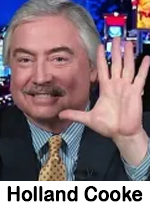
By Holland Cooke
Consultant

imNews flash: Time cannot be managed. But tasks can.

As we install a new PD at a client station, I will share with you what I’m sharing with him: Four techniques I myself have found EXTREMELY helpful over years of dancing-as-fast-as-I-can in several management positions.

1. “Map” your week. Use a spreadsheet, to create a schedule that doesn’t change week-to-week. Slot-in items like:
a) If you’re on-air: Your show + prep + when you do your daily promo/blog, post/social media, etc.
b) Talent meetings.
c) Regularly-scheduled Boss Time (see “folders’) below.
d) Is there a weekly staff meeting or department heads meeting? Do you routinely meet with sales? Slot it in.
e) In-bin and phone time (see below).
f) Days you’re available to do-lunch, or for sales calls.
g) MBWA time (“Management By Walking-Around”). Build it in.
f) What else?

Tip: Round-up. If something takes 45 minutes, slot-in an hour, to allow for bathroom breaks, checking voicemail, or running-across-the-street for a cuppa cawfee. Consider doing so even if there’s free crankcase coffee there at the station. It’s fresh air. Building in a couple short walks each day can really help you clear your mind between events.

This map you are making is “a living document,” subject to ongoing revision. But plan-your-work-and-work-your-plan, and you’ll find that lots more gets done. You’ll also find that people respond by being more punctual for you.

Tip: Find a hiding place. Always-being-in-your-office tempts interruptions. Two decades of management – and 23 years as a landlord – taught me how some issues that seemed “urgent” to people seeking your attention tend to resolve themselves before the would-be interrupter finds you.

2. Show your boss two file folders, one with your initials on the tab, the other with his/her initials on the tab. Give him/her the one with your initials, and keep the other one. Then, schedule a regular meeting (that goes on your map). The meeting can be weekly, daily, Monday/Wednesday/Friday, whatever. Lock it in, show up on-time.

Pledge to each other that you will avoid ad hoc, single-topic conversations. Unless someone is bleeding or something is on fire, the conversation can wait for a scheduled meeting. Toss a note, or pertinent document, into the folder.

I started doing this when I worked for a particularly “spontaneous” GM. NO NAMES. His half-dozen daily “Got a minute?” interruptions were extremely disruptive. And he was flattered when I showed him the respect of blocking-out Quality Time for issues we shared. Sure, he’d back-slide from time to time. When he did, I would ask, politely, “Do we need to handle this now, or should I put it in The Folder?” He took the hint; and praised me later, during my Performance Review, for suggesting the idea, which he instituted with the sales manager, business manager, and chief engineer. THANK ME LATER FOR THIS ONE.

3. Don’t answer the phone! That’s why there’s voicemail (and caller ID). Phone calls about every little thing are a torturous pause button and invite long workdays and more and taller piles of half-finished tasks. Set aside two times per day to schedule and return calls. Quality Time. Try it, and you will REALLY thank me. And I saved the best for last…

im

4. Touch each piece of paper ONCE. See “In-Bin time” in your weekly map above. Do one-of-the-following with every piece of paper or email that finds you:
a) Deal-with-it instantly (i.e., scribble a response and return to sender), or otherwise bring the issue to closure; OR
b) Send it to someone else (“delegation” in management lingo); OR
c) File it; OR
d) Circular-file-it (sort your mail over the wastebasket); OR
e) There is no e).

Ritualistic as all-of-the-above may seem, YOUR LIFE WILL CHANGE if you take these suggestions literally. Things are busy enough that no routine less structured will suffice. And conducting yourself accordingly will send an important message to the people you work with.

Holland Cooke (HollandCooke.com) is a consultant working at the intersection of broadcasting and the Internet. He is the author of “Close Like Crazy: Local Direct Leads, Pitches & Specs That Earned the Benjamins” and “Confidential: Negotiation Checklist for Weekend Talk Radio.” Follow HC on Twitter @HollandCooke

Advice

Welcome to No-Brand Land!

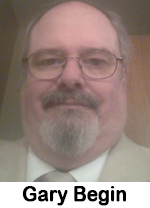
By Gary Begin
Sound Advantage Media

imBroadcasting executives spend millions building their radio station’s brand in the marketplace. But is it being spent in the right place?

The frontline salesperson is a marketer’s greatest asset in creating brand justice and impact. But if you ask brand managers to look at their brand-building budgets, you’d probably see expenses allocated opposite to what drives brand purchase decisions.

Brand marketers continue to pump big bucks into extensive ad campaigns while doing next to nothing to deliver relevant, brand-supporting messages at the all-important, more significant level—the distance between a company’s sales voice and a prospect’s purchase decision.

What’s the answer?

It probably lies somewhere between (1) the unwillingness of radio stations and brand managers to go further “downstream” with their strategic recommendations and (2) the lack of useful tools to get them there.

Welcome to No Brand’s Land

Increasingly, a company’s branding success depends less on what they sell and more on how they sell it. Selected experts in branding seem to be coming around the idea that the power to make or break your brand-building effort lies not in the quality of your advertising but in the customer’s experience at the point of sale. In radio, that’s your over-the-air product and how your ad rep handles the advertiser.

On one side of No Brand’s Land, brand marketers can control all the implementation, ensuring the advertising campaign is right on, the media coverage generated by your on-air promotion is consistent, your Web site looks the same, and your corporate design is in place.

But on the other side of the No Brand’s Land, salespeople are still doing their own thing. They are cutting and pasting old proposals with outdated information and incorrect messages. They’re fabricating homegrown collateral tools and PowerPoint presentations that are, at best, inconsistent with corporate positioning or, worse, downright inaccurate.

The most frightening thing for brand marketers is that these cobbled-together documents must walk the halls of prospective customers, representing the company’s brand at the most critical points in the sales process. Ouch.

Adding insult to injury, the field-fabrication virus spreads exponentially as this lousy information is perpetuated across the channel on the brand’s intranet.

Crossing Over No Brand’s Land

To navigate and successfully cross No Brand’s Land effectively, marketers must start by adapting brand message creation and delivery to today’s strategic sales processes. Two trends will drive marketers’ efforts to create brand-supporting content that helps salespeople sell.

Trend #1: Value Selling

For more than a decade, sales training and methodology experts have focused on improving the consultative selling skills of salespeople—especially in complex selling environments. The concept is simple: first, salespeople identify customers’ needs; then, they demonstrate the ability of a solution to respond to that customer’s specific needs successfully.

Often called Value Selling or Solution Selling, this dynamic and interactive sales process replaces previously static, one-way techniques that debate the merits of competing features and functions.

While salespeople move toward creating a much more customized sales experience for each prospect, most marketing departments continue to deliver generic messaging using static collateral tools—a one-size-fits-all approach for a one-to-one world. No wonder salespeople are forced to scramble to create custom content, piecemealed from various sources, to demonstrate they have listened to the customer.

The first thing brand managers can do to help is translate their high-level positioning into street-ready value propositions and solution messaging that speak to customers the way salespeople have been trained to sell:

  • Create customer empathy by identifying and demonstrating a proper understanding of the critical do-or-die issues facing your customers. Do that for each level of the decision-making team and link it back to how they do their jobs today.
  • Next, determine and articulate the risks if they do not address these issues. Also, firmly establish and highlight the rewards if they do act. Take special care to find out how your customers will define success—determine what they want to brag about if they are successful in achieving positive results.
  • Then demonstrate how your company’s solution helps them respond specifically—and successfully—to their key do-or-die issues.

Trend #2: Dynamic, Personalized Collateral Building

Value selling has raised the bar, forever changing customer expectations about sales experiences. Customers expect company interactions to be personal, relevant, and tailored to their specific needs.

Meanwhile, marketing departments have tried to keep pace by adopting segmentation strategies, doing their best to tailor messages and create more customer-relevant positioning. However, the tools to deliver these increasingly sophisticated messages through the sales channels have lagged. So, we’ve seen a proliferation of static collateral tools designed to fit every occasion.

Unfortunately, salespeople are neither warehouse managers nor librarians, and they have difficulty tracking and finding suitable materials when needed. In response, marketers have set up sales intranets to supply 24×7 access to support materials.

While these intranets improve accessibility to materials, they don’t resolve the most significant issue facing today’s value-selling salespeople: the need to provide prospects with dynamic, personalized sales communications. With only static documentation, salespeople begin creating unique, customized documents for each sales situation.

Typically, this happens at the expense of the brand and the company. The lack of consistency between radio stations and from salesperson to salesperson—undermines the millions spent on brand awareness advertising. The extra time spent by salespeople crafting these personalized proposals, presentations, and collateral pieces keeps them from time better spent with customers.

Marketing’s big win is that every radio salesperson, even within a multi-entertainment environment, will now communicate a consistent company message. Imagine the brand-building power unleashed when sales reps begin delivering a persuasive, powerful, and pre-approved message at every point of customer contact.

Gary Begin can be contacted at: garybegin10@gmail.com.

Industry News

TALKERS News Notes

Talkers Books, the book publishing arm of TALKERS, celebrates the first anniversary of the release of one of its most successful titles, From Immigrant to Public Intellectual: An American Story (Talkersim Books, 2022) by Dr. Murray Sabrin. The book has been an Amazon bestseller and a popular vehicle sparking conversations on political news/talk shows across America. Its author, Murray Sabrin, Ph.D. is emeritus professor of finance, Ramapo College of NJ. Dr. Sabrin – a prolific author – is considered a “public intellectual” for writing essays about the economy in scholarly and popular publications as well as being a prolific guest and “go-to” resource on hundreds of radio and TV talk shows and podcasts. According to publisher Michael Harrison, who wrote the book’s provocative foreword, “From Immigrant to Public Intellectual is a truly American story about an immigrant child’s rise from humble beginnings to forge a stellar career as an educator, author, candidate, and media influencer. Murray Sabrin explains libertarianism in plain language using his own life story set against a half-century of changing times. Talk show hosts have been tapping into this articulate scholar’s knowledge and views for more than three decades since his impressive third-party showing as the Libertarian candidate for Governor of New Jersey in 1997.” To learn more about Dr. Murray Sabrin please visit murraysabrin.com and murraysabrin.substack.com.

SiriusXM’s Megyn Kelly will host a special live edition of her program on December 6 at 10:15 pm ET immediately following the “NewsNation” Republican Primary Debate. SiriusXM’s Triumph channel will also carry the debate live.

New York-based software firm Aiir Inc announces the addition of five news staffers. They include Paul Carlin and Phil Ray who join the customer support team in the UK. Phil Hannon joins Aiir’s team in North America, as does Chase Daniels, who has been serving as Bold Gold Media’s director of programming. Additionally, Alex Watson assumes the newly created position of customer experience specialist.

Edison Research’s Top 10 Findings of 2023 will be unveiled in a 30-minute webinar on December 13 at 2:00 pm ET. Edison says the list-worthy findings on audio, podcasts, radio, exit polls and more from its custom research and syndicated datasets will be presented by many of the researchers who worked on the studies.

Industry News

TALKERS News Notes

Actress Shannen Doherty teams up with iHeartPodcasts for her podcast, “Let’s Be Clear.” A press release says, “Shannen Doherty will open up like never before in her new live memoir podcast. ‘Let’s Be Clear’ promises to be a raw and candid exploration of Shannen’s personal journey covering everything from her TV and film credits to her stage four cancer battle, friendships, divorces and more. The podcast will also provide a platform for Shannen to share her life experience, the strength that carried her through difficult times, and her hopes and dreams for the future.”

FOX News Audio debuts a new weekly podcast hosted by FOX News correspondent Benjamin Hall called, “Searching for Heroes with Benjamin Hall.” The podcast highlights inspiring stories of community and compassion, while providing a voice to America’s unsung heroes. The first episode features a look back at the catastrophic injuries Hall sustained while covering the war in Ukraine and the extraordinary efforts that aided his road to recovery. While news gathering in Ukraine in March of 2022, Hall’s car was hit by a projectile missile, leaving him with one working limb and tragically taking the lives of his colleagues, FOX News photojournalist Pierre Zakrzewski and Ukrainian journalist Oleksandra Kuvshynova. Since the attack, Hall has been inspired by the incredible efforts of everyday heroes similar to those who went above and beyond to help him throughout his arduous journey of recovery.

Industry News

TALKERS News Notes

“The Patriot” is coming to Houston. TALKERS magazine sources indicate that a new conservative news/talk station with a strong, market-wide signal will debut in Houston on or shortly after January 1, 2024. It will feature new, local morning and afternoon drive shows and an array of syndicated personalities including Rob Carson, Todd Starnes, Rich Valdes, Chris Plante, and Wendy Bell. Confirmation to come. In the meantime, for more information contact: Steve@Lapcomventures.com

Jordan Schlansky rises from Conan O’Brien’s associate producer (with “various duties”) to his co-host – with the launch of “The Conan and Jordan Show” on SiriusXM’s Conan O’Brien Radio channel. SXM says, “Conan and Jordan will explore their strange relationship and get to know each other even better during their radio series. In the debut episode, the pair delved into Jordan’s favorite band, Rush, and his pronunciation of Socrates, among other topics. Plus, they spoke with several callers live on air.”

In conjunction with today’s national Giving Tuesday, the Broadcasters Foundation of America is asking radio and television professionals to consider a tax-deductible donation that will help their colleagues in need. The BFoA, a 501c3 charity, provides financial assistance to people in radio or television who are in need due to a debilitating disease, accident, or disaster. BFoA president Tim McCarthy comments, “Giving Tuesday is a perfect day to think of our colleagues who have fallen on challenging times. Every week we receive more requests for aid, and we cannot turn our backs on our hard-working colleagues who life has dealt a difficult hand, leaving them in need of our help.” Find out more about how to give here.

Audacy Dallas raised over $88,000 for the My Possibilities charity that serves adults with disabilities such as Down Syndrome, Autism, Asperger’s, Prader-Willi, head injuries and more, as part of 105.3 The Fan’s 13th annual Piece-A-Thon. On November 22, midday show “K&C Masterpiece” co-hosts Kevin Hageland, Cory Mageors, and Mike Bacsik took over the station’s airwaves from 5:30 am to 7:00 pm and welcomed special guests that included Dallas Cowboys EVP and chief brand officer Charlotte Jones, Dallas Stars Foundation president Marty Turco, former Texas Rangers pitcher Derek Holland, and more.