


Industry Views

Changing the Words Isn’t Changing the Use
img

By Matthew B. Harrison
TALKERS, VP/Associate Publisher
Harrison Media Law, Senior Partner
Goodphone Communications, Executive Producer

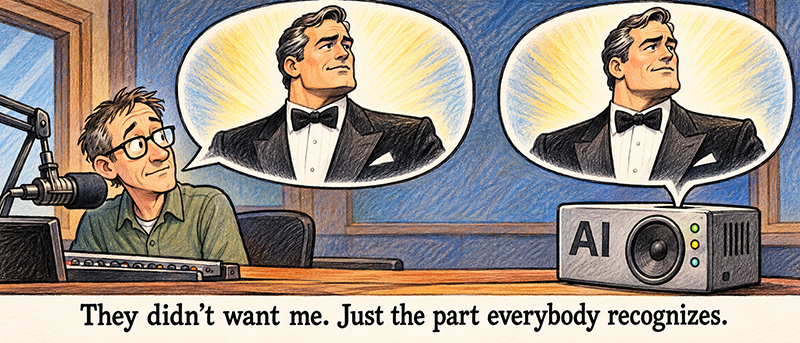
imgAI can make someone else’s story sound like you. What have you added?

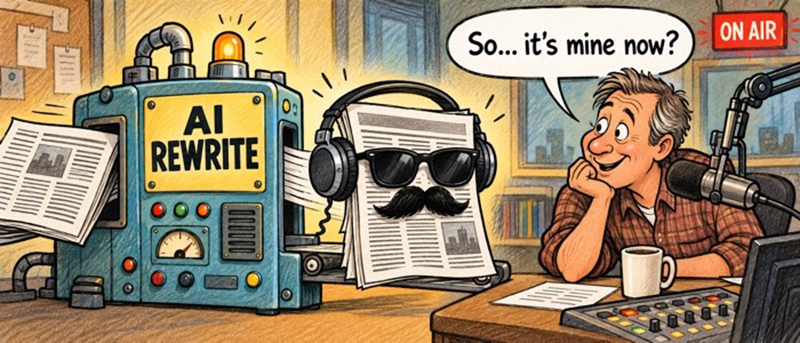
Imagine this morning’s show prep: a host finds a terrific newspaper feature, drops it into an AI tool, and types, “Make this 90-seconds, conversational, in my voice.” Seconds later, there is a polished script. The sentences are different, the pacing works, and it even sounds like something the host would say. The software has changed the words. But has it changed the use?

That question deserves a moment before the microphone opens. “Rewrite this” is an instruction to software, not a legal clearance process. Copyright reaches beyond identical sentences: an abridgment or adaptation can still use protected material from the original. Replacing the vocabulary does not necessarily remove the underlying copyright issue.

First, though, let’s protect something equally important: the freedom to report the news. A newspaper does not own the facts it uncovers, and broadcasters can report those facts in their own words. Copyright protects the author’s expression, not the event, information, or idea itself. An AI-assisted factual summary is therefore not automatically an infringement, either.

When a use does borrow protected expression, fair use requires more than checking whether the wording changed. Courts consider the purpose and character of the use, the nature of the original, how much protected material the user took, and the effect on the original’s potential market. News reporting and commentary can qualify, but neither label guarantees the result. A shorter version that serves as a substitute for the original raises a different question from an excerpt used to examine or criticize it.

For a host, a useful editorial question follows: What am I adding besides my voice? Perhaps the story prompts an interview with the reporter, a challenge to the conclusions, or an explanation of what the issue means locally. Those choices give the audience a reason to hear your treatment. They do not automatically establish fair use, but they help distinguish developing a segment from repackaging a feature.

AI can help with that development. Ask it to suggest follow-up questions, identify assertions worth checking, or organize your own notes into a workable outline. Then read the source, verify the facts, and make the editorial decisions yourself. Credit the reporting that helped you, while remembering that attribution and permission serve different purposes. A source acknowledgment is good practice, but it does not authorize an otherwise infringing use.

The opportunity here goes beyond avoiding a claim. A host’s value includes judgment, curiosity, experience, and the relationship with listeners, all things worth bringing to the microphone. Use AI to make room for more of that work. A script can sound like you without giving the audience anything of yours.

Matthew B. Harrison is a media and intellectual property attorney who advises radio hosts, content creators, and creative entrepreneurs. He has written extensively on fair use, AI law, and the future of digital rights. Reach him at Matthew@HarrisonMediaLaw.com or read more at TALKERS.com.
Industry News

BFoA Announces New Hardship Grants

The Broadcasters Foundation of America announces that it is expanding its charitable assistance to help more radio and television professionals facing financial hardship with the addition of Hardship Grants for broadcasters on unpaid or reduced-pay leave and those confronting extraordinary expenses related to imgfamily care, housing emergencies, relocation, or theft. BFoA chair Scott Herman says, “This expands our ability to reach broadcasters who are struggling to meet their expenses because of extraordinary circumstances. I was delighted that the Board unanimously approved this initiative. We are up and running and ready to help more members of our broadcasting community when they need it most.” The BFoA also provides Monthly Grants to broadcasters dealing with prolonged illnesses and Emergency Grants to those affected by disasters, including floods and hurricanes. For more information, radio and television professionals who currently or previously worked in broadcasting may visit www.broadcastersfoundation.org, or contact 212-373-8250 or info@thebfoa.org.

Industry News

SiriusXM to Carry Court TV Content

SiriusXM and Court TV announce a deal that will create a Court TV channel on the satellite audio service. Court TV was recently acquired by Law&Crime and SiriusXM says, “Through a live audio imgstream of its television programming, Court TV will now offer SiriusXM listeners access to expert legal analysis, in-depth reporting, and detailed insight into the evidence and legal perspectives at the center of the cases captivating the nation.” Law&Crime was founded by ABC News chief legal analyst Dan Abrams.

Industry News

Thomas Media’s WTON-AM Returns to Air After a Year

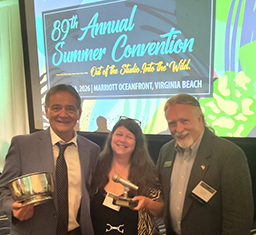
Thomas Media co-owner Joe Thomas tells TALKERS that his radio station WTON-AM, Staunton, Virginia is back on the air. He says the station was evicted from the transmitter site a year ago imgand survived via an STA (special temporary authority) on their two FM repeaters in Harrisonburg and Charlottesville. Thomas says, “Ask my high school teachers. All my projects were done just in the nick of time!” He thanks his engineer Alan Williams, the engineers at Kintronics and his lawyer Patrick Cross from Brooks-Pierce for getting the FCC to give their approval. Pictured here are (from l-r): Thomas Media general manager Vinnie Kice, Elaine Thomas, and Joe Thomas with the Virginia Association of Broadcasters’ CT Lucy Lifetime Achievement award and the 2026 Best Newscast award.

Industry News

WWO: Hurricane Isaias Impacts Radio Usage Patterns

In a blog post from Cumulus Media | Westwood One’s Audio Active Group, an examination of Xperi’s DTS AutoStage next-day AM/FM radio audience measurement service shows how AM/FM radio was used in the various markets affected by Hurricane imgIsaias. Some of the key findings include: 1) On Friday, October 9, Hurricane Isaias hit Mobile: While hour-by-hour in-car AM/FM radio listening occasions reveal drivers heeded shelter warnings, from 9AM to 11AM, there was higher than normal car traffic for last-minute shopping and getting to safety; 2) Sunday, October 11: Mobile morning in-car occasions recovered to 86% of historical levels and on Sunday, noon to midnight, in-car listening recovered to 98% of historical levels; 3) Atlanta’s News and Talk WSB notched its highest shares and cumes as Hurricane Isaias hit the market; 4) In Panama City, Florida, Christian stations saw strong audience growth during the storm week; 5) The Cumulus Pensacola cluster shares doubled versus a typical day; and 6) In Mobile on Friday, October 9, hurricane landfall day, the Cumulus cluster share grew 30% compared to a typical day. See the complete blog post here.

Industry Views

Monday Memo: Occasions, Not Duration

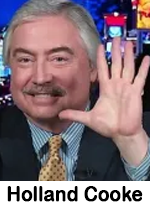
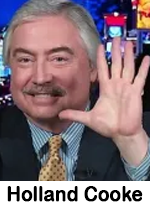
By Holland Cooke
Consultant

imgFor 100 years, radio programmers have tried to keep listeners listening longer. “Coming up next…”

Another few minutes? Yes! Ask! And do so as-seductively-as-possible, saying “you” and “your.” But there’s very little you can say to keep someone sitting in a parked car after they’ve turned the engine off.

A more realistic opportunity?

Life is fragmented. Audio is everywhere. Listeners move among broadcast radio, podcasts, streams, satellite, YouTube and whatever their phones serve up next. Oh, and off-air promotion – billboards, TV, direct mail – remember them – cost money.

Sales 101: Say it with me: “Your best prospect is…?”  An existing customer! Sell ‘em again, in this case inducing an existing listener to listen again later – specifically later-today, and same-time-tomorrow. You can’t win by earning TSL when they’re not listening. So, seem useful-enough that they’ll want to come back again.

  • First thing in the morning…
  • Before leaving home…
  • During the commute…
  • At lunch…
  • Before the drive home…
  • When weather threatens…
  • When big news breaks…
  • When the game will air…

All-news stations have understood this for decades. The very first one – 1010WINS/New York, to-this-day #1 in morning drive – said, “Give us 22 minutes and we’ll give you the world.” The product was designed for repeat use.

This also changes how we use digital tools 

Too many stations treat the app, stream, and social media as separate products. They should be pathways back to useful content. A push alert can invite immediate listening when something important happens. A social clip can preview what the morning show will develop tomorrow. A podcast can serve someone who missed the original conversation while promoting the next live one.

The objective is not to trap listeners. It is to accompany them. Try this…

  • Map your target listener’s day. Identify five moments when your station could be helpful, entertaining or reassuring. Then ask yourself…
  • Do we offer something worth returning for at each moment?
  • Do listeners know we offer it?
  • Do we remind them when to return?

And when they do return, do we deliver immediately? Or make them wait through clutter?

Duration still matters. Every unnecessary word still spends attention. So, program at-the-speed-of-life. But focusing only on longer listening per-occasion overlooks how people actually live. You can’t keep someone sitting in a parked car. You can earn more visits.  

Holland Cooke (HollandCooke.com) is a consultant working the intersection of broadcasting and the Internet. Follow HC on Twitter @HollandCooke and connect on LinkedIn

Industry Views

That’s My Voice but Those Aren’t My Words

img

By Matthew B. Harrison
TALKERS, VP/Associate Publisher
Harrison Media Law, Senior Partner
Goodphone Communications, Executive Producer

imgA Tokyo ruling has revisited a question that Bette Midler raised decades ago.

For anyone earning a living behind a microphone, your voice carries more than sound. It carries your reputation and your audience’s trust. An AI imitation can borrow both. Paying for the technology doesn’t necessarily buy permission to use the identity.

A September 30, Tokyo District Court decision recognized that a voice’s commercial appeal can receive publicity-rights protection. Actor Kenjiro Tsuda sought removal of 188 videos allegedly imitating his voice through AI. The court dismissed those claims because the material was already gone, leaving actual infringement undecided. Still, the underlying question should sound familiar to Bette Midler.


img

After Midler declined a Ford commercial, the advertising agency hired a former backup singer to imitate her. The agency had licensed “Do You Want to Dance.” It hadn’t secured Midler’s participation. In 1988, the Ninth Circuit held that deliberately imitating a professional singer’s distinctive, widely known voice to sell a product could violate California law. Permission to use the song didn’t settle permission to borrow the identity.

The Tokyo court described the voice as 「個人の人格の象徴」- “a symbol of individual personality.” Also, the perfect spring break tattoo: a generic phrase announcing how unique you are.

The Japanese decision doesn’t establish American law, and Midler doesn’t make every imitation unlawful. But together they frame a practical question for broadcasters using synthetic voices: whose identity is helping sell this, and what permission covers that use?

AI has changed the machinery. The person behind the voice still matters.

Matthew B. Harrison is a media and intellectual property attorney advising broadcasters, content creators, and creative entrepreneurs. Reach him at Matthew@HarrisonLegalGroup.com

Industry News

McVay Media to Produce and Coach “Regret Free” Podcast

The new podcast from Myron Mullins is being produced and coached by McVay Media. The new program stems from Mullins’ new mission “focused on helping men – particularly former executives and high-achieving professionals – rediscover purpose, imgconfront personal struggles, and build lives defined by faith, family, freedom, and intentionality.” During his more than 30-year career, Mullins built and led 16 business enterprises, “leading diverse teams, and serving on corporate and organizational boards. His career provided him with firsthand experience navigating the pressures, responsibilities, expectations, and sacrifices that often accompany professional success. But behind the accomplishments was a deeply personal journey: In 2006, Mullins surrendered his life to faith, beginning a transformation that would eventually lead him to turn his experiences – both the victories and the failures – into a platform for mentoring, coaching, speaking, and storytelling.” McVay Media president Mike McVay says, “Ryan Kershner and I are honored to work with Myron and join this journey.”

Industry News

Audacy: For Commuters, Economy is #1 Issue

Audacy’s VP, government and political partnerships Haley Teare-Lombardo and SVP of research and insights Ray Borelli were recently interviewed by Shane Greer of Campaigns & Elections what Greer calls the challenge of using advertising to reach additionally voters instead of reaching the same voters all the time. imgBorelli and Teare-Lombardo say that with the economy being top of mind, commuters may be a particularly important audience and that radio can help campaigns reach voters beyond traditional TV and digital buys. For example: 1) 59% of likely voters who commute say the economy and cost of living are the most important issues shaping their vote, rising to 73% among commuting homeowners with children; 2) Commuters are a significant audience: 78% of employed Americans commute at least two days a week, and nearly 90% travel by car; 3) Radio reaches voters during the commute: AM/FM radio captures 82% of ad-supported audio listening during weekday commuting hours; and 4) Radio can extend TV/CTV reach: In the 2022 midterms, radio added 676,000 incremental voters (+10%) to John Fetterman’s TV/CTV reach in Pennsylvania and 659,000 (+18%) to Raphael Warnock’s in Georgia. See a video of the interview here.

Industry Views

Remembering My Friend, Mike Horn

By Doug Stephan
CEO, Stephan Multimedia

imgThe phone would ring; I recognized the number… call always started the same… in his best radio voice, “Doug Stephan…. Michael Horn”

And then it was off with a deal or a discussion of my show “Good Day”… or chatting about his daughter… or the latest person he reached out to help.

I don’t remember meeting Mike… our friendship just sort of fell into place. I knew him before I was at KABC, Los Angeles – probably from a TALKERS convention… it’s not important. What was important is that I knew him.

He often referred to me as brother, which played well at the many family get togethers he and his daughter Jen would invite me to at his house where there was always a collection of CRN luminaries, from Bill Shatner to Fred Dryer, to everyone from his family and extended family. I was grateful to be remembered.

I was also grateful to Mike for so much more… not sure I ever really told him that in so many words.

He was a helper.  We shared the philosophy of being on this planet to help, and because the business – even though it had a fabulous, exciting side – was and is cruel.

So many fabulous personalities would think they were at the end of their career, and Mike would throw them his lifeline. Look at the list of people who have been a part of CRN over the years, and as you look at that list, see how diverse their programming and backgrounds. There was room for everyone under Mike’s tent.

From the time when I started the syndicated “Good Day” program… through today, He has carried every program I ever did.

He was so proud of his daughter. Frankly, I’ve known Jennifer Horn most of her life. She learned early about the business from all sides. As his trusted and confident partner, they nursed and nourished CRN from the awkward beginnings of that weird technology to today’s “everybody can get everything” platforms, the astonishing thing is that CRN still holds that unique position of being so helpful to so many people on either end of the signal. I remember the day he convinced me to try putting Jennifer on the air with me. She was so bright, fun and quick, and then he said to me… “Don’t you think it’s about time you stated paying her?!!!!”

Yes… and away that train went. I have no misconceptions. Even though he carried my stuff on one of his channels, the “Good Day” show with Jen ended up on ALL his assets. Go figure.

Those of you who know me know I could go on and on about Mike, but I think I’ve made my point. Mike was all about knowing his way around and figuring stuff out. I remember a movie I was watching and there is a helicopter reporters voice… It was Mike! Fun!

He was the number one helper and fixer in LA. and hundreds of people owe him big time thanks for all he did to help friends, no matter their stripes or requests. His being an idea guy with a broad canvas made it all work… not easily, but no one was ever left out to dry.

God love you, Michael. The many years of friendship and great memories will be with me and so many others forever. You lived a unique life of purpose and distinction.

Doug Stephan, CEO of Stephan Multimedia,  is a veteran talk radio personality, producer and entrepreneur. He can be reached by phone at 424-508-2525 or emailed at doug@dougstephan.onmicrosoft.com.

Industry News

Bob Pittman Featured Guest at BFoA’s Media Mixer

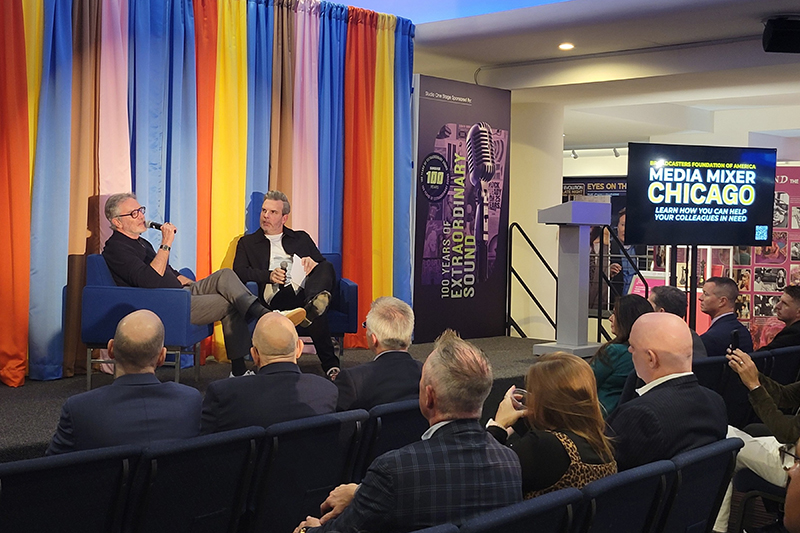
img

Pictured above is iHeartMedia chairman and CEO Bob Pittman (left) with Premiere Networks-syndicated DJ Fred of “The Fred Show” during a sit-down interview at the Broadcasters Foundation of America’s Media Mixer in Chicago on October 7, the day before the Radio Hall of Fame induction ceremony. BFoA says more than 150 broadcast professionals attended the networking, educational, and social event.

Industry News

Crime Junkie Stays Atop Podtrac’s September 2026 Top Podcasts Chart

Podtrac releases its Top Podcasts chart for September 2026 based on U.S. unique monthly audience for participating networks and imgAudioChuck’s “Crime Junkie” maintains its hold on the #1 slot, with The New York Times’ “The Daily” at #2, followed by NPR’s “NPR News Now” at #3. Notable changes from the August chart include The New York Times’ “The Ezra Klein Show” falling four places to #16 and DailyWire’s “Morning Wire” rising six places to #19. See the complete chart here.

Industry Views

“Superfans Are Driving Podcast Usage Now”

By Holland Cooke
Consultant

imgThe “Pareto Principle” is a rule-of-thumb that roughly 80% of revenue comes from about 20% of customers, in many industries. Including radio, where so-called “First Preference” or “P1” listeners – those who listen to your station most – contribute most of your Time Spent Listening.

Ditto for podcasting, where 17% of podcast listeners are the ballgame, according to Point-To-Point Marketing and Strategic Solutions Research. If you missed Tuesday’s webinar “The Podcast Study: Turning Listeners/Viewers Into Superfans,” here’s the deck – and an appetizer: They listen while commuting, cautionary to broadcasters’ in-car dominance and opportune for podcasters.

This research also fleshes-out who these “Superfans” are, how to engage them, and how NOT to tune-them-out.

Holland Cooke (HollandCooke.com) is a consultant working the intersection of broadcasting and the Internet. Follow HC on Twitter @HollandCooke and connect on LinkedIn

Industry News

WWO: Big Reach Creates Future Demand

This week’s blog post from Cumulus Media | Westwood One’s Audio Active Group looks at creating future demand via two recent publications: James Hurman’s Future Demand: How Marketing to Tomorrow’s Customers Will Break Your Brand Out of the Performance Trap and Les Binet’s and Will Davis’ study Go Big imgor Go Home: How Small Thinking is Killing Advertising and What to Do About It. Both publications point to a number of conclusions that advertisers should be aware of: 1) Advertisers have two jobs: Convert existing demand by reaching the five percent who are in the market and create future demand via brand building focused on the 95% of consumers who are not in the market; 2) “Big media ads” (AM/FM radio, TV, and outdoor), are more effective at creating future demand because they create a greater sense of quality, popularity, and trust for brands; 3) Ads from “big media” (AM/FM radio, TV, and outdoor) stick in minds more than digital or social media ads. Over 85% of online ads don’t reach the 2.5 second Attention-Memory Threshold, according to Amplified Intelligence’s Karen Nelson-Field; 4) Don’t be afraid of “waste.” It’s the part of advertising that works. See full blog post here.

Industry News

FOX Business Network Sets New Weekday Programming

FOX Business Network unveils a new weekday programming lineup effective October 12 that includes “Big Money in the Morning” (6:00 am to 9:00 am ET) hosted by Dagen McDowell, Brian Brenberg and Taylor Riggs with Barron’s Josh Schafer. “The Big Money imgShow” (12:00 noon to 2:00 pm ET) adds rotating co-hosts Cheryl Casone, Marcus Lemonis, and Lou Basenese alongside current host Jackie DeAngelis. Additionally, Liz Claman will launch a new Friday night program titled, “Claman’s Power Players” (7:00 pm to 7:30 pm ET). FOX News Media president and executive editor Jay Wallace says, “We’re excited to bring viewers fresh programming from a seasoned team of journalists, offering expert insight and analysis on the forces shaping the economy and driving business news. FOX Business remains committed to delivering compelling business news, market analysis, and conversation throughout the day, and these changes will further strengthen our weekday lineup.”

Industry News

Goforth Promoted to President of Gamut Podcast Network

Hubbard | Media That Connects promotes John Goforth president of the Gamut Podcast Network. The company says that the new title places Gamut alongside Hubbard’s other media and entertainment companies and reflects its continued investment in podcasting. imgHubbard says, “Gamut’s revenue has grown 47% over the past two years, and the network now spans more than 250 national and local shows, including flagship franchises ‘American Nightmares’ and ‘Professor of Rock,’ plus local sports networks SKOR North in Minneapolis-St. Paul and 312 Sports in Chicago. Hubbard CEO Ginny Hubbard adds. “John has been leading Gamut since the day he walked in the door, and we’ve watched him turn it into something everyone at Hubbard is proud of. He understands this business from the creator’s side and the sales side, and he genuinely cares about the people making these shows. Naming him president is our way of recognizing that, and of letting the industry know how much we believe in where Gamut is headed under John’s leadership.”

Industry Views

Sabo Sez: Processing is Important

By Walter Sabo
A.K.A. Walter Sterling
Host, The Other Side of Midnight
WABC, New York / Red Apple Audio Networks

img

As digital equipment and content replaces analog radio’s audio capabilities and innovations increase, never has a production director had more options, remarkable equipment or creative opportunities.

Robert Clotworthy is the narrator of “Ancient Aliens” and “The Curse of Oak Island Gold.” Robert appears regularly on my radio show, “The Other Side of Midnight,” to discuss aliens, UFOs and how the U.S. Government hides stuff! He is a world class story narrator.

Being geeks, I had to ask him about his work. Do you do the VO work from home, how much time do you have to prep, were you ever in radio? Answers: works in the studio, loves to interact with the director and tech. A one-hour show takes them two to voice. Nope, never in radio.  Then we stepped into serious geekdom – what kind of mic do you use?

“We use four different mics,” depending on the scene and tone of the script. Clotworthy explained that the audio is so precise that the History Channel had a custom made Neuman just for him – about $8,000.

Certainly, that’s fascinating but then he told me a final fact about the audio procedures at the History Channel:

“You understand that when I do the show, they are recording off all four mics at the same time.” Today digital TV video simultaneously records off multiple cameras. The “Ancient Aliens” production staff records audio from multiple narrator mics and carefully matches audio with the right video.

I’ve had to sit with that for a while!

Radio’s audio challenge has evolved in the past decade. In the 60s radio and music were processed for tiny transistor radio speakers. The 70s introduced giant, on-the-floor speakers with woofers and tweeters.

Today we are heard in the car, earphones and ear pods. Has our processing evolved to those new stages?

Walter Sabo has been a C-Suite action partner for companies such as SiriusXM, Hearst, Press Broadcasting, Gannett, RKO General, and many other leading media outlets. His nightly show “The Other Side of Midnight” is heard on WABC, New York and the Red Apple Audio Network 1:00 am – 5:00 am. His syndicated show, “Sterling On Sunday,” from Talk Media Network, airs 10:00 pm-1:00 am ET, and is now in its 10th year of success. He can be reached by email at sabowalter@gmail.com.  He can be phoned at 646-678-1110.

Industry Views

In Support of the First Amendment

TALKERS publisher Michael Harrison has issued the following statement in response to the White House press ban on CNN, MSNOW and Politico:

img“Throughout its 36-year history of service to the talk radio and associated talk media industries, TALKERS has maintained a strict policy of non-partisanship in its coverage of the field and its players. However, the single ideological orthodoxy practiced by TALKERS through this period has been uncompromising support of the First Amendment – the prime principle and foundation upon which all American freedoms and values are built. Over the years, we have bestowed our prestigious Freedom of Speech Award upon a wide variety of broadcasters from all ends of the political spectrum, and we have gone to bat in support of hosts, stations and networks – popular and otherwise, Democrat and Republican, liberal and conservative – when under fire from presidents and other governmental forces determined to quell that fundamental right.  For the sake of our industry and our country, we stand in protest of the current White House press ban imposed against our colleagues and strongly encourage all practitioners of American talk media, regardless of political persuasion, to unify in opposition to this egregious aggression against our fundamental right to fulfill our core duty and promise to the people of our nation.”

Industry News

Civic Media to Acquire Iowa Stations from NRG Media

Civic Media – via its Iowa subsidiary Cedar Basin Media, LLC – is acquiring NRG Media’s Cedar Rapids and Waterloo radio stations, including news/talk KXEL-AM, Waterloo. The other signals are imgKFMW-FM and KOKZ-FM in Cedar, plus KPTY-AM, and FM translators K263BZ, and K297BS in Waterloo. Civic Media is based in Wisconsin and operates stations there as well as in Minnesota and Michigan. Cedar Basin Media says, “Cedar Basin Media is a radio group built on a simple premise: communities deserve stations that are actually of and for them – good information, real conversation, and people on the air who live here, too.”

Industry Views

The Audience Has an Audience

img

By Matthew B. Harrison
TALKERS, VP/Associate Publisher
Harrison Media Law, Senior Partner
Goodphone Communications, Executive Producer

“Everybody’s a dreamer / And everybody’s a star.”
Ray Davies, “Celluloid Heroes,” 1972

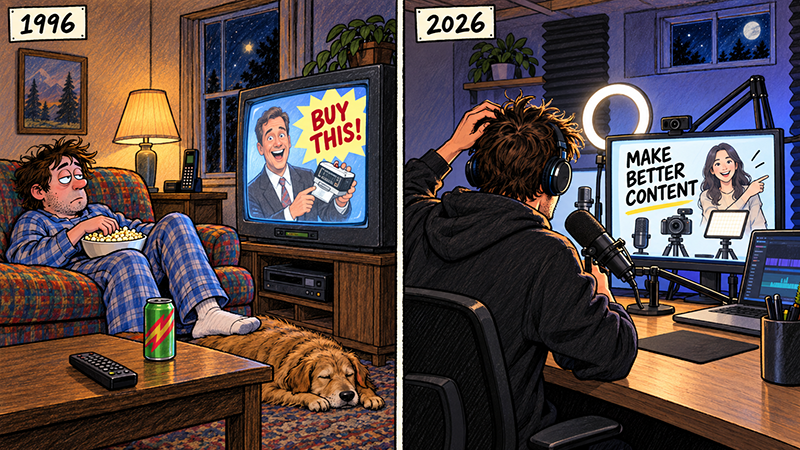
imgMy father recently called my attention to something hiding in plain sight. He was watching YouTube and noticed ads for StreamYard, Riverside, Sprizzy and other companies selling tools and services to people who want to produce, distribute, or promote their own media. “They are advertising on consumer venues!” he told me. That was the part that caught his attention.

It sounds obvious until you think about what it means. These companies are not merely advertising to viewers, listeners, and readers. They are advertising to viewers, listeners, and readers who also make things: podcasts, videos, livestreams, newsletters, books, music, and shows. The consumer audience now contains an enormous population of producers.

My father, TALKERS founder Michael Harrison, has a phrase for this: “The audience has an audience.” In a July interview about the modern media landscape, he put it even more plainly: “Everybody has a show.” That does not mean everybody has a large show, a profitable show, or even a particularly good show. It means that access to the means of publishing and broadcasting, once scarce and expensive, has become ordinary.

That change created an entire business layer around the aspiring and semi-professional media producer. StreamYard and Riverside sell production capability. Podbean sells hosting, distribution, and monetization tools. Sprizzy sells YouTube promotion. Beyond them are editing platforms, newsletter companies, self-publishing services, PR firms, audience-development businesses and companies willing to help almost anyone build, package and promote a media product.

The money moving around this ecosystem is no longer trivial. The Interactive Advertising Bureau reported that U.S. creator-economy advertising grew from $29.5 billion in 2024 and projected it to reach about $43.9 billion in 2026. In its September 2026 advertising outlook update, IAB reported that 54% of buyers said they were increasing their focus on creator and influencer advertising and partnerships.

For traditional broadcasters, that should change how we think about the people on the other side of the microphone. The butcher, the baker and the candlestick maker may still be members of the audience, but now the butcher has a cooking channel, the baker has a podcast, and the candlestick maker has an Etsy store, a newsletter and 14,000 followers. They may be competitors for attention, but they can also be customers, advertisers, guests, sources, affiliates, and future talent.

This does not erase the distinction between professional media and someone experimenting in a spare bedroom. Scale still matters. Skill matters. Editorial judgment matters. Broadcasters also operate under legal and regulatory obligations that do not simply transfer to someone uploading a video from a phone. But the old wall separating “the media” from “the audience” has become remarkably porous.

That may be the bigger lesson behind all those advertisements. Companies that once would have bought trade advertising to reach broadcasters, publishers or recording professionals can now advertise on consumer platforms and find millions of people with, as Michael puts it, “a toe in showbiz.” The consumer venue has become a trade venue because a meaningful portion of the consumers are also in the trade.

So where exactly is the line between our audience, our competition and our customers? Increasingly, there isn’t a very clean one. When the audience has an audience, the media business is no longer just about reaching consumers. It is about reaching people who are themselves trying to reach somebody else.

Matthew B. Harrison is a media and intellectual property attorney who advises radio hosts, content creators, and creative entrepreneurs. He has written extensively on fair use, AI law, and the future of digital rights. Reach him at Matthew@HarrisonMediaLaw.com or read more at TALKERS.com.

Industry News

AM Radio Act Passes in the House

The AM Radio for Every Vehicle Act made its way through the House of Representatives yesterday (9/15) and will move on to the Senate. The bill would mandate that the Department of Transportation require automakers provide AM radios in all new passenger cars sold in the U.S. without an additional charge. NAB president and CEO Curtis LeGeyt comments, “Today’s decisive House passage of the AM Radio for Every Vehicle Act is a significant step forward for the millions of Americans who rely on AM radio for lifesaving emergency information, trusted news and a vital connection to their communities.”

Bob Pittman, iHeartMedia chairman and CEO states, “The House’s passage of the AM Radio for Every Vehicle Act is a significant victory for public safety, local communities and the millions of Americans who rely on AM radio every day.”

John Catsimatidis, chairman and CEO, Red Apple Media and WABC Radio, says, “I am glad that common sense has prevailed in Washington DC. The American people are on the side of common sense.”

TALKERS publisher Michael Harrison states, “Now all AM operators should take advantage of this by filling their beleaguered frequencies with inspired, original and absolutely necessary content, or it will prove to be a temporary and culturally flimsy reprieve.”

Industry News

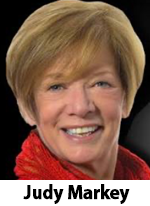
Former WGN Host Judy Markey Dies at 82

WGN, Chicago announced to listeners on Friday (9/11) that former longtime air personality Judy Markey died at age 82 in Switzerland by medically assisted suicide after years of failing health. Markey was co-host of the “Kathy and Judy Show” alongside Kathy O’Malley. Before embarking on her radio career, imgMarkey was a columnist for the Chicago Sun-Times. Retired WGN news anchor Steve Bertrand – who was a regular on the “Kathy and Judy Show” – appeared on WGN’s morning show with Bob Sirott to break the news. O’ Malley addressed Markey’s passing in a post on the WGN website: “Over the years, Judy and I talked on the air several times about our support for medical aid in dying, a highly personal choice but one we felt should be available for those who chose it – and she did. With her family at her side, she peacefully ended her life at a MAID (medical aid in dying) facility in Switzerland.” Of Markey’s success on the radio, WGN notes how it all began: “On a hunch, on Super Bowl Sunday afternoon in 1989, WGN’s program director Lorna Gladstone decided to team Markey and O’Malley. No one could have anticipated they would be, as media critic Rob Feder aptly put it ‘lightning in a bottle.’ For the next two decades ‘The Girlfriends,’ as they came to be known, attracted a fiercely loyal following (of women and men) and dominated the midday ratings,” Feder wrote. “Their authentic chemistry transcended radio. No topic was off limits or too personal. Annual fan conventions and station-sponsored trips drew thousands.” See the WGN story here.

Industry News

Miranda Khan Named Afternoon Host at KCMO, Kansas City

Cumulus Media’s KCMO, Kansas City “Talk Radio 95.7 FM” names Kansas City native Miranda Khan host of the new “Miranda’s Right” show airing from 4:00 pm to 7:00 pm beginning today img(9/14). Khan most recently served as anchor at WPTV-TV, West Palm Beach. She’d also hosted shows on Newsmax and America’s News Voice Network. KCMO program director Pete Mundo says, “KCMO Talk Radio is making a strong commitment to Kansas City by continuing to invest in live, local programming. Miranda is a smart, engaging voice who brings years of media experience and deep Kansas City roots, and she knows how to connect with listeners and drive meaningful conversations. Her addition strengthens our commitment to delivering the news, opinions, and discussions that matter most to Kansas Citians every day. We are excited to welcome Miranda home to KC.”

Industry Views

Sabo Sez: The Smartest Minds in the Radio Room

By Walter Sabo
A.K.A. Walter Sterling
Host, The Other Side of Midnight
WABC, New York / Red Apple Audio Networks

imgWhen in doubt, I recall smart quotes from people in our business who are successful, well paid, kind, and future oriented. I have always focused on what’s next rather than what’s been. These observations drive good results:

“Citytv of Canada is the model local TV News and has been for 50 years.” – Strategist, John Parikal

“Progress moves in many directions. Imagine if cable came first, then someone invented a way to send shows over the air.” – publisher / broadcaster, Michael Harrison

“The goal is a playlist of one song.” – Al Brady Law, a kind mentor and brilliant programmer.

“An Urban station should sound like music bouncing off the rooftops in Harlem on a July night.” – Frankie Crocker

“Top 40 will always be a successful format because by definition it plays the most popular songs of the day.” – Allen Shaw, former vice chairman of Beasley Broadcasting.

“We have a business plan; our stations have to be number 1.” – Robert McAllan, president emeritus Press Broadcasting / founder of WTKS-FM Real Radio. Orlando / New Jersey 101.5.

“One day all music will be on FM and all talk will be on AM.” – Jean Shepherd, WOR Radio host, 1964.

GM Mickey Luckoff on why number 1 KGO, San Francisco moved like an express train: “I hire hosts who have done Top 40. I can teach them Talk; I can’t teach them Radio.”

“My staff just can’t barge into the studio when I’m on, they have to understand this takes concentration, the job is to get to the next thing.” – Howard Stern

“It’s a simple business; people make it hard.” – Edward F. Mclaughlin president EIB network.

“My business decisions are always based on common sense.” – John Catsimatidis, owner, WABC Radio.

“When we release a movie, I stand outside the theatre on opening night and talk to the audience members as they file out. That’s the best research we do.” – Leonard Goldenson, founding chairman ABC Inc.

“No, I don’t watch many TV shows because I know all the stories.” – Fred Silverman, program chief CBS, ABC, NBC.

About streaming music services: “There has always been a box of records next to the radio.” – Bob Pittman, CEO, IHeart.

Tom O’Neil, founder, RKO General Radio, “Pay whatever you have to for a morning man, a production director, and for equipment to make the loudest signal, the rest you’ll have to beg for.”

Walter Sabo has been a C-Suite action partner for companies such as SiriusXM, Hearst, Press Broadcasting, Gannett, RKO General, and many other leading media outlets. His company, HITVIEWS, in 2007, was the first to identify and monetize video influencers. His nightly show “The Other Side of Midnight” is heard on WABC, New York and the Red Apple Audio Network 1:00 am – 5:00 am. His syndicated show, “Sterling On Sunday,” from Talk Media Network, airs 10:00 pm-1:00 am ET, and is now in its 10th year of success. He can be reached by email at sabowalter@gmail.com.  He can be phoned at 646-678-1110.