TALKERS New York 2013






1. Mike Francesa – WFAN, New York


2. Jim Rome – Premiere Networks

3. Dan Patrick – DirecTV/Fox Sports Radio Network

4. Boomer Esiason & Craig Carton – WFAN, New York

5. Mike Valenti & Terry Foster – WXYT-FM, Detroit

6. Mike Greenberg & Mike Golic – ESPN Radio

7. John Dennis & Gerry Callahan – WEEI Sports Radio Network Boston and New England

8. Tony Kornheiser – WTEM, Washington


9. Doug Karsch & Scott Anderson – WXYT-FM, Detroit

10. Angelo Cataldi – WIP-AM/FM, Philadelphia

11. Fred Toettcher & Rich Shertenlieb – WBZ-FM, Boston

12. Pat O’Brien, Vic “The Brick” Jacobs & Steve Hartman – Fox Sports Radio Network

13. Dan Le Batard – WAXY, Miami

14. Mike Missanelli – WPEN-AM/FM, Philadelphia

15. George Dunham & Craig Miller – KTCK, Dallas

16. Terry Boers & Dan Bernstein – WSCR, Chicago

17. Gary Radnich & Larry Krueger – KNBR, San Francisco

18. Steve Mason & John Ireland – KSPN, Los Angeles

19. Kevin Calabro – KIRO-AM, Seattle

20. Mike Stone & Bill McAllister – WXYT-FM, Detroit

21. Glenn Ordway & Michael Holley – WEEI Sports Radio Network Boston and New England

22. Colin Cowherd – ESPN Radio

23. John Jurkovic, Carmen DeFalco & Harry Teinowitz – WMVP, Chicago

24. Tom Tolbert – KNBR, San Francisco

25. Anthony Gargano & Glen Macnow – WIP-AM/FM, Philadelphia

26. John Seibel, Joe Starkey & Josh Miller – KDKA-FM, Pittsburgh

27. Mike Rhyner & Corby Davidson – KTCK, Dallas

28. Scott Garceau & Jeremy Conn – WJZ-AM/FM, Baltimore


29. Randy Karraker, Chris Duncan & D’Marco Farr – WXOS, St. Louis

30. Dave Archer & Mike Bell – WQXI, Atlanta

31. Brian Murphy & Paul McCaffrey – KNBR, San Francisco

32. Dan Sileo – WQAM, Miami

33. Mike Felger & Tony Massarotti – WBZ-FM, Boston

34. Petros Papadakis & Matt “Money” Smith – Fox Sports Radio Network

35. Brock Huard & Mike Salk – KIRO-AM, Seattle

36. Ed Norris & Steve Davis – WJZ-AM/FM, Baltimore

37. Mitch Levy – KJR-AM, Seattle

38. Dan Barriero – Fan Radio Network Minneapolis and Upper Midwest

39. Chris Russo – SiriusXM

40. Paul Alexander, Gregg Giannotti & Jim Colony – KDKA-FM, Pittsburgh

41. Paul Finebaum – Paul Finebaum Radio Network Birmingham and Southeast

42. Joe Benigno & Evan Roberts – WFAN, New York

43. Dan McNeil & Matt Spiegel – WSCR, Chicago

44. Vinnie Richichi & Ron Cook – KDKA-FM, Pittsburgh


45. Richie Whitt & Greg Williams – KRLD-FM, Dallas

46. Josh Innes & Rich Lord – KILT-AM, Houston

47. Jason Bishop, John Auville, John-Paul Flaim & Eric Bickel – WJFK-FM, Washington

48. Tony Bruno – WPEN-AM/FM, Philadelphia

49. Joe Rose – WQAM, Miami

50. Doug Franz & Ron Wolfley – KTAR-AM, Phoenix

51. Jon “Stugotz” Weiner & Marc Hochman – WAXY, Miami

52. Dan Cole – Fan Radio Network Minneapolis and Upper Midwest

53. Alfred Williams & Darren McKee – KKFN, Denver

54. Bernie Miklasz – WXOS, St. Louis

55. Adam Gold & Joe Ovies – WCMC-FM, Raleigh

56. Steve Somers – WFAN, New York

57. Stephen A. Smith & Ryan Ruocco – WEPN-FM, New York

58. Tom Waddle & Marc Silverman – WMVP, Chicago

59. Randy Galloway – KESN, Dallas

60. Nick Wright & John Lopez – KILT-AM, Houston

61. Kevin Sheehan & Thom Loverro – WTEM, Washington

62. Christopher Rude, Perry Laurentino, Sandra Golden & Leo Mazzone – WCNN, Atlanta

63. Patrick Reusse & Phil Mackey – KSTP-AM, Minneapolis

64. Drew Goodman & Scott Hastings – KKFN, Denver

65. Bob Stelton & Dave Grosby – KIRO-AM, Seattle

66. Jim Traber – WWLS, Oklahoma City

67. Taylor Zarzour & Marc James – WFNZ, Charlotte

68. Mark Howard, Frank Wycheck & Kevin Ingram – WGFX, Nashville

69. Bob Fescoe – KCSP, Kansas City

70. Isaac Ropp & Jason Scukanec – KFXX-AM, Portland

71. John Canzano – KXTG, Portland

72. Tony Rizzo & Aaron Goldhammer – WKNR, Cleveland

73. Mike Mutnansky & Lou Merloni – WEEI Sports Radio Network Boston and New England

74. Kevin Kiley & Chuck Booms – WKRK-FM, Cleveland

75. Blaine Bishop, Brent Dougherty & Clay Travis – WGFX, Nashville

76. Brian Baldinger & Harry Mayes – WPEN-AM/FM, Philadelphia

77. LaVar Arrington & Chad Dukes – WJFK-FM, Washington

78. Michael Kay & Don La Greca – WEPN-FM, New York

79. Andy Furman & Artrell Hawkins – Fox Sports Radio Network

80. Norm Hitzges – KTCK, Dallas

81. Doug Stewart, Ryan Stewart, Tony Barnhart & Wes Durham – WQXI, Atlanta

82. Steve Duemig – WDAE, Tampa

83. Zach McCrite & Rick Venturi – WXOS, St. Louis

84. Chris McClain, Jim Celania & Colin – WFNZ, Charlotte

85. Don Geronimo – KHTK, Sacramento

86. JT the Brick – Fox Sports Radio Network

87. Max Kellerman & Marcellus Wiley – KSPN, Los Angeles

88. Craig Shemon – Yahoo! Sports Radio

89. Michael Barkann & Ike Reese – WIP-AM/FM, Philadelphia

90. Jonathan Hutton, Chad Withrow & Paul Kuharsky – WGFX, Nashville

91. Lee “Hacksaw” Hamilton – XEPRS, San Diego

92. Mike Hill & Mark Schlereth – ESPN Radio

93. Rob Dibble & Amy Van Dyken – Fox Sports Radio Network

94. Brandon Tierney & Eric Davis – KGMZ, San Francisco

95. Travis Rodgers – Yahoo! Sports Radio

96. Steve Czaban & Andy Pollin – WTEM, Washington

97. Steak Shapiro, Nick Cellini & Chris Dimino – WQXI, Atlanta

98. Dino Costa – SiriusXM

99. Steve “Homer” True & Mitch Nelles – WAUK, Milwaukee

100. Joe Morgan – Sports USA Media

LOS ANGELES — Registrations for the West Coast installment of this year’s innovative two-part Talkers New Media Seminar are now being booked. Based upon initial demand it will be an early sellout – just as the standing room-only New York installment this past June and last year’s experimental Los Angeles Regional Talkers Forum. The gathering is following the new format consisting of one solid, power-packed day, a drastically-reduced recession-friendly registration fee of $99 (including breakfast, lunch, refreshments and all sessions) and a limited seating capacity in an intimate setting. Set for Thursday, October 11 between 9:00 am and 5:00 pm, the conference will take place at the historic Steve Allen Theater and again be presented by TALKERS in association with the Los Angeles Press Club which is based out of that colorful venue. According to TALKERS founder Michael Harrison, “Last year’s experimental Los Angeles Regional Talkers Forum was a smashing success that set the stage for this year’s two-part bi-coastal national event. The first part of this new version of the convention that was held in New York this past June was one of the most productive and well-received conferences in TALKERS magazine’s history. LA will be equally if not more exciting a happening! Attendees will enjoy a memorable day of dynamic networking and exposure to the most sought-after views and information about the industry’s hottest challenges, opportunities and issues.” Full agenda details will be posted here at Talkers.com in the coming days and weeks – but to assure registration, attendees are advised to sign up now. Because it is open only to working media, there will be no online registration — only by telephone. For registration and sponsorship information call 413-565-5413.
[print_gllr id=9806]

2CheckOut.com Inc. (Ohio, USA) is an authorized retailer for goods and services provided by TALKERS magazine and it’s affiliates.
81. Mike Rosen – KOA, Denver
82. Alan Stock – KDWN, Las Vegas

83. Armstrong & Getty – KSTE, Sacramento
84. Dave Elswick – KARN-FM, Little Rock
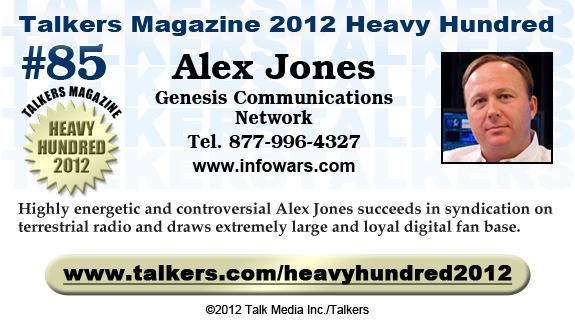
85. Alex Jones – Genesis Communications Network
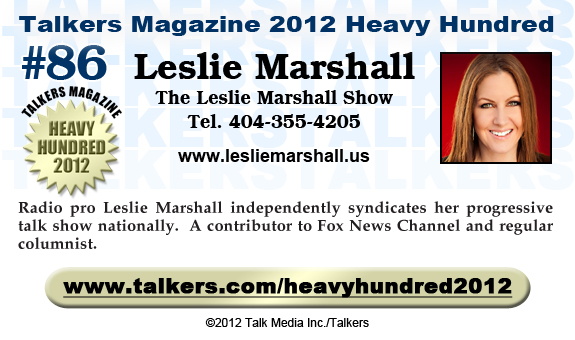
86. Leslie Marshall – The Leslie Marshall Show
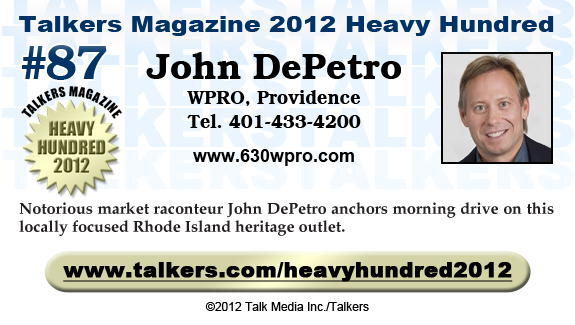
87. John DePetro – WPRO, Providence
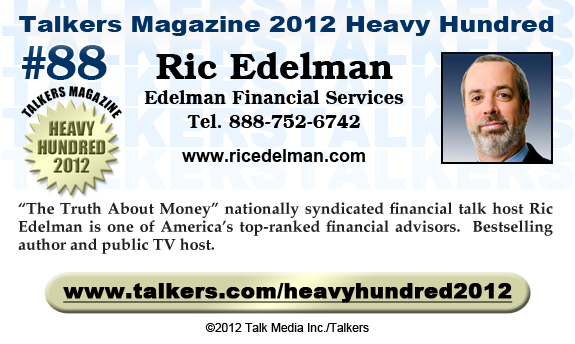
88. Ric Edelman – Edelman Financial Services
89. Dana Loesch – KFTK-FM, St. Louis / WIBC, Indianapolis
90. Diane Rehm – National Public Radio
91. Mark Reardon – KMOX, St.Louis
92. Rev. Al Sharpton – Syndication One
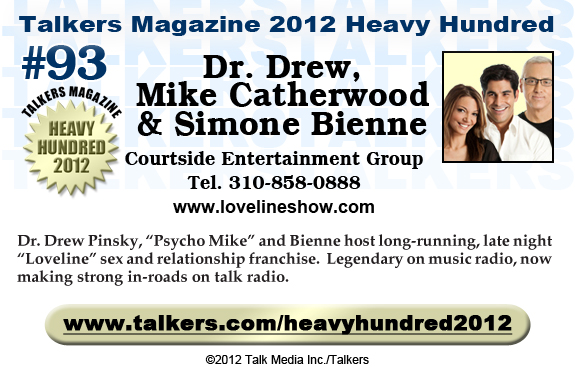
93. Dr. Drew, Mike Catherwood & Simone Bienne – Courtside Entertainment Group
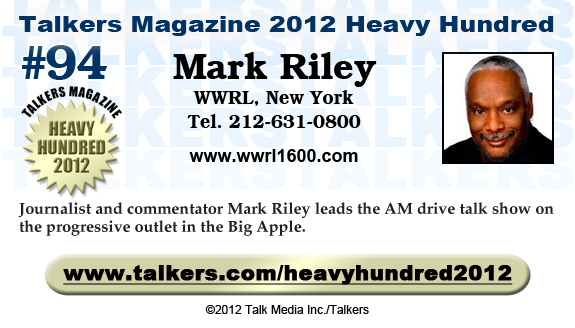
94. Mark Riley – WWRL, New York
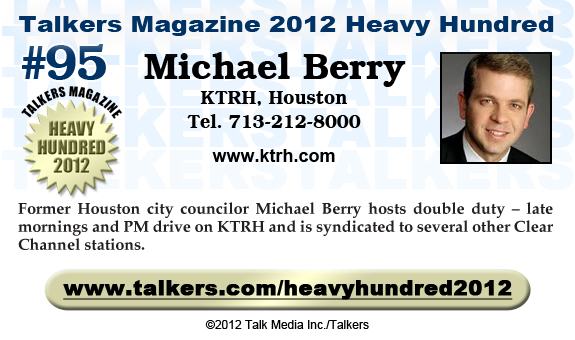
95. Michael Berry – KTRH, Houston
1 – 10 | 11 – 20 | 21 – 35 | 36 – 50 | 51 – 65 | 66 – 80 | 81 – 95 | 96 – 100
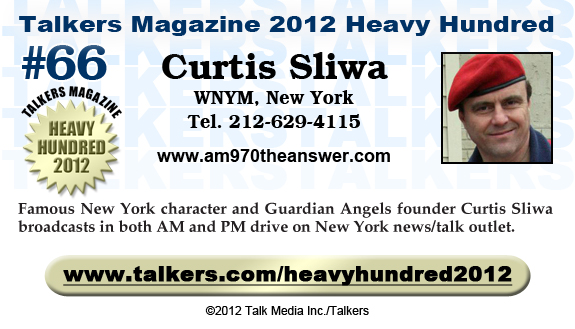
66. Curtis Sliwa – WNYM, New York
67. Brian Kilmeade – Fox News Radio
68. Jay Severin – WXKS, Boston
69. Opie & Anthony – Sirius XM
70. Mitch Albom – WJR, Detroit
71. Doug McIntyre – KABC, Los Angeles
72. Terry Gross – National Public Radio
73. Mike Trivisonno – WTAM, Cleveland
74. John McCaslin & Dana Mills – TRN/The Washington Times
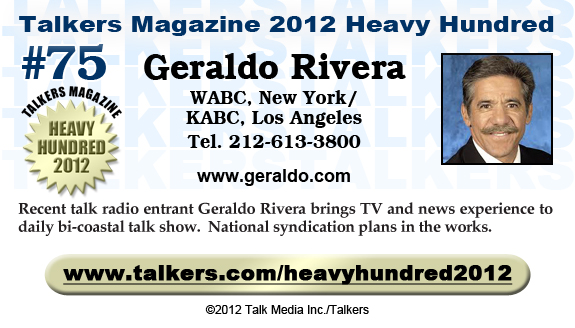
75. Geraldo Rivera – WABC, New York / KABC, Los Angeles
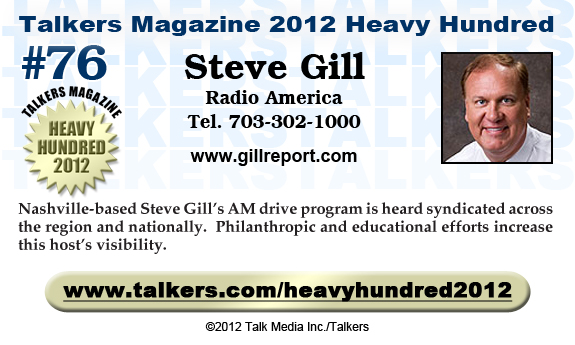
76. Steve Gill – Radio America
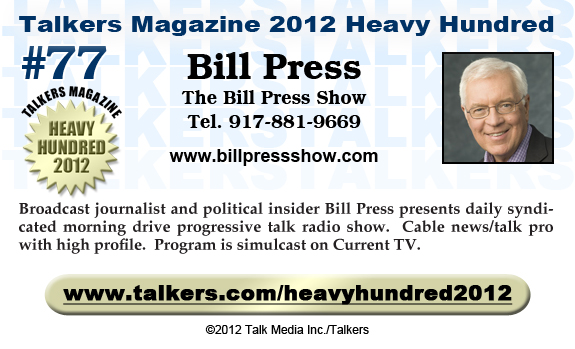
77. Bill Press – The Bill Press Show
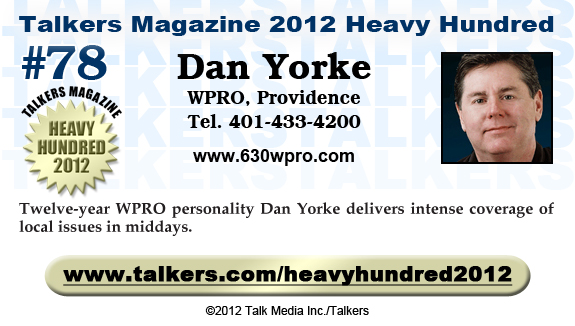
78. Dan Yorke – WPRO, Providence
79. Jason Lewis – Genesis Communications Network
80. Tom Marr – WCBM, Baltimore
1 – 10 | 11 – 20 | 21 – 35 | 36 – 50 | 51 – 65 | 66 – 80 | 81 – 95 | 96 – 100
51. John Gibson – Fox News Radio
52. Ian Freeman & Mark Edge – Free Talk Live
53. Larry Young – WOLB, Baltimore
54. Joe Pagliarulo – WOAI, San Antonio / KPRC, Houston
55. Howie Carr – WRKO, Boston
56. Dom Giordano – WPHT, Philadelphia
57. The Monsters – WTKS-FM, Orlando
58. Mike Huckabee – Cumulus Media Networks
59. Tim Conway, Jr. – KFI, Los Angeles
60. Warren Ballentine – Syndication One
61. Michael Castner – The Wall Street Journal Radio Network
62. Quinn & Rose – WPGB-FM, Pittsburgh
63. Hugh Hewitt – Salem Radio Network
64. Jim Villanucci – KKOB, Albuquerque
65. G. Gordon Liddy – Radio America
1 – 10 | 11 – 20 | 21 – 35 | 36 – 50 | 51 – 65 | 66 – 80 | 81 – 95 | 96 – 100
36. Bob & Tom – Premiere Networks
37. Dr. Laura Schlessinger – Take on the Day LLC
38. Randi Rhodes – Premiere Networks
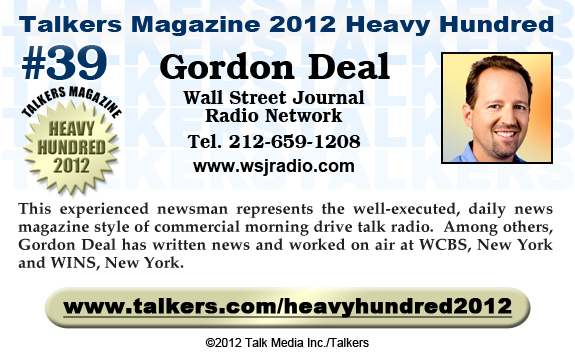
39. Gordon Deal – Wall Street Journal Radio Network
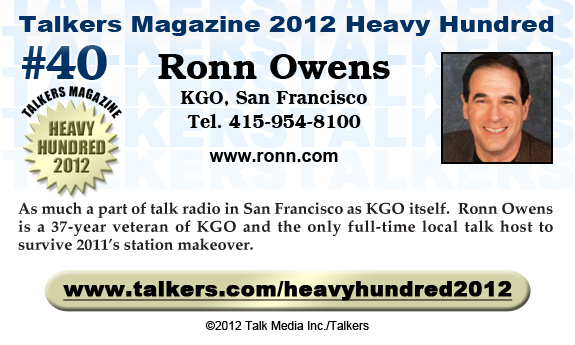
40. Ronn Owens – KGO, San Francisco
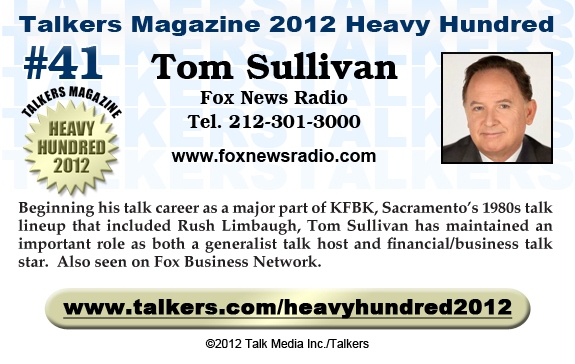
41. Tom Sullivan – Fox News Radio
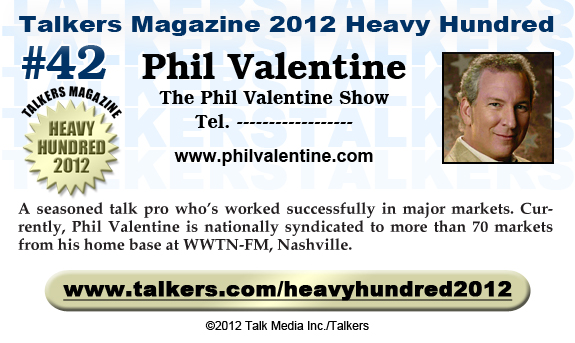
42. Phil Valentine – The Phil Valentine Show
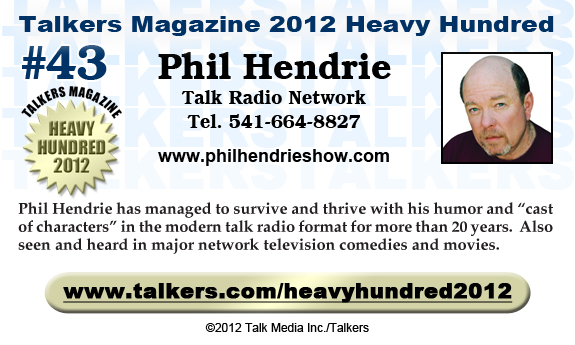
43. Phil Hendrie – Talk Radio Network
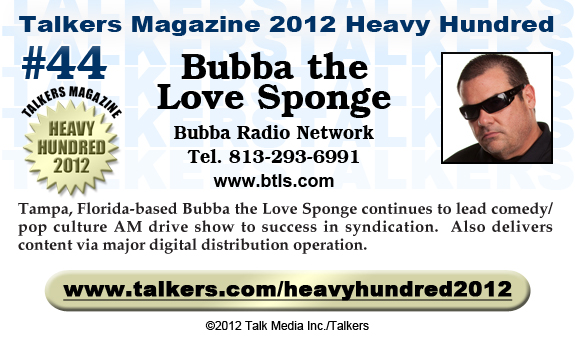
44. Bubba the Love Sponge – Bubba Radio Network
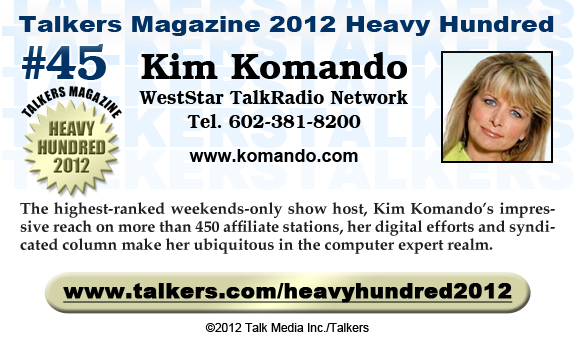
45. Kim Komando – WestStar TalkRadio Network
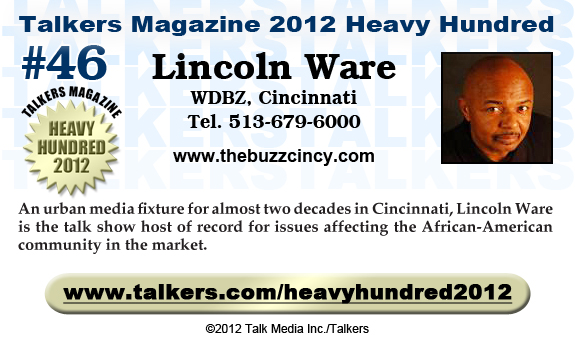
46. Lincoln Ware – WDBZ, Cincinnati
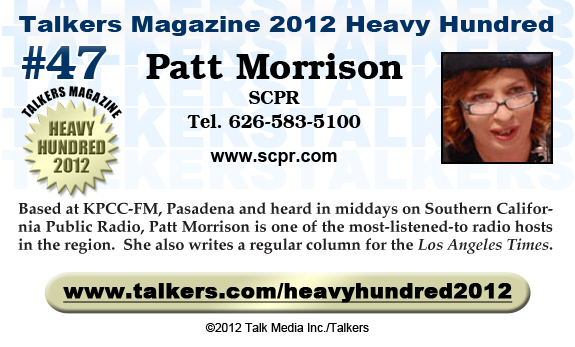
47. Patt Morrison – SCPR
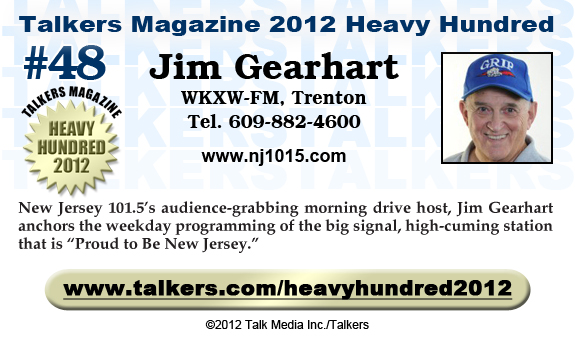
48. Jim Gearhart – WKXW-FM, Trenton
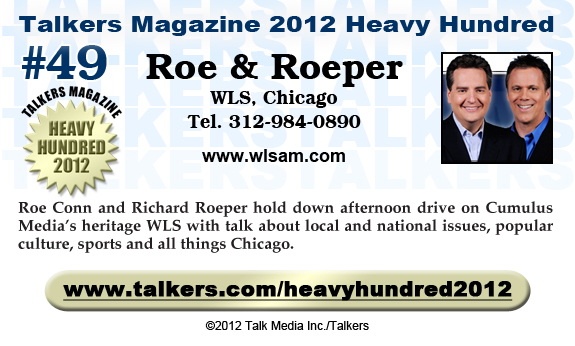
49. Roe & Roeper – WLS, Chicago
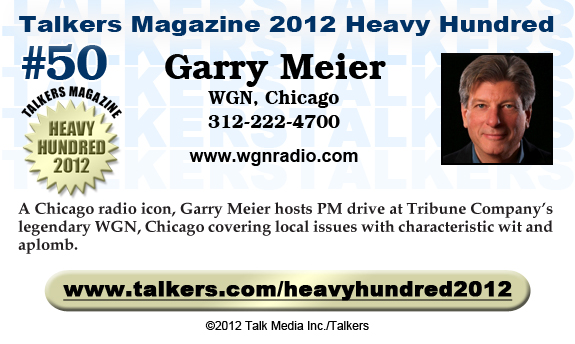
50. Garry Meier – WGN, Chicago
1 – 10 | 11 – 20 | 21 – 35 | 36 – 50 | 51 – 65 | 66 – 80 | 81 – 95 | 96 – 100
21. Dennis Miller – Dial Global
22. Jim Bohannon – Dial Global
23. Bill Bennett – Salem Radio Network
24. Michael Medved – Salem Radio Network
25. Mancow – Talk Radio Network
26. George Noory – Premiere Networks
27. Todd Schnitt – Compass Media Networks
28. Joy Browne – WOR Radio Network
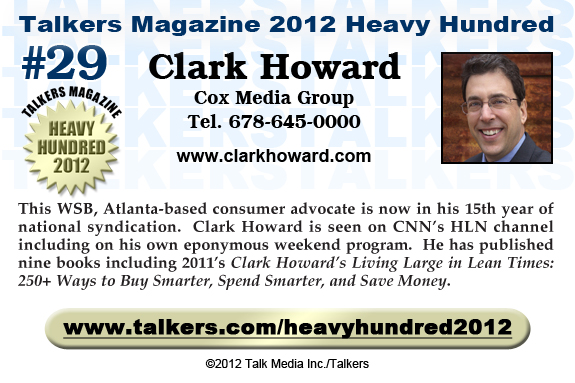
29. Clark Howard – Cox Media Group
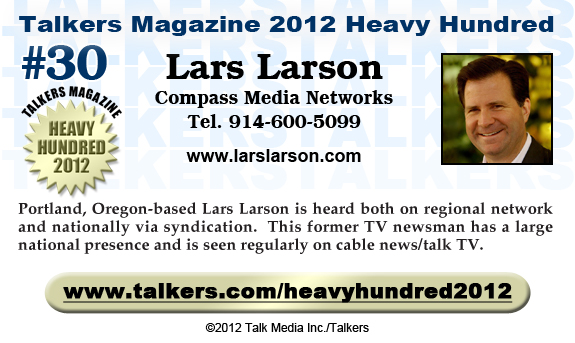
30. Lars Larson – Compass Media Networks
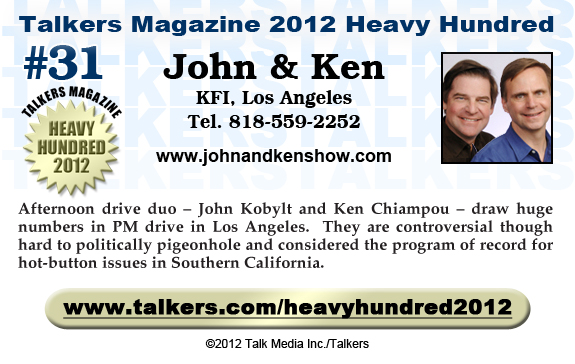
31. John & Ken – KFI, Los Angeles
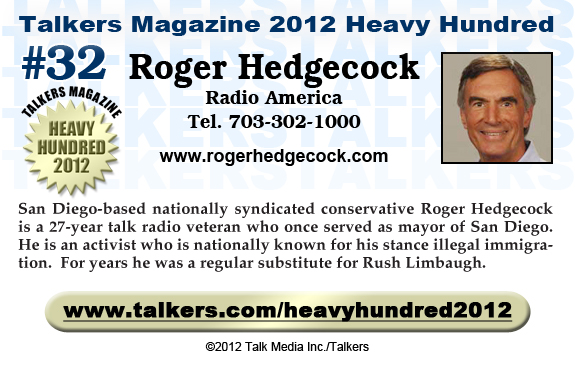
32. Roger Hedgecock – Radio America
33. Don Imus – Citadel Media Networks
34. Bill Cunningham – WLW, Cincinnati
35. Dennis Prager – Salem Radio Network
1 – 10 | 11 – 20 | 21 – 35 | 36 – 50 | 51 – 65 | 66 – 80 | 81 – 95 | 96 – 100
11. Stephanie Miller – WYD Media
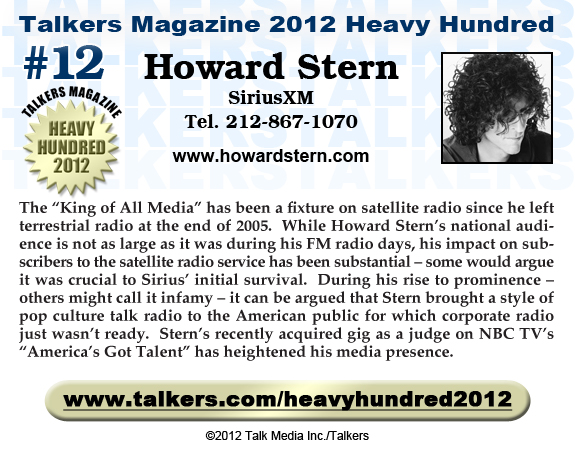
12. Howard Stern – SiriusXM
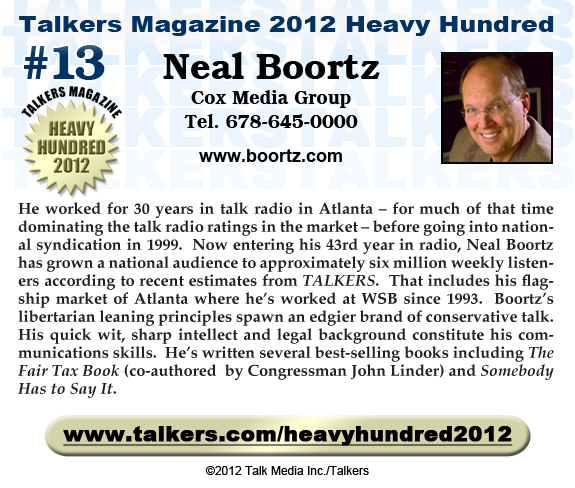
13. Neal Boortz – Cox Media Group
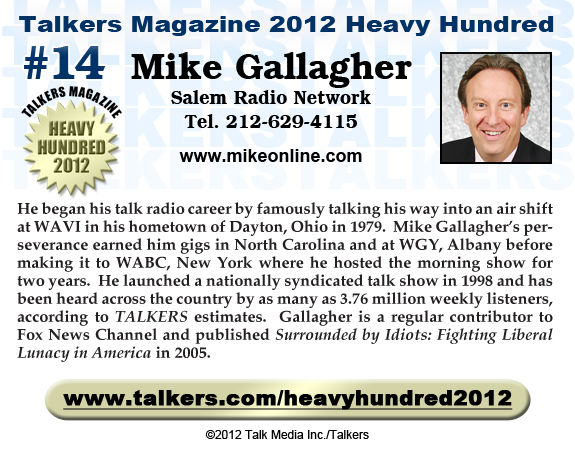
14. Mike Gallagher – Salem Radio Network
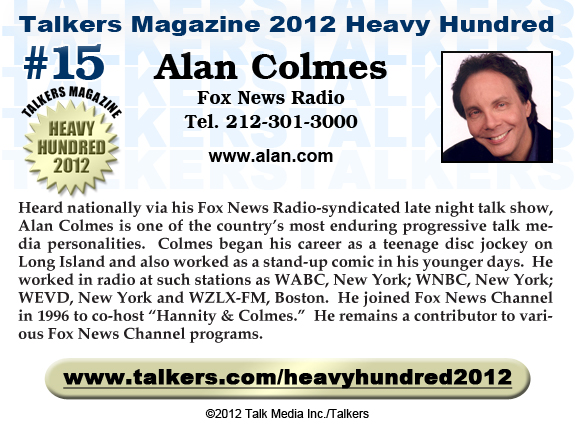
15. Alan Colmes – Fox News Radio
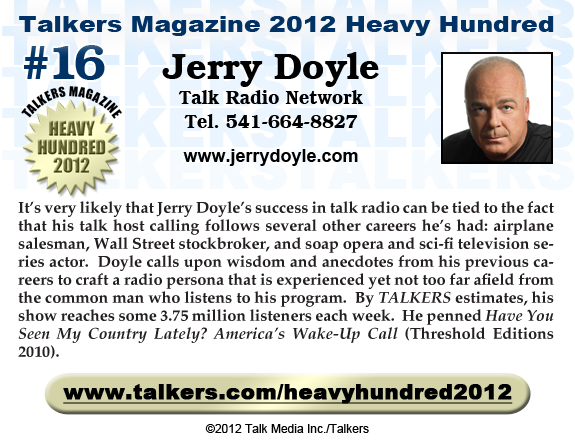
16. Jerry Doyle – Talk Radio Network
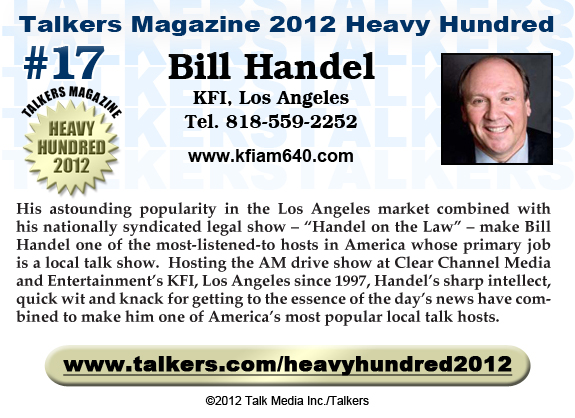
17. Bill Handel – KFI, Los Angeles
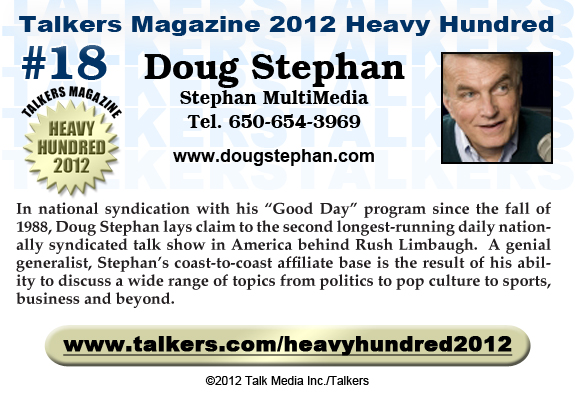
18. Doug Stephan – Stephan MultiMedia
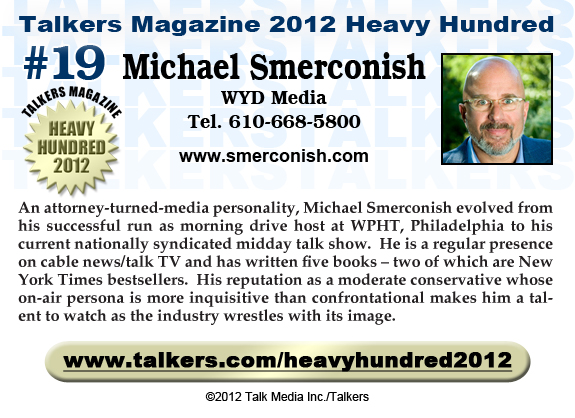
19. Michael Smerconish – WYD Media
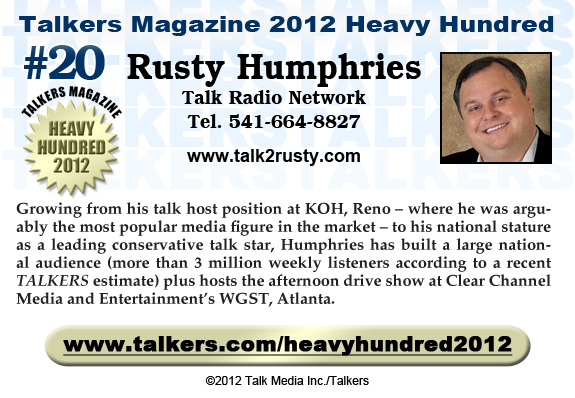
20. Rusty Humphries – Talk Radio Network
1 – 10 | 11 – 20 | 21 – 35 | 36 – 50 | 51 – 65 | 66 – 80 | 81 – 95 | 96 – 100
JC Corcoran Responds
Gentlemen:
I enjoy your work, but I wish one of you responsible for today’s piece (Social Media: Handle with Care, published 1/27/12) had contacted me before it was published. I might have been able to contribute background information most would consider pertinent. It’s a bit frustrating to see the  outcome which, in this case, amounts to a number of colleagues whose work I respect, taking positions without having some of the key facts in the story at their collective disposal. These facts may or may not have altered their opinions, but still should be taken into consideration. I hope you’ll share this information online as an addendum to today’s story.
I am not “defending” my use of rough language in the tweets. I’m only offering an explanation. Unbelievably, this entire thing began when, during the first week of October, I was alone in breaking the story, three weeks before the rest of the free world, that St. Louis Cardinal manager Tony LaRussa was about to retire from baseball. The story was universally dismissed and I was roundly ridiculed by the local media. It wasn’t until the day after the World Series parade that everyone realized I’d had one of the great scoops in recent memory. My relatively new Twitter account went from 280 followers to over 2600 in just a few days. In mid-November, similar kinds of sources told me Albert Pujols was only a few hours away from re-signing with the Cardinals. I tweeted it. I ended up being wrong. That’s when some longtime adversaries went into attack mode.
1) The Riverfront Times, the publication that started the controversy by publishing the exchange between me and the “listeners,” has been attacking, cheap-shotting and mischaracterizing my work almost since the day I arrived in St. Louis twenty-seven years ago. I will simply use one story as an example of the way they work. Several years ago I was involved in a lawsuit with another pair of broadcasters. The pair engineered a physical attack on me at a charity appearance I was broadcasting from, then told police it was I that had attacked them. Over the course of the three-year long wait for the case to come to trial, the RFT published almost two dozen attacks on my character, ranging from accusation to ridicule. When I won the case, and the jury hit the opposing pair with $370,000 in damages, the RFT spoke not a word of it. Moral of the story? Their decision to come after me again came as no surprise.
2) A series of tweets from two of the individuals in question was never published by the RFT or any other media outlet that covered this story. The people who sent those tweets were nice enough to tell me they wanted to “rape my mother,” among other things. I ignored them. Again, I’m not surprised this part of the story was omitted by The Riverfront Times. It was only when more of this sewage was sent that I finally reacted the way I did.
3) This is not the way I talk to people. This is not the way I talk to listeners. This is the way I talk to creeps.
4) Two of the people that have been sending this stuff have been identified as local broadcast competitors. Cowards hiding behind phony screen names. That element to the story, somehow, has been left out of all of this. (For the record, every single thing I do in this town contains my real name and image.)
For nearly three decades I have enjoyed a terrific relationship with my listeners. Frankly, it’s the kind of bond most GMs and PDs can only dream about. I’ve achieved amazing ratings and won all the awards. I hardly think it would be fair to make this unfortunate development seem typical of my work here or somehow reduce it to being my defining moment. I learn from my mistakes as well as the mistakes of others. I hope you’ll all do the same.
I continue to look forward to your daily work at Talkers.
JC Corcoran
KTRS, St. Louis
jcontheline.com
Great Article
I read your story, “Social Media: Handle with Care” with great interest. I find that tweeting is a great way to engage the audience. You will get tweets from people who will never call a radio program and sometimes from callers after they get  off the air. Twitter is used by some in our business as a one way communication and I assume that is because they don’t want to be seen as only responding to favorable comments. I will tend to ReTweet a positive comment, but I will RT and respond to negative comments more frequently. I guess I enjoy the “fight, fight, fight” mentality of the school yard.
Talk radio, at least how I see it, is a persuasive medium and Twitter gives you an oppurtunity to make points and back them up with links. Twitter also reminds you sometimes that you aren’t always right.
I think the real danger in a talk radio host adamantly using Twitter seems to be the danger of slipping into a mode that allows talk that wouldn’t be OK on the air, as if you were texting a freind of yours. I am guilty of this many times.
Great article.
Dale Jackson
PD/ Host of The Dale Jackson Show
The Attack Machine Blog
NewsTalk 770 AM/92.5 FM WVNN
Cumulus Media – Huntsville, AL
dale.jackson@cumulus.com
Very Smart
 Love the Social Media: Handle with Care exploration. Very smart!
Amir Forester
Forester Public Relations
Los Angeles, California
amir@foresterpublicrelations.com
Builds Up Fan Base
I have found facebook and twitter very beneficial in keeping my name in front of my former listeners during my time on the beach. Everyday I post a story or two and make a comment on it. Some of the discussions can get pretty intense.  It’s as if I am doing a show without doing a show.
I have the maximum of 5,000 friends on my facebook page plus 1300 on a newer fan page and about 1300 Twitter followers. Now I know there is some overlap, but I am still adding people every day. When I announce my next gig I will have a built in forum to drive my listeners to the new station. It has been a wonderful way to build a loyal fan base and keep my name in the public’s eye.
Any host that isn’t currently using social media to build up their fan base in case they find themselves looking for work is a fool.
Tom Becka
Talk Show Host
Omaha, Nebraska
Responses to Walter Sabo’s Overnight: The Underexploited Daypart
THANK YOU. Never understood why dummies don’t do more with overnights. Why must you and I be smarter than everyone ALWAYS?
– Jake Fogelnest via Twitter
The dream for my next life. Another all-night talk show.
– Haney Howell via Twitter
Hey…I LOVE this,Walter! I’m a HUGE fan of “overnight” radio. It’s how I started my career. I do hope that your readers understand how true what you suggest is to them. Overnights has long been ingnored in radio…a place to put the “new guy/gal,” etc. There are TONS of wide awake people, at those hours, who’d appreciate being treated like they were as important as midday or AM drive listeners.
– Bob Bateman via Twitter
Love this. My 2 1/2 years of overnights at WHEN Syracuse (1980-82) were fantastic and the phones always rang off the hook thanks to a wide-ranging audience of students & third shifters.
– Peter King via Twitter
Walter, I always liked your response to management: “You want non-traditional revenue? How about selling the all-night show?”
– Tom Parker via Twitter
”Dennison’s…A Men’s Clothier”…etc., etc. Love the article, as you’d imagine!
– Ray Rossi via Twitter
Enjoyed this article very much, Walter. I totally agree. Before talk radio, I was on air at QVC for 15 years and helped them build the overnights to an extremely profitable time slot. Like radio, they had been neglecting it. Live and local overnight radio shows will not only “lead the way” to morning drive, they will open the door to so many new advertisers.
Nice job, thank you for writing it!
– Steve Bryant via e-mail
Contact TALKERS: info @ talkers [dot] com.
TALKERS magazine is the leading trade publication serving the talk media industry in America. It was dubbed “The Bible of Talk Radio” by Business Week Magazine. As technology and media trends have evolved over the years, the publication expanded to serve the forms of talk media beyond just talk radio — which includes talk distributed digitally, satellite radio, as well as talk programming on television.
TALKERS magazine was launched as a print publication during the Summer of 1990 by Michael Harrison, a radio broadcasting innovator and trade journalist who has been at the center of many of the exciting pop radio revolutions of the past 50-plus years, both on air and behind the scenes.
TALKERS magazine is now published in digital-only formats and features news stories, photos and videos relevant to the non-stop happenings in talk media with a focus on top hosts and stations, developments at the networks, interviews with movers and shakers, the opinions of industry participants and leaders, and fast-breaking developments in technology.
TALKERS magazine also conducts ongoing research of the topics and opinions discussed and expressed on hundreds of talk stations and programs across America and compiles them into surveys and graphs which have become the standard of the industry.
In addition to talk broadcasters using TALKERS magazine research as a guideline to see where they fit into the industry’s scheme of things, the consumer press also regularly turns to the publication to capture the mood of the public as it is expressed in talk media in addition to learning about what’s happening in the business. Hardly a week goes by in which TALKERS magazine is not cited in a major publication or TV broadcast dealing with news stories, public opinion or talk radio specifically.
According to TALKERS magazine publisher Michael Harrison, “Talk media is collectively the most accurate bellwether of American public opinion in the mass media today.”
Since 1990, the growth of TALKERS magazine has been parallel to that of the talk radio industry – which includes the sub-formats news/talk, talk, sports talk, all-news, non-commercial talk, and more – with many observers crediting the publication with not just chronicling the talk radio phenomenon, but playing a significant role in supporting and fueling the medium’s spectacular rise to prominence. Talk radio is the most-listened to radio genre today and certainly the most important.
TALKERS magazine has an international readership that includes the key participants at most talk radio stations and networks in the United States and Canada (plus the U.K, Ireland, Denmark, Australia, New Zealand, South Africa and Hong Kong), including the most important talk show hosts on air, online, on satellite and in podcasting.
TALKERS magazine readers also include the top executives of TV networks, management at the largest entertainment companies, editors of major publications, members of congress, governors of states, and even the President of the United States. And, the hardcore fans of talk radio — its most dedicated listeners — are consumers of the content on Talkers.com and its affiliated products.
TALKERS magazine advertisers include radio program suppliers, broadcast equipment manufacturers and distributors, book publishers, record companies, political action committees and more.
Because of the phenomenal growth of talk media, its impact on society, and the colorful nature of both its personalities and its listeners, TALKERS magazine emerged in the 1990s as one of the most important trade journals in American industry and on the contemporary cultural scene. Now, with the industry headed boldly into the 21st century, and with the exponential growth of the many spoken-word formats and delivery systems, TALKERS magazine’s potential for expansion is unlimited.
TALKERS magazine’s writers include some of the most respected media professionals in the country and it has published exclusive interviews with some of the nation’s most important newsmakers. These include Presidents of the United States, key broadcasting executives, business and government leaders, as well as show business figures.
TALKERS magazine has expanded into an array of media beyond its writings. It has organized and presented the talk media industry’s longest-running and most important national convention – now in its 23rd consecutive year in addition to countless individual forums, seminars and radio rows around the country on subjects that include politics, foreign policy, domestic violence, health care and economics.
TALKERS magazine and the talk media are very much a part of each other and on the move toward playing an even larger and increasingly more important role in 21st century America!
By Michael Harrison
Publisher
TALKERS
 In the nearly four decades that I have been publishing TALKERS, I’m consistently asked by reporters who cover media and politics, “Now that the election is over, what is talk radio going to have to talk about?” This inquiry is based on the false – but widely held assumption – that “talk radio” is a one-trick pony. Drives me nuts.
This question hasn’t been limited to elections (although they lead the pack). It also comes after the resolution of wars (the two Persian Gulf wars were biggies), and major murder trials with racial overtones (O.J. Simpson comes to mind and let’s not forget the tragic saga of George Floyd). We need a good “reckoning” every now and then in this country.
There is also a variation of the question that I’ve fielded consistently at the end of each year: “What will next year’s big talk show topic be?” This one is easy. I always say, “The unknown.” Two mighty examples of that were 9/11 and Covid-19.
I’m often asked, “What would it take to bring people together during these polarized times?” My answer: “A hefty asteroid impact.”
I clearly remember an incident on April 19, 1995, while being interviewed by a reporter for The New York Times about the mechanics and philosophy of talk radio programming. He asked, “So what will be next week’s big topic on talk shows?” (As if I’m a fortune teller.)
As he was delivering the question, I noticed out of the corner of my eye on the Sony TV screen mounted near the ceiling of the TALKERS newsroom, the gigantic explosion of a building that was identified on the chyron as the Federal Building in Oklahoma City. I instantly responded, “Turn on CNN… I think it’s happening right now.”
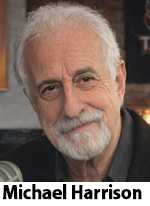
So back to the election. Every ending launches a new beginning. Talk radio is a competitive game based upon the strategy of positioning. It’s sort of like a log rolling contest.
It requires a deft balance between leaning left or right and understanding the perplexing laws of gravity, momentum, and inertia.
It also requires an understanding of the true nature of marketplace conditions and the ever-changing state of public opinion.
Most important, it requires an understanding of the target core and the awareness that sometimes you have to piss off segments of it in order to maintain forward momentum.
There really is no such thing as “mass appeal” in talk radio. Back when Michael Savage was the highest rated talker in San Francisco, I was often asked, “How is it possible for such a conservative figure to be the top guy in one of the most liberal markets in America?”
My answer, “Because talk radio (and radio in general) is not an election. It is a competition for fractions of a point within niches. Michael Savage couldn’t get elected dog catcher in San Francisco… but he has the right appeal to a disenfranchised minority that is large enough to put him on top in his niche. The game is played the way the game is scored.”
I’ve always believed that there is a place for the left and a place for the right in talk radio. And as any sailor knows, the winds can change direction on a dime. The lefties have their work cut out for them and hopefully will take advantage of this new opportunity.
But all is not lost for the righties. Hardly! They are now finally free to move forward and cultivate the fascinating and engaging rebuilding of the very legitimate American Conservative movement without having to kiss the ass of a man who has hijacked both radio and frittered away the legitimacy of its content for far too long.
Michael Harrison can be reached at michael@talkers.com.
By Matthew B. Harrison
TALKERS, VP/Associate Publisher
Harrison Media Law, Senior Partner
Goodphone Communications, Executive Producer
 At 8:15 am, a radio host plays part of a television interview and explains why the guest’s answer deserves scrutiny. By noon, another program has clipped that host’s commentary and is taking it apart. The first use feels like doing the job. The second can feel like somebody helping themselves to your work, especially when they sell advertising around it.
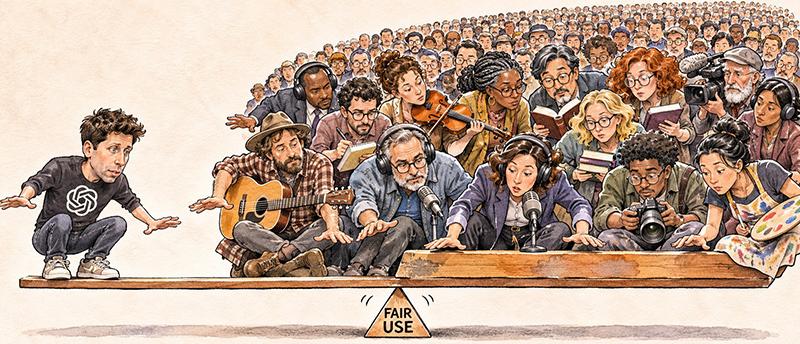
That tension gives broadcasters a useful perspective on OpenAI’s October 30 statement, “Fair use benefits everyone.” The company assembled arguments supporting fair use in its copyright litigation involving news publishers, emphasizing benefits to creators, researchers, and the public. It is advocacy from a party to the litigation, not a judicial ruling. But the broader proposition deserves consideration from an industry that regularly experiences fair use from both directions.
For a talk host, the benefit can be immediate. An audience may need to hear the disputed answer, see the advertisement, or examine the passage before the host’s criticism makes sense. Requiring permission for every such use could give the subject of criticism considerable control over the discussion. Fair use provides room for qualifying commentary and reporting without that permission, although calling a segment “news” does not automatically establish the defense.
Now move to the other microphone. Your station secured the interview, paid the producer, developed the questions, and cultivated the audience. Another outlet extracts the most revealing exchange and uses it to challenge your coverage. Your investment matters to the business, but it does not automatically give you the power to prevent criticism that qualifies as fair use.
Change the example again. Instead of analyzing your interview, the other outlet uploads a substantial uninterrupted portion, adds a brief introduction, and offers listeners much of the experience your station produced. That raises a different question about substitution and the market for your work. The analysis considers the purpose, the nature of the original, the amount and significance taken, and the effect on its potential market, rather than simply counting seconds or checking for a credit.
This is where broadcasters can contribute something valuable to the AI debate. They understand why access to existing expression supports new commentary, and why producing that expression costs money. They also know that a competing program can win listeners through better reporting or sharper analysis. Competition alone does not tell us whether someone has improperly used protected material.
OpenAI and its supporters argue that training models serve a different purpose from publishing the works used to train them. Broadcasters can take that argument seriously while still asking what material was copied, how it was obtained, and what uses the law permits. Training a model, generating an answer, and publishing that answer involve distinct conduct. A persuasive argument about one does not automatically resolve the others.
The practical discipline is consistency. Before borrowing, identify what the audience needs to encounter and what your program contributes. Before objecting to someone else’s borrowing, examine whether they are criticizing your work or supplying a substitute for it. Neither the presence of advertising nor your understandable irritation settles the question.
That experience on both sides of the microphone is central to my book, Playing the Clip, which examines fair use in the daily work of media creation. Broadcasters need meaningful protection for what they produce, and meaningful freedom to examine what others produce. Fair use benefits the profession by helping preserve both, even when its application to our own work feels less comfortable.
Matthew B. Harrison is a media and intellectual property attorney who advises radio hosts, content creators, and creative entrepreneurs. He has written extensively on fair use, AI law, and the future of digital rights. Reach him at Matthew@HarrisonLegalGroup.com or read more at TALKERS.com.
Townsquare Media is first out of the gate reporting third quarter 2026 financial results and reveals net revenue of $110.9 million, an increase of 3.9% over the same period in 2025. Townsquare CEO Bill Wilson says, “Townsquare’s third quarter results reflect  the continued strength of our Digital Advertising platform. Third quarter net revenue of $110.9 million increased 3.9% year-over-year and exceeded our guidance range, Adjusted EBITDA of $22.6 million increased 2.7% year-over-year and was within our guidance range, and net loss narrowed by $1.5 million year-over-year to $4.0 million. These results were driven by the growth of Townsquare Ignite, our Digital Advertising business, and by political revenue that is tracking ahead of our expectations. Digital Advertising net revenue grew 12.7% year-over-year, accelerating for the third consecutive quarter, led by programmatic revenue growth of 22.5%. Our Media Partnerships business now serves 18 partners and extends our digital programmatic advertising platform to 122 markets across the United States, and we expect Media Partnerships revenue to more than double in 2026. In addition, Townsquare Interactive delivered strong profitability, with Segment Profit margins of 36% in Q3, as we rebuild and grow our sales team.”
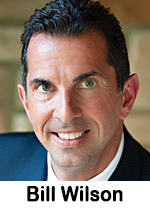 Wilson continues, “At the same time, we want to be candid about the challenges we face. Our local clients continue to feel pressure from higher operating costs and interest rates, and they are scrutinizing every marketing dollar, particularly those spent on traditional media. Excluding political, Broadcast Advertising net revenue declined 5.2% in the third quarter. We expect those declines to deepen in the fourth quarter, partly as political advertising crowds out other inventory. In addition, while Townsquare Interactive’s profit remains strong, lower-than-anticipated sales velocity means it will not return to sequential revenue growth in Q4 2026 as we had projected.”
By Walter Sabo
A.K.A. Walter Sterling
Host, Red Apple Audio Networks
 On the list of imagined crimes committed by the act of consolidation upon the radio industry is the myth that it killed the “farm team” for emerging talent. There never was a farm team.
Radio, like online video web stars, is built on the blind ambition of self-cast stars. Hey kid, if you want to be in radio, you’ll find a way. I can’t recall radio industry recruiters hanging around high schools or colleges listening for compelling voices and story tellers. Radio talent did whatever they had to do to slip into the nearest radio station. Rookies still pester their way past the gate except now their odds of finding a launch pad are much better. Simple math.
America’s radio station count has more than doubled since 1970 – from roughly 6,800 to more than 15,600 total AM, commercial FM, and noncommercial FM stations. AM climbed to nearly 5,000 stations around 1990 before declining approximately 500 to roughly its 1970 level. The expansion came on FM: commercial stations more than tripled, while non-commercial stations grew more than elevenfold. Those totals don’t even include the thousands of FM translators and low-power FM stations now on the dial.
Ironic, huh?
There have never been so many stations which is ironic for a dying medium. More stations, better odds of landing a job. A formal structure for bringing in a new radio talent has never been stronger. Today there are paid internships, training courses, and of course campus radio stations – all formal paths to gaining employment.
There is a whole industry called “on boarding” with which many media companies engage. My on boarding was the owner let me hang around Saturdays, dub commercials to cart and bought me my first cup of coffee. Thanks Nick, owner of WCRV, Washington Boro, NJ
Walter Sabo has been a C-Suite action partner for companies such as SiriusXM, Hearst, Press Broadcasting, Gannett, RKO General, and many other leading media outlets. His nightly show “The Other Side of Midnight” is heard on WABC, New York and the Red Apple Audio Network 1:00 am – 5:00 am. His syndicated show, “Sterling On Sunday,” from Talk Media Network, airs 10:00 pm-1:00 am ET, and is now in its 10th year of success. He can be reached by email at sabowalter@gmail.com. He can be phoned at 646-678-1110.
Programming pro Mike Stern is leaving his position with Jacobs Media to join Zimmer Communications as director of programming for the company’s Missouri stations in Columbia, Springfield and Jefferson City. He says, “I couldn’t be more  excited about the opportunity to join Zimmer Communications. I’ve consulted them for more than a decade, so I know it is a first-class radio operation that still believes in being local and connecting with listeners. I’d like to thank [general manager] Carla Leible and [operations director] Trevor Morgan for making this possible.” Morgan comments, “Mike has a genuine passion for creating great radio. His creativity, organization, and keen ear for compelling content have already made a tremendous impact on the stations he’s worked with through Jacobs Media. We’re excited to bring his expertise and experience to all our brands as we continue to create great content and find meaningful ways to connect with our listeners and advertisers.”
A group of 21 House Democrats is appealing to Senate Majority Leader John Thune and Senate Committee on Commerce, Science, and Transportation chair Ted Cruz to only advance the confirmation of Republican FCC nominee Danielle Thumann Severs alongside the renomination of the agency’s lone Democrat, Anna M. Gomez. The congressmen write: “The  Communications Act limits how many commissioners may belong to one political party, ensuring that decisions on broadband, media ownership, and network security are tested by more than one point of view. Preserving that balance is central to how the Commission is meant to function. Commissioner Gomez has brought independent judgment and a clear command of the FCC’s statutory responsibilities to her work and has consistently engaged with members on both sides of the aisle on the merits of an issue rather than its politics. She has remained focused on many of the core responsibilities that Congress has entrusted to the FCC: closing the digital divide, protecting consumers, promoting competition and innovation, strengthening the security of our communications networks, and advancing U.S. technological leadership.” The group also says, “The Commission functions as intended only when both parties have a seat at the table. Confirming an additional Republican nominee without also securing continued Democratic representation would upset that balance. Commissioner Gomez has shown the experience and judgment to continue that work. We therefore ask that the Senate pair any new Republican nominee with her renomination to a full term, consistent with the bipartisan design Congress built into this agency.”
By Holland Cooke
Consultant
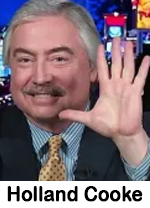 What makes a life – or the work we do – matter? In Make It Matter, author Matthew Emerzian explores how recognizing our own worth, making others feel valued, and contributing to something beyond ourselves can give everyday choices a deeper purpose.
If you are podcasting, here’s your take-away: Make listeners feel that THEY matter…not merely that your podcast matters.
Emerzian’s narrative builds around three perspectives: “I Matter. You Matter. We Matter.” Applying that framework to podcasting suggests practical lessons.
The big idea: A listener who feels understood has a reason to come back…and recommend your podcast.
Make It Matter: Unlocking Human Potential Through The Mattering Mindset by Matthew Emerzian is published by Wiley Books. To read 2 free sample chapters, scroll down to “Recommended Reading” at HollandCooke.com
Holland Cooke (HollandCooke.com) is a consultant working the intersection of broadcasting and the Internet. Follow HC on Twitter @HollandCooke and connect on LinkedIn
Crossover Media Group is partnering with leadership expert, keynote speaker and author Dave Reggina to handle advertising sales for his “The No Snooze Podcast.” Additionally, CMG has acquired an equity interest in the program. Crossover Media 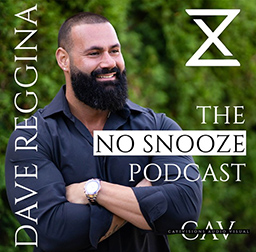 Group managing member Scott Calka says, “‘The No Snooze Podcast’ is a compelling, engaging and inspirational program hosted by a personality who’s equally compelling, engaging and inspirational. With his special blend of motivational leadership insights, uplifting personal-growth stories and practical health and fitness advice, Dave is poised to break out in the podcast universe. Our new partnership underscores our confidence in his potential and is emblematic of an evolving model for our podcast business.” Reggina’s diagnosis as a teen with Crohn’s disease sparked his dedication to health, fitness and resilience. He is the author of the book, 30 Lessons to Lead: From Breakdowns to Breakthroughs, and co-founded A.C.E. (Action Cultivates Excellence), a transformative personal and professional growth movement and community.
According to data from Edison Research’s Share of Ear study that looks at share of in-car audio time among the total U.S. 13+ population and those whose primary car is an electric vehicle (EV). Edison says, “AM/FM radio still accounts for the largest percentage of in-car audio time. This is accurate for the total U.S.  13+ population as well as those whose primary vehicle they ride in or drive is an EV, but at dramatically different rates. The total population spends 53% of their in-car audio time with AM/FM radio, while EV drivers and riders spend 42% of their in-car audio time with the platform. Streaming music time remains second behind AM/FM radio, but gains significant ground among EV drivers/riders, increasing from 17% of time to 22%. The EV audience’s share of in-car time with podcasts is twice that of the total population. Time spent with SiriusXM also increases among EV drivers/riders, rising from 16% of time to 20%. All other platforms remain relevantly consistent across the two groups.”