By Frank Morano
City Councilor
New York City 51st District
Staten Island
 For most of my life, the sound of an AM signal has been my constant companion. Long before I ever spoke into a microphone professionally, I was the kid hiding under the covers with a transistor radio, slowly turning the dial, discovering voices, ideas, communities, and worlds far beyond my bedroom. AM radio didn’t just shape my career – it shaped who I am.
That’s why, as both a lifelong AM radio listener and a longtime AM broadcaster (77WABC and WNYM-AM “970 The Answer”), I’m introducing legislation in the New York City Council to require that all City-owned and City-contracted vehicles continue to include functioning AM receivers. I’m proud of my work in government, but this one is personal. Because AM radio isn’t just entertainment or nostalgia – it’s infrastructure. It’s public safety. It’s the backbone of our emergency communications system. And it’s in danger.
When Everything Else Fails, AM Radio Doesn’t
We don’t have to imagine what happens when modern communications collapse. We’ve lived it.
On September 11, 2001, when cell networks jammed almost immediately, millions of New Yorkers turned to AM radio for news, instructions, and reassurance.
In the 2003 Northeast Blackout, AM signals were among the very few communications systems still functioning across multiple states.
During Superstorm Sandy, when much of the region lost power and internet for days, AM remained a critical lifeline for emergency updates, evacuation information, and weather alerts.
These weren’t theoretical scenarios. They were real moments of crisis – and AM radio proved its value every single time.
When the lights go out, AM stays on. When cell networks are overwhelmed, AM cuts through. When the internet fails, AM continues broadcasting. It is the most resilient form of mass communication ever created, and FEMA and the National Weather Service still rely on AM frequencies for a reason: they reach people when nothing else can.
AM Radio Is Still the Soundtrack of America
Beyond emergencies, AM radio remains woven into the cultural fabric of this country. It’s where Americans talk to each other – about politics, sports, faith, overnight oddities, neighborhood issues, and everything in between. It’s one of the last places where anyone can call in, join the conversation, and be part of a community.
The same AM dial that once carried the voices announcing D-Day, the moon landing, and the gritty street reporting of New York legends still carries the news, opinions, and debates that shape American life today. There is something uniquely democratic about the AM band: it is accessible, unpretentious, inexpensive, and available to everyone.
That’s worth preserving. Especially now, as some automakers – particularly in the electric vehicle space – phase AM radios out of new models, citing interference or cost concerns.
Cities and States Can Lead Where Washington Waits
Congress is considering the “AM Radio for Every Vehicle Act,” and I support it wholeheartedly. But federal action can take time. Cities and states can move faster.
New York City’s legislation can be a model:
- If municipalities require AM receivers in the vehicles they procure…
- If state governments do the same for their fleets…
- And if enough jurisdictions stand firm…
Automakers will have no choice but to keep AM radio in every vehicle they sell.
Government can’t – and shouldn’t – tell anyone what to listen to. But we absolutely can ensure that the option to listen still exists. And that, when disaster strikes, the public can rely on a system proven over nearly a century to work under the toughest circumstances imaginable.
The Signal Must Go On
AM radio isn’t a relic. It’s a lifeline. It’s a civic space. It’s one of the last great mediums that belongs to the people. As someone who owes much of his career – and much of his identity – to those airwaves, I feel a responsibility to protect them.
By acting locally here in New York City, I hope we inspire communities across the country to do the same. If we want the AM dial to be there for the next blackout, the next storm, or the next unthinkable moment, the time to act is now.
Because when everything else goes silent, AM radio still speaks.
And we need to make sure it always will.
Frank Morano was recently elected City Councilor representing New York City’s 51st district. Prior to that he forged a distinguished career in talk radio at WABC and WNYM in New York. Councilor Morano can be reached via email at frank@moranoforcouncil.com.
Share this with your network


 Columbia. The stations are in small markets and include: KAAN-AM/FM, Bethany; KWIX-FM, Cairo; KKWK-FM and KMRN-AM, Cameron; KIRK-FM, Macon; KTCM-FM, Madison; KRES-FM and KWIX-AM, Moberly; KJEL-FM and KBNN-AM, Lebanon; and KFBD-FM, KOZQ-FM, KJPW-AM, and KIIK-AM in Waynesville. Connoisseur Media founder and CEO Jeffrey Warshaw says, “These Missouri markets did not fit into our long-term plans. We are pleased to have found a trusted buyer in Miles Carter and his family-oriented company.” Carter comments, “We have wanted to expand for a while and when the opportunity came, we were eager to talk with Connoisseur. As we look toward the new markets, our mission remains the same: bring trustworthy local news, agriculture coverage, and community-focused storytelling to areas that need a stronger voice. Expansion isn’t about getting bigger, it’s about serving more people with the kind of reliable, hometown broadcasting Carter Media was built on.”
 people here at KNX all around me are real. And they are people who live and work in this community. Brian Douglas and Sioux-Z Jessup, our traffic team, Sabina – they care about people driving in from places like Santa Clarita. Or when you hear sirens on the westside or Monrovia, we here at KNX are curious too! And we can joke about the differences between LA and Orange County and how Irvine is always topping the list somewhere because we are here with you in this community. We know Southern California. It has been my privilege to be part of this community and to tell you stories about things that matter, as well as things that just might brighten your day. We’ve had so much fun. It has been my absolute pleasure to meet some of you, along the way… So, I hope that you will continue to listen to KNX and enjoy my partner here and support him, Mike Simpson, and the new owner of my chair as the morning co-host, that is Margaret Carrero, we wish her well.” With Carrero’s move to mornings, Alex Silverman joins the afternoon lineup, alternating shifts with Brian Douglas.
  Elizabeth Mayer states, “In our continued focus on YouTube and watchable podcasts, this edition of the Podcast Download reveals YouTube at an all-time high for consumption. Regardless of tenure or heavy usage, YouTube remains in the top spot, which speaks to podcast consumers seeking out watchable podcasts. 12% of weekly podcast consumers use Smart TVs where video components are intuitive and easy to access to listen to podcasts.” Signal Hill Insights president and CEO Paul Riismandel adds, “Audio is still key. While we see yet another bump in the preference to use YouTube for podcasts, we don’t see notable change in the number of weekly podcast consumers who are only watching their podcasts. This segment remains a tiny minority – just 8% in this report.”
 One of my first jobs out of college was working in the marketing department of WNBC-AM, New York. Yes, “Imus In The Morning” (Don Imus – not nice), Cousin Brucie (Bruce Morrow – nicest star who ever lived). One of my tasks was to pull ratings numbers from the computer for the sales department. I was fascinated by TIME SPENT LISTENING (TSL) and CUME numbers. I’d rank them, compare, trend them every way imaginable.
 chairman and CEO Bob Pittman comments, “We’re pleased with our third quarter performance, generating Adjusted EBITDA of $205 million, slightly above the midpoint of our guidance range, and our consolidated revenue was down 1.1% compared to prior year, at the high end of our guidance, and up 2.8% excluding political revenue. And we continue to take important steps in the evolution of our company – last week we announced our new relationship with Amazon Ads, which will provide advertisers using Amazon DSP access to our vast audio portfolio, and just this morning we announced our new TikTok partnership, which will bring TikTok creators into iHeart’s ecosystem. We are committed to exploring new ways to unlock the value of our unparalleled assets, maximizing the unique position we occupy in the evolving media landscape, and creating innovative cross-platform opportunities to bring new products and services to our consumers and our advertising partners.”
 period last year. Saga says this was primarily the result of an industry wide settlement with two music licensing organizations (ASCAP and BMI) resulting in a retroactive rate adjustment of approximately $2.1 million covering the period from January 1, 2022, to the quarter ended September 30, 2025. Station operating expense would have decreased $120 thousand or 0.5% for the quarter without this settlement. For the quarter, Saga had an operating loss of $626 thousand compared to operating income of $1.6 million for the same quarter last year and station operating income decreased $2.5 million to $3.5 million. Without the settlement the operating loss would have been operating income of $1.5 million compared to $1.6 million and station operating income would have been $5.6 compared to $6.0 million for the same quarter last year. Saga reports a net loss of $532,000for the quarter compared to net income of $1.3 million for the third quarter last year. Saga says its balance sheet reflects $34.2 million in cash and short-term investments as of November 3, 2025.
 policy in the National Women’s Soccer League and teammates Sarah Gorden and Angelina Anderson who strenuously object to the idea. Travis – co-host of The Clay Travis and Buck Sexton Show – said on the program, “If you are a male soccer player, and you are listening to us right now, D1, I would encourage you to go to open tryouts. If you make a women’s soccer team or they ban you – just say you identify as a woman – if you make a women’s soccer team, I’ll pay you 100 grand. Challenge out there for every man listening to us right now. I want one of you out there to try to make a women’s pro soccer team – just tell them if they question you, ‘hey, I identify as a woman,’ and I want you to make the team because if they don’t have this rule in place, it would be transphobic for them to stop you from being able to become a male identifying as a woman professional athlete. And I think you might be able to score fifty goals in a year and maybe this is what needs to happen in the National Women’s Soccer League.”
 the same period a year ago. Urban One CEO and president Alfred C. Liggins, III says, “Third quarter results came in slightly softer than expected across the board. Core radio, excluding political, finished down 8.1%, and our Radio segment is currently pacing down 30.2% all-in and 6.4% ex-political for the fourth quarter of 2025. Revenues at our Reach Media and Digital segments were down 40.0% and 30.0% respectively, which was on the lower end of expectations. Cable TV advertising was down 5.4% and affiliate revenue was down 9.1% driven by continuing subscriber churn. In light of the soft overall market conditions, we are reducing our full year guidance from $60 million of Adjusted EBITDA to $56 to $58 million. Our focus remains on controlling costs, managing debt, leverage and liquidity. During the third quarter of 2025, we repurchased $4.5 million of our 2028 Notes at an average price of approximately 52.0% of par, reducing our outstanding debt balance to $487.8 million.”
  than three decades. During his career, he hosted the first live, daily talk show in KFAB’s 100-year history and served several years as the station’s program director. He was also the voice of Nebraska Cornhusker football from 1980-1995. He says, “Time sure flies when you’re havin’ fun. Since I was a kid growing up in Minnesota, I had a passion for radio. It’s just like anything else, kids who dream about being a doctor or whatever; mine was radio.” KFAB says that Sadlemyer’s on-air partners for the past quarter-century – Jim Rose and Lucy Chapman – will remain as part of the station’s morning drive commitment to providing news, weather, traffic, sports and compelling conversations about the issues important to the community. The station says that KFAB listeners will still hear plenty of Gary Sadlemyer on the station as he’ll still work to provide personalized content for station advertisers, and pop in to hang out or be a fill-in host on the morning show from time to time.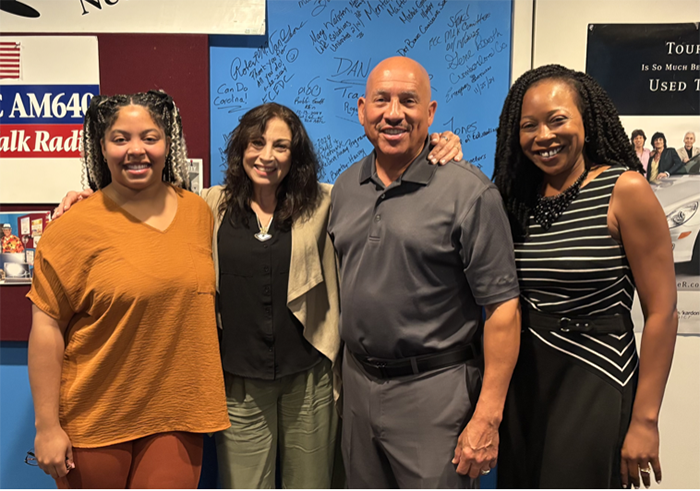
 Possibly not – beginning Sunday – unless you live in Hawaii and Arizona (except the Navajo Nation) or American Samoa, Guam, the Northern Mariana Islands, Puerto Rico, or the U.S. Virgin Islands. Everywhere else, clocks will change when we “fall-back” on November 2.
 charge inflated prices, according to a report by Reuters. At the heart of the complaint is the charge that Nielsen is providing access to the national broadcast radio ratings only if the client spends a lot of extra money on
  the separate local ratings. Cumulus argues that Nielsen’s policy forces them to buy ratings in U.S. markets where it doesn’t operate stations in order to have the complete national ratings data. Nielsen has stated that Cumulus’ suit is “entirely without merit” and “we will respond accordingly.” The complaint also says Nielsen is “degrading product quality, raising prices without justification and blocking competitors from gaining footholds in the industry.”
  Microsoft CEO Steve Ballmer retired with enough do-re-mi to indulge two passions. He bought the NBA Los Angeles Clippers (for a record $2 billion). And he built
  provides insights for marketers on how to curate advertising strategies that authentically connect with audiences and build trust in an increasingly fragmented and technology driven world.” The study was fielded through Critical Mass Media for iHeartMedia and found that 82 percent of respondents worry about AI’s societal impact, and 9 in 10 believe it’s important to know the media they consume is created by a real person. iHeartMedia president of insights Lainie Fertick says, “The data shows us that consumers are emotionally driven, digitally fatigued and yearning for authenticity in an increasingly algorithmic world. This is especially critical with rapid technology advancements and the growing use of AI in the media industry. For marketers, it creates both hurdles and unique opportunities to connect with audiences in this new environment.” Key findings from the study include: 1) Children are struggling to be independent in a tech-forward era; 2) Consumers are all online, but they aren’t happy to be there; 3) Trust in online information is at an all-time low; 4)
  Algorithms rule our lives, and consumers know it; 5) Media is dividing us on current events, but all agree that there’s “something going on with those Epstein files”; and 6) Though 97 percent of consumers know what AI is, with 70 percent actually using AI, distrust remains high. iHeartMedia chairman and CEO Bob Pittman comments, “It’s important for us to remember, as marketers, that we’re in a very delicate position within a turbulent time, both in America and around the world. In a world of digital saturation and AI acceleration, this study reveals that consumers are not just looking for convenience – they’re searching for meaning. Sports, radio, live media and human-led storytelling offer a rare sanctuary of trust, empathy and shared experience. Above all, we must continue listening to Americans more closely than ever before and focus on ways to foster real connection and amplify our collective humanity.”
 Every talk host knows the move: play the clip. It might be a moment from late-night TV, a political ad, or a viral post that sets the table for the segment. It’s how commentary comes alive – listeners hear it, react to it, and stay tuned for your take.
 The most common mistake podcasters make is assuming the microphone alone creates an audience. Too many would-be hosts hit Record without a clear strategy for WHY they’re doing a show, WHO it’s for, and what makes it DIFFERENT from millions of other podcasts.
 eldest son, FNC is in the doghouse. Newsmax published an account of the interview which quotes Trump Jr. saying, “Honestly, I don’t watch it anymore because it is so ridiculous. They try so hard to be unbiased that they’re actually biased against conservatives at this point. But this shouldn’t be surprising. These are networks that banned me for two-and-a-half. I’m barely on anymore. I know my father was banned.” However, TALKERS has learned that Donald Trump Jr. appeared on FOX News Channel four times recently – on August 13 and September 3, 11, and 12. He told Salcedo
  “FOX’s approach has left conservatives silenced while Democrats and establishment figures get free rein.” The president recently complained about FNC in a post on Truth Social in which he singled out White House correspondent Peter Doocy for talking to Arizona Senator Mark Kelly about his healthcare agenda. He wrote, “Why is Fox News and Peter Doocy putting on Democrat Senator Mark Kelly to talk about, totally unabated or challenged, Healthcare?” SiriusXM’s Megyn Kelly recently complained about FOX News Channel’s coverage of Charlie Kirk’s slaying, saying, “It’s really bothering me how FOX News is talking about Charlie, like he was theirs — he wasn’t. It’s a lie. Just stop.”
 When we first covered this case, it felt like only 2024 could invent it – a disgraced congressman, George Santos, selling Cameos and a late-night host, Jimmy Kimmel, buying them under fake names to make a point about truth and ego. A year later, the Second Circuit turned that punchline into precedent. (Read story here:
  These aren’t just bulletin boards. They’re extensions of your station, where listeners expect to be acknowledged and advertisers expect to see results.
 With topics ranging from Mars and UFOs to flying cars and ‘civilization starter kits,’ each episode blends science, technology, and imagination with the real choices shaping our world.” For example, on this week’s program Cirilli welcomes Harvard astrophysicist Dr. Avi Loeb for a conversation about comet 3I/ATLAS, alien tech, and the future of space exploration. He also chats with Rich Cooper, vice president of strategic communication and outreach for Space Foundation, about America’s $1 trillion space economy and why investing in space isn’t just about exploration – it’s about building America’s economic future. Premiere Networks president Julie Talbott states, “We’re thrilled to welcome ‘Hello Future’ to the network. With years of experience as a journalist covering global affairs, technology and policy, Kevin has the unique ability to connect the dots between science and the future for listeners who crave bold ideas and fresh perspectives on what’s ahead.”
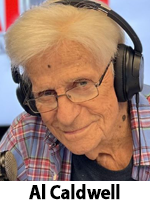 Beaumont region for over five decades known for his authenticity, passion, and a deep love for Beaumont and its people. Caldwell is now 89 yet he continues to wake up at 4:00 am to entertain and inform his long standing and loyal fan base. Chamber president Amy Lavoi says, “Al Caldwell is more than just a radio personality – he’s the voice of our community. Through decades of broadcasting and public service, Al has uplifted this city with his humor, insight, and compassion. We are honored to recognize him as our 2025 Man of the Year.” Caldwell comments, “This community has given me so much over the years and being recognized by the Chamber as ‘Man of the Year’ is truly humbling. I love telling stories, sharing laughs, connecting with listeners, and waking up before the sun to be part of their day.” The award will be presented at the Chamber’s Annual Meeting on October 7 at the Beaumont Civic Center.
 entertainment & integrated marketing Jeff Meza says, “Cultural ROI is the vehicle for us at Urban One to further our mission to help educate the industry and brand partners alike on the importance that intentions must be rooted in strategy, and this new economy requires development of total market plans that are inclusive and representative of authentic experiences.” Urban One VP, television and digital research Audrey Cochran adds, “I am incredibly proud of the work we’ve done to quantify the undeniable impact that Black consumers have on U.S. culture. This study not only demonstrates their impact and influence on broader consumer behavior but also underscores the value of authentically connecting with this segment – and the business risks of failing to do so.”
  Sure, radio’s superpower is that we’re live. But 75% of all advertising dollars are now spent on digital. And Netflix, YouTube, and podcast platforms have conditioned consumers to expect that their content will wait for them (“on-demand”), not the other way around (“linear,” meaning real-time on-air). If your best content disappears the moment it airs, you’re leaking value. Think: time-shifted, searchable, and shareable.
 Jimmy Kimmel’s first monologue back after the recent suspension had the audience laughing and gasping, and, in the hands of countless radio hosts and podcasters, replaying. Within hours, clips of his bit weren’t just being shared online. They were being chopped up, (re)framed, and (re)analyzed as if they were original show content. For listeners, that remix feels fresh. For lawyers, it is a fair use minefield.
 Markets broadcast operations. Salem CEO David Santrella says, “Linnae is a proven builder of teams and revenue streams. For nearly three decades she has delivered results across every part of Salem’s business, and she has the rare ability to connect vision with execution. As we move into a ‘One World’ selling environment, Linnae is exactly the leader we need to unlock new opportunities across all of our platforms and deepen our service to advertisers. Her leadership will be central to accelerating Salem’s growth.” Also, Jamie Cohen is promoted to chief digital officer, a newly created role designed to unify and oversee all digital operations across Salem Media. Cohen was most recently SVP of broadcast digital. Santrella says, “Jamie has been one of the key architects of Salem’s digital transformation. In just seven years, he took a $6 million business and scaled it to over $40 million—proof of both his vision and his execution. This new role gives him the mandate to break down silos and unify all of Salem’s digital assets under one strategy. With Jamie at the helm, Salem is positioned not just to compete in the digital marketplace, but to lead as a fully integrated media company.”