Industry Views

Pending Business: TV Knows Best

By Steve Lapa
Lapcom Communications Corp
President

imBulletin: “Linear TV” is no longer the winner.

Linear TV is tech talk for combining over the air and cable TV, and according to Nielsen, July 2023 was the first-time streaming TV was the winner, as streaming captured most TV viewing.

From Netflix to YouTube, we are watching more content on streaming channels than linear TV. You have read about the resurgence in “Suits,” the legal drama that originally aired 2011-2019 and is now drawing 18 billion minutes of viewing on Netflix. Whether those 18 billion minutes are part Meghan Markle curiosity or part writers’ strike, does not matter. Those 18 billion minutes of viewing helped drive streaming viewership to an all-time high. Maybe streaming grabbed a page from that old radio handbook that starts with “Content is King.”

But the companies controlling the streaming ad-free experience on Netflix, Disney, Hulu, etc. seized the opportunity and raised rates. Soon, it will cost you more every month to watch your favorite content ad-free.

Wait a minute! Did I just say the ad-free experience as in commercial free or no interruptions? Did the streaming guys just take another page from the well-worn radio programming handbook and turn the commercial-free model upside down to increase income? Streaming channels will deliver commercial free programming and charge you anywhere from $13.99- $21.99 a month as the fees double and triple depending on when you started your subscription.

How about our friends at Amazon Prime jumping on “Thursday Night Football,” or Apple and Peacock pushing baseball? Do not forget the YouTube NFL packages starting at $250. No, this is not a veiled plug for paid programming, nor is it a critique of the value propositions offered in the streaming world. Time for a long look in the mirror:

— The commercial-free experience began when radio programmers dropped the commercials, programmed longer, commercial-free segments to drive listenership and ratings up. In the short term it worked. My hand is in the air, guilty as charged. Maybe I was one of the lone radio management voices who asked, “Then what, run the spots and drive the audience away? Are we sending the wrong message?” We were dumb. After commercial free came rates, packages, and promotions. None of us said, “Raise the rates when the commercial-free stops!” The streaming guys got it right – just raise the rates.

— There is no older radio programming mantra than “Content is King.” You can name the iconic talents with one word, Howard, Rush, Imus, yet major radio organizations struggle as they search for great, soon-to-be iconic talent. It is faster, easier, and more lucrative to become a Tik-Tok, YouTube, or Instagram star.

These are all just examples of how radio was first in and stopped innovating. There is some good news on the horizon. Facebook is stepping back from the news business as news organizations ban together and ask for compensation. This could be the first chink in Facebook’s 113-billion-dollar ad armor. Maybe not. Either way, the old school top-of-the-hour newscast, or large market all-news radio should be re-imagined, opening the door to the next generation of innovators.

Steve Lapa is the president of Lapcom Communications Corp. based in Palm Beach Gardens, FL. Lapcom is a media sales, marketing, and development consultancy. Contact Steve Lapa via email at: Steve@Lapcomventures.com.

Industry Views

ENOUGH! The Selling Culture Has Failed Radio

By Walter Sabo
Consultant, Sabo Media
A.K.A. Walter Sterling
Radio Host, Sterling On Sunday
Talk Media Network

The creeping culture of sales-determines-all has brought the industry to this moment of despair. The selling culture has failed the medium. It is time to, once again, segregate the sales and programming departments. Take the budgets away from the program directors and inspire them to create exciting UNPREDICTABLE programming.

Earnings calls for most radio companies were held this week. Not pretty. Declarations of the demise of radio are constant, emotional, and desperate. Bleak conditions in the radio industry have occurred before. A review of past crises and how they were overcome is constructive, urgent, and essential.

For example, in 1952, network TV was launched and showed signs of success. NBCABC, and CBS moved their money from radio to TV. Longform radio shows were cancelled leaving stations across the country with a problem. At the time, most radio stations were small shops, usually family-owned, therefore the need to add hours of local programming was a financial challenge. The solution was presented by a programmer.

Todd Storz’ family owned stations in Omaha, Kansas City, Minneapolis, New Orleans, St Louis and Oklahoma City. He was young and obsessed with radio. His stations were losing money and the future, without network show blocks, was uncertain. Todd ate at a diner daily and noticed that even after it closed, the waitresses put their own money in the jukebox to hear the same songs they had heard all day. Hit after hit. Todd created a list of the top 40 songs, built a production sound and put it on his Omaha station. The station was #1 overnight. His top 40 format was aired on his owned stations with the same results.

Ruth Meyer was the program director of WMCA, New York where she established the GOOD GUYS dynasty. Before WMCA Ruth was the PD of Storz’s station in Kansas City. I asked her who did what at Storz and she said, “It was all Todd.” Todd was a programmer who never spent a day in sales. Storz’s programming idea changed and, yes, saved the industry.

When Todd died at 38 years of age his father – a businessman – took over the company. After Todd’s death, the stations died too. Why? Storz station manager Deane Johnson explained, “Todd’s death [and the control of the radio stations falling to Todd’s father] brought about a shift from a ‘programming company’ to a ‘money company.’”

Radio’s next challenge was FM. It is a popular myth that the shift from AM listening to FM was driven by the higher quality of the FM signal. FM’s signal had been available since 1948. No one listened.

You don’t go to iMAX to watch the huge, superior white screen. You go to watch a movie on the huge superior white screen. When the FCC mandated an end to AM/FM simulcasts, the general managers had no idea what to do and isn’t it time for golf?

Obsessed, very young radio fanboy programmers such as Michael Harrison and Allen Shaw joined with frustrated senior programmers like B. Mitchel ReedScott MuniMurray the K and Tom Donahue to EXPERIMENT with new programming techniques. They imagined and implemented progressive rock, free-form, album rock. THEN the crowds came to FM to hear exciting UNPREDICTABLE programming.

In 1966, Tom O’Neil, the founder/chairman of RKO General owned many money-losing, major market stations. The solution? Better sellers? Better sales training? A sales master course? No. The answer was Bill Drake. O’Neil hired Bill Drake and allowed him to create exciting UNPREDICABLE programming. Drake’s programming saved many RKO stations and was copied by hundreds of stations across the country. Drake’s programming saved them, too.

ALL of radio’s challenges today can be solved with programming invented by programmers free to program. Enough with “it’s not in the budget.” Enough with “it will bring in money.” Enough with “it’s good for sales.” Enough with talent having to generate half their salary in billing to be retained. Enough!

Unleash today’s program directors to follow their instincts, their facts and no more having to check with corporate. Why? Because checking with corporate hasn’t worked. Checking with corporate stops the flow of ideas, it freezes them in time. Radio is live, in the moment. When radio programming is frozen in time it MUST failGive up corporate engagement. Let programmers surprise you.

To quote a mentor, ABC Radio Network’s VP Dick McCauley (a sales guy), “A great salesperson is one who has a great product.” He said it a lot.

Walter Sabo was the youngest executive vice president in the history of NBC. He was the programming consultant to RKO General longer than Bill Drake. According to a Sirius corporate EVP, “Sirius exists because of what Walter Sabo did.”  He hosts a Talk Media Network radio show as Walter M. Sterling, “Sterling on Sunday.” Find out more here: www.waltersterlingshow.com  Contact him at walter@sabomedia.com or 646.678.1110

Industry News

WTOP Names Three to News Director Roles

Hubbard Broadcasting’s all-news WTOP-FM, Washington, DC announces that three news pros are named to news director roles for the station. Monique Hayes is promoted to AM broadcast news director; Bill McFarland joins WTOP as PM broadcast news director; and Giang Nguyen joins the station as digital news director. Hayes has been serving with the station for the past two years, most recently as assignments manager. She says, “Thisim is a great opportunity to help lead one of the best newsrooms in the area. I look forward to coaching and training future newsroom leaders and collaborating with our veteran journalists. I am excited to work with this new management team to deliver great local coverage of Washington, DC, and the surrounding communities.” McFarland comes to WTOP from NBC Boston, Telemundo Boston and New England Cable News where he was assistant news director. Nguyen recently served as a multimedia reporter in local markets in Kansas (WIBW-TV) and Illinois (WQAD-TV) as well as having worked at CNN, Radio Free Asia, NHK World and CCTV America in both reporter and assignment editor roles. WTOP director of news and programming Julie Ziegler comments, “I am so excited to have the force of Monique, Giang and Bill behind our daily newsroom operations. Having their combined talents on both the broadcast and digital sides is exactly what we need to meet our daily mission of delivering the most compelling content to our listeners and readers across all platforms.”
Industry Views

Sabo Sez: Consolidation Has Been Radio’s Savior

By Walter Sabo
Consultant, Sabo Media
A.K.A. Walter Sterling
Radio Host, Sterling On Sunday
Talk Media Network

imHALF of all radio stations in the United States lose money – at least they did back in 1991. The NAB used to put out an annual report revealing how many radio stations were profitable. Usually half the stations in America lost money. Since consolidation, the NAB stopped putting out that report. It is reasonable to believe that far, far fewer stations lose money today.  Shared costs, real estate, technical economies due to digital equipment versus analog all indicate that there must be fewer money-losing properties.
The business of radio is very strong and appealing to investors. Apollo Advisers was the first money-in Sirius. The Apollo fund recently bought Cox radio. Marc Rowan, Apollo’s CEO is the smartest guy in any room. Rowan doesn’t invest in hunches; he buys businesses that grow return on investment.

In 1970, 7% of all ad dollars went to radio. Today, 7% of all ad dollars go to radio.  In 1970, Procter & Gamble spent almost zero dollars in radio. Thanks to consolidation and the vision of Randy Michaels, radio has shifted from a “frequency” ad buy to a “reach”  buy. Reach commands higher rates and more sophisticated advertisers. The RAB’s Erica Farber and Sound Mind’s Kraig Kitchin focused on winning P&G dollars. Today, Procter & Gamble is a top-five radio advertiser.

Are you sick and tired of “experts” saying that radio is slow to digital?  Radio is not slow, radio was first-in. Mark Cuban put thousands of stations on Broadcast.com in the 1990s. Today radio leads the list of most downloaded podcasts. NPR has been the leader in podcasting since Alex Bennett started the industry. Under Bob Pittman and Jarl MohniHeart and NPR dominate downloads.

Why the pessimism and anxiety in the hallways?  It started with the management of consolidation. There are major consulting firms to help employees go through mergers. Consolidating an industry and its workforce is both an art and science. No radio company sought or engaged experienced expertise to manage consolidation. Instead, when a quarter’s revenue was missed, people were fired. Your friends in the next office were suddenly out of work. Layoffs should have happened all at once, based on a strategic plan. There is no plan. Firings are executed on random dates, with no notice; a horrible practice that continues. That’s why you’re miserable. No plan.

Radio stations in Canada, Europe, Australia and the UK are having excellent years. Canadian Music Week conventions, Commercial Broadcasters of Australia and European conferences are bursting with optimism and good news about radio. Why? Consider this possibility: Most radio companies outside the US are owned and managed by executives with a programming background. To do their jobs, programmers must be optimistic about the future. A salesperson’s job requires them to spend their days listening to media buyers’ objections to advertising on radio – negotiators! It sucks.

Consumers like or love radio. The reason SiriusXM Satellite Radio has 34 million listeners PAYING for radio is that listeners want MORE stations. Much, perhaps most, “music discovery” comes from radio listening. 53% of Americans will listen to radio today. In 1970, 53% of Americans listened to radio daily.

Walter Sabo was the youngest executive vice president in the history of NBC. The youngest VP in the history of ABC. He was a consultant to RKO General longer than Bill Drake. Walter was the in-house consultant to Sirius for eight years. He has never written a resume. Contact him at walter@sabomedia.com. or mobile 646-678-1110. Hear Walter Sterling at www.waltersterlingshow.com.

Industry News

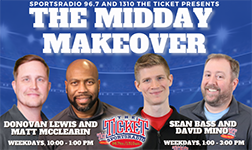
New Hosts Join Cumulus Media’s “The Ticket” in Dallas-Fort Worth

Cumulus Media announces new personalities in middays on its sports talk outlet KTCK-AM/FM, Dallas-Fort Worth “The Ticket.” Former “Ticket” host Matt McClearin re-joins the station after two years on-air at the company’s WJOX-FM, Birmingham, Alabama. He’s partnering with “Ticket” personality Donovan Lewis for theim 10:00 am to 1:00 pm show, filling the role of retired “Ticket” host Norm Hitzges. New to the daily lineup is the 1:00 pm to 3:00 pm duo of Sean Bass and David Mino. Bass has been with “The Ticket” for 22 years, most recently as producer of “The Norm and D Invasion.” Mino has been with the station for 11 years, most recently as producer of “The Hardline” afternoon drive show. Station program director Jeff Catlin comments, “I couldn’t be more excited for the midday makeover on ‘The Ticket.’ Matt, Sean, and Mino have all earned this opportunity. All three guys are well-known and well-liked by our passionate listeners and their ‘Ticket’ teammates. They will fit in well and make this a seamless transition.”
Industry Views

Don’t Leave Cash on the Nightstand

By Walter Sabo
Consultant, Sabo Media
A.K.A. Walter Sterling
Radio Host, Sterling On Sunday
Talk Media Network

imAmazing fact: In ancient times, from 1962-1972, the highest-paid on-air talent in New York City was “an overnight guy.” He was paid salary plus sales response. I’m talking about Long John Nebel on WOR, WNBC, then WMCA. Long John’s live reads moved product because his audience was captive. One-to-one his listeners were attached to their radios in the truck cab, night watchman’s building lobby, parents pacing with their babies, students cramming. His background was not in radio; he was a skilled auctioneer. Obviously, the same listeners exist today – and are anxious for someone to talk to them. Check out this old clip of Nebel in action: https://youtu.be/wYMCkpYFtbk
One of today’s bizarre misconceptions is that overnights/late nights are not important for sales or audience share. Totally and completely wrong!

— As an executive, when launching a new format, any new format, the first time period I staffed was overnights. Late-night, overnight is the doorway to a station. Listening patterns to AM drive are habitual, hard to change. Late night listening is discretionary. Audiences will sample new radio offerings when they seek pure entertainment rather than essential utility elements.

— Late-night cume feeds morning drive. Study the flow of audience from late-night to morning drive, you will be surprised how much of the AM drive cume depends on the last station heard before turning off the radio.

— No distractions. It is easier to sell any product or idea to a person who is giving you 100% of their attention rather than rushing to work, calming the kids and remembering to avoid road construction. As George Noory’s success confirms, the percent of listeners who act on a commercial message is higher overnights than at any other time period.

— Every format has a default hour – one hour of the day when it will have its largest audience share. For all-news, for example, it’s always 5:00 am – 6:00 am. Lite FM’s, 1:00 pm. Live, local talk: 11:00 pm.  Listeners seek companionship, sympathy and empathy from talk shows.  If a station offers a “best of” at 11:00 pm, it is ignoring the built-in strategic advantage of the talk format. 11:00 pm is primetime.

— Rate integrity. A station may charge top dollar for morning drive. Upon further study those high rates usually come with nighttime bonus spots.  Bonus spots cut the rate in half. The nighttime results story can stand on its own and command premium pricing without bonusing.

Walter Sabo was the youngest executive vice president in the history of NBC. The youngest VP in the history of ABC. He was a consultant to RKO General longer than Bill Drake. Walter was the in-house consultant to Sirius for eight years. He has never written a resume. Contact him at walter@sabomedia.com. or mobile 646-678-1110. Hear Walter Sterling at www.waltersterlingshow.com.

Industry News

Dan Patrick Announces Retirement in 2027

Sports Illustrated’s Kevin Sweeney reports that sports media personality Dan Patrick announces to his fans thatim he plans to retire from the business in four years at the end of 2027. Patrick’s radio program is nationally syndicated via Premiere Networks and is simulcast via YouTube. The former ESPN personality responded to fans who questioned his decision by saying, “This is a young man’s game. I’m the oldest guy doing this. And I enjoy doing it, but by the end of 2027, that’ll be it. You have my word, so plan accordingly.” Read the SI story here.
Industry News

New Jim Peters Talk Show to Take Live Video Phone Calls

Former Conk News editor-in-chief Jim Peters announces that he is launching a new live video talk show, “Jim Peters At Night,” at 11:00 PM ET on July 31 that will broadcast simultaneously on 10 platforms and networks. Peter says, “There’s nothing new about what I’m doing. There are hundreds of people doing it on Twitch everyim night. But they’re all pretty much just talking to their friends. Ours might be the first ‘professional’ talk show that will take spontaneous video phone calls and only video phone calls from the public.” Peters goes on to say, “When I started this project, I decided I was going to go wherever the prevailing technology took me. Although I’ve hosted several television talk shows in the past, I’m a radio guy at heart. So, we started with a live audio show… but it’s currently way easier to do live video than live audio. So, then it became a radio show with a video feed, and standard phone call-in. But when I realized that we could take video phone calls, I said screw it, let’s get real: it’s a TV show – with the public joining in, on the screen.” Peters’ new program will debut on Rumble, YouTube, Twitter, Facebook, Twitch, OnlyFans, Odysee, Telegram & Trovo, and audio-only on Podbean Live.
Industry Views

Pending Business: Good News Bad News

By Steve Lapa
Lapcom Communications Corp
President

Survey says, the good news is, 49% of local direct advertisers use AM/FM radio.

The bad news is, the same survey says, 65% of that same group uses social media advertising. Advantage +16% for the digital team. The good news is, you are comfortable selling/managing digital and social media vehicles because like it or not your local advertiser is leaning in on the digital/social media advertising opportunity.

Survey says, more bad news, 54% of the local direct advertiser group is buying event-sponsorships. The good news is, you are comfortable selling/managing event-sponsorships because like it or not your local advertiser is leaning in on the event-sponsorship advertising opportunity.

Now for the closer, survey says, over 50% of these local advertisers are now budgeting only 2% of gross revenues on advertising. Thank you Borrell for the researched eye-opener and thank you pandemic for shrinking the local advertiser’s marketing dollar.

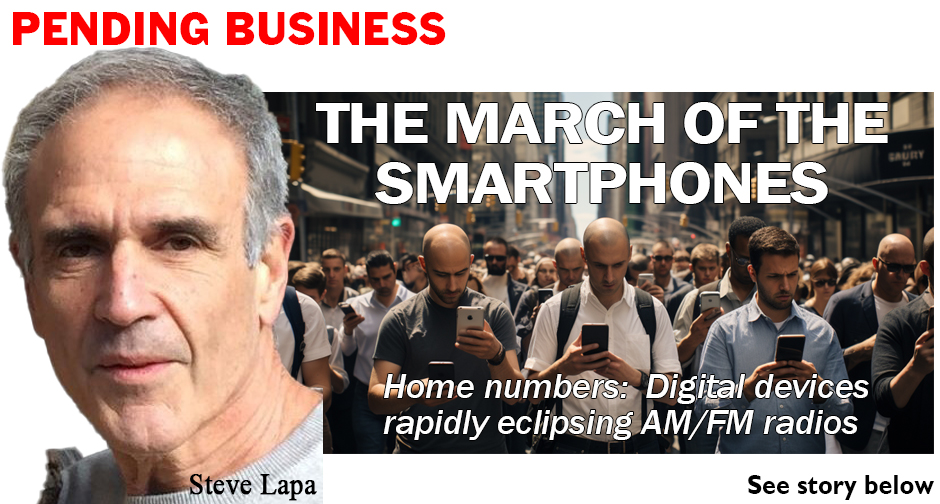
Show of hands, please, anyone reading this totally surprised? The online digital/social media advertising world has been on a double-digit growth tear as long as anyone can remember. The growth continues as AM/FM sellers stand by and watch the parade go by, sorry guys. The facts are… there are roughly 310 million smartphones in the U.S. According to the last Edison survey, 68% of U.S. homes own 1.5 radios. In round numbers 338 million radios at home. Wait, what? Are there almost as many smartphones as AM/FM radios at home? Anyone own more than one smartphone? I thought there was a radio in almost every room in your home. Not anymore, you say? Quite different from the average five radios per household when many reading this column earned their first double digit commission check as a member of that fun loving sales team. The times are a changin’ and I hope you are changing with the times. Let us start here:

Update your value proposition for “Why Radio?” Make it current and relevant to today’s media ecosystem.

Sharpen your new selling skills. Get ahead of the curve and leave your competitors in the dust.

Ask yourself, “What happened?” The numbers of smartphone users are growing. Maybe not as fast as in the past but growing. The number of AM/FM radios in the home is shrinking. Look to your leadership for some answers.

When the trend is NOT your friend, it’s time to think like the great leaders who built our country and media empires, “Lead, follow, or get out of the way.”

Steve Lapa is the president of Lapcom Communications Corp. based in Palm Beach Gardens, FL. Lapcom is a media sales, marketing, and development consultancy. Contact Steve Lapa via email at: Steve@Lapcomventures.com.

Industry News

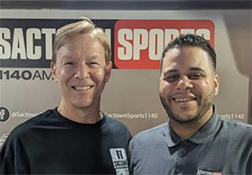
KHTK, Sacramento Unveils New Midday Show

Bonneville’s KHTK, Sacramento “Sactown Sports” announced the new midday show starring Kevin “Whitey” Gleason and Chris Watkins. The 10:00 am to 2:00 pm “Whitey & Watkins” program debuts on Monday (7/10). Bonneville Sacramento SVP and market manager Steve Cottimgrim says, “We are very excited to welcomeim Whitey Gleason back to Sactown Sports. The credibility that Whitey has with the sports audience in Northern California coupled with Chris’ passion and knowledge of the Sacramento Kings will certainly make this show a perfect fit for our ever-expanding ‘Sactown Sports’ brand.” Gleason most recently served with Audacy’s KGMZ-FM, San Francisco “95.7 The Game,” and prior to that he was part of the “Rise Guys” show on KHTK. Watkins has been with “Sactown Sports” for nine years, most recently as the host of “Chris & Co” and co-host of the “Return of the Roar” podcast.
Industry News

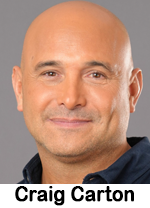
Craig Carton Says Farewell to WFAN

Yesterday (6/15), the New York Post’s Andrew Marchand broke the news that WFAN, New York afternoon drive personality Craig Carton will leave his role with the station at the end of the month to focus full time on his show on cable’s FS1 network. During Thursday’s program, he delivered an emotional farewell to the station, his co-host Evan Roberts, and to Audacy New York senior vice president Chris Oliviero – the man whoim brought Carton back to WFAN after he served a year in prison for fraud. He said, “I had a saint in my corner. A gentleman by the name of Chris Oliviero. He has maintained his support of me as a friend and a brother through all the ups and downs of my radio career. When I got myself in trouble, he came and visited me. He told me if I ever got my life back in order and figured out why I made the bad decisions I made, he would be there for me. No guarantees of a job, but that he would never stop being my friend. Having a guy like that as your friend, I’m the luckiest guy in the world. Not only is he my friend, but he paved the way for me to come back to WFAN.” The WFAN website says Carton will continue to do his weekend gambling addiction program, “Hello, My Name is Craig” show that airs on WFAN on Saturday mornings. He added, “WFAN has meant the world to me. If WFAN didn’t give me the opportunity to come back and restart a career, no joke, I’m unemployable… so, walking away from WFAN is not easy. WFAN is my home.”
Industry News

TALKERS 2023: Video of “Talk Radio and Podcasting” Panel Discussion Posted

im

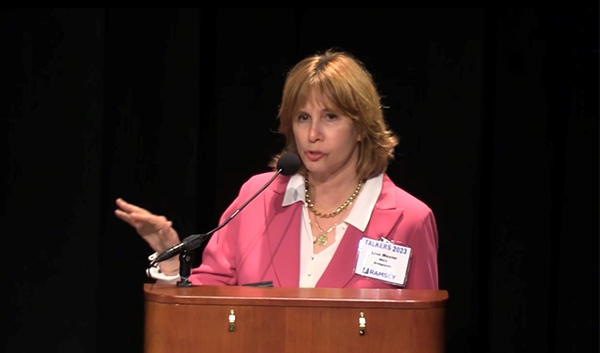
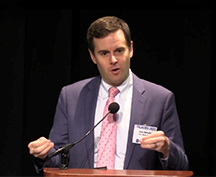
During the coming days, videos of all of TALKERS 2023’s numerous sessions conducted June 2 at Hofstra University will be posted, continuing today (6/15) with the panel discussion, “Talk Radio andim Podcasting.” The session, sponsored by Our American Stories, was introduced by syndicated talk show host Guy Benson of FOX News Radio (pictured at right) and moderated by talk show host Lisa Wexler of WICC, Bridgeport, CT (pictured above). Panelists (pictured below from left to right) include Steve Goldstein, CEO, Amplifi MediaGary Krantz, CEO, Krantz Media GroupGreg Stocker, brand manager, WPHT, Philadelphia; Ron Hartenbaum, managing member, WYD Media; and Larry Young, host/producer, “In Conversation with LY” podcast. See the video of this session here
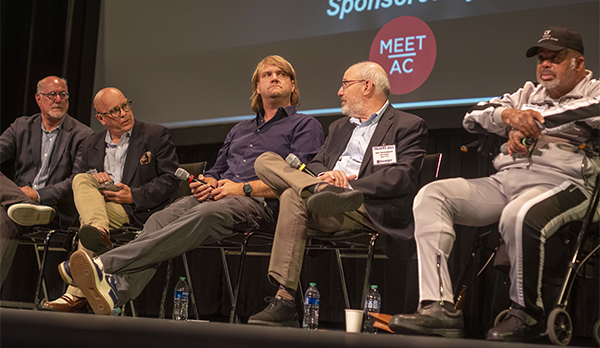
im

Industry News

Pittsburgh Sports Media Personality Stan Savran Dies

Pittsburgh sports media pro Stan Savran died on Monday (6/12) at the age of 76. Savran began his career at WWSW-AM, Pittsburgh in 1976 before moving crosstown to KQV. He then served with WTAE-TV and WTAE-imAM. In 1991, he and co-host Guy Junker launched the popular “SportsBeat” program on cable TV. After that show’s eventually demise, the two worked together on Pittsburgh radio on what are now WPGP-AM and WBGG-AM.  in addition to a couple of cable TV ventures in which he held reporting and sports talk hosting roles. Savran would also host the postgame show on the Pittsburgh Steelers Radio Network.
Industry News

WJR, Detroit Unveils New All Local Lineup

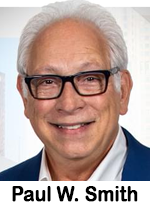
Cumulus Media’s Detroit news/talk 760 WJR announces a series of lineup changes that will take effect on June 20 in which all of the daytime hosts will be live and local. One of the biggest changes is longtime station morning host Paul W. Smith moving to the newly created 12:00 noon to 2:00 pm daypart as host of “Focus.” Smith replaces the Westwood One-syndicated “Dan Bongino Show.” WJR says that Smith’s hosting the “Focus” show “will expand theim community’s access to Michigan’s most influential political, civic, and business newsmakers.”  Moving to mornings is current early afternoon host Guy Gordon, who becomes host of  “JR Morning” from 6:00 am to 9:00 am. “All Talk” with Tom Jordan and Kevin Dietz airs from 9:00 am to 12:00 noon. Following “Focus” will be the imnewly created “JR Afternoon” show with host Chris Renwick from 2:00pm-4:00pm, followed by “The Mitch Albom Show” from 4:00 pm to 6:00 pm. Additionally, WJR is bringing back “SportsWrap” with host Sean Baligian airing from 6:00 pm to 7:00 pm. Cumulus Detroit VP and market manager Steve Finateri says, “Launching the ‘Focus’ show will give Paul W. Smith the opportunity to expand, on and off the air, his unmatched relationships with Michigan’s most influential newsmakers, for the benefit of our audience and our advertising partners. WJR is ‘The Great Voice of the Great Lakes’ and going 100% local is a big win for all Michiganders who count on WJR to inform and educate us about everything happening here in our state!” WJR program director Mike Wheeler adds, “What a lineup! Each of our talent is a brand unto themselves and have a unique vision and take on the events that shape the news. We are absolutely living up to our claim that WJR is where Michigan comes to talk.”
Industry Views

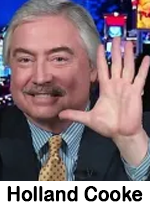
Monday Memo: Apple Heaven and Hell

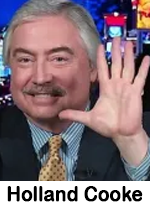
By Holland Cooke
Consultant

imEver lost your phone? It’s an instant sick, sinking feeling. It’s quaint to even call it a “phone,” because it’s…everything. Including us. Like the transistor radio Boomers toted in our youth, it’s audio in your pocket.


For broadcasters and podcasters, a smartphone can be the whole toolbox. MOVIES are being shot on the newest iPhone. The cameras and editing apps are that good. TV and radio can go live, anywhere there’s a signal. And, like Alexa, Siri is conversant. Dictation isn’t just a convenient voice-to-text appliance. It makes lots of apps lots handier, and safer while driving. So, when, suddenly, my phone couldn’t hear me anymore, I went Code Red.

“Testing…testing…”

First triage: Google. But when I satisfied myself that all my settings were as they should be, I needed a person. As expected, the patient expert on Apple’s Support line had a thick foreign accent and great people skills. She had me repeating all the steps Google recommended, and told me I had to update my OS. When repeated attempts failed, I needed in-person handholding, a/k/a The Genius Bar.

Just TRY calling an Apple Store. The local number for the Providence Place Mall location rings in Texas I was told, after I cheated by reaching out to a friend who works for Apple and got me in the door. The irony is painful: They sell telephones but can’t answer one.

im

Antiques Roadshow

I’ll seem my age if it’s 2023, and I’m still toting iPhone 8. Hey, it worked…until it didn’t. And the Genius Bar person explained that it had missed too many OS updates to ever catch-up. And when she ran diagnostics, enough other issues warranted the handoff to sales.

Dazzling as the latest-greatest are, I went with SE, same size/shape/appearance as the 8 being retired. It snapped right into the decorative Block Island cover case that had saved the old phone from so many drops. In the survey Apple emailed later that day, I couldn’t say enough about Matty, the sales guy who walked me through setting-up the new phone. All better now, and although it’s now sans SIM card, the retired 8 phone is a spare tire. If I want to talk to it, I’ll need earbuds. But it’s an otherwise functional iPod that will Facetime, Email, you-name-it, via WiFi.

So then?

With most AM/FM broadcast hours now automated or syndicated, stations that make local human connections will be conspicuous; and niche-topic podcasts will ooze “community.”

I write lots of commercials, and – where pertinent – we assure that “you won’t land in voicemail.” And we’ll emphasize one-on-one support. Here’s how one client – the voice you hear is the owner, whose stations are 100 miles from Dallas – sells expensive cameras, at a store in Dallas: http://getonthenet.com/CompetitiveCameras.mp3

Holland Cooke (HollandCooke.com) is a consultant working at the intersection of broadcasting and the Internet. He is the author of “Multiply Your Podcast Subscribers, Without Buying Clicks,” available from Talkers books; and “Spot-On: Commercial Copy Points That Earned The Benjamins,” a FREE download; and the E-book and FREE on-air radio features Inflation Hacks: Save Those Benjamins.” Follow HC on Twitter @HollandCooke

Industry News

WOR, New York News Director Joe Bartlett to Retire

Longtime WOR, New York news pro Joe Bartlett announces he will retire as a full-time member of the iHeartMedia news/talk station’s staff on May 31 after a 37-year career with the station. Bartlett – who’s been serving most recently as morning news anchor and news director for 710 WOR – says he planned to retire three years ago, but when the Covid-19 pandemic hit he decided to postpone it. In addition to his newsim anchoring and reporting work, Bartlett has also hosted talk shows on the station, including the long-running “WOR Saturday Morning Show.” He comments, “I loved my job and have been fortunate to have been part of this great station for all these years. I could have gone on much longer, but the time had come, where I just needed more free time. Sadly, this is not a job you can do only six months a year. I have been blessed to have had a caring radio ownership, extremely talented co-workers and a very loyal audience.” Bartlett and his wife have relocated to South Carolina where he looks forward to having more time for golf, seeing his grandchildren, and supporting the New York Giants. WOR program director Tom Cuddy says, “It’s rare in this business to encounter as versatile a radio personality as Joe: anchor, news director, and talk show host…not to mention an all-around nice guy. He will be missed not just by our listeners but by our staff.”
Features

Reflections on Jerry Springer

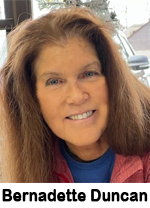
By Bernadette Duncan
Author/Professor/Former Radio Producer

(EDITOR’S NOTE: The following is an excerpt from Bernadette Duncan’s classic talk radio book about her 26-year career as a major market and national radio producer, Yappy Days: Behind the Scenes with Newsers, Schmoozers, Boozers and Losers (Talkers Books, 2016).  It appears in the chapter titled, “Guests Who Are Not What They Seem.”)

imWhen television spiraled into a circus of chair-throwing, hair-pulling, fist-fighting, profanity-yelling, cross-dressing, sex-addicted guests, Jerry Springer was the ultimate ringleader.  “The Jerry Springer Show” was so over-the-top when it debuted in September 1991 that security guards stood by on set and the opening featured a parental warning that stated the content may be inappropriate for children. With segments like “Sex Between Family Members” or “Nudists Talk About Why They Expose All,” it gained a reputation for being the most sexually-explicit tabloid program.
So why not invite Springer on to dish about the show’s 10-year success?  If anyone had stories, Springer was loaded. Though maybe his material would be salty and I had to be prepared.  In other words, I needed to keep my finger near the “dump button” in case some raunchy words flew out of his mouth.

What I discovered was amazing. This guy, whose high-octane show could be jaw-droppingly raunchy and theatrical, was himself a charming and humble philosopher.  Get a load of this personal history… British-born, Springer broke into politics in 1971 as a city councilman and was forced to resign from office three years later after admitting to soliciting a prostitute. The following year, after owning up to his actions, he won back his seat by a landslide.  In 1977, he was elected Mayor of Cincinnati and he served one term.

Springer was riveting, confirming the possibility that the best guests are often talk show hosts themselves.  He could talk about anything and with heart. And without ever uttering a nasty word.  He spoke most touchingly about coming to America on The Queen Mary with his parents when he was five-years-old.  “In one generation,” he said, “we went from the Holocaust to this wonderful privileged life I have today.”

Who knew you could pluck a guest from the circus of tabloid television and discover the soul of a poet? Jerry Springer was multi-faceted and showed character.  The qualities that anchored him were, perhaps, the very characteristics that allowed him to oversee his wacky show.

Bernadette Duncan can be contacted via email at heybharrison@gmail.com.  Meet Bernadette Duncan at TALKERS 2023 on June 2 at Hofstra University.

Features

Remembering Jerry Springer: Coming To America

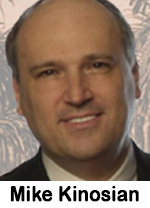
By Mike Kinosian
TALKERS magazine
Managing Editor


imNotwithstanding the enormity of accomplishments that enveloped this exceptionally bright and learned broadcaster, Jerry Springer remained as humble and refreshingly an “ah shucks” individual as you’ll ever hope to meet.

Perhaps that speaks to the somber circumstances that brought him to this country at the tender and innocent age of five.

It’s a borderline crime that many people think the Tulane University (B.A. in Political Science, 1965) and Northwestern University (1968 Law degree) graduate’s resume consisted solely of watching people verbally and physically beat each other to a pulp on a daily, hour-long television show that carried his name for 27 years, starting in September 1991.

It was only natural that this passionate political voice for domestic and international issues – who was a leader in lowering the voting age from 21 to 18 with the 1971 passage of the 26th Amendment – be offered a meaningful podium to air his views.

Many observers, though, were stunned when – in January 2005 – Springer actually agreed to weave a daily radio talk show into his already hectic media schedule.

Field of dreams leveled

 Barely two weeks into Springer’s local run on Clear Channel Cincinnati flagship WCKY “The Revolution Of Talk Radio” and Clear Channel Detroit’s WDTW “Detroit’s Progressive Talk,” Air America Radio picked up his 9:00 am – 12:00 noon “Springer On The Radio” talkfest.

The experience had the resplendent one positively beaming. “Frankly, I’m just as excited as I can be,” he remarked to me. “Politics and public issues have always been my main interest. [It’s exciting] to have an opportunity to be part of the American conversation at a time when there is clearly a need for other points of view. Talk radio is overwhelmingly dominated by conservative ideas. There’s a place for that, of course, but we also need to hear other ideas and other points of view. Perhaps this is an area in which I can make a contribution.”

 Off-and-on discussions had been held between Springer and Air America even before the network’s March 31, 2004 sign-on. The former Cincinnati Mayor, however, confided he wasn’t thoroughly convinced he was ready to commit to doing a daily radio show. “With this last presidential election, I realized that, until we level the playing field, there’s not going to be any hope of having a more progressive government,” Springer proclaimed. “That’s when it suddenly became a priority for me. I’ve only been on Air America [since January 2005], but the early ratings returns are great; apparently, we’re doing well.”

 Life progresses

 Every Top 10 market except No. 2 Los Angeles carried “Springer On The Radio” and the overall affiliate count quickly grew to 50 outlets. “Our biggest non-Air America Radio station is [Clear Channel Cleveland news/talk] WTAM,” he pointed out. “It’s a powerhouse station and the interesting thing there is that I lead into [Premiere Radio’s] Rush Limbaugh. In some markets, I lead into [Air America’s] Al Franken and in others, I lead into Rush – talk about whiplash.”

The majority of the American populace, of course, knew Springer as the 14-year host of a show that wasn’t much of a threat to win many Peabody awards.

Approximately 10 years prior to his national exposure, though, Springer was an anchor/political reporter/commentator on Cincinnati television, proudly notching seven Emmy Awards for his nightly commentaries. “I loved doing it and don’t have any bad memories, but I’m in a different point in my life now,” Cincinnati Magazine’s five-time “Best TV Anchor” recipient commented. “Life moves on and I’m onto something else and I’m not sure I’d go back to that anymore.”

Stone cold memories

 Some would ascribe Chicago (the base of his TV show); New York; or Cincinnati as Springer’s birthplace. All would be incorrect, as he was born in London (1944) when his family successfully escaped the holocaust.

They arrived in New York City on January 24, 1949 and it is without any hesitation the usually glib Springer blurted out that particular date in reverence and sincere reflection. “I didn’t specifically go through Ellis Island,” he recounted in a markedly softer tone. “My parents and I had a five-day journey on the Queen Mary and I remember being called up on the top deck as we passed the Statue of Liberty. It didn’t mean that much to me, since I was just five years old and freezing cold. I do, however, remember being scared because I saw all those people huddled together. The other memory I have is that it was stone silent – nobody said a word.”

Radio’s role in the Americanization process

 In later years, his mother (Margot) told her son that he’d asked her why everyone was looking at the Statue of Liberty and what it meant. “She said in the German that she spoke at the time that one day it will mean everything,” Springer recalled still touched with emotion. “She was right. My family went from holocaust to this ridiculously privileged life I live today in one generation, so I know the ‘American Dream’ can work.”

The first year he and his family were immigrants, Springer lived in Manhattan’s now defunct Whitehall Hotel near Amsterdam Avenue.

One year later, they moved to a rent-controlled apartment where his parents would live for the next 32 years. “Everyone was trying to learn English,” emphasized Springer, who established a scholarship fund at Chicago’s Kellman School that serves inner city youth. “I was five years old, but my parents wanted me to become Americanized so we listened to the radio all day. One of my earliest memories as a little boy was listening in the morning to [Roger] Gallagher & [Joe] O’Brien [on New York City’s WMCA]. Some of my Americanization – including the news, sports, idioms, music and sense of humor – came through the radio.”

Compelling dialogue

Utterly and genuinely masterful at what he’s accomplished on television, a low-key Springer modestly admitted he tried to learn a little something from certain radio personalities, without consciously copying anybody. “I just turn on the microphone and talk,” he stated with simplicity. “Obviously, Rush and [ABC Radio’s/Fox News Channel’s] Sean [Hannity] are at the top of the heap, simply because they’ve been doing it for so long. I think [Air America’s] Randi Rhodes is just wonderful on the radio and Al Franken has a great sense of timing.”

Many on the right claim liberal-leaning talkers have heretofore failed in our medium because they lack the entertainment factor. If anyone knew how to present an entertaining product, it was the extremely adept Springer who flatly asserted, “The conversation has to be interesting – period. That can be in the way it’s presented; the way we accept different callers; or with little skits we do. People must feel they have to listen, but it doesn’t have to be entertaining in the ‘ha-ha’ sense all the time. To be honest, not every conservative show is entertaining – some aren’t interesting at all.”

The question of whether a program holds one’s interest or has a significant entertainment quotient has virtually nothing to do with a particular political philosophy, but rather, as Springer explained whether the host is capable of putting on a good show. “The reality is conservatives took to radio 20 years ago when liberals weren’t looking at that as an economic marketplace. Someone figured out that conservatives could really find an audience in radio because you were dealing, at that time, with angry white men going to work. You get them when they’re driving to [their jobs]. Clearly, Rush filled a void and is a tremendous talent. When people saw that, the industry moved in that direction.”

The face of liberal America

Firmly contended that conservatives did well on radio in large part because the liberals won, Springer opined in my 2005 interview, “America is far more liberal today than it ever was. I know we elect conservatives from time to time, but clearly in terms of the critical issues of the day, no one could look at America and say we are not liberal. The protest came from the right.”

Conservatives though were in charge when he was growing up and dissent came from the left.

Protests were for such noble movements and causes as civil rights, anti-war, women’s rights and the environment. “Finally, the liberals won and their agenda is how most Americans live,” Springer contended. “Even if you call yourself a conservative, chances are your kids are listening to the same music, going to the same movies and wearing the same clothing. The culture is clearly more liberal than it ever was. We don’t even blink if we see interracial dating or interracial marriage; it’s not an issue. We’ve clearly moved to the left. Since America is now so liberal in terms of its everyday living, the protest is coming from the right.”

TV show proves to be a non-issue

That’s certainly more than a plausible reason to explain the widespread success enjoyed by conservative talk radio. “With the emergence of the Christian right or whatever in the last couple of years, liberals have been getting nervous again,” Springer speculated. “You’ll start to see the emergence of liberal radio. Radio will always be the response to what’s going on in society. People aren’t going to call up [talk shows] if they’re happy with everything; they’ll get on with their lives. People who call are the ones who are upset. That’s why you’ve seen this trend in radio from liberal to conservative back to liberal.”

 Listener feedback to the engaging Springer was gratifying and, on at least one level, elicited a curious result. “We don’t get any calls – and I mean none – that comment on the [television show],” he stressed. “I sometimes wonder if they even know that it’s me or if they think I’m a guy with a similar name. From whatever side of the spectrum they’re from, no one seems to make reference to the television show. It’s a non-entity in terms of radio.”

Not a perfect fit

Those unaware of Springer’s legitimate political acumen could be caught off-guard by hearing him as the front person of an issue-charged talk program, but the host adamantly maintained, “Within 18 seconds of hearing the show, you’re going to realize it’s different. You may not agree with what I’m saying, but it’s impossible to listen [and not have an opinion].”

Commanding center stage approximately eighteen years ago were such topics as the war in Iraq; terrorist bombings in London; potential Supreme Court nominees; Social Security; and other pertinent headlines of the day. “Even if you were inclined to call and razz me about the [TV] show, it’s pretty hard to do,” Springer contended. “You’d be embarrassed because everyone else is talking about a woman crying because her son is fighting in Iraq and the next caller [weakly] says, ‘Hey, Jerry, I love those transvestites.’ It wouldn’t fit and we’ve found, for some reason, it also doesn’t exist.”

Mindless to mind-provoking

 Juggling both the radio and high-profile syndicated television show proved to be admittedly rough for Springer – who was generally up at 5:30 am. “I spend two hours at the studio going over my notes from the night before and checking if there’ve been any changes from [overnight]. I do the [radio] show and then we immediately have a 30-minute meeting. We tentatively pick a couple of subjects to talk about [on the next broadcast] and people start doing research.”

If it happened to be a television-taping day, he rushed to that studio to do shows at 3:00 pm and 6:00 pm and was usually back home by 9:00 at night.

Over dinner, he checked to see if there were any changes or breaking news.

“Springer On The Radio” was produced in Cincinnati, but the television show required the host to be in Chicago. “I also have a place in Sarasota; I’ve been in New York; and just recently did the show from London,” he pointed out. “It’s a lot of work and it’s a real job. I devote a couple of hours a week to the television show and the thing I do is mindless, but the radio show is real work.”    

Tongue tied

On-air radio elements consisted of Springer and caller interaction, with no emphasis placed on guests. “I’m not rushing to do it, but won’t say I’ll never do it,” he put forth. “I’m more comfortable with [the way it’s been going] and don’t want this to be a show from the top down. The idea is to have this be a middle-America show, a [program] where regular folks can [share] what they’re thinking.”

That philosophy didn’t preclude certain luminaries from voluntarily calling in, as Springer discovered when he was discussing the energy issue.

A caller identified himself to the screener as “Robert Kennedy” and it, indeed was the Robert F. Kennedy Jr. “My two idols were my father [Richard, a street vendor who sold stuffed animals] and, in terms of my political conscious, [RFK Jr.’s] father,” Springer noted. “It was a great thrill to talk with [RFK Jr.] – I was like a groupie.”                                                                    

Link to a legend

In addition to momentous, that particular conversation had to be more than a bit surreal for Springer and not simply because it was with a famous activist/fellow Air America Radio talk host. (Kennedy co-hosted Air America’s two-hour weekend “Ring Of Fire” with Mike Papantonio).

When he graduated from college, Springer worked as a presidential campaign aide to Bobby Kennedy. After the New York Senator was assassinated inside Los Angeles’ Ambassador Hotel in June 1968, Springer joined a Cincinnati law firm and, in 1971, was elected to Cincinnati’s Council-at-Large.

With the largest plurality in the city’s history, the then 33-year-old Springer was elected Mayor of Cincinnati in 1977.

Potent platform

Air America Radio colleague Al Franken made no secret of his fervent desire to represent Minnesota in the U.S. Senate (which, of course, he did), while Springer’s name was frequently mentioned in a similar capacity in Ohio or in that State’s Governor’s office. “It’s possible that the day may come where I pursue either of those [offices],” acknowledged Springer, who made a Democratic gubernatorial bid in 1982. “I must say [though] I’m concentrating on this radio job right now. I didn’t realize it would take off this way when I started. This may turn out to be a bigger [stage] than any political office. I’m sure a year from now I’ll look at how my life is going, but I’m very excited about making this radio thing work.”

In addition to being the opening act for “Achy Breaky” Billy Ray Cyrus, Springer released his own country CD (“Dr. Talk”) and once dressed to play in the nets for the IHL’s Milwaukee Admirals.

With less and less free time, there wasn’t much for Springer to do other than be enticed by an occasional movie role (he played himself in at least a half-dozen films, including “Austin Powers: The Spy Who Shagged Me”) or television appearance. “I try to enjoy my weekends,” the steadfast New York Yankees fan confided. “It’s been depressing this year because they’ve played so abysmally [entering the 2005 All-Star break in third place, 2.5 games behind the defending 2004 World Series champion Boston Red Sox]. You reach a point in life where you make time for those things that have to do with the quality of life. I admit, however, it’s difficult because I’m carrying so many jobs at once.”  

Rolling along

 Being Mayor of Cincinnati – especially at such a young age – was easily one of Springer’s greatest political accomplishments, but the longtime local co-host on Jerry Lewis’ annual “Stars Across America” Labor Day Muscular Dystrophy Telethon and VP of the national MDA knew he arrived as a celebrity when he appeared on the May 14, 1998 cover of Rolling Stone Magazine. “That’s when it suddenly hit me that this is really big,” he laughed. “I’ve always kind of taken things with a grain of salt and have said that it’s only television, not life-changing.”

Email Mike Kinosian at Mike.Kinosian@gmail.com

Industry News

“Talk Radio and Podcasting” Panel Set for TALKERS 2023

One of the many informative highlights of the forthcoming TALKERS 2023 conference will be a special panel discussion focusing specifically on the medium of podcasting as it applies to and relates to professional talk radio broadcasters. According to TALKERS VP/executive editor Kevin Casey, “So much of the discussion of podcasting we see at media events around the country approach the subject from a very broad-strokes perspective and water down their focus to the thousands of amateurs in the game and micro-niches utilized for obscure interests. The effective utilization of podcasting from the perspective of talk radio professionals – as a tool to increase revenue, expand branding, offer on-demand distribution, produce ancillary products and extend independent careers – is a specific realm of focus. That’s what this panel will explore.” The session will include an introduction by Guy Benson, host, FOX News Radio; moderation by Lisa Wexler, host, WICC, Bridgeport, CT; and panelists Steve Goldstein, CEO, Amplifi MediaRon Hartenbaum, managing member, WYD MediaChris Oliviero, market president, Audacy New York; David Pakman, host, The David Pakman Show; and Larry Young, host, The Larry Young Podcast. Casey adds, “Each of these distinguished broadcasters brings a formidable level of expertise and field experience to the subject of podcasting’s role within the talk radio universe.” There will be more than 60 distinguished industry speakers at TALKERS 2023, the 26th annual installment of the talk media industry’s longest running and most important annual gathering.  For more agenda, registration, sponsorship and hotel information, see story below or click here.

Industry Views

Monday Memo: Hearing is Believing

By Holland Cooke
Consultant

Every time I visit a station, I meet with sales, and I leave ’em a thumb drive of “spots that have produced results elsewhere, for businesses just like yours,” magic words on local direct retail sales calls. Help yourself to these, all of which produced results.

— Key Lending Solutions and AdvantaClean demonstrate using unscripted client interview sound bites and minimal announce copy.

— Here’s a straight pitch I wrote for the guy who maintains my home water system.

— When local retailers are defending against lower-cost big box competitors, local radio can be their best friend. Here’s a spot I produced that differentiates based on service.

Here’s the spot that had been airing when the client said “It’s not working.” I asked the rep: “Can we make it a 60 instead of a 30?” And I asked her to send me the jingle, and to interview the client and his customers on her smartphone, and send me the raw audio. Here’s the spot that got the advertiser to renew.

— Here are two spots I wrote for a tech retailer, one pitching convenience/security systems, the other pitching Home Theater.

Sure…A-B-C, “Always Be Closing.” But successful reps I’ve seen in action make that first call the C-N-A, “Client Needs Assessment,” 20 questions, ideally capturing the interview audio for use as you hear above. And they begin the second call saying, “Based on what you told me…” and hit Play.

Some things are easier to demonstrate than describe. And if you’re on-air talent who also sells, you are advantaged.

Holland Cooke (HollandCooke.com) is a consultant working at the intersection of broadcasting and the Internet. He is the author “Spot-On: Commercial Copy Points That Earned The Benjamins,” a FREE download; and the E-book and FREE on-air radio features Inflation Hacks: Save Those Benjamins;” and “Multiply Your Podcast Subscribers, Without Buying Clicks,” available from Talkers books.  Follow HC on Twitter @HollandCooke

Features

TALKERS 2023 Agenda Update

TALKERS 2023

June 2, 2023 – Hofstra University, Hempstead, NY

Presented by TALKERS in association with WRHU Radio

 Sponsored by (in alphabetical order):

The Doctor Asa Show – Backbone Networks – Benztown – The Michael Berry Show – Broadcasters General Store – C. Crane – Collette – Comrex – The Epoch Times –- Goldman McCormick PR – Guestbooker.com – The Sean Hannity Show – Newsmax – Our American Stories – Premiere Networks – Radio America – The Ramsey Show – Dr. Murray Sabrin – Stephan Multimedia – The Todd Starnes Show – Talk Media Network – Visit Atlantic City


AGENDA

Registration Desk Open – 7:30 am to 6:00 pm – Lobby of John Cranford Adams Playhouse

Registration Director: Barbara Kurland, Business Manager, TALKERS

Assistant Registration Director: Olivia Mannarino, Associate, TALKERS

________________________________________

Breakfast – 8:00 am to 8:55 am – Reception Tent next to John Cranford Adams Playhouse

Breakfast Emcee: David Bernstein, GM/Broadcast Operations, TALKERS

“Woman of the Year Award”

Recipient: Martha Zoller, Host WDUN-FM-AM, Gainesville, GA

“Lifetime Achievement Award”

Recipient: Kraig Kitchin, CEO, Sound Mind, LLC

Sponsored by Sean Hannity / Premiere Networks

________________________________________

Exhibits Open – 9:00 am to 5:00 pm – Lobby of John Cranford Adams Playhouse

Backbone Networks – Representative: Richard Cerny, President/CEO

Broadcasters General Store – Representative: Buck Waters, Marketing Executive

Collette – Representatives: Jim Edwards, VP, US Affinity Development; Paul Holly, Partnership Marketing Manager

Comrex – Representative:  Chris Crump, CBNE, Senior Director of Sales & Marketing

____________________________________________

Morning Greetings – 9:00 am to 9:45 am – John Cranford Adams Playhouse

TALKERS 2023 Emcee: Kevin Casey, VP, Executive Editor, TALKERS

“National Anthem”

Performed by: TBA

“Morning Wakeup”

Speaker: Jimmy Failla, Host, FOX News Radio

“Setting the Stage: Triple Perspective”

Official Greeter: Todd Starnes, Host/President, The Todd Starnes Show Syndication/Owner, KWAM, Memphis

“Welcome to TALKERS 2023”

Introduction: Victoria Jones, Executive Director, DC Radio Company

Speaker: Michael Harrison, Publisher, TALKERS

Special Guest (by remote): Bob Pittman, CEO, iHeart Media

Sponsored by The Doctor Asa Show

____________________________________________

Panel Discussion – 9:50 am to 10:25 am – John Cranford Adams Playhouse

“Programming News/Talk Radio in the Digital Era – Part 1”

Introduction: TBA

Moderator: Mike McVay, President, McVay Media Consulting

Panelists:

Michael Czarnecki, VP, Programming, Binnie Media

Tom Cuddy, Program Director, WOR, New York

Kevin DeLany, VP, News & Talk Programming, Westwood One

Eric Stanger, SVP, Operations, Sean Hannity Show, Premiere Networks

Joe Thomas, Host/Program Director, WCHV – Charlottesville, VA/PD, WRAD, River Valley, VA

Brett Winterble, Host, WBT, Charlotte

Sponsored by Premiere Networks
_____________________________________________

Fireside Chat Part 1 – 10:30 am to 10:50 am – John Cranford Adams Playhouse

Guest:  Christopher Ruddy, Founder/CEO, Newsmax Media

Host: Michael Harrison, Publisher, TALKERS

Sponsored by Collette

Fireside Chat Part 2 – 10:55 am to 11:15 am – John Cranford Adams Playhouse

Guest: Jeff Warshaw, Founder/CEO Connoisseur Media

Host: Michael Harrison, Publisher, TALKERS

Sponsored by Benztown

____________________________________________

“Freedom of Speech Award” – 11:20 am to 11:40 am – John Cranford Adams Playhouse

Recipient: Tavis Smiley, Host/Owner, KBLA, Los Angeles

Presenter: Michael Harrison, Publisher, TALKERS

Sponsored by The Todd Starnes Show

_______________________________________________

Four-Way Discussion – 11:45 am to 12:10 pm – John Cranford Adams Playhouse

“The State of Sports Talk Radio”

Introduction: TBA

Facilitator: John T. Mullen, General Manager, WRHU-FM/WRHU.org, Hofstra University

Panelists:

Grace Blazer, VP, National NTS Brand Coordinator, Director of News and AM Programming Florida Region, iHeart Radio

Mark Chernoff, Sports Reporter, 107.1 The Boss, Long Branch, NJ/Sports Radio Talent Coach

Spike Eskin, VP, Programming, WFAN, New York and CBS Sports Radio

Sponsored by Backbone Networks

____________________________________________________

Lunch – 12:15 pm to 1:15 pm – Reception Tent next to John Cranford Adams Playhouse

Lunch Emcee: David Bernstein, GM, Broadcast Operations, TALKERS

“Welcome to Hofstra University”  

Speaker: Mark Lukasiewicz, Dean, Lawrence Herbert School of Communication, Hofstra University

“Special Lunch Greetings”

Speaker: Carl Higbie, Host, Newsmax TV

“Humanitarian of the Year Award”

Presenter: Harry Hurley, Host, WPG, Atlantic City

Recipient: Jim Thompson, Former President, Broadcasters Foundation of America (posthumously)

Accepter: Renee Cassis, Broadcasters Foundation of America

Sponsored by Newsmax

____________________________________________

Panel Discussion – 1:20 pm to 1:55 pm

“Talk Radio and Podcasting”

Introduction: Guy Benson, Host, FOX News Radio

Moderator: Lisa Wexler, Host, WICC, Bridgeport, CT

Panelists:

Heather Cohen, SVP, The Weiss Agency

Steve Goldstein, CEO, Amplifi Media

Ron Hartenbaum, Managing Member, WYD Media

Chris Oliviero, Market President, Audacy New York

David Pakman, Host, The David Pakman Show

Larry Young, Host, The Larry Young Podcast

Sponsored by Visit Atlantic City

____________________________________________

Panel Discussion – 2:00 pm to 2:35 pm – John Cranford Adams Playhouse

“Generating Talk Radio Revenue in a Digital World” 

Introduction: Doug Stephan, Host, Good Day Show/Founder Stephan Multimedia

Moderator: Steve Lapa, President, Lapcom Communications Corp

Panelists:

Vince Benedetto, CEO, Bold Gold Media Group

Paul Gleiser, Host/Owner, KTBB-FM-AM, Tyler, TX

Todd Starnes, Host/President, The Todd Starnes Show Syndication/Owner, KWAM, Memphis

Paul Vandenburgh, Host/Owner, WGDJ, Albany, NY

Michael Zwerling, Host/Owner, KSCO-FM-AM/KOME, Santa Cruz

Sponsored by The Ramsey Show

____________________________________________

Panel Discussion – 2:40 pm to 3:15 pm – John Cranford Adams Playhouse

“The Big Picture”

Introduction: Matthew B. Harrison, Esq., Associate Publisher, TALKERS/President, the Harrison Legal Group

Moderator:  Michael Harrison, Publisher, TALKERS

Panelists:

Arthur Aidala, Esq. Founding Partner, `Aidala, Bertuna & Kamins, PC/Host, AM 970 The Answer, New York

Dr. Asa Andrew, CEO/Host, The Doctor Asa Network

Vince Benedetto, CEO, Bold Gold Media

Lee Habeeb, Host/Producer, Our American Stories

Lee Harris, Morning Co-Anchor, WINS, New York

Kraig Kitchin, CEO, Sound Mind, LLC

Sponsored by Newsmax

____________________________________________

Panel Discussion – 3:20 pm to 3:55 pm – John Cranford Adams Playhouse

“Programming Talk Radio – Part 2”

Introduction: Alex Fife, VP Operations, Southeast, iHeartMedia – Total Traffic & Weather Network

Moderator: Walter Sabo, CEO, Sabo Media/Host/Producer, Sterling on Sunday

Speakers:

Phil Boyce, SVP, spoken word format, Salem Media Group; Ops VP, New York region/WMCA/AM 970 The Answer

Ross Kaminsky, Host, KOA, Denver

Josh Leng, CEO, Talk Media Network

Dan Mandis, Host/Program Director, WTN, Nashville

Matt Meany, Program Director, WABC, New York/Red Apple Audio

Greg Stocker, Brand Manager, WPHT, Philadelphia

Sponsored by Our American Stories

____________________________________________

Panel Discussion – 4:00 pm to 4:35 pm – John Cranford Adams Playhouse

“Navigating a Radio Talk Show Hosting Career”

Introduction: Ryan McCormick, Managing Partner, Goldman McCormick, PR

Moderator: Dom Giordano, Host, WPHT, Philadelphia

Speakers:

Mandy Connell, talk show host, KOA, Denver

Jeff Katz, talk show host, WRVA, Richmond

Frank Morano, talk show host, WABC, New York

Martha Zoller, talk show host, WDUN, Gainesville, GA

More TBA

Sponsored by C. Crane

____________________________________________

Three-Way Chat – 4:40 pm to 5:00 pm – John Cranford Adams Playhouse

“Making the Connections Between Local and National, Radio and Television”

Facilitator: Harry Hurley, Host, WPG, Atlantic City, NJ

Speakers:

John Caracciolo, President/CEO, JVC Broadcasting

Brian Kilmeade, Host, FOX News Radio/FOX News Channel

Sponsored by The Michael Berry Show

________________________________________________

Closing Reception – 5:00 pm to 6:00 pm – Reception Tent next to John Cranford Adams Playhouse

Sponsor TBA

Program subject to changes

Industry News

Failla Making Impression on “Gutfeld!” Will Speak at TALKERS 2023

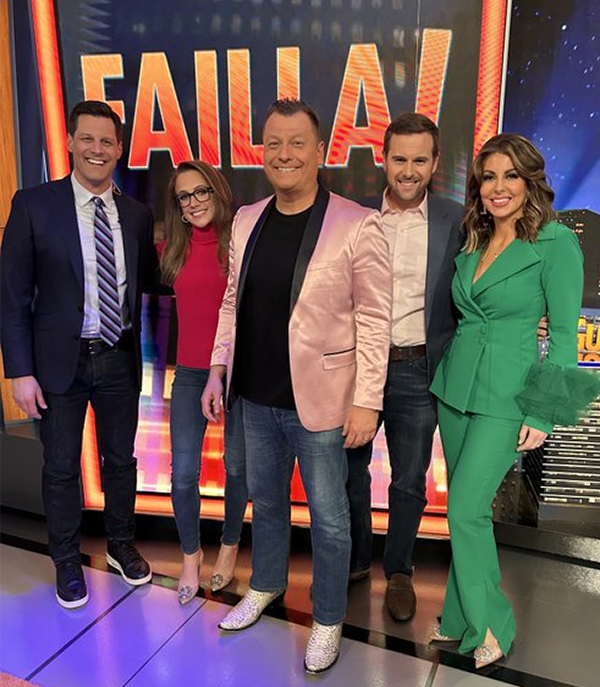
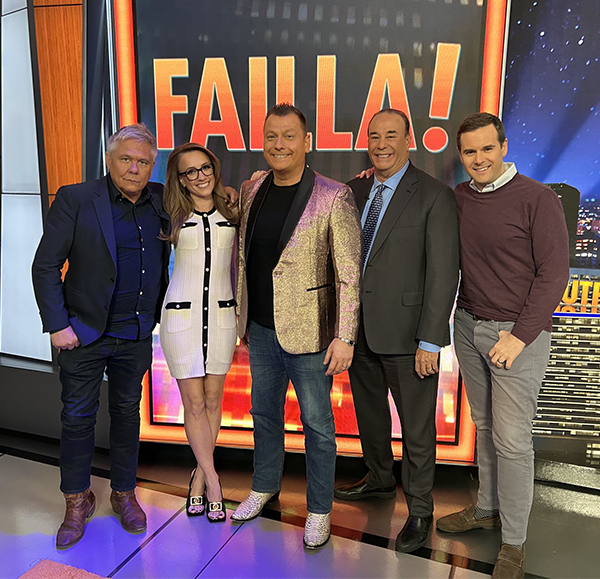
Radio has been getting a lot of love lately from the TV side of FOX.  FOX News Radio syndicated midday star Jimmy Failla (center, above) has become the “go-to” guy as fill-in host on FOX News Channel’s wildly successful late night “Gutfeld!” show (starring Greg Gutfeld). One of Failla’s guests on last night’s appearance was fellow syndicated FOX Radio talker Guy Benson, also a rising star in the industry. Both Failla and Benson will be appearing as speakers at the forthcoming TALKERS 2023 on Friday, June 2 at Hofstra University.  Failla will be reprising his popular role as one of the opening speakers at the event performing his unique blend of comedy and social satire specifically focused on talk industry issues. TALKERS publisher Michael Harrison says, “Jimmy gets the conference off and running on such a wonderfully upbeat note. He’s become a tradition!  Our attendees love him.” Pictured above (l-r) are: FOX Business Channel’s Brian Brenberg, Gutfeld! personality Kat Timpf, Failla, Benson, and commentator Morgan Ortagus.

Features

TALKERS 2023 Speakers, Registration, and Hotel Info

TALKERS 2023, the 26th annual edition of the talk media industry’s longest running and largest convention is shaping up to be one of the storied event’s most important installments.  The power-packed, one-day event will be presented by TALKERS on Friday, June 2, 2023 on the campus of Hofstra University in Hempstead, New York in association with the prestigious university’s multi-award-winning station WRHU Radio. TALKERS publisher Michael Harrison says, “We are delighted to be able to join forces again with our colleagues at Hofstra – the site of our very successful 2022, 2021 and 2016 events – and enjoy the remarkable resources that its Lawrence Herbert School of Communication brings to the table.” As was the case last year, this event will be held in a COVID-19 compliant environment based upon the circumstances at the time of the convention. TALKERS 2023 will boldly address key issues – some existential – facing the talk radio and talk media industries at this dramatically critical juncture of rapidly accelerating technological and societal change as well as identifying the remarkable opportunities inherent in these developments. It will also provide participants with unique and powerful networking opportunities.
In-person speakers at TALKERS 2023 include (in alphabetical order): Arthur L. Aidala, Esq. founding partner, Aidala, Bertuna & Kamins PC/talk show host AM 970 The Answer, New York; Asa Andrew, M.D., talk show host, the Doctor Asa Show; Vince Benedetto, CEO, Bold Gold Media; Guy Benson, talk show host, FOX News Radio; David Bernstein, director of broadcast operations, TALKERSGrace Blazer, VP, national NTS brand coordinator, director of news and AM programming Florida Region, iHeartMedia; Phil Boyce, SVP/Spoken Word Format, Salem Media Group; Ops VP, New York Region/ WMCA/AM970 The Answer; John Caracciolo, president/CEO, JVC Broadcasting; Kevin Casey, VP/executive editor, TALKERSMark Chernoff, sports reporter, 1071 – The Boss, Livingston, NJ/sports talk talent coach; Heather Cohen, SVP, The Weiss Agency; Mandy Connell, talk show host, KOA, Denver; Tom Cuddy, program director, WOR, New York; Michael Czarnecki, VP/programming, Binnie Media; Kevin DeLany, VP, News & Talk Programming, Westwood One; Spike Eskin, VP of Programming at WFAN, New York and CBS Sports Radio; Jimmy Failla, talk show host, FOX News Radio; Alex Fife, VP, operations, Southeast, iHeartMedia/Total Traffic & Weather Network; Dom Giordano, talk show host, WPHT, Philadelphia; Paul L. Gleiser, talk show host/owner, KTBB-AM/FM, Tyler, TX; Lee Habeeb, talk show host/producer, Our American Stories; Michael Harrison, publisher, TALKERSMatthew B. Harrison, VP/associate publisher, TALKERS/media attorney; Harry Hurley, talk show host, WPG, Atlantic City, NJ; Victoria Jones, executive director, DC Radio Company; Ross Kaminsky, talk show host, KOA, Denver; Jeff Katz, talk show host, WRVA, Richmond; Brian Kilmeade, talk show host, FOX News Radio/FOX News Channel; Kraig Kitchin, president, Sound Mind, LLC;  Steve Lapa, president, Lapcom Communications Corp; Josh Leng, CEO, Talk Media Network; Matt Meany, program director, WABC, New York; Mike McVay, president, McVay Media Consulting; Frank Morano, talk show host, WABC, New York; John T. Mullen, general manager, WRHU-FM/WRHU.org, Hempstead, NY; Chris Oliviero, market president, Audacy, New York; David Pakman, talk show host/commentator, the David Pakman Show; Christopher Ruddy, CEO, Newsmax Media; Walter Sabo, president, Sabo Media/talk show host, Sterling On Sunday; Tavis Smiley, talk show host/owner, KBLA 1580, Los Angeles; Todd Starnes, talk show host, the Todd Starnes Show/owner KWAM, Memphis; Doug Stephan, talk show host, the Good Day Show/CEO Stephan Multimedia; Greg Stocker, brand manager, WPHT, Philadelphia; Joe Thomas, talk show host/program director, WCHV – Charlottesville, VA/PD, WRAD, New River Valley, VA; Paul Vandenburgh, talk show host/owner, WGDJ, Albany, NY; Jeff Warshaw, CEO/founder, Connoisseur Media; Lisa Wexler, talk show host, WICC, Bridgeport, CT; Brett Winterble, talk show host WBT, Charlotte; Larry Young, talk show host, The Larry Young Podcast; Michael Zwerling, talk show host/owner, KSCO, Santa Cruz; Martha Zoller, talk show host, WDUN, Gainesville, GA. More will be named in the days ahead.

Attendance at the conference is limited to members of the working media and directly associated industries as well as students enrolled in accredited learning institutions. All attendees will be required to register in advance on the phone payable by credit card. Attendance will be limited, and the conference is again expected to be an early sellout.

The all-inclusive registration fee covering convention events, exhibits, food, and services for the day is $379. Take advantage of the early bird fee of $329 available until 5:00 pm ET on Friday, March 31. Because space will be limited and a sellout is anticipated, all registrations are non-refundable. The recommended nearby hotel is the Long Island Marriott at 101 James Doolittle Blvd., Uniondale, NY. For room reservations click here. To register for TALKERS 2023 or to obtain sponsorship information, call Barbara Kurland at 413-565-5413.

Industry Views

The Power of Appealing to Aspiration

By Walter Sabo
Consultant, Sabo Media
A.K.A. Walter Sterling
Radio Host, Sterling on Sunday

WABC - Bruce MorrowIt was a cruel trick. Hulu started streaming “For the People” from Shondaland Productions last month and I bit. It is a show about Manhattan, ambition and really well-tailored clothes. Then I looked at the more information tab and discovered that the show was cancelled… in 2018. Crushed. Two seasons on ABC. Cancelled.
Why have I fallen so hard for a show about the lawyers of the United States District Court for the Southern District of New York? Two reasons: “For the People” is aspirational TV (at least to me) like, “Diners, Drive-ins and Dives.” Every character in “For the People” has an enviable 20s-in-Manhattan lifestyle. It is easy for me to embrace the warm pool fantasy of a good job, cool sushi bars, easy sex. I also miss a character in the show named Kate Littlejohn played by Susannah Flood. She says what needs to be said and does not care what people think of her in the workplace! That’s my aspiration too!

“Diners, Drive-ins and Dives” is also aspirational (again, at least to me). The star, Guy Fieri, lives off the grid and off the menu. He eats any deep-fried dish he wants in the kitchen with the chef for free! I eat Lipitor. I aspire to be Guy Fieri, a man who has no negative consequences for his cardiac arrest diet.

When a show taps into your aspirations on any level, it becomes your show. Radio entertainment did that for you, that’s why you work in radio! You and I can do that for a listener. The founding Top 40 jocks tapped the aspirations of teens every day. Dewey Phillips on WHBQ, Alan Freed on 1010 WINS, Bruce Morrow on WABC and many more. What did they do? They said the names of their listeners for hours and hours, they formed an exclusive club of cool kids. These pioneers compelled their listener to buy the record, the ticket and come to the dance.

“Hey cousin, you’re captured.”  Bruce Morrow said that phrase MILLONS of times going into breaks. He captured the listener behind the velvet rope of coolness and that’s where they aspired to be and to remain.

The moment you share a story your listeners absolutely relate to, they will aspire to join your club. Say a listener’s name, and you instantly become a part of their personal history. Radio’s star making power is radio’s magic. Secretly, every listener wants to be a star, make their aspiration come true and you have a listener for life. Or, as the pedantic say… a P1!

Walter Sabo, consultant, can be contacted at Sabo Media: walter@sabomedia.com. Direct phone: 646-678-1110.  Check out www.waltersterlingshow.com. Meet Walter Sabo at TALKERS 2023 on June 2 at Hofstra University.

Industry News

Jimmy Failla Guest Hosts FOX News’ “Gutfeld!” Show

FOX News Radio host Jimmy Failla served as guest host on last Friday night’s edition of FOX News Channel’s “GUTFELD!” program starring Greg Gutfeld. Failla hosts the 12:00 noon to 3:00 pm ET daypart on FOX News Radio and among his talents is stand-up comedy, making him a more-than-qualified guest host on Gutfeld’s show that offer’s a humorous take on the day’s news.

Pictured above (from l-r) on the set of the “GUTFELD!” show is the cast from Friday’s program: novelist and literary critic Walter Kirn, FOX News analyst and regular GUTFELD! panelist Kat Timpf, Failla, “Bar Rescue” host John Taffer, and FOX News Radio host Guy Benson.

Industry News

WJR, Detroit Raises $1.8 Million During Radiothon

Cumulus Media’s news/talk WJR-AM, Detroit raised $1,888,503 to aid The Salvation Army of Metro Detroit combat hunger and homelessness in Metro Detroit via the 36th Annual Bed & Bread Club Radiothon held on February 23-24. The 27-hour radio fundraiser featured WJR personalities Paul W. Smith, Sean Baligian,  Marie Osborne, Tom JordanChris Renwick, Lloyd Jackson, Mitch Albom, Ken Brown, Steve Courtney, Guy Gordon, and Bed & Bread Club founder and Radio Hall of Famer Dick Purtan, broadcasting from The Salvation Army Great Lakes Divisional Headquarters in Southfield. The Bed & Bread Club Radiothon has raised a total of more than $43.1 Million over the life of the radiothon.

Industry News

Boston Sports Talker Tony Massarotti Apologizes for Racist Joke

Tony Massarotti – one half of the afternoon drive duo of “Felger and Mazz” on Beasley Media Group’s WBZ-FM, Boston “98.5 The Sports Hub” – apologized yesterday (2/20) for the racially “insensitive” and “hurtful” comments he made on Friday’s program. The Boston Herald reports that Massarotti’s co-host Mike Felger was broadcasting remotely from a business center in a New Orleans hotel in which two Black people were sitting behind him. Referencing a previous trip to New Orleans in which Felger’s vehicle was stolen, Massarotti asked Felger if the two could hear him and when Felger replied that they couldn’t, he said, “OK, so I would be careful if I were you because the last time you were around a couple of guys like that, they stole your car.” During his apology on Monday, Massarotti said he gets why the joke, intended to be poking fun at Felger, was wrong. “It didn’t come off that way. It came off as something far broader and ignorant, and I’m regretful of that… I sincerely apologize, and I will do my best to make sure it never happens again.”Read the story in the Boston Herald.

Industry Views

Monday Memo: Sound Popular

By Holland Cooke
Consultant

Joe Pags - Talkers MagazineWeekend ask-the-expert shows can be a powerful marketing tool. In a recent column, I outlined how attorneys – an industry where supply exceeds demand – can differentiate from competitors’ look-alike billboards and often-tacky TV spots.

And, well-coached, brokered weekend hours can drum up lots of business for financial advisors, and how-to hosts fielding calls on a variety of other topics. For years, an EXTERMINATOR has done Saturday mornings on WPRO-AM, Providence, and the guy’s a rock star.

Tip for weekend warriors: Record every call you take. Build a library.

— With a trove of pre-recorded calls, you can recycle previous live calls, to get-the-ball-rolling, and steer the conversation into your lane. And sounding so popular implies your authority.

— With all we do to make your weekend show “appointment listening,” you don’t want to disappear when you’re on vacation.

— When you assemble the show that airs in your absence, do include the appropriate disclaimer, but avoid the “Best of” cliché that screams “re-run.” Instead of simply repeating a previous show intact, make it a true best-of, with calls that were on-topic and particularly helpful.

— And rather than repeatedly saying “Don’t’ call,” let the board op thank those who do call (off-air); or if calls ring-through to voicemail, use it to collect callbacks, deepening your collection.

— You can also repurpose calls into topical FAQ podcasts, to-which you Tweet links, and promote on-air and to your email database.

Holland Cooke (HollandCooke.com) is a consultant working at the intersection of broadcasting and the Internet. He is the author of “Multiply Your Podcast Subscribers, Without Buying Clicks,” available from Talkers books; and “Spot-On: Commercial Copy Points That Earned The Benjamins,” a FREE download; and the E-book and FREE on-air radio features Inflation Hacks: Save Those Benjamins.” Follow HC on Twitter @HollandCooke

Industry Views

Monday Memo: Baseball Bonanza

By Holland Cooke
Consultant

As The Beatles sang, “It’s been a long, cold, lonely winter.” Baseball – even Spring Training while it’s still chilly in March – says “Here Comes the Sun.” That’s what baseball means… to listeners.

To local advertisers, it’s an opportunity for The Little Guy to sound big. In the words of one GM – who has made a pile of money selling baseball – “It’s ego and envy.”

Sales: It’s a thing, not a number

 The sponsorship package cannot be quantified on a-cost-per-ANYTHING basis. It’s not “efficient” in agency terms, but baseball is powerful “reputation appropriation.” Translation: Advertisers can tell the world they’re big-enough for baseball.

— The rapid-response plumber, the roofing repair guy, and the lumber yard or hardware store or any independent local retailer slugging-it-out against big box competitors can be part of the Astros or the Braves or the Cardinals or the Dodgers or the Rangers or the Giants brand.

— Low-hanging fruit: Prospects who are, personally, fans. For decades, we’ve been telling reps at conservative talk stations to pitch businesses that fly big American flags. So which local retailers do you know to be baseball fanatics?

— Milk the value-added stuff affiliates get. Include some tickets in the package. Take ‘em to a game and bring ‘em up to the broadcast booth for a selfie with the radio team. Can you rent a sky box for a game and throw a client party?

— Make a list of guys-who-own-guy-stuff businesses. Home improvement and auto repair have always been opportune.

— Second and third-generation retailers might family-feud about other things. But grandfather AND father AND son can agree on this expenditure lots quicker than you can get consensus about a ROS spot package on “Kiss” or “Lite” or “Magic.”

— Baseball is a high-affinity branding opportunity. I don’t know when I will need to buy a tire…because nails lurk. But I already know where I’ll buy it, because they advertise in Red Sox games. And get this! All year long, that particular advertiser says, in all his commercials, in a thick Boston accent, “You go, Red Saux!”

— Warm list: Who’s advertising on stadium signage? That’s an ego clue. But it’s just branding. Radio can add-value to that expense by “telling your story,” and adding a call-to-action.

— Baseball = beer, so prospect DUI defense attorneys, and auto body shops. 😉

— Reps: You’re not calling from KXXX. You’re calling from Padres Radio. The team logo is in your email and sales material.

— Way-back-when: As Mickey Mantle launched one into the cheap seats, Mel Allen would proclaim it “another Ballentine Blast!” Back to the future: I’ve been at games where everyone there got a free something because the team did such-and-such. Can you invent a cool feature for local sponsorship? Every listener who says they heard ___ gets free ____ the next day.

IMPORTANT: Update copy as the season progresses. This is a franchise, not plug-N-play programming that babysits nights and weekends. Nothing says auto-pilot and disserves clients like spots and promos that crow “Baseball is back!” in July.

I was the Motor-Mouth Manager

War story: I programmed WTOP, Washington in the 1980s, long before there were Washington Nationals. We were your Orioles Baseball Station; and I was managing a union shop…but I ended up joining AFTRA because our announcers were newscasters who couldn’t say “Mid-Atlantic Milk Marketing Association” as rapidly as I, an ex-1970s Top 40 DJ.

— So – believe it or not – the company paid my initiation fee. And every time there was a change in that 65 seconds-of-copy-crammed-into the 60-second opening billboard that ticked-off all the sponsors, I got ‘em all in, and I got $10-something in my Pension & Welfare Fund. Sweet. But I digress…

— To OUR ear, that whole word salad sounds hellishly rushed. But to ADVERTISERS, it’s like having your caricature on the wall at the see-and-be-seen steak house. Every business named there is a someone, associated with everyone else there. They’re part of a local Orioles or Mariners or Mets Baseball Who’s Who. And everyone who isn’t isn’t.

— I’ve been on calls with reps closing baseball packages because “It’s worth it just for the promos!” So, include sponsor mentions in ROS promos.

— That said, sell enough in-game frequency to be heard. Two or three spots per game won’t be.

Next week: Avoiding the most common error I hear baseball stations make.

Holland Cooke (HollandCooke.com) is a consultant working at the intersection of broadcasting and the Internet. He is the author of “Multiply Your Podcast Subscribers, Without Buying Clicks,” available from Talkers books; and “Spot-On: Commercial Copy Points That Earned The Benjamins,” a FREE download; and the E-book and FREE on-air radio features Inflation Hacks: Save Those Benjamins.” Follow HC on Twitter @HollandCooke

Industry Views

Stars and Their Platforms

By Walter Sabo
Host/Producer, Sterling on Sunday
Media Consultant

Lucille Ball earned 50 shares with her classic TV series, “I Love Lucy.” Every year during her summer hiatus she would make a movie. Name a Lucille Ball movie.

Lucy was the all-time star of television but couldn’t open a movie. Each medium creates its own stars and rarely does a star transfer from one medium to another.

Some examples: “NYPD Blue” first season star David Caruso couldn’t wait to break out from TV and become a movie star. He recently retired from 10 years of work on the TV show “CSI Miami.” Exceptions? Maybe three: Michael J FoxWill SmithSteve McQueen.

The phenomenon of single medium stardom is true throughout all crafts. Great magazine writers struggle to turn in a publishable book. Book authors are challenged to condense their thoughts to 1,000 words. Megyn Kelly is a cable star but couldn’t cross the golden bridge to broadcast TV.

Every year a local TV weather person bugs the local talk station to fill-in on a talk show over a holiday. How does it go? Beware the fifth minute. After five minutes all of the passionate feelings the TV talent has about their pet topic have been expressed. With two hours and 55 minutes to go, the local weatherman is in trouble hosting an unscripted radio show. Where is the prompter? Where are the phone calls? But put a radio morning host on TV and the results are just as awful. The radio host looks fat because they have no idea how to dress for TV, they don’t understand the cue lights on the cameras and the prompter is confusing.

Which brings us to the relationship between radio and podcasting

One of the burdensome falsehoods of the moment is that radio talent should be churning out original content podcasts. It’s just audio right? Radio is good at talking! Podcasting has fostered its own stable of stars including Joe RoganAdam CarollaAnna Farris and Ben Shapiro (I know he’s a radio guy, but he’s a better podcaster). To a listener, the production styles of a podcast and live radio are strikingly similar, but you know that the production environments are completely different. Talent who intuitively understand on-demand audience preferences thrive hosting commercial-free podcasts. Radio talent excel within the disposable, often-interrupted flow of a live broadcast. Podcasts allow for thinking time, pausing, editing, correcting and fancy production beds. Live radio? You just better get to the next thing. The mindset of a podcast star versus a radio star must of necessity be appropriate to their unique performance stage.

Most radio managers have met with resistance when asking their talent to make original content podcasts. (Not air checks.) Radio talent is right to resist! Creating a very good radio show is demanding and often exhausting. After three or more hours on the air, no performer has the energy to hop into a production chair and attract a million downloads. Tragically mandatory podcast dictates leave little opportunity for talent to say, “I can’t do a podcast well. I’m a radio performer and isn’t that what you hired me for?” My goodness – such a radio talent would be labelled insubordinate, not a team player, and not part of the future!!!

To be productive and on-brand podcasts offered by a radio station should be hosted by podcast stars. The odds of a radio star creating a winning podcast are about the same as finding a Lucille Ball hit movie.

Walter Sabo is a long-time radio industry consultant and thought leader.  He hosts and produces a network radio show titled “Sterling on Sunday” 10:00 pm-1:00 am ET.  www.waltersterlingshow.com.   walter@sabomedia.com

Industry News

Chris Stigall’s Daily Podcast Joins the Salem Podcast Network

The daily podcast hosted by Chris Stigall officially joins the Salem Podcast Network. Stigall hosts the “Philadelphia’s Morning Answer” program on Salem Media Group’s WNTP, Philadelphia “AM 990, The Answer” and hosts the 10:00 am to 12:00 noon talk program on Cumulus Media’s KCMO-AM, Kansas City. He says, “I want to thank the Salem Podcast Network for bringing our podcast into their family of great shows. As a radio guy my entire career, I wasn’t sure how the podcast version would be received when we launched. Our advertising partners who invested in the show early as well as the smartest audience in the digital space have helped our young podcast crest four million downloads, and we’re just getting started!” Salem SVP of spoken word Phil Boyce adds, “Chris Stigall is a special host who has developed a unique relationship with a very loyal audience. We saw this when we brought him over to ‘AM 990 The Answer’ a few years ago, and we know he will have the same reaction from audiences nationwide with his podcast.”