By Matthew B. Harrison
TALKERS, VP/Associate Publisher
Harrison Media Law, Senior Partner
Goodphone Communications, Executive Producer
 In radio and podcasting, editing isn’t just technical – it shapes narratives and influences audiences. Whether trimming dead air, tightening a guest’s comment, or pulling a clip for social media, every cut leaves an impression.
But here’s the legal reality: editing also creates risk.
For FCC-regulated broadcasters, that risk isn’t about content violations. The FCC polices indecency, licensing, and political fairness – not whether your edit changes a guest’s meaning.
For podcasters and online creators, the misconception is even riskier. Just because you’re not on terrestrial radio doesn’t mean you’re free from scrutiny. Defamation, false light, and misrepresentation laws apply to everyone — whether you broadcast on a 50,000-watt signal or a free podcast platform.
At the end of the day, it’s not the FCC that will hold you accountable for your edits. It’s a judge.
1. Alex Jones and the $1 Billion Lesson
Alex Jones became infamous for promoting conspiracy theories on Infowars, especially his repeated claim that the Sandy Hook shooting was a hoax – supported by selectively aired clips and distorted facts.
The result? Nearly $1 billion in defamation verdicts after lawsuits from victims’ families.
Takeaway: You can’t hide behind “just asking questions” or “it was my guest’s opinion.” If your platform publishes it – over the airwaves or online – you’re legally responsible for the content, including how it’s edited or framed.
2. Katie Couric and the Gun Rights Group Edit
In “Under the Gun,” filmmakers inserted an eight-second pause after Katie Couric asked a tough question, making it seem like a gun rights group was stumped. In reality, they had answered immediately.
The group sued for defamation. The case was dismissed, but reputations took a hit.
Takeaway: Even subtle edits – like manufactured pauses – can distort meaning and expose creators to risk.
3. FOX News and the Dominion Settlement
FOX News paid $787 million to Dominion Voting Systems after airing content suggesting election fraud – often based on selectively edited interviews and unsupported claims.
Though FOX is (among other things) a cable network, the impact shook the media world. Broadcasters reassessed risks, host contracts, and editorial practices.
Takeaway: Major networks aren’t the only ones at risk. Radio hosts and podcasters who echo misleading narratives may face similar legal consequences.
4. The Serial Podcast and the Power of Editing
“Serial” captivated millions by exploring Adnan Syed’s murder conviction. While no lawsuit followed, critics argued the producers presented facts selectively to build a certain narrative.
Takeaway: Even without a lawsuit, editing shapes public perception. Misleading edits may not land you in court but can damage trust and invite scrutiny.
Whether you’re behind a radio microphone or a podcast mic, your editing decisions carry weight – and legal consequence.
The FCC might care if you drop an indecent word on air, but they won’t be the ones suing you when a guest claims you twisted their words. That’s civil law, where defamation, false light, and misrepresentation have no broadcast exemption.
There’s one set of rules for editing that every content creator lives by – and they’re written in the civil courts, not the FCC code.
Edit with care.
Matthew B. Harrison is a media and intellectual property attorney who advises radio hosts, content creators, and creative entrepreneurs. He has written extensively on fair use, AI law, and the future of digital rights. Reach him at Matthew@HarrisonMediaLaw.com or read more at TALKERS.com.
Share this with your network

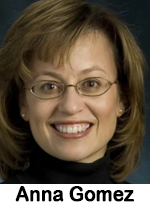 defund, or threaten news outlets that support the government’s views, and there’s a reason for that. This has never been about saving money. It’s about silencing those who report the news accurately, without fear or favor. The true cost of this one-sided attack on free speech will be felt most by small and rural communities across the country. Much like the disappearance of local newspapers, cutting off support for public stations could create a new kind of ‘news desert.’ In many hard-to-reach areas, these stations may be the only source for the public to receive emergency alerts, traffic updates, and information about local events and ways to stay engaged in their own neighborhoods. Defunding them strips away these essential services and further isolates the very communities these stations seek to serve. The FCC is playing a dangerous game with its own baseless attacks on public broadcast stations. Its role should be to protect and expand the public’s access to timely, accurate news that is free from political interference. I will continue fighting this FCC’s politically motivated efforts to investigate and harass these stations.”
 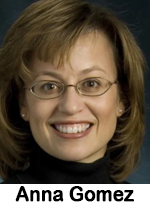 move to appease the Administration and secure regulatory approval of a major transaction currently pending before the FCC. For months, it has been clear that this lawsuit was entirely meritless, just like the complaint now before the Commission. The transcript and video of the 60 Minutes interview with Vice President Harris show no evidence of wrongdoing, only the standard editorial judgments used across the news industry to ensure clarity and brevity. Had Paramount chosen to fight this in court, they would have prevailed on the facts and the law. But instead of standing on principle, Paramount opted for a payout. That decision now casts a long shadow over the integrity of the transaction pending before the FCC. Given the extraordinary public interest in this deal, the novel legal questions raised by the lawsuit and its resolution, and the repeated calls from lawmakers for transparency, I once again urge the FCC to bring this matter before the full Commission for a vote. Approving this transaction behind closed doors and under the cover of bureaucratic process would be a shameful outcome that denies the American people the transparency and accountability they deserve, especially when press freedom is at stake.”
 storytelling and community engagement. Over the past five years, BIN: Black Information Network has achieved remarkable milestones, including: Surpassing 19 million monthly listeners, a reflection of BIN’s growing influence and strong connection to its target audience; expanding BIN News content to over 100 broadcast radio stations across the U.S., making BIN one of the most widely distributed, Black-focused news audio platforms in the country; and delivering news coverage tailored to 65 of America’s largest Black communities, with reporting that reflects the local realities, perspectives, challenges and triumphs.” BIN president Tony Coles adds, “BIN: Black Information Network has become a trusted and indispensable voice for Black communities in America. In just five years, we’ve transformed how local and national news reaches our audiences. We are giving a voice to the stories that have gone untold for too long. We are providing freedom to journalists to pursue meaningful reporting – and we’re just getting started.”
 -minute radio specials are hosted by longtime radio personality Larry O’Connor and features stories of our nation’s heroes, the families who serve by their side, and how Fisher House plays a role in their journey. Hear the demo and register today at
  provide cultural, social, and political commentary across all FOX News Media platforms. Cooper launched her podcast, “The Brett Cooper Show” in January 2025. From 2022-2024, Cooper hosted “The Comments Section,” a video podcast on The Daily Wire.
 Act and underscores AM radio’s enduring value to the American people. For more than a century, AM radio has been a lifeline, delivering trusted news, local sports, crop reports and emergency information when and where it matters most. From rural communities to urban centers, from first responders to everyday commuters, over 80 million Americans rely on this free, local service to stay informed and safe every month.
  to the industry in a free webinar on June 25 at 2:00 pm ET. More than 2,000 people ages 13-24 in the U.S. were surveyed for the report. Edison says, “The study explores what shapes the lives of Gen Z – from current issues to overall outlooks, and what their media choices include – from music discovery to their favorite podcasts. Learn how Gen Z listeners use audio, tech, and social media, and most importantly, the role audio plays in their daily lives.”
  The addition of these stations fits perfectly into our late founder, my father, Thomas H. Draper’s motto that it is our moral obligation to serve our audience and advertising partners.” In a press release, Draper says it currently operates WBOC-TV, FOX21, WRDE-TV, Telemundo Delmarva, Antenna TV, My Cozi TV, The DSN Sports Network, and multiple FM radio stations across the Delmarva Peninsula. Speaking for seller Forever Media, president Lynn Deppen comments, “We are proud of the legacy these stations have built in their communities and grateful to our dedicated teams who have served listeners with passion and professionalism. We are confident that Draper Media shares our commitment to local broadcasting and will continue to provide outstanding service to audiences and advertisers alike as these stations enter an exciting new chapter.” The transaction is expected to close in the third quarter of 2025, subject to approval by the FCC.
 In early 2024, voters in New Hampshire got strange robocalls. The voice sounded just like President Joe Biden, telling people not to vote in the primary. But it wasn’t him. It was an AI clone of his voice – sent out to confuse voters.
 the Corporation” because it was established to be a private non-profit corporation independent from governmental control or influence. This comes after the Trump administration attempted to remove three of the CPB’s board of directors – Laura G. Ross, Thomas E. Rothman, and Diane Kaplan – earlier this year. CPB CEO Patricia Harrison says, “We are very pleased that the Court recognized CPB is an independent, non-profit corporation, free from governmental control or influence, and CPB, board and management, looks forward to continuing our work with policymakers and other stakeholders to ensure accurate, unbiased and nonpartisan public media is available for all Americans.”
 end of this week. It has been the greatest honor of my professional life to serve the American people as a Commissioner. I am deeply honored to have been entrusted with this responsibility by President Donald J. Trump during his first term.
  When Georgia-based nationally syndicated radio personality, and Second Amendment advocate Mark Walters (longtime host of “Armed American Radio”) learned that ChatGPT had falsely claimed he was involved in a criminal embezzlement scheme, he did what few in the media world have dared to do. Walters stood up when others were silent, and took on an incredibly powerful tech company, one of the biggest in the world, in a court of law.
 Free Press for the very first stop of our First Amendment Tour outside of Washington. Together, we must continue to stand up for free expression and push back against the Administration’s growing campaign of censorship and control.” Gomez’s office says that as part of her tour, Gomez is partnering with consumer and civil society organizations across the ideological spectrum to participate in speaking engagements and listening sessions focused on protecting the rights and freedoms enshrined in the First Amendment. Most recently, she held an event in partnership with the Center for Democracy and Technology, spoke at the Media Institute, and participated in a workshop held by the Competitive Enterprise Institute and TechFreedom.
 Dozens of brand-new audio hardware and software companies have been launched during the past 20 years. These start-ups are usually funded by venture capital money. VC money is not invested to return a profit, it’s poured in to – pour it in. Their money is “different” than the cashflow that fuels your business. Start-up money buys time to profit.
 TALKERS publisher Michael Harrison introduced the term in the 1990s, inviting us to think-beyond the real-time audio we were sending up those towers. What he described seemed conceptual, even futuristic, back then, when we were still logging-onto AOL via dial-up (screech).
 suitable for all formats. All are hosted by WMAL-FM, Washington, DC morning personality Larry O’Connor. Fisher House says, “The inspiring and patriotic radio show features interviews with wounded warriors and veterans including heroes from Operation Enduring Freedom, the Vietnam War, and an incredible, emotional story of one of America’s World War II living legends. Listeners will hear their emotional stories fighting for our freedoms, the injuries and illnesses they endured, and the welcoming homes Fisher House provides for them and their loved ones while they endure their painful and painstaking recoveries.” For more information on this radio special, contact Larry O’Connor at: 562-665-9537 or
  radio.” Nielsen says delineating between total listening (or viewing) and the ad supported universe is vital in today’s burgeoning media landscape where consumer choice grows by the day and marketers are looking at every available opportunity to cut through. In the first quarter of 2025, ad supported audio represented 64% of total listening. This is similar to TV, where 72% of total viewing was spent on ad supported platforms, in Q1 according to Nielsen’s recently launched Ad Supported Gauge report. Looking at ad-supported audio, consumers spent 66% of their daily listening time with radio, 19% with podcasts, 12% with streaming audio services and 3% with satellite radio. Radio accounts for anywhere from 47% of daily ad supported audio time among people 18-34 to 73% among 35+. Meanwhile, podcasts are the inverse, representing 15% of daily audio time for people 35 and older compared with 32% among those 18-34.
  Right now, dozens of well-suited, over-priced, unpleasant lawyers are fighting in Hollywood over the title credit their client should receive on a movie, TV show, or book cover. Placement within the credit roll at the end of a show is a battleground of egos and legalities. Part of the process of securing proper credit is governed by multiple union rules negotiated by multiple unions and corporate dictates of corporate masters. (You don’t get to be CEO of Paramount by being a nice guy.)
 lot of good listening and attention to what matters most to those in the communities they call home. Our news will talk about what people are talking about, be factual, and will ask the next question so people can reconnect with their local communities and schools in a way that journalism hasn’t consistently afforded in recent years. Online and social media disinformation is steadily driving people back to how they used to find out what’s happening, and Big Radio is well-positioned to meet this moment and lead the re-emergence of local radio news in this region and beyond.” Big Radio – owned by father and son Scott and Ben Thompson – owns and operates 10 radio stations in the Monroe, Freeport, Janesville, and Beloit, Wisconsin markets.
 freedoms enshrined in the First Amendment and fighting back against what she calls the Trump administration’s ongoing campaign of censorship and control. Gomez says, “Since the founding of our country, the First Amendment has protected our fundamental right to speak freely and hold power to account. Today, the greatest threat to that freedom is coming from our own government. Silencing dissenting voices is not a show of strength – it’s a sign of fear. We must continue to speak out against this growing campaign of censorship and control before this dangerous new normal becomes the status quo.”
 Jimmy Steal are presenting a free webinar for radio professionals around the globe titled, “Creating On-Air Megastars and Programming Legendary Radio Station.” The 45-minute webinar will be hosted by Benztown CEO Andreas Sannemann and P1 Media Group partner Ken Benson and will feature programming pro Jimmy Steal.
  a budget crunch – the company has been eliminating positions at stations across the country. He says he didn’t have “an inkling” that his job was at risk, “I probably should have. Radio is really tough now.” Gordon has been a host on the morning show since June of 2023 and was on in afternoons six years prior to that. During his long career in Detroit, he worked as 11:00 pm news anchor at WXYZ-TV and as morning anchor on WDIV-TV. He told his listeners, “If this is the end of the career, I have no grievances. I’m Lou Gehrig without the horrible disease. I’m the luckiest man on Earth.”
  Radio sells advertisers our listeners’ attention. For a hundred years, our inventory has largely been commercials. Now, as our wandering audience leads us to more revenue channels, are we hooked on spots?
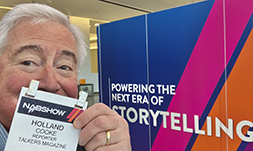
 Hello from Las Vegas, ever-changing yet timeless. Here this week the NAB Show is “Powering the Next Era of Storytelling.” And it’s about time. While there is now a filibuster-proof U.S. Senate majority to require that cars include AM receivers, some AM stations are being shut off. Over the weekend millions took to the streets and this morning Wall Street braced for more. So, the vibe here is positively rejuvenating.
 Corporate cost cuts continue. In
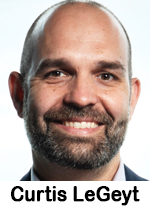
 NAB says, “Local radio stations provide trusted news, sports and entertainment to their communities free of charge, but stations’ ability to do so would be greatly threatened if faced with a new performance tax, on top of the hundreds of millions of dollars local stations already pay each year in copyright and streaming fees.” The second resolution calls on legislators to support the AM Radio for Every Vehicle Act that would ensure the continued availability of AM in all newly manufactured vehicles. NAB president and CEO Curtis LeGeyt comments, “On the heels of an incredibly successful State Leadership Conference, where over 560 local TV and radio broadcasters traveled to Washington, DC to meet with lawmakers on Capitol Hill, congressional support for local radio is strong. State broadcaster associations play a pivotal role in our advocacy efforts, and I am proud to see the collective unity behind these resolutions.”