By Erik Cudd
 From my teenage years to today, radio has been the career of my adult life. When I first began listening in my teens, I was drawn less to the music and more to the conversation. I tuned into stations not for my favorite songs, but because I enjoyed hearing people talk, debate, and share ideas. Over my lifetime, I have seen many changes in the medium. The news/talk format, in particular, has always fascinated me for its mix of news, commentary, and immediacy.
In such a time as this, because radio is the medium I know best and love most, I write this appeal to those influential in news/talk. My hope is that you will step forward once again as the architects and innovators you have always been, and raise a rallying cry for this unique moment. The freedoms and ambitions that make the format so vital also create challenges. By design, it invites sharp opinions, spirited disagreement, and cultural edge. Those qualities are its strengths. But in our current climate, they also carry the risk of drifting into tribalism and rhetoric that can spill over into something more dangerous.
This is not an implication that I believe news/talk is responsible for the death of Charlie Kirk. I would like to be crystal clear. What I am saying is that a perfect storm has been gathering for many years, and no one can deny the polarized, charged landscape we now inhabit. And that storm is not radio’s sole responsibility. Television, social media, and digital platforms have found their profit margins in spaces that thrive on provocation. Cable news leans on conflict. Social media algorithms reward outrage. Digital outlets chase clicks and controversy. Radio is part of this broader ecosystem, not apart from it. And while no single medium created our current atmosphere, each has a role to play in reflecting on its impact and considering how best to move forward.
This is not about drawing a simple line between “toxic” and “non-toxic” content. Such judgments are rarely clear, and program directors deserve the benefit of the doubt. Yet it may be worth asking whether radio, like all media, could benefit from a renewed look at how editorial choices can help keep conversations as civil and constructive as possible. Debate and controversy will always be part of the medium, but escalation does not need to be the only outcome.
The September 10 tragedy underscored this in more ways than one. Beyond the event itself, the aftermath played out across digital spaces, where ordinary citizens made comments that, while protected speech, resulted in lost jobs, reputational damage, and news coverage. The lesson is not that speech should be curtailed, but that our civic discourse is increasingly fragile. And because radio is one of the most intimate and influential media, its choices ripple outward into that discourse in profound ways.
Audiences are noticing. As someone in my early 50s, squarely within talk radio’s target demographic, I should be a loyal listener. Yet I find myself tuning in less often, not from a lack of loyalty, but because I long to hear more voices who can thoughtfully engage both sides of an issue, giving each perspective a fair hearing and treating every listener as though their view matters. That is why I believe there may be room to pull back a bit, to allow for more variety, nuance, and genuine curiosity in how issues are approached.
Serious does not mean boring. Civility does not mean dull. Across platforms, authenticity and curiosity consistently earn audiences. Podcasts like SmartLess and Armchair Expert succeed not by stoking outrage but by elevating storytelling and connection. Public affairs series such as Frontline and American Experience continue to attract loyal audiences through rigorous, measured reporting. Nonfiction authors like Malcolm Gladwell and Brené Brown demonstrate that thoughtful exploration can reach mass audiences. These examples are proof that depth and balance can succeed when executed with energy and creativity.
Radio is uniquely positioned to do the same. The path forward is not retreat from controversy but innovation. Maybe it begins by encouraging new hosts who bring curiosity, empathy, and an equal openness to both sides of an issue, alongside conviction. It could include piloting alternative formats in off-peak slots where experimentation can thrive. It will require recalibrating success metrics to value loyalty, digital engagement, and cross-platform trust, not just short-term spikes. And it may also mean weaving national voices together with local conversations so that stations strengthen both their reach and their roots.
I do not write this from a high perch. I write as a member of the audience who also walked the halls of the station and still believes in the power of the medium. My words are not meant as accusation but as an open hand in friendship. What I am asking is simple: perhaps it is time for a more purposeful, deliberate engagement of conversation in the conference room. To sit together and ask if everything that airs is doing what it should. To take a long, hard look at whether anything might need to be discussed, reconsidered, or rebalanced in light of what we have all just witnessed.
Radio, because of its intimacy and reach, is uniquely positioned to lead by example. By being more proactive in its own yard, radio could encourage the same self-reflection across media, and even among the public itself. That is not retreat. That is leadership.
Radio still matters. Its intimacy can at times divide, but it can also renew. The question is not whether talk radio will remain bold, it always will, but whether it can channel that boldness in a way that builds the public square rather than fractures it.
The opportunity is here: to prove that freedom and responsibility can coexist, and that doing so is good for the culture, and good for the business.
Erik Cudd has worked in radio and media since 1991. He can be emailed at erik@cudd.us.
Share this with your network



 entertainment & integrated marketing Jeff Meza says, “Cultural ROI is the vehicle for us at Urban One to further our mission to help educate the industry and brand partners alike on the importance that intentions must be rooted in strategy, and this new economy requires development of total market plans that are inclusive and representative of authentic experiences.” Urban One VP, television and digital research Audrey Cochran adds, “I am incredibly proud of the work we’ve done to quantify the undeniable impact that Black consumers have on U.S. culture. This study not only demonstrates their impact and influence on broader consumer behavior but also underscores the value of authentically connecting with this segment – and the business risks of failing to do so.” See more about the study here.
  As a media consultant, my team has had the privilege of being engaged extensively by members of the C-Suite. Becoming a member of the C-Suite is a common goal. To get into any group, acceptance often depends on acting and appearing like established members. Here are some of the actions observed of business masters whom we consulted: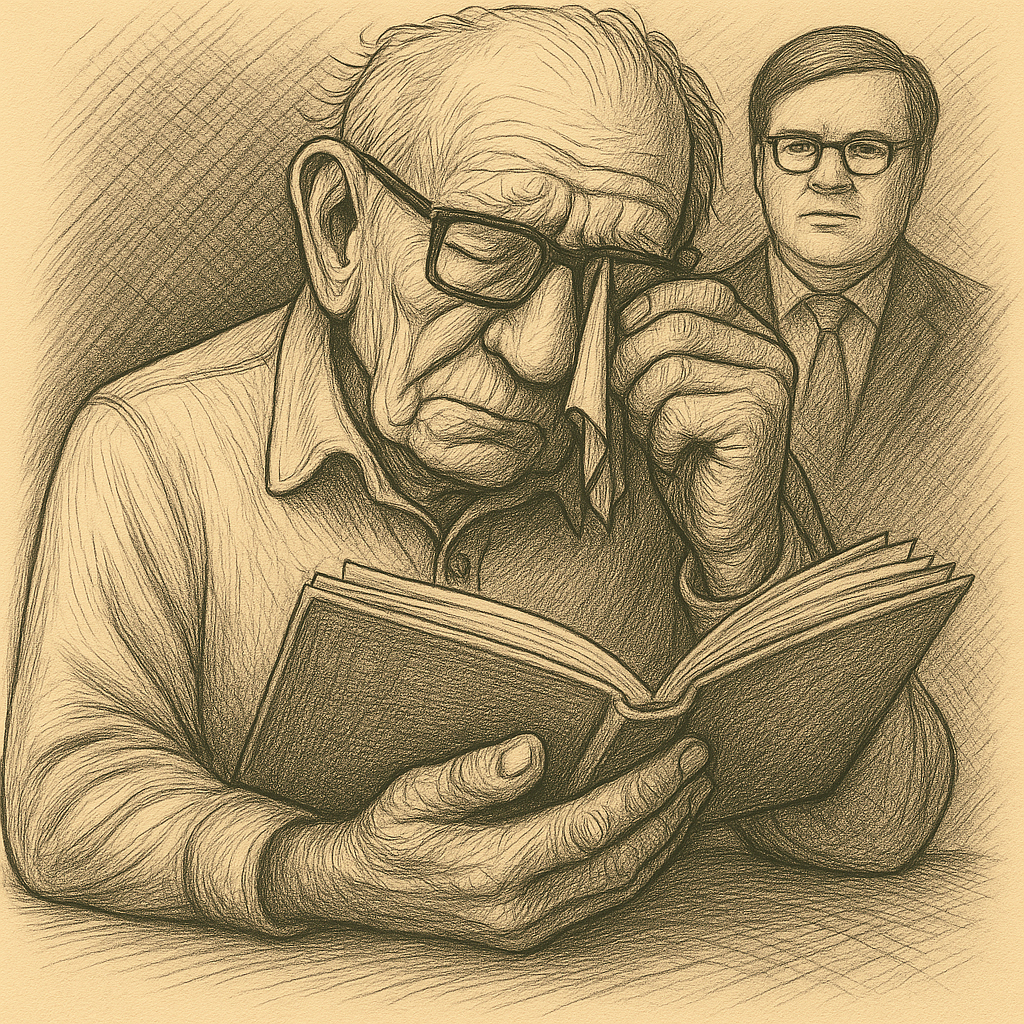
 licensed to Walton, New York – previously aired a country format and a news/talk format, respectively. Bold Gold Media Group president Vince Benedetto says, “We have a deep love and connection to the Catskill Mountains and Delaware County, and we are very much looking forward to bringing our programming to the wonderful community of Walton. For a long time, we have had the privilege serving the neighboring town of Hancock, and very much look forward to extending our local programming to include even more of the residents of Delaware County.”
 Jimmy Kimmel’s first monologue back after the recent suspension had the audience laughing and gasping, and, in the hands of countless radio hosts and podcasters, replaying. Within hours, clips of his bit weren’t just being shared online. They were being chopped up, (re)framed, and (re)analyzed as if they were original show content. For listeners, that remix feels fresh. For lawyers, it is a fair use minefield.
 for the Amplified Voices Podcast Network and Amplified Voices TV. American Urban Radio Networks CEO Chesley Maddox-Dorsey says, “This launch represents a powerful evolution in our mission to serve Black audiences. By creating two distinct digital destinations under AmplifiedVoices.com — AVTV and AV Podcasts — we are sharpening our focus to better meet the needs of our listeners, viewers and content partners.” Content will include “On the Record” with AURN News correspondent Ebony McMorris, “Café Mocha Radio,” and “reACT with Rev. Al.”
 Patriot.TV. Root says, “What an honor to join Patriot TV and their millions of conservative viewers. My weekend powerhouse TV show, ‘America’s Top Ten Countdown,’ reaches millions on Real America’s Voice TV. Now my daily video podcast WAR Zone will be on multiple dynamic platforms from Patriot TV, to serving as the official podcast of ‘The Gateway Pundit,’ reaching their 2.5 million unique daily readers, as well as livestreamed on X, Gettr, and TruthSocial. The left has tried everything to stop me, ban me, censor me, harass me, yet the popularity and reach of my shows just keeps exploding. That’s called WINNING!”
 Have you noticed a profile pattern for the mass shooters and political assassins? 20-30 years old. Living at home or close.
 the popularity of mobile devices for audio listening is the most dominant in urban communities. Within that audience segment, 40% of time is spent listening to audio on a mobile device, vs. 28% of time spent listening on an AM/FM radio receiver. The mobile device also holds a strong lead in suburban communities, with 36% of time spent listening on that device compared to 30% of time on a radio receiver. However, the radio receiver is strongest in rural communities where it matches the listening time of the mobile device, each receiving 34%.
 Yorker Radio Hour,” and “Terrestrials,” as well as “Freakonomics Radio,” “Science Friday” and “Today, Explained,” which NYPR distributes – available to at-risk public radio stations at no cost. This initiative comes as the CPB prepares to wind down at the end of September, following a $9.4 billion rescission package Congress approved in July, putting the future of more than 1,500 public radio and television stations nationwide in jeopardy. NYPR says, “This initiative will allow stations to redirect funds they would typically use to license our programs toward sustaining their vital local operations and reporting.”
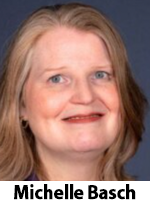 Hubbard Radio’s all-news WTOP-FM, Washington is looking for a new morning drive news anchor after Michelle Basch informed the company she will leave her position at the end of the year to relocate out of DC. WTOP director of news and programming Julia Ziegler wrote in a memo to the stations staff, “Anyone who knows Michelle Basch, knows how much she and her husband Mike adore their cabin in Pennsylvania. Michelle and Mike have decided to move there full-time in the Spring, which means Michelle will be leaving WTOP after nearly two decades. The good news? Michelle will continue to anchor AM Drive through the end of the year. She will then do some reporting for us until she and Mike are fully moved to PA. Michelle’s passion for news, commitment to excellence and drive to ‘first get it right, then get it first’ will be greatly missed in this newsroom.”
  insights. Aragon joined Skyview in 2014, and Skyview says he has “built a reputation among his colleagues and our clients as a highly analytical contributor, whose insights support the sales team, our advertisers, and our networks.” At the same time, Heather Baumanis is promoted to executive director, business development and communications. In this role, she’ll support Skyview’s business portfolio of sports partnerships and maintain and contribute to new and existing client relationships while leading the company’s internal, external, and corporate branding initiatives.
 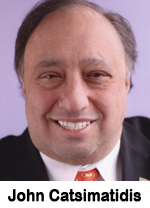 House version contains an eight-year sunset provision on the law requiring all cars manufactured in the U.S. to have an AM radio at no extra cost. The Senate version has no sunset provision. WABC, New York owner John Catsimatidis has been very vocal supporting the bill without the sunset provision. “77WABC and all AM radio stations across the country provide life-saving information and emergency alerts to the public. While the committee’s action may be a step forward, a ridiculous last-minute change sunsets the law in eight years. AM is the backbone of the emergency alert system and tornados, hurricanes, and other disasters won’t go away.”
 Federal Communications Commissioner Anna M. Gomez issued a statement criticizing the Commission’s threats against ABC that, in part, led to the suspension of the “Jimmy Kimmel Live!” program. Her statement is as follows: “We cannot allow an inexcusable act of political violence to be twisted into ajustification for government censorship and control. First, an ABC reporter was told that his coverage amounted to hate speech and that he should be prosecuted simply for doing his job. Then, the FCC threatened to go after this same network, seizing on a late-night comedian’s inopportune joke as a pretext to punish speech it disliked. That led to a shameful show of cowardly corporate capitulation by ABC that has put the foundation of the First Amendment in danger.
 “FOX & Friends Weekend” with Rachel Campos-Duffy, Charlie Hurt and Griff Jenkins hosting live outside State Farm Stadium. Maria Bartiromo will anchor “Sunday Morning Futures” from the same location. “Saturday in America” host and co-host of “Outnumbered” Kayleigh McEnany and “FOX & Friends” co-host Lawrence Jones will present live special coverage of the memorial proceedings.
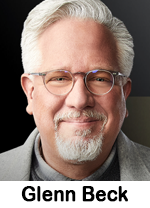 guest host because he specifically asked for the honor, so he can share his thoughts and remembrances on the passing of his personal friend. SRN adds, “We have received permission from Premiere Networks to allow Glenn to do this, even though he may be on a competing station in some radio markets. This is one of those rare times where competitors unite for the common good. We wanted our stations to know this special broadcast has been approved. It promises to be memorable radio.” SRN says other major stars will fill in during the coming days. Vice President JD Vance guest-hosted live from The White House on Monday and Tuesday’s show was hosted by Matt Walsh, Michael Knowles and Ben Shapiro.
 Charlie Kirk’s tragic assassination shook the talk radio world. Emotions were raw, and broadcasters across the spectrum tried to capture that moment for their audiences. Charles Heller of KVOI in Tucson
  In the wake of Charlie Kirk’s murder, one would expect every company that owns a talk radio station, every network that syndicates conservative voices, and every corporation that employs talk radio hosts to issue a unified statement of defiance. This was not just an attack on Charlie; it was an attack on the entire industry of talk radio, on the free exchange of ideas, and on the First Amendment itself. Yet, shockingly, most of these companies have remained silent. That silence is unacceptable. At a moment like this, the industry should stand shoulder to shoulder and declare to the world: we will not be intimidated, we will not be silenced, and we will never abandon the microphone.
 Grief for the loss of Charlie Kirk is palpable around the world. Broadcasters who interviewed him or had anything to do with the Turning Point organization were deeply touched by his tragic death.
 Amazon learned that there are high volume sales for specific categories of products. High demand equals high value to the seller. Items such as diapers, printer ink, staplers, batteries, etc. Being brilliant, Amazon created “Amazon Basics.” Same products, white labeled. Amazon doesn’t manufacture batteries; they just slap their logos on what America needs most. That’s why Mr. Bezos has a bigger boat than you.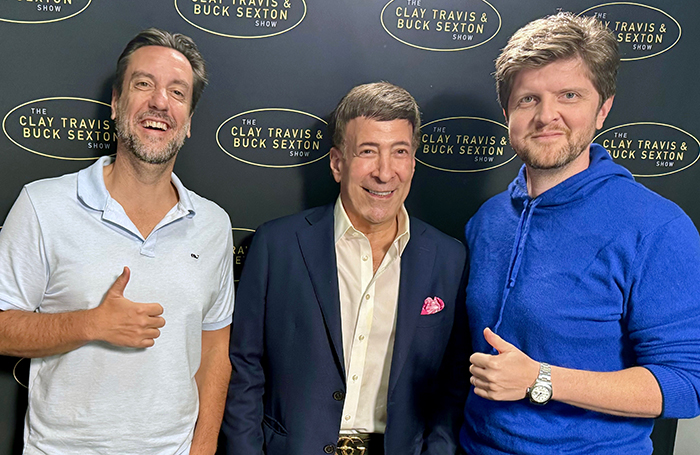
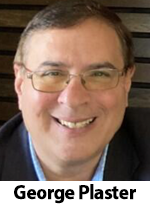 The Nashville-based “George Plaster Show,” with co-hosts Kelly Holcomb and Billy Derrick, is now heard on Saga Communications’ sports talk WKFN-AM/W281BT in Clarksville, Tennessee. Clarksville Now reportsPlaster said he’s excited for the opportunity to be here and tap into a new market of sports fans. “I’m very excited about being in Clarksville. For me, this is about adding listeners – listeners who knew me from years ago. I think we’re going to do really well here, it’s a market that has a lot of sports fans, and we just simply want to tap into it.” “The George Plaster Show” will air live from 3:00 pm to 5:00 pm Monday through Friday.
 FOX News Channel presenting a primetime special titled, “Charlie Kirk: An American Original,” hosted by FOX News Channel’s Jesse Watters tomorrow at 7:00 pm ET with an encore presentation on Sunday (9/14) at 7:00 pm ET. FOX News says Watters “will reflect on Kirk’s extraordinary impact as a conservative thought leader, gifted communicator, and a monumental force for the MAGA movement.” Kirk colleagues and friends being featured include: Donald Trump Jr., “My View” host Lara Trump, Graham Allen, and Pastor Jack Hibbs. In addition, FNC personalities Will Cain, Laura Ingraham, Brian Kilmeade, Ainsley Earhardt and Lawrence Jones will reflect on Kirk’s impact.
 Bruce DuMont
 The Museum of Broadcast Communications announces the selection of eight new Legends inductees into the Radio Hall of Fame for 2025, recognizing radio broadcasters who have passed away. This year’s inductees include longtime WLS-AM, Chicago morning drive cohost Don Wade and nationally syndicated host Dale Sommers “The Truckin’ Bozo.” Radio Hall of Fame co-chair Kraig Kitchin comments, “Each of these individuals contributed to the growth and vibrance of our radio industry and are worthy of induction. I’m thrilled to see recognition for their talents and efforts and heartened that their family, friends and colleagues can witness this well-deserved honor.”