By Matthew B. Harrison
TALKERS, VP/Associate Publisher
Harrison Legal Group, Senior Partner
Goodphone Communications, Executive Producer
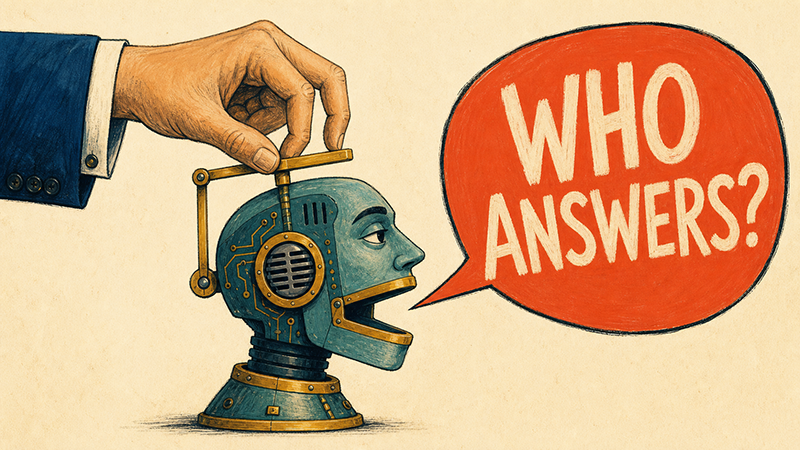
 New laws may hold AI companies responsible, but regulating machine-generated speech presents risks of its own.
Florida recently sued OpenAI and CEO Sam Altman, alleging that they marketed ChatGPT while concealing known safety risks. California has taken a different approach: a company accused of causing harm cannot defend itself simply by saying the AI acted autonomously. Neither development guarantees liability, but both signal that “the AI did it” may no longer work as a legal escape hatch.
That sounds sensible. An AI model cannot pay damages, carry insurance, exercise professional judgment, or go to jail. If a company releases a system, profits from it, and markets it as useful or reliable, the law should at least ask what the company knew, promised, and reasonably could have prevented.
Mark Walters – host of Armed America Radio – learned how difficult that can be. ChatGPT falsely reported that he had been accused of embezzling money from a gun-rights organization. Walters sued OpenAI for defamation, but a Georgia court granted the company summary judgment in 2025, finding insufficient evidence that OpenAI knew the output was probably false. The machine was wrong; the legal remedy failed.
The harder question involves speech. Colorado adopted requirements intended to prevent discriminatory automated decisions, prompting AI to sue on First Amendment and equal-protection grounds. The Federal Trade Commission has now suggested that secretly steering a model away from the accurate or objective answers users expect could itself constitute consumer deception.
This presents a genuine slippery slope. Government should protect people from fraud, defamation, discrimination, dangerous products, and nonconsensual deepfakes. It should not acquire a broad power to decide what an AI system must identify as “truth,” particularly in areas involving politics, history, public policy, or contested scientific opinion.
For broadcasters and content creators, the immediate lesson remains familiar. AI may assist with research, writing, editing, and production, but it does not inherit responsibility for the finished product. The person or company that publishes the words still needs to verify them, while the companies building the machines should not escape scrutiny merely because no human typed the final sentence.
Accountability should follow control, knowledge, and profit. The challenge will be imposing that accountability without turning AI regulation into government supervision of lawful speech.
Matthew B. Harrison is a media and intellectual property attorney who advises radio hosts, content creators, and creative entrepreneurs. He has written extensively on fair use, AI law, and the future of digital rights. Reach him at Matthew@HarrisonLegalGroup.com or read more at TALKERS.com.



 In an impressive example of the productive synergy that can be generated by the teaming of campus and professional spoken word radio organizations,
 chance to weigh in on whether to allow the FCC to continue its campaign of censorship and control, the American public showed up in a big way, and the vast majority who spoke up delivered the same message. They believe in the value of their local news, they trust those who cover their communities, and they understand that the FCC has no business deciding who is a journalist and what counts as real news. A small number of partisan voices tried to hijack this process into a referendum on a network they dislike, but the public refuses to let local stations become collateral damage in the FCC’s political games. The FCC has no authority to police the ideological balance of the airwaves, and no matter what this Commission does next, the record now makes clear that this was never a genuine search for the public interest.”
 “It’s all media,” declared accomplished media executive Jack Griffin when confronted with brand new definitions of content and content distribution. Jack, for years, was president of Meredith Publishing, Time Inc., and The Tribune Company. I met Jack when he was publisher of PARADE magazine. Jack is pragmatic, won’t waste your time and spots BS faster than most humans. We were listening to discussions of the impact of online media versus traditional media, and his line was running out. Jack declared “It’s all media” and the meeting blessedly ended. The phrase haunts me and it is being proven true every second of every day.
 powerful, collective voice when negotiating with automakers, tech platforms and policymakers.” NAB president and CEO Curtis LeGeyt adds, “Radio has long been an essential part of the driving experience, delivering trusted local news, lifesaving emergency information and the entertainment Americans rely on every day. As dashboards evolve, ensuring broadcast radio remains accessible is more important than ever. By joining Radio Ready, NAB looks forward to partnering with broadcasters from across the world to ensure that free, trusted radio remains easy for drivers to find and use in the vehicles of today and tomorrow.”
 reorganization and is waiting for the Federal Communications Commission to finish its regulatory approval process. The court is extending the company’s filing deadline for its Chapter 11 plan to October 30.
 Saturdays from 12:00 noon to 3:00 pm. Industry affiliate relations pro Jim Watkins is serving WestStar Entertainment as director of affiliate sales, he says, “We’re excited to partner with KEIB and expand Kim’s presence in one of the nation’s most important radio markets. Technology touches every part of daily life, and Kim’s rare ability to make complex issues entertaining and easy to understand makes her program an outstanding addition to The Patriot’s weekend lineup.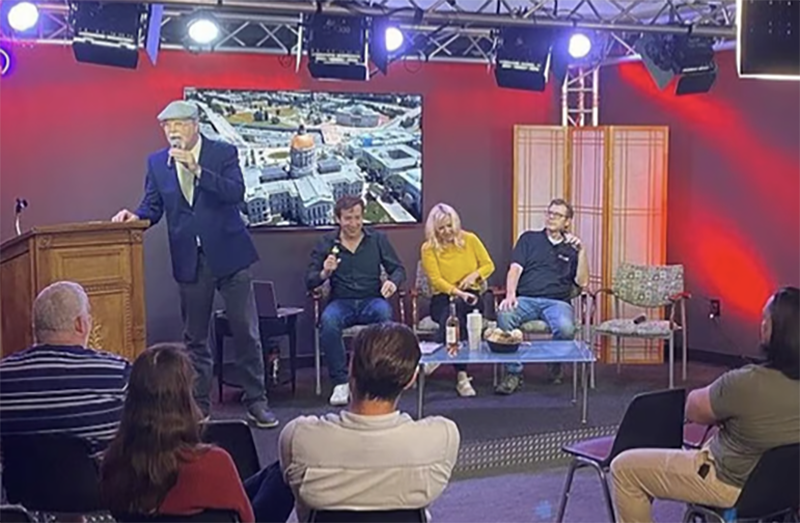
 Tournament is one of the industry’s signature events. It offers a unique opportunity to play one of the region’s premier courses while spending the day with colleagues, industry leaders, and celebrities, all in support of a charity that provides a vital lifeline to our fellow broadcasters when they need it most.” All proceeds from the tournament directly benefit the BFOA’s charitable mission.
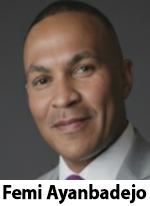 Joe LaCroix says, “Femi’s sports knowledge spans far beyond football, encompassing the entire Charm City sports scene. His fearless opinions and local sports knowledge will complement Ken’s fiery takes and Tim’s sharp insights. We can’t wait for our listeners to experience the next chapter of afternoons with ‘The Final Drive.’” Ayanbadejo’s radio experience began in 2012 with contributions to several programs, including “The Scott Garceau Show,” Ravens game-day radio with Gerry Sandusky, and, most recently, “The Bruce and Femi Show” on “105.7 The Fan.”
 reporting. While this chapter has come to an end, I remain committed to the values that have guided my career: serving the public, pursuing the truth, and treating people with fairness and respect. I want to thank my colleagues, mentors, friends, and family – especially my wife and sons – for their support throughout this journey. I look forward to what comes next and the opportunity to continue contributing meaningful work. I will still be broadcasting games, and I will continue to be a member of the Indiana University Radio Network.” This comes on the heels of the spring firing of late morning talk host Rob Kendall and the subsequent exit of late morning co-host Casey Daniels, who left of her own volition.
  2026 for its Edison Podcast Metrics, Business is the seventh most popular podcast genre among weekly U.S. consumers 13+, surpassing Religion & Spirituality, Health & Fitness, and Music, among others. Edison ranks the top 10 Business podcasts and NPR’s “Planet Money” is #1, followed by the Ramsey Network’s “The Ramsey Show” at #2. When ranking shows of all podcast genres, “The Ramsey Show” ranks #41 in the U.S. based on Edison’s Q2 2026 Top 50 Podcasts chart.
 country, and they deserve both the content and distribution that matches their energy. Between our incredibly entertaining and informative lineup of local hosts and our exclusive partnership with the Texans, we are the ultimate destination for Houston sports fans. Launching ‘95.7 The Fan’ as our tenth FM sports station in the top 10 U.S. markets is a proud milestone and solidifies Audacy’s leadership in local sports audio. We can’t wait to bring this unbeatable coverage to even more fans so they can join the conversation and stay connected to the teams they love.”
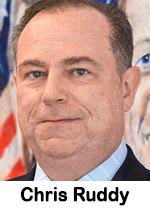 dangerous and would allow two or three corporations to dominate local television news, reducing competition, independent journalism, and threatening religious broadcasters.” He noted that conservative organizations including CPAC, the National Religious Broadcasters, and the Zionist Organization of America oppose lifting these ownership limits. Ruddy also took the opportunity to address how broadcasters view the American people, saying, “Polling consistently shows Americans are far more center-right than portrayed by the legacy media. There is a growing disconnect between public opinion and media narratives.”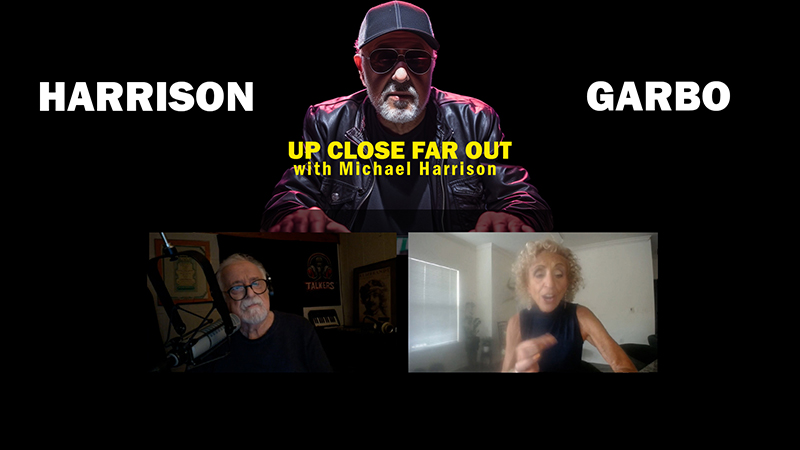
 its growing library of films, documentaries, specials, and original programming. SalemNOW general manager Rob Ellis comments, “We’re excited to partner with Kappa Studios and bring their outstanding programming to SalemNOW. This collaboration strengthens our commitment to offering audiences exceptional faith-based and conservative content that informs, inspires, and entertains while continuing to grow the SalemNOW platform.”
 TALKERS founder Michael Harrison is this week’s guest on the National Press Club’s official podcast, Update-1, in which he tackles the topic “Predicting the Future of Media Following the Shutdown of CBS News Radio.” Interviewed by noted American University media professor Gemma Puglisi, Harrison addresses such issues as changes in the tenets of journalism and the general shrinkage of radio news. Along the way, he offers his insights into a variety of media and societal topics including the impact of clickbait and what he describes as “the daily dance of affirmation” resulting
  from the trend toward news platforms “targeting” audiences for purely marketing purposes. Harrison defends AI from critics who claim the technology lacks “heart” and that audiences will swing back to the “authenticity” being destroyed by AI slop. Harrison makes the case that what counts is the humanity behind the operation of AI which is “only a tool.” He says, “Blaming AI for shallow content is like attributing shoddy novels to the invention of the word processor.” Harrison boldly predicts that AI and modern technology will hasten the “death of Hollywood” as we know it among other insights into the future of news, entertainment, and communications. Don’t miss this!
  The key takeaways include: 1) AM/FM radio’s “big data” moment has arrived with massive sample sizes that grow each month: TV has long had cable set top data and smart TV data to generate large samples of tuning data. It’s now radio’s turn! Just like cable set top data, there are no demographics but all markets have large samples. Overall, sample sizes are 5-10X bigger than current ratings samples; 2) Overnight ratings in over 300 markets: In an industry first, every market now has audience shares from yesterday. See your station’s daily audience trends refreshed each day; 3) All listening occurs with humans present: 25% of TV viewing occurs to an empty room but AM/FM radio listening in traveling vehicles always has humans present!; 4) Large samples mean stable listening trends: In all sized markets and for all sized stations, daily share trends are stable and consistent; and 5) AM/FM radio now has modern, cutting edge, timely measurement, which does not rely on a consumer’s memory or require a consumer to do something (like wear a gizmo).
 Radio stations used to announce the present temperature at the end of the weather forecast, empowering listeners who are heading out to dress accordingly. It’s the ultimate live-N-local information.
 Other key findings include: Sports content acts as a unique bridge between listening and watching experiences, drawing the closest parity between listeners and viewers across top genres; Format choice signals entirely distinct consumer mindsets: the highly structured, utility-driven “Pragmatic Listener” versus the entertainment-seeking, visually focused “Interactive Watcher.”; and Conversion mechanics differ by format, with audio consumers acting as direct digital responders and video watchers acting as high-intent brand translators and social amplifiers.
  Audacy’s sports talk WGR-AM, Buffalo serving as the flagship station. Now, the team announces that it has 23 stations signed up as affiliates, including Good Karma-operated WHSQ-AM, New York City (formerly WCBS-AM at 880 kHz) and WESP-FM, West Palm Beach “ESPN West Palm” – both stations operated by Good Karma. In the Buffalo market, games will be heard on Cumulus Media’s rock WGRF-FM.
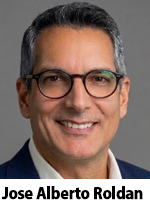 and enterprise systems. Beasley says Roldan, who most recently served as vice president of IT, joined Beasley Media Group in 2019 and has played an instrumental role in modernizing the company’s technology environment, enhancing cybersecurity, improving operational efficiency, and advancing strategic technology initiatives across the organization. Beasley CEO Caroline Beasley comments, “Jose has been an exceptional leader and trusted member of our technology team since joining Beasley Media Group. His expertise, strategic vision, and unwavering commitment to innovation have helped strengthen our technology infrastructure and position the company for continued growth. We are pleased to recognize his many contributions with this well-deserved promotion.”
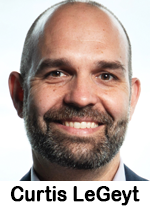 the endorsement of President Donald J. Trump and backing from first responders, emergency managers, public safety organizations and community leaders nationwide. NAB president and CEO Curtis LeGeyt says, “The time for Congress to act is now. Hundreds of broadcasters from across the country alongside nearly one million AM radio listeners have reached out to their members of Congress to support the AM Radio for Every Vehicle Act and protect this essential public safety resource. We are grateful to our congressional champions who have led this bipartisan effort every step of the way. Congress has everything it needs to act. It is time to finish the job and send this bill to the president’s desk.”