


The Opportunity Before Radio: Boldness with Balance
By Erik Cudd
 From my teenage years to today, radio has been the career of my adult life. When I first began listening in my teens, I was drawn less to the music and more to the conversation. I tuned into stations not for my favorite songs, but because I enjoyed hearing people talk, debate, and share ideas. Over my lifetime, I have seen many changes in the medium. The news/talk format, in particular, has always fascinated me for its mix of news, commentary, and immediacy.
In such a time as this, because radio is the medium I know best and love most, I write this appeal to those influential in news/talk. My hope is that you will step forward once again as the architects and innovators you have always been, and raise a rallying cry for this unique moment. The freedoms and ambitions that make the format so vital also create challenges. By design, it invites sharp opinions, spirited disagreement, and cultural edge. Those qualities are its strengths. But in our current climate, they also carry the risk of drifting into tribalism and rhetoric that can spill over into something more dangerous.
This is not an implication that I believe news/talk is responsible for the death of Charlie Kirk. I would like to be crystal clear. What I am saying is that a perfect storm has been gathering for many years, and no one can deny the polarized, charged landscape we now inhabit. And that storm is not radio’s sole responsibility. Television, social media, and digital platforms have found their profit margins in spaces that thrive on provocation. Cable news leans on conflict. Social media algorithms reward outrage. Digital outlets chase clicks and controversy. Radio is part of this broader ecosystem, not apart from it. And while no single medium created our current atmosphere, each has a role to play in reflecting on its impact and considering how best to move forward.
This is not about drawing a simple line between “toxic” and “non-toxic” content. Such judgments are rarely clear, and program directors deserve the benefit of the doubt. Yet it may be worth asking whether radio, like all media, could benefit from a renewed look at how editorial choices can help keep conversations as civil and constructive as possible. Debate and controversy will always be part of the medium, but escalation does not need to be the only outcome.
The September 10 tragedy underscored this in more ways than one. Beyond the event itself, the aftermath played out across digital spaces, where ordinary citizens made comments that, while protected speech, resulted in lost jobs, reputational damage, and news coverage. The lesson is not that speech should be curtailed, but that our civic discourse is increasingly fragile. And because radio is one of the most intimate and influential media, its choices ripple outward into that discourse in profound ways.
Audiences are noticing. As someone in my early 50s, squarely within talk radio’s target demographic, I should be a loyal listener. Yet I find myself tuning in less often, not from a lack of loyalty, but because I long to hear more voices who can thoughtfully engage both sides of an issue, giving each perspective a fair hearing and treating every listener as though their view matters. That is why I believe there may be room to pull back a bit, to allow for more variety, nuance, and genuine curiosity in how issues are approached.
Serious does not mean boring. Civility does not mean dull. Across platforms, authenticity and curiosity consistently earn audiences. Podcasts like SmartLess and Armchair Expert succeed not by stoking outrage but by elevating storytelling and connection. Public affairs series such as Frontline and American Experience continue to attract loyal audiences through rigorous, measured reporting. Nonfiction authors like Malcolm Gladwell and Brené Brown demonstrate that thoughtful exploration can reach mass audiences. These examples are proof that depth and balance can succeed when executed with energy and creativity.
Radio is uniquely positioned to do the same. The path forward is not retreat from controversy but innovation. Maybe it begins by encouraging new hosts who bring curiosity, empathy, and an equal openness to both sides of an issue, alongside conviction. It could include piloting alternative formats in off-peak slots where experimentation can thrive. It will require recalibrating success metrics to value loyalty, digital engagement, and cross-platform trust, not just short-term spikes. And it may also mean weaving national voices together with local conversations so that stations strengthen both their reach and their roots.
I do not write this from a high perch. I write as a member of the audience who also walked the halls of the station and still believes in the power of the medium. My words are not meant as accusation but as an open hand in friendship. What I am asking is simple: perhaps it is time for a more purposeful, deliberate engagement of conversation in the conference room. To sit together and ask if everything that airs is doing what it should. To take a long, hard look at whether anything might need to be discussed, reconsidered, or rebalanced in light of what we have all just witnessed.
Radio, because of its intimacy and reach, is uniquely positioned to lead by example. By being more proactive in its own yard, radio could encourage the same self-reflection across media, and even among the public itself. That is not retreat. That is leadership.
Radio still matters. Its intimacy can at times divide, but it can also renew. The question is not whether talk radio will remain bold, it always will, but whether it can channel that boldness in a way that builds the public square rather than fractures it.
The opportunity is here: to prove that freedom and responsibility can coexist, and that doing so is good for the culture, and good for the business.
Erik Cudd has worked in radio and media since 1991. He can be emailed at erik@cudd.us.
 FOX News Channel presenting a primetime special titled, “Charlie Kirk: An American Original,” hosted by FOX News Channel’s Jesse Watters tomorrow at 7:00 pm ET with an encore presentation on Sunday (9/14) at 7:00 pm ET. FOX News says Watters “will reflect on Kirk’s extraordinary impact as a conservative thought leader, gifted communicator, and a monumental force for the MAGA movement.” Kirk colleagues and friends being featured include: Donald Trump Jr., “My View” host Lara Trump, Graham Allen, and Pastor Jack Hibbs. In addition, FNC personalities Will Cain, Laura Ingraham, Brian Kilmeade, Ainsley Earhardt and Lawrence Jones will reflect on Kirk’s impact.
 Salem Media Group recruits Australian media personality Erin Molan to host an eponymous podcast for the Salem Podcast Network. Molan says, “The American market has always felt like such a natural fit. The focus on my former show on Sky News Australia was always more heavily skewed towards foreign affairs, U.S. politics, national security, and COMMON SENSE! When clips started to go viral in the United States, I figured there was an appetite there for what I had to say!” Salem SVP spoken word Phil Boyce comments, “I really believe Erin Molan is the ‘thunder from down under.’ She is fighting hard for the right side in Australia, and now we are helping her make her case to the U.S. and beyond. She is a strong advocate for Israel and against anti-Semitic rhetoric, so I can’t wait to hear her get started.”
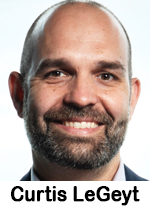
 radio spots across 192 media markets, generating more than 1 billion impressions and $43 million in airtime from TV and radio stations. NAB president and CEO Curtis LeGeyt says, “Local stations are serving communities with live sports, trusted local news and life-saving emergency coverage – all available for free to every American. But outdated rules are shackling these stations from growing and innovating at a time when Big Tech operates with limitless scale and zero public interest obligations. Consumers deserve more – not fewer – local journalists on the ground and live sporting events accessible without a subscription. The FCC must act quickly to level the playing field so broadcasters can continue investing in the content communities rely on most.”
 in the U.S. House of Representatives and a filibuster-proof 61 in the U.S. Senate. NAB president and CEO Curtis LeGeyt says, “We thank the growing, bipartisan group of lawmakers standing up for their constituents who depend on AM radio. This support demonstrates a deep understanding that AM radio remains an essential lifeline for emergency alerts, local news and community connection. With significant momentum behind this bill, NAB urges House leadership to bring it to the floor without delay and preserve this vital service for the American public.”
 An annual physical is a wise idea. Doc asks, “How are you doing?”. Then he or she asks some detailed questions based on your medical history. Then “how have you been feeling? Any issues?” Doc always orders blood draws to see what might be lurking. Is the statin drug keeping your cholesterol in check? Are you getting plenty of exercise, plenty of sleep? How’s your diet? Over the years, I’ve visited about my health with at least a dozen different doctors. I’m convinced that the good ones always ask good questions and then listen carefully. Good questioner – good listener. That’s the doc I can respect and put my trust in.
 Newsmax were defamatory. However, Newsmax is not admitting guilt; just the opposite. “Newsmax believed it was critically important for the American people to hear both sides of the election disputes that arose in 2020. We stand by our coverage as fair, balanced, and conducted within professional standards of journalism.” The company says Delaware Court Judge Eric Davis would not provide a fair trial wherein the company could present standard libel defenses to a jury. Newsmax CEO Christopher Ruddy says, “The Delaware Court under Judge Davis effectively enforced a confiscation of our property because our reporting was not always sympathetic to Joe Biden. The actions taken against Newsmax, and earlier against FOX News, represent a direct attack on free speech and a free press.”
 As TV touts its perennial New Fall Season, our DVR is already set to “record series” so we can pick-up where the “Matlock” sequel left-us-hanging; and for a third season of quirky “Elsbeth” (a closet reboot, the female “Columbo”). And where I live – where everyone seems to know everyone – we are salivating for “The Real Housewives of Rhode Island.”

 The program is hosted by U.S. Senator Ted Cruz and Premiere Networks-syndicated radio personality and podcaster Ben Ferguson who break down the most important news stories of the week and what they mean for Americans. “Verdict with Ted Cruz was first launched as a podcast in January 2020. Premiere Networks expanded the podcast into a weekly one-hour radio program for talk radio stations, which debuted on 100 stations in April 2025.
 pursuit of pure profit. It embraced this Administration’s radical notion that discriminatory behavior should be tolerated and even embraced, while efforts to expand opportunity for everyone should be rejected.
 the program “continues to build a powerful platform that champions American values, highlights critical national security issues, and gives voice to law enforcement, veterans, and grassroots advocates.” Letts adds, “I’m honored to bring our message to listeners in Los Angeles and Portland. Now more than ever, we need open, honest dialogue on the challenges facing our country – and we’re doing just that, one conversation at a time.”
 threatening free speech, medical autonomy, and the core doctor-patient relationship.” Dr. Gold states, “This is a wake-up call. We’re watching medicine become weaponized against the people it’s meant to serve. This film asks the question every American should be asking: Who does your doctor work for?” SalemNOW general manager Robert Ellis adds, “We’re proud to give a platform to voices willing to stand for truth. This film is essential viewing for anyone who believes medical freedom is worth protecting.”
 for free markets, Gomez called out the FCC’s role and Paramount for “cowardly capitulation.” Trusty said, “This transaction reflects the free market at work, where private investment, not government intervention, is preserving an iconic American media institution. During its review of the transaction, the Commission determined the merger was lawful and would serve the public interest. This deal brings fresh
  leadership, new capital, and a clear plan to compete with dominant tech platforms.” Gomez stated, “In an unprecedented move, this once-independent FCC used its vast power to pressure Paramount to broker a private legal settlement and further erode press freedom. Once again, this agency is undermining legitimate efforts to combat discrimination and expand opportunity by overstepping its authority and intervening in employment matters reserved for other government entities with proper jurisdiction on these issues. Even more alarming, it is now imposing never-before-seen controls over newsroom decisions and editorial judgment, in direct violation of the First Amendment and the law… The Paramount payout and this reckless approval have emboldened those who believe the government can – and should – abuse its power to extract financial and ideological concessions, demand favored treatment, and secure positive media coverage. It is a dark chapter in a long and growing record of abuse that threatens press freedom in this country.”
 Mark Walters
 local communities and civic issues.” According to a press statement, Bolling will assist in guiding Re:Public’s strategic communications, serve as voice of the platform in national and regional media, and assist with outreach as Re:Public expands throughout the United States. Bolling says, “Re:Public is an innovative new platform that returns the voice of ordinary Americans to the center of our public life. Local news has been dominated by goliath corporations for too long. Re:Public empowers people with the ability to report what is important in their own neighborhoods — unfiltered, uncensored, and held accountable.”
 the country, particularly in rural and underserved areas. However, Americans are increasingly skeptical of media institutions, with trust in media at historic lows. That reality cannot be ignored. It is not unreasonable for taxpayers to expect transparency, accountability, and balance from any outlet receiving federal support. Nor is it unreasonable for Congress to reassess whether public funding models established in a different media era remain justified today, especially when Americans have more access to more content from more sources than ever before. This action does not signal the end of public media. Instead, it presents an opportunity for innovation, partnerships, and more localized decision-making. As a regulator, I will continue to support policies that promote access and competition in media, without presupposing that one model of funding or content creation should be immune from public scrutiny or reform.”
 to elevating Black culture and storytelling across podcast and video platforms” that will serve as the exclusive home for both the Amplified Voices Podcast Network and the soon-to-launch Amplified Voices TV. Superadio and AURN CEO Chesley Maddox-Dorsey says, “This launch represents a powerful evolution in our mission to serve Black audiences. By creating three distinct digital destinations – AURN.com, Superadio.com and AmplifiedVoices.com – we are sharpening our focus to better meet the needs of our listeners, viewers and content distributors.”
 and the “AAR Daily Defense Hour” join the programming at Omni Broacasting’s WTKE in the Ft. Walton Beach-Destin, Florida market. Additionally, the “Armed American Radio” show is being distributed by CRN Talk to cable systems operated by Cox Communications, Optimum TV, and Xfinity Stream.
 and companies seeking to hire, especially among passive job seekers who are less likely to use job sites: Nine out of 10 job seekers are reached by ad-supported audio. Over-the-air AM/FM radio reaches nearly 80% of active and passive job seekers. Six out of 10 active job seekers are reached by podcasts; 2) AM/FM radio streaming’s audience growth has surged among job seekers: Since 2021, AM/FM radio streaming has soared in usage among both active and passive job seekers. Six out 10 active job seekers are reached by AM/FM radio streaming; 3) Passive job seekers outnumber active job seekers by +50%. Active job seekers are growing: The optimal source for filling positions are passive job seekers who outnumber active job seekers by +50%. Active job seekers have surged from 15% in 2018 to 24% currently; and 4) Advertising works: There is a very linear relationship between ad spend, share of voice, ad recall, and market share. The greater the ad spend, the greater the ad recall and market share.
  move to appease the Administration and secure regulatory approval of a major transaction currently pending before the FCC. For months, it has been clear that this lawsuit was entirely meritless, just like the complaint now before the Commission. The transcript and video of the 60 Minutes interview with Vice President Harris show no evidence of wrongdoing, only the standard editorial judgments used across the news industry to ensure clarity and brevity. Had Paramount chosen to fight this in court, they would have prevailed on the facts and the law. But instead of standing on principle, Paramount opted for a payout. That decision now casts a long shadow over the integrity of the transaction pending before the FCC. Given the extraordinary public interest in this deal, the novel legal questions raised by the lawsuit and its resolution, and the repeated calls from lawmakers for transparency, I once again urge the FCC to bring this matter before the full Commission for a vote. Approving this transaction behind closed doors and under the cover of bureaucratic process would be a shameful outcome that denies the American people the transparency and accountability they deserve, especially when press freedom is at stake.”
 featured live each night from 6:00 pm to 8:00 pm ET. Root says, “Tens of millions of die-hard Trump supporters go to theGatewayPundit.com 24/7 for the news and opinions that you won’t find in the mainstream media. It’s the perfect platform and synergy for my podcast. This is a marriage made in heaven. My daily podcast offers raw truth, the most exciting content for MAGA fans, and the most intense, passionate, combative, controversial, in-your-face, high-energy show anywhere in American media, combined with the biggest personality, and the loudest MAGA mouth on the planet. My show takes your breath away. It’s two hours of ‘pedal to the metal, balls to the walls,’ without taking a breath.”
 Act and underscores AM radio’s enduring value to the American people. For more than a century, AM radio has been a lifeline, delivering trusted news, local sports, crop reports and emergency information when and where it matters most. From rural communities to urban centers, from first responders to everyday commuters, over 80 million Americans rely on this free, local service to stay informed and safe every month.
  African American residents, as well as progressive listeners more broadly. KBLA Talk 1580 continues to be the most ‘trusted, credible, and reliable’ media source in Southern California for African Americans and beyond. While KBLA Talk 1580 is unapologetically progressive, the station and its on-air talent prioritize good ideas over ideology.” KBLA will hold a “Juneteenth Backyard Barbecue” today at Kenneth Hahn State Recreation Area from 4:00 pm to 8:00 pm. On Saturday (6/21) KBLA will present an “Empowerment Congress Juneteenth Community Celebration & Dialogue” at The Beehive from 9:00 am to 2:00 pm, and on Sunday (6/22), station host Dominique DiPrima will moderate a “State of Black Women in Los Angeles” symposium at The Living Room @ Faithful Central Bible Church from 10:00 am to 2:00 pm.
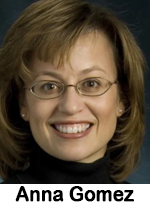
 Olivia will be a great addition to the Commission. Olivia brings years of valuable experience to the agency, including her public service on Capitol Hill and time in the private sector. I am confident that her deep expertise and knowledge will enable her to hit the ground running, and she will be an exceptionally effective FCC Commissioner. I look forward to welcoming Olivia to the Commission as a colleague and advancing an agenda that will deliver great results for the American people.” Fellow Commissioner, Democrat Anna Gomez also welcomes Trusty, saying, “I want to congratulate Olivia Trusty on her confirmation and welcome her to the FCC. I have known Olivia for years and have been very impressed with her strong background in communications policy and deep understanding of the technical aspects of this job, which will be a great asset to this agency. I look forward to working with her to return the FCC to its core priorities of protecting consumers, promoting innovation and competition, and securing our communication networks.”
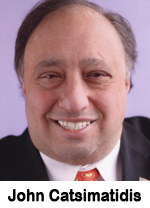 Thursday (6/12) in New York City. The Distinguished Service Award was presented to WABC Radio in recognition of a century of broadcasting leadership and its continued role as a vital force in American media. During his acceptance speech, Catsimatidis stated, “92% of the American people believed what Walter Cronkite said, and I think news has to get back to that situation and that’s what we’re doing at WABC.” He added, “I am honored to accept the Distinguished Service Award on behalf of WABC Radio, Margo [Catsimatidis], Chad [Lopez], and the entire team. We are committed to common sense, presenting all sides of a story, and letting the listeners decide.”