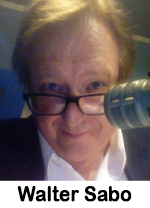
By Walter Sabo
Consultant, Sabo Media
A.K.A. Walter Sterling
Radio Host, Sterling on Sunday
 Talk show talent, program directors, show producers and broadcast business decision-makers represent the core readership of this publication. Sometimes we are so close to something that we fail to see it for what it really is. That is the case of the “talk show host” in American radio. Michael Harrison refers to the often-shameless targeting of audiences as “the daily dance of affirmation.” I view the daily process of radio talk show hosting at its very core, as “the daily dance of freedom.”
Talk show hosts are a rare breed and endangered species who enjoy a unique freedom in American radio. Hosts can actually talk about whatever they want! Of course, they are subject to both the rewards and consequences of this freedom – but the process of doing a live talk show, sparked by opinion and controversy, is so spontaneous and uniquely dynamic that it cannot be controlled on a minute-to-minute level without losing the flavor that makes it so special and long-lived.
During a decade as a top-five market and network talk show host, no one has ever told me what to talk about. And for zillions of years as a programming executive prior to that, I never told a host what to talk about on their next show.
Talk hosts are granted remarkable radio freedom! Music jocks haven’t had that freedom since the 1960s. Music jocks have to get up the courage to ask permission to merely change the order of songs on their play list. Talk show hosts “own” three or four hours a day on a significant station or stations to say whatever they wish. That’s amazing! At first that freedom was a daunting, humbling challenge for me. However, I have been guided by my experience in programming or having launched some of the world’s most successful talk stations.
Based on that experience from both sides of the mic, here’s what works: Talk can entertain a listener of any age and demographic if the host talks about the listener’s day. I talk about my day framed for a listener, one listener – water in the basement, trouble with the sister-in-law, the parent-teacher conference, more trouble with the sister-in-law, the check engine light in the car never wants to go out, life at Walmart. I talk from a place of trust.
Trust that events that poke the landscape of our lives are a very big deal. Trust that I will never find the “right” topic on any editorial page. Trust that you, dear listener, already know who you are going to vote for in any election and that this English major does not have the magic wand to change your mind. Trust that my on-air opinion must never waiver or we have no show.
Listen to talk shows and stations that reach demos under 50: WMMS, Cleveland; KFI’s John and Ken; Casey Bartholomew at WBAP, Dallas; KMBZ, Kansas City; KFBK, Sacramento; the Elvis Duran Show; and streaming with Bubba the Love Sponge or Phil Hendrie. Those successful shows embrace the scope of conversation two best friends would have on the phone today. If two best friends would discuss a topic, why wouldn’t you share it on the air? If two best friends would never discuss it, why would you ever put it on the air?
Walter Sabo, consultant, can be contacted at Sabo Media: walter@sabomedia.com. Direct phone: 646-678-1110. Check out www.waltersterlingshow.com.
Share this with your network


 regularly listen to AM or FM.” Company SVP of research Elizabeth Falke states, “The bottom line here is just how much people value having easy access to both AM and FM radio in their cars. Consumers want radio for a variety of different reasons that are largely unique to local radio – everything from discovering what new music matters to weather updates, the latest sports reports and local news and events.” As the AM Radio for Every Vehicle Act of 2025 makes its way through congress, Falke says its important that manufacturers understand the absence of radio would also influence new car purchasing decisions. The study found that 96% of Americans would miss radio if it were removed and 89% say the lack of a radio would likely keep them from buying that vehicle. She concludes, “This research is crucial for car manufacturers as we see that, immediately, half of consumers wouldn’t even look at buying a car without a radio. The ease and simplicity of radio is embedded in the lives of drivers consuming various forms of audio in their cars.”
  announces new affiliate stations that include WOR, New York; KNEW, San Francisco; WTAM, Cleveland; WOAI, San Antonio; WSJS, Greensboro; WSTP, Charlotte; KKXT, Corpus Christ; WHLO, Akron; KYQQ, Abilene; KIXW, Riverside; and WOND, Atlantic City. “Our American Stories” is now heard on 480 stations nationwide.
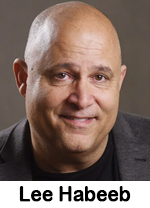 “Our American Stories” founder and host Lee Habeeb was tapped by the White House to tell the story of John Adams and his defense of the Redcoats in the trial the Boston Massacre. This is part of the White House’s America 250 “Story of America” series that’s being created in partnership with Hillsdale College and the US Department of Education.
  solutions executive Michael Katz writes that, according to Scarborough consumer purchase data, consumers were asked to “select auto dealerships where you or other household members might shop if you were planning to buy or lease a new or used vehicle (including in-store and online shopping)” and 36% were unable to name an auto dealer. Katz adds that one out five auto intenders (21%), those who will lease or buy a new or used vehicle in the next year, cannot name one auto dealer. He says, “Auto dealers need ads that teach people who they are and build their brands.”
 Americans 13+ are awake by 6:00 am during the weekday. The two most popular half hour increments Americans set their alarms for are between 6:00 am-6:30 am and 7:00 am-7:30 am. For radio station programmers wondering how important the 5:00 am hour is, just over 14% are awake by 5:00 am with another 17% rising sometime during the 5:00 am hour. Edison says other data indicates most Americans are waking up slightly later than they did before the COVID-19 pandemic shifted routines and schedules to spend more time in the home.
 lies in its ability to deploy high-end, labor-light, automation-heavy processes at scale. It’s a productivity story now, driven by robotics, industrial AI, and, most crucially, advanced 5G infrastructure deployed as an industrial platform — not just as a consumer gimmick.” He adds, “Compare this with our own policy environment, where even the best private sector players are hamstrung by outdated regulations, capricious permitting processes, and the dogma that government shouldn’t pick winners — especially in telecom or manufacturing. That ideology might have made sense in the 1990s, but it’s lethal to the future of our telecommunications industry now, and in consequence, our manufacturing future.”
  stations including KOMY-AM, Monterey-Salinas, California; WSCW-AM, Charleston, West Virginia; and more.
 largest share of listening, accounting for more than one-third of daily time with audio among those age 13+. The vast majority of that listening (31%) is to AM/FM over-the-air signals.” (The other 5% comes from radio streams.) Behind AM/FM in listening is streaming music (20%), YouTube (14%), podcasts (11%), SiriusXM (8%), owned music (4%), TV music channels (3%), audiobooks (3%) and other (1%).
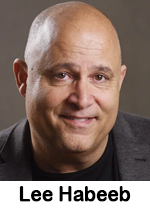 and founder of “Our American Stories,” a storytelling radio show and podcast featuring narratives that represent the best of America: history, sports, music, free enterprise, charity, faith, family and more. It can be heard five days a week, two hours a night, on well over 250 affiliates, including many heritage outlets, across the country. And archives of the show are available as an evergreen series of podcasts. In 2021, “Our American Stories” was signed to a syndication deal with Premiere Networks, giving it an added layer of distribution muscle as the property continues to show non-stop growth and display tremendous compatibility with more traditional forms of news/talk radio programming. According to Harrison, “Lee Habeeb is one of the most positive, as well as successful, players in the news/talk radio community with a compelling message of goodness and unity. He is a shining light of hope and growth for our industry and America.”
  of his son who gave his life in Afghanistan trying to save a fellow soldier, an event that became the inspiration for the popular country song, “I Drive Your Truck,” plus the story of the USS Indianapolis, America’s worst naval disaster. Also, host Lee Habeeb shares a personal story of his uncle who was killed by Nazis after D-Day. The program is available on a market-exclusive basis with barter. The show is available via FTP delivery. “Our American Stories” is distributed by Premiere Networks and is heard in over 310 radio markets across the U.S. For more information contact: 855-276-8020 or
 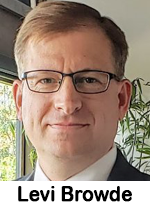 inhumanity. Torture, murder, brainwashing, imprisonment, rape, forced labor, propaganda, slander, robbery, and economic deprivation form the foundation of the campaign. The harvesting of organs from living Falun Gong practitioners for transplant sale has taken the persecution to a whole new level. TALKERS magazine is in communication with the New York City-based Falun Dafa Information Center which reports the following message to our readers: The fact that the CCP is enacting these crimes in the world today creates a series of questions. If China is willing to do this to a harmless and innocent group of its own citizens, what wouldn’t it do to the rest of the world if it felt that it had the power and incentive to do so? Would it violate the human rights of other nation’s citizens, invade a neighboring country, or try something worse? Do we each have a responsibility to stand up for innocent victims who are being tortured and slaughtered by their own government? If your neighbor was not bothering you but they were slaughtering their family members what would your responsibility be? Given the truth of this situation, what is your responsibility? TALKERS encourages the talk media community to make contact with Levi Browde, executive director of the Falun Dafa Information Center to arrange interviews with him and other experts to raise consciousness among Americans to this dire human rights threat as well as other detailed insights into tenuous U.S.-China relations. He can be reached via email at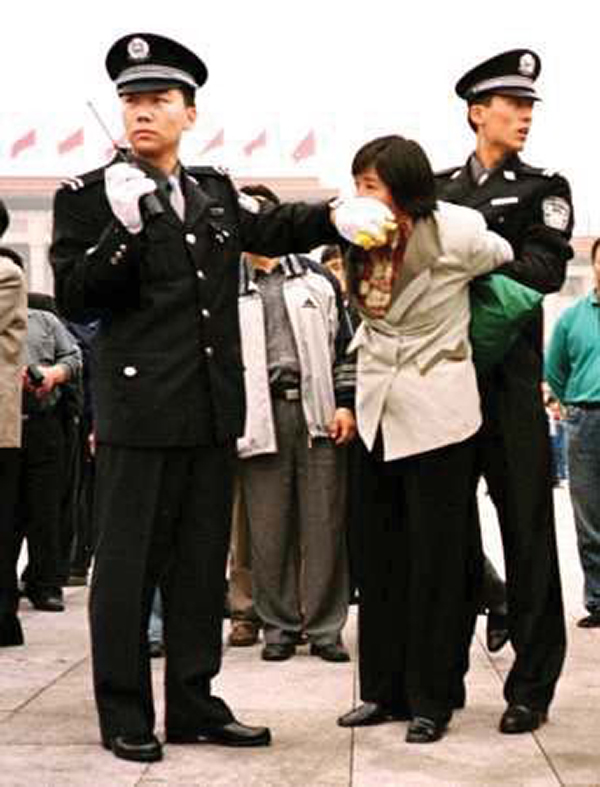
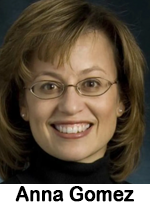 federal law. She says, “The FCC has once again chosen bureaucratic cover over public accountability. This merger was approved behind closed doors with no open process, no full Commission vote, and no transparency for the consumers and communities who will bear the consequences. A transaction of this magnitude, which includes new and novel issues before the FCC, demands open deliberation before the full Commission, not a quiet sign-off meant to avoid public scrutiny. Given the increasingly alarming pace of reckless media consolidation, the American public deserves to know how and why this decision was made.
 Wilshire on May 19. Local television, radio, and student award recipients will be recognized at the Gracie Awards Luncheon at Cipriani 42nd Street in New York on June 16. Some of the notable radio winners include: Deborah Rodriguez news anchor for CBS News Radio; Kristen Farrah, producer of “Radio Health Journal” for American Urban Radio Networks; WABC Radio’s “Cats & Cosby” (John Catsimatidis & Rita Cosby) talk show; WGN, Chicago’s “The Lisa Dent Show”; and co-host Debra Green of WSB-AM, Atlanta’s “The Mark Arum Show.”
 radio (including AM/FM streams), the historic spoken-word listening leader. Edison adds, “Spoken-word listening time among Americans 13-34 is dominated by podcasts, with 53% of time being spent with that specific platform, versus 23% of time going to AM/FM radio. Radio does rebound among 35–54-year-olds but still falls short with 47% of their spoken-word listening time going to podcasts and 35% going to AM/FM radio. Our story completely changes among Americans ages 55+, who spend the majority of their spoken-word listening time with AM/FM radio, at 55%, and less than one-quarter of their time with podcasts at 22%. The dominance of podcast listening among younger age cohorts can certainly be attributed to their preference for on-demand content that also includes visual elements, qualities specific to podcasts and not radio. AM/FM radio carries a wide variety of spoken-word offerings, ranging from sports play-by-play and sports talk, NPR programming, news and entertainment talk shows, to political talk.”
 Right,’ and ‘3 Martini Lunch.’” Radio America president and CEO Mike Paradiso states, “Helios Media is the natural progression of what Radio America has been building for decades – trusted content, powerful reach, and authentic voices that resonate with millions of Americans. With Helios Media, we’re giving creators the tools, the platform, and the audience to stand out in the competitive landscape of podcasting and digital media.” Radio America adds, “While Radio America continues its leadership in radio syndication – home to popular shows like ‘The Dana Show’ with Dana Loesch and ‘The Chad Benson Show’ – Helios Media serves as a distinct brand, purpose-built for podcast development, distribution, marketing and sales, amplifying news, culture, and entertainment stories through voices that challenge the mainstream and speak with conviction.”
  “designed to help brands reach and engage multicultural audiences across today’s digital media landscape.” AURN CEO Chesley Maddox-Dorsey says, “AURN has always been committed to helping brands connect authentically with multicultural audiences. Our partnership with AdGrid allows us to expand that connection beyond audio and into the broader digital ecosystem, giving advertisers new ways to reach these influential audiences with scale, cultural relevance and measurable results.”
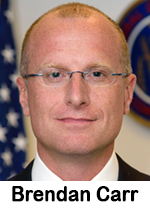 license renewals come up. The law is clear. Broadcasters must operate in the public interest, and they will lose their licenses if they do not. And frankly, changing course is in their own business interests since trust in legacy media has now fallen to an all time low of just 9% and are ratings disasters. The American people have subsidized broadcasters to the tune of billions of dollars by providing free access to the nation’s airwaves. It is very important to bring trust back into media, which has earned itself the label of fake news. When a political candidate is able to win a landslide election victory after in the face of hoaxes and distortions, there is something very wrong. It means the public has lost faith and confidence in the media. And we can’t allow that to happen. Time for change!” Carr included a Truth Social post from President Donald Trump in which he complains about papers such as The New York Times and The Wall Street Journal reporting on a strike against the U.S. base in Saudi Arabia that hit five refueling tanker planes. Trump said the reporting was intentionally wrong.
  nationally syndicated radio show, “FOX Across America,” and his FOX News Channel show, “FOX News Saturday Night.” The theme for this 10th Event & Dinner at Mohegan Pennsylvania on May 5 is “250 Years of American Liberty!” Bold Gold president Vince Benedetto says, “This being our 10th event and coinciding with
 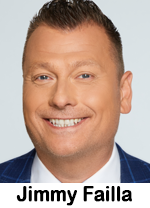 America’s 250th Birthday, we are doing everything bigger this year. In addition to celebrating 250 years of America, we’ll be celebrating 250 years of freedom of speech… and there is no greater daily example of that freedom that radio broadcasters. Radio, especially talk radio, remains America’s modern town hall. Our efforts at this event will help the next generation of radio broadcasters.” The Bold Gold Foundation will also be honoring Northeast Pennsylvania business leader and philanthropist Robert Tamburro with The Atlas Award for Citizenship. Bold gold says the Atlas Award is bestowed on individuals who, through their hard work and bold actions, show what is possible to achieve in a free society, and who exhibit extraordinary dedication to the highest ideals of character, community service, entrepreneurialism, patriotism, leadership, and virtue.
 year, generative AI adoption among American consumers.” Some of the key findings include that online audio consumption has hit an all-time high: 1) 81% of Americans age 12+ (233 million) listened to online audio in the last month, and 76% (219 million) listened in the last week; 2) Americans age 55+ are driving the most recent increases. Monthly online audio listening among this group jumped from 52% in 2024 to 70% in 2026, a gain of nearly 20 percentage points in just two years; 3) 80% of Americans age 12+ (230 million) have ever listened to or watched a podcast, an all-time high; and 4) 58% of Americans age 12+ (167 million) have consumed a podcast in the last month, also an all-time high.
 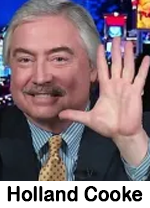 Unless you live in Hawaii and Arizona (except the Navajo Nation) or American Samoa, Guam, the Northern Mariana Islands, Puerto Rico and the U.S. Virgin Islands, your clocks will change when we “Spring Forward” on Sunday 3/8.
 recent trends towards fragmentation facilitate or inhibit the ability of local broadcast television stations to meet their public interest obligations, including their production of local news and reporting? In what ways is the marketplace continuing to evolve and how will future changes impact consumer access to free over-the-air news and information, including public safety information?”
 dominant spoken-word audio listening platform, but it was fully sixty-five percentage points higher than podcasts, which accounted for 10% of listening time back then. Quarter by quarter and year over year, time spent using AM/FM radio to listen to spoken-word audio has declined significantly and shifted to time spent with podcasts. As of Q4 2025, 40% of time spent listening to spoken-word is now spent with podcasts and 39% of time is spent with AM/FM radio. Not only does radio not beat podcasts by a significant margin, it now trails the on-demand platform for spoken-word audio listening.”
 president Julie Talbott says, “We’re deeply saddened by the loss of Rev. Jesse Jackson, and it has been an honor to work with him and his family throughout the past two decades of his ‘Keep Hope Alive’ radio show. Santita Jackson is uniquely positioned to carry forward his legacy and his unwavering commitment to community and social justice – values he championed so powerfully for listeners and stations across the country.” iHeartMedia chairman and CEO Bob Pittman adds, “Rev. Jackson has been a transformative voice in American life, and it was a privilege to work with him dating back to ‘The Jesse Jackson Show’ with Quincy Jones in the 1990s. We’ve valued our relationship with him over the years and look forward to celebrating his lasting impact on the national conversation and our culture – an influence that will continue to resonate for generations.”
 patriotic, pro-America content that celebrates the American journey and inspires its citizens by highlighting the historic accomplishments of this great nation from our founding through the Trump Administration today.” Carr adds, “On July 4, 2026, America will celebrate the 250th Anniversary of the signing of the Declaration of Independence. That revolutionary document set forth our founding principles – including Life, Liberty, and the pursuit of Happiness – and put America on a collision course with destiny. Over the following centuries, the American story has defined modern history and spread freedom, opportunity, and prosperity across the globe. As America’s 250th anniversary approaches, it is important to reflect on the ideals and events that have defined our past while keeping an eye towards our country’s bright future. The White House is leading our national celebration of this historic event with the Salute to America 250 Task Force, which calls on the federal government, among others, to mark this momentous occasion. As part of this effort, I am calling on broadcasters to pledge to provide programming that promotes civic education, national pride, and our shared history.” Carr shares some examples stations could use, including:
 purchasing power – backed by a population of nearly 70 million that is a leading ethnicity in growth – has now reached $4.1 trillion and continues to grow more than twice as fast as that of non‑Latinos. iHeartMedia says, “The impact of this can only be measured in global scale: If isolated, the GDP of current U.S. Latinos would rank fifth in the world, having surged from $2.2 trillion in 2015 to $4 trillion.” iHeartLatino president and chief creative officer Enrique Santos says, “Bicultural Latinos are not just an audience — they are a cultural vanguard, driving tastes, trends and conversations across every platform while powering one of the fastest‑growing segments of the U.S. economy and redefining what it means to be American. For brands, the takeaway is clear: culture is the strategy — language is the tactic. Those who lead with cultural intelligence, not just translation, earn more than attention, they earn long-term loyalty and trust.” The study also finds that audio is important to this demographic. The study finds: “Broadcast reaches 9 in 10 Latinos monthly, according to Nielsen, and this new research shows that Bicultural Latino radio listening is diverse – 92 percent listen in English, 78 percent listen in Spanish – and 65 percent of Bicultural Latinos prefer listening to radio/music/podcasts equally in Spanish and English. Additionally, the research shows that 98 percent are listening to music weekly, 63 percent tune into podcasts weekly and 69 percent engage with live sports through audio.”
 “Podcasting’s momentum strengthened in 2025, with audio remaining the foundation of the medium while video helped bring in new audiences. What’s most compelling is the diversity podcasting now delivers across content, platforms, and consumers. Triton’s report highlights where new listeners are engaging and how their evolving behaviors – including shopping and purchase intent – are creating a highly engaged audience that is increasingly attractive for brand investment.” One key finding from the study is that “consumption preferences vary sharply by genre. Categories primarily consumed via audio are Science (58%), History (56%), Fiction (54%), Arts (51%), and True Crime (50%), while Music (34%), Sports (32%), Kids & Family (31%), Comedy (30%), News (30%) skew more heavily toward exclusive video consumption. This emphasizes a need for differentiated content and monetization strategies.”
 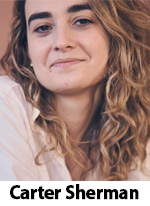 Carter Sherman and Kai Wright. Guardian U.S. editor Betsy Reed says, “This project is a major step toward bringing audio and video journalism to American audiences, showcasing the breadth of our global content and reporting muscle. It’s also
 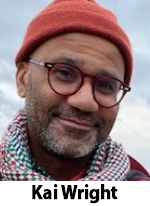 the latest step in our ongoing US expansion, which we’ve seen in recent months across politics, media, sports, culture, breaking news, and more.” Carter has been serving the Guardian as reproductive health and justice reporter since 2023 and recently published the book, The Second Coming: Sex and the Next Generation’s Fight Over Its Future (2025, Gallery). Wright was most recently host and managing editor of Notes From America with Kai Wright and has served with WNYC, New York.