By Walter Sabo
A.K.A. Walter M Sterling
WPHT, Philadelphia
Sterling Every Damn Night
Sterling on Sunday Syndicated, TMN
Another Side of Midnight, WABC, New York
 In 1952, the success formula for today’s radio was discovered and put into practice by two hungry entrepreneurs: Todd Storz and Gordon McLendon. Both men owned dying radio stations in medium and major markets. The industry was suffering from a lack of purpose or solutions due to the advent of television which drove the migration of hit network radio shows to television. Lucille Ball, Bob Hope, and Gertrude Berg were on radio first.
Storz and McLendon developed “Top 40” with their own brains and money. Top 40 was research and focus group based, as well as. Storz tried it first in Omaha, then Kansas City and Miami. McLendon in Dallas, Houston, Minneapolis, and New Orleans. The formula was simple but not obvious. Their common-sense solution worked in all formats: music and talk.
Ruth Meyer was Storz’s PD in Kansas City and I worked with her at ABC. She was very clear when outlining the Storz history, “It was all Todd.”
Success ingredients
The formula: Target one demographic. Play their hits – often. Call out the names of as many people in the audience as possible – make the listener a star. Present with enthusiasm. Promote at every local crowd event possible. Repeat.
All of the McLendon and Storz stations grew instantly, usually to number one.
That ingredient list works repeatedly for station after station for decades. But, and here’s the but, all of those ingredients have to be in the recipe. Leave out promotion, for example, or research, and it doesn’t work. But the full ingredient list does work for every single format.
I asked Mickey Luckoff, who ran talker KGO as the number one station in San Francisco for most of our lives, how he selected his on air talk hosts to which he replied, “They all come from top 40 because I can teach them talk but I can’t teach them radio.” His promotions were non-stop and smart, TV campaigns were non-stop and research, yes, research – non-stop!
When Adult Contemporary was evolving, my team was responsible for the NBC FM properties. Corporate finance people who went to Wharton urged me to go slow, layer in expenses when launching this odd new format. I knew layering was a recipe – for failure!!! All the ingredients had to be rolled out at once. In 1981, WYNY in New York had a $2 million dollar cash and a $2 million barter promotion budget. Result, a $3 million profit and a 5 share. Thanks to PD Pete Salant and GM Al Brady Law. We used the Storz/McLendon recipe with AC music and Dr. Ruth, it obviously works.
WGMS-FM was a classical station in Washington, DC. When it was owned by RKO and run by visionary Jerry Lyman, it applied the Storz/McLendon recipe to classical music. Their promos announced that WGMS played “Real Oldies – Your favorites from the 1600s, 1700s and 1800s!” WGMS aired a tight playlist of hits. Special weekends were popular, such as a “Beethoven Weekend” with t-shirt giveaways. The station was a profit monster, top 10 in Washington DC.
Five years ago, WABC-AM was about 28th in NYC as a result of cutting costs, by god the cost cutting was epic and so was the failure. Today, John Catsimatidis, the owner, and Chad Lopez, the president, have grown the station to a 4 share and number eight in New York. An AM talk station, number eight and growing. What? How? They put in all the ingredients. The station is data driven. The talent is live. External paid ads run for WABC almost every single day. The air team goes to local events to meet the crowds. WABC airs live listener music requests and dedications on the weekend with Cousin Bruce Morrow and Joe Piscopo – live. Did I mention live?
Today not history
The team is happy. They are making radio. This isn’t nostalgia. Mr. Cats is a very current based businessman who expects results. Like Storz and McLendon he is an entrepreneur, a private owner deploying common sense. He’s doing what is proven, what works. Bravo.
Conclusion: There is nothing wrong with radio. Just stop. Include every ingredient in the proven recipe; expect stunning results.
Walter Sabo has been a C-Suite action partner for companies such as SiriusXM, Hearst, Press Broadcasting, Gannett, RKO General, and many others. His nightly show “Walter Sterling Every Damn Night” is heard on WPHT, Philadelphia. His syndicated show, “Sterling On Sunday,” from Talk Media Network, airs 10:00 pm-1:00 am ET, and is now in its 10th year of success. He recently began hosting “Another Side of Midnight” weekends on WABC, New York. He can be reached by email at sabowalter@gmail.com or phoned at 646-678-1110.
Share this with your network




 To quote a radio friend, “Some talk show hosts think the news of the day only exists to serve up interesting fodder for their shows.” Many media practitioners, whose jobs encompass letting their audiences know about the pain and suffering of “others,” feel personally exempt from experiencing a connection to the talking points of poverty, ignorance, violence, and injustice that they eagerly collect (and even welcome) as fresh “content” for their platforms. It’s all just “material” to them.
 Holders of the company’s existing 9.200% Senior Secured Second Lien Notes due 2028 agreed to exchange them for newly issued 10.000% Senior Secured Second Lien PIK Notes due 2027 at an exchange ratio of 50 cents on the dollar. On March 30, Beasley completed the purchase of $15.9 million aggregate principal amount of Existing First Lien Notes, and $15 million aggregate principal amount of the Existing First Lien Notes remains outstanding.
 host Jimmy Kimmel’s jokes aimed at the two. FCC Commissioner Anna M. Gomez issued a statement about the order, saying, “This is the most egregious action this FCC has taken in violation of the First Amendment to date. As part of its ongoing campaign of censorship and control, the White House called publicly for the silencing of a vocal critic, and this FCC has now answered that call. This is an unprecedented and politically motivated attempt to interfere with how broadcasters operate, and this unlawful overreach will fail. This should be a lesson to media companies that no amount of capitulation to this administration will buy them protection. The only choice is to stand up and stand firm in defense of the First Amendment.”
 Washington and will “feature interviews with notable figures from politics, business, sports and entertainment.” Van Susteren also hosts “The Record With Greta Van Susteren” daily on Newsmax. Van Susteren says, “I am excited about this new platform so I can explore issues more deeply with listeners who want to know the full story.” Newsmax Audio and Radio CEO Ralph Renzi adds, “We are proud that Greta will bring her insightful journalism to the podcast world.”
 Wang – is heard on 790 KABC-AM in Los Angeles and 810 KSFO-AM in San Francisco daily from 12:00 noon to 3:00 pm. Phillips is also a columnist for the Orange County Register and the Los Angeles Daily News. Wang also hosts the locally focused “KABC News Blitz” daily from 5:00 pm to 6:00 pm. Cumulus regional VP Larry Blumhagen says, “We are thrilled to extend “The John Phillips Show” and will continue to have John Phillips and Randy Wang speak about accountability in California to their loyal audience.”
 Stations I work with are confronting a generational revenue issue: Local direct retail business owners who are Baby Boomers are retiring. And their heirs are moving the radio dollars that built their parents’ businesses to search engine optimization and elsewhere-digital. The narrative we present them: “Radio is ‘a reach engine’” for the digital content people their age personally favor. In this mode, the station feels less like “your father’s Oldsmobile;” and more present tense. Many of these next-generation businesspeople are avid podcast listeners, and that presents an opportunity.
 provocative podcasts, unexpected live experiences, and new research, tools and planning solutions, Bubbler is designed to get brands into the conversation in fresh ways.” As part of its launch, Bubbler announces a partnership with iHeartMedia to develop and distribute a slate of original business and marketing podcasts, with more than 10 original podcasts slated for this year. President of iHeartPodcasts Will Pearson says, “The iHeartPodcast Network has always been focused on the new genres and audiences we can reach through this incredible medium – and the ‘business-to-business’ space is a perfect example of that. Creating a slate in podcasting for marketing executives to have meaningful, deep conversations with each other about the world of business and advertising will have immense value for our listeners and brand partners alike.”
 government studies report most commutes are a solo affair. In the car, Honda drivers cannot be reached by social media, online video, or any digital platform while commuting to work. What are the audio habits of Honda drivers in all locations (home, work, vehicle, and some other place)? Edison examined audience shares among Honda drivers to ad-supported audio platforms at home, in the car, at work, and some other place. In all locations, Honda drivers devote 62% of all their ad-supported audio time spent to AM/FM radio.”
  newscast that some 700 stations respected enough to put on their air. Schwalb tells the Tribune, “Conversations have been going on since the announcement, and I think we get closer and closer to a decision every day. But we have to be very careful and be very diligent about making sure the product that we select is going to make sense from a listener perspective and a revenue perspective as well… CBS has been a great top-of-the-hour news piece for a long time, but it’s a very small percentage of what we do in a given hour between business, traffic and weather together on the eights, local news – the strongest local newsroom in Chicago radio.”
 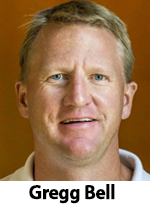 Ian Furness Show,” which moves to an earlier start by an hour. The Seattle Times notes that Bell has covered the Seahawks for the Tacoma News Tribune since 2014, and Kidd is an executive producer with KJR who co-hosts the “Seahawks Man 2 Man” podcast. Bell comments about working Kidd, saying, “We have great rapport. I value his input. He’s a Seattle kid, born and raised, and a Coug. He’s a little younger than I am, so that gives another perspective.”
  As a newly minted program director (remember them?), I found the 1980 “NAB Radio Programming Conference” downright enchanting. New-tech cart machines (remember them?) would FIND the splice! And after the cart played, a flashing light saved careless DJs from accidentally playing it again.
 treatment schedule. Edmonds, 42, said the diagnosis came unexpectedly about two months ago and described it on the air as a ‘total gut punch.’ A mother of a young daughter, she acknowledged the fear that followed the discovery but said she is confident in her care team and treatment plan at Henry Ford Health. Edmonds told listeners she has already begun chemotherapy and believes she will get through the process.” Edmonds says her oncologist emphasized the importance of consistent sleep and recovery during chemotherapy. She made clear that the change is temporary and that she plans to remain connected to WJR and its audience as she is able while focusing on her health.
 Broadcasting and ESPN Arkansas, which will now serve all the Fort Smith, Hot Springs, Northwest Arkansas, Harrison, Mountain Home, and much of Eastern Oklahoma. Top rated KISR will continue to serve the River Valley from just below its previous dial position, moving to 93.1 FM.” ESPN Arkansas general manager Tommy Craft adds, “We are excited to expand and grow the footprint and coverage areas of our ESPN Arkansas radio stations. The addition of a 100,000-watt station to our roster of current stations is a true game changer. Fred Baker and KISR have spent more than 55 years building something that is far more than just a radio station for so many people, and we are humbled to be able to continue that kind of commitment to listeners. We live in a state where the sports we love and the daily conversations about the teams we follow matter. The opportunity to expand our coverage so that more of the great people in Arkansas can join in the conversation with our live and local sports talk radio shows is a thrill, and we cannot wait to get started.”
 are antisemites. How could this be? Rosenberg posted a video clip of the mascots warmly embracing New York Mayor Zohran Mamdani at Citi Field, followed by a still photo of himself in a corridor at Citi Field with Mr. Met about 20 yards down the same corridor walking in the opposite direction after, Sid says, ignoring him. It’s unclear at this time if the Justice Department has opened an investigation into the New York Mets.
  The rise of independent, talk show-style political commentary on YouTube has created a new class of media actors who do not see themselves as broadcasters, journalists, or publishers. They see themselves as creators. That distinction is real in terms of identity, tone, and platform. It is not real where it matters most: liability.
 deceased, known or unknown, in New Mexico who has made a meaningful impact on their community, through service, leadership, sacrifice, or simply showing up when it matters most. On May 4th, News Radio KKOB will begin announcing honorees, with four individuals recognized each weekday, leading up to a culminating event later this summer. KKOB program director Aaron “Buck” Burnett says, “250 Flags is about recognizing the people who don’t always get the spotlight. New Mexico is full of everyday heroes, and this gives us a chance to tell their stories and honor them in a meaningful way.”
 manage the business as CEO upon successful acquisition.” Warshaw also says he steered SFM and Del Nin to the deal that made SFM a majority stake holder of the new Audacy in early 2024 and alleges he was promised he’d be the next CEO of Audacy or that he would get 5% of SFM’s profits from the Audacy acquisition.
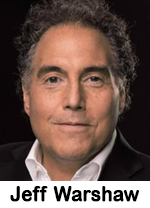 Now, in recent court filings, Warshaw claims that by mid-2023 he had identified HG Vora as the key holder of Audacy’s distressed debt and, through industry contacts, came to believe that HG Vora was already aligned with Cumulus Media to merge the two companies. But the filings stop short of proving that such a deal ever existed in a formal sense.
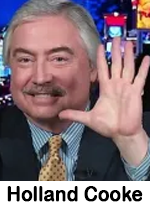
 pending regulatory approval by the FCC and is expected to close in summer of this year. Connoisseur CEO Jeff Warshaw states, “We are over the moon to be able to add these phenomenal properties and team to our company. This marriage will allow us to even better serve the community and our clients.” NRG Media CEO Mary Quass adds, “The Lincoln stations have been a very important part of our story, and we are pleased to pass them to Jeff and his team. Jeff is a broadcaster who shares our commitment to great local service, quality programming, and deep community connections!” At the same time, Connoisseur is entering into a deal with MSC Radio Group to sell its Topeka cluster that includes news/talk WIBW-AM and three music brands. About this sale, Jeff Warshaw says, “We’re incredibly proud of the impact these stations have had in Topeka and the connections they’ve built with listeners. As we continue to refine our portfolio, this agreement allows us to focus our resources on key growth markets while ensuring these stations are well-positioned for the future with KNZA. We’re confident they will continue their legacy of serving the community with a strong emphasis on local engagement, news, and partnerships.”
 Good News/Bad News: Fender‑benders, slip‑and‑falls, and other “injuries caused by the negligent, careless, or reckless actions of others” will always happen. That’s the good news…for personal injury attorneys. Their bad news is that supply WAY-exceeds demand, and their advertising reflects it.
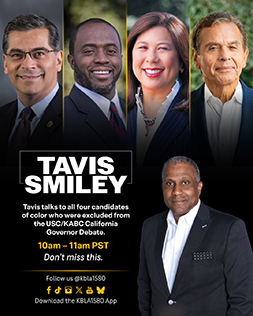 who were excluded from the recently canceled March 24 KABC-TV | University of Southern California gubernatorial debate. Smiley says he’ll speak with Xavier Becerra, Tony Thurmond, Betty Yee, and Antonio Villaraigosa separately in four 15-minute segments about the race, their campaigns, and their plans for California’s future. He adds, “It’s no coincidence that the four gubernatorial candidates who were excluded from a debate hosted by ABC7 and USC – canceled due to public outcry – are now appearing on KBLA Talk 1580, a Los Angeles-based, Black-owned, progressive radio station, to discuss their campaigns and the race for California’s top office.”
 latest addition to Gamut’s growing 312 Sports network, a Chicago-focused lineup anchored by “Dan Bernstein Unfiltered” and featuring shows such as “Forward Progress: A Chicago Bears Podcast” and “Organizations Win Championships,” a Chicago Bulls podcast. Gamut Podcast Network head John Goforth comments, “This isn’t just another recap show. Chicago fans don’t think about their teams in a vacuum, and we’re not going to talk about them that way either. ‘Off the Ivy’ is about what it all means – what a win says, what a loss exposes, and where this team is actually headed. If you care about the Cubs, this is the conversation you want to be part of.”
 In ongoing discussions about the dwindling relevance of radio in the modern world, the medium is grudgingly defended as a reliable “first responder” during times of public emergencies.
 of modern-day media Sterno.
 using print and television. The owner was stunned that in a local group of 125 people not one could name his company. Doug Hansen‘s Bug-a-Way Pest Control then embarked on an AM/FM campaign in which a jingle was created for his business and soon his company went from zero unaided awareness to 20%. The campaign helped create future demand for his company as 29% of locals surveyed said they would call his company if they needed pest control.
 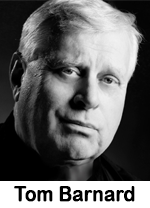 hosting “The Tom Barnard Podcast” since leaving the station in December of 2022. On the podcast, Barnard was joined by family members including his wife and podcast co-host Kathryn Brandt who said they began to have concerns about Barnard’s health shortly after he retired from KQRS. Barnard says he’s been undergoing treatment that has had a positive effect on him, but he acknowledges that there is currently no cure for Alzheimer’s.
 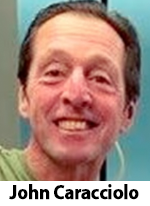 The recent shutdown of CBS News Radio isn’t just another media headline – it’s a wake-up call. A clear example of what happens when decisions about our information, our communities, and our voices are made in corporate boardrooms disconnected from real life.
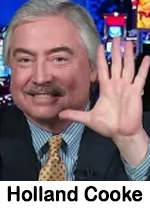 If you work in radio, you’ve heard every flavor of AI anxiety. Some fear it will wipe out jobs. Others treat it like a super shortcut – cranking-out spots, promos, and proposals faster and cheaper. Kate O’Neill’s
 approximately 700 stations. Variety reports that these cuts come under new management at Paramount Skydance and are part of CBS News editor in chief Bari Weiss’ plans to “make CBS News more relevant to younger, digitally savvy generations.” It’s expected that the personnel cuts will affect between 60 and 70 people.
 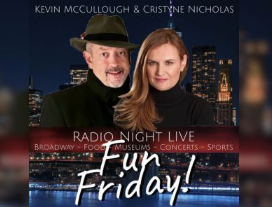 most in need of support. Today, the weekly talk show continues to focus on the best of New York City, interviewing leaders in travel and tourism, hospitality, Broadway and live entertainment, food & beverage, major sports events, as well as elected officials, heads of NYC’s business improvement districts, celebrities, members of the media and beyond. Kevin McCullough says, “A five-year journey that began buried in COVID has sprouted into the single most compelling argument for the greatest of all cities every single Friday.” Times Square Alliance president Tom Harris comments, “With most talk shows focusing on the worst, it’s refreshing to tune in each week and hear about the best of New York City. I am always honored to be a guest of Cristyne and Kevin and wish them continued success.”