By Matthew B. Harrison
TALKERS, VP/Associate Publisher
Harrison Media Law, Senior Partner
Goodphone Communications, Executive Producer
 AI is now embedded in the modern newsroom. Not as a headline, not as a novelty, but as infrastructure. It drafts outlines, summarizes complex reporting, surfaces background details, and accelerates prep for live conversations. For media creators operating under relentless deadlines, that efficiency is not theoretical. It is practical and daily.
That reality raises a quiet but consequential legal question. When AI contributes to your research, what does verification now require?
Professional hosts are not reading raw chatbot answers on air and calling it journalism. That caricature misses the real issue. What is actually happening is subtler and far more common.
AI now sits inside research workflows. Producers use it for background. Hosts use it to summarize reporting. Teams use it to outline controversies or draft rundowns. Most of the time, it works. Sometimes, however, it invents.
When that invention involves a real person and a serious allegation, the legal analysis looks familiar.
For public figures, defamation requires proof of actual malice – knowledge of falsity or reckless disregard for truth. For private figures, negligence is usually enough. In both cases, the focus is not on the tool. It is on the content creator’s conduct.
AI does not change the elements. It changes the context in which reasonableness is judged.
Courts have long held that repeating a defamatory statement can create liability, even if someone else said it first. If you rely on a blog, and that blog relied on AI, and the allegation is false, the question becomes whether your reliance was reasonable.
Was the source reputable? Was the claim inherently improbable? Were there obvious red flags? Was contradictory information readily available?
AI’s reputation for “hallucinating” facts now forms part of that backdrop. Widespread awareness that these systems can fabricate citations, merge identities, or invent accusations becomes relevant when a court evaluates your verification choices.
This does not mean using AI indicates reckless disregard. It means using AI does not excuse skipping verification when the stakes are high.
The more specific and damaging the claim, the greater the duty to confirm it through independent, reliable sources. Not another prompt. Not a circular reference to the same unverified blog. Rather, a primary record, official statement, or established reporting.
Documentation matters. If challenged, being able to show that you checked multiple sources before broadcast can be decisive.
None of this is new doctrine. What is new is how seamlessly AI blends into ordinary research habits. That integration makes it easier to forget that the legal question is still about human judgment.
The law will not ask whether your workflow was efficient. It will ask whether your conduct was reasonable under the circumstances.
In the age of AI, verification is not a courtesy. It is risk management.
Matthew B. Harrison is a media and intellectual property attorney who advises radio hosts, content creators, and creative entrepreneurs. He has written extensively on fair use, AI law, and the future of digital rights. Reach him at Matthew@HarrisonMediaLaw.com or read more at TALKERS.com.
Share this with your network



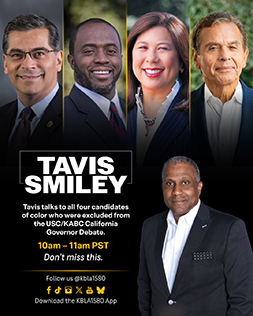 who were excluded from the recently canceled March 24 KABC-TV | University of Southern California gubernatorial debate. Smiley says he’ll speak with Xavier Becerra, Tony Thurmond, Betty Yee, and Antonio Villaraigosa separately in four 15-minute segments about the race, their campaigns, and their plans for California’s future. He adds, “It’s no coincidence that the four gubernatorial candidates who were excluded from a debate hosted by ABC7 and USC – canceled due to public outcry – are now appearing on KBLA Talk 1580, a Los Angeles-based, Black-owned, progressive radio station, to discuss their campaigns and the race for California’s top office.”
 latest addition to Gamut’s growing 312 Sports network, a Chicago-focused lineup anchored by “Dan Bernstein Unfiltered” and featuring shows such as “Forward Progress: A Chicago Bears Podcast” and “Organizations Win Championships,” a Chicago Bulls podcast. Gamut Podcast Network head John Goforth comments, “This isn’t just another recap show. Chicago fans don’t think about their teams in a vacuum, and we’re not going to talk about them that way either. ‘Off the Ivy’ is about what it all means – what a win says, what a loss exposes, and where this team is actually headed. If you care about the Cubs, this is the conversation you want to be part of.”
 In ongoing discussions about the dwindling relevance of radio in the modern world, the medium is grudgingly defended as a reliable “first responder” during times of public emergencies.
 of modern-day media Sterno.
 using print and television. The owner was stunned that in a local group of 125 people not one could name his company. Doug Hansen‘s Bug-a-Way Pest Control then embarked on an AM/FM campaign in which a jingle was created for his business and soon his company went from zero unaided awareness to 20%. The campaign helped create future demand for his company as 29% of locals surveyed said they would call his company if they needed pest control.
  hosting “The Tom Barnard Podcast” since leaving the station in December of 2022. On the podcast, Barnard was joined by family members including his wife and podcast co-host Kathryn Brandt who said they began to have concerns about Barnard’s health shortly after he retired from KQRS. Barnard says he’s been undergoing treatment that has had a positive effect on him, but he acknowledges that there is currently no cure for Alzheimer’s.
  The recent shutdown of CBS News Radio isn’t just another media headline – it’s a wake-up call. A clear example of what happens when decisions about our information, our communities, and our voices are made in corporate boardrooms disconnected from real life.
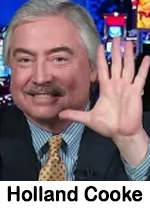 If you work in radio, you’ve heard every flavor of AI anxiety. Some fear it will wipe out jobs. Others treat it like a super shortcut – cranking-out spots, promos, and proposals faster and cheaper. Kate O’Neill’s
 approximately 700 stations. Variety reports that these cuts come under new management at Paramount Skydance and are part of CBS News editor in chief Bari Weiss’ plans to “make CBS News more relevant to younger, digitally savvy generations.” It’s expected that the personnel cuts will affect between 60 and 70 people.
 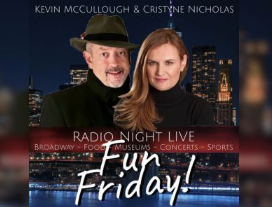 most in need of support. Today, the weekly talk show continues to focus on the best of New York City, interviewing leaders in travel and tourism, hospitality, Broadway and live entertainment, food & beverage, major sports events, as well as elected officials, heads of NYC’s business improvement districts, celebrities, members of the media and beyond. Kevin McCullough says, “A five-year journey that began buried in COVID has sprouted into the single most compelling argument for the greatest of all cities every single Friday.” Times Square Alliance president Tom Harris comments, “With most talk shows focusing on the worst, it’s refreshing to tune in each week and hear about the best of New York City. I am always honored to be a guest of Cristyne and Kevin and wish them continued success.”
  Right,’ and ‘3 Martini Lunch.’” Radio America president and CEO Mike Paradiso states, “Helios Media is the natural progression of what Radio America has been building for decades – trusted content, powerful reach, and authentic voices that resonate with millions of Americans. With Helios Media, we’re giving creators the tools, the platform, and the audience to stand out in the competitive landscape of podcasting and digital media.” Radio America adds, “While Radio America continues its leadership in radio syndication – home to popular shows like ‘The Dana Show’ with Dana Loesch and ‘The Chad Benson Show’ – Helios Media serves as a distinct brand, purpose-built for podcast development, distribution, marketing and sales, amplifying news, culture, and entertainment stories through voices that challenge the mainstream and speak with conviction.”
  pretends it has the power to control news coverage. In reality, the FCC has vanishingly little power over national news networks. It licenses local broadcast stations, not networks, and no licenses are up for renewal until 2028. Early renewal attempts are exceedingly rare, and the process is so demanding that any effort would almost certainly fail, especially given the well-documented First Amendment violations underlying these moves. These threats are grounded in neither reality nor law and would not survive judicial scrutiny, just as other recent attempts by this Administration to push beyond constitutional limits have repeatedly failed in court.
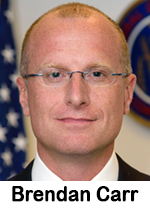 license renewals come up. The law is clear. Broadcasters must operate in the public interest, and they will lose their licenses if they do not. And frankly, changing course is in their own business interests since trust in legacy media has now fallen to an all time low of just 9% and are ratings disasters. The American people have subsidized broadcasters to the tune of billions of dollars by providing free access to the nation’s airwaves. It is very important to bring trust back into media, which has earned itself the label of fake news. When a political candidate is able to win a landslide election victory after in the face of hoaxes and distortions, there is something very wrong. It means the public has lost faith and confidence in the media. And we can’t allow that to happen. Time for change!” Carr included a Truth Social post from President Donald Trump in which he complains about papers such as The New York Times and The Wall Street Journal reporting on a strike against the U.S. base in Saudi Arabia that hit five refueling tanker planes. Trump said the reporting was intentionally wrong.
  Let’s start with what NOT to do, The 7 Deadly Sins Of Small Business Advertising:
 year, generative AI adoption among American consumers.” Some of the key findings include that online audio consumption has hit an all-time high: 1) 81% of Americans age 12+ (233 million) listened to online audio in the last month, and 76% (219 million) listened in the last week; 2) Americans age 55+ are driving the most recent increases. Monthly online audio listening among this group jumped from 52% in 2024 to 70% in 2026, a gain of nearly 20 percentage points in just two years; 3) 80% of Americans age 12+ (230 million) have ever listened to or watched a podcast, an all-time high; and 4) 58% of Americans age 12+ (167 million) have consumed a podcast in the last month, also an all-time high.
  during an informal conversation with his longtime friend, music industry publicist Anne Leighton on her YouTube program, “The Anne Leighton Inclusion Interview.” Harrison talks about the evolution of radio and its influence on popular culture through more than a half century of
  broadcasting adventures including his present-day role as a member of the classic rock band, Gunhill Road. Harrison states, “Anne is such a unique player in this business – a longtime proponent of music discovery – she has such a respect for the artists and their fans. Her podcast is SO refreshingly grassroots. It was a remarkable, fun experience talking with her about all that cool stuff.” Fans of music and radio history should not miss this.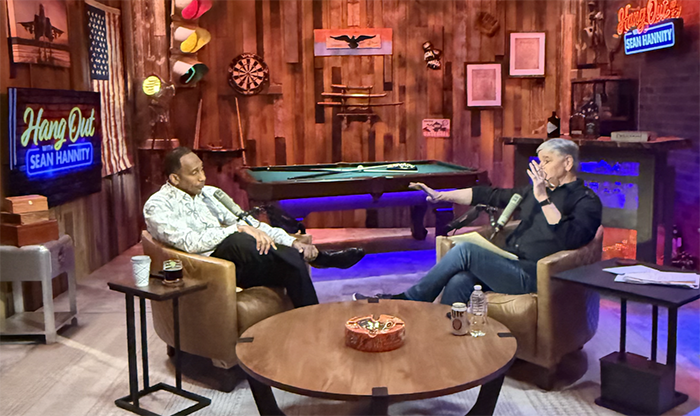
 Small businesses often underestimate their greatest competitive edge. It’s not price. It’s not selection.
 Networks has a sterling reputation in our industry with a tremendous product line and management team. I cannot wait to get started and superserve our clients.” Additional moves include Laura Peyer being promoted to SVP of advertising sales; Anthony Severino being upped to VP of sales planning; Michael Weiss rising to VP of advertising sales; and Laura Schaefer named as director of advertising sales & manager of sales planning. Compass president of advertising sales & marketing Paul Gregery states, “It is truly my very good fortune to work with such a talented, hardworking, and passionate group of people. We are thrilled to welcome Stephanie to our wonderful company and equally thrilled to honor her colleagues with their promotions.”
 Unless you live in Hawaii and Arizona (except the Navajo Nation) or American Samoa, Guam, the Northern Mariana Islands, Puerto Rico and the U.S. Virgin Islands, your clocks will change when we “Spring Forward” on Sunday 3/8.
 Talk radio has a long incredibly successful run of shows about sex.
 Leader of Minnesota. We will be greeted as liberators. Death to fraud investigations!” Via social media, O’Donnell posted: “I want to take a moment to offer my sincerest apologies for a post I made about Minnesota’s Governor that, quite frankly, I am deeply ashamed of. It was irresponsible and completely inappropriate and I have since taken it down. It served only to deepen divisions at a time when unity and basic human decency are most needed. My primary responsibility as a broadcaster, a father, and a person is to always comport myself professionally, appropriately, and compassionately, and I failed to do that. Again, I am truly, deeply, unequivocally sorry.”
  field with global technology platforms.” He underscored broadcasters’ unique and essential role in public safety, civic engagement and strengthening local democracy. Additionally, broadcasters heard from key policymakers shaping broadcast policy, including Sen. Ed Markey (D-MA), who spoke about the enduring value of broadcast radio and his leadership on the bipartisan effort to pass the AM Radio for Every Vehicle Act… and U.S. Rep. Richard Hudson (R-NC), chairman of the House Energy and Commerce Subcommittee on Communications and Technology, who spoke about the need for broadcast ownership rules to reflect today’s landscape and the importance of keeping AM radio in cars.
 Your prospect – or, worse, an existing advertiser with cold feet – says “We tried radio. It didn’t work.” Often, the copy is the culprit, because it’s inside-out.
 Station owner John Catsimatidis says, “Big name personalities define WABC Radio. Sean is a powerful addition to our Sunday lineup and another example of WABC’s unmatched ability to attract major talent and deliver must-hear talk. The show is going to be fast, fearless, and honest, with smart conversation, sharp opinion, and honest discussion about the stories driving the country.” Spicer comments, “WABC Radio doesn’t whisper, it leads! It is one of the most iconic and influential radio stations in the U.S. WABC Radio listeners expect truth, energy, and authenticity, and that’s exactly what I’m going to give them. I couldn’t be more excited to join the incredible 77WABC lineup.”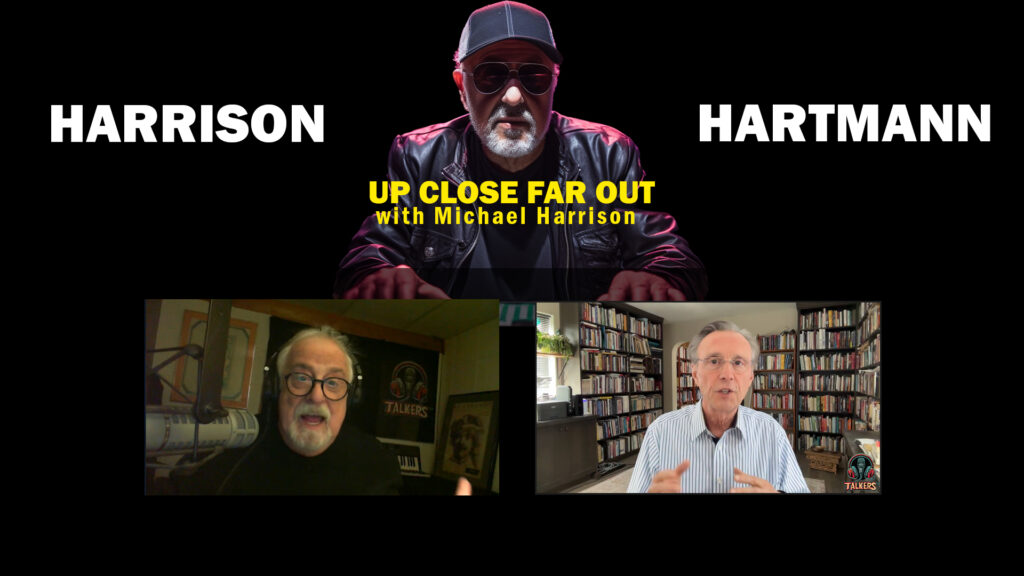
 strength of the video podcast and podcast clips, while “The Joe Rogan Experience” is #2 with consumption split almost evenly between audio and a combination of video podcast and podcast clips. Perhaps not surprisingly, NPR’s “NPR News Now” (#4) consumption came primarily from audio with about 20% coming from podcast clips. Candace Owens’ “Candace” leapt 71 places to finish the January period at #10. Her program’s consumption was primarily a split between video podcast and podcast clips.