Industry Views

When I Say “Technology,” You Think “Silicon Valley?”

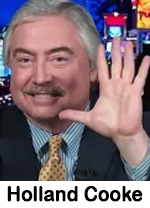
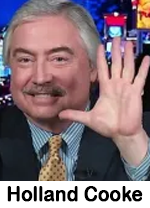
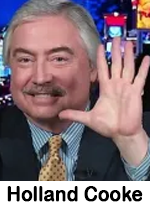
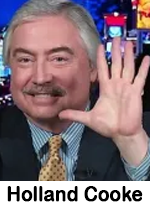
By Holland Cooke
Consultant

imInventors from around the world are in Las Vegas this week for CES2024.

AirForestry is a Swedish company using 5G to develop a harvester drone that hugs the top of a tree, prunes-off branches on the way down, saws-off the trunk, and carries it to the nearest road. Electronic glasses from Canada’s e-Sight help the visually impaired conquer conditions like macular degeneration and diabetic retinopathy. Even legally blind people can achieve up to 20/20 enhanced vision.

From Poland, Vasco Electronics introduces its Translator E1 earpiece that translates 49 languages in real-time. And from Hong Kong, the Oclean X Pro Digital Sonic Electric Toothbrush uses a tiny built-in 6-axis gyroscope that tells you – on an interactive touch screen – how well you brushed, and which areas need more attention. And you know that technology is changing everything when the CEO of the world’s biggest beauty company, L’Oreal, is here from France to deliver a keynote.

“The winners are…”

Among this year’s Consumer Technology Association Innovation Awards: a “4D Food Printing System for Future Food.” The Care-pet bed for dogs and cats monitors their breathing, heart rate, and rest, via Bluetooth you can share with your vet. And with the 2024 election looming, there’s a blockchain-based voting system.

Bosch is addressing a sad news story we keep seeing on all these big-screen TVs: ItsGun Detection System” uses Artificial Intelligence to merge video and audio to defend-against school shootings. Designed to reduce reaction time and quickly mobilize emergency response plans, this system helps secure approach and entry points, by detecting guns and sound signatures of gunshots, even estimating gunshot direction to help make learning environments safer.”

In addition to daily TALKERS columns this week, I’m offering daily 60-second radio reports. Help yourself to today’s here: http://getonthenet.com/CES2024-Tuesday.mp3. It can air until Friday. And I’ll be posting updates you can download at HollandCooke.com.

Holland Cooke (HollandCooke.com) is a consultant working at the intersection of broadcasting and the Internet. He is the author of “Close Like Crazy: Local Direct Leads, Pitches & Specs That Earned the Benjamins” and “Confidential: Negotiation Checklist for Weekend Talk Radio.” Follow HC on Twitter @HollandCooke

Industry Views

Pending Business: Calendar Secrets

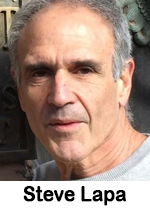
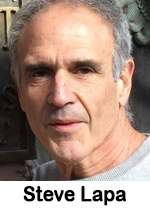
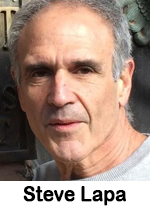
By Steve Lapa
Lapcom Communications Corp
President

imThis column should really be called, “How I got transferred from Buffalo to Tampa.” The storyline will help explain the title and offer you a proven technique that should help you sell and earn more.

Before Zoom, Teams and other video conference platforms that drive today’s daily to-dos, sales teams worked hard to fill the day with “in-person” sales calls. Back then, most managers forgot, or did not account for how weather impacted the number, geography and quality of those money making in-person sales calls, until blizzards, hurricanes and mother nature took her toll on productivity. Those of you who work or have worked in northern markets like Buffalo know all too well what 8 to 12 inches of snow can do to a daily plan. The same holds true for southern markets that experience hurricanes that have devastated communities going back to the hurricanes that nearly destroyed Miami and New Orleans. Now it seems wildfires are becoming a more regular threat in western markets. Having experienced most of the worst, like it or not, weather is an unpredictable yet critical variable in your sales plan.

One of the most destructive blizzards in history hit Buffalo during my first year as a young general manager. Retail contract cancellations, stranded employees, and off-the-air due to frozen antennas were draining revenues. It was December and the calendar was winning. After the ice melted and the snowplows cleared the way, we packaged everything we could before year-end to try and salvage the pacing that was leading to a bonus. The calendar won, annual bonus gone, but the learning curve kicked in.

B.G. (before Google) any research had to be accomplished old school: calls, friends, articles, and experts. We determined the average number of weather impact days, just like the guys in the theme park business. We developed a “real world” budget that accounted for weather days, the accompanying limited staffing, and a set aside percentage of revenues for cancellations.

When we began the year, the “real world” budget was put in place. By November of that year, the radio station had achieved its revenue goal for the full calendar year. The day before Thanksgiving I was summoned to the corporate office and was handed a file with a one-way ticket to Tampa, Florida. Goodbye blizzards, hello hurricanes. As a young manager, the sun was much more inviting than the snow, and I am still in Florida.

The discipline of a sales or planning calendar accompanied by “what if” is a must have.

Oh yes, make sure that pencil has an eraser.

Steve Lapa is the president of Lapcom Communications Corp. based in Palm Beach Gardens, FL. Lapcom is a media sales, marketing, and development consultancy. Contact Steve Lapa via email at: Steve@Lapcomventures.com.

Industry News

Audacy Promotes Rachel Williamson and Kevin Cassidy

Audacy announces two promotions within its senior leadership team. Rachel Williamson is promoted to president of local sales strategy and innovation, and Kevin Cassidy moves from his role overseeing theim company’s New Orleans market to take over for Williamson as SVP and market manager for the Chicago market. Williamson reports to Brian Benedik, chief imrevenue officer, and Cassidy reports to Brian Purdy, regional president. Benedik says, “We are thrilled to move Rachel into this new, important assignment. Her leadership experience and expertise with linear and digital audio and video will be a tremendous asset to growing our local business across Audacy.” Purdy comments, “With an impressive multiyear track record of success overseeing our New Orleans cluster, Kevin knows how to grow brands and deliver performance. We are confident that Chicago will continue to thrive under Kevin’s guidance.”

Industry Views

Monday Memo: Be Conspicuous When Competitors Are MIA

By Holland Cooke
Consultant

imIn a recent column, I outlined win-win radio/TV station alliance tactics. This week, as stations are finalizing 2024 budgets, a tip for advertising your station on TV.

Dominate in January. Why:

— It’s a buyer’s market then, and your message won’t compete with other stations’ promotion. Slaves to conventional wisdom, they will be running DURING the Spring book, because they forgot that radio listening is habit, which will be set long before diaries and PPM will collect data. Smart stations derive a benefit message and set that habit BEFORE the book.

im

— If you can trade for over-the-air stations, the price is right. In January they’re lean too. Can you trade – or afford to pay cash for – cable? Two reasons cable might be a better deal:

1. You can target your signal pattern better than over-the-air channels, whose coverage footprint is bigger than yours; and

2. You can buy channels with programming similar to yours. FOX News Radio affiliate? Buy FOX News Channel (and Newsmax).

Holland Cooke (HollandCooke.com) is a consultant working at the intersection of broadcasting and the Internet. He is the author of “Close Like Crazy: Local Direct Leads, Pitches & Specs That Earned the Benjamins” and “Confidential: Negotiation Checklist for Weekend Talk Radio.” Follow HC on Twitter @HollandCooke

Industry Views

Pending Business: We Are Growing

By Steve Lapa
Lapcom Communications Corp
President

imSurvey says nearly half of all Americans over 13, nearly 135 million, listen to spoken word formats. The growth curve boasts an eye opening 52% jump in time spent listening at home.

Please keep in mind we are listening in 2023 via different platforms including AM/FM radio, smartphones, computer streaming, smart speakers, and smart TV. Podcasting is a major driver of this growth curve, almost tripling its share of total audio consumption. And the closer is traditional AM/FM radio is still the morning drive, in-car winner controlling 62% of listening, despite the auto industry’s attempt to shun the king of spoken word distribution – AM radio.

Audio marketers, please pound the drum a little louder when you pitch this growth story. I still haven’t seen this new validation pushed aggressively on X (formerly Twitter) among the Taylor Swift running to hug Travis Kelsey posts, have you? Anything on Instagram? Facebook? YouTube? Rumble? Are we reframing a modern version of that 1600s philosophical “if a tree falls in the forest…?”

All sellers need to take a minute to digest, discuss and integrate the findings in the Edison/NPR Spoken Word Audio report and start the drumbeat of growth, impact, engagement and influence. How else will we pushback on the taken-for-granted, same old-same old, spoken word presentation. Freshen up that media kit! Growth is an important sales point to make in any presentation and audio sellers need to keep pointing to that growth curve as competitors lean in on their own story lines.

Let’s get down to how best to answer W.I.F.A (what’s in it for advertisers) on your next presentation.

1) New. One of the most powerful words in sales and marketing. New information can drive new decisions. Let the numbers help make your point as you shape your presentation.

2) The Trend is Your Friend. Every business owner, entrepreneur, investor and CEO always want to be informed and in front of growth trends. You now have the opportunity in front of you.

3) Keep it Simple. Keep your information simple and easy to understand. Many influential newsletters use the simple technique of a bold number followed by a fast fact story line. If it works for the big boys, the technique should work for you.

4) Managers. Bring good news to your sales and marketing teams. Sellers, bring good news to your advertisers. The survey says we are growing, and positive growth is an important part of any business.

Steve Lapa is the president of Lapcom Communications Corp. based in Palm Beach Gardens, FL. Lapcom is a media sales, marketing, and development consultancy. Contact Steve Lapa via email at: Steve@Lapcomventures.com.

Industry News

Audacy Unveils Town Hall Program Across All-News Stations

Audacy announces a new, quarterly town hall program called “Audacy Conversations” involving 12 of its all-news formatted stations. The company says, “The quarterly program will feature a robust week of coordinated local coverage in Audacy’s news markets, a live town hall broadcast rotationally hosted by one of its brands and a syndicated news special heard across participating news and news/talk brands and nationwide via the Audacy app.” Audacy VP of news Bill Smee comments, “‘Audacy Conversations’ aims to foster meaningful conversations on vital topics, exemplifying the core of Audacy’s news platform and radio’s unwavering commitment to informing and connecting the local communities we serve. We look forward to leveraging the power and influence of our combined news brands to cultivateim conversations and connections on topics relevant to our local communities throughout the year.” The next “Audacy Conversations” explores the state of downtown. It says, “Over three years later, America’s cities are still grappling with challenges and unexpected fallout caused by the COVID-19 pandemic. WBBM Newsradio (WBBM-AM/WCFS-FM) in Chicago will host a live town hall on November 9 to explore those impacts in-depth and what’s at stake for businesses and community members as cities look to revitalize their downtowns.” The program will air on WBBM Newsradio, KRLD NewsRadio 1080 (KRLD-AM) in Dallas, WWJ News Radio 950 (WWJ-AM) in Detroit, KNX News 97.1 FM (KNX-FM) in Los Angeles, WCBS 880 (WCBS-AM) in New York, KYW Newsradio (103.9 FM/1060 AM) in Philadelphia and KCBS All News (106.9 FM/740 AM) in San Francisco on November 16 at 7:00 pm local time. It will also air on WBEN-AM, Buffalo; WCCO-AM, Minneapolis; WWL-AM/FM, New Orleans; KDKA-AM, Pittsburgh; and KMOX-AM, St. Louis. Throughout the week of November 13 to 17, the all-news stations will air special content catered to the town hall topics, including interviews, news stories and feature reporting.

Features

How News/Talk Radio Should Adapt to Attract and Retain a Younger Audience

By Bill Bartholomew
Talk Host/Podcaster/Journalist/Musician

imFolks in the Gen Z and millennial demographics are heavily engaged in political issues, care about news in their communities and the world, and are constantly bombarded with content.  So why are they less likely to tune into and interact with news/talk radio than older demographics?

Talk radio has historically skewed older, and from an ad portfolio standpoint, is often targeted at the coveted 35-54 and 55+ demographics.  However, in a world where social media influencers and podcasters supply information to millions of young consumers, news/talk radio should be able to effectively compete for the ears of younger generations in a comparable, if not expanded way.

For all of the anecdotal and hard evidence that terrestrial radio may be trending in a downward direction, the format continues to have a vast reach.  It is convenient to engage with it in automobiles, and occasionally in home or office settings.  Yet, while younger generations listen to radio, news/talk is not the format that they turn to by and large.

Unlike many digital-first content producers, radio retains a unique quality: authority.  By virtue of editorial standards, FCC regulation and brand – things that social media and podcasts often lack – radio has the unique ability to deliver credible, vetted, nuanced and universally trustworthy content that can instantaneously adapt to meet the needs of the moment.  This is true in everything from natural disasters to rapidly evolving breaking news stories, providing a channel for immediate, reactionary insight and analysis.

There are several steps that news/talk radio should pursue in earnest to adapt to the current climate of content consumption, particularly by younger listeners, that can reach, and most importantly, retain broader, younger, more diverse and more engaged audiences.

  1. Introduce younger people into the conversation.

Too often, Gen Z and millennials are skewered by older hosts, mocked for their perceived naivety, unchecked optimism and me-first approach.  While some of these qualities can be accurate, that approach reflects a disconnect between older generations and the experience of younger ones.  Millennials and Gen Z have grown up in a post-9/11 world replete with “endless wars”, the fallout from the 2008 financial crisis, runaway student debt, a massive housing crisis, the mental health stressors of social media, Covid19’s impact on traditional youth experiences, climate change, a deeply bifurcated political environment and a constantly evolving quest for social justice.  Through these experiences, younger generations offer an important perspective that should be assigned the same news value as experts from older generations.

Are you discussing shifts towards electric vehicles?  Bring on someone from Gen Z to share their perspective on why steps towards carbon neutrality are important to them.  Engaging a conversation on the president’s approval rating?  Perhaps younger conservative and leftist voices should be included in the conversation.  Discussing immigration?  How about the perspective of a younger member of a Latino organization?

By giving younger generations and more diverse guests a platform, stations can simultaneously expand their content and reach.  With consistency, the station’s brand will become more familiar to younger potential listeners who may be inclined to tune in to hear someone who shares their identity and perspective on – here’s that word again – a platform of authority.  Let the guest do the work of establishing the credibility and importance of your station or talk show to younger audiences by posting about their appearance on social media, sharing audio clips and mentioning to their peers.  It will build familiarity and trust among those generations, who in turn, will begin to tune in on a more regular basis.

Stations should also consider bringing more younger, competent voices into on-air roles, whether that be through reporting, segments, fill-in hosts, weekend shows or full-time hosts.

  1. Meet the audience where they are: their phones. 

As mentioned above, the convenience of simply turning on AM/FM radio is highly appealing in automobiles, though as Apple Carplay continues to adapt and evolve, digital-first content is likely to become as simple and convenient in the near future.

Talk radio needs to make consuming their product on smartphones as simple and direct as turning on a traditional radio.  This means no clunky websites, no lengthy pre-roll spots, a reliable stream connection and a “one touch” means of turning on and off the station.  This should also mean expanding talk shows to high-quality video livestreams, following in the footsteps of the top YouTube and Twitch performers; developing unique content for TikTok and Instagram; building podcasts that are focused on specific issues, and; providing interaction via text and chat.

Radio has the ability to be the ultimate livestreamer, social media influencer and podcaster, but rarely harnesses these platforms in a meaningful way.

It is not enough to simply strive to “expand a digital presence”; stations and shows must engage in the hard work of building platform-specific content with their brands.

  1. Music, cultural references and themes for the modern age.

A few weeks ago on a seemingly benign episode of the TV show FOX NFL Sunday, panelists Jimmy Johnson and Terry Bradshaw offered an example of the type of cultural adaptation that sophisticated writers and producers provide their brands.  While describing a fight between two football players, Mr. Johnson said something to the effect of “when it comes to these two, what’s that Taylor Swift song?”, and then in synch with Mr. Bradshaw, “bad blood!”.  It is highly unlikely that these two 70+ men listen to Taylor Swift’s music with any regularity or would simultaneously pull the “Bad Blood” reference.  Yet, with excellent preparation that played into the greater cultural moment as well as the specific, current Taylor Swift/NFL overlap, in a six-second span, FOX NFL Sunday was able to give the illusion that their panelists are contemporary, hip and plugged into “what is going on”.  Is your station or show plugged into what’s going on?  Do you use contemporary music for bumps?  Are your images – including headshots and social content – modern, interesting and engaging or are they more akin to a miscellaneous real estate agent?  You are a performer in an entertainment business that, while certainly paying homage to the past and lineage of the industry, must be contemporary in aural and visual presentation.  This goes for everything from wardrobe on video and in photo to fonts on graphic design.

How often do you or your producer read Pitchfork to learn about new music that is breaking this week?  How often do you or your producer read Variety to understand major trends that are happening in the broader entertainment industry?  What live events are you broadcasting from, covering and building partnerships with?  You should strive to be cutting edge.

  1. We need a friend now more than ever.

This is something that goes for all audiences, but particularly for younger ones.  It’s OK, in fact, great to be yourself, present yourself from your generation and retain the authoritative stance that has built your brand.  Take a look at the success that sports talker Mike Francesa enjoyed by leaning into his persona – and in turn – developing legions of younger listeners that fell in love with his dad-like delivery and frequent meltdowns.

Few things are as uncomfortable to see as a 40+ person dressing or acting like a teenager.  Younger listeners want that senior, experienced, trusted friend to entertain them, inform them, and at times, tell them that everything is going to be OK.  You can help make sense of the world for younger audiences, something that is absolutely essential in the modern era.

Through attracting younger listeners by including them in the conversation, effectively delivering content on smartphones, presenting a cutting-edge entertainment product and continuing to serve as a trusted friend, news/talk radio can greatly expand its reach, relevance and revenue.

To that point, some younger listeners who discover a radio station or show via any of the above entry points will likely work backwards to the traditional AM/FM dial.  Like the resurgence of vinyl records, AM radio in particular has the opportunity to become a hip delivery format for discerning younger listeners.

The big question is: are radio companies, stations and hosts prepared to do the hard work of reimaging their product?


Bill Bartholomew is a talk radio and podcast host/producer, journalist and musician based in Providence, Rhode Island. Email him at: william.f.bartholomew@gmail.com. 
Industry News

Momo Vemireddy Named Regional Promotions Director for Audacy Austin

Audacy Austin names Manimala “Momo” Vemireddy as regional promotions director. In this role, she’ll work closely with market and brand leadership and regional promotions leads on the ideation,im implementation and management of all market events, promotions and contesting initiatives and support similar initiatives within the region that includes Dallas, Houston and New Orleans. Audacy Austin SVP and market manager Bob Mackay says, “Momo has all the mojo going as far as being connected promotionally in Austin. She loves live music and being out with the brands, which made her the perfect choice to work alongside our vice president of programming Nikki Nite, to help elevate the Audacy Austin marketing efforts.” Audacy operates news/talk KJCE-AM and three music brands in the Austin market.

Industry News

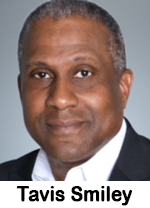
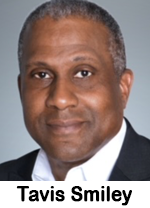
The Tavis Smiley Show Now Heard in Chicago and Philadelphia

The national syndication effort of the “Tavis Smiley” talk radio program accelerates with WVON, Chicago and WURD, Philadelphia adding the program to their lineups. Based at SmileyAudioMedia, Inc’s “unapologetically progressive” urban talk KBLA, Los Angeles, the program was recently put into syndication on Equity Media LLC’s talk WBOK, New Orleans. SmileyAudioMedia says WURD beganim airing the program yesterday (9/11) and WVON starts on October 2. Additional networks and stations picking up the “Tavis Smiley” show this month include the “We Believe Radio” network in Mississippi and its affiliates. Smiley says, “In little more than a month, our radio show is now heard in three of the nation’s top five markets. We’re excited that more of America now has access to our innovative and empowering programming with groundbreaking and exclusive conversations. Our rapid expansion is filling a void for African American and progressive listeners in a growing number of markets throughout the United States during this critical presidential election season.” WURD Radio CEO Sara M. Lomax comments, im“WURD Radio is excited to bring the ‘Tavis Smiley’ show to our listeners in Philadelphia and beyond. Tavis brings a powerful mix of dynamic interviews, pointed social and political commentary and a roster of A-list guests. He is a welcome addition to WURD’s lineup of progressive Black talk programming. Our listeners will be informed, entertained and enlightened by the insightful conversations with notable and influential figures Tavis hosts on his program every day.” WVON chief Melody Spann Cooper says, “We’re excited about Tavis’ return to Chicago radio. He has had a long association with WVON. His show is a perfect fit to offer a national perspective on Black America.” Tavis Smiley recently received the coveted “Freedom of Speech Award” at the Talkers 2023 conference held on June 2, 2023.

Industry News

TALKERS News Notes

The son of WIP, Philadelphia midday host Hugh Douglas, also named Hugh Douglas, died in a car crash in Georgia on Monday (9/4). The younger Douglas – a student at Morehouse College – was traveling with fellow student Christion Files Jr. who also perished in the crash. The elder Douglas is a former star defensive end for the Philadelphia Eagles. He co-hosts the WIP show with Joe Giglio.

iHeartMedia, Inc announces that chairman and CEO Bob Pittman and COO and CFO Rich Bressler will participate in a question and answer session during the BofA Securities 2023 Media, Communications and Entertainment Conference on Wednesday, September 13 at 9:40 am ET. A live webcast of the session will be available to the general public at the start of the session through a link on the Investors homepage of iHeartMedia’s website. A replay of the webcast will be available in the Events & Presentation section of iHeartMedia’s Investors homepage.

In celebration of yesterday’s (9/5) International Day of Charity, Warner Bros. Unscripted Television, in association with Telepictures, debuted the “Six Degrees with Kevin Bacon” podcast in collaboration with iHeartPodcasts and SixDegrees.Org. In his new show, Bacon will encourage listeners to make a difference in the world around them and will help them to lean in, learn and be inspired to act.

CNN Audio announces that CNN chief medical correspondent Dr. Sanjay Gupta is leading listeners into an exploration of the human body’s most intricate and fascinating organ – the brain – when the eighth season of his podcast “Chasing Life with Dr. Sanjay Gupta” returns, premiering Tuesday (9/12).

Industry Views

Politeness, Punctuality and Power

By Walter Sabo
Consultant, Sabo Media
A.K.A. Walter Sterling
Radio Host, Sterling On Sunday
Talk Media Network

imFor decades the power-lunch spot in Manhattan was the beautiful Four Seasons restaurant. Check it out: A history of the Four Seasons Restaurant in New York City – Four Seasons new ownership (townandcountrymag.com)

Top clients would host luncheons at the Four Seasons with Sabo Media. These included Walter Anderson, former chairman/CEO of PARADE magazine who was a regular customer. If the lunch was scheduled for 12:30 pm and I arrived at 12:15 pm, Anderson was already there. Next time, I would arrive at 12:05 pm for the 12:30 pm lunch; he was already there.

The restaurant manager/maître d’ explained that, “The most powerful person always arrives first.” Of course. The most powerful person could control where she sat, where she faced and what your view of the room would be. When Walter Anderson hosted future lunches, I arrived at about 11:15 am for the 12:30 pm meet!

If I had any early career success it was not because I knew anything, it was because of Eleanor Ranft, my assistant. Prior to working with me she had been Robert Sarnoff‘s assistant for 20 years. Robert, as-in-son of the General. (Eleanor knew how to address letters to ambassadors.) At the end of the workday, she would go over the telephone call sheet and make sure I had returned every call. Neither of us were going home unless I returned every call.

When addressing emails, the most powerful people return the emails instantly. Test it, send a note to the most powerful people you know, see what happens. Mel KarmazinBob PittmanHoward SternMichael HarrisonChris OlivieroKraig KitchinDavid YadgaroffBill WhiteLee HarrisDan MasonJarl MohnMarc Rowan instant answers. Instant response keeps a person in the deal-flow, the conversation and the action. Instant response makes them powerful.

Conversely, for weeks I tried to have lunch with a local market EVP, no answer. I didn’t want a job; I was trying to place a sales order for an agency friend! No answer. Finally, I asked the market program director why I never heard from his boss. Answer, “He doesn’t think you can do anything for him.” Obviously, the order went to a different company.

A common trait of every star I’ve had the privilege to know is that they are all extremely polite. For example, Randy ThomasCharlie VanDykeBruce Morrow, Howard Stern, the late Casey KasemElvis Duran are kindness and manners personified. They send thank you notes. Their interpersonal attitude is to share experience rather than to say look it up yourself. Many top executives built their entire career by sending thank you notes.

That being said, THANK YOU for being a client of Sabo Media. Thank you for clearing “Sterling On Sunday” on stations like KMOX, KMBZ-FM, WPHT, KDKA and Albany’s Talk 1300.  Have a pleasant Labor Day.

Walter Sterling-Sabo can be contacted at Walter@sabomedia.com or 646.678.1110 mobile. He’ll answer immediately. Sabo Media’s robust client list over the years has included PARADE magazine, Sirius Satellite Radio, The Wall Street Journal Radio Service, RKO, Salem, and CBS. Sabo was the first to monetize online video stars and influencers through his company HITVIEWS.

Industry News

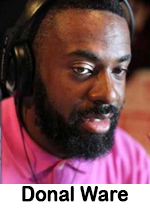
Donal Ware Celebrates 18 Years of “BOXTOROW”

Sports talk personality Donal Ware is celebrating the 18th anniversary of his nationally syndicated program “BOXTOROW” that first aired on August 20, 2005 on a radio station in its home base of Raleigh, and stations inim Baltimore, Birmingham, Greensboro, and Winston-Salem. The show airs on SiriusXM’s College Sports channel in addition to radio stations in 12 of the top 50 markets across the country including Washington, Tampa, Portland, Charlotte, Pittsburgh, Austin, Kansas City, Raleigh, Nashville, Norfolk, Jacksonville, and New Orleans. Guests on the program over the years have included Serena Williams, Kevin Durant, Simone Biles, Jerry Rice, Snoop Dogg, Michael B. Jordan, and more.

Industry Views

ENOUGH! The Selling Culture Has Failed Radio

By Walter Sabo
Consultant, Sabo Media
A.K.A. Walter Sterling
Radio Host, Sterling On Sunday
Talk Media Network

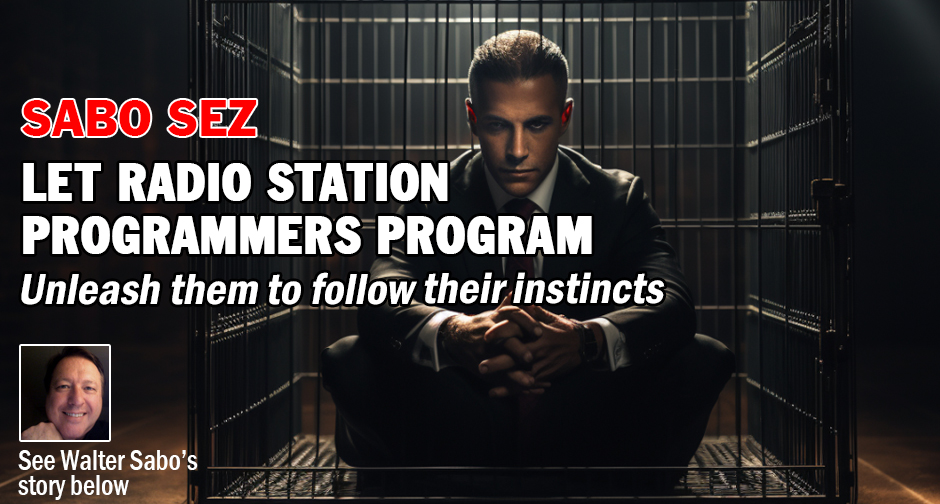
The creeping culture of sales-determines-all has brought the industry to this moment of despair. The selling culture has failed the medium. It is time to, once again, segregate the sales and programming departments. Take the budgets away from the program directors and inspire them to create exciting UNPREDICTABLE programming.

Earnings calls for most radio companies were held this week. Not pretty. Declarations of the demise of radio are constant, emotional, and desperate. Bleak conditions in the radio industry have occurred before. A review of past crises and how they were overcome is constructive, urgent, and essential.

For example, in 1952, network TV was launched and showed signs of success. NBCABC, and CBS moved their money from radio to TV. Longform radio shows were cancelled leaving stations across the country with a problem. At the time, most radio stations were small shops, usually family-owned, therefore the need to add hours of local programming was a financial challenge. The solution was presented by a programmer.

Todd Storz’ family owned stations in Omaha, Kansas City, Minneapolis, New Orleans, St Louis and Oklahoma City. He was young and obsessed with radio. His stations were losing money and the future, without network show blocks, was uncertain. Todd ate at a diner daily and noticed that even after it closed, the waitresses put their own money in the jukebox to hear the same songs they had heard all day. Hit after hit. Todd created a list of the top 40 songs, built a production sound and put it on his Omaha station. The station was #1 overnight. His top 40 format was aired on his owned stations with the same results.

Ruth Meyer was the program director of WMCA, New York where she established the GOOD GUYS dynasty. Before WMCA Ruth was the PD of Storz’s station in Kansas City. I asked her who did what at Storz and she said, “It was all Todd.” Todd was a programmer who never spent a day in sales. Storz’s programming idea changed and, yes, saved the industry.

When Todd died at 38 years of age his father – a businessman – took over the company. After Todd’s death, the stations died too. Why? Storz station manager Deane Johnson explained, “Todd’s death [and the control of the radio stations falling to Todd’s father] brought about a shift from a ‘programming company’ to a ‘money company.’”

Radio’s next challenge was FM. It is a popular myth that the shift from AM listening to FM was driven by the higher quality of the FM signal. FM’s signal had been available since 1948. No one listened.

You don’t go to iMAX to watch the huge, superior white screen. You go to watch a movie on the huge superior white screen. When the FCC mandated an end to AM/FM simulcasts, the general managers had no idea what to do and isn’t it time for golf?

Obsessed, very young radio fanboy programmers such as Michael Harrison and Allen Shaw joined with frustrated senior programmers like B. Mitchel ReedScott MuniMurray the K and Tom Donahue to EXPERIMENT with new programming techniques. They imagined and implemented progressive rock, free-form, album rock. THEN the crowds came to FM to hear exciting UNPREDICTABLE programming.

In 1966, Tom O’Neil, the founder/chairman of RKO General owned many money-losing, major market stations. The solution? Better sellers? Better sales training? A sales master course? No. The answer was Bill Drake. O’Neil hired Bill Drake and allowed him to create exciting UNPREDICABLE programming. Drake’s programming saved many RKO stations and was copied by hundreds of stations across the country. Drake’s programming saved them, too.

ALL of radio’s challenges today can be solved with programming invented by programmers free to program. Enough with “it’s not in the budget.” Enough with “it will bring in money.” Enough with “it’s good for sales.” Enough with talent having to generate half their salary in billing to be retained. Enough!

Unleash today’s program directors to follow their instincts, their facts and no more having to check with corporate. Why? Because checking with corporate hasn’t worked. Checking with corporate stops the flow of ideas, it freezes them in time. Radio is live, in the moment. When radio programming is frozen in time it MUST failGive up corporate engagement. Let programmers surprise you.

To quote a mentor, ABC Radio Network’s VP Dick McCauley (a sales guy), “A great salesperson is one who has a great product.” He said it a lot.

Walter Sabo was the youngest executive vice president in the history of NBC. He was the programming consultant to RKO General longer than Bill Drake. According to a Sirius corporate EVP, “Sirius exists because of what Walter Sabo did.”  He hosts a Talk Media Network radio show as Walter M. Sterling, “Sterling on Sunday.” Find out more here: www.waltersterlingshow.com  Contact him at walter@sabomedia.com or 646.678.1110

Industry Views

Monday Memo: Connie Welcomes the Stranger’s Call

By Holland Cooke
Consultant

imShe was the agent I enjoyed working with most over three decades I was an active real estate investor. We remain good friends, and her technique informs the work I do coaching agents – and attorneys and financial advisors and other professionals – who host ask-the-expert radio shows.

Understand the difference between “advertising” and “marketing”

Achievers like Connie do. Do you? Erroneously, these terms are often used interchangeably.

— Advertising asks shoppers to pick your product off a crowded shelf.

— Marketing makes them want to.

High-volume agents typically allocate 30% of net income to marketing, which produces leads. Lower-volume agents spend as much, or more, on advertising, which produces fewer leads. If you’re handing out mouse pads in the era of iPad, you’re late.

And you’re bucking human nature: Every…single…day, we are bombarded by SO many advertising pitches, that we lean-back-from commercials. But we lean-into storytelling, when the story hits home. One of the few things that can keep someone sitting in a parked car with the key on Accessories is the on-air attorney untangling the caller’s dilemma when it is REAL relatable.

im

“Can you recommend a plumber?”

The caller isn’t Connie’s client…yet. The stranger got her name from someone else Connie had helped. Reputation. Word-of-mouth. “Got a pen?” she asks. “I’m going to give you his cell number. And let me know if he can’t help you and I’ll recommend someone else who’s helped me lately.” THAT is marketing GOLD. Instant relationship.

As is the attorney whose weekend call-in show offers that “the lawyer is in, the meter is off.” One that I coached offers words-to-live-by: “If you want someone to think you can help them, help them.”

Expensive syndicated TV spots – or hokey locally produced ads – and look-alike billboards – all blur-together in a wall of noise. As do agents’ radio copy that “If I can’t sell your house, I’LL buy it!” and attorneys hedging that “If we don’t win, you don’t pay.”

Yes, advertise. But rather than squandering that airtime touting yourself, do a commercial disguised as an informative feature, snack-size how-to guidance. And offer more-about-that in a free download checklist or podcast or other asset on your memorable domain name website. Or “Ask me!” by calling your memorable phone number. Tell ‘em, rather than just trying to sell ‘em, and you’ll sell more of ‘em.

Big-spending competitors look alike. You can sound different.

It’s the oldest, most-proven concept in marketing: Free samples, of your expertise and comforting counsel. Your trusted voice can differentiate you. Done right, these shows have callers asking, “May I call you at the office on Monday?” even before the host invites them to. BUT…

In too many cases, that weekend show is a well-kept secret, under-promoted by the station, and only available in real-time…UNLESS…the radio show is just one element of a coordinated interactive multi-platform strategy, which harvests and addresses your prospects’ relatable concerns via podcast, social media, email, those commercials I describe above, and a voicemail tactic SO obvious that few spot the opportunity.

Lots of work? You bet! An organized production routine is key. Find a producer – a Robin to your Batman – who can keep that conveyor belt humming, and he or she is every bit the hero as Connie’s plumber.

Holland Cooke (HollandCooke.com) is a consultant working at the intersection of broadcasting and the Internet. He is the author of “Spot-On: Commercial Copy Points That Earned The Benjamins,” a FREE download; and “Multiply Your Podcast Subscribers, Without Buying Clicks,” available from Talkers books. Follow HC on Twitter @HollandCooke

Industry Views

Pending Business: Good News Bad News

By Steve Lapa
Lapcom Communications Corp
President

Survey says, the good news is, 49% of local direct advertisers use AM/FM radio.

The bad news is, the same survey says, 65% of that same group uses social media advertising. Advantage +16% for the digital team. The good news is, you are comfortable selling/managing digital and social media vehicles because like it or not your local advertiser is leaning in on the digital/social media advertising opportunity.

Survey says, more bad news, 54% of the local direct advertiser group is buying event-sponsorships. The good news is, you are comfortable selling/managing event-sponsorships because like it or not your local advertiser is leaning in on the event-sponsorship advertising opportunity.

Now for the closer, survey says, over 50% of these local advertisers are now budgeting only 2% of gross revenues on advertising. Thank you Borrell for the researched eye-opener and thank you pandemic for shrinking the local advertiser’s marketing dollar.

Show of hands, please, anyone reading this totally surprised? The online digital/social media advertising world has been on a double-digit growth tear as long as anyone can remember. The growth continues as AM/FM sellers stand by and watch the parade go by, sorry guys. The facts are… there are roughly 310 million smartphones in the U.S. According to the last Edison survey, 68% of U.S. homes own 1.5 radios. In round numbers 338 million radios at home. Wait, what? Are there almost as many smartphones as AM/FM radios at home? Anyone own more than one smartphone? I thought there was a radio in almost every room in your home. Not anymore, you say? Quite different from the average five radios per household when many reading this column earned their first double digit commission check as a member of that fun loving sales team. The times are a changin’ and I hope you are changing with the times. Let us start here:

Update your value proposition for “Why Radio?” Make it current and relevant to today’s media ecosystem.

Sharpen your new selling skills. Get ahead of the curve and leave your competitors in the dust.

Ask yourself, “What happened?” The numbers of smartphone users are growing. Maybe not as fast as in the past but growing. The number of AM/FM radios in the home is shrinking. Look to your leadership for some answers.

When the trend is NOT your friend, it’s time to think like the great leaders who built our country and media empires, “Lead, follow, or get out of the way.”

Steve Lapa is the president of Lapcom Communications Corp. based in Palm Beach Gardens, FL. Lapcom is a media sales, marketing, and development consultancy. Contact Steve Lapa via email at: Steve@Lapcomventures.com.

Industry News

Hosts Jim Leach and Frank McNeil Exit WMAY-FM, Springfield

Longtime Springfield, Illinois air personality Jim Leach is leaving Mid-West Family Broadcasting’s news/talk WMAY-AM/FM to take on role of public information officer for the Illinois Department of Public Health. The progressive talk host – who’s been hosting the 4:00 pm to 6:00 pm show – admits to the State Journal Register that he feels “incredibly fortunate to have been given the platform and latitude” to express his views on his talkim show on the station for nearly three decades. Leach tells the news outlet that his role as “a smart, local progressive-leaning talk show on a commercial radio station is going the way of the dinosaur. ‘It was certainly my hope to make sure that we had a wide array of viewpoints and to make sure a lot of people’s views and opinions were heard, and I feel like we accomplished that. I find that a really gratifying part of the job. We opened up that platform and that ability to be heard to a wider audience.’” Additionally, the new lineup does not include current early evening host Frank McNeil, who tells the State Journal Register that station management suggested another time for his program that “wasn’t acceptable at this point in time.” See more from the State Journal Register here.

Industry Views

Talk Radio’s $4 Billion Mistake

By Walter Sabo
Consultant, Sabo Media
A.K.A. Walter Sterling
Radio Host, Sterling on Sunday

imIn the early 1980s, talk radio made a $4 billion mistake. Prior to then, there were approximately 50 full-time talk stations in America. They were predominantly found in major markets and had been in the format since Marconi. The original talk stations had two key traits: They were dominant in ratings and much of their popularity was driven by women hosts.

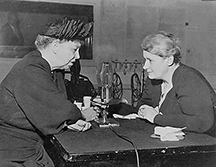
Mary Margaret McBride hosted an NBC, then ABC Network show based from WOR, New York at 12:00 noon.  From 1938-1957 she led midday radio listening. Nope, not a cooking show. She featured the most powerful, newsworthy guests and grilled them. She prepped for 23 hours a day and sweated every minute. Her popularity was so great that she required five secretaries just to answer her mail. Her 10th anniversary was held at Yankee Stadium. McBride’s 15th  anniversary filled Madison Square Garden, hosted by Eleanor Roosevelt. Correct, Mary Margaret and her listeners were honored by Mrs. Roosevelt.

How about the money? During many early years, it was believed that no advertiser would buy daytime radio.im Then Mary Margaret read live copy. OR Mary Margaret had her guests read live copy. Sales for advertisers exploded. (Source: It’s One O’ Clock, Time for Mary Margaret McBride by Susan Ware https://a.co/d/iHShiad)

The historic galaxy of remarkable women talk show hosts is vast: WOR (Always number one through most of its history) Martha DeaneDora McCannPatsy McCannMary HealyPegeen FitzgeraldArlene FrancisSherrye HenryJoan Hamburg — yes, all at the same time. Throughout the country the stars include: Sally Jessy Raphael (20+ years on major market radio), Dr. Ruth WestheimerDr. Tony GrantAnnie AielloMimi BenzellDorothy KilgallenJohnnie Putman and the most powerful broadcaster in Ireland, Marian Finucane. (Worth the listen: https://www.rte.ie/radio/radio1/clips/21683976/)

The audience for the content featured by those hosts is thriving and watching daytime TV. Before 1982, daytime TV was the happy land of soap operas and game shows. Then, as content delivered by women hosts left radio, it was embraced by TV. Sally! Dr. Ruth! Oprah! Ellen! The View, The Chat, The Chew, Jenny JonesJoan RiversQueen LatifahKelly ClarksonRicki Lake.

Today daytime talk TV is a $4 billion business. I take credit for… a lot. I am proudest of the fact that few execs have hired as many women managers and women hosts.

Question to talk radio chieftains, where are the women hosts?

Walter Sabo was the youngest Executive Vice President in the history of NBC. The youngest VP in the history of ABC. He was a consultant to RKO General longer than Bill Drake. Walter was the in-house consultant to Sirius for eight years. He has never written a resume. Contact him at walter@sabomedia.com. or mobile 646-678-1110. Hear Walter Sterling at www.waltersterlingshow.com.

Industry Views

Pending Business: Thank You, Mr. President

By Steve Lapa
Lapcom Communications Corp
President

imHow about a collective “thank you” to the 45th president of the United States for keeping your talk radio programming relevant, timely, unpredictable and most of all engaging?

The interpretation, speculation and compilation of facts, opinions and reporting will be non-stop until this chapter of the news cycle meets the next chapter. This is a never-ending saga that keeps the dial locked into your talk radio frequency. This is the content that keeps the electronic water cooler crowded with listeners who can’t get enough.

Whatever comes next in this chapter of history unfolding in front of our collective ears and eyes is the oxygen that keeps the talk radio world alive and well every day. By the way, the 45th president of the United States just may have pulled your typically soft talk radio summer sales out of the basement and pushed you into an express elevator to the penthouse.

Are you still feeling the drumbeat of the naysayers predicting how talk radio will age out? Or better yet, run its course? My prediction is talk radio is about enter a phase previously unmatched in American broadcast history. Seriously. When was the last time a former president of the United States owned the headlines and collective headspace of talk radio hosts and listeners worldwide for so many years? Never.

Let’s get ready to refresh our summer vacation schedules, seasonal sales packages, rates, and most of all strategies. Start here:

— Sell the concept. Leave the opinions and banter about indictments, politics and the law to your on-air talent. Focus instead on the unique value of the engaged audience.

— Experts are important. Chances are your talk radio hosts will be smart enough to break down the issues and lean on experts to help the audience understand the ramifications. Credibility and consistency can make your coverage stand apart. Show your advertiser what makes your coverage different and better.

— Talk radio goes where TV and video can’t – the car, the beach, even the backyard. Sell the need to know on the go.

— Unfolding the unpredictable. Your listeners want the “inside scoop” on what the next chapter of this saga looks like. Your on-air talent look for every opportunity to give their listeners a peek behind the opinion curtain. The seller’s job is to bring the value of that connection to life on every sales call.

Talk radio is alive and well every day. It’s up to you to show your advertisers the value of instant access to a trusted voice.

Steve Lapa is the president of Lapcom Communications Corp. based in Palm Beach Gardens, FL. Lapcom is a media sales, marketing, and development consultancy. Contact Steve Lapa via email at: Steve@Lapcomventures.com.

Industry News

Benztown Enhances News/Talk Imaging Library

Benztown announces that it is enhancing Benztown Branding’s Ambush News/Talk Audio Imaging Library and is featuring the signature voice of JJ Surma. Benztown says, “The new Ambush library takes the imaging of spoken-word radio stations to the next level in quality, freshness, and resonance. Surma was recently namedim one the most successful voices in audio branding as a 2023 honoree of the Benztown 50 list of the top 50 voiceover professionals in the U.S. and Canada.” The Ambush audio imaging library is written and produced by imaging director Scott Phillips. Benztown VP, sales & operations Masa Patterson says, “JJ is world class, serving as the imaging voice for some of the best NT stations in America. Combining him with a production talent like Scott Phillips and retooling the content plan has Ambush positioned as a top-of-class resource for audio producers in the spoken word space.” Surma adds, “Scotty Phillips is an amazing writer and producer, and Ambush is a legendary resource that I leaned into many times in my years as a creative services director. The opportunity to bring my energy to such a respected and trusted audio library and company has me all fired up!” Listen to an audio composite of Benztown’s Ambush News/Talk audio imaging library here.

Industry News

Jayne Miller to Host Weekend Show on WBAL-AM

Baltimore investigative reporter Jayne Miller – who retired from WBAL-TV, Baltimore last year after 40 years – is hosting a talk show on Hearst Television’s WBAL “NewsRadio 1090 AM and 101.5 FM.” The Saturday 11:00im am to 1:00 pm program will “take a closer look at a variety of issues important to the greater Baltimore area, leaning on her extensive network to bring Saturday listeners interviews with key newsmakers.” WBAL director of programming Jeff Wade states, “Jayne brings a wealth of knowledge to the microphone built on decades of experience asking the tough questions and holding those in power accountable. I’m excited for her to bring that same tenacity, inquisitive nature and passion to WBAL’s Saturday lineup.”

Industry News

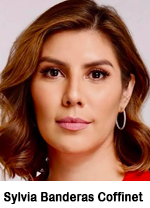
Latino Media Network Names Sylvia Banderas Coffinet CEO

As reported by Sara Fischer for Axios, Latino Media Network – the Hispanic media company partially funded by philanthropist and activist George Soros – names Sylvia Banderas Coffinet chief operating officer. Banderas Coffinet most recently served as general manager at Vox Media. Latino Media Network’s acquisitionim of the conservative Radio Mambí network of Spanish-language news/talk stations from TelevisaUnivision aggravated some conservatives who petitioned the FCC to deny the license transfers. The petition was rejected. The Radio Mambí format goes back to Amancio Víctor Suárez’s launch of programming created by anti-communist Cuban exiles in the mid-1980s. The group of 18 radio stations will gradually be turned over to Latino Media Network throughout this year. Company co-founder Jess Morales Rocketto is quoted saying, “We’re not the first business owners with our own political leanings,” while adding that they are focused on commercial success and not “imposing a political agenda.” Read the Axios piece here.

Features

Remembering Jerry Springer: Coming To America

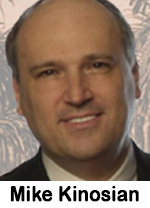
By Mike Kinosian
TALKERS magazine
Managing Editor
 

imNotwithstanding the enormity of accomplishments that enveloped this exceptionally bright and learned broadcaster, Jerry Springer remained as humble and refreshingly an “ah shucks” individual as you’ll ever hope to meet.

Perhaps that speaks to the somber circumstances that brought him to this country at the tender and innocent age of five.

It’s a borderline crime that many people think the Tulane University (B.A. in Political Science, 1965) and Northwestern University (1968 Law degree) graduate’s resume consisted solely of watching people verbally and physically beat each other to a pulp on a daily, hour-long television show that carried his name for 27 years, starting in September 1991.

It was only natural that this passionate political voice for domestic and international issues – who was a leader in lowering the voting age from 21 to 18 with the 1971 passage of the 26th Amendment – be offered a meaningful podium to air his views.

Many observers, though, were stunned when – in January 2005 – Springer actually agreed to weave a daily radio talk show into his already hectic media schedule.

Field of dreams leveled

 Barely two weeks into Springer’s local run on Clear Channel Cincinnati flagship WCKY “The Revolution Of Talk Radio” and Clear Channel Detroit’s WDTW “Detroit’s Progressive Talk,” Air America Radio picked up his 9:00 am – 12:00 noon “Springer On The Radio” talkfest.

The experience had the resplendent one positively beaming. “Frankly, I’m just as excited as I can be,” he remarked to me. “Politics and public issues have always been my main interest. [It’s exciting] to have an opportunity to be part of the American conversation at a time when there is clearly a need for other points of view. Talk radio is overwhelmingly dominated by conservative ideas. There’s a place for that, of course, but we also need to hear other ideas and other points of view. Perhaps this is an area in which I can make a contribution.”

 Off-and-on discussions had been held between Springer and Air America even before the network’s March 31, 2004 sign-on. The former Cincinnati Mayor, however, confided he wasn’t thoroughly convinced he was ready to commit to doing a daily radio show. “With this last presidential election, I realized that, until we level the playing field, there’s not going to be any hope of having a more progressive government,” Springer proclaimed. “That’s when it suddenly became a priority for me. I’ve only been on Air America [since January 2005], but the early ratings returns are great; apparently, we’re doing well.”

 Life progresses

 Every Top 10 market except No. 2 Los Angeles carried “Springer On The Radio” and the overall affiliate count quickly grew to 50 outlets. “Our biggest non-Air America Radio station is [Clear Channel Cleveland news/talk] WTAM,” he pointed out. “It’s a powerhouse station and the interesting thing there is that I lead into [Premiere Radio’s] Rush Limbaugh. In some markets, I lead into [Air America’s] Al Franken and in others, I lead into Rush – talk about whiplash.”

The majority of the American populace, of course, knew Springer as the 14-year host of a show that wasn’t much of a threat to win many Peabody awards.

Approximately 10 years prior to his national exposure, though, Springer was an anchor/political reporter/commentator on Cincinnati television, proudly notching seven Emmy Awards for his nightly commentaries. “I loved doing it and don’t have any bad memories, but I’m in a different point in my life now,” Cincinnati Magazine’s five-time “Best TV Anchor” recipient commented. “Life moves on and I’m onto something else and I’m not sure I’d go back to that anymore.”

Stone cold memories

 Some would ascribe Chicago (the base of his TV show); New York; or Cincinnati as Springer’s birthplace. All would be incorrect, as he was born in London (1944) when his family successfully escaped the holocaust.

They arrived in New York City on January 24, 1949 and it is without any hesitation the usually glib Springer blurted out that particular date in reverence and sincere reflection. “I didn’t specifically go through Ellis Island,” he recounted in a markedly softer tone. “My parents and I had a five-day journey on the Queen Mary and I remember being called up on the top deck as we passed the Statue of Liberty. It didn’t mean that much to me, since I was just five years old and freezing cold. I do, however, remember being scared because I saw all those people huddled together. The other memory I have is that it was stone silent – nobody said a word.”

Radio’s role in the Americanization process

 In later years, his mother (Margot) told her son that he’d asked her why everyone was looking at the Statue of Liberty and what it meant. “She said in the German that she spoke at the time that one day it will mean everything,” Springer recalled still touched with emotion. “She was right. My family went from holocaust to this ridiculously privileged life I live today in one generation, so I know the ‘American Dream’ can work.”

The first year he and his family were immigrants, Springer lived in Manhattan’s now defunct Whitehall Hotel near Amsterdam Avenue.

One year later, they moved to a rent-controlled apartment where his parents would live for the next 32 years. “Everyone was trying to learn English,” emphasized Springer, who established a scholarship fund at Chicago’s Kellman School that serves inner city youth. “I was five years old, but my parents wanted me to become Americanized so we listened to the radio all day. One of my earliest memories as a little boy was listening in the morning to [Roger] Gallagher & [Joe] O’Brien [on New York City’s WMCA]. Some of my Americanization – including the news, sports, idioms, music and sense of humor – came through the radio.”

Compelling dialogue

Utterly and genuinely masterful at what he’s accomplished on television, a low-key Springer modestly admitted he tried to learn a little something from certain radio personalities, without consciously copying anybody. “I just turn on the microphone and talk,” he stated with simplicity. “Obviously, Rush and [ABC Radio’s/Fox News Channel’s] Sean [Hannity] are at the top of the heap, simply because they’ve been doing it for so long. I think [Air America’s] Randi Rhodes is just wonderful on the radio and Al Franken has a great sense of timing.”

Many on the right claim liberal-leaning talkers have heretofore failed in our medium because they lack the entertainment factor. If anyone knew how to present an entertaining product, it was the extremely adept Springer who flatly asserted, “The conversation has to be interesting – period. That can be in the way it’s presented; the way we accept different callers; or with little skits we do. People must feel they have to listen, but it doesn’t have to be entertaining in the ‘ha-ha’ sense all the time. To be honest, not every conservative show is entertaining – some aren’t interesting at all.”

The question of whether a program holds one’s interest or has a significant entertainment quotient has virtually nothing to do with a particular political philosophy, but rather, as Springer explained whether the host is capable of putting on a good show. “The reality is conservatives took to radio 20 years ago when liberals weren’t looking at that as an economic marketplace. Someone figured out that conservatives could really find an audience in radio because you were dealing, at that time, with angry white men going to work. You get them when they’re driving to [their jobs]. Clearly, Rush filled a void and is a tremendous talent. When people saw that, the industry moved in that direction.”

The face of liberal America

Firmly contended that conservatives did well on radio in large part because the liberals won, Springer opined in my 2005 interview, “America is far more liberal today than it ever was. I know we elect conservatives from time to time, but clearly in terms of the critical issues of the day, no one could look at America and say we are not liberal. The protest came from the right.”

Conservatives though were in charge when he was growing up and dissent came from the left.

Protests were for such noble movements and causes as civil rights, anti-war, women’s rights and the environment. “Finally, the liberals won and their agenda is how most Americans live,” Springer contended. “Even if you call yourself a conservative, chances are your kids are listening to the same music, going to the same movies and wearing the same clothing. The culture is clearly more liberal than it ever was. We don’t even blink if we see interracial dating or interracial marriage; it’s not an issue. We’ve clearly moved to the left. Since America is now so liberal in terms of its everyday living, the protest is coming from the right.”

TV show proves to be a non-issue

That’s certainly more than a plausible reason to explain the widespread success enjoyed by conservative talk radio. “With the emergence of the Christian right or whatever in the last couple of years, liberals have been getting nervous again,” Springer speculated. “You’ll start to see the emergence of liberal radio. Radio will always be the response to what’s going on in society. People aren’t going to call up [talk shows] if they’re happy with everything; they’ll get on with their lives. People who call are the ones who are upset. That’s why you’ve seen this trend in radio from liberal to conservative back to liberal.”

 Listener feedback to the engaging Springer was gratifying and, on at least one level, elicited a curious result. “We don’t get any calls – and I mean none – that comment on the [television show],” he stressed. “I sometimes wonder if they even know that it’s me or if they think I’m a guy with a similar name. From whatever side of the spectrum they’re from, no one seems to make reference to the television show. It’s a non-entity in terms of radio.”

Not a perfect fit

Those unaware of Springer’s legitimate political acumen could be caught off-guard by hearing him as the front person of an issue-charged talk program, but the host adamantly maintained, “Within 18 seconds of hearing the show, you’re going to realize it’s different. You may not agree with what I’m saying, but it’s impossible to listen [and not have an opinion].”

Commanding center stage approximately eighteen years ago were such topics as the war in Iraq; terrorist bombings in London; potential Supreme Court nominees; Social Security; and other pertinent headlines of the day. “Even if you were inclined to call and razz me about the [TV] show, it’s pretty hard to do,” Springer contended. “You’d be embarrassed because everyone else is talking about a woman crying because her son is fighting in Iraq and the next caller [weakly] says, ‘Hey, Jerry, I love those transvestites.’ It wouldn’t fit and we’ve found, for some reason, it also doesn’t exist.”

Mindless to mind-provoking

 Juggling both the radio and high-profile syndicated television show proved to be admittedly rough for Springer – who was generally up at 5:30 am. “I spend two hours at the studio going over my notes from the night before and checking if there’ve been any changes from [overnight]. I do the [radio] show and then we immediately have a 30-minute meeting. We tentatively pick a couple of subjects to talk about [on the next broadcast] and people start doing research.”

If it happened to be a television-taping day, he rushed to that studio to do shows at 3:00 pm and 6:00 pm and was usually back home by 9:00 at night.

Over dinner, he checked to see if there were any changes or breaking news.

“Springer On The Radio” was produced in Cincinnati, but the television show required the host to be in Chicago. “I also have a place in Sarasota; I’ve been in New York; and just recently did the show from London,” he pointed out. “It’s a lot of work and it’s a real job. I devote a couple of hours a week to the television show and the thing I do is mindless, but the radio show is real work.”    

Tongue tied

On-air radio elements consisted of Springer and caller interaction, with no emphasis placed on guests. “I’m not rushing to do it, but won’t say I’ll never do it,” he put forth. “I’m more comfortable with [the way it’s been going] and don’t want this to be a show from the top down. The idea is to have this be a middle-America show, a [program] where regular folks can [share] what they’re thinking.”

That philosophy didn’t preclude certain luminaries from voluntarily calling in, as Springer discovered when he was discussing the energy issue.

A caller identified himself to the screener as “Robert Kennedy” and it, indeed was the Robert F. Kennedy Jr. “My two idols were my father [Richard, a street vendor who sold stuffed animals] and, in terms of my political conscious, [RFK Jr.’s] father,” Springer noted. “It was a great thrill to talk with [RFK Jr.] – I was like a groupie.”                                                                    

Link to a legend

In addition to momentous, that particular conversation had to be more than a bit surreal for Springer and not simply because it was with a famous activist/fellow Air America Radio talk host. (Kennedy co-hosted Air America’s two-hour weekend “Ring Of Fire” with Mike Papantonio).

When he graduated from college, Springer worked as a presidential campaign aide to Bobby Kennedy. After the New York Senator was assassinated inside Los Angeles’ Ambassador Hotel in June 1968, Springer joined a Cincinnati law firm and, in 1971, was elected to Cincinnati’s Council-at-Large.

With the largest plurality in the city’s history, the then 33-year-old Springer was elected Mayor of Cincinnati in 1977.

Potent platform

Air America Radio colleague Al Franken made no secret of his fervent desire to represent Minnesota in the U.S. Senate (which, of course, he did), while Springer’s name was frequently mentioned in a similar capacity in Ohio or in that State’s Governor’s office. “It’s possible that the day may come where I pursue either of those [offices],” acknowledged Springer, who made a Democratic gubernatorial bid in 1982. “I must say [though] I’m concentrating on this radio job right now. I didn’t realize it would take off this way when I started. This may turn out to be a bigger [stage] than any political office. I’m sure a year from now I’ll look at how my life is going, but I’m very excited about making this radio thing work.”

In addition to being the opening act for “Achy Breaky” Billy Ray Cyrus, Springer released his own country CD (“Dr. Talk”) and once dressed to play in the nets for the IHL’s Milwaukee Admirals.

With less and less free time, there wasn’t much for Springer to do other than be enticed by an occasional movie role (he played himself in at least a half-dozen films, including “Austin Powers: The Spy Who Shagged Me”) or television appearance. “I try to enjoy my weekends,” the steadfast New York Yankees fan confided. “It’s been depressing this year because they’ve played so abysmally [entering the 2005 All-Star break in third place, 2.5 games behind the defending 2004 World Series champion Boston Red Sox]. You reach a point in life where you make time for those things that have to do with the quality of life. I admit, however, it’s difficult because I’m carrying so many jobs at once.”  

Rolling along

 Being Mayor of Cincinnati – especially at such a young age – was easily one of Springer’s greatest political accomplishments, but the longtime local co-host on Jerry Lewis’ annual “Stars Across America” Labor Day Muscular Dystrophy Telethon and VP of the national MDA knew he arrived as a celebrity when he appeared on the May 14, 1998 cover of Rolling Stone Magazine. “That’s when it suddenly hit me that this is really big,” he laughed. “I’ve always kind of taken things with a grain of salt and have said that it’s only television, not life-changing.”

Email Mike Kinosian at Mike.Kinosian@gmail.com

Industry Views

Monday Memo: Hearing is Believing

By Holland Cooke
Consultant

Every time I visit a station, I meet with sales, and I leave ’em a thumb drive of “spots that have produced results elsewhere, for businesses just like yours,” magic words on local direct retail sales calls. Help yourself to these, all of which produced results.


— Key Lending Solutions and AdvantaClean demonstrate using unscripted client interview sound bites and minimal announce copy.

— Here’s a straight pitch I wrote for the guy who maintains my home water system.

— When local retailers are defending against lower-cost big box competitors, local radio can be their best friend. Here’s a spot I produced that differentiates based on service.

Here’s the spot that had been airing when the client said “It’s not working.” I asked the rep: “Can we make it a 60 instead of a 30?” And I asked her to send me the jingle, and to interview the client and his customers on her smartphone, and send me the raw audio. Here’s the spot that got the advertiser to renew.

— Here are two spots I wrote for a tech retailer, one pitching convenience/security systems, the other pitching Home Theater.

Sure…A-B-C, “Always Be Closing.” But successful reps I’ve seen in action make that first call the C-N-A, “Client Needs Assessment,” 20 questions, ideally capturing the interview audio for use as you hear above. And they begin the second call saying, “Based on what you told me…” and hit Play.

Some things are easier to demonstrate than describe. And if you’re on-air talent who also sells, you are advantaged.

Holland Cooke (HollandCooke.com) is a consultant working at the intersection of broadcasting and the Internet. He is the author “Spot-On: Commercial Copy Points That Earned The Benjamins,” a FREE download; and the E-book and FREE on-air radio features Inflation Hacks: Save Those Benjamins;” and “Multiply Your Podcast Subscribers, Without Buying Clicks,” available from Talkers books.  Follow HC on Twitter @HollandCooke

Industry News

Audacy Insights: Radio Killed the Video Star

An Audacy Insights piece by company chief marketing officer Paul Suchman lays out the case that audio – radio/streaming/podcasts – is a more effective marketing tool than video (the traditional darling of media planners). Suchman writes that this argument “is among the ultimate tussles between media planners and publishers. While some may lean more heavily toward video, we at Audacy respectfully disagree.” He makes a five-point argument in audio’s favor saying it wins in reach, time spent using, is more immersive, activates all senses, and drives recall. Read the complete story here.
Industry News

Monitor: Talk Radio Rises as a New Battleground for Latino Voters

A piece in the Christian Science Monitor by Simon Montlake takes a deep dive into the battle for Hispanic listeners – and voters – on the nation’s radio waves. The recent sale of Univision’s “Radio Mambi” (WAQI-AM, Miami) to George Soros-backed Latino Media Network and that company’s acquisition of other AM signals in Florida, New York, Illinois, Arizona, California, Texas, and Nevada created a stir and cries of “left-wing censorship” from conservatives. The rhetoric surrounding these deals is part and parcel of the politicized nature of media in the modern world. In the piece, Montlake observes, “The $60 million takeover – and the reactions it has sparked – is another flashpoint in the national battle to win over Latino voters, a fast-growing demographic that has long leaned Democratic but has lately grown more receptive to Republicans. So far, most Spanish-language radio in the U.S. has been focused on music and entertainment, not news or commentary. Which in the eyes of many makes it an untapped and lucrative means of political persuasion.” Read the Monitor story here.

Industry News

Boston Sports Talker Tony Massarotti Apologizes for Racist Joke

Tony Massarotti – one half of the afternoon drive duo of “Felger and Mazz” on Beasley Media Group’s WBZ-FM, Boston “98.5 The Sports Hub” – apologized yesterday (2/20) for the racially “insensitive” and “hurtful” comments he made on Friday’s program. The Boston Herald reports that Massarotti’s co-host Mike Felger was broadcasting remotely from a business center in a New Orleans hotel in which two Black people were sitting behind him. Referencing a previous trip to New Orleans in which Felger’s vehicle was stolen, Massarotti asked Felger if the two could hear him and when Felger replied that they couldn’t, he said, “OK, so I would be careful if I were you because the last time you were around a couple of guys like that, they stole your car.” During his apology on Monday, Massarotti said he gets why the joke, intended to be poking fun at Felger, was wrong. “It didn’t come off that way. It came off as something far broader and ignorant, and I’m regretful of that… I sincerely apologize, and I will do my best to make sure it never happens again.”Read the story in the Boston Herald.
Industry Views

Pending Business: Your Trial Balloon

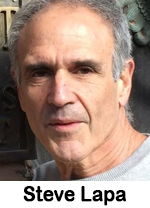
By Steve Lapa
Lapcom Communications Corp
President

Talk radio - Talkers MagazineIf you float a trial balloon, expect it to be shot down.
And to make the story driving the news headlines a better metaphor for our sales world, it should be noted that gathering information is always part of our mission. Sellers and managers should be floating trial sales balloons all the time.

Consider how many times we talk to our best advertisers to float an idea, a package, picking up a known talent or play-by-play rights to a popular team. But here is where the news story and our sales world take different forks in the road. Although the woods are full of downed sales balloons, it’s a good thing. Because in our sales world downed trial balloons mean we’re trying new things, communicating with our advertisers and not rocking along in the comfort zone. It also means some of these trial balloons make it to reality and become innovative ideas and viable sales opportunities.

I have certainly floated my share. There is a strategy behind floating a trial sales balloon to help you get the result you need. How do you improve the odds of a trial balloon becoming a sales reality? Here are some field tested tips:

— Determine your goals before you start. It’s so important to know what you’re looking for. Pricing input? Viability? Excitement? Sometimes sellers are so excited they misread the advertiser’s enthusiasm level. The reverse is also true. Sellers can be lukewarm as they focus on the transaction ahead instead of the first stage advertiser input.

— Ask permission. This is very important yet most sellers and managers never think about the advertiser reaction. What if they just don’t want to be surveyed? Always ask first.

— Confirm the confidence. Be sure everyone in your loop understands the trust you show in seeking their input.

— Keep your “ask” simple. You are asking for input. The simpler the ask, the cleaner the input.

— No commitments. Be clear the conversation you are having is early-stage preliminary to test the waters only. You are not even close to asking for a commitment, just sharing ideas and looking for input.

— Who wants to know? Be ready with the right answer.

Sellers and managers have been in the trial balloon business since the first ad was sold. Be sure to review your pre-flight check list before launching that next trial balloon.

Steve Lapa is the president of Lapcom Communications Corp. based in Palm Beach Gardens, FL. Lapcom is a media sales, marketing, and development consultancy. Contact Steve Lapa via email at: Steve@Lapcomventures.com

Industry News

Ice-T Launches Daily Game on iHeartPodcast

Actor and hip hop legend Ice-T is debuting a new podcast series with the help of Audity and iHeartPodcasts. “Ice-T’s Daily Game” will feature Ice-T sharing words of wisdom “gleaned from life experience and his journey from the gang-filled streets of Los Angeles to the Hollywood Walk of Fame.” The series will consist of profound three- to five-minute long messages each weekday. Ice-T says, “I’ve always enjoyed sharing motivational quotes and words of wisdom to help people better their lives. I started sharing quotes on social media and my fans loved it so much, they wanted me to share it daily. Through this new podcast with iHeartPodcasts, I hope these quotes will reach the right people and bring them up to speed on the daily game of life.”

Features

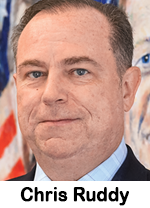
Ruddy Speaks Out as Talk Hosts Support Newsmax Versus DirecTV

TALKERS founder Michael Harrison and Newsmax CEO Christopher Ruddy engaged in a phone conversation this week (2/8) to discuss the bruhaha buzzing through conservative news/talk radio triggered by AT&T’s recent decision to remove the popular conservative channel from its subsidiary, DirecTV. Ruddy, grateful for the support Newsmax is receiving from radio hosts, wanted to speak out directly to the medium further explaining his position. (NOTE: Newsmax also has a footprint in the news/talk radio space as syndicator of the daily Rob Carson midday program.)
Late in January, DirecTV, owned by AT&T, “deplatformed” Newsmax from more than 13 million of its subscriber homes calling it a “business decision.”

News of this stunned Washington, fueling GOP lawmakers with more evidence that big tech media was closing down conservative voices for political reasons.

This was the second time in just the past year AT&T moved to cancel a conservative channel, taking OAN off their platforms last April.

However, Newsmax is not OAN. Newsmax has, in breathtaking time, became the fourth-highest-rated cable news channel reaching 25 million Americans, according to Nielsen.

Major Members of Congress, Senators and newsmakers dot its programming lineup every day. Even First Lady Jill Biden made a prime-time appearance to discuss her cancer initiative last October and former President Donald Trump is a regular participant.

According to Ruddy, “The fact that AT&T was willing to take down Newsmax as Republicans take control of the House was yet another sign for America’s right that ‘wokeness’ remains in high gear.”

In the conversation, Ruddy described AT&T’s decision a “blatant act of political censorship” and “effort to restrict conservative voices before the ’24 election.”

Here are some takeaways from Chris Ruddy:

Government Collusion

“We know from ‘The Twitter Files,’ that Twitter worked in collusion with federal agencies, including the FBI, to censor and restrict the speech of news media and public figures,” said Ruddy.

“Why,” he asked,” would we not think that was happening” in Newsmax’s case, too?

(During testimony on February 8 before the House Oversight Committee, former Twitter executives admitted they handled the Hunter Biden matter poorly, but also said they were not in contact with government officials over the matter.)

Ruddy points to a 2021 letter penned by Democratic Members of Congress Anna Eshoo and Jerry McNerney, addressed to AT&T’s CEO and other cable operators, clearly aimed at removing OAN, Newsmax and FOX News Channel for spreading “misinformation.”

Harrison asked, “With two channels down, is FOX News a target next?”

Ruddy said it clearly is a target, but that cable operators will have a more difficult time “deplatforming” it.

Cutting Costs

Harrison asked, “When AT&T dropped OAN and Newsmax, didn’t the company say both moves were the result of cost-cutting?”

Ruddy responded that this claim makes no sense when Newsmax is concerned, “because they keep over 100 channels that have far less ratings and are more costly than Newsmax.”

A business approach, he said, would be for DirecTV to remove low-rated channels that are costly, not highly rated channels like Newsmax that are inexpensive.

He said AT&T’s unusual decision to cut Newsmax demonstrates a “political motive.”

Newsmax has produced a chart that shows 22 liberal-leaning news and information channels. Almost all have lower ratings than Newsmax – and all get fees higher than Newsmax was seeking.

Ruddy says Newsmax sought a very modest license fee of $1 per year per subscriber. CNN gets $14 a year from DirecTV. And almost every channel in the top 100 gets a multiple of the $1.

Harrison asked, “So, what’s the problem for DirecTV, which I understand raked in $2.7 billion last year in profits?”

Ruddy’s response: “DirecTV says that Newsmax is simply ineligible for any license fee, not one penny let alone $1.”

And here he seems to make a strong case AT&T is targeting Newsmax – by denying it any fees when almost everyone else gets paid a fee, especially liberal channels.

“AT&T DirecTV is being super clever,” Ruddy explains. “They tell Newsmax they’ll carry us for free, but we can’t get a license fee.”  But, Ruddy adds, “Since all cable agreements, according to industry standards, get the lowest rate, that means all go to zero fees with no license fee for Newsmax.

“Since cable news channels need license fees to operate, DirecTV is effectively putting Newsmax out of business,” he said.

Political Bias

“This claim that Newsmax alone can never get a fee simply doesn’t seem to work for a lot of people in the public as well as Congress,” Ruddy said.

“Many conservative leaders in America – and some fair-minded independents and liberals – have already concluded that AT&T’s motives with Newsmax were largely driven by politics, and not by dollars and cents.”

New House Speaker Kevin McCarthy said he called AT&T and informed the company that “Newsmax should not be treated any differently based upon them being a conservative news outlet.” McCarthy has vowed there will be hearings on the removal of Newsmax.

Even Alan Dershowitz, one of America’s famed liberal lawyers, agrees with McCarthy that Newsmax’s removal doesn’t pass the smell test.

“Clearly, they used economic reasons as a cover for political reasons,” Dershowitz told Newsmax’s Greta Van Susteren last week.

Dershowitz said he believes AT&T’s decision “had elements of partisan and ideological and political bias directed at stations that don’t adhere to the views of the company.”

“Anybody who believes that this was purely an economic decision should buy a bridge in Brooklyn,” he said, adding that A&T DirecTV “ought to reconsider and put Newsmax back on.”

 Fighting Back

When AT&T DirecTV deplatformed OAN, a relatively hard-right channel with a relatively small viewership, it received little attention. But the executives at AT&T may have awoken a sleeping giant by taking on Newsmax.

Newsmax’s reach is extensive, reaching 40 million Americans through online, apps, emails, and a huge social media network – not to mention that its content is highly utilized by many radio talk show hosts and producers.

Ruddy told Harrison, “For a long time Newsmax’s audience has been aligned and interconnected with the talk radio audience. We are seeing tremendous synergies across all media platforms, including talk radio.” Ruddy has been speaking out on this subject on a number of radio talk shows across America.

On the same day of the Ruddy-Harrison conversation, the Newsmax CEO appeared on Mark Simone’s top-rated show on powerhouse WOR in New York to discuss the censorship of his channel. Demand is so great for interviews, Newsmax analysts Dick Morris and Hogan Gidley are also doing interviews about the AT&T matter.

The End Game

Ruddy said he’d like Newsmax to be back on DirecTV. Initially, DirecTV said they had no intention to bring Newsmax back on air. But last week, the company reversed course and said they are open to do so.

However, according to Ruddy, so far DirecTV has not changed their position that Newsmax is not entitled to any license fees.

“We are willing to negotiate but DirecTV has to do so in good faith,” Ruddy said, adding “We’re waiting.”

He said even if Newsmax stays off DirecTV, his media empire will continue to grow.

“This episode has made us stronger and AT&T is a good company for us to build against in the months and years ahead,” he said. “Everyone knows AT&T and they’re not well-liked for engaging in politics, targeting conservatives – and they even owned CNN during its worst years,” Ruddy said.

“We’ve been in business for 25 years and no matter what the controversy, Newsmax has always come out ahead. It will this time too,” he concluded.

After speaking with Ruddy, Harrison stated, “We all know that the First Amendment only applies to government censorship and privately-owned platforms have the right to present or not present whatever opinions conform to their positions. However, when government officials use the influence and prestige of their office to pressure high-level media executives to deplatform legitimate players for obvious political ends – as seems to be the case in this Newsmax scenario – that becomes a major concern for all Americans who value free speech. And even if the government wasn’t involved, massive power requires equal responsibility and even-handedness. Although in many cases the picture remains murky – for the most part, it is clear to me that conservatives claiming an ongoing imbalance of bias against them, by the informationally-vital venues of big tech, have an abundance of growing evidence to support their complaints. And that should be a major worry of all fair-minded Americans trying to negotiate the turbulent waters of this new digital era without losing at least the spirit of the First Amendment let alone the letter of the law.”

Industry News

Audacy Releases Company Social Impact Report

Audacy shares its latest “Social Impact Report, Supporting Sound Communities,” that reveals the company’s “powerful impact story across our 6 pillars of Audacy Serves.” The company says, “This year, we showcase ‘I’m Listening’ as our flagship social impact program dedicated to more mental health conversations. Brands – and media in particular – have an incredible opportunity to impact our lives and communities. Audacy leans into its strength – Audio – to build connection with our listeners. We support their well-being by sharing stories of mental health experiences. This authentic storytelling is the heart of our business and helps improve health outcomes too!  That’s why the content we create for ‘I’m Listening’ features artists, athletes, and celebrities sharing their mental health experiences – we are living our belief, ‘Talk Saves Lives… We’ve raised more than $1.5 million for the American Foundation for Suicide Prevention; hosted a national mental health conversation with experts and listeners – all living our belief, Talk Saves Lives.” You can see the complete report here.

Industry Views

Post CES: Technology Trends Update

By Holland Cooke
Consultant

What a week! And what it all means to radio? Simple. Matter-enough to earn a place on the landscape described by Consumer Technology Association VP/research Steve Koenig. This briefing alone was worth the trip. My short-version notes of six bases he tagged…

Enterprise Technology Innovation

  • “Stubborn inflation and rising interest rates.” Yet, historically…
  • Tough times yield innovation, much of which “comes from the smallest startups.” During The Great Recession of 2008-2009, we got 4G mobile broadband, smartphones, and tablets and notebook computers. As a 2023 recession looms: 5G, autonomous systems, connected intelligence, quantum computing.
  • 5G is “upgrading the global economy.”
  • While “supply chains remain vulnerable, chip inventories are rising.”

Metaverse/Web 3.0

  • “The Metaverse is closer than you think. It’s the next generation of the Internet.”
  • “Like the internet in the 1990s, a real trend,” not just the crude video game graphics we’ve seen in Meta’s rollout.
  • Think “shared experiences,” not hard to conceptualize after two years of Zoom.


Click here to read more of this story…