By Holland Cooke
Consultant
The number of Americans asking Google for help with debt is way up. Delinquencies are surging. Credit scores are falling at the fastest pace since the Great Recession. Consumer Confidence is down. Costco is mobbed.
Gasoline, eggs, now coffee. What DOESN’T cost more? Seen beef prices? Hamburger Helper sales are up double-digits year-over-year.
A client station asked me for something to pitch to a local credit union. So, I called-in “The Deal Detective.” He’s a frugal flatfoot, the lieutenant of low prices, a savings sleuth with a barcode scanner. He reads receipts like rap sheets. And he’s a stack of 60-second features.
Special for TALKERS readers: Help yourself, here.

They’re FREE, no paperwork, no national spot. Sell a local sponsorship and keep the money. It’s your license to bill. OK to use as stream cover-up spots, or on your station website (help yourself to the graphic). NOT “available wherever you get your podcasts.”
Holland Cooke (HollandCooke.com) is a consultant working the intersection of broadcasting and the Internet. Follow HC on Twitter @HollandCooke and connect on LinkedIn
Share this with your network




 U.S. unique monthly audience for October 2025. The New York Times’ “The Daily” is #2, NPR’s “Up First” is #3, followed by the “FOX News Hourly Update” at #4 and “Dateline NBC” at #5. DailyWire’s “The Ben Shapiro Show” rises two places to #8, while Salem Podcast Network’s “The Charlie Kirk Show” falls five places to #11. See the complete chart here.
 Atlanta Journal-Constitution. The Compass Media Networks host is heard in Atlanta on Cox Media Group’s WSB-AM/WSBB-FM. His first piece was printed in September in the wake of the slaying of Charlie Kirk. His latest column is titled, “Democrats are hungry, Republicans complacent and all politics is national,” and



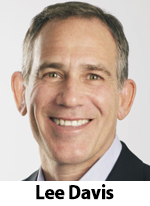 general manager has been in his current role since 2023. Audacy notes that Davis “rejoined Audacy in 2018 to lead the reboot of Audacy’s TWIN platform.” Audacy chief revenue officer Bob Philips says, “Lee has been a valued colleague and leader whose experience, dedication, and steady guidance have made a lasting impact on Audacy (as well as the companies he has worked at throughout his career). His contributions and presence will be greatly missed.”
 produce and distribute weekly coaches’ podcasts for multiple sports during their seasons. Audacy Wichita SVP and market manager Tommy Castor says, “We are proud to continue our 50-plus-year tradition as the radio home of Shocker sports. Our partnership with Wichita State Athletics reflects a deep commitment to the community and to connecting with generations of fans. We’re excited to provide Shocker fans the best play-by-play coverage and exclusive updates that bring every game to life.”





 stories of America’s heroes, the families who serve by their side, and how Fisher House plays a role in their journey. This program is appropriate for the entire Veterans Day Weekend and is a fitting, patriotic, and inspirational holiday programming alternative for all formats. Listeners will hear their emotional stories fighting for our freedoms, how they sustained their injuries, and the welcoming homes Fisher House provides for them and their loved ones while they endure their painful and painstaking recoveries. This year’s program features a special focus on the incredibly inspiring victories our wounded warriors enjoy on the field of competitive, adaptive sports. Fisher House supports the Wounded Warrior Games and the lnvictus Games as a vital part of the physical, emotional, and mental healing process for our wounded veterans. Listeners will hear about the riveting war stories detailing the injuries these heroes sustained, the ensuing medical and therapeutic healing process, right through the triumph on the field of international sports, as these brave veterans continue their dedication of service, representing America in international competition. For more information on this radio special, available cash and barter free, contact Larry O’Connor at 562.665.9537 or

 policy in the National Women’s Soccer League and teammates Sarah Gorden and Angelina Anderson who strenuously object to the idea. Travis – co-host of The Clay Travis and Buck Sexton Show – said on the program, “If you are a male soccer player, and you are listening to us right now, D1, I would encourage you to go to open tryouts. If you make a women’s soccer team or they ban you – just say you identify as a woman – if you make a women’s soccer team, I’ll pay you 100 grand. Challenge out there for every man listening to us right now. I want one of you out there to try to make a women’s pro soccer team – just tell them if they question you, ‘hey, I identify as a woman,’ and I want you to make the team because if they don’t have this rule in place, it would be transphobic for them to stop you from being able to become a male identifying as a woman professional athlete. And I think you might be able to score fifty goals in a year and maybe this is what needs to happen in the National Women’s Soccer League.”

 the same period a year ago. Urban One CEO and president Alfred C. Liggins, III says, “Third quarter results came in slightly softer than expected across the board. Core radio, excluding political, finished down 8.1%, and our Radio segment is currently pacing down 30.2% all-in and 6.4% ex-political for the fourth quarter of 2025. Revenues at our Reach Media and Digital segments were down 40.0% and 30.0% respectively, which was on the lower end of expectations. Cable TV advertising was down 5.4% and affiliate revenue was down 9.1% driven by continuing subscriber churn. In light of the soft overall market conditions, we are reducing our full year guidance from $60 million of Adjusted EBITDA to $56 to $58 million. Our focus remains on controlling costs, managing debt, leverage and liquidity. During the third quarter of 2025, we repurchased $4.5 million of our 2028 Notes at an average price of approximately 52.0% of par, reducing our outstanding debt balance to $487.8 million.”
 authentic voices in audio are powerfully shaping culture, building true community, and driving measurable brand performance.” Based on the results of the Audio Creator Impact Study, the webcast will highlight “how deep authenticity and strategic alignment fuel results across the entire customer journey.”
 Cincinnati – died on Sunday at age 80. As reported by John Kiesewetter at WVXU.org reports on Trumpy’s passing and his career. Trumpy pitched the idea of a sports talk program to then-general manager of WLW-AM, Cincinnati Charles Murdock but was shot down. He turned to WCKY-AM and launched the show there. Three years later, WLW-AM hired him away from WCKY. Trumpy, who played for the hometown Cincinnati Bengals from 1968-1977, would move on to national television with NBC Sports that culminated with him receiving the Pete Rozelle Award for lifetime achievement in NFL broadcasting.
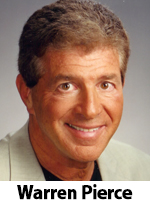 to have interviewed tens of thousands of celebrities, authors, politicians and other assorted newsmakers during his long radio career.” The Free Press obit states, “He filled a variety of roles for WJR across the decades beginning in the 1970s. Whether hosting a weekday morning or afternoon slot or doing a weekend shift, he drew fans with his friendly, upbeat style and filled ‘The Warren Pierce Show’ with a mix of interviews, movie reviews, news and weather. A dedicated fan of University of Michigan football, Pierce also did sideline reporting for WJR’s coverage of Wolverines games during the era of coach Bo Schembechler.” He left WJR in 1993 and joined WJBK-TV, Detroit as a morning news anchor.

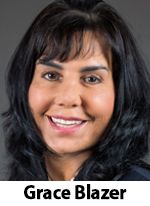 results has made her an invaluable leader within iHeartMedia.” Blazer has been with iHeartMedia since 2013 and serves as national news, talk, and sports brand coordinator, news director for the Florida News Network, program director for Miami’s WIOD and WINZ, and program director for Tampa’s WFLA. Market president Shari Gonzalez adds, “At iHeartMedia Miami, we’re fortunate to have exceptional programming leadership, and Grace is a shining example of that excellence. With 12 years of unwavering passion, strategic vision and meaningful impact across our organization, Grace has consistently raised the bar. We’re thrilled to recognize her achievements and promote her to lead our dynamic cluster into the future.” Blazer comments, “I’m incredibly proud and excited to step into my new role at iHeartMedia Miami. iHeartMedia is a powerhouse of creativity and bold ideas, and I’m energized by the opportunity to help shape our Miami brands growth and collaborate with some of the most extraordinary programmers in the industry.”



 Tragically, I was none of those things. Fortunately, I had the support of those who believed I had potential and encouraged me to follow a slightly different path — to morning radio. And while I never envisioned eventually moving from music to talk radio, the transition has been the most rewarding experience of my life, and these last three years at Civic Media have been the proudest of my 40-plus year career.” Prior to joining Civic Media, Matenaer served with Good Karma Brands’ news/talk WTMJ, Milwaukee in the newsroom and in morning drive. She adds, “As I head toward retirement, I want to take this moment to thank my current and former colleagues and mentors. You are among the most talented, dedicated and hilarious people on the planet. Thank you to Civic Media, for believing in a 60-something woman to host her own show and for your commitment to community-based radio and to a healthy democracy.”
 follows the 5:00 am hour of “Colorado’s Morning News” anchored by Gondek. Michael Brown, former FEMA Administrator and nationally syndicated host of “The Situation with Michael Brown,” moves from sister KHOW to the 9:00 am to 12:00 noon daypart. The rest of the day’s local programming is Mandy Connell from 12:00 noon to 3:00 pm; KOA Sports with Dave Logan and Ryan Edwards from 3:00 pm to 6:00 pm, followed by “Broncos Country Tonight with Benjamin Allbright and Nick Ferguson.”
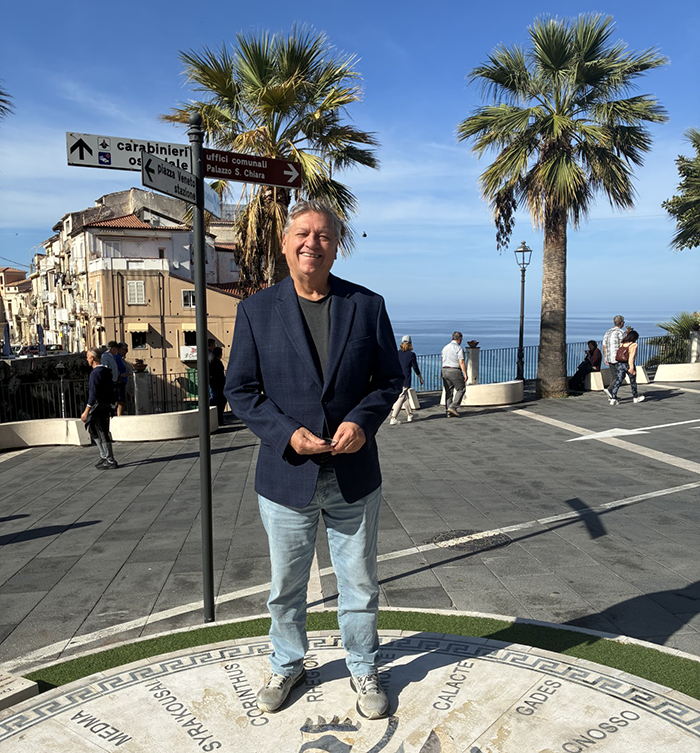






 brands. Gould comes to iHeartMedia from Metamorphosis.Digital where she was chief revenue officer and VP of sales. iHeartMedia division president Kris Foley says, “Annalee’s ability to build trust, navigate change, and deliver creative, cross-platform results makes her the ideal leader for our San Francisco sales team. Her experience and relationships in the Bay Area will be instrumental as we continue to grow our presence and impact.” She comments, “Audio is one of the most powerful and evolving channels in media today and nowhere embodies creativity and innovation quite like the Bay Area. I’m excited to join iHeartMedia and work with a team that understands how meaningful human-generated content continues to drive trusted marketing. In a time when that connection feels increasingly rare, radio and podcasts remain deeply human, built on authentic voices, real stories, and companionship.”


 enhancing the subscriber experience through new content, deeper personalization, and continued innovation across every stage of the customer journey, driving greater engagement and value for our listeners. At the same time, we’re scaling our digital advertising business and strengthening our leadership in podcasting. Across each of these areas, we’re leveraging our unique assets to deliver sustainable profitability and long-term value for our shareholders — a strategy that is already delivering as we raise our full year guidance.” During the quarter the satcaster expanded and developed its roster of high-profile voices. It extended its agreement with Andy Cohen and celebrated the 10th anniversary of his flagship channel, Radio Andy. Stephen A. Smith also debuted on the platform, launching new political and sports programs and renewed its agreement with Megyn Kelly, expanding the partnership to include the upcoming Megyn Kelly Channel.
 Civic Media’s news/talk network, managing schedules, talent, quality control, and compliance with broadcast regulations. Key responsibilities include selecting programs, coaching on-air personalities and shows, developing promotional strategies, and ensuring the station’s sound and content align with its brand and audience needs. They blend creativity and business acumen, using audience research and ratings data to shape programming and achieve business goals.”
 them achieve their business objectives through effective radio and digital advertising. The ideal candidate will possess excellent communication skills, have an enthusiastic and outgoing personality, along with a drive to succeed. Most importantly – we are looking for hard-working salespeople who want to have FUN at work, make money, and help local businesses grow.
 morning drive (6:00 am to 9:00 am). Sister KHOW talk host Michael Brown will take over the 9:00 am to 12:00 noon slot on KOA. Kaminsky says in a social media post, “This will be the first time in decades (or maybe ever, I really don’t know) that KOA has a talk show in ‘morning drive.’ We’ll keep bringing you plenty of news but now we’re doing it in a show that also talks about the news (and lots of other things…the show won’t be very different from my current show.) Psyched to be embarking on this project with @JeanaGondek who I always have so much fun bantering with. The show will be fun, informative, and entertaining…at least that’s the goal!” Kaminsky says the “Colorado’s Morning News” program featuring Gondek will air from 5:00 am to 6:00 am.
 says he’ll “oversee all aspects of sports talk content across the network, including daily technical operations, social media strategy, and brand management. He will build a talented team of hosts and producers responsible for compelling on-air programming – featuring original content, interviews, benchmarks, and fan interaction.” Williams says, “There’s never been a more exciting time to be in audio – the industry is thriving, innovative, and constantly evolving. This is a unique opportunity to build on the incredible foundation created by our partners at Audacy and BetMGM and combine it with the reach, heritage, and credibility of Westwood One Sports. I’m honored to help shape the next chapter, delivering smart, entertaining, and authentic sports content for listeners everywhere.”
 8.4% excluding the $6.9 million impact from discontinuing the DailyWire and Dan Bongino relationships. The company posted a net loss of $20.4 million compared to net loss of $10.3 million in Q3 2024. Cumulus breaks down its revenue by segment and reports that its broadcast radio spot revenue declined 13.1% to $83.7 million, while network revenue fell 26.5% to $31.2 million. Total broadcast revenue was
 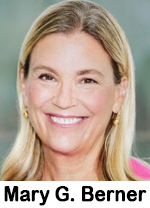 $114.9 million, a decrease of 17.2% from the same period in 2024. Cumulus president and CEO Mary G. Berner says, “In an advertising environment that remained challenging for legacy media, we continued to outperform. We once again gained market share in total broadcast spot as well as in digital, where our market share gains reflected the strong growth of our digital marketing services business, which was up 34% in the quarter. Additionally, we remained highly focused on re-engineering the business, reducing annualized fixed costs by $7 million and accelerating our efforts to implement a wide array of AI initiatives to drive efficiencies and enhance growth. These results underscore our disciplined focus on optimizing performance in areas that we can control. While we do not expect the current headwinds to abate in the near-term, we remain confident in our ability to position the company for long-term success through strong execution and by maximizing value from the company’s underlying assets.”