


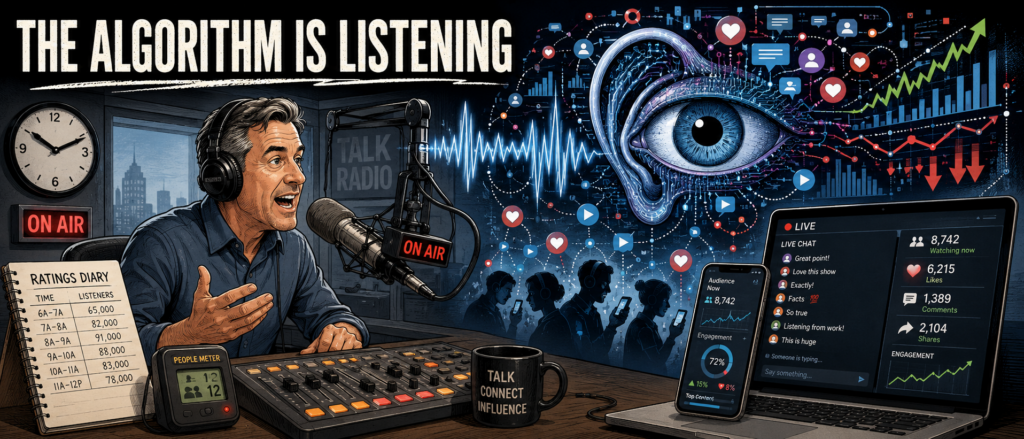
The Algorithm is Listening

By Matthew B. Harrison
TALKERS, VP/Associate Publisher
Harrison Legal Group, Senior Partner
Goodphone Communications, Executive Producer
Radio once measured the audience… now digital platforms use the audience to decide what happens next
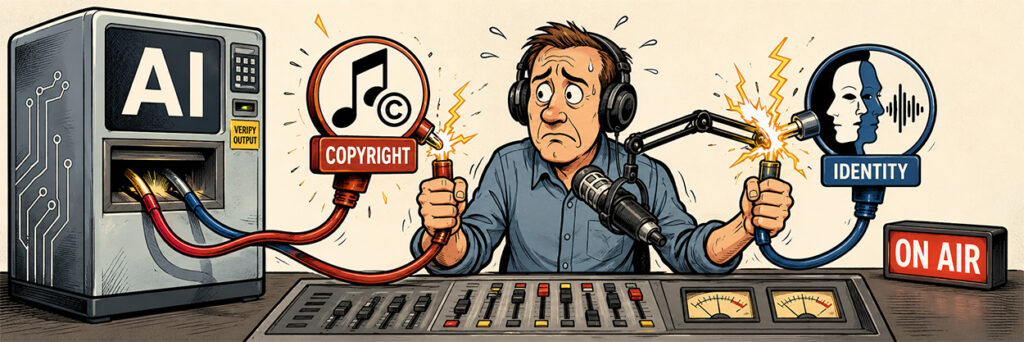
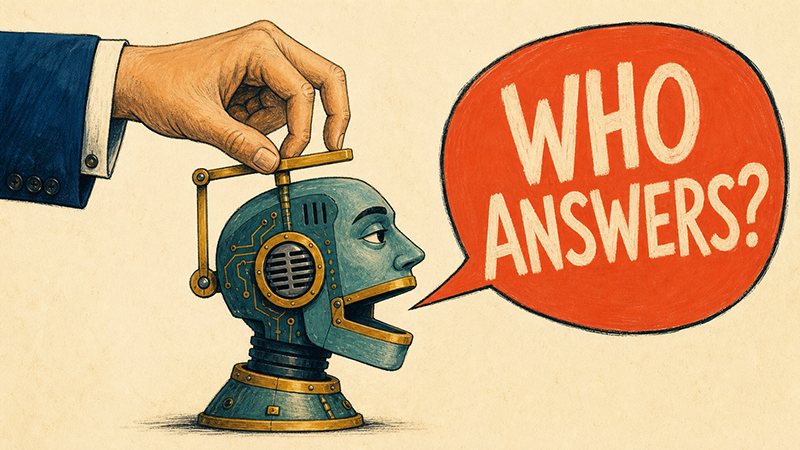
Radio programmers have always watched the audience. The difference for programmers today is that the audience can now watch back, respond instantly, influence the show, and determine whether the next person ever receives it.
That is the practical meaning of an algorithm for a broadcaster. It is not a mysterious robot hiding inside the black box of an enigmatic social platform. It is a set of instructions used to make decisions. On YouTube, Facebook, TikTok, Spotify, Twitch, and other services, those instructions help determine which content gets shown, to whom, in what order, and under what circumstances.
Radio has used simpler forms of algorithmic thinking for decades. A music clock is a set of instructions. So is a rule prohibiting two songs by the same artist within a specified period. Or two female vocals in a row. A programmer who schedules news at the top of the hour, traffic twice an hour, and the strongest feature before a commercial break has created a decision system.
Digital algorithms do something more consequential. They do not merely organize the program. They organize the audience around each individual piece of content.
From diaries to PPM
The traditional radio diary asked selected listeners to record what they heard and when they heard it. Nielsen defines the diary as a measurement method in which respondents manually record their listening habits. Those reported habits are then used to estimate listening across a larger market.
The system was necessarily crude. A diary could show that someone reported listening to a station during morning drive. It could not reliably establish whether that person loved the program, ignored it, hated it, stayed because the station was playing in a waiting room, or simply remembered the call letters incorrectly.
Still, the diary produced an enormously valuable number. Ratings influenced advertising rates, station formats, talent contracts, syndication opportunities, and management decisions. The ratings service measured the audience, but the station still controlled the programming and the transmitter.
The Portable People Meter changed the speed and granularity of that feedback. PPM panelists carry a small device that detects inaudible identification codes embedded in participating broadcasts. Instead of relying entirely on a listener’s memory and written entry, the meter passively detects exposure to encoded audio.
That gave programmers something closer to immediate feedback. They could study audience movement within smaller portions of a show, identify apparent tune-out points, compare features, evaluate commercial breaks, and make changes much more quickly.
PPM therefore became the bridge between traditional ratings and algorithmic distribution. The diary remembered the audience. PPM observed the audience more closely. Both still produced information for human beings to interpret.
A programmer could see a decline and decide to shorten a segment. The meter did not shorten it. A consultant could conclude that a feature hurt retention. The PPM system did not prevent tomorrow’s listeners from hearing it.
The algorithm closes that gap.
 In an impressive example of the productive synergy that can be generated by the teaming of campus and professional spoken word radio organizations,





 By Matthew B. Harrison
 The Radio Hall of Fame announced today (8/3) the selection of nine 2026 Legends inductees. These individuals were selected by the Radio Hall of Fame’s 2026 Nominating Committee, which meets annually to recognize deceased individuals who made significant contributions to the radio industry. The Radio Hall of Fame is housed within the Museum of Broadcast Communications in Chicago.

 chance to weigh in on whether to allow the FCC to continue its campaign of censorship and control, the American public showed up in a big way, and the vast majority who spoke up delivered the same message. They believe in the value of their local news, they trust those who cover their communities, and they understand that the FCC has no business deciding who is a journalist and what counts as real news. A small number of partisan voices tried to hijack this process into a referendum on a network they dislike, but the public refuses to let local stations become collateral damage in the FCC’s political games. The FCC has no authority to police the ideological balance of the airwaves, and no matter what this Commission does next, the record now makes clear that this was never a genuine search for the public interest.”
 WTLP-FM (licensed to Braddock Heights) at 103.9 FM and the company will begin leasing it to the Christian music network K-LOVE on August 1. WTOP general manager Joel Oxley states, “Our main signal on 103.5 FM covers most of Frederick County’s population and with the advent of streaming, listeners can get us anywhere in the country.” WTOP began simulcasting on 103.9 FM in 2007.
 “It’s all media,” declared accomplished media executive Jack Griffin when confronted with brand new definitions of content and content distribution. Jack, for years, was president of Meredith Publishing, Time Inc., and The Tribune Company. I met Jack when he was publisher of PARADE magazine. Jack is pragmatic, won’t waste your time and spots BS faster than most humans. We were listening to discussions of the impact of online media versus traditional media, and his line was running out. Jack declared “It’s all media” and the meeting blessedly ended. The phrase haunts me and it is being proven true every second of every day.
 WRMR-FM, Jacksonville, NC; WMFD-AM, Wilmington, NC; WKXB-FM, Boiling Spring Lakes, NC; WILT-FM, Wrightsville Beach, NC; WAZO-FM, Southport, NC; and translators W269DF-FX and W240AS-FX, Wilmington, NC. KALIL & CO., INC. was the exclusive broker for this transaction.
 powerful, collective voice when negotiating with automakers, tech platforms and policymakers.” NAB president and CEO Curtis LeGeyt adds, “Radio has long been an essential part of the driving experience, delivering trusted local news, lifesaving emergency information and the entertainment Americans rely on every day. As dashboards evolve, ensuring broadcast radio remains accessible is more important than ever. By joining Radio Ready, NAB looks forward to partnering with broadcasters from across the world to ensure that free, trusted radio remains easy for drivers to find and use in the vehicles of today and tomorrow.”

 end. My job was eliminated Friday, July 24th. I was at Salem for a total of 25 years. I worked there twice. I assisted getting KNTH on the air as the latest news/talk station in November 2004. I met many great people while there. I had great staff, too. One of the biggest thrills was producing the Sam Malone Show, as well as his sidekick. JP Pritchard along with Tom Fontaine contributed to the success of the show. Good times; great oldies.”

 Zimmer will take over the operation of sports talk KOSP-FM “102.1 The Won” and three music brands. It currently owns news/talk KWTO/K227KO and sports talk KBFL-AM/K245CA. Zimmer Communications president John Zimmer says,
 “This is an exciting opportunity to bring together two organizations that share the same values and a deep commitment to local broadcasting. By combining our strengths, we’ll be able to offer advertisers even more effective marketing solutions while continuing to provide the trusted local content our audiences rely on.” Mid-West Family president Mike Paterson adds, “As the local radio and media landscape continues to evolve, bringing these two organizations together creates even greater opportunities for our advertising partners, our communities and especially our employees.”
 Friday, August 28. The program was created in honor of the late founder of Media Staffing Network, Laurie Kahn. MIW says Speak Up! is a year-long mentorship program designed to empower women working in small- and medium-market radio stations across all departments. One outstanding candidate will receive personalized mentorship from MIW’s network of female broadcast leaders, complemented by executive coaching from Media Staffing Network’s certified coaches.



 reorganization and is waiting for the Federal Communications Commission to finish its regulatory approval process. The court is extending the company’s filing deadline for its Chapter 11 plan to October 30.

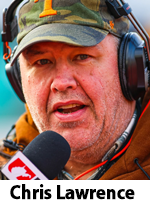 announced during a special dinner at the Edison Ballroom in New York City on October 20. While four spoken-word-formatted stations made the cut in the Legendary Station category, it’s interesting to note that just one talk host – news/talk or sports talk – is a finalist across five personality categories. That distinction goes to WCHS-AM, Charleston, West Virginia morning drive host Chris Lawrence who is a finalist in the Small Market Personality of the Year category. Go get, ‘em Chris! We’re pulling for you.

 Saturdays from 12:00 noon to 3:00 pm. Industry affiliate relations pro Jim Watkins is serving WestStar Entertainment as director of affiliate sales, he says, “We’re excited to partner with KEIB and expand Kim’s presence in one of the nation’s most important radio markets. Technology touches every part of daily life, and Kim’s rare ability to make complex issues entertaining and easy to understand makes her program an outstanding addition to The Patriot’s weekend lineup.