Industry Views

Pending Business: March Madness 2024

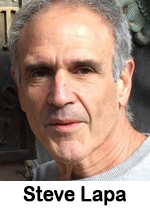
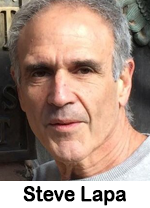
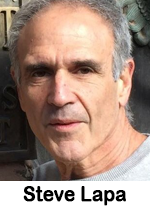
By Steve Lapa
Lapcom Communications Corp
President
imMarch is half over, and the Madness is just beginning.

Can you feel the social media buzz driven by countless fans from Florida and Iowa to California as they brag and bet on their favorite teams?

Advertising as well is turning to the tournament page and taking on the creative themes that talk to the millions of fans who will fill out their brackets in that new age science called “bracketology.” Is that basketball novice who wins the office money pool because the uniforms were just the right color still in the office? Or how about grandma beating a few experts because she really has been a fan for over 60 years. So much for the science behind “bracketology.”

Industry surveys project nearly $2.7 billion will be wagered during the madness as the dollars flow through legal venues. This year may be a little different as fans in Iowa play a unique role. More on that in a minute.

As a forever basketball fan and a fan of great marketing, March Madness is that rare intersection of high-level athletic performance and competitive marketing execution on full display in front of millions almost every day for nearly three weeks. The summer Olympics in Paris scheduled July 26-Aug 11, come close, but the Olympic games play to a multi-sport, truly global crowd. There is nothing else in sports and marketing that compares to the prolonged, daily intensity surrounding the “Big Dance,” and this year it is truly a dance.

Fans are in for a next-level experience as Iowa’s amazing Caitlin Clark puts Women’s March Madness on the sports map once and for all. This year the social media buzz will have the additional fandom buying every ticket in sight as Caitlin’s Iowa Hawkeyes sold out arenas around the country.

So, what does all this March Madness fandemonium have to do with what we do in sales and marketing? Let’s learn.

1. Watch for marketers who get the emotional connection with the core fans. This year’s messaging will broaden beyond what you might expect.

2. As demographics change, so will creative.

3. Although your marketing may be limited to your local market, watch for new categories that can open your thinking.

Nearly 133 years have passed since Dr. James Naismith grabbed a round ball and a basket. His goal was to invent a simple game to keep a group of young men active during those maddening winter months in Springfield, Massachusetts. If he could only have imagined what he started.

Steve Lapa is the president of Lapcom Communications Corp. based in Palm Beach Gardens, FL. Lapcom is a media sales, marketing, and development consultancy. Contact Steve Lapa via email at: Steve@Lapcomventures.com.

Industry Views

Monday Memo: Happy Campers

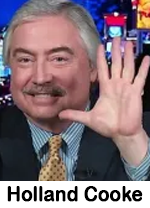
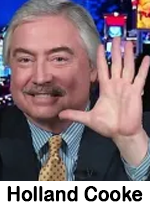
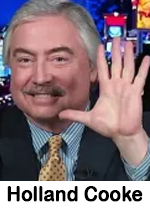
By Holland Cooke
Consultant

imFor spring break this year, Sarah and I revisited Sandals Grand Bahamian all-inclusive resort – NOT inexpensive, and very worth it. We’ve already booked same-week-next-year, and we think we know who we’ll see there then.

Among those we chatted-up at beach bars: Owner of a HVAC service company in Iowa. He arrived ahead of 16 employees and +ones (“the other 16 are back there keepin’ the heat on”). And get this: He said that, for some, it’s their first airplane travel. And they land in Nassau! WHAT a boss, eh?

Another business owner we met topped that! He had 38 inbound next-day for a long weekend. To qualify for this “President’s Club” trip, those 19 reps each moved a million dollars of product in 2023.

“Selling what?” I had to ask. “All the things nobody wants to buy,” he quipped. His company is a rack jobber, meaning it has agreements with retailers to display and sell products in-store. Think cigarette lighters and the thousand other items you see at gas stations and convenience stores.

Going right into Larry King mode, I learned about those sunglasses that retail for $19.99. He buys ‘em by the palette, 19 cents each. And when I asked “What was HOT 2 years ago, and is NOT now?” he replied, without hesitation, “masks.”

im

He caught my ear when he used the term “liberal” to describe regions. In talk radio, that’s a political term. But the way he used it reflects Michael Jordan’s famous quote, “Republicans buy sneakers, too.” Like politics, commerce is regionalized. And he spoke in practical terms: Phone charger cords sold in the northeast are predominantly iPhone-compatible. “Get much-south-of New York,” and Android cords are also popular.

Contributing to inflation: Pre-pandemic, the usual business model was that the store paid for what his company delivered. Some clients were big-enough to change that, to paying-upon-SALE, which bar codes enable. So, the rack jobber is on-the-hook for “inventory shrinkage” (shoplifting and pilferage). But the arm-wrestling continues… and at least 19 reps are winning.

Heading for our final-night-there dinner, we passed the President’s Club reception in a VIP area; and next morning at breakfast, we spotted President’s Club T-shirts. We expect to see more next year, because, as the boss winked, “those wives want to come back!” and they tend to be supportive of long workdays in the meantime. 😉

Holland Cooke (HollandCooke.com) is a consultant working at the intersection of broadcasting and the Internet. He is the author of  The Local Radio Advantage: Your 4-Week Tune-In Tune-Up,” and “Close Like Crazy: Local Direct Leads, Pitches & Specs That Earned the Benjamins” and “Confidential: Negotiation Checklist for Weekend Talk Radio.” Follow HC on Twitter @HollandCooke and connect on LinkedIn.

Industry Views

Michael Harrison: The Future of Radio Depends Upon What Those of Us in the Business Make It

im

TALKERS founder Michael Harrison appeared as a guest Wednesday on Frank Morano’s “The Other Side of Midnight” show (3/13) as part of his current “Scammers” interview tour promoting the new Gunhill Road “Damn Scammers (Get Off My Phone)” music video (www.scammersvideo.com). The conversation illuminated Harrison’s concerns about the rapid spread of scamming and fraud in the digital space but quickly expanded to a discussion about the pros and cons of AI and an existential look at the future of the radio platform itself.

Regarding the insidious growth of scams on the internet, Harrison said, “It is a major problem up there with terrorism, inflation, street crime, pandemics, uncontrolled immigration, and war… it’s corroding the quality of our lives, lowering the bar on integrity, and raising the level of disingenuousness that is becoming a ‘normal’ part of our culture.” Harrison attributes a major part of the problem to legislators being behind the curve on this, stating, “Historically, it takes time for legislation to catch up to changes in technology… now that technology is changing so rapidly it’s increasingly difficult for legislators to keep up with it. In many cases they don’t even have a clue as to how the internet operates.”

Regarding the issue of AI stealing jobs from broadcasters – particularly talent – going forward, Harrison was blunt: “Just like all technology, AI is a double-edged sword and can be dangerous.  But in the case of art, people have always accused new technologies in art as somehow being fake and ‘cheating’ but history has consistently shown that today’s technology is tomorrow’s art. Regarding the loss of jobs for radio talent, it all depends on what you bring to the table. If you are a basic announcer, meaning you read most of your content from a script or apply a very limited range of verbiage such as time, temperature, news and the simple intros and outros of songs – watch out, you will likely lose your job. But if you’re a talk show host, analyst, interviewer, or commentator – all you have to do is work a little harder… you have to be even more original. AI can only draw upon and synthesize what’s already out there. You’ll have to stay ahead of the AI learning curve. All AI can actually do is realistically recreate monologues and dialogue that are in the category of worn-out talking points. If that’s what you are currently doing on the air, you’ll be replaced by AI and no one will notice.”

Regarding the future of radio and its ongoing viability in the digital era, Harrison said that it depends on whether those of us in the industry actively create radio’s relevant future or abandon it out of fear or simple lack of ideas. Harrison warned, “The use of ‘audio’ as a description of this medium is short-sighted. Radio is an esthetic… complex and organic. All radio is audio but not all audio is radio. Putting up a sign on radio calling it audio would be like owning a restaurant and calling it ‘food’ or a specific brand car dealership and calling it ‘transportation.’” Listen to the interview here

Industry Views

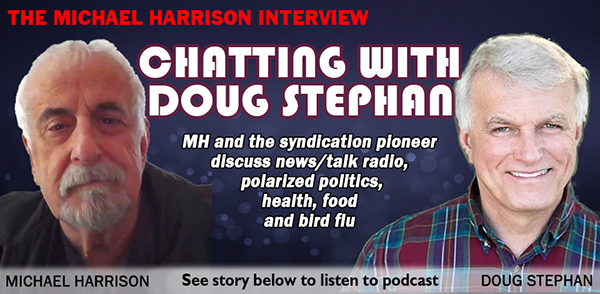
Steve Weisman is This Week’s Guest on Harrison Podcast

Noted attorney and respected talk media commentator Steve Weisman is this week’s guest on the award-winning PodcastOne series, “The Michael Harrison Interview.” A prolific author and lecturer who teaches White Collar Crime and Media Law at Bentley University in Boston, Weisman is one of the nation’s leading experts on scams, identity theft and cybersecurity.  His widely read blog, Scamicide, provides daily updated information about the latest scams, identity theft schemes and cybersecurity developments. He recently testified before the U.S. Senate Special Committee on Aging about the dangerous proliferation of scams being targeted to America’s senior population. Harrison – a longtime outspoken foe of digital-era corruption – states, “Our podcast this week is aimed at shedding light on the dark corners and back alleyways of our modern society in which scammers, fraudsters and cyber criminals are flourishing… they steal our identities, our money and our peace of mind. Our loss of privacy and security is a loss of freedom and our legislators on both sides of the aisle remain basically clueless. In an era in which talk show hosts are rightfully obsessed with street crime, terrorism and immigration run amok, it is surprising there is not more attention being paid to this insidious social cancer born of advanced technology and civic decay.” Listen to the podcast in its entirety here.

Industry Views

Monday Memo: MAKE MONEY on YouTube

By Holland Cooke
Consultant

imSell a local advertiser a promotion – a contest which awards a major prize from the advertiser’s inventory – to the winner who creates the best commercial for the advertiser.

Simplify the entry process by simply making “Send us your YouTube link” the means-of-entry. Then, you can embed finalists’ YouTube players on a-page-of-entries, (sponsored by the advertiser). And you can use the YouTube hit count to determine the winner. Sure, contestants will hype-the-clicks. The bigger the numbers, the better.

im

The Free Prize Inside: You don’t just expose advertiser and contest to YOUR cume. You’re showing it to YouTube’s cume! So, pack those keywords.

And/or: Invite listeners to do a commercial for the station!

Holland Cooke (HollandCooke.com) is a consultant working at the intersection of broadcasting and the Internet. He is the author of “Close Like Crazy: Local Direct Leads, Pitches & Specs That Earned the Benjamins” and “Confidential: Negotiation Checklist for Weekend Talk Radio.” Follow HC on Twitter @HollandCooke and connect on LinkedIn.

Industry Views

SABO SEZ: Here are Five Original Ideas Worth Stealing

By Walter Sabo
Consultant, Sabo Media Implementers
A.K.A. Walter Sterling
Radio Host, “Sterling On Sunday”
Talk Media Network

imOriginal ideas are golden and rare. Here are five ideas worth stealing because of their novelty, success and oh-wow factor!

THE SECRET OF A GREAT TALK STATION – Tom Bigby founding program director of WIP Philadelphia.  Tom turned up a large black knob to his left and it fed the phone screeners doing their work. He could monitor all calls coming in and how they were screened. He recorded all screener conversations and “I do air check sessions with the screeners.” declared Mr. Bigby.

ENTER AND YOU COULD WIN ALL THE CLOTHES – FOX FM Melbourne Australia. Every year FOX FM hosted the FOX FASHION SHOW at a mall. The event drove entries for a contest that awarded tickets to the show. Ok, normal.

Surprise: “And one listener will win all the clothes.” At the time, 2002, Brad March was the head of programming for owner, Austerio.

WE’LL BOOST SECURITY. When New Jersey 101.5 started, John and Ken hosted PM Drive – yes that John and Ken of KFI deserved fame. The hot topic was the station’s fantasy to eliminate tolls on the Jersey Turnpike. No one considered that eliminating tolls would mean firing unionized toll takers… in New Jersey.Somebody thought that was a bad idea and slashed the tires in the station’s parking lot. Lame owners would have shut down the topic. Bob McAllan, CEO of Press Broadcasting had no problems with the topic. His response:  Heavy investing in hurricane fencing and super-bright lights for the building’s exterior. Bob kept the staff fearless and that is why the station is a success to this minute.

SOMEBODY’S GOT TO BE IN THE BUILDING ALL NIGHT.  Thanks to the kindness of strangers, Sterling On Sunday and my guest host appearances for Westwood One have originated from great radio facilities throughout the northeast. Great empty facilities. After 10:00 pm clusters of stations housed in state of the art installations operate without one human body in the building. Not one, not a board op, or night editor, or anybody. It’s spooky and irresponsible. What if?? Dave LaBrozzi, Program Director of KDKA engaged a group of eager interns to work in the beautiful KDKA newsroom all night. Great training for the students and smart service to Pittsburgh.

WEBSITES ARE DIFFERENT. Radio 538 is the hot top 40 in the Netherlands. Dan Mason and I consulted them and learned that they recognized that a website is not a radio station. They built web content that had nothing to do with the radio station, except in spirit, but was very appealing to online consumers. Note that all of the stars on online video are native to the medium. Hollywood stars who tried to cross to digital, failed. Different medium. Build web-only content for traffic success.

Walter Sabo hosts “Sterling On Sunday” – a 10-year network success heard on stations such as KMOX, St Louis; WPHT, Philadelphia; KFBK, Sacramento; and KDKA, Pittsburgh. His company, Sabo Media has delivered audience growth for SiriusXM, Hearst, FOX Television and other media titans. He can be reached at walter@sabomedia.com www.waltersterlingshow.com

Industry Views

Pending Business: Baked-In?

By Steve Lapa
Lapcom Communications Corp
President

imIs that host read you are pitching “baked-in?”

No, I am not talking baked in the content, as in before the break with all the produced commercials. I am talking about “baked-in” the audio that will live on as long as that show is available.

Still confused? You should ask someone who has handled an actual audio podcast avail. Some advertisers and their ad agencies are shaping the future and “baked-in” is a fundamental element of the new-think that is pushing the needle on podcast CPM, while your team struggles to compete for low CPM based on old school models that are dropping like flies.

The good news is that host read is still the gold standard that moves the listener to action. The bad news is radio station sellers are hanging onto older strategies that have little room in a future filled with millions of audio podcasts that contain no music and feature comedy, news, talk, opinion, lifestyle, sports, politics, entertainment, financial, medical, legal, self-help, religion, even foreign language – as in nothing but the human voice and a little production.

Sound familiar? I call it the great sales equalizer: the host read.

So how can this magical host read have such a dramatic impact in this super-crowded environment, yet be so underappreciated on radio stations coast to coast? Let us look at the three legs of the sales stool that have never changed.

1. The seller. Most radio sellers are presenting the host read the same way they did since their first order. What is new, different, and exciting in the way you present your talent today?

2. The audience. Size matters, intimacy matters, performance matters. Can you demonstrate how your host-audience relationship fulfills those criteria and generates a response for your advertisers?

3. The inventory. Why do we still have the same number of host reads in every hour of a show? Anyone have the courage to vary the inventory or pricing throughout a show?

The podcast world is leading the way to a future filled with:

1. Baked-In host reads.
2. Pre-roll, mid-roll, and post-roll price differences.
3. Commercial inventory limits.
4. Impression delivery options that demonstrate clear accountability.

There is a bright future in audio sales that will look and feel different from what we take for granted today. Make sure you are on the right side of the wave and not stuck in the mud.

Steve Lapa is the president of Lapcom Communications Corp. based in Palm Beach Gardens, FL. Lapcom is a media sales, marketing, and development consultancy. Contact Steve Lapa via email at: Steve@Lapcomventures.com.

Industry Views

Monday Memo: The Local Radio Advantage, Part 3

By Holland Cooke
Consultant

imIt’s not your imagination. The world has gone daffy. The USA is all-but boots-on-the-ground in rough neighborhoods around the world. Weather is getting even wackier. The next gun nut could open fire, at any moment, anywhere. 2024 campaign? It’s a long way to November. And even in this rebounding economy, supermarket prices still hit-home… if you can get there.

Here in Southern New England that could take up to an hour longer, as tens of thousands are inconvenienced every day, and will be for months – possibly two years we’re told – after an abrupt bridge closure along Interstate 195. Your daily commute is torture if you live here; and an unpleasant surprise awaits when you head to Cape Cod this summer, or if you’re just passing through this intersection where I-195 joins Maine-to-Miami I-95, the main artery through the most densely populated parts of the USA.

The good news for listeners is that serious structural defects were spotted BEFORE a deadly bridge collapse like we’ve seen in Minnesota and Pennsylvania and elsewhere in recent years. The good news for local media is that information changes throughout the day, and day-to-day, as the Department of Transportation continuously modifies lane merges and detours to cope. If you’re driving, you can’t NOT listen.

im

Presume that listeners are wondering “What NEXT???” If your station is known-for-knowing, listeners will keep coming back for more. Last week and the week before here, we demonstrated simple tweaks that make local news copy instantly more and helpful and relevant and understandable. This week: setting an expectation and delivering. Two tips:

Invite overtly. Try this imaging statement that has proven effective for setting a listening appointment to on-hour newscasts: “SO much is changing, SO quickly now. Stay close to the news.” Example: If you’re an affiliate, call it “a quick FOX News update, every half hour, throughout your busy day.” Doing so empowers the customers our local advertisers want pulling into the parking lot.

Then, make it sound different than last hour. Advance the story.

Example: news that “The New York Times is buying Wordle” broke in afternoon drive.

Next morning, same copy, word-for-word.

Better next-morning lead: “Wordle will remain free… for now.”

Avoid the listener thinking, “You already told me that,” by leading with a different aspect than last time. Every effort you make to sound fresh is well worth it.

Holland Cooke (HollandCooke.com) is a consultant working at the intersection of broadcasting and the Internet. He is the author of The Local Radio Advantage: Your 4-Week Tune-In Tune-Up,” and “Close Like Crazy: Local Direct Leads, Pitches & Specs That Earned the Benjamins” and “Confidential: Negotiation Checklist for Weekend Talk Radio.” Follow HC on Twitter @HollandCooke and connect on LinkedIn

Industry Views

Monday Memo: The Local Radio Advantage, Part 2

By Holland Cooke
Consultant

imRadio programming is like any business. Our best prospects are existing customers (getting people already listening to listen more often). And – without spending a dime on outside promotion – we can if the station is known-for-knowing. Set the expectation that we have listeners’ backs and optimize the information we deliver.

Last week’s column was Part 1 of this three-part series, demonstrating a simple tweak for making source material more relevant and useful. This week, more addition-by-subtraction: “A-words” to avoid; and Magic Words to use every chance you get.

“Anyone,” and “asked,” and “announced” are red flags. These words scream press release.

Instead-of: “Anyone who has seen a car matching that description is asked to contact the police.”

Say: “If you see that car, call the police.”

Instead of: “Anyone who feels discriminated-against because…”

Say: “If you feel discriminated-against because…”

im

“Anyone” (or “those,” both third-person) is someone else. Second-person Magic Words “you” and “your” talk to me, the listener. And instead of telling me THAT something-was-announced, explain WHAT, and what-it-means-to-me:

Example: “Jefferson County has joined Clearfield, Elk and 18 other Pennsylvania counties in the Law Enforcement Treatment Initiative. The initiative is a law enforcement-led collaborative program which seeks to direct those who suffer from substance abuse disorders into helpful treatment services.”

Re-write: “If you live in Jefferson County and you or someone you know are struggling with substance abuse, you can now ask police to connect you with a treatment program without being arrested or prosecuted…”

Next week here: THE #1 way to keep listeners coming back for more…

Holland Cooke (HollandCooke.com) is a consultant working at the intersection of broadcasting and the Internet. He is the author of The Local Radio Advantage: Your 4-Week Tune-In Tune-Up,” and “Close Like Crazy: Local Direct Leads, Pitches & Specs That Earned the Benjamins” and “Confidential: Negotiation Checklist for Weekend Talk Radio.” Follow HC on Twitter @HollandCooke and connect on LinkedIn.

Industry Views

Pending Business: Curmudgeons

By Steve Lapa
Lapcom Communications Corp
President

imAre you a sales curmudgeon? You know, that old-school, out-of-touch terrestrial radio ad sales rep who is too lazy to learn the new digital/social media sales world?

A recent survey by Borrell and Associates says most radio station managers vote for “new blood” on the sales team to offset those old-school sellers who are oversaturated and have no more room to grow. It’s the evergreen water bottle analogy. Open that off-the-shelf bottled water and just try pouring more water into that fully filled bottle. There is no more room for even another ounce. Is that you? So full of sales knowledge that there is no room to learn? Your boss thinks it’s better to hire another seller than to wait until you decide to push yourself through the comfort zone and become more productive in the digital/social media column.

The top line “hire new sellers” concept here is true. Some living history:

1. AM vs. FM. Are you old enough to remember separate AM and FM sales teams? AM radio stations were the first big income generators. When FM music stations became popular, we first sold AM/FM combo plans. Realizing FM formats were geared to a younger audience, we hired sellers who got it. Sales teams were formed to sell just the FM stations. The internal conflict was a management nightmare, yet somehow, we managed to create two separate teams. The rest is terrestrial radio sales history.

2. Cluster Sales. When the FCC allowed owners to control more than two radio stations in a market, we went through another seismic change. Sellers who sold for one, or in some cases AM/FM combo sales, were soon allowed to pitch multiple stations owned by one owner in a market. Managers were faced with a new round of consolidation conflict. If you worked with an advertiser that needed additional markets, you were able to bring outside markets with commonly owned radio stations to the mix. Somehow, we managed.

3. Digital/Social. What took so long? Today’s terrestrial radio ad seller is an important foundational component in every radio station ad sales department. Yet the ad sales and audience growth aren’t on the AM/FM or satellite band. It hasn’t been for a while. The ad demand and growth in audience and revenue is on your computer, smartphone, apps, and earbuds. Are you ready to adapt to the digital/social media demand curve? Or are you sitting in your comfortable rocking chair.

There is no doubt new sellers plugged into new media platforms will fuel the next level of audio sales growth. But before we give up on those curmudgeons on your sales team, let’s learn how they preserve the buyer-seller relationship long enough to earn the privilege of becoming “curmudgeons.”

Steve Lapa is the president of Lapcom Communications Corp. based in Palm Beach Gardens, FL. Lapcom is a media sales, marketing, and development consultancy. Contact Steve Lapa via email at: Steve@Lapcomventures.com.

Industry Views

Howie Carr is This Week’s Guest on Harrison Podcast

Legendary radio talk show host Howie Carr is this week’s guest on the award-winning PodcastOne series, “The Michael Harrison Interview.” Carr – a mainstay at WRKO heard 3:00 pm to 7:00 pm – is legendary among Boston-based radio figures as a conservative populist in addition to being a long-running Boston Herald columnist famous for his fearless organized crime fighting and investigative reporting on government corruption. Over the years, his show grew so popular that it has expanded to being carried on several dozen radio stations across New England on his own independent Howie Carr Radio Network. Carr, a prolific author, has penned two best-selling New York Times blockbusters, The Brothers Bulger and Hitman, in addition to several other Boston organized crime books and a couple of novels. His latest book – a memoir covering his journey from being a city hall reporter to hanging out with President Donald Trump at Mar-a-Lago – is titled, PAPER BOY: Read All About It. Harrison and his guest discuss the past, present and future of media and journalism including Carr’s no-holds-barred critique of the corporate powers shaping today’s flow of information and dis-information. Not to be missed! Listen to the podcast in its entirety here.

Industry Views

SABO SEZ: Award the Future

By Walter Sabo
Consultant, Sabo Media Implementers
A.K.A. Walter Sterling
Radio Host, “Sterling On Sunday”
Talk Media Network

imWhen reviewing our industry’s awards such as the Crystals or Marconis there are two categories missing. They are: “Best New” and “Best Innovation.” Imagine if winners were announced for these prizes:

“Best New Talent On Air”

“Best New Talent Off Air”

“Most Creative Sales Solution”

“Most Creative Station Promotion”

“Most Innovative DAB or Podcast Format”

“Best New Talent – Podcast”

“Best Innovation In Engineering”

Those awards aren’t fantasy, they are actual awards given annually by Australian Commercial Radio (ACRA). They are presented at a magnificent well-produced event for the entire country – attendance is SRO. The subliminal message to Australian radio personnel is powerful: Innovation is expected and rewarded. NEW is expected and rewarded – no need to wait for you to become legendary (!) to be recognized. “NEW” is a powerful reward and promise to the talent you hope will find a career in radio. Face it, our “on boarding” leaves a lot to be desired. (Hey, work in the promotion department while you live at home, and we’ll let you pick up pizza that you can share!)

The best gift the late PD Al Brady Law gave me was he greeted all new ideas with, “It might work.” Most other executives kill innovative thought with the worst question possible: “Who else is doing it?” The industry has a lame record of assessing new ideas. New ideas are systematically despised:

Bill Drake’s format was damned in jock-for-hire classifieds that warned, NO DRAKE JOCKS. Yes, dozens of stations wanted NO DRAKE JOCKS. Quickly Drake’s strategies slaughtered those stations and revolutionized music formats to this moment. Recorded music on the radio was actually thought to be illegal until WNEW-AM, New York fought that court fight in the 1940s and won. All news on WINS and WCBS certainly was not going to work after the 1960s New York newspaper strike ended. WFAN could never succeed as an all-sports station – soon after launch it became the highest biller in NYC.

When AC was launched in 1978 at the NBC FM and RKO FM stations, it had no future. FM was only for beautiful music and hard rock and besides who else is doing it?

Album rock, AOR, …why we have research to prove young people only want hits! Targeted FM talk – combining a hot format with hot talent would absolutely fail at KLSX-FM, Los Angeles and thanks to Bob Moore became the number one local biller – turn it back to the failed classic rock format please begged one research hit squad! “New Jersey 101.5” has a one million cume talking all week, playing music all weekend. Which award category suits that giant station? “Best New” would have been appreciated.

Todd Storz, the inventor of Top 40, passed away at 38 and his father who owned their stations in Miami, Omaha, and New Orleans couldn’t wait to change his Top 40 format creation to MOR when the kid died. As a result, when Todd died the stations died, too.

Innovators like Bill Drake, Jeff SmulyanAllen ShawBob McAllanAlan MasonL. David Moorhead, and Howard Stern are first ignored, then marginalized, then vilified… then hundreds fight for their credit.

The only way radio stays relevant and grows its place on the media landscape is with a constant flow of “Best New” and “Best Innovation.” That’s when younger listeners are attracted to radio – the same way they are attracted to everything – if it’s NEW. The radio you and your friends were drawn to, talked about at school, listened to constantly was saturated with new contests, new daring DJs, new promotions, new hits, new energy.

The delicious daily challenge of on-air talent and management is what can we put on the air today that has never been done before? If it’s new, even if it doesn’t work forever, generates buzz, attention, youthful audiences.  Of course, 20-year-olds will listen to radio, it’s at the end of their arm! But they are not going to salivate at the promise of “20 of your favorites from the 80s, 90s and today.” Or a national contest.

Why not test a NEW award in just one awards category? “Best Innovation in Engineering” The Marconi Award.

Walter Sabo is a leading media industry consultant and syndicated talk radio personality.  He can be emailed at Walter@Sabomedia.com. Website: www.waltersterlingshow.com

Industry Views

Pending Business: Q2

By Steve Lapa
Lapcom Communications Corp
President

imHave we passed the disappointment of 2023?

If ad sales at your radio station finished last year up double digits (excluding digital) please skip past the next few paragraphs. If you’re in the same boat as most radio ad sellers across the country at various levels – i.e. local, national, syndication, network – last year was a struggle.

Now then, how is Q1 shaping up?

Are you making up for lost ground, like the airline business, automotive business, restaurants or are you still pushing that boulder uphill? Here is some straight-from-the-field unfiltered feedback:

1. Valentine’s Day at most restaurants was one of the busiest on record. People at the packed-in table next to ours waited two hours after sitting to be served. So much for a 6:45 pm reservation. They got free dessert. Seriously?

2. Travel is back, make no mistake about it. Discount airfares are a thing of the past on the big-name airlines. At 6’2” I really believe my knees should not be touching the seat in front of me in comfort class on most major airlines.

3. Try negotiating a new car deal this month. No, not the incentives on the 2023 models, I’m talking 2024 in 2024. As the goodfellows said back home, fuhgeddaboudit.

There is nothing wrong with trying to make up for the lost income of the Covid years. After all, testing the pricing upside in business is the American way. We pay more, tip more, and adjust. It is the Darwin theory eating into our wallets every day. So why are most broadcast radio sales teams at all levels still throwing it against the wall to see what sticks? I see it every day in my marketing work. We have lost touch with the excitement, the “wow” factor, the customizations, the basic intangibles of selling the great talent we represent.

Let us learn from other successful businesses. Travel pitches pent-up demand, restaurants make sure you will get the special occasion marketing message no matter where you are, and the auto business, well the ships and chips are in!

What do we not understand about the current weakness in our broadcast radio sales strategy?

1. How current is your value proposition? Successful podcasters like Joe Rogan and Alex Cooper along with YouTubers, Facebook, Instagram, and all social media have changed the game-forever. How does your value proposition stand out today?

2. Talk radio will not go away. Programmers and talent will learn what they need to adjust to refocus one of the great radio formats ever created since someone said, “Let’s play the top 40 songs over and over.”

3. Let us start re-thinking what broadcast radio sellers need to prioritize to make a difference-today.

Steve Lapa is the president of Lapcom Communications Corp. based in Palm Beach Gardens, FL. Lapcom is a media sales, marketing, and development consultancy. Contact Steve Lapa via email at: Steve@Lapcomventures.com.

Industry Views

Monday Memo: The Local Radio Advantage

By Holland Cooke
Consultant

imIf you’re a news/talk station, don’t assume that you own “news radio” in your market. Imaging is important, but it merely talks-the-talk. You walk-the-walk with local news copy that delivers what solid commercial copy does: benefits. Just doing local news makes you special. But do listeners simply hear a station voice… reading something? Are you merely… accurate? Or do you deliver “take-home pay,” unwrapping the story to tell the listener something useful?

In many homes, there are now fewer radios than smart speakers. And nobody has ever said: “Alexa, please play six commercials.” But she can play millions of songs. So do streams and YouTube.

What can make a music station different from all those other audio choices is the way you help folks cope, how relevant and empathetic you are, how you sound like you have-their-back as day-to-day news has them wondering “What NEXT?”

And boosting tune-in exposes your advertisers better. So, Time Spent Listening is still the ballgame. Specifically, you need to add occasions of tune-in, and this week’s column begins a three-part series of news copy coaching tips that can help bring listeners back more often.

im

Simply rewriting source material can make a huge difference. Press releases torture the ear. They’re formal, and prone to jargon and spin (especially from politicians). When they’re from the police, they’re written in cop-speak. And most press releases are written inside-out, emphasizing a process, rather than the consequence to listeners.

Process example: “At Thursday’s work session of the Springfield City Council, a decision was made to move forward with Community Days this year. The annual Community Days celebration is scheduled for June 16 and 17th. Council members made sure the Community Days funds will be handled by an independent accountant. Councilwoman Sharon Grant said…”

Re-write to lead with consequence: “The annual Springfield Community Days celebration will be June 16th and 17th. After last year’s controversy, Council members made sure the Community Days funds will be handled by an independent accountant. At Thursday’s session, Councilwoman Sharon Grant said…”

That simple tweak is well-worth the minimal effort. Listeners are mentally busy. Remove “Styrofoam words.”  Example: “State Police say they are investigating a possible case of child endangerment after a seven-month-old child was treated for severe injuries.”

Simply delete “say they.”

Next week: Ripped from the headlines… 

Holland Cooke (HollandCooke.com) is a consultant working at the intersection of broadcasting and the Internet. He is the author of The Local Radio Advantage: Your 4-Week Tune-In Tune-Up,” and “Close Like Crazy: Local Direct Leads, Pitches & Specs That Earned the Benjamins” and “Confidential: Negotiation Checklist for Weekend Talk Radio.” Follow HC on Twitter @HollandCooke and connect on LinkedIn

Industry Views

Monday Memo: Milk It

By Holland Cooke
Consultant

imIf last week’s column didn’t out me as an utter Smerconish fan-boy, this week’s will. Find his 2/10 CNN show online. It may be the best hour of cable news Talk TV I’ve ever seen; and having hosted several hundred myself, I don’t say so casually.

After Special Counsel Robert K. Hur’s report on President Biden’s mishandling of classified material characterized him as a “sympathetic, well-meaning, elderly man with a poor memory,” Michael’s poll asked: “Should Jill Biden suggest to her husband that he not seek re-election?”

50,504 votes (not a misprint): 63.85% Yes, 36.15% No.

Guest James Carville quipped that “Today is the youngest you’ll ever be for the rest of your life;” and he noted that LBJ didn’t drop out of the 1968 race until March.

Meanwhile, the D.C. Circuit Court of Appeals rejects Donald Trump’s claim of immunity from prosecution for the potential crimes tied to trying to stay in office despite losing the election…AND polls consistently demonstrate that most Americans don’t want a Biden-Trump rematch in 2024. Undaunted, Nikki Haley asks “do we really want two 80-year-olds” to be the choice?

With all due respect to Rush Limbaugh for leading the vaunted “Talk Radio Revolution” back then, this format’s golden age is NOW. We are in the suspense business. Milk it.

TALKERS publisher Michael Harrison asks, “Does the current crop of hosts, trained to preach to their target audience choirs, have the skill and balls to take advantage of the frustrated – even desperate – mood of the greater American public outside their narrow-minded core followers? And will their bosses allow them to even try?”

While I share his concern, I am advising news/talk stations that the “news” component is MUCH more tactically opportune than the “talk” – even for FOX News Radio affiliates which program major syndicated political hosts. ABC and CBS newscasts are also big assets, appointment listening if we promote overtly.

Specific goal: Add occasions-of-tune-in. How: “With SO much changing SO quickly now, stay close to the news. Check-in for a quick [name of network] update, every half hour…here. [dial positions, call letters].”

Local news people: This tactic will better expose your work too. Emulate your network’s writing style, latest-aspect-first, short sentences, use sound, and sound different than last hour.

Hosts: LISTEN. If callers barely let you get a word in edgewise, you’re playing this just right.

Holland Cooke (HollandCooke.com) is a consultant working at the intersection of broadcasting and the Internet. He is the author of The Local Radio Advantage: Your 4-Week Tune-In Tune-Up,” and “Close Like Crazy: Local Direct Leads, Pitches & Specs That Earned the Benjamins”and “Confidential: Negotiation Checklist for Weekend Talk Radio.” Follow HC on Twitter @HollandCooke and connect on LinkedIn.

Industry Views

Pending Business: The Biggest of the Big

By Steve Lapa
Lapcom Communications Corp
President

imSuper Bowl LVIII could have been the best ever.

The pre-game hype was over the top, blending unique Vegas themes with the traditional NFL superhype we all know and enjoy. Digital Frank Sinatra singing “My Way” with the Super Bowl Symphony, Wayne Newton sharing his life story – pure Vegas, baby – and the 2024 pre-game was a scene set like no other. Usher fans enjoyed a halftime show that was pure energy. The storylines for this game featured more themes away from the game than any other in history. Could there have been any more written about Taylor Swift and her connection to this game, impact on NFL viewership and could she make it from Tokyo on time? It seemed like Sunday morning’s New York Times digital edition devoted more front-page space to Taylor Swift than the game itself.

Ironically, Super Bowl LVIII was a stunner. The Niners missed a point after kick that could have made them Super Bowl Champions. The miss led the game into overtime and another amazing Patrick MahomesAndy Reid last minute Super Bowl win. But the real treat was all the new think in creative commercials.

No longer were TV ads limited to one or even two celebrities per commercial. It was almost a competition for how many stars you could fit into 30 seconds. After all, when a 30-second commercial cost $7 million, maybe you cast Jennifer Aniston, David Schwimmer, J Lo, Tom Brady, David Beckham, half the cast of “Suits,” to name a few, in one ad.

Madison Avenue was under more pressure than Brock Purdy, so the creative juices were flowing. Love it or hate it, the creative pressure to make a $7 million investment in 30 seconds payoff was intense. The new think worked. Go big or go home! Stand-by for the countless industry articles measuring everything from recall to audience size. The trend is your friend, and the trend says, this could be a peek into the future of open-your-wallet marketing. But where does this put audio pricing and creative on the impact spectrum?

Odds are the creatives that just opened the door to a new chapter of multiple celebrity integrations will stimulate the next generation of “theatre of the mind” producers. They are out there, for sure. We just need to work harder to attract their talent. As for pricing, that part is up to you.

Steve Lapa is the president of Lapcom Communications Corp. based in Palm Beach Gardens, FL. Lapcom is a media sales, marketing, and development consultancy. Contact Steve Lapa via email at: Steve@Lapcomventures.com.

Industry Views

FROM THE ARCHIVE: Joe Madison Classic Interview Posted This Week on Harrison Podcast

im

Legendary radio talk show host and civil rights activist Joe Madison, who succumbed last week to cancer at 74, is memorialized on this week’s installment of the award-winning PodcastOne series, “The Michael Harrison Interview.” In addition to expressing his personal view of Madison’s career and historic accomplishments, Harrison presents what he describes as the “most comprehensive interview with Joe Madison available in the extensive TALKERS archives.” Harrison continues, “Joe Madison has appeared as a guest on eight occasions during this podcast’s eight-year history (a milestone achieved this month) in addition to delivering two major keynote addresses and making at least five additional panel appearances at national TALKERS conferences – so we certainly have a wealth of material from which to choose.” The interview presented here was conducted and originally posted in April, 2022 in conjunction with the publication at that time of Madison’s long-awaited book, Radio Active: A Memoir of Advocacy in Action, on the Air and in the Streets. The strikingly candid conversation between the two old friends covers Madison’s personal exploration into his genealogy along with his experiences in dealing with alleged racism in his radio career, life-threatening hunger strikes, and his general complex overview and connection with Black and White relations in America. Harrison states, “As warm as our personal friendship grew over the years, interviewing Joe was never easy.  He challenged me at every turn – even when I agreed with him. At one point in this interview, he bluntly tells me that my question is naïve!” Listen to the podcast in its entirety here.

Industry Views

Mysteries Explained: The Radio Hall of Fame

By Walter Sabo
Consultant, Sabo Media Implementers
A.K.A. Walter Sterling
Radio Host, “Sterling On Sunday”
Talk Media Network

imFor several years I’ve had the surprising privilege of serving as a member of the nominating committee of the Radio Hall of Fame. How does the process work? Let me clear up some of the mystery. FAQ:

Who chooses the nominations? You have input. Right now, the Hall is seeking recommendations from you without restriction. Who do you think belongs in the ROF? Suggest your nominations until March 31 https://www.radiohalloffame.com/nominate. After the nominations close, a list of hundreds of respected names are reviewed by the nominating committee.

Who is on the Nominating committee? The members are listed on the website: https://www.radiohalloffame.com/committee. They represent radio companies of all sizes and no one company is over-represented. Many of the members are not affiliated with any one company. Some are inductees, themselves.

Do committee members “push” people just from their own company? Not from my experience.

Can companies buy favor with sponsorship participations? No. The event sponsorship process happens after inductees are determined.

Is there geographic favoritism? Every nominee is considered for accomplishment, tenure, geography, format. It is fair to say that the committee agonizes over each of those qualities.

Who votes? The committee of 25 narrows it down to 24 nominees and that list is sent to approximately 1,000 broadcasters representing all formats, parts of the country and owners. An accounting firm receives and counts those votes.

Can’t the committee unilaterally select an inductee? Yes, but it is usually just one person, someone who is not an on-air talent.

What are the terms of the committee members? The positions rotate. Three to seven years seems to be the typical tenure.

What is a Legacy?  If a broadcaster is deceased, they can be fully honored as an inductee in the Legacy category.

Support is needed. Every year the induction ceremony is a beautiful, well-executed event celebrating our passion for quality radio. At the moment, it is one of the few pure “radio” gatherings. (Don’t annoy me about the NAB – they used to have a pure, big tent radio event but now that’s a sales event.).

The constant refrain that radio does not get appropriate credit as a viable, MAJOR medium can be mitigated when our Hall of Fame evening is a sell-out. Every single company should buy tables, ads and send their C-suite. The well-produced show is available for broadcast and should be broadcast! The speeches are much funnier than the Oscars or Emmys.

Walter Sabo is a leading media industry consultant and syndicated talk radio personality.  He can be emailed at Walter@Sabomedia.com. Website: www.waltersterlingshow.com

Industry Views

Pending Business: One Special Person

By Steve Lapa
Lapcom Communications Corp
President

imOne person can make a difference.

I thought my first boss invented that quote. Seems he borrowed the first half of JFK’s “One person can make a difference, and everyone should try.” It seems in 1964 former first lady Jacqueline Kennedy was describing JFK’s philosophy to a historian as opposed to offering a direct quote. Ultimately, the press attributed the quote to JFK. It’s the thought that counts.

Fast forward to my first management job in Buffalo, New York and the quote became a goal. Consider the GOATS we see in professional sports. Michael Jordan or Tom Brady could put a team on their back and 13 World Championships followed.

Now we see the phenomenon in the explosive intersection of pop culture and sports. Stand back fans, this is a lot bigger than Joe DiMaggio and Marilyn Monroe. This is about the two biggest brands on the planet today joining forces to move the needle in every measurable media metric and drive the commercial value of a partnership through the stratosphere while staying within the confines of good taste.

This is about Taylor Swift and NFL future hall of famer Travis Kelce. This storyline has driven the average ticket to Super Bowl 58 to over $6,000, gameday VIP treatment will run over $35,000.

What does all this heady superstar stuff have to do with us everyday radio/audio sellers and managers watching at home? The “one person can make a difference” theory can work for you.

Here is how:

1. Practice makes perfect. Ever think about how many hours Taylor Swift rehearses? Rumor has it she sings while jogging on a treadmill. Pass the oxygen. When Payton Manning worked out at full speed on an inclined treadmill, we asked him about that grueling drill. His answer was classic, “Ever been chased by a 300-pound lineman who can run 40 yards in 4.6 seconds?” How about you? What is your sales practice routine?

2. The need to be different. Every great athlete, performer, scientist, and innovative businessperson told themselves and anyone who would listen they had the need to achieve. What would your manager say if you said, “I am ready to deliver more sales than anyone else who ever worked here!”

3. The long haul. On the way to achieving their goals, the great ones have no clock, just focus. Even the great James Madison, the youngest framer of our Constitution would “sit for ideas” waiting until he could clearly process and communicate the concepts he was developing.

Too many sellers and managers take short cuts, give up before the 9th contact or move on to other jobs thinking the grass is greener. Be the one person who makes a difference and enjoy the game!

Steve Lapa is the president of Lapcom Communications Corp. based in Palm Beach Gardens, FL. Lapcom is a media sales, marketing, and development consultancy. Contact Steve Lapa via email at: Steve@Lapcomventures.com.

Industry Views

Monday Memo: Calculating Taylor Swift

By Holland Cooke
Consultant

imNow that every single thing is a political argument, the angry social media conversation about Taylor Swift is unsurprising. And with the Super Bowl looming, the decibel level amps-up.

So, kudos to SiriusXM and CNN host Michael Smerconish. I’ve previously cited him here as technique worth emulating when it comes to:

– Polling the audience on an ongoing basis (a sponsored feature on smart radio stations)
– Leveraging social media to give audience ownership of the show; and
– Genuine curiosity. His centrist approach earns him scorn from both sides in this Cold Civil War we’re living through. I can relate. When I managed WTOP, Washington, the quickest way to make the phone explode was to announce a crowd estimate for an abortion rally. Both sides jammed the lines to damn the number.

This preposterous Swift kerfuffle had been all heat until Smerconish shed light on it this past weekend. Noting rumors shared by FOX News that she would photobomb the Super Bowl with a Joe Biden endorsement, his poll question was “Could Taylor Swift determine the outcome of the presidential election?”

im

Just now, you answered that question in your own mind. But – for our purposes – the more useful approach is to consider information Smerconish curated unfiltered by personal politics:

– Swift has 279 million Instagram followers
– She has (so far) sold 4.35 million pricey tickets for The Eras Tour. Its “record-shattering revenue” (so far) is $1 billion+
– $200 million (so far) in tour merchandise. Her gray $45 T-shirt is now sold-out in all but 3XL and 4XL.
– 26 billion+ Spotify streams in 2023.
– SSRS polling: 59% of USA adults identify as Swift fans, 63% of women; and her fans are evenly divided 50/50 between Democrat or Dem-leaning and Republican or GOP-leaning.
– On her urging, several hundred thousand Americans younger than 25 have registered to vote.

Add it all up? “Taylor knows your social media interactions, where you saw her on tour, how much merch’ you’ve bought from her website, she knows the size of your T-shirt, the number of downloads you’ve made. We’re embarking on an election cycle which will be (a) the most expensive in history, and (b) will see much of the money spent on ‘micro-targeting,’ the use of online data to tailor – pun intended – advertising messages to individuals based on the identification of recipients’ personal vulnerabilities and interests. In order to target effectively, data is essential. And Taylor’s got lots and lots of it, and on a demographic that is exactly what the Biden team needs the most: disproportionally female, young, and passionate. With truly the touch of a button Taylor Swift is uniquely situated to use the data at her disposal to impact the presidential race.”

Leave it to your nerdy consultant to ask: Are WE using OUR listener data to OUR benefit?

Bigger-picture issues:

– Privacy: We have all volunteered LOTS of information about ourselves. Look what pops up in your email and your social media.
– Vulnerability of the Electoral vote process: The last two Republican presidents took office after losing the popular vote. Taylor Swift is my coastal Rhode Island neighbor, and if she votes here, neither of us matter. Our state has four electoral votes. Just 40 thousand-some popular votes in three key states gave Biden his 2020 win.
– Tone: The measurable appeal of Swift’s sunny disposition vs. “I am your retribution.”

Good for us. News/talk radio is in the suspense business. “What JUST happened??? What happens NEXT???” So, we should wish Nikki Haley well.

Inquisitive Smerconish sounds like dispassionate Mr. Spock: “What [Swift detractors on the right] should be worried about is her data.”

Holland Cooke (HollandCooke.com) is a consultant working at the intersection of broadcasting and the Internet. He is the author of “Close Like Crazy: Local Direct Leads, Pitches & Specs That Earned the Benjamins” and “Confidential: Negotiation Checklist for Weekend Talk Radio.” Follow HC on Twitter @HollandCooke and connect on LinkedIn.

Industry Views

Ralph Nader is This Week’s Guest on Harrison Podcast

The man described by Michael Harrison as the “father of American consumer advocacy,” Ralph Nader, is this week’s guest on the award-winning PodcastOne series, “The Michael Harrison Interview.” Nader is a legendary American consumer advocate, lawyer, author and five-time significant third-party presidential candidate. His nationally syndicated “The Ralph Nader Radio Hour” (Pacifica Broadcasting), heard weekly on approximately 50 stations and as a podcast, is celebrating its 10th anniversary this February. Harrison and Nader discuss the historical role of third-party candidates in American politics in addition to taking a deep dive into the proliferation of scams and high-tech fraud, including the dangers presented to children in this technologically amplified era. Listen to the podcast in its entirety here.

Industry Views

Pending Business: Do You Know?

By Steve Lapa
Lapcom Communications Corp
President

imI’m no expert, but I do have a theory.

The American media business is the most competitive and advanced in the world. Many other countries directly or indirectly control their airwaves and print publications. Not here, no way, not as long as the First Amendment protects freedom of the press. Yet with that historic, awesome guarantee in place, why are newspapers failing, magazines gutting staff and many of the newer dot coms hitting the wall?

It is inevitable that daily print publications like the LA Times and the Washington Post cut back. We’ve come a long way since Guttenberg, but low-tech printing presses, paper and ink are just not fast enough to keep up with the 24/7 information cycle. I can understand the financial woes caused by bloated staffs at Buzzfeed, Vice and most recently at Business Insider. But when Sports Illustrated gave notice to its writing crew, now you are messing with arguably the most successful sports magazine of all time.

S.I. knew how to attract great writers delivering iconic story lines. We’re talking writers like Rick Reilly, the late Frank Deford, J.F.K. – yes, the late president – Carl Sandburg and one of my favorite characters of all time the late cigar chomping New York Daily News columnist Jimmy Breslin. Martha Stewart on the cover, not for me.

What happened here? The simple answers are: Too much debt, too much overhead, and too slow to recognize and act on shifting dynamics.

Yet People magazine, which has been around for 50 years and if you believe Statista, now reaches over 82 million readers a month! Can you name the last time People won a Pulitzer for a story? Yet we can all learn a critical lesson from the continued success of People. Even those of us in management in the radio/audio business.

Here comes my big theory which you can apply to content, sales, sales management, and everything else important in life.

1) Know your audience. People is focused on celebrities and rarely gets a story wrong.

2) Keep it simple. People is about pictures and easy to understand storylines.

3) The original target was women 18-34. As the target demo shifted and lifestyles changed, the content of People adjusted.

Let’s connect the dots in our programming, sales, and sales management world.

1) Are you in step with your audience? Listeners, and advertisers are all part of a dynamic environment. What’s in your planner that forces you to know the “audience” you sell or market to?

2) Do you keep your proposals simple and easy to understand? Fast and focused is the name of the game.

Steve Lapa is the president of Lapcom Communications Corp. based in Palm Beach Gardens, FL. Lapcom is a media sales, marketing, and development consultancy. Contact Steve Lapa via email at: Steve@Lapcomventures.com.

Industry Views

Monday Memo: Baseball Station? Own It!

By Holland Cooke
Consultant 

imAs The Beatles sang, “It’s been a long, cold, lonely winter.” ‘Still is, eh?

Baseball – even Spring Training while it’s still chilly in March – says “Here Comes The Sun.” That’s what baseball means…to listeners. But with games also on SiriusXM and Tune-In and team apps, baseball isn’t the exclusive franchise AM/FM affiliates used to enjoy. So, BE KNOWN for having the games.

im

To local advertisers? In the words of one GM – who has made a pile of money selling baseball – “It’s ego and envy.” And while second and third-generation retailers might family-feud about other things, grandfather AND father AND son can agree on this expenditure lots quicker than you can get consensus about a ROS spot package on Kiss or Lite or Magic or Froggy.

Help yourself to your February Baseball To-Do List: http://getonthenet.com/BaseballFebruary.pdf

Holland Cooke (HollandCooke.com) is a consultant working at the intersection of broadcasting and the Internet. He is the author of “Confidential: Negotiation Checklist for Weekend Talk Radio” and “Close Like Crazy: Local Direct Leads, Pitches & Specs That Earned the Benjamins.” Follow HC on Twitter @HollandCooke and connect on LinkedIn

Industry Views

SABO SEZ: Howard Stern Deserves a Big Thank You

By Walter Sabo
Consultant, Sabo Media Implementers
A.K.A. Walter Sterling
Radio Host, “Sterling On Sunday”
Talk Media Network

imNO ONE has done more to elevate the status and improve the working conditions of on-air talent as much as Howard Stern.

Howard turned 70 this month and he has been on the air for 50 years – half of the time of the existence of radio. During his brilliant career, he has elevated the capabilities of radio to a scientific, pristine art. His success is neither an accident nor luck. It’s not even God-given talent. It’s all work. Nobody has ever worked harder on their radio show than Howard and, as a result, no radio star has ever earned as much money or deserved as much acclaim.

Several important notes:

— For Howard, radio always comes first. When he made the movie Private Parts the production fit around his radio show.

— “America’s Got Talent” ended taping at the pre-agreed times to accommodate Howard’s radio show.

— I made the first call to his agent to recruit Howard to SiriusXM Satellite Radio. He was already making a lot of money… his motivation for moving was to give his radio show the support and freedom necessary to see just how great he could make it.

— He loves radio.

Whatever you’ve heard Howard earns, it’s probably close. That’s good for everybody on the air in the world. He earns more than any TV star. He earns more than 99.9% of all movie stars. I think it’s pretty much Taylor SwiftPaul McCartney and Howard. A radio star is actually in that conversation!

When he started in the 1980s, he was suspended for saying douche bag. Now you can say douche bag. Thank him for winning that fight.

Thank him for proving that radio stars do better with real writers and producers. Radio stars can create four hours a day of magic with little help. (TV Sitcoms produce 22 minutes a week, for 22 weeks a year with 11 writers.) Thank him for moving millions of dollars of products a week with his live reads, enhancing the value of your live reads.

Thank him for being harassed by the federal government. Thank him for not blinking. Thank him for raising the profile and stature of American radio. Thank him for being funny.

I just don’t think he’s been thanked enough…

Walter Sabo was a founding architect of SiriusXM Satellite Radio and began the recruitment of Howard Stern. He has consulted RKO General, PARADE magazine, Hearst BroadcastingPress Broadcasting, and other premium brands. He launched the first company to engage online video influencers, Hitviews. As an executive, he was EVP of NBC FM RADIO giving Dr. Ruth Westheimer her first media job and fostering the creation of adult contemporary. As VP ABC Radio Networks, Sabo hired Ringo Starr to be a DJ for a 24-hour special.

Industry Views

Pending Business: One Billion and Counting

By Steve Lapa
Lapcom Communucations Corp
President

imLet’s talk streaming because I don’t get what is happening. Maybe you do.

Talk shows place decent cameras in the radio studio, maybe one in the control room, possibly a third at a “producer’s” desk, a flat screen or two with cool visuals in the background to fulfill the coolness quotient, push the video stream to YouTube or another platform and wait for the throngs of followers to find the talk radio show, view, subscribe and stay with it until the numbers are staggering.

Sometimes the video stream is promoted on air or your station’s website and the expectation is the online audience will skyrocket. After several months, the viewer numbers don’t skyrocket, or maybe the numbers develop modestly, but sales becomes the art of packaging. Because the scale necessary to move the sales needle is still not happening.

This is not a hypothetical. This is happening today at some of the best radio stations delivering high-level radio programming in markets of all sizes around the country. Why do we struggle with how to turn the best radio programming in the world into competitive online video content?

The short answer is great talk radio programming is just that: great radio programming. But herein lies the dilemma. Great talk radio talent, in any format, are natural masters of the foundational elements that can make their YouTube, Rumble, and other social media video platforms gain audience and successfully generate revenue.

Let’s identify the most important reason why:

1. Authentic. Show me one successful talk radio host in any talk radio format who does not exude “authentic.” Agree or disagree with the host on politics, sports, finances or fishing, great talk show hosts are authentic, and their audience can sense the passion coming through in every show. Now, let’s identify the nasty four-letter word, stopping many great talk talents and their content from performing competitively on current social media video platforms. That four-letter word?

2. Show. Most great talk radio talents understand what it takes to put on a great “show.” Mechanics, formatics, and unique skills are developed over time designed to maximize Nielsen performance. But often, many of these – forgive me here – old media “show” skills are not relevant to the huge audience now consuming 1 billion hours of YouTube video every day. Yet we persist and video stream the radio “show” with the expectation an online audience will skyrocket, sales will explode, and the future is as easy as hitting the send button. It just does not work that way.

The radio industry has developed many of the greatest “authentic” talents in the world. How will we plan for a future that has billions of hours of consumption?

Steve Lapa is the president of Lapcom Communications Corp. based in Palm Beach Gardens, FL. Lapcom is a media sales, marketing, and development consultancy. Contact Steve Lapa via email at: Steve@Lapcomventures.com.

Industry Views

Monday Memo: Are Your Weekend Promos Upside-down?

By Holland Cooke
Consultant

imAvoid THE most-common mistake I hear in promos for talk stations’ weekend ask-the-expert shows: Opening with the Close.

I coach attorneys/real estate agents/personal finance advisors and other pay-for-play weekend hosts, both on-behalf of client stations, and working directly with these professionals in other markets. Done right, these shows ROI like crazy… but too often they’re well-kept secrets. So, it’s important that weekday promos invite weekend tune-in.

Tip: DON’T begin the promo with the host introducing him/herself and naming the show and when it airs. Instead: Like good commercial copy, the Close (asking for tune-in in this case) comes at the end of the promo.

im

Open by stating the listener issues that tuning-in can help inform. Examples:

Attorney: “Have you been injured? Before you accept the insurance company’s offer…”

Real estate agent: “Are you shopping for your first home? Or downsizing?”

Money-talk host: “Is there too much month left at-the-end-of the money?”

Note The Two Magic Words: “you” and “your.”

Holland Cooke (HollandCooke.com) is a consultant working at the intersection of broadcasting and the Internet. He is the author of “Confidential: Negotiation Checklist for Weekend Talk Radio” and “Close Like Crazy: Local Direct Leads, Pitches & Specs That Earned the Benjamins.” Follow HC on Twitter @HollandCooke and connect on LinkedIn.

Industry Views

SABO SEZ: City to Town – A Perspective on Trump Voters

By Walter Sabo
Consultant, Sabo Media Implementers
A.K.A. Walter Sterling
Radio Host, “Sterling On Sunday”
Talk Media Network

imAcknowledging that this publication is fiercely non-partisan and that I – in my role as a broadcaster – am basically the same, I offer the following, not as a political opinion piece, but rather a personal observation based on experience that might shed light on the deeper nature of a large segment of the American population prone to listen to talk radio.

A few years ago, I moved from Manhattan to Shaker Heights, Ohio. Geraldo Rivera made the same journey for the same reason; our wives went to Shaker High. In our brides’ minds, that’s enough reason to return.

During the period of the Donald Trump presidency, a new phenomenon was sweeping the East and West Coasts: People who did not vote for Trump demonized and marginalized those who did. Lifelong friendships were ended by anti-Trump individuals who merely suspected a friend was pro-Trump, often with little evidence. Celebrities threatened to leave the country if Trump became or remained president. They would flee to Canada, without any consideration of whether or not Canadians wanted them!  

At first, I would ask anti-Trump people if they had actually voted for Hillary Clinton? That question was inevitably met with an icy glare, but no answer. They hadn’t. Anti-Trumpers were seething, ignited by their guilt that they assumed Clinton would win and therefore making their voting participation unnecessary. What else could explain the fevered emotion against a president – on his FIRST day in office? Trump hadn’t done anything to anger Scarlett Johansson into leading an angry insurrection mob. But she did. Day one.

Living in Ohio, I have spent time with hundreds of Trump voters and learned something valuable. Trump supporters do not match the level of passion in support of the president as those who hate him. Not even close. The disparity is stunning.

No Trump voter has threatened to leave the country if a Democrat wins. No Trump voter has said, “I hate all Biden voters, I wish they would die,” as Howard Stern has said about them. No Trump voter refuses to befriend a Joe Biden voter just because, hey, if we’re friends we are friends.

Yes, Trump voters go to the polls for him because of – his policies. And what are those? The Ohio parents and workers I know matter-of-factly want Trump first and foremost so they can afford gasoline and heating oil. When the price of gas went up, parents had to cut down on after school activities, school competitions and distant playdates, they just couldn’t afford the trip. They can’t hop on the bus to Chelsea Piers. They don’t care if it’s Trump specifically, they just want cheaper gas – sir can you do that?

Next, they vote for the candidate who will support safe neighborhoods, cheaper meat, cheaper milk, their kid in the Marines home for the holidays, Israel, better schools.

I learned this from parents waiting for dance class and band practice to end. Patient parents proud of their kids. They weren’t chanting for Trump or bashing Biden. They just want enough gas to get home.

I’ve learned that many people who hate Trump voters do so while getting into an Uber, a taxi, bus, or subway. They don’t own a car. They buy food for one, not for five times seven days a week. They don’t have to go to three different food stores to get the cheapest items… they just hit Food Emporium ($6.98 a gallon of milk). In Ohio, $2.29 a gallon, Walmart.

Of course, there are other issues swirling around Trump and Biden – but right now most deplorable Ohioans have to pick up the kid at school on time, let their child buy one toy at Dollar Tree, I said one, and hope there is enough spaghetti for dinner.

Walter Sabo was a founding architect of SiriusXM and began the recruitment of Howard Stern. He has consulted RKO General, PARADE magazine, Hearst BroadcastingPress Broadcasting, and other premium brands. He launched the first company to engage online video influencers, Hitviews. As an executive, he was EVP of NBC FM RADIO giving Dr. Ruth Westheimer her first media job and fostering the creation of adult contemporary. As VP ABC Radio Networks, Sabo hired Ringo Starr to be a DJ for a 24-hour special.

Industry Views

SABO SEZ: Reflections on the Death of Sears and “Mass Appeal” Radio

By Walter Sabo
Consultant, Sabo Media Implementers
A.K.A. Walter Sterling
Radio Host, “Sterling On Sunday”
Talk Media Network

imSears used to sell everything. Tractors, tires, insurance, investments, chickens. In 2004, Sears was the dominant retailer in America. By the end of the decade, it was feverishly closing stores and dying.

Marketers blame the failure on aging store decor, failure to support the brand online, and merchandise offerings that were too broad. Circuit CityCompUSAFirestone and other highly targeted stores were super-serving specific product lines and diminishing the appeal of Sears’ profit leaders.

Nope. If a broad product line was the problem, Walmart would be a very small business. Operationally, Sears died from within by centralizing all buying and selling decisions. Local stores had zero autonomy and therefore were unable to stay ahead of customer preference trends. The bureaucracy was poison. Financially, Sears was a publicly traded company managed in the end by Wall Street speculators who probably wanted it to fail for their own gain.

SHOCKING WALMART NEWS: Walmart is the highest grossing company in the world. Larger than Chinese oil refineries, General MotorsVolkswagen, and Microsoft. It is the highest grossing company in the world.

Walmart’s decision strategy is surprisingly decentralized. It learned from Sears’ mistake. The employees you see working in Walmart are in charge. Each employee is assigned to a department. They see the profit and loss for their department and for each item they are selling. Employees are shown those numbers from day one. Walmart associates are expected to keep shelves stocked and to stay ahead of demand by ordering from distribution centers on their handheld computers.

No checking with corporate or clearing adds.

In times of crisis, such as hurricanes, Walmart colleagues can donate food, water, and other supplies to rescue workers without chain of command approval. Just do it. After one local disaster, a Walmart corporate type commented on the vast amount of donations made by a local store: “That’s a good use of autonomy.”

Walmart also learned from Sears how not to finance their company: 50% of Walmart is held by founder Sam Walton’s dependents and the Waltons control the board of directors.

So… what does this mean to you?

Walter Sabo was a founding architect of SiriusXM and began the recruitment of Howard Stern. He has consulted RKO General, PARADE magazine, Hearst BroadcastingPress Broadcasting, and other premium brands. He launched the first company to engage online video influencers, Hitviews. As an executive, he was EVP of NBC FM RADIO giving Dr. Ruth Westheimer her first media job and fostering the creation of adult contemporary. As VP ABC Radio Networks, Sabo hired Ringo Starr to be a DJ for a 24-hour special.

Industry Views

Pending Business: Cold Calling

By Steve Lapa
Lapcom Communications Corp
President

imLet’s take a minute to welcome back an old reliable that has been part of our sales and marketing world since Adam pitched Eve and got the first “yes” on the original cold call. No telling how cold that call really was.

But seriously, here come two shoutouts that should motivate you to re-evaluate the one strategy that has worked since the very early days of sales. Imagine knocking on 3,000,000 doors, making 3,000,000 cold calls. How many sales would you expect? According to The New York Times, a super PAC has knocked on all those doors nationwide, nearly 1,000,000 or one-third in Iowa alone, asking for the order. That’s a lot of cold calling and leave it to Iowa weather to put the “cold” back into cold calling.

Everyone reading this column would argue, TV, radio – especially r-a-d-i-o – and social media ads are more impactful, more efficient, and often more emotionally compelling than old school cold calling. Only time and results will tell if the boots-on-the-ground technique succeeded over the millions in media spend. No, this isn’t about modern-day political marketing strategy, this is about recognizing an old, proven technique that still has a role in today’s modern, hyper-speed, tech-driven world.

Do you remember the cold-calling contests that ended on a Friday with your team turning in the business cards that proved you met with those brand-new decision makers? Business cards in hand, you were well on your way to winning that weekly cold-calling contest. Talk about cold-call champions! All those business cards represented follow up opportunities that often led to long-term relationships netting many sellers nice commission checks.

Now comes the selfie, the modern-day version of those business cards, documenting proof positive you met the brand-new decision maker on the way to developing that newfound business relationship. Suddenly the old school cold-call strategy has a new world spin showing everyone on the team you are out and about in front of new business prospects, setting appointments and with newly fueled positive energy writing business and achieving your goals.

Hard to believe we are all connected to Adam’s very first sale, the 3,000,000 nationwide cold calls and the political strategists who earn big sums while still advising candidates to make sure they are getting out there, shaking hands and making those cold calls.

What’s on your planner this week?

Steve Lapa is the president of Lapcom Communications Corp. based in Palm Beach Gardens, FL. Lapcom is a media sales, marketing, and development consultancy. Contact Steve Lapa via email at: Steve@Lapcomventures.com.

Industry Views

Monday Memo: Plan Now for Your Bonus Day

By Holland Cooke
Consultant

imTake a day off. You get one free this year.

Programmers: When was the last time you really listened?

— Not the way you usually hear it, at low volume in the office…but “out there,” where/when/how listeners hear radio. Schedule dedicated listening time, away from the station. I promise you will find it an ear-opening experience.

im

— In 2024, you have no excuse NOT to take a day to listen…because it’s a Leap Year. You get an extra day, a February 29, courtesy of Pope Gregory XIII, in 1582 (as in “The Gregorian Calendar”). So, heaven help you if you miss this opportunity.

Holland Cooke (HollandCooke.com) is a consultant working at the intersection of broadcasting and the Internet. He is the author of “Close Like Crazy: Local Direct Leads, Pitches & Specs That Earned the Benjamins” and “Confidential: Negotiation Checklist for Weekend Talk Radio.” Follow HC on Twitter @HollandCooke

Industry Views

Benztown CEO/Founder Andreas Sannemann is This Week’s Guest on Harrison Podcast

The CEO/founder of Benztown, one of the world’s most successful creators and suppliers of radio station jingles and imaging, Andreas Sannemann is this week’s guest on the award-winning PodcastOne series, “The Michael Harrison Interview.” Sannemann is a leading international audio imaging specialist, composer and entrepreneur based at Benztown’s European headquarters in Stuttgart, Germany. He joined forces with Dave “Chachi” Denes (who is a past guest on this podcast) and Oliver Klenk in 2008 to form the company.  Benztown’s American headquarters are located in Glendale, California. The international production giant provides imaging and other types of programming content and branding to radio stations in the United States, Germany, England, Australia, New Zealand, and more servicing over 2,300 affiliates on six continents. Audio imaging for the 21st Century and beyond – that’s Sannemann’s mission! Michael Harrison says, “I’ve been talking with broadcast industry leaders around the globe, as we lead up to the United Nations ‘World Radio Day 2024’ on February 13, to acquire a greater comprehension of the massive scope of this medium beyond the US. Sannemann and I discuss the state of radio around the world from his knowledgeable perspective in Germany.  I’ve always had a special place in my heart for jingles and imaging. The audio jingle has gone through many incarnations over the years, but our modern world has not grown so sophisticated as to relegate them to being a relic of the past. Catchy, ear-wormy jingles are still a major part of product branding, and this continues to be a rich and valued tradition in the radio business where personalities, shows and especially stations regularly present a harmonic group of people singing names and call letters. Jingles and imaging are a key part of the radio ‘esthetic.’ Radio-lovers and audiophiles will find this conversation illuminating.” Harrison is serving as executive advisor to UNESCO for “World Radio Day 2024.” Listen to the podcast in its entirety here