Industry Views

Pending Business: Do You Know?

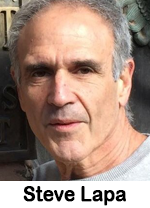
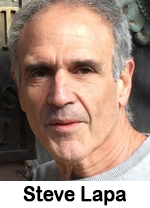
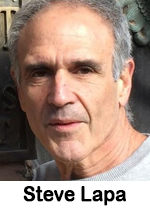
By Steve Lapa
Lapcom Communications Corp
President
imI’m no expert, but I do have a theory.

The American media business is the most competitive and advanced in the world. Many other countries directly or indirectly control their airwaves and print publications. Not here, no way, not as long as the First Amendment protects freedom of the press. Yet with that historic, awesome guarantee in place, why are newspapers failing, magazines gutting staff and many of the newer dot coms hitting the wall?

It is inevitable that daily print publications like the LA Times and the Washington Post cut back. We’ve come a long way since Guttenberg, but low-tech printing presses, paper and ink are just not fast enough to keep up with the 24/7 information cycle. I can understand the financial woes caused by bloated staffs at Buzzfeed, Vice and most recently at Business Insider. But when Sports Illustrated gave notice to its writing crew, now you are messing with arguably the most successful sports magazine of all time.

S.I. knew how to attract great writers delivering iconic story lines. We’re talking writers like Rick Reilly, the late Frank Deford, J.F.K. – yes, the late president – Carl Sandburg and one of my favorite characters of all time the late cigar chomping New York Daily News columnist Jimmy Breslin. Martha Stewart on the cover, not for me.

What happened here? The simple answers are: Too much debt, too much overhead, and too slow to recognize and act on shifting dynamics.

Yet People magazine, which has been around for 50 years and if you believe Statista, now reaches over 82 million readers a month! Can you name the last time People won a Pulitzer for a story? Yet we can all learn a critical lesson from the continued success of People. Even those of us in management in the radio/audio business.

Here comes my big theory which you can apply to content, sales, sales management, and everything else important in life.

1) Know your audience. People is focused on celebrities and rarely gets a story wrong.

2) Keep it simple. People is about pictures and easy to understand storylines.

3) The original target was women 18-34. As the target demo shifted and lifestyles changed, the content of People adjusted.

Let’s connect the dots in our programming, sales, and sales management world.

1) Are you in step with your audience? Listeners, and advertisers are all part of a dynamic environment. What’s in your planner that forces you to know the “audience” you sell or market to?

2) Do you keep your proposals simple and easy to understand? Fast and focused is the name of the game.

Steve Lapa is the president of Lapcom Communications Corp. based in Palm Beach Gardens, FL. Lapcom is a media sales, marketing, and development consultancy. Contact Steve Lapa via email at: Steve@Lapcomventures.com.
Industry Views

Monday Memo: Baseball Station? Own It!

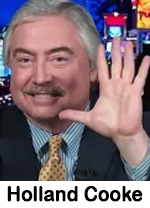
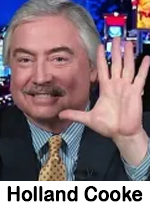
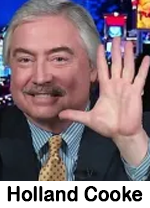
By Holland Cooke
Consultant 

imAs The Beatles sang, “It’s been a long, cold, lonely winter.” ‘Still is, eh?


Baseball – even Spring Training while it’s still chilly in March – says “Here Comes The Sun.” That’s what baseball means…to listeners. But with games also on SiriusXM and Tune-In and team apps, baseball isn’t the exclusive franchise AM/FM affiliates used to enjoy. So, BE KNOWN for having the games.

im

To local advertisers? In the words of one GM – who has made a pile of money selling baseball – “It’s ego and envy.” And while second and third-generation retailers might family-feud about other things, grandfather AND father AND son can agree on this expenditure lots quicker than you can get consensus about a ROS spot package on Kiss or Lite or Magic or Froggy.

Help yourself to your February Baseball To-Do List: http://getonthenet.com/BaseballFebruary.pdf

Holland Cooke (HollandCooke.com) is a consultant working at the intersection of broadcasting and the Internet. He is the author of “Confidential: Negotiation Checklist for Weekend Talk Radio” and “Close Like Crazy: Local Direct Leads, Pitches & Specs That Earned the Benjamins.” Follow HC on Twitter @HollandCooke and connect on LinkedIn

Industry Views

SABO SEZ: Howard Stern Deserves a Big Thank You

By Walter Sabo
Consultant, Sabo Media Implementers
A.K.A. Walter Sterling
Radio Host, “Sterling On Sunday”
Talk Media Network

imNO ONE has done more to elevate the status and improve the working conditions of on-air talent as much as Howard Stern.
Howard turned 70 this month and he has been on the air for 50 years – half of the time of the existence of radio. During his brilliant career, he has elevated the capabilities of radio to a scientific, pristine art. His success is neither an accident nor luck. It’s not even God-given talent. It’s all work. Nobody has ever worked harder on their radio show than Howard and, as a result, no radio star has ever earned as much money or deserved as much acclaim.

Several important notes:

— For Howard, radio always comes first. When he made the movie Private Parts the production fit around his radio show.

— “America’s Got Talent” ended taping at the pre-agreed times to accommodate Howard’s radio show.

— I made the first call to his agent to recruit Howard to SiriusXM Satellite Radio. He was already making a lot of money… his motivation for moving was to give his radio show the support and freedom necessary to see just how great he could make it.

— He loves radio.

Whatever you’ve heard Howard earns, it’s probably close. That’s good for everybody on the air in the world. He earns more than any TV star. He earns more than 99.9% of all movie stars. I think it’s pretty much Taylor SwiftPaul McCartney and Howard. A radio star is actually in that conversation!

When he started in the 1980s, he was suspended for saying douche bag. Now you can say douche bag. Thank him for winning that fight.

Thank him for proving that radio stars do better with real writers and producers. Radio stars can create four hours a day of magic with little help. (TV Sitcoms produce 22 minutes a week, for 22 weeks a year with 11 writers.) Thank him for moving millions of dollars of products a week with his live reads, enhancing the value of your live reads.

Thank him for being harassed by the federal government. Thank him for not blinking. Thank him for raising the profile and stature of American radio. Thank him for being funny.

I just don’t think he’s been thanked enough…

Walter Sabo was a founding architect of SiriusXM Satellite Radio and began the recruitment of Howard Stern. He has consulted RKO General, PARADE magazine, Hearst BroadcastingPress Broadcasting, and other premium brands. He launched the first company to engage online video influencers, Hitviews. As an executive, he was EVP of NBC FM RADIO giving Dr. Ruth Westheimer her first media job and fostering the creation of adult contemporary. As VP ABC Radio Networks, Sabo hired Ringo Starr to be a DJ for a 24-hour special.

Industry Views

Pending Business: One Billion and Counting

By Steve Lapa
Lapcom Communucations Corp
President

imLet’s talk streaming because I don’t get what is happening. Maybe you do.


Talk shows place decent cameras in the radio studio, maybe one in the control room, possibly a third at a “producer’s” desk, a flat screen or two with cool visuals in the background to fulfill the coolness quotient, push the video stream to YouTube or another platform and wait for the throngs of followers to find the talk radio show, view, subscribe and stay with it until the numbers are staggering.

Sometimes the video stream is promoted on air or your station’s website and the expectation is the online audience will skyrocket. After several months, the viewer numbers don’t skyrocket, or maybe the numbers develop modestly, but sales becomes the art of packaging. Because the scale necessary to move the sales needle is still not happening.

This is not a hypothetical. This is happening today at some of the best radio stations delivering high-level radio programming in markets of all sizes around the country. Why do we struggle with how to turn the best radio programming in the world into competitive online video content?

The short answer is great talk radio programming is just that: great radio programming. But herein lies the dilemma. Great talk radio talent, in any format, are natural masters of the foundational elements that can make their YouTube, Rumble, and other social media video platforms gain audience and successfully generate revenue.

Let’s identify the most important reason why:

1. Authentic. Show me one successful talk radio host in any talk radio format who does not exude “authentic.” Agree or disagree with the host on politics, sports, finances or fishing, great talk show hosts are authentic, and their audience can sense the passion coming through in every show. Now, let’s identify the nasty four-letter word, stopping many great talk talents and their content from performing competitively on current social media video platforms. That four-letter word?

2. Show. Most great talk radio talents understand what it takes to put on a great “show.” Mechanics, formatics, and unique skills are developed over time designed to maximize Nielsen performance. But often, many of these – forgive me here – old media “show” skills are not relevant to the huge audience now consuming 1 billion hours of YouTube video every day. Yet we persist and video stream the radio “show” with the expectation an online audience will skyrocket, sales will explode, and the future is as easy as hitting the send button. It just does not work that way.

The radio industry has developed many of the greatest “authentic” talents in the world. How will we plan for a future that has billions of hours of consumption?

Steve Lapa is the president of Lapcom Communications Corp. based in Palm Beach Gardens, FL. Lapcom is a media sales, marketing, and development consultancy. Contact Steve Lapa via email at: Steve@Lapcomventures.com.

Industry Views

Monday Memo: Are Your Weekend Promos Upside-down?

By Holland Cooke
Consultant

imAvoid THE most-common mistake I hear in promos for talk stations’ weekend ask-the-expert shows: Opening with the Close.

I coach attorneys/real estate agents/personal finance advisors and other pay-for-play weekend hosts, both on-behalf of client stations, and working directly with these professionals in other markets. Done right, these shows ROI like crazy… but too often they’re well-kept secrets. So, it’s important that weekday promos invite weekend tune-in.

Tip: DON’T begin the promo with the host introducing him/herself and naming the show and when it airs. Instead: Like good commercial copy, the Close (asking for tune-in in this case) comes at the end of the promo.

im

Open by stating the listener issues that tuning-in can help inform. Examples:

Attorney: “Have you been injured? Before you accept the insurance company’s offer…”

Real estate agent: “Are you shopping for your first home? Or downsizing?”

Money-talk host: “Is there too much month left at-the-end-of the money?”

Note The Two Magic Words: “you” and “your.”

Holland Cooke (HollandCooke.com) is a consultant working at the intersection of broadcasting and the Internet. He is the author of “Confidential: Negotiation Checklist for Weekend Talk Radio” and “Close Like Crazy: Local Direct Leads, Pitches & Specs That Earned the Benjamins.” Follow HC on Twitter @HollandCooke and connect on LinkedIn.

Industry Views

SABO SEZ: City to Town – A Perspective on Trump Voters

By Walter Sabo
Consultant, Sabo Media Implementers
A.K.A. Walter Sterling
Radio Host, “Sterling On Sunday”
Talk Media Network

imAcknowledging that this publication is fiercely non-partisan and that I – in my role as a broadcaster – am basically the same, I offer the following, not as a political opinion piece, but rather a personal observation based on experience that might shed light on the deeper nature of a large segment of the American population prone to listen to talk radio.

A few years ago, I moved from Manhattan to Shaker Heights, Ohio. Geraldo Rivera made the same journey for the same reason; our wives went to Shaker High. In our brides’ minds, that’s enough reason to return.

During the period of the Donald Trump presidency, a new phenomenon was sweeping the East and West Coasts: People who did not vote for Trump demonized and marginalized those who did. Lifelong friendships were ended by anti-Trump individuals who merely suspected a friend was pro-Trump, often with little evidence. Celebrities threatened to leave the country if Trump became or remained president. They would flee to Canada, without any consideration of whether or not Canadians wanted them!  

At first, I would ask anti-Trump people if they had actually voted for Hillary Clinton? That question was inevitably met with an icy glare, but no answer. They hadn’t. Anti-Trumpers were seething, ignited by their guilt that they assumed Clinton would win and therefore making their voting participation unnecessary. What else could explain the fevered emotion against a president – on his FIRST day in office? Trump hadn’t done anything to anger Scarlett Johansson into leading an angry insurrection mob. But she did. Day one.

Living in Ohio, I have spent time with hundreds of Trump voters and learned something valuable. Trump supporters do not match the level of passion in support of the president as those who hate him. Not even close. The disparity is stunning.

No Trump voter has threatened to leave the country if a Democrat wins. No Trump voter has said, “I hate all Biden voters, I wish they would die,” as Howard Stern has said about them. No Trump voter refuses to befriend a Joe Biden voter just because, hey, if we’re friends we are friends.

Yes, Trump voters go to the polls for him because of – his policies. And what are those? The Ohio parents and workers I know matter-of-factly want Trump first and foremost so they can afford gasoline and heating oil. When the price of gas went up, parents had to cut down on after school activities, school competitions and distant playdates, they just couldn’t afford the trip. They can’t hop on the bus to Chelsea Piers. They don’t care if it’s Trump specifically, they just want cheaper gas – sir can you do that?

Next, they vote for the candidate who will support safe neighborhoods, cheaper meat, cheaper milk, their kid in the Marines home for the holidays, Israel, better schools.

I learned this from parents waiting for dance class and band practice to end. Patient parents proud of their kids. They weren’t chanting for Trump or bashing Biden. They just want enough gas to get home.

I’ve learned that many people who hate Trump voters do so while getting into an Uber, a taxi, bus, or subway. They don’t own a car. They buy food for one, not for five times seven days a week. They don’t have to go to three different food stores to get the cheapest items… they just hit Food Emporium ($6.98 a gallon of milk). In Ohio, $2.29 a gallon, Walmart.

Of course, there are other issues swirling around Trump and Biden – but right now most deplorable Ohioans have to pick up the kid at school on time, let their child buy one toy at Dollar Tree, I said one, and hope there is enough spaghetti for dinner.

Walter Sabo was a founding architect of SiriusXM and began the recruitment of Howard Stern. He has consulted RKO General, PARADE magazine, Hearst BroadcastingPress Broadcasting, and other premium brands. He launched the first company to engage online video influencers, Hitviews. As an executive, he was EVP of NBC FM RADIO giving Dr. Ruth Westheimer her first media job and fostering the creation of adult contemporary. As VP ABC Radio Networks, Sabo hired Ringo Starr to be a DJ for a 24-hour special.

Industry Views

SABO SEZ: Reflections on the Death of Sears and “Mass Appeal” Radio

By Walter Sabo
Consultant, Sabo Media Implementers
A.K.A. Walter Sterling
Radio Host, “Sterling On Sunday”
Talk Media Network

imSears used to sell everything. Tractors, tires, insurance, investments, chickens. In 2004, Sears was the dominant retailer in America. By the end of the decade, it was feverishly closing stores and dying.
Marketers blame the failure on aging store decor, failure to support the brand online, and merchandise offerings that were too broad. Circuit CityCompUSAFirestone and other highly targeted stores were super-serving specific product lines and diminishing the appeal of Sears’ profit leaders.

Nope. If a broad product line was the problem, Walmart would be a very small business. Operationally, Sears died from within by centralizing all buying and selling decisions. Local stores had zero autonomy and therefore were unable to stay ahead of customer preference trends. The bureaucracy was poison. Financially, Sears was a publicly traded company managed in the end by Wall Street speculators who probably wanted it to fail for their own gain.

SHOCKING WALMART NEWS: Walmart is the highest grossing company in the world. Larger than Chinese oil refineries, General MotorsVolkswagen, and Microsoft. It is the highest grossing company in the world.

Walmart’s decision strategy is surprisingly decentralized. It learned from Sears’ mistake. The employees you see working in Walmart are in charge. Each employee is assigned to a department. They see the profit and loss for their department and for each item they are selling. Employees are shown those numbers from day one. Walmart associates are expected to keep shelves stocked and to stay ahead of demand by ordering from distribution centers on their handheld computers.

No checking with corporate or clearing adds.

In times of crisis, such as hurricanes, Walmart colleagues can donate food, water, and other supplies to rescue workers without chain of command approval. Just do it. After one local disaster, a Walmart corporate type commented on the vast amount of donations made by a local store: “That’s a good use of autonomy.”

Walmart also learned from Sears how not to finance their company: 50% of Walmart is held by founder Sam Walton’s dependents and the Waltons control the board of directors.

So… what does this mean to you?

Walter Sabo was a founding architect of SiriusXM and began the recruitment of Howard Stern. He has consulted RKO General, PARADE magazine, Hearst BroadcastingPress Broadcasting, and other premium brands. He launched the first company to engage online video influencers, Hitviews. As an executive, he was EVP of NBC FM RADIO giving Dr. Ruth Westheimer her first media job and fostering the creation of adult contemporary. As VP ABC Radio Networks, Sabo hired Ringo Starr to be a DJ for a 24-hour special.

Industry Views

Pending Business: Cold Calling

By Steve Lapa
Lapcom Communications Corp
President

imLet’s take a minute to welcome back an old reliable that has been part of our sales and marketing world since Adam pitched Eve and got the first “yes” on the original cold call. No telling how cold that call really was.
But seriously, here come two shoutouts that should motivate you to re-evaluate the one strategy that has worked since the very early days of sales. Imagine knocking on 3,000,000 doors, making 3,000,000 cold calls. How many sales would you expect? According to The New York Times, a super PAC has knocked on all those doors nationwide, nearly 1,000,000 or one-third in Iowa alone, asking for the order. That’s a lot of cold calling and leave it to Iowa weather to put the “cold” back into cold calling.

Everyone reading this column would argue, TV, radio – especially r-a-d-i-o – and social media ads are more impactful, more efficient, and often more emotionally compelling than old school cold calling. Only time and results will tell if the boots-on-the-ground technique succeeded over the millions in media spend. No, this isn’t about modern-day political marketing strategy, this is about recognizing an old, proven technique that still has a role in today’s modern, hyper-speed, tech-driven world.

Do you remember the cold-calling contests that ended on a Friday with your team turning in the business cards that proved you met with those brand-new decision makers? Business cards in hand, you were well on your way to winning that weekly cold-calling contest. Talk about cold-call champions! All those business cards represented follow up opportunities that often led to long-term relationships netting many sellers nice commission checks.

Now comes the selfie, the modern-day version of those business cards, documenting proof positive you met the brand-new decision maker on the way to developing that newfound business relationship. Suddenly the old school cold-call strategy has a new world spin showing everyone on the team you are out and about in front of new business prospects, setting appointments and with newly fueled positive energy writing business and achieving your goals.

Hard to believe we are all connected to Adam’s very first sale, the 3,000,000 nationwide cold calls and the political strategists who earn big sums while still advising candidates to make sure they are getting out there, shaking hands and making those cold calls.

What’s on your planner this week?

Steve Lapa is the president of Lapcom Communications Corp. based in Palm Beach Gardens, FL. Lapcom is a media sales, marketing, and development consultancy. Contact Steve Lapa via email at: Steve@Lapcomventures.com.

Industry Views

Monday Memo: Plan Now for Your Bonus Day

By Holland Cooke
Consultant

imTake a day off. You get one free this year.

Programmers: When was the last time you really listened?

— Not the way you usually hear it, at low volume in the office…but “out there,” where/when/how listeners hear radio. Schedule dedicated listening time, away from the station. I promise you will find it an ear-opening experience.

im

— In 2024, you have no excuse NOT to take a day to listen…because it’s a Leap Year. You get an extra day, a February 29, courtesy of Pope Gregory XIII, in 1582 (as in “The Gregorian Calendar”). So, heaven help you if you miss this opportunity.

Holland Cooke (HollandCooke.com) is a consultant working at the intersection of broadcasting and the Internet. He is the author of “Close Like Crazy: Local Direct Leads, Pitches & Specs That Earned the Benjamins” and “Confidential: Negotiation Checklist for Weekend Talk Radio.” Follow HC on Twitter @HollandCooke

Industry Views

Benztown CEO/Founder Andreas Sannemann is This Week’s Guest on Harrison Podcast

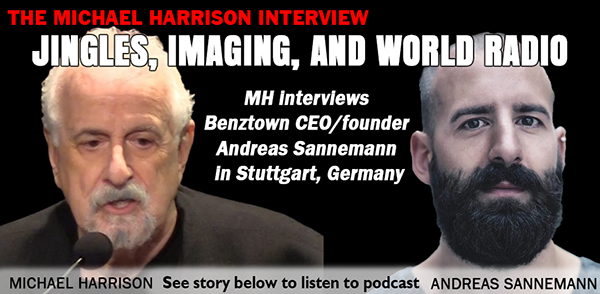
The CEO/founder of Benztown, one of the world’s most successful creators and suppliers of radio station jingles and imaging, Andreas Sannemann is this week’s guest on the award-winning PodcastOne series, “The Michael Harrison Interview.” Sannemann is a leading international audio imaging specialist, composer and entrepreneur based at Benztown’s European headquarters in Stuttgart, Germany. He joined forces with Dave “Chachi” Denes (who is a past guest on this podcast) and Oliver Klenk in 2008 to form the company.  Benztown’s American headquarters are located in Glendale, California. The international production giant provides imaging and other types of programming content and branding to radio stations in the United States, Germany, England, Australia, New Zealand, and more servicing over 2,300 affiliates on six continents. Audio imaging for the 21st Century and beyond – that’s Sannemann’s mission! Michael Harrison says, “I’ve been talking with broadcast industry leaders around the globe, as we lead up to the United Nations ‘World Radio Day 2024’ on February 13, to acquire a greater comprehension of the massive scope of this medium beyond the US. Sannemann and I discuss the state of radio around the world from his knowledgeable perspective in Germany.  I’ve always had a special place in my heart for jingles and imaging. The audio jingle has gone through many incarnations over the years, but our modern world has not grown so sophisticated as to relegate them to being a relic of the past. Catchy, ear-wormy jingles are still a major part of product branding, and this continues to be a rich and valued tradition in the radio business where personalities, shows and especially stations regularly present a harmonic group of people singing names and call letters. Jingles and imaging are a key part of the radio ‘esthetic.’ Radio-lovers and audiophiles will find this conversation illuminating.” Harrison is serving as executive advisor to UNESCO for “World Radio Day 2024.” Listen to the podcast in its entirety here

Industry Views

CES2024: AI, Sustainability, “TV,” Inclusivity

By Holland Cooke
Consultant

imAfter 4G enabled Uber and other apps now-common, inventors are flexing 5G. And grab-the-armrest for what 6G and 7G will bring. Just when we’re blasé about Wi-Fi, we are told that Li-Fi will use light to transmit data.
Artificial Intelligence? ChatGPT was training wheels. AI’s impact is just beginning to unfold. As it does, Consumer Technology Association research points to concerns over privacy, disinformation, safety, and job loss. 74% believe the federal government should regulate AI safety.

Sustainability is huge here: Solar panels – some are small foil strips — will replace batteries in many applications. And we’re seeing a cube-shaped portable inflatable “smartfarm” that can grow produce anywhere.

What we used to call “a television” becomes the Intelligent Hub for your home, connecting with appliances, security cameras, and thermal imaging for tele-health. It’s an e-commerce platform, like your smartphone… interactive – like betting on live games – and with immersive experiences Netflix is rolling out.

Inclusivity is big business at CES: We’re seeing hearable glasses for people who are vision AND hearing impaired, including some “chic” designs. And lots of tech here helps us as we age. With women’s health a $1.2 trillion market, mattress sensors can trigger cooling during menopause. And Artificial Intelligence will bring drug discovery breakthroughs.

I’m reporting for TALKERS readers, every day this week. Help yourself to today’s report here: http://getonthenet.com/CES2024-Thursday.mp3. It can air until Friday. And I’ll be posting daily 60-second reports you can download at HollandCooke.com.

Holland Cooke (HollandCooke.com) is a consultant working at the intersection of broadcasting and the Internet. He is the author of “Close Like Crazy: Local Direct Leads, Pitches & Specs That Earned the Benjamins” and “Confidential: Negotiation Checklist for Weekend Talk Radio.” Follow HC on Twitter @HollandCooke

Industry Views

CES2024: Tech Trends Research Revealed

By Holland Cooke
Consultant

imHello from Las Vegas, where your undaunted correspondent dutifully suffered the long, long line snaking through the ballroom corridors at Mandalay Bay for what is, each year, a data feast: the Consumer Technology Association’s “Tech Trends to Watch” presentation.

Appetizers:

– After 4G enabled Uber and other applications now common, inventors here are flexing 5G. And grab-the-armrest for what 6G and 7G will bring. Just when we’re blasé about Wi-Fi, we’re told that Li-Fi will use light to transmit data.

– Artificial Intelligence: ChatGPT was training wheels. AI’s impact is just beginning to unfold. As it does, CTA research points to consumer concerns over privacy, disinformation, safety, and job loss. 74% believe the federal government should regulate AI safety.

– Sustainability: Solar panels of all shapes and sizes will replace batteries in many applications. A foil strip on your dog’s collar powers the tag you use to call him from your smartphone. And we’re seeing an inflatable portable smartfarm.

– Inclusivity: Fitness trackers for the wheelchair-bound. Hearable glasses for those vision AND hearing impaired, “chic” designs. Lots of tech for the aging, including…

– Health + Wellness: With women’s health a $1.2 trillion USA market, mattress sensors trigger cooling during menopause. AI will bring drug discovery breakthroughs.

– Mobility: EV goes marine with the Mercury 30E outboard. We’re seeing E-bikes and construction equipment. Critical issues: peace-of-mind about battery range and quicker charging, and “values” choices about using less gasoline.

– TV becomes the Intelligent Hub for your home, connecting with appliances, security cameras, and thermal imaging for tele-health. It’s an E-commerce platform “like a smartphone ecosystem.” More interactive (betting on live games), and immersive experiences Netflix will roll-out.

– Audio? CTA research points to a “rising growth in older podcast listeners:” and how podcasters will monetize superfans.

Here’s the entrée (I hope you’re hungry):

https://cdn.ces.tech/ces/media/pdfs/2024/ces-tech-trends-preso.pdf

I’m reporting for TALKERS readers, every day this week. Help yourself to today’s report here: http://getonthenet.com/CES2024-Wednesday.mp3. It can air until Friday. And I’ll be posting daily 60-second reports you can download at HollandCooke.com.

Holland Cooke (HollandCooke.com) is a consultant working at the intersection of broadcasting and the Internet. He is the author of “Close Like Crazy: Local Direct Leads, Pitches & Specs That Earned the Benjamins” and “Confidential: Negotiation Checklist for Weekend Talk Radio.” Follow HC on Twitter @HollandCooke

Industry Views

When I Say “Technology,” You Think “Silicon Valley?”

By Holland Cooke
Consultant

imInventors from around the world are in Las Vegas this week for CES2024.

AirForestry is a Swedish company using 5G to develop a harvester drone that hugs the top of a tree, prunes-off branches on the way down, saws-off the trunk, and carries it to the nearest road. Electronic glasses from Canada’s e-Sight help the visually impaired conquer conditions like macular degeneration and diabetic retinopathy. Even legally blind people can achieve up to 20/20 enhanced vision.

From Poland, Vasco Electronics introduces its Translator E1 earpiece that translates 49 languages in real-time. And from Hong Kong, the Oclean X Pro Digital Sonic Electric Toothbrush uses a tiny built-in 6-axis gyroscope that tells you – on an interactive touch screen – how well you brushed, and which areas need more attention. And you know that technology is changing everything when the CEO of the world’s biggest beauty company, L’Oreal, is here from France to deliver a keynote.

“The winners are…”

Among this year’s Consumer Technology Association Innovation Awards: a “4D Food Printing System for Future Food.” The Care-pet bed for dogs and cats monitors their breathing, heart rate, and rest, via Bluetooth you can share with your vet. And with the 2024 election looming, there’s a blockchain-based voting system.

Bosch is addressing a sad news story we keep seeing on all these big-screen TVs: ItsGun Detection System” uses Artificial Intelligence to merge video and audio to defend-against school shootings. Designed to reduce reaction time and quickly mobilize emergency response plans, this system helps secure approach and entry points, by detecting guns and sound signatures of gunshots, even estimating gunshot direction to help make learning environments safer.”

In addition to daily TALKERS columns this week, I’m offering daily 60-second radio reports. Help yourself to today’s here: http://getonthenet.com/CES2024-Tuesday.mp3. It can air until Friday. And I’ll be posting updates you can download at HollandCooke.com.

Holland Cooke (HollandCooke.com) is a consultant working at the intersection of broadcasting and the Internet. He is the author of “Close Like Crazy: Local Direct Leads, Pitches & Specs That Earned the Benjamins” and “Confidential: Negotiation Checklist for Weekend Talk Radio.” Follow HC on Twitter @HollandCooke

Industry Views

Pending Business: Calendar Secrets

By Steve Lapa
Lapcom Communications Corp
President

imThis column should really be called, “How I got transferred from Buffalo to Tampa.” The storyline will help explain the title and offer you a proven technique that should help you sell and earn more.


Before Zoom, Teams and other video conference platforms that drive today’s daily to-dos, sales teams worked hard to fill the day with “in-person” sales calls. Back then, most managers forgot, or did not account for how weather impacted the number, geography and quality of those money making in-person sales calls, until blizzards, hurricanes and mother nature took her toll on productivity. Those of you who work or have worked in northern markets like Buffalo know all too well what 8 to 12 inches of snow can do to a daily plan. The same holds true for southern markets that experience hurricanes that have devastated communities going back to the hurricanes that nearly destroyed Miami and New Orleans. Now it seems wildfires are becoming a more regular threat in western markets. Having experienced most of the worst, like it or not, weather is an unpredictable yet critical variable in your sales plan.

One of the most destructive blizzards in history hit Buffalo during my first year as a young general manager. Retail contract cancellations, stranded employees, and off-the-air due to frozen antennas were draining revenues. It was December and the calendar was winning. After the ice melted and the snowplows cleared the way, we packaged everything we could before year-end to try and salvage the pacing that was leading to a bonus. The calendar won, annual bonus gone, but the learning curve kicked in.

B.G. (before Google) any research had to be accomplished old school: calls, friends, articles, and experts. We determined the average number of weather impact days, just like the guys in the theme park business. We developed a “real world” budget that accounted for weather days, the accompanying limited staffing, and a set aside percentage of revenues for cancellations.

When we began the year, the “real world” budget was put in place. By November of that year, the radio station had achieved its revenue goal for the full calendar year. The day before Thanksgiving I was summoned to the corporate office and was handed a file with a one-way ticket to Tampa, Florida. Goodbye blizzards, hello hurricanes. As a young manager, the sun was much more inviting than the snow, and I am still in Florida.

The discipline of a sales or planning calendar accompanied by “what if” is a must have.

Oh yes, make sure that pencil has an eraser.

Steve Lapa is the president of Lapcom Communications Corp. based in Palm Beach Gardens, FL. Lapcom is a media sales, marketing, and development consultancy. Contact Steve Lapa via email at: Steve@Lapcomventures.com.

Industry Views

Monday Memo: Hello from Las Vegas!

By Holland Cooke
Consultant

imThis week, more than a hundred thousand inventors, investors, and techy-nerds from over 150 countries swarm Sin City for CES2024. You’ll be seeing all about it all this week on network newscasts and cable news channels and social media.

And yes, there are square miles of products being introduced here, the “Consumer Electronics” that were the roots of this event. But the big buzz this year will be Artificial Intelligence, at which we-the-legacy-media are looking at over our shoulder, as ChatGPT et al and text-to-speech are augmenting – in some cases displacing – human radio and television talent.

im

After we’ve spent decades learning how to use his software – Bill Gates tells Inc. magazine that – soon – we won’t need to. He describes your “agent,” your A.I. assistant, a constant companion, in your earbud, that has what Gates calls “a rich understanding of your life.” Think Alexa or Siri…on steroids.

Want to send an email? Just start talking. You’ll never miss a birthday, and you’ll know about flight delays and weather and traffic tangles without checking. And YOUR agent will know your FRIENDS’ agents. Even Gates admits that these virtual social secretaries could faux pas: “Suppose you want to see a friend. If YOUR agent talks to THEIRS, you DON’T want it to say, ‘she’s seeing other friends Tuesday and you’re not included.’” Oops.

Sure, it’s gadget heaven here. And some of these TVs are so big that I can’t figure out how they’d get through the door at home. But, year after year lately, services upstage things at CES. This year’s keynoters include the CEO of L’Oréal and Hyundai and Best Buy and Walmart and executives from McDonalds and Northwestern Mutual and Walmart, as technology changes almost every aspect of life every day.

How big is CES? Even the sprawling Las Vegas Convention Center isn’t big-enough. There will be exhibits and sessions up and down The Strip, so I’ll be getting-in my steps. And I’m reporting for TALKERS readers, every day this week. Help yourself to today’s report here: http://getonthenet.com/CES2024-Monday.mp3. It can air until Friday. And I’ll be posting daily 60-second reports you can download at HollandCooke.com.

Holland Cooke (HollandCooke.com) is a consultant working at the intersection of broadcasting and the Internet. He is the author of “Close Like Crazy: Local Direct Leads, Pitches & Specs That Earned the Benjamins” and “Confidential: Negotiation Checklist for Weekend Talk Radio.” Follow HC on Twitter @HollandCooke

Industry Views

SABO SEZ: Five Golden Actions for 2024

By Walter Sabo
Consultant, Sabo Media Implementers
A.K.A. Walter Sterling
Radio Host, “Sterling On Sunday”
Talk Media Network

imResearch shows that readers to trade publications like articles with five bullet points. Here are my five bullet points for 2024. If these were to be deployed, you could be thriving by the end of the year. These actions would increase sales and audience share.
1. Radio should be easy to buy. It’s not. Easy fix: Look at your website. Based on the website how would you buy time on your station? It should be as simple as a realtor’s website. Put up pictures of your salespeople with ALL of their real contact information – not a FORM. Offer their email and cell number. Offer a “tour” of the offerings with information about the talent and the audience. What does the host sell best? How about a very brief audio message from each host to your potential advertiser?
2. Every medium creates its own stars. Example – David Caruso, good on TV, bad in movies. Your hosts, good on radio, lousy at original podcasts.  Sure, edit up the interviews or bits and make them into a podcast. But don’t ask a host to get off the air and make brand new content for a podcast. Engage locals who are good at making original podcasts and offer them a stage.
3. Sell the biggest number. Your morning show probably has more listeners than the “Tonight Show” has viewers in your city. 1010 WINS has more listeners in New York than FOX News has viewers nationwide. Go check. Those are the numbers that put radio in perspective!  Stop selling the smallest number, TIME SPENT LISTENING. Who came up with that!?
4. Don’t make potential advertisers jump through hoops. If you have spent your career in programming, you may not know the tyranny of MEDIA CREDIT. New radio advertiser: Good buy, high rate, longterm business. Sounds great. Not so fast. At most companies, new business still has to go through the gauntlet of a MEDIA CREDIT CHECK. End that.
5. What’s wrong with the hosts? Many hosts use a content formula that MUST generate a diminishing audience size and older and older and older demos.  Repeat. WHY? If you start to trust that what you talk about socially, with your friends, your audience will grow and grow younger. Be more like Bruce Collins, PD at WBAP, Dallas. Bruce just hired James Parker who has been featured for years on “Sterling On Sunday.” James is going to talk about life, fatherhood and funny. He joins “New Jersey 101.5” alumnus, Casey Bartholomew, 10:00 am – 12:00 noon, who talks about life, fatherhood and funny.  It’s working so well that WBAP will now be simulcast on Class C2 FM, KLIF.

Five bullet points. Goals: HAPPY NEW YEAR!

Walter Sabo was a founding architect of SiriusXM and began the recruitment of Howard Stern. He has consulted RKO General, PARADE magazine, Hearst Broadcasting, Press Broadcasting, and other premium brands. He launched the first company to engage online video influencers, Hitviews. As an executive, he was EVP of NBC FM RADIO giving Dr. Ruth Westheimer her first media job and fostering the creation of adult contemporary. As VP ABC Radio Networks, Sabo hired Ringo Starr to be a DJ for a 24-hour special.

Industry Views

Pending Business: Welcome to 2024

By Steve Lapa
Lapcom Communications Corp
President

imWhat do your New Year’s resolutions look like?
Chances are your resolutions included what I call the old reliable “mores.” Earn more, save more, exercise more, eat more of the healthier foods. Sound familiar? Do you break down the resolutions into daily goals? As in here is what I need to do today to meet my goals and fulfill my resolutions. How about the “less” category? Do you spend any time thinking about what you want to do less often? Let us start with some obvious candidates.

A recent survey by Frequence.com indicated 84% of respondents in marketing and advertising felt stress on the job. Maybe the other 16% had just taken their morning meds. Seriously, can you blame the stressed-out thousands who have spent a career working for companies that stand on the brink of financial peril, delist from the stock exchange, or initiate short-notice personnel cuts? Has anyone in the radio business reading this column ever experienced a fully stress-free experience for over 36 waking hours? If it is not work, maybe it is friends, family, travel issues, or anything else that you simply cannot stop thinking about.

“Less” resolution #1. Less stress on the job, unless you are in the parachute business or an air-traffic controller or emergency room doctor in New York or Chicago, you get where I am going with this.

The same survey showed 72% of respondents work for organizations expecting them to deliver more with less support. The last time I worked for a broadcast company that provided me with my own dedicated assistant, the Cowboys won the Super Bowl in the first ever televised in prime time. Please raise your hand if you are a seller or sales manager with your own dedicated assistant. Anybody? How about in the past 10 years?

“Less” resolution #2. Less is more. The slogan takes on new life in the remote work environment that is a norm for many in the media buyer-seller relationship. Everyone in the chain is being asked to do more, reach increased goals, and perform to a higher standard with less support. You are either on the income money flow line or the expense side. Pick your lane and try your best to deliver measurable results.

Technology is driving change in every corner of the workplace. New strategies and technologies designed to monetize media impressions are part of our culture. Surveys show anywhere from 52-70% of sellers and marketers are challenged with keeping up.

“Less” resolution #3. Prioritize your upskilling. Pick the one area that will allow you to hit your most important “more” goals and master it. Never stop learning, just adjust your learning curve to what works best for you.

Here’s to a more productive and prosperous New Year!

Steve Lapa is the president of Lapcom Communications Corp. based in Palm Beach Gardens, FL. Lapcom is a media sales, marketing, and development consultancy. Contact Steve Lapa via email at: Steve@Lapcomventures.com.

Industry Views

New York Festivals VP/Exec Director Rose Anderson is This Week’s Guest on Harrison Podcast

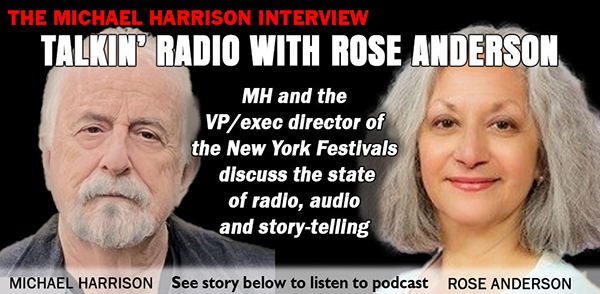
The New York Festivals Radio Awards, currently accepting entries for 2024, honors radio content in all lengths and formats and across all platforms from radio stations, networks, and independent producers around the world. Embracing all aspects of the radio and audio industries, its categories mirror today’s global trends and encourage the next generation of storytellers by recognizing innovators in many category groups. (The organization also has divisions for advertising and TV.)  NY Festivals longtime VP/executive director, Rose Anderson is this week’s guest on the award-winning PodcastOne series, “The Michael Harrison Interview.” Anderson brings tremendous practical experience to the table in her role at NY Festivals. Prior to joining, she was director of production of the Sports Emmy Awards for the National Academy of Television Arts & Sciences. She has been an associate director of the CBS Sports Olympic Unit as well as having served as associate director of ABC Sports.  She was a history major at the University of Massachusetts and earned a Masters degree in Broadcast Journalism at Boston University. As the international broadcasting community looks forward to celebrating World Radio Day on February 13, Harrison and Anderson discuss the global state of radio and storytelling. Listen to the podcast in its entirety here

Industry Views

Pending Business: Ad Count

By Steve Lapa
Lapcom Communications Corp
President

imHow many times will we research the same subject and come to the same conclusion?
This time it is the podcast. How many ads will the average listener consider “appropriate” in a 60-minute episode?

If you read the recent research from Cumulus/Signal Hill, you know the answer. For the rest of you, survey says under four minutes per 60-minute episode. The same survey says the magic number for a 30-minute episode is under three.

How ironic is that? The typical talk radio hour runs more ads in one break than an entire 60-minute episode of a podcast. Could it be because we have been integrating radio commercials into hour-long broadcast content for over 100 years? Have we conditioned news/talk listeners to accept more commercials per hour? Our TV friends have been at for over 80 years with an even bigger hourly spot load. Anyone ever see audience research that says add more commercials?

Seriously, unless you pay for the ad-free experience of Netflix, HBO, Hulu, Spotify, Pandora, etc., like most consumers of media, you are comfortable with the ad-supported media model.

So, how has the podcast world been so successful with a model that would leave most traditional radio and TV owners, execs, and sellers dumbfounded.

Here is some insight from my experience.

1) CPM is higher in podcast. The hard facts are when you work with higher CPM you can adjust the commercial load. Demand for digital/social media and podcasts with marketable scale is greater than terrestrial radio. The demand curve for podcast advertising is greater than terrestrial radio. Time to wake up, shake up and shout out loud about our 100-year-old sleepy giant!

2) Survey said 62% of podcast listeners prefer the host read. Talk radio sellers should improve this pitch every day. Today, podcast sellers are simply better at it. Podcast sellers get the intimate relationship between host and listener better than most radio sellers get host and audience. Podcast hosts seem more one-on-one savvy. What will Joe Rogan’s next guest say? What will we hear when your talk talent interviews their next guest?

3) Quality. When your local production director is overloaded and needs to get commercials completed on the air yesterday, what wins: quantity or quality? Be honest here. Where is the next audio creative genius like Dick Orkin or Chuck Blore? Do you know those names?

4) Can you really compare ad load levels between the 60- or 30-minute podcast episode to the average three-hour daily talk radio show?

Traditional molds need to be revisited regularly. My experience with YouTube is showing me even newer models for monetization, different from audio podcasts. Does your 2024 planner have any room for innovation?

Steve Lapa is the president of Lapcom Communications Corp. based in Palm Beach Gardens, FL. Lapcom is a media sales, marketing, and development consultancy. Contact Steve Lapa via email at: Steve@Lapcomventures.com.

Industry Views

Monday Memo: CES2024, Help Yourself

By Holland Cooke
Consultant

imIt’s massive, it’s mind-boggling, and we-the-workin’-press are under strict instructions NOT to call it “The Consumer Electronics Show.” Lotsa luck. 100 thousand+ of us from 150+ countries will descend upon the sprawling Las Vegas Convention Center and other venues up-and-down The Strip.

This long-running expo has evolved from “stereos” and VCRs and drones and smartphones and other thing-in-a-box products, to the new media which are broadcasters’ friends and foes. Yes, CES is still gadget heaven, but Artificial Intelligence – and how it will soon change everyday life – will be the big buzz this year.

im

TV network newscasts and cable news channels cover this event heavily, and you can too. Again, next month, I am offering TALKERS subscribers free daily 60-second radio reports, for air January 8-12, also OK for stream cover-up spots. There’s NO paperwork and NO national sponsor. So, if you sell a local sponsorship, keep the money.

You can hear a sample report (from CES2023), a spec you can use to pitch, at HollandCooke.com, where I will post daily reports the-night-before air.

Holland Cooke (HollandCooke.com) is a consultant working at the intersection of broadcasting and the Internet. He is the author of “Close Like Crazy: Local Direct Leads, Pitches & Specs That Earned the Benjamins” and “Confidential: Negotiation Checklist for Weekend Talk Radio.” Follow HC on Twitter @HollandCooke

Industry Views

What’s a “Bombshell” in a Noisy World?

By Michael Harrison
Founder
TALKERS

imWe live in an increasingly noisy world.  The accelerating advancement of media technology, with its accompanying “everybody is a star” syndrome, combine to make it increasingly difficult to get attention. By that, I mean real attention – the kind of attention that those in the professional media (and related) industries describe as “traction.”

Public conversation, as conducted in today’s media, has fallen victim to the noisy cocktail party syndrome. That’s what happens at social events, catering halls and froofy restaurants where the cruel combination of loud background music, echoey acoustics, and lots of small talk forces attendees to speak louder and louder and louder in order to be heard. The decibel count goes into hyper-inflation. People start screaming at each other saying nothing of consequence. Some folks deal with the inherent discomfort of this scenario by practicing the disingenuous (but extremely useful) art form of faking interest and understanding through confident smiling, eyebrow raising, nodding, grunting and saying innocuous phrases like “ha” and “there ya go” while others just keep on screaming.

Have you noticed how headlines – even when used by the editors of generally reliable platforms – have taken hyperbole to new lows of dishonest click bait in order to get attention?  Beware of two such words that are being spewed through today’s media to cut through the noise only to create even more noise in the process.  In the world of science, it’s “terrifying.”  In the world of politics, it’s “bombshell.”  These ratty words have infested our media sewers and should be avoided unless actually used in an honest and accurate manner.

Michael Harrison is publisher of TALKERS.  He can be contacted directly via email at michael@talkers.com.

Industry Views

Six Reasons Radio Listeners Ignore Your Morning Show

imConsultant Gary Begin of Sound Advantage writes in a piece for TALKERS today about why some morning radio shows fail to launch. He offers six reasons for this that can be avoided if management really wants to create a successful program. Reason number one? Because the hosts are just not that good. See Begin’s complete article here.
Industry Views

Monday Memo: News Tune-Out/Tune-In

By Holland Cooke
Consultant

im“Most registered voters avoid the news at least some of the time. Of those who disengage, over half avoid national politics coverage,” according to the “Voices of Value 2023 Report” by the Pell Center at Salve Regina University.

It’s a survey of registered voters in Rhode Island, where I live, and this data mirrors national polls: “Democrats and Republicans hold deeply negative views of their political counterparts. Nearly two-thirds of Republicans and Democrats view their political opponents as very close-minded. Independents are less likely to judge their counterparts as harshly.”

— Also reflecting national data: “More Rhode Islanders trust local than national news, but Republicans and Independents are less trusting than Democrats, given their concerns of partisan media as a threat to democracy.”
— “All parties are skeptical of news from social media sites as they are concerned with fake news and disinformation.”
— “Partisan differences exist beyond this fatigue of national politics. Republicans are the most likely party to distrust the news media and the least likely party to say they avoid the news. Over half receive most of their news from FOX News.”

im

What this means to radio:

— If you do local news, tout it.
— If you’re an affiliate, remind them that you’re FOX News in the car. It’s the source they trust. Those who disengage aren’t listening.

Holland Cooke (HollandCooke.com) is a consultant working at the intersection of broadcasting and the Internet. He is the author of “Close Like Crazy: Local Direct Leads, Pitches & Specs That Earned the Benjamins” and “Confidential: Negotiation Checklist for Weekend Talk Radio.” Follow HC on Twitter @HollandCooke

Industry Views

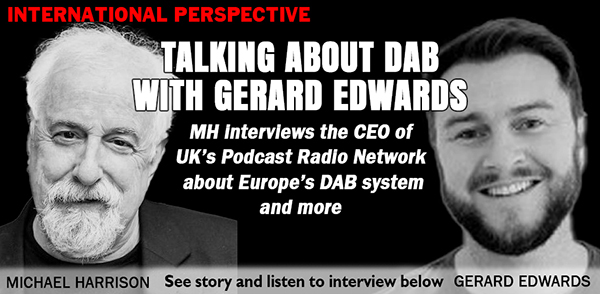
UK Perspective: Shedding Light on DAB and International Radio with Podcast Radio’s Gerard Edwards

TALKERS founder Michael Harrison speaks with Gerard Edwards – the founder and CEO of Podcast Radio (podcastradionetwork.com) based in London, UK. Podcast Radio has shown tremendous growth since its launch less than five years ago and is heard worldwide with a menu of podcasts online as well as on air in the UK via DAB radio stations.  The company recently expanded its footprint into North America as a radio program content supplier. Harrison and Edwards take a deep dive into the state of DAB as a 21st century radio broadcast technology in addition to discussing a big picture view of the state of radio in general. Harrison describes Edwards as one of world radio’s rising young visionaries. Listen to the uninterrupted interview in its entirety here.

Industry Views

Pending Business: When the Package Doesn’t Work

By Steve Lapa
Lapcom Communications Corp
President

imIt happens to everyone at least once.

You present your package with every asset at your disposal to make the campaign a winner – host read radio, podcast, X(Twitter), Instagram, Facebook, YouTube, and anything else at your disposal. You work with your manager for pricing, coordinate the digital team for input, and touch base with your business department for the all-clear. Your presentation is an award winner, your enthusiasm is contagious and the deal closes. The campaign launches and to your shock and dismay the feedback from your client is utter disappointment as results are anemic. You verify everything is running properly, digital and social media are coordinated, yet the anticipated tsunami of results is barely a rain shower.

Are you kidding me right now? What in the world happened? A little history and a little reality will help you right the ship.

It’s been 60 years since Marshall McLuhan taught us the “medium is the message” and arguably became the original disruptor. He was so far ahead of his time, Musk, Zuckerberg, and Altman would be challenged. The bottom line is McLuhan got it right as we still stumble our way through the performance side of the ads.

Let us examine how we package and sell 60 years later.

Mistake #1- All creative is the same. In the example above, I listed 6 common platforms many local hosts utilize daily to spread the word.

A) Sellers focus on packaging scale, competitive efficiency and closing the business.
B) Hosts focus on product and content acceptability.
C) Managers focus on deal points.
D) Traffic and business focus on integrating systems.
E) Production is ready to deliver the deadline.
F) STOP!!!! Who is focused on matching the platform or medium with high impact creative messaging? “50% OFF” is an empty value proposition when there is no product sell-in. Who is making sure EVERY asset is delivering the creativity that engages and motivates the listener/viewer for each medium?

Mistake #2. I got this. Wake up! The multi-platform package is more complicated than the beta binomial curve for duplication. Oops, did I lose you? The concept is the radio listener may or may not be the podcast listener who may or may not be the YouTube viewer, who may or may not be the Facebook follower, and so on. You are the sales pro who put this package in motion, yet did you stop to think through: Does each medium have a unique campaign with different frequency, creative updates and feedback loops? Do you have any idea how many daily tweets it takes to sell that product or service? Or are you applying branding metrics to sales goals? And that is just the beginning.

We often forget, YouTube, Facebook, Instagram, are barely 20 years old and we are still learning. Yet our terrestrial radio station heritage goes back over 100 years, so you think, “I Got this.” To paraphrase the great Marshall McLuhan, don’t drive into the future using only a rear-view mirror.

Steve Lapa is the president of Lapcom Communications Corp. based in Palm Beach Gardens, FL. Lapcom is a media sales, marketing, and development consultancy. Contact Steve Lapa via email at: Steve@Lapcomventures.com.

Industry Views

Monday Memo: Time Management? Don’t Even Try

By Holland Cooke
Consultant

imNews flash: Time cannot be managed. But tasks can.


As we install a new PD at a client station, I will share with you what I’m sharing with him: Four techniques I myself have found EXTREMELY helpful over years of dancing-as-fast-as-I-can in several management positions.

1. “Map” your week. Use a spreadsheet, to create a schedule that doesn’t change week-to-week. Slot-in items like:
a) If you’re on-air: Your show + prep + when you do your daily promo/blog, post/social media, etc.
b) Talent meetings.
c) Regularly-scheduled Boss Time (see “folders’) below.
d) Is there a weekly staff meeting or department heads meeting? Do you routinely meet with sales? Slot it in.
e) In-bin and phone time (see below).
f) Days you’re available to do-lunch, or for sales calls.
g) MBWA time (“Management By Walking-Around”). Build it in.
f) What else?

Tip: Round-up. If something takes 45 minutes, slot-in an hour, to allow for bathroom breaks, checking voicemail, or running-across-the-street for a cuppa cawfee. Consider doing so even if there’s free crankcase coffee there at the station. It’s fresh air. Building in a couple short walks each day can really help you clear your mind between events.

This map you are making is “a living document,” subject to ongoing revision. But plan-your-work-and-work-your-plan, and you’ll find that lots more gets done. You’ll also find that people respond by being more punctual for you.

Tip: Find a hiding place. Always-being-in-your-office tempts interruptions. Two decades of management – and 23 years as a landlord – taught me how some issues that seemed “urgent” to people seeking your attention tend to resolve themselves before the would-be interrupter finds you.

2. Show your boss two file folders, one with your initials on the tab, the other with his/her initials on the tab. Give him/her the one with your initials, and keep the other one. Then, schedule a regular meeting (that goes on your map). The meeting can be weekly, daily, Monday/Wednesday/Friday, whatever. Lock it in, show up on-time.

Pledge to each other that you will avoid ad hoc, single-topic conversations. Unless someone is bleeding or something is on fire, the conversation can wait for a scheduled meeting. Toss a note, or pertinent document, into the folder.

I started doing this when I worked for a particularly “spontaneous” GM. NO NAMES. His half-dozen daily “Got a minute?” interruptions were extremely disruptive. And he was flattered when I showed him the respect of blocking-out Quality Time for issues we shared. Sure, he’d back-slide from time to time. When he did, I would ask, politely, “Do we need to handle this now, or should I put it in The Folder?” He took the hint; and praised me later, during my Performance Review, for suggesting the idea, which he instituted with the sales manager, business manager, and chief engineer. THANK ME LATER FOR THIS ONE.

3. Don’t answer the phone! That’s why there’s voicemail (and caller ID). Phone calls about every little thing are a torturous pause button and invite long workdays and more and taller piles of half-finished tasks. Set aside two times per day to schedule and return calls. Quality Time. Try it, and you will REALLY thank me. And I saved the best for last…

im

4. Touch each piece of paper ONCE. See “In-Bin time” in your weekly map above. Do one-of-the-following with every piece of paper or email that finds you:
a) Deal-with-it instantly (i.e., scribble a response and return to sender), or otherwise bring the issue to closure; OR
b) Send it to someone else (“delegation” in management lingo); OR
c) File it; OR
d) Circular-file-it (sort your mail over the wastebasket); OR
e) There is no e).

Ritualistic as all-of-the-above may seem, YOUR LIFE WILL CHANGE if you take these suggestions literally. Things are busy enough that no routine less structured will suffice. And conducting yourself accordingly will send an important message to the people you work with.

Holland Cooke (HollandCooke.com) is a consultant working at the intersection of broadcasting and the Internet. He is the author of “Close Like Crazy: Local Direct Leads, Pitches & Specs That Earned the Benjamins” and “Confidential: Negotiation Checklist for Weekend Talk Radio.” Follow HC on Twitter @HollandCooke

Industry Views

Welcome to No Brand Land!

imConsultant Gary Begin of Sound Advantage Media writes today in a piece for TALKERS magazine in which he says that quite often there is a disconnect between the brand of a radio station and the brand-supporting messages that the sales staff is presenting to prospects. He says, “Experts in branding seem to be coming around to the idea that the power to make or break your brand-building effort lies not in the quality of your advertising but in the customer’s experience at the point of sale. In radio, that’s your over-the-air product and how your ad rep handles the advertiser.” He adds, “To navigate and successfully cross No Brand’s Land effectively, marketers must start by adapting brand message creation and delivery to today’s strategic sales processes.” He says there are two trends that will drive marketers’ efforts to create brand-supporting content that helps salespeople sell.” Read about them in his column here.

Industry Views

TRUE CRIME: What Would You Do?

By Walter Sabo
Consultant, Sabo Media Implementers
A.K.A. Walter Sterling
Radio Host, “Sterling On Sunday”
Talk Media Network

imWHAT WOULD YOU DO? A very good major market DJ murders his wife and injures her lover upon catching them in the marital bed. An 11-year-old girl was in the house – a witness. The murderer is convicted (second-degree murder/“situational crime”) sent to prison, does his time and is released after a few years for good behavior while incarcerated.
Upon release, the convicted murderer is hired as an on-air talent by at least three publicly held companies, with properties licensed by the federal government and heavily staffed with women employees. “Hey, he’s a good jock!” He works continuously from the time of his release until he retires about 18 years later in 1991.

Within the past decade, major market on-air talent have been fired, chastised, suspended or forced to mumble meaningless public apologies for posting tacky memes, joking about sports sideliner Erin Andrews (at the same time TMZ reporters were making the very same jokes about her on FOX), questioning team owners’ judgements, or posting “inappropriate” remarks on all forms of social media. Entire businesses have been lost because of silly off-air comments by talk hosts or DJs. Dr. Laura is an amazingly great talent.

Many of the job security issues faced by today’s on-air talent are the result of social media posts they made a few years ago – or sometimes things they said a few decades ago. Worse, people in all professions get in trouble for expressions uttered outside of the parameters of their actual jobs. A joke about the boss, a compliment about the attractiveness of a co-worker or mocking a product – in very few words – could easily destroy a career.

Considering this oh-so-touchy environment, would the murderer be hired today, or even allowed in a radio station’s lobby?  No, “Humble” Harve Miller, the murderer, would not be hired today by the very same companies that hired him a relatively few short decades ago.

Based on today’s standards, the CEOs of the companies that did hire Humble Harve should be immediately fired or at least forced to issue written public apologies and be deprived of their bonuses or suffer a claw back of their retirement packages. Immediately. My god! An 11-year-old murder witness! 

Too much? Too late, you say. Not practical? Agree!! Those actions would be just as overwrought as firing or shaming a host about their Erin Andrews joke or meme posted on X.

How likely do you think one of my proudest hires, Dr. Ruth Westheimer, would have a chance to become the number one radio personality in New York City today?

Perspective: memes, jokes, asides, and minor league slander only become big deals when the paranoid company stops time and puts out a public apology. The apology inevitably, not the incident, reaches a much larger audience. The public awareness brought about by the apology or employee firing actually causes damage to all involved.

Walter Sabo has helped some of the largest media companies in the world increase share of audience. Clients have included Conde Nast, SiriusXM, ABC, Gannett, RKO General, American Tower, TuneIn and more. The company he founded, HITVIEWS was the first to identify and monetize online influencers as revealed at the TALKERS New Media Seminar in 2008. His Talk Media Network show, “Sterling On Sunday,” generates significant audience share for stations such as WPHT, Philadelphia; KMBZ-FM, Kansas City; KMOX, St Louis; and KFBK, Sacramento. You can learn about the show at www.waltersterlingshow.com or email Walter at walter@sabomedia.com.

Industry Views

Pending Business: Coffee Talk

By Steve Lapa
Lapcom Communications Corp
President

imHave you tried the $7 cup of coffee at Starbucks?

A recent visit to my neighborhood location was an eye-opener. The demographics were broader than a trip to Disneyland. The service was average, as the baristas gave a hearty Moe’s welcome shoutout, heads down cranking out the orders.

A recent study showed 63% of millennial coffee drinkers are good with that $7 price because the coffee experience made them feel good. I was wowed at the acceptance of the price point. If the average consumer goes to Starbucks 16 times a month, that is over $100 a month on coffee. No wonder there more than 16,000 locations in the U.S. We just can’t get enough!

Yes, I am a student of successful marketing no matter what the product or service is. Tide, Starbucks, iPhone – what is it about the product that drives the value proposition? Quality? My gym socks do just as well in the less expensive laundry detergent. Dependability? My iPhone needs rebooting more than I would like to admit. Consistency? Ever taste Pike Place when it is from the bottom of the canister? No product or service is flawless, yet we consistently pay more for some over others. Is it marketing, packaging, or genuine performance? A little of everything.

Let us connect to our sales world.

1) There is no shortage of Tide. Yet it is still the most expensive brand on most supermarket and big box store shelves. Consumers have paid a premium for nearly 80 years because we trust the product. And therein lies the lesson for talk radio sellers. The trust your audience has in your on-air hosts is hard-earned equity reinforced every day.

2) The sit-down experience and service in a Starbucks is unique. From Manhattan to Carmel, California, locally owned coffee shops try, and some may succeed but the overall sit-down experience and service at Starbucks is consistently high-quality, meeting our expectations no matter where you are and so price barriers come down. Lesson #2 for sellers. Is your buyer-seller exchange always at a consistent important level no matter how close your relationship with your advertiser? Even when business is down?

3) There is no way to Google that answer. Put yourself in the shoes of your advertiser, especially a first-time advertiser when the wrong copy runs, an invoice is incorrect, or another issue comes up. Is it quick and easy to resolve a discrepancy? Will you invest the time and patience to ease the process?

Our talk radio business rarely integrates intangibles when it comes to pricing. Competitive, efficiencies and demand traditionally drive pricing. Yet the talk radio personalities are the ones with all the intangibles. From political influencers and offering emergency weather information to life changing news storylines that need interpretation to become more acceptable. Yet through it all, we are still the $1 cup of coffee.

Steve Lapa is the president of Lapcom Communications Corp. based in Palm Beach Gardens, FL. Lapcom is a media sales, marketing, and development consultancy. Contact Steve Lapa via email at: Steve@Lapcomventures.com.

Industry Views

Monday Memo: We Don’t Just Do Live Audio Anymore

By Holland Cooke
Consultant

What used to be “a radio station” is now the hub of live AND on-demand audio AND video AND text and graphics. As we populate all the platforms with which we share listeners’ attention (and advertisers’ do-re-mi), I’ve gathered tips from the pros:

im

Holland Cooke (HollandCooke.com) is a consultant working at the intersection of broadcasting and the Internet. He is the author of “Close Like Crazy: Local Direct Leads, Pitches & Specs That Earned the Benjamins” and “Confidential: Negotiation Checklist for Weekend Talk Radio.” Follow HC on Twitter @HollandCooke

Industry Views

Pending Business: The Dilemma

By Steve Lapa
Lapcom Communications Corp
President

imWhat’s old is new again.

From Jonathan Swift and Mark Twain to Winston Churchill, Peter Allen and Carole Bayer Sager, historic influencers have been credited with owning that phrase as long as I can remember.

That single concept is one of the foundational principles of media sales, even today. If you have been selling or managing long enough to remember pay phones on street corners, in hotel lobbies and airports, you should have a special appreciation for what follows. Let’s start with:

1. The “Golden Choice: Ratings or Results.” Which would you rather be selling? Top-rated content, or content that generates top performance results? No, they do not necessarily go hand in hand. Just because you sell major-scale delivery, doesn’t necessarily mean your audience will meet the advertiser’s expectation of performance. Like many of you reading this column, I’ve had the privilege of representing both sides of the dilemma; top-ranked content in radio, TV, digital and social media that did not meet the Key Performance Indicator requirements and smaller scale content that delivered annual renewals, year after year. I work with content that generates millions of impressions weekly and content that does not participate in Nielsen surveys, or delivers moderate scale, yet the old dilemma of ratings or results seems new to the newer digital/social media sales teams making calls today.

2. Does the creative match the audience? This is one of my favorite questions, especially when it comes to host-reads. The greatest talents I’ve worked with are never afraid to ask for the creative freedom to tweak copy points to match their audience. Every great host knows the audience. Sometimes it pays dividends to allow for creative freedom and sometimes it becomes a fast track to a cancellation. The difference is the confidence the advertiser has in you and the talent you represent.

3. Just say no, or go with the flow? When business is soft, most sellers and managers will take the short-term test dollars. Thirteen-week minimums become two-week tests and thus a product or service is given a short-term ride on what should be a longer-term campaign. But let’s face it, we’ve all compromised somewhere to help make the cash register ring a little louder. With a respectful nod to every seller and manager, that timeless call is totally up to you.

From local radio sales and podcasts to digital and social media sales, what’s old is new again and again.

Steve Lapa is the president of Lapcom Communications Corp. based in Palm Beach Gardens, FL. Lapcom is a media sales, marketing, and development consultancy. Contact Steve Lapa via email at: Steve@Lapcomventures.com.

Industry Views

Monday Memo: Be Conspicuous When Competitors Are MIA

By Holland Cooke
Consultant

imIn a recent column, I outlined win-win radio/TV station alliance tactics. This week, as stations are finalizing 2024 budgets, a tip for advertising your station on TV.

Dominate in January. Why:

— It’s a buyer’s market then, and your message won’t compete with other stations’ promotion. Slaves to conventional wisdom, they will be running DURING the Spring book, because they forgot that radio listening is habit, which will be set long before diaries and PPM will collect data. Smart stations derive a benefit message and set that habit BEFORE the book.

im

— If you can trade for over-the-air stations, the price is right. In January they’re lean too. Can you trade – or afford to pay cash for – cable? Two reasons cable might be a better deal:

1. You can target your signal pattern better than over-the-air channels, whose coverage footprint is bigger than yours; and

2. You can buy channels with programming similar to yours. FOX News Radio affiliate? Buy FOX News Channel (and Newsmax).

Holland Cooke (HollandCooke.com) is a consultant working at the intersection of broadcasting and the Internet. He is the author of “Close Like Crazy: Local Direct Leads, Pitches & Specs That Earned the Benjamins” and “Confidential: Negotiation Checklist for Weekend Talk Radio.” Follow HC on Twitter @HollandCooke