By Matthew B. Harrison
TALKERS, VP/Associate Publisher
Harrison Media Law, Senior Partner
Goodphone Communications, Executive Producer
 The Problem Is No Longer Spotting a Joke. The Problem Is Spotting Reality
Every seasoned broadcaster or media creator has a radar for nonsense. You have spent years vetting sources, confirming facts, and throwing out anything that feels unreliable. The complication now is that artificial intelligence can wrap unreliable content in a polished package that looks and sounds legitimate.
This article is not aimed at people creating AI impersonation channels. If that is your hobby, nothing here will make you feel more confident about it. This is for the professionals whose job is to keep the information stream as clean as possible. You are not making deepfakes. You are trying to avoid stepping in them and trying even harder not to amplify them.
Once something looks real and sounds real, a significant segment of your audience will assume it is real. That changes the amount of scrutiny you need to apply. The burden now falls on people like you to pause before reacting.
Two Clips That Tell the Whole Story
Consider two current examples. The first is the synthetic Biden speech that appears all over social media. It presents a younger, steadier president delivering remarks that many supporters wish he would make. It is polished, convincing, and created entirely by artificial intelligence.
The second is the cartoonish Trump fighter jet video that shows him dropping waste on unsuspecting civilians. No one believes it is real. Yet both types of content live in the same online ecosystem and both get shared widely.
The underlying facts do not matter once the clip begins circulating. If you repeat it on the air without checking it, you become the next link in the distribution chain. Not every untrue clip is misinformation. People get things wrong without intending to deceive, and the law recognizes that. What changes here is the plausibility. When an artificial performance can fool a reasonable viewer, the difference between a mistake and a misleading impression becomes something a finder of fact sorts out later. Your audience cannot make that distinction in real time.
Parody and Satire Still Exist, but AI Is Blurring the Edges
Parody imitates a person to comment on that person. Satire uses the imitation to comment on something else. These categories worked because traditional impersonations were obvious. A cartoon voice or exaggerated caricature did not fool anyone.
A convincing AI impersonation removes the cues that signal it is a joke. It sounds like the celebrity. It looks like the celebrity. It uses words that fit the celebrity’s public image. It stops functioning as commentary and becomes a manufactured performance that appears authentic. That is when broadcasters get pulled into the confusion even though they had nothing to do with the creation.
When the Fake Version Starts Crowding Out the Real One
Public figures choose when and where to speak. A Robert De Niro interview has weight because he rarely gives them. A carefully planned appearance on a respected platform signals importance.
When dozens of artificial De Niros begin posting daily commentary, the significance of the real appearance is reduced. The market becomes crowded. Authenticity becomes harder to protect. This is not only a reputational issue. It is an economic one rooted in scarcity and control.
You may think you are sharing a harmless clip. In reality, you might be participating in the dilution of someone’s legitimate business asset.
Disclaimers Are Not Shields
Many deepfake channels use disclaimers. They say things like this is parody or this is not the real person. A parking garage can also post a sign that it is not responsible for damage to your car. That does not absolve them when something collapses on your vehicle.
A disclaimer that no one negotiates or meaningfully acknowledges does not protect the creator or the people who share the clip. If viewers believe it is real, the disclaimer (often hidden in plain sight) is irrelevant.
The Liability No One Expects: Damage You Did Not Create
You can become responsible for the fallout without ever touching the original video. If you talk about a deepfake on the air, share it on social media, or frame it as something that might be true, you help it spread. Your audience trusts you. If you repeat something inaccurate, even unintentionally, they begin questioning your judgment. One believable deepfake can undermine years of credibility.
Platforms Profit From the Confusion
Here is the structural issue that rarely gets discussed. Platforms have every financial incentive to push deepfakes. They generate engagement. Engagement generates revenue. Revenue satisfies stockholders. This stands in tension with the spirit of Section 230, which was designed to protect neutral platforms, not platforms that amplify synthetic speech they know is likely to deceive.
If a platform has the ability to detect and label deepfakes and chooses not to, the responsibility shifts to you. The platform benefits. You absorb the risk.
What Media Professionals Should Do
You do not need new laws. You do not need to give warnings to your audience. You do not need to panic. You do need to stay sharp.
Here is the quick test. Ask yourself four questions.
Is the source authenticated?
Has the real person ever said anything similar?
Is the platform known for synthetic or poorly moderated content?
Does anything feel slightly off even when the clip looks perfect?
If any answer gives you pause, treat the clip as suspect. Treat it as content, not truth.
Final Thought (at Least for Now)
Artificial intelligence will only become more convincing. Your role is not to serve as a gatekeeper. Your role is to maintain professional judgment. When a clip sits between obviously fake and plausibly real, that is the moment to verify and, when necessary, seek guidance. There is little doubt that the inevitable proliferation of phony internet “shows” is about to bloom into a controversial legal, ethical, and financial industry issue.
Matthew B. Harrison is a media and intellectual property attorney who advises radio hosts, content creators, and creative entrepreneurs. He has written extensively on fair use, AI law, and the future of digital rights. Reach him at Matthew@HarrisonMediaLaw.com or read more at TALKERS.com.
Share this with your network



 Seven consumer studies commissioned by the Cumulus Media | Westwood One Audio Active Group® over an eight-year period find audio listeners are a rich source of in-market financial consumers and drive significant top and bottom funnel impact. The key findings from the studies are outlined on this week’s blog.
 Earlier this week, Michael Harrison published his top 10 list of suggestions for being a successful talker. Item number three really caught my eye:

 Carolina – southwest of the city of Charlotte. The company says the move will bring “Charlotte’s premier source for news, conversation, and community connection to a powerful 100,000-watt signal.” The company is moving WLNK to the 100.9 and 93.3 frequencies. Charlotte VP and market manager Marsha Landess adds, “We are thrilled to elevate WBT to the FM dial, ensuring that even more listeners can connect with the voices they trust every day. These moves further strengthen our position in the market and reinforce our commitment to serving Charlotte with the best local programming, news, and entertainment.”
 New York. Bold Gold says WDLA-AM will “broadcast Catskills News Talk, the Voice of Sullivan and the Catskills, a news and talk format featuring ‘Ciliberto & Friends’ with radio legend Paul Ciliberto.” Bold Gold Media NY region general manager Dawn Ciorciari states, “There is something truly special about turning the lights back on for a local radio station. We are beyond excited to bring local radio back to life for the people of Walton and Delaware County; to once again give this community a local voice, a source of connection, and radio stations they can call their own.”
 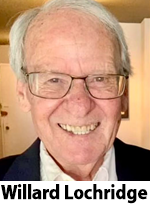 Lochridge entered the business in the sales department and by 1970 became the general manager of WRIF, Detroit. He was promoted by ABC to general manager for WPLJ, New York in 1973. He would serve at KAUM, Houston before returning to New York to serve with ABC Radio Networks. He later joined NBC’s The Source. In 1988 he and his wife purchased a small station in Wickenburg, Arizona.
 distributed by Audacy to unite the biggest sports voices, markets, and fans.” Audacy Detroit SVP and market manager Debbie Kenyon says, “The launch of ‘97.1 Detroit Sports Radio Network’ represents a massive commitment to our listeners and an exciting chapter in our growth. We are excited to partner with Townsquare Media and other media companies to expand our footprint across all of Michigan and to deliver great content to the dedicated fan base we serve. We are proud to deliver best-in-class sports coverage to the entire state, solidifying our position as the essential source for Michigan sports audio content now and for years to come.” The network’s first affiliates include Townsquare Media’s WFGR in Grand Rapids, WJIM in Lansing, WBCK in Battle Creek, and WKMI in Kalamazoo, plus Blarney Stone Broadcasting’s WGRY in Roscommon. Additional affiliates will be announced in the upcoming months.
 16% year-over-year decline in the percentage of Americans who say they get their news ‘often’ from apps like Instagram, Facebook, TikTok and X.2. In this rapidly changing landscape, consumers are increasingly turning to All News Radio for local news, trusted voices, and fact-based reporting.” Borelli cites as evidence for this Nielsen data indicating that Audacy all-news stations are up 11% versus last year and adds that’s coming off a presidential election year. Ben Mevorach is vice president of news at WINS, New York and he says, “As the number of places to get news continues to grow, the number of places to find news that is credible, trustworthy, and without bias is rapidly shrinking. People constantly tell us that 1010 WINS is their sole source for news they can trust.”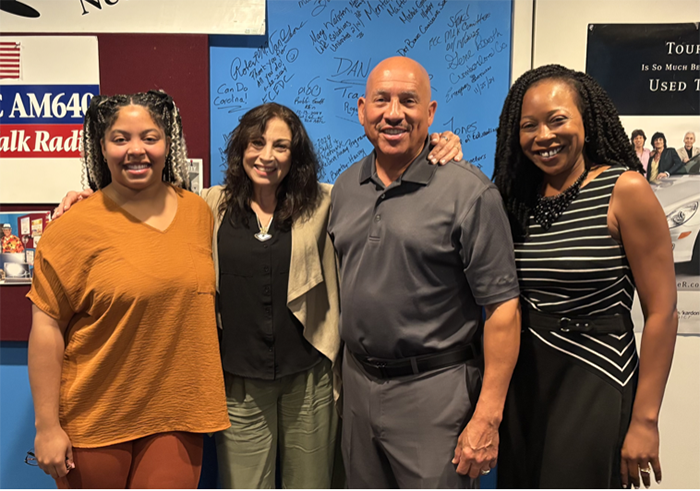
 Microsoft CEO Steve Ballmer retired with enough do-re-mi to indulge two passions. He bought the NBA Los Angeles Clippers (for a record $2 billion). And he built
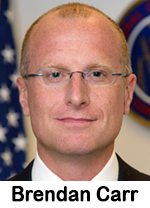 but sources tell Reuters that it would likely be sometime after November. Senate Commerce Committee Chair Ted Cruz criticized Carr for comments he made on the Benny Johnson podcast about late night talk host Jimmy Kimmel’s joke that appeared to threaten ABC/Disney and promise FCC action against the company if it didn’t take action on its own. On his Premiere Networks distributed podcast, “The Verdict with Ted Cruz,” Cruz said of Carr’s comments, “I got to say that’s right out of ‘Goodfellas.’ That’s right out of a Mafioso coming into a bar going, ‘Nice bar you have here. It would be a shame if something happened to it.’” Carr recently said that’s not what he meant and stated, “We don’t want to see weaponization of government by any administration against any perspective – and that’s certainly not what we’re doing here.”
 Jimmy Kimmel’s first monologue back after the recent suspension had the audience laughing and gasping, and, in the hands of countless radio hosts and podcasters, replaying. Within hours, clips of his bit weren’t just being shared online. They were being chopped up, (re)framed, and (re)analyzed as if they were original show content. For listeners, that remix feels fresh. For lawyers, it is a fair use minefield.
 complexities of divorce – helping people navigate every stage of the process faster, more affordably, and with far less conflict. Hello Divorce says its service “goes far beyond digitizing forms and redesigns the entire divorce experience with proprietary technology and AI to eliminate costly errors, reduce delays, and remove the bottlenecks that wreak havoc on divorce timelines.” iHeartMedia president of corporate development and ventures Joe Robinson says, “Hello Divorce offers a powerful solution for one of life’s most challenging transitions. This partnership gives them a unique opportunity to connect with people nationwide through our platforms, delivering resources and guidance that can truly make a difference.”
 our airwaves free from government influence. The First Amendment affords our stations – and all Americans – this fundamental right, and the mere perception that broadcasters acted because of undue pressure is a problem for our credibility and the trust we have built with our audiences.
 Amazon learned that there are high volume sales for specific categories of products. High demand equals high value to the seller. Items such as diapers, printer ink, staplers, batteries, etc. Being brilliant, Amazon created “Amazon Basics.” Same products, white labeled. Amazon doesn’t manufacture batteries; they just slap their logos on what America needs most. That’s why Mr. Bezos has a bigger boat than you.
 The board of directors of the New York State Broadcasters Association names Red Apple Media CEO John Catsimatidis the New York Broadcaster of the Year for 2025. Catsimatidis will be honored at the NYSBA Broadcast Leadership and Hall of Fame Luncheon in New York City on October 22. NYSBA president David Donovan says, “We are honored to have him as NYSBA’s Broadcaster of the Year. John has had unparalleled success turning around 77WABC and expanding Red Apple Media throughout the country. He has led legislative efforts to keep AM radio in vehicles, a vital issue for all New Yorkers.” Catsimatidis comments, “Thank you, Dave and the Board of the New York State Broadcasters Association for this honor. Radio is an integral part of listeners’ lives and often the only source of information during times of disaster. I ask everyone in radio to alert their listeners that car manufacturers are risking lives by taking AM off the dashboard of new cars. Together, we can stop this, and we must stop it.” Catsimatidis entered the radio business with the purchase WABC-AM in March 2020 and has since added WLIR-FM, Hampton Bays and WRCR-AM, Haverstraw to his portfolio of stations.
 accuses FOX of “engaging in an extensive and unlawful campaign to block competition in the market for right-leaning pay television news, including Newsmax.”
  A FOX spokesperson responded with the following: “Newsmax cannot sue their way out of their own competitive failures in the marketplace to chase headlines simply because they can’t attract viewers.” Newsmax issued the following statement in response to that saying, “If Newsmax was such a ratings failure, why has FOX spent so much time, energy, and resources to suppress us, block us, and denigrate us? The answer is obvious. Also please note that FOX in its statement does not deny any of our serious allegations.”
 America’s top 10 radio broadcasters by station count and by revenue. Connoisseur Media CEO Jeffrey Warshaw says, “Local broadcasting has always been at the heart of what we do. Connoisseur started as a company rooted in radio serving local markets. Today we’re taking that same local-focused philosophy, which now includes our digital marketing and multi-platform expertise to some of the most dynamic markets in the country. This acquisition is about assembling the scale and resources to keep radio strong, serve our communities, empower our employees, and create even more value for advertisers. As I have travelled the country to meet our new colleagues in the Alpha Media markets, I have been impressed with their dedication to radio and their communities. I am excited to be associated with such a great group of people.”
 contract.” Stern’s current five-year deal expires later this fall and speculation earlier this summer that the satcaster and Stern would part ways at the end of his current deal spurred Stern to issue a statement on his show (during summer re-runs) that he’d be back on September 2 to dispel the rumors. There are reports that Stern is dealing with his 98-year-old mother’s failing health and that is weighing on him. The story indicates Stern sent an email to his employees to explain the situation, but sources supplied no details about that email. The New York Post story says Stern’s listenership has gone from “20 million at its height to 125,000 daily listeners now.” However, SiriusXM doesn’t publish its listener data and no sources are provided for those figures.
  Imagine an AI trained on millions of books – and a federal judge saying that’s fair use. That’s exactly what happened this summer in Bartz v. Anthropic, a case now shaping how creators, publishers, and tech giants fight over the limits of copyright.
 Ninety seconds. That’s all it took. One of the interviews on the TALKERS Media Channel – shot, edited, and published by us – appeared elsewhere online, chopped into jumpy cuts, overlaid with AI-generated video game clips, and slapped with a clickbait title. The credit? A link. The essence of the interview? Repurposed for someone else’s traffic.
 An annual physical is a wise idea. Doc asks, “How are you doing?”. Then he or she asks some detailed questions based on your medical history. Then “how have you been feeling? Any issues?” Doc always orders blood draws to see what might be lurking. Is the statin drug keeping your cholesterol in check? Are you getting plenty of exercise, plenty of sleep? How’s your diet? Over the years, I’ve visited about my health with at least a dozen different doctors. I’m convinced that the good ones always ask good questions and then listen carefully. Good questioner – good listener. That’s the doc I can respect and put my trust in.
 would go their separate ways when his current contract ends later this year. The Yahoo story says, “A source affirmed that everything is a done deal in this regard, and all previous reports of him exiting the company were pure fallacy, per RadarOnline. The man of the hour himself also dropped a big hint on his social media, teasing an answer to all the questions hovering around his career very soon.” Stern’s own Instagram account posted the following: “Now we can reveal that all the questions will be answered. All the truths will be told by the one man truly on the inside: Howard Stern will speak. Tuesday, September 2.”

 “Listeners to our first ‘For Radio Geeks Only’ special told us they wantematthewd more – and John and I did, too! We’re glad to bring it back with an even longer show this time,” said Bob Sirott. Go back to the days before streaming, cable, VCRs, DVDs, and smartphones when rock ‘n’ roll radio was a source of entertainment. Sirott and Landecker will play their favorite jingles and will be joined by special guests, including 1960s disc jockeys Ron Riley and Spike O’Dell, one of WGN Radio’s very own. Listeners are being encouraged to call or text the station at 312-981-7200 to share their stories of listening to radio and records. The show will be available as a podcast on
  role in the decision-making journey, often sparking the craving before any digital ad or social scroll can. In fact, the survey shows a measurable lift in intent: consumers targeted by radio campaigns were 4% and 7% more likely to visit, reinforcing radio’s power to drive foot traffic.” Further, the study shows that “89% reported making last-minute meal decisions while in the car—right in radio’s sweet spot. Additionally, 84% believe it’s smart for fast food restaurants to use radio advertising to inform customers about menu items and deals. And notably, 82% admitted that simply hearing ads about food can make them feel hungry, highlighting radio’s unique ability to trigger cravings and drive immediate action.”
  saying Stern is mulling retirement and that he might consider a shorter-term deal than the usual five-year pacts he’s been signing. Still other sources say Stern isn’t the draw he once was, and a renewal of his current $500 million deal is not going to happen. Another report indicates SiriusXM may make a bid for his library of shows instead of a renewed contract for new content.