


Most Podcast Fans Watch and Listen. Very Few Only Watch
By Mark Santos
Mark Studios
Founder
 Talk hosts keep hearing that podcasting has turned into a video business: put cameras in the studio or get left behind. The newest audience numbers say something more useful. The people who consume podcasts every week now do both, and the shows they follow have to work with the screen on and with the screen off.
Video and audio run level. In the first quarter of 2026, 78% of U.S. weekly podcast consumers watched podcasts with video and 80% listened to audio-only podcasts, according to Edison Research’s The Podcast Consumer 2026. Those are mostly the same people, not two camps. In Edison’s Q3 2025 reading, video had come out ahead for the first time, 82% to 78%. By Q1 2026, audio was back in front by two points.
Almost nobody only watches. In Cumulus Media and Signal Hill Insights’ Podcast Download, Spring 2026, only 8% of weekly podcast consumers said they only watch podcasts, while 92% said they listen. The screen does matter more than it used to: 49% now prefer to actively watch when video is available, up from 30% in April 2022. But 30% prefer to have the video playing in the background while they listen. For a lot of the audience, the picture is company, and the audio still carries the show.
YouTube is where they go. YouTube is the platform weekly podcast consumers use most. Edison’s Q1 2026 data puts it at 37%, and the Cumulus and Signal Hill survey at 44%, against 21% and 14% for Spotify. YouTube says more than 1 billion people a month watch podcasts there. More of that viewing is happening on the living room set: viewers watched more than 700 million hours of podcasts on YouTube’s living-room devices in October 2025, up from 400 million a year earlier, according to YouTube. Those are the company’s own figures.
The biggest shows publish one episode twice. We took Apple’s top 100 U.S. podcasts, from the chart of October 30, 2026, and checked each show’s latest episodes against YouTube. Seventy-four of the 100 post full episodes there. The video goes up a median of 1.1 hours from the audio release, and 67 of those 74 shows post both within a day. Only one show in the top 100 posted clips without full episodes.
Two details stood out. For 14 of the 74 shows, most episodes carried a different title on YouTube than in the podcast feed: a numbered feed title such as “1074. Andy & DJ CTI” turned into a question or a hook. And 30 of the 100 feeds had no YouTube link anywhere in the show or episode notes, so a listener in a podcast app gets no pointer to the video version.
What that means for a talk show
Make it work blind. With 92% saying they listen, assume much of your audience hears the episode without watching it. If a segment depends on something on screen, describe it out loud, the way radio always has.
Post the full episode, not only clips. Among the top 100, full episodes were the norm, and clips alone were the rare exception.
Ship both versions the same day. Most of the top shows put audio and video up within a day of each other, a median of 1.1 hours apart. A video that lands a week later is a rerun to the people who already heard it.
Title for each place. The feed title serves people who already know the show. The YouTube title has to make a stranger click.
Point listeners to the video. Put the channel link in the show notes of every episode. Almost a third of the top 100 feeds have no YouTube link at all.
What these numbers don’t show
The surveys measure different people. Edison Podcast Metrics interviews about 20,000 U.S. weekly podcast consumers age 13 and older a year; the Cumulus and Signal Hill April 2026 wave asked 600. That is why YouTube’s share comes out at 37% in one and 44% in the other, so quote each figure with its source. YouTube’s audience numbers are its own and aren’t independently audited. Our check covers the 100 biggest shows, not the long tail: the Podcast Index listed 4,725,818 podcast feeds on September 16, 2026, and only about 10% had published an episode in the previous 90 days. Even the money is counted the old way. IAB and PwC put U.S. podcast ad revenue at $2.86 billion in 2025, up 17.6%, under an audio-based definition that may miss ad money from video podcasts on video platforms. And none of this measures a station’s own audience. Your P1s may not behave like the weekly podcast audience at large, and your own downloads and YouTube analytics are the test that counts.
Disclosure: I run a video studio that edits podcast video, among other work.
Mark Santos is the founder of Mark Studios, a video studio in Palm Beach County, Florida, that edits video podcasts and YouTube video for shows and businesses across the U.S. He has edited video since he was 10, and Mark Studios has completed more than 8,000 orders for 4,500+ clients. Connect with Mark on LinkedIn
 Gen Z now consumes podcasts monthly, positioning the generation to become podcasting’s largest audience; 4) 57% of Americans both watch and listen to podcasts, underscoring the rise of the creator ecosystem across audio and video; 5) And while listeners embrace AI for behind-the-scenes production, they remain wary of AI replacing the human voice and connection at the heart of podcasting. Audacy says the takeaway from this report is that podcast advertising is shifting from buying reach to buying influence – with trust, expertise and community becoming the real currency.
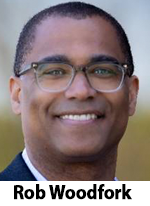 is a key part of our long-term strategy to transform how we cover sports. We’re committed to delivering content that goes beyond highlights and final scores – focusing instead on context, analysis, and storytelling that resonates with today’s audience.” WTOP says that in his new role, Woodfork will lead a more dynamic, multi-platform approach to sports journalism, anchored by daily video and audio commentary designed for modern consumption habits. His work will prioritize insight and authenticity – meeting audiences where they are, particularly among Gen X and Millennial fans seeking more than traditional sports updates.
 U.S. newspapers has shrunk, but right now it accounts for less than 10% of total revenue. In fact, “Revenue from that cohort has declined 25% over the past few years, while revenue from tech companies has grown roughly 200%.” The story goes on to note, “Over the past few years, the AP’s business has evolved to become less reliant on local newspaper revenue and more reliant on a broader set of customers, including digital outlets, broadcasters and non-news companies.”
 program “The Meidas Touch” is #1, followed by Joe Rogan’s comedy podcast “The Joe Rogan Experience” at #2. Rising to #3 in February was Goalhanger’s history show “The Rest is History.” Interestingly, the overwhelming majority of “The Meidas Touch” consumption is via video and video clips, while “The Rest is History” consumption is primarily audio only. Notable changes from the January ranking include Candace Owens’ “Candace” rising four places to #6, Red Seat Ventures’ “The Tucker Carlson Show” climbing five places to #10, and DailyWire’s “The Ben Shapiro Show” falling two places to #15.
 year, generative AI adoption among American consumers.” Some of the key findings include that online audio consumption has hit an all-time high: 1) 81% of Americans age 12+ (233 million) listened to online audio in the last month, and 76% (219 million) listened in the last week; 2) Americans age 55+ are driving the most recent increases. Monthly online audio listening among this group jumped from 52% in 2024 to 70% in 2026, a gain of nearly 20 percentage points in just two years; 3) 80% of Americans age 12+ (230 million) have ever listened to or watched a podcast, an all-time high; and 4) 58% of Americans age 12+ (167 million) have consumed a podcast in the last month, also an all-time high.
 If you missed yesterday’s webinar, look for the replay which will be posted today at
 their local market. Bonneville says, “The platform brings together Arizona Sports, Seattle Sports, Denver Sports, Sactown Sports, and KSL Sports in Salt Lake City, delivering more than 63 hours of live sports programming every day across audio, video, digital, and social channels.” Bonneville president and CEO Tanya Vea adds, “Bonneville Sports Network gives advertisers both flexibility and scale. Our network reaches fans wherever and whenever they engage with sports, across every platform. Advertisers can now leverage that strength in a way that aligns with their goals, whether they’re pursuing national reach or meaningful local impact.”
 The drive to stream video of radio shows has always been risky. Remember your shock when you first saw one of your radio heroes? Video streaming can present a constant disconnect between the show in the listener’s head and the show on the stream. Many stations make the disconnect worse by streaming terrible video images. Combine the trauma of how a host really looks with a dreary TV show and the package cannot benefit the relationship between station and listener/viewer.
 right, two shows… one on the radio, one on the stream. Seamless and fun.

 watching video podcasts. Sixty-two percent of weekly podcast listeners 13+ have enjoyed video podcasts passively, with the video content playing in the background while listening to the audio. Meanwhile, the data reveals a compelling point – 72% of weekly podcast listeners 13+ have enjoyed video podcasts actively, meaning they have watched video as they listen to the podcast. Edison says, “Podcasts with video elements also allow creators to repurpose content into short, engaging clips tailor-made for social media platforms – think YouTube shorts, TikTok, or reels on Instagram or Facebook. This strategy can work to enhance a show’s digital presence, while amplifying the reach and engagement of podcasts overall.”
 Will video save the radio star? I hope so.
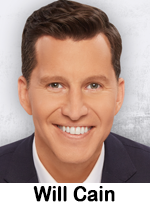 The program is also being produced for national syndication on terrestrial radio as well as being available on the FOX News YouTube channel. The program will tackle the latest headlines from Cain’s unique perspective along with thought-provoking longform interviews with leading figures and live calls from viewers and listeners. Cain comments, “This is it! This is what I want to be a part of in our national conversation. More. More engagement, more debate, more dangerous conversations, more free thinking, more fun.”
 company’s New Orleans market to take over for Williamson as SVP and market manager for the Chicago market. Williamson reports to Brian Benedik, chief
 revenue officer, and Cassidy reports to Brian Purdy, regional president. Benedik says, “We are thrilled to move Rachel into this new, important assignment. Her leadership experience and expertise with linear and digital audio and video will be a tremendous asset to growing our local business across Audacy.” Purdy comments, “With an impressive multiyear track record of success overseeing our New Orleans cluster, Kevin knows how to grow brands and deliver performance. We are confident that Chicago will continue to thrive under Kevin’s guidance.”
 2) Audio is powerful. Podcast consumers spend a significant amount of time on YouTube listening to podcasts without watching the video; 3) Since 2019, YouTube and


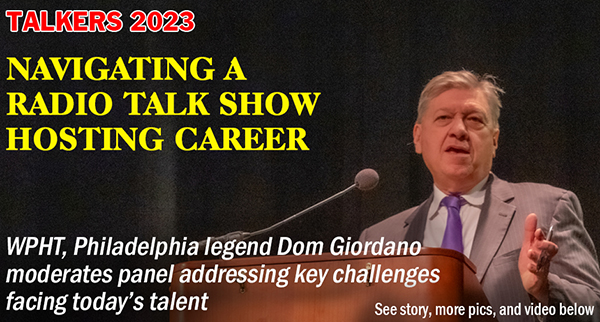
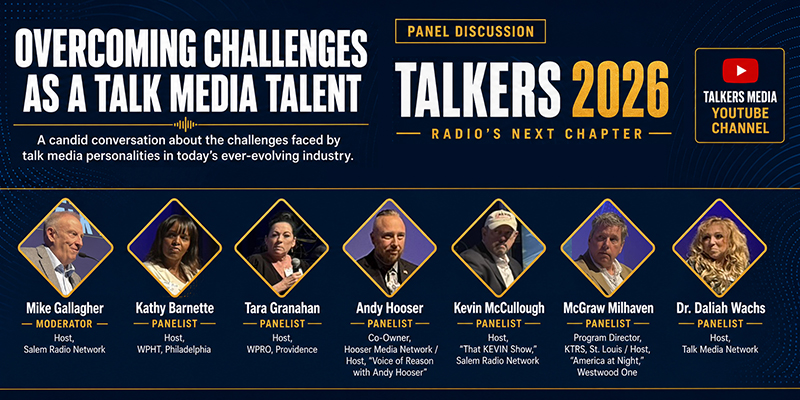
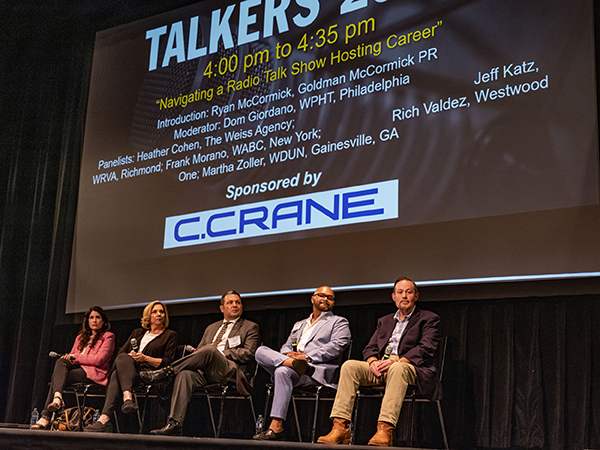
 Hosting Career.” The session, sponsored by C. Crane, was introduced by managing partner, Goldman McCormick PR and syndicated host, Ryan McCormick (pictured at right) and moderated by WPHT, Philadelphia host, Dom Giordano (pictured above). Panelists (pictured below from left to right) include Heather Cohen, SVP, the Weiss Agency; Martha Zoller, host, WDUN-AM/FM, Gainesville, GA; Frank Morano, host WABC, New York; Rich Valdes, host, Westwood One; and Jeff Katz, host, WRVA, Richmond, VA.
 How about a collective “thank you” to the 45th president of the United States for keeping your talk radio programming relevant, timely, unpredictable and most of all engaging?
 planners). Suchman writes that this argument “is among the ultimate tussles between media planners and publishers. While some may lean more heavily toward video, we at Audacy respectfully disagree.” He makes a five-point argument in audio’s favor saying it wins in reach, time spent using, is more immersive, activates all senses, and drives recall.
 commentators as well as up-and-comers. Trader tells TALKERS he “honestly believes AUN is one of the fastest growing TV and streaming networks in the country.” He states, “Now it is time to expand once again. Our goal is to be broadcasting in every major market in the next two years! This is maybe where an ambitious, hard-working manager can become part of this dream. I am looking to develop a management team to make it happen. If a candidate has expertise in managing finances and accounting, recruiting, human resources, overseeing and developing technologies, as well as creating company policy, sales and marketing, then such an individual might be looking for the challenge of a lifetime.” Trader continues, “I am looking to work with conservative/faithful, passionate ideologs like myself who are concerned with the direction our great republic is heading and want to return it to the Judeo-Christian, faith-based patriotic roots our founding fathers created! Here is the catch: all our progress and success has been achieved on a very tight budget! In fact, we cannot offer salaries. What we can offer is incentives for those who produce to be rewarded.” Interested candidates can contact Rick Trader, president/CEO, AUN TV Network at