
Welcome to No-Brand Land!
By Gary Begin
Sound Advantage Media
 Broadcasting executives spend millions building their radio station’s brand in the marketplace. But is it being spent in the right place?
The frontline salesperson is a marketer’s greatest asset in creating brand justice and impact. But if you ask brand managers to look at their brand-building budgets, you’d probably see expenses allocated opposite to what drives brand purchase decisions.
Brand marketers continue to pump big bucks into extensive ad campaigns while doing next to nothing to deliver relevant, brand-supporting messages at the all-important, more significant level—the distance between a company’s sales voice and a prospect’s purchase decision.
What’s the answer?
It probably lies somewhere between (1) the unwillingness of radio stations and brand managers to go further “downstream” with their strategic recommendations and (2) the lack of useful tools to get them there.
Welcome to No Brand’s Land
Increasingly, a company’s branding success depends less on what they sell and more on how they sell it. Selected experts in branding seem to be coming around the idea that the power to make or break your brand-building effort lies not in the quality of your advertising but in the customer’s experience at the point of sale. In radio, that’s your over-the-air product and how your ad rep handles the advertiser.
On one side of No Brand’s Land, brand marketers can control all the implementation, ensuring the advertising campaign is right on, the media coverage generated by your on-air promotion is consistent, your Web site looks the same, and your corporate design is in place.
But on the other side of the No Brand’s Land, salespeople are still doing their own thing. They are cutting and pasting old proposals with outdated information and incorrect messages. They’re fabricating homegrown collateral tools and PowerPoint presentations that are, at best, inconsistent with corporate positioning or, worse, downright inaccurate.
The most frightening thing for brand marketers is that these cobbled-together documents must walk the halls of prospective customers, representing the company’s brand at the most critical points in the sales process. Ouch.
Adding insult to injury, the field-fabrication virus spreads exponentially as this lousy information is perpetuated across the channel on the brand’s intranet.
Crossing Over No Brand’s Land
To navigate and successfully cross No Brand’s Land effectively, marketers must start by adapting brand message creation and delivery to today’s strategic sales processes. Two trends will drive marketers’ efforts to create brand-supporting content that helps salespeople sell.
Trend #1: Value Selling
For more than a decade, sales training and methodology experts have focused on improving the consultative selling skills of salespeople—especially in complex selling environments. The concept is simple: first, salespeople identify customers’ needs; then, they demonstrate the ability of a solution to respond to that customer’s specific needs successfully.
Often called Value Selling or Solution Selling, this dynamic and interactive sales process replaces previously static, one-way techniques that debate the merits of competing features and functions.
While salespeople move toward creating a much more customized sales experience for each prospect, most marketing departments continue to deliver generic messaging using static collateral tools—a one-size-fits-all approach for a one-to-one world. No wonder salespeople are forced to scramble to create custom content, piecemealed from various sources, to demonstrate they have listened to the customer.
The first thing brand managers can do to help is translate their high-level positioning into street-ready value propositions and solution messaging that speak to customers the way salespeople have been trained to sell:
- Create customer empathy by identifying and demonstrating a proper understanding of the critical do-or-die issues facing your customers. Do that for each level of the decision-making team and link it back to how they do their jobs today.
- Next, determine and articulate the risks if they do not address these issues. Also, firmly establish and highlight the rewards if they do act. Take special care to find out how your customers will define success—determine what they want to brag about if they are successful in achieving positive results.
- Then demonstrate how your company’s solution helps them respond specifically—and successfully—to their key do-or-die issues.
Trend #2: Dynamic, Personalized Collateral Building
Value selling has raised the bar, forever changing customer expectations about sales experiences. Customers expect company interactions to be personal, relevant, and tailored to their specific needs.
Meanwhile, marketing departments have tried to keep pace by adopting segmentation strategies, doing their best to tailor messages and create more customer-relevant positioning. However, the tools to deliver these increasingly sophisticated messages through the sales channels have lagged. So, we’ve seen a proliferation of static collateral tools designed to fit every occasion.
Unfortunately, salespeople are neither warehouse managers nor librarians, and they have difficulty tracking and finding suitable materials when needed. In response, marketers have set up sales intranets to supply 24×7 access to support materials.
While these intranets improve accessibility to materials, they don’t resolve the most significant issue facing today’s value-selling salespeople: the need to provide prospects with dynamic, personalized sales communications. With only static documentation, salespeople begin creating unique, customized documents for each sales situation.
Typically, this happens at the expense of the brand and the company. The lack of consistency between radio stations and from salesperson to salesperson—undermines the millions spent on brand awareness advertising. The extra time spent by salespeople crafting these personalized proposals, presentations, and collateral pieces keeps them from time better spent with customers.
Marketing’s big win is that every radio salesperson, even within a multi-entertainment environment, will now communicate a consistent company message. Imagine the brand-building power unleashed when sales reps begin delivering a persuasive, powerful, and pre-approved message at every point of customer contact.
Gary Begin can be contacted at: garybegin10@gmail.com.
 In
In 
 Providence-based talk host, podcaster, journalist and musician Bill Bartholomew says, “In a world where social media influencers and podcasters supply information to millions of young consumers, news/talk radio should be able to effectively compete for the ears of younger generations in a comparable, if not expanded way.” In a piece written for TALKERS magazine. Bartholomew says, “Unlike many digital-first content producers, radio retains a unique quality: authority. By virtue of editorial standards, FCC regulation and brand – things that social media and podcasts often lack – radio has the unique ability to deliver credible, vetted, nuanced and universally trustworthy content that can instantaneously adapt to meet the needs of the moment. This is true in everything from natural disasters to rapidly evolving breaking news stories, providing a channel for immediate, reactionary insight and analysis.” To that end, he suggests four steps news/talk stations should pursue.
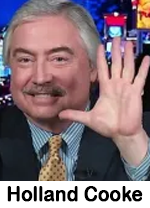
  “If you think radio has problems,” consultant Holland Cooke says, “Netflix et al are to television stations what Pandora et al are to music stations. So local news is TV stations’ silver bullet. And – like radio – their need to promote off-air exceeds their promotion budget.” In this week’s column, he outlines tactics for “partnering with a fellow broadcaster who’s also challenged.”
  I am always impressed when I see-and-hear radio and TV stations swapping product.
 In May 2007, I was enjoying the brand-new app called YouTube. Still independently owned, still relatively unknown. Some of the videos pulled millions of viewers, more viewers than enjoyed by ESPN or any cable network. More interesting, the videos with high counts were not made by NBC or ESPN or any traditional video source. High view count videos were being made by people with no experience in traditional media, they were experimenters producing in their basements and bedrooms.
 -platform audio with media plans that utilize radio, digital audio and podcasts, working together to reach audiences with unprecedented precision and drive quantifiable outcomes for their brands.” Some of the findings within the guide include: 1) Audio advertising works harder – driving more than two times the attention of TV and social media at more desirable CPMs; 2) Radio and digital audio are stronger together. A multi-platform audio strategy is so powerful that advertisers see 1.5 times the return on ad spend compared to digital-only campaigns; 3) Advertisers are leaving upwards of $6 billion in revenue on the table by not including total audio – a balanced mix of traditional broadcast radio and digital audio – in their media mix, according to a study conducted by Audacy and Neustar. The report also offers actionable tips for producing effective ads under the section titled, “5 Ways the Best Audio Ads Crush the Status Quo.” Here, Audacy says, “Advertising on the #1 reach media — Audio — will get you the most ears. But to keep them, your creative can’t just be good — it needs to be really freaking great.”
  own problems by increasing overall interference on the band, leading many stations to abandon it.” But all-digital AM is a much better signal and as more and more infotainment systems in new cars are HD compatible, more listeners are likely. Outfitting AM stations with digital transmitters is not inexpensive, even though they use far less electricity than an analog AM transmitter. And in the United Kingdom where digital audio broadcasting (DAB) launched more than 10 years ago, most commercial radio stations still broadcast an analog signal as well. Even though about 60% of listening in the UK is to DAB signals, Ofcom recently agreed to renew analog licenses through 2032 because many Britons still listen to analog on their old radios.
  As your friends get fired and on-air hosts are replaced with WideOrbit and Profitable Software, the mournful refrain is to unfairly blame consolidation. Consolidation has, in fact, made the medium financially viable and brought hundreds of individual stations from a river of red ink to the glow of black ink. Prior to consolidation, over half the radio stations in the U.S. lost money – year after year. Not a secret stat, those numbers were revealed annually by the NAB.
 Attention news/talk radio sellers! Get ready to meet your new best friend… and it is not who you think it is.
 SiriusXM. The company says, “As a radio news anchor, you will work under tight deadlines and deliver top-notch newscasts. You have a passion for breaking news and the flexibility to work on a day’s notice.” Requirements include at least five years’ experience as a news anchor and strong writing skills & audio editing experience.
 As this week’s first Republican presidential debate looms, my FOX News Radio-affiliated client stations are irked. Thanks to their network, they’re carrying it live, and locally sponsored, and promo-ing it aplenty. A couple of my clients will travel to Milwaukee to wrap pre- and post-game color around the play-by-play. So, yuh, they’re irked.
 Radio station personnel could be facing the worst environment – ever!
 HALF of all radio stations in the United States lose money – at least they did back in 1991. The NAB used to put out an annual report revealing how many radio stations were profitable. Usually half the stations in America lost money. Since consolidation, the NAB stopped putting out that report. It is reasonable to believe that far, far fewer stations lose money today. Shared costs, real estate, technical economies due to digital equipment versus analog all indicate that there must be fewer money-losing properties.
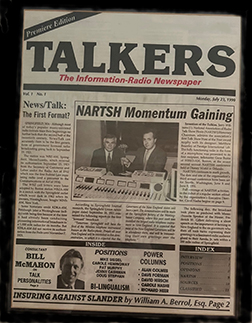 format phases including a full color magazine and eventually a daily online operation geared to providing news, advice and opinions to professionals involved in programming, managing, marketing and operating an array of related platforms in what has come to be known as talk media. This includes most popular forms of spoken-word AM and FM radio, plus online programming, podcasting, cable television and satellite broadcasting. During this period, TALKERS has produced and presented 26 national conventions in New York and another three in Los Angeles. Add to that more than 35 regional, national and international forums about the field and countless radio rows including several at the White House in conjunction with both the Bill Clinton and George W. Bush administrations. TALKERS remains and will continue to be a non-partisan proponent of the First Amendment with a great love and passion for talk media’s roots in the century old medium of radio.
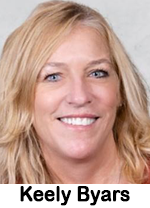 and operations. She is a native Nebraskan who is passionate about local media and the Omaha community. Byars understands our commitment to excellence, and we are thrilled to have her join our talented team in Omaha.” Byars has served in leadership positions with Lee Enterprises, Berkshire Hathaway Media, and the Omaha World-Herald. She comments, “Radio has such a positive impact on so many of our listener’s lives, the local businesses we serve, and the community partnerships we form. Joining the team at the radio stations that I grew up listening to is such an honor to me and I am excited to build upon the stations’ legacies.”
 media franchise – has hosted and produced more than 1,000 TV shows, 800 radio shows, and traveled all 50 states during the course of his media career. Lipford says he’s shifting the business model of his media company, which will now focus on streaming and licensing the brand’s extensive library of home improvement content. Lipford will continue to host his weekly two-hour “Today’s Homeowner” Radio show, and “Tips for Today’s Homeowner” radio features through the end of 2023, with the final show and features airing the week of December 25.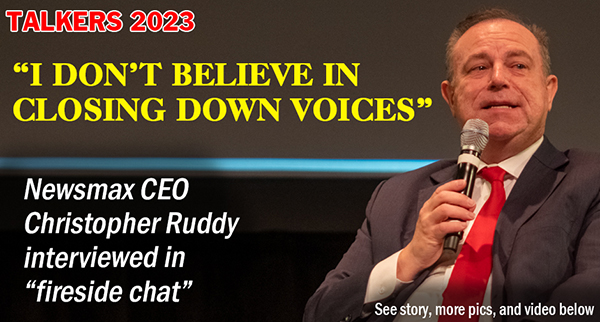
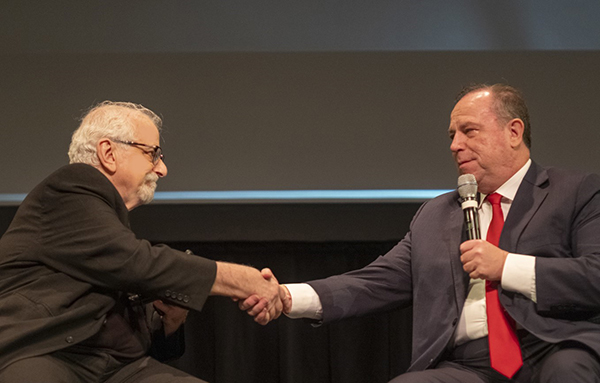
 delighted to have him as a guest in this setting and at this time.” In a fast-paced session sponsored by Collette guided travel tour specialists, Ruddy and Harrison engaged in a candid conversation about positioning, programming and navigating the infrastructure of modern media including print, digital and radio as well as cable news/talk television.
  Last week I had the privilege of moderating a panel at the TALKERS conference. Confession: I listen to speech patterns and tones more than words.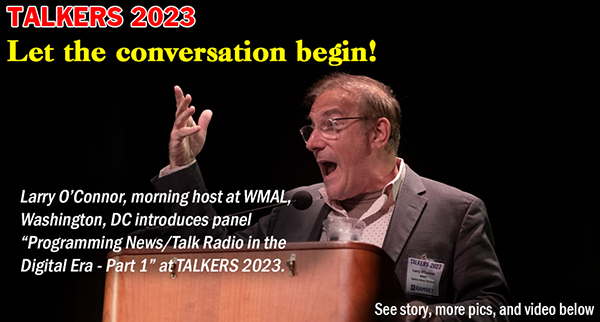
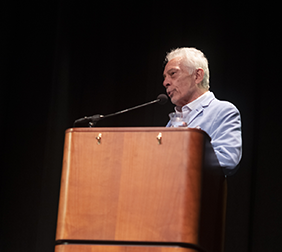 at Hofstra University will be posted, beginning today with the panel discussion “Programming News/Talk Radio in the Digital Era – Part 1.” The session, sponsored by Premiere Networks, is introduced by Larry O’ Connor, morning host at WMAL, Washington, DC and moderated by Mike McVay (pictured at right), CEO of McVay Media Consulting. Panelists (pictured below from left to right) include Joe Thomas, program director/host, WCHV, Charlottesville, VA; Eric Stanger, SVP operations, Sean Hannity Show/Premiere Networks; Brett Winterble, host, WBT, Charlotte; Kevin DeLany, VP news & talk programming, Westwood One; and Tom Cuddy, program director, WOR, New York. (Note: Matt Meany, program director, WABC, New York who was originally scheduled to appear on this panel switched to the “Programming News/Talk Radio in the Digital Era – Part 2” session which will be posted tomorrow.)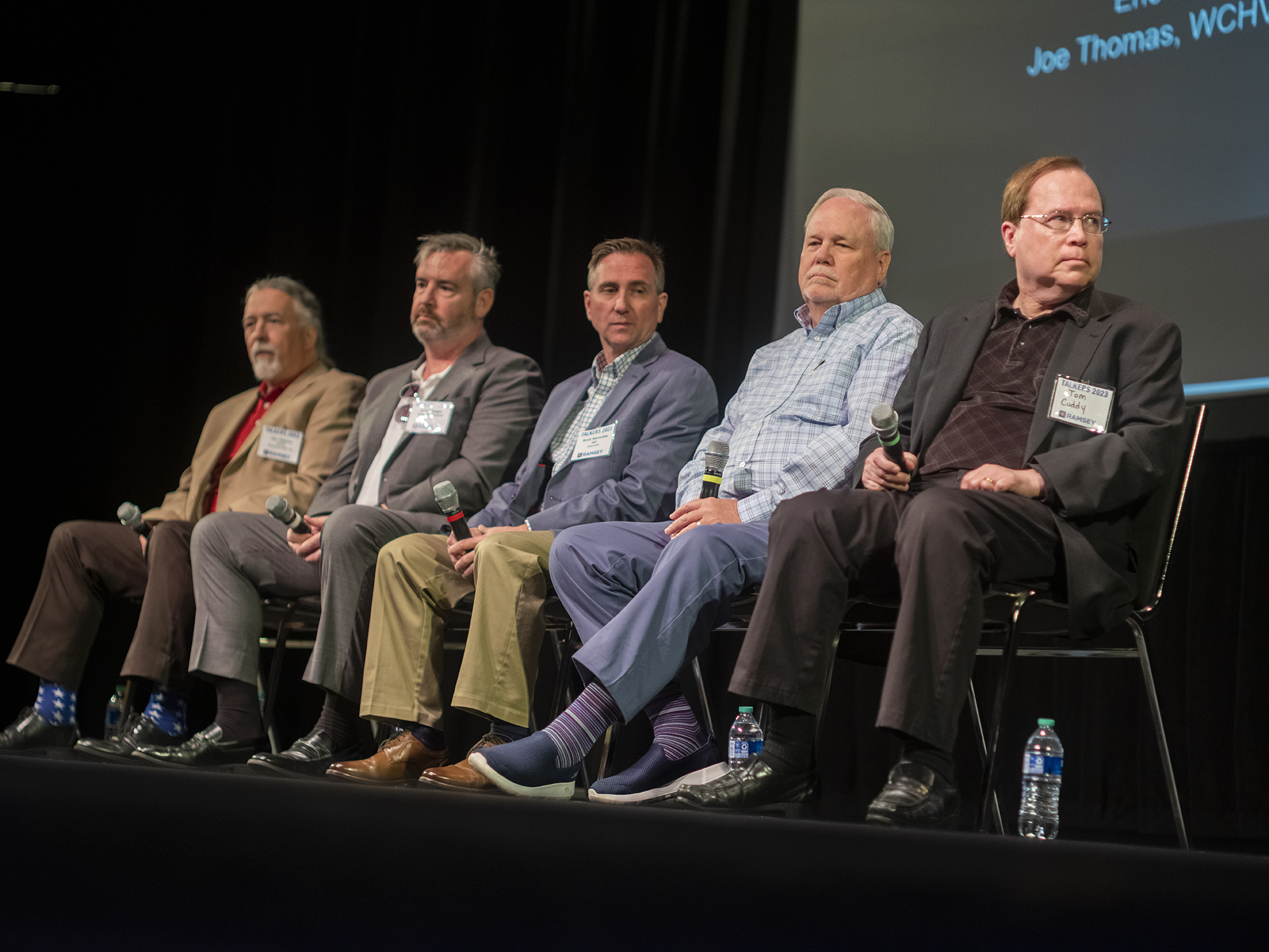
 Starnes comments, “When I bought KWAM I promised our listeners that we were going to bring fair and balanced journalism back to the radio. I’m incredibly proud of our dedicated and hard-working team of broadcasters at KWAM.”
  There are media and there are media. There are platforms and there are platforms. Not all cultural artifacts are equal in terms of their utilitarian versus cultural value. Damn the tone-deaf corporate bean counters who are ripping the heart out of the spirit that gives humanity its life force! Marketplace obsolescence should not solely be determined by profit and loss. With all due respect to the idea of public service, what about the concept of loyalty? Shame on the automobile industry! Not only is it turning its back on the needs of millions of people, it is in the process of betraying one of its historic partners in not only commerce – but romance and glory. In other words, the automobile industry owes the radio industry a huge debt. The relationship between cars and radios goes a century deep and has been nothing less than a two-way street. Yes, auto industry, don’t be so hasty to save a few bucks by rushing AM (and then FM) radio out the door. You might just find in the long run that “radio” outlasts the private “car” as a fixture of human activity.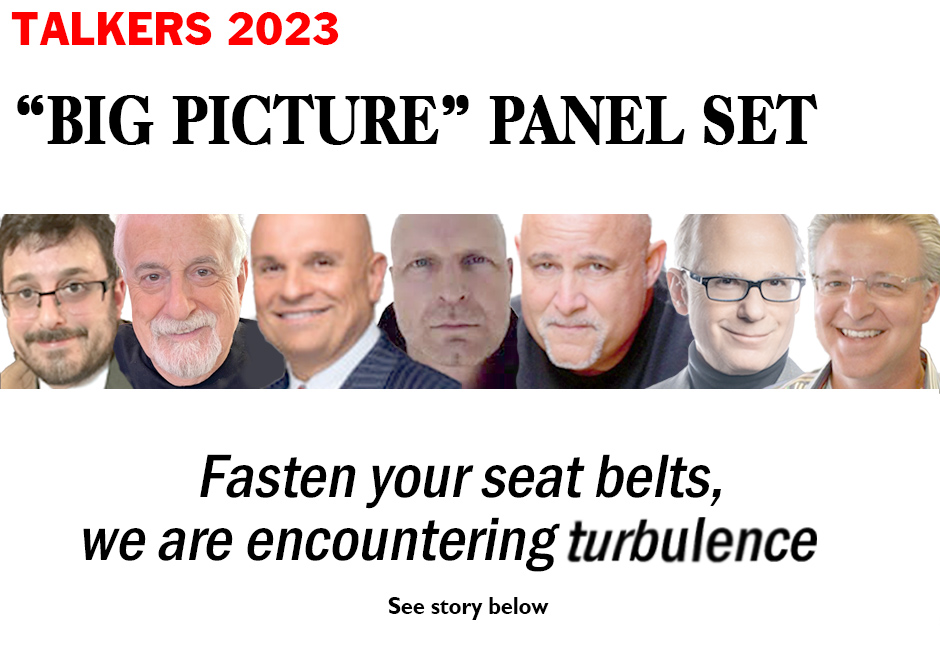
 in London, Springer got a law degree from Northwestern University, served on the Cincinnati City Council before exiting in a prostitution scandal, returned to the Council a year later and eventually served as mayor of Cincinnati. He ran unsuccessfully for governor of Ohio as a Democrat. He moved into television news and won regional Emmy Awards before debuting his own soon-to-be-a-hit TV show that began as an issues-oriented program. Springer was part of the Air America liberal talk radio experiment during the early 2000s in which he hosted the 9:00 am to 12:00 noon ET show. In 2005, TALKERS magazine managing editor Mike Kinosian (who then was special features editor for Inside Radio) interviewed Springer.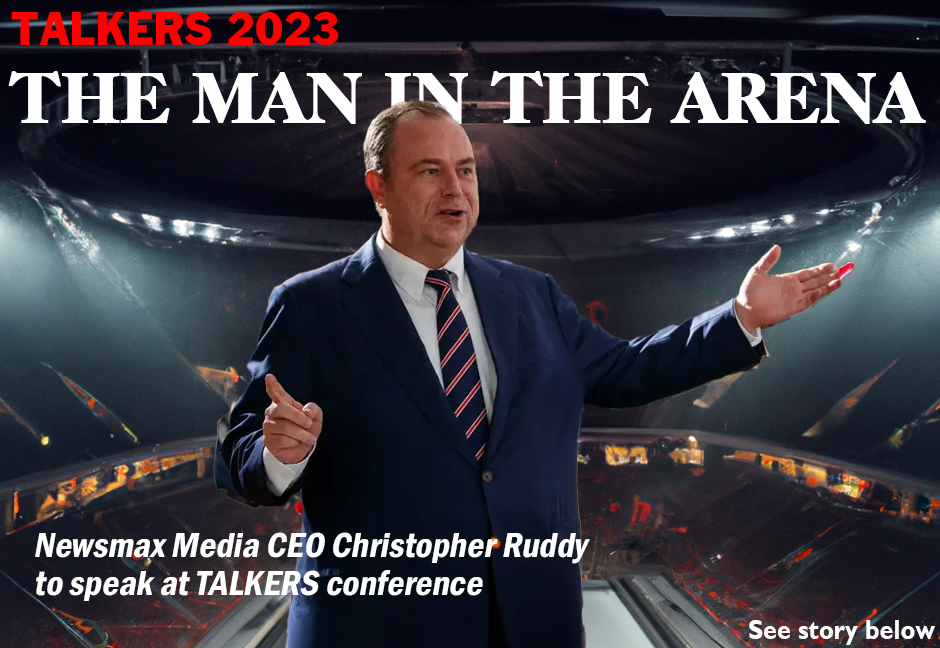
 syndicated radio health-based talk show continues to gain affiliates, was recently appointed the role of “ringside physician” for Impact Wrestling which doubles as a serious medical position as well as an entertainment position. Doctor Asa tells TALKERS, “The NFL, just like combat sports, includes years of high-impact play, raising concerns for long-term wellness. Concussions, joint injuries, cardiovascular health, obesity, and neurological complications are the norm as the average career for
  an NFL player is very short.” Doctor Asa will be speaking and educating as the leading health and wellness voice for NFL Franchises and Alumni with strategies for optimal health, performance, and longevity. He continues, “The NFL is a worldwide sports giant with some of the greatest athletes. The players are the ones we need to make sure are in the best position to enter the sport well and exit with their greatest win, their health. NFL Alumni Health has a passion to educate the players for better current play health and longevity choices which creates a better post-play outcome. Many former NFL Alumni Players are losing quality of life and facing serious health challenges. NFL Alumni Health is on a mission to create a better way. I’m here to be the voice, the storyteller, and catalyst to inspire the NFL and its Alumni, and influence others to reach their potential and becoming the best version of themselves.” Dr. Asa Andrew will be speaking on “The Big Picture” panel at TALKERS 2023, June 2 at Hofstra University.