

Industry News

TALKERS 2026 – Hailed as a Stunning Industry Revival
img
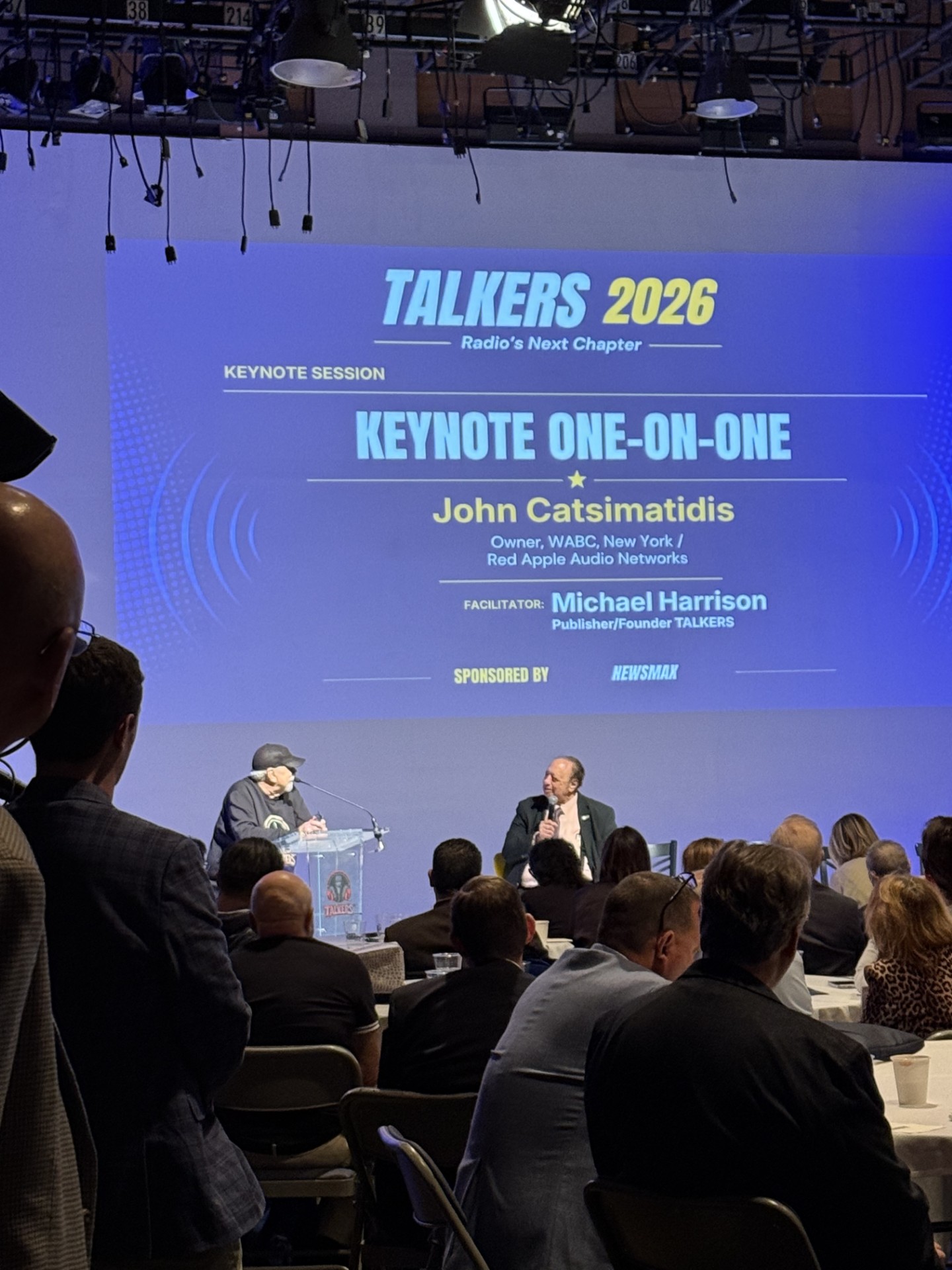
TALKERS publisher Michael Harrison (l) and Red Apple Media CEO John Catsimatidis (r) pictured above in ‘Keynote One-on-One” conversation at TALKERS 2026.

The 28th annual edition of the talk media industry’s longest running and most important national gathering – TALKERS 2026: Radio’s Next Chapter – took place at the Lawrence Herbert School of Communication on the Long Island, NY campus of Hofstra University this past Friday (6/5). It was produced in conjunction with Hofstra’s multi-Marconi Award winning campus radio station, WRHU-FM. The vibrant, sold-out gathering presented 65 speakers and 338 registered attendees engaged in the sharing of perspectives, advice, and ideas within the fertile environment of dynamic collegial networking.

The main themes of the conference included an intense focus on the future of radio and talk media in the multi-platform digital world of the second quarter of the 21st century.  These included exploration of such existential questions as how to gain profile traction in a noisy world; how to regain the public’s trust in the media; how to meet the challenge of generating revenue in a fractured and challenging economy; what entrepreneurial opportunities exist for individuals and independent companies in this new environment; how to expand programming options; how to recruit new talent; how to attract younger demos; how to deal with the enormous unforgiving power of algorithms in scoring the game; how to effectively control and exploit AI; how to make a living in this business; and so much more.

Speakers and attendees included a cross section of talk media professionals from the words of talent, management, ownership, syndication, journalism, engineering, politics, sports, the law, academia, and music – even pro-wrestling!

TALKERS founder Michael Harrison expressed his deep gratitude to the industry: “We worked day and night for months putting this one together, and we couldn’t be more pleased with the results. Heartfelt thanks to our speakers, attendees, and sponsors, as well as our dear friends and partners at Hofstra University, where it all started for me.”

TALKERS VP / executive editor Kevin Casey states, “We have enough text, photos, and video from this historic media event to keep us busy putting it together and maximizing the intellectual riches for a long time to come. It was a content motherlode!”  TALKERS will provide full coverage of TALKERS 2026: Radio’s Next Chapter over the coming days, weeks and months on its website, newsletter and video channel. Stand by!

Industry Views

They Say YOU Infringed – But Do THEY Own the Rights?

By Matthew B. Harrison
TALKERS, VP/Associate Publisher
Harrison Media Law, Senior Partner
Goodphone Communications, Executive Producer

imgYou did everything right – or so you thought. You used a short clip, added commentary, or reshared something everyone else was already posting. Then one day, a notice shows up in your inbox. A takedown. A demand. A legal-sounding, nasty-toned email claiming copyright infringement, and asking for payment.

You’re confused. You’re cautious. And maybe you’re already reaching for the fair use defense.

But hold on. Before you argue about what you used, ask something simpler: Does the party accusing you actually own the rights?

Two Main Reasons People Send Copyright Notices

1. They believe they’re right – and they want to fix it.  Sometimes the claim is legitimate. A rights-holder sees their content used without permission and takes action. They may send a DMCA takedown, request removal, or ask for a license fee. Whether it’s a clip, an image, or a music bed – the law is on their side if your use wasn’t authorized.
2. They’re casting a wide net – or making a mistake. Other times, you’ve landed in a mass enforcement dragnet. Some companies send thousands of notices hoping a few people will pay – whether or not the claim is strong, or even valid. These are often automated, sometimes sloppy, and occasionally bluffing. The sender may not own the rights. They may not even know if what you used was fair use, public domain, or licensed.

Mistakes happen. Bots misidentify content. Images get flagged that were never protected. Even legitimate copyright holders sometimes act too fast. But once a notice goes out, it can become your problem – unless you respond wisely.

The First Thing to Check Is Ownership

Most creators instinctively argue fair use or say they meant no harm. But those aren’t the first questions a lawyer asks.

The first question is: “Do they have standing to bring the claim?”

In many cases, the answer is unclear or flat-out “no.” Courts have dismissed copyright lawsuits where the claimant couldn’t show ownership or any active licensing interest. If they can’t demonstrate control over the work – and actual market harm – they may not have the right to sue.

What To Do If You Get a Notice

Don’t panic. Not all claims are valid – and not all claimants are in a position to enforce them.
Don’t assume fair use will protect you. It might, but only after ownership is clear.
Don’t engage emotionally. Responding flippantly can escalate things fast.
Do get help early. A media attorney can help you assess whether the claim is real – and whether the sender has any legal ground at all.

Matthew B. Harrison is a media and intellectual property attorney who advises radio hosts, content creators, and creative entrepreneurs. He has written extensively on fair use, AI law, and the future of digital rights. Reach him at Matthew@HarrisonMediaLaw.com or read more at TALKERS.com.

Industry News

Salem Media Group to Sell Greenville-Spartanburg Signals

Salem Media Group announces it is entering into an agreement to transfer the ownership of Greenville-Spartanburg, South Carolina stations news/talk WGTK-FM, classic hits duo WRTH-FM and WLTE-FM toim
Educational Media Foundation for $6,775,000. Salem Media CEO David Santrella states, “We have enjoyed our years in the Greenville-Spartanburg market but have made the strategic decision to divest our interests there. As we do, we are grateful to be able to place these signals in the hands of Educational Media Foundation who share a like-minded mission with Salem through their music programming. We are also thankful to our Greenville-Spartanburg staff for their many years of service.”
Industry Views

NAB Out of Step on Non-Competes

By Walter Sabo
Consultant, Sabo Media
A.K.A. Walter Sterling
Radio Host, Sterling on Sunday

It’s tough enough for radio talent to navigate stable careers in these days of consolidated station ownership, personnel cutbacks and drastic salary reductions – but the NAB’s newly stated stance on non-competes adds insult to injury and is out of step with the interests of beleaguered professionals still hanging on for dear life in the programming sector of this industry. I understand that the National Association of Broadcasters is at heart a lobbying group representing the interests of the medium’s ownership but, c’mon – non-competes really are of another era and egregiously unfair.

This week the NAB announced that they were not in favor of the FTC ruling to ban non-compete clauses that prevent radio talent from crossing the street. The FTC is proposing the ban on non-competes for a broad section of industries compelling dozens of industry lobbies to sign a letter to Congress in opposition to the ban.

The lobbyists’ letter says that the FTC’s rule would invalidate millions of contracts around the country that courts, scholars, and economists have found entirely reasonable and beneficial for both businesses and employees. “Accordingly, we ask you (Congress) to exercise your oversight and appropriations authority to closely examine the FTC’s proposed rule-making.”

Government interference with the practices of any industry, especially in the area of freedom of competition, is never a good idea. The NAB and other industries believe banning non-competes constitutes FTC overreach. And that is a solid argument. However, the NAB also suggests that broadcasters present a unique case for non-compete clauses due to the “substantial investments broadcasters make in promoting on-air talent.” That’s where they are grossly behind the times.

Maybe in TV. But it has been decades since any radio company has made any investment in promoting their on-air talent. Do you have a $500 “name” jingle? Where are the billboards? Whatever happened to TV and newspaper ads?

Non-competes are deployed in most industries to protect trade secrets. All of radio’s trade secrets are on the air!

Walter Sabo, consultant, can be contacted at Sabo Media: walter@sabomedia.com. Direct phone: 646-678-1110.  Check out www.waltersterlingshow.com.