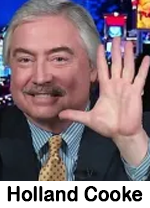
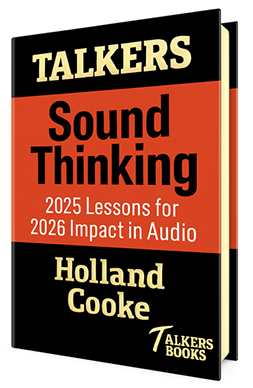
By Holland Cooke
Consultant
 Music radio’s competitors were vinyl, then tape, then CDs – before smartphone streaming and satellite radio offered more portability and variety. And before consolidation, broadcasters were under less of the revenue pressure that now commercializes many stations beyond listeners’ tolerance. TALKERS NAB Show coverage included Edison Research founder Larry Rosin lamenting “many, many [music] stations now loading all their spots into two interminable breaks per hour.” I cringe hearing FMs struggle to remain among listeners’ music appliances. And I fret that monologue-heavy talk radio is relinquishing interactive dialogue to social media.
Before moving to all-news, and eventually news/talk, I worked in music formats less-structured than today’s. So now I hear music radio as an outsider, more like a consumer. Which got me wondering: How does my format sound to music consultants? So, I asked several whose work I respect.
Beware the one-joke act
Mike McVay reckons that “listeners want to know a little bit about a lot of things,” a point other colleagues echo. Explaining that “music radio is all about variety,” adult contemporary specialist Gary Berkowitz: “To me, listeners are tired of all this political back and forth. Sure, it has its place, but it’s like if music radio only played five different artists!” Jon Holiday – who customizes station playlists for a variety of formats – asks “are talk listeners getting what they want?” Calling some formats “very artist-heavy,” he thinks stations were right to play so much Taylor Swift in 2024, certainly her year. And 2025 sure is Trump’s, but Holiday calls “banging the same drum all day, every day” the most common flaw he hears on talk radio.
McVay says listeners like “stories that pull on their heart strings. It’s why “NBC Nightly News” ends with a touching story. It’s not fluff. It’s information relief.” He also recommends topics you are likely to overhear at the next table during lunch: “Discretionary Time Information” (binge-worthy shows on Apple+, Max, Netflix). Health. And – lately more than ever – what Mike calls “purse” stories (think: eggs). Been to Costco? On weekends it’s mobbed. Ask any member and they’ll recite a shopping list of Kirkland-brand bargains.
Play the hits
When Gary Berkowitz – then an accomplished music programmer – took over stately WJR, he “approached it like it was a music station, the only difference was my ‘songs’ were my personalities, news coverage and, at the time, play-by-play of all the major Detroit teams.” He bought a jingle package “to ‘decorate’ the station;” and “got ‘JR involved with everything that was happening in Detroit. All I did was put it all together and present it like my top-40 upbringing taught me.”
I can relate. Before I programmed all-news WTOP, Washington, I had no news experience. I came from a music FM. The WTOP staff I inherited was impressive, and their work was solid, but the station wasn’t “programmed enough.” I was sent there to convert Cume to Average Quarter Hour – the blocking-and-tackling formatics fundamental to music radio. We owned “the Top news…instantly” image, and we said those very words LOTS. But research told us that traffic and weather were “the hits;” and how we presented them moved the needle.

Great talkers are great listeners
In every transaction, consumers now expect to interact; and “listeners like to hear others’ voices,” Mike McVay observes: “When the audience is comfortable enough to weigh in with an opinion, their own story, or a reaction, you’ve created a ‘friend circle.’” Jon Holiday tells morning shows he works with to “take time going into breaks to be topical and interact with callers.” And engage by texting and social media. And don’t just push-TO listeners. Be quick to REPLY, and you will make them feel special.
Yet, in three decades coaching talk hosts, the most unwelcome word I say seems to be “callers.” Imitating gifted Rush Limbaugh, many hosts are prone to windy monologue, rather than inviting the busy dialogue that makes a station sound popular (something local advertisers notice). DJs deftly weaving interactivity into music shows often sound more inviting than sermonizing talkers. Holiday remembers El Rushbo as “a master at having fun, particularly in his early days as a syndicated personality.”
Prescription: Local
Twenty years ago at the TALKERS conference, publisher Michael Harrison’s advice was elegantly simple: “Give them something they can’t get anywhere else.” Especially now, with so many non-local audio competitors. Regardless of format, helpful local information can increase Occasions of Tune-In per week.
Simply doing local news is a start. But does yours enable the listener by telling what an item means to him or her? On any given day, what you’re overhearing at lunch is something big that’s happening somewhere else. Can you explain the local impact? “National news needs to mean something to me, my community, my region or state,” according to McVay.
With weather so erratic in so many places, owning that image is gold. If you’re news/talk, don’t assume that you’re the market’s weather station. If you’re music, don’t assume you can’t be. Noting typical news/talk demographics, Jon Holiday surmises that, “as we get older, we seem to be more interested in weather.”
And as successful music stations have always done, show up! Gary Berkowitz had WJR go all-in on Detroit’s Thanksgiving Day parade, “with our people all over the parade route. It was better than the TV coverage!”
Holland Cooke (HollandCooke.com) is a consultant working the intersection of broadcasting and the Internet. Follow HC on Twitter @HollandCooke and connect on LinkedIn
Share this with your network
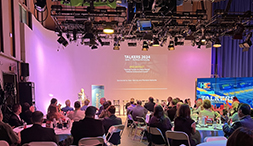 News/talk, sports talk, all-news, and general talk will be amply covered. There will be over 50 top industry speakers, and registration is limited to insure intimacy. Attendance at the conference is only open to members of the working media and directly associated industries as well as students enrolled in accredited learning institutions. All attendees will be required to register in advance on the phone payable by credit card. Because attendance will be limited, the conference is again expected to
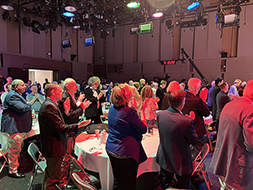 be an early sellout. The all-inclusive registration fee covering convention events, exhibits, food, and services for the day is $260. However, attendees can take advantage of the early bird fee of $150 available until 5:00 pm ET on Friday, April 3. All registrations are non-refundable. This power-packed, one-day event is being presented in association with Hofstra’s multi-award-winning station, WRHU Radio and the school’s Lawrence Herbert School of Communication.
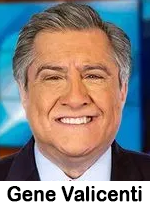 founder Michael Harrison on WPRO, Providence’s “The News with Gene Valicenti” discussing the shutdown of CBS News Radio. The two seasoned broadcasters took an analytical look at the past 100 years of broadcast journalism – from Edward R. Murrow to modern times – comparing the role and impact of early day giants such as William S. Paley (CBS), David Sarnoff (NBC), and John W. Kluge (Metromedia) to today’s crop of moguls including the Ellison family’s Larry Ellison (Oracle) and his son David Ellison (Skydance Media) who now control Paramount, CBS, and a variety of other media and technological ventures.
 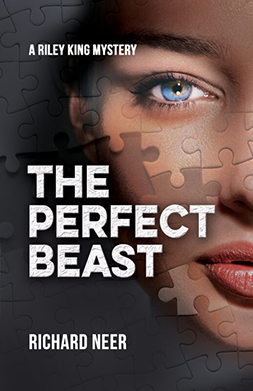 media enthusiasts, including the invasion of AI into the talent job market. Neer first established himself as a heavyweight author in 2001 when he penned the landmark FM: The Rise and Fall of Rock Radio. In The Perfect Beast, Neer poses the question to his fellow broadcasters, “Ever wonder if your job will someday be taken by an AI facsimile of your act?”
 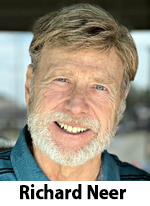 The story also deals with how a commentator’s words can be twisted and misused, resulting in something evil. TALKERS publisher Michael Harrison (who makes an appearance as himself in The Perfect Beast) describes Neer as a media “Renaissance man.” Neer can be contacted for interviews via email at
  during an informal conversation with his longtime friend, music industry publicist Anne Leighton on her YouTube program, “The Anne Leighton Inclusion Interview.” Harrison talks about the evolution of radio and its influence on popular culture through more than a half century of
  broadcasting adventures including his present-day role as a member of the classic rock band, Gunhill Road. Harrison states, “Anne is such a unique player in this business – a longtime proponent of music discovery – she has such a respect for the artists and their fans. Her podcast is SO refreshingly grassroots. It was a remarkable, fun experience talking with her about all that cool stuff.” Fans of music and radio history should not miss this.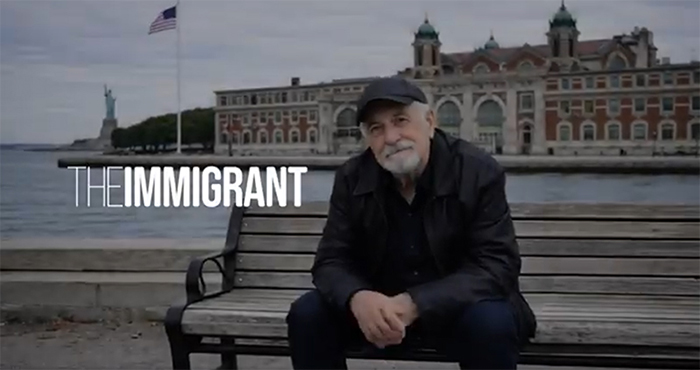
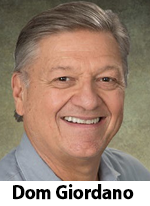 Giordano is a political commentator, social generalist and seasoned expert on education. He is a former Pennsylvania-based schoolteacher whose keen insights, innovative ideas, and communication skills were discovered by talk radio in Philadelphia in 1987 when, after serving as a dependable “go-to” source on education, he became a fulltime host on WWDB-FM. In 2000, he moved over to powerhouse WPHT 1210 am in Philly where he has been broadcasting ever since. In addition to his enduring radio presence, Giordano hosts several podcasts including the groundbreaking “Old School, New School, Next School” which takes a critical-but-constructive view of America’s education crisis and is must-listening for parents who care about their kids and the future of America. Get ready for a no-holds-barred view of such hot topics as school choice, the tyranny of social media, the distraction of smart phones, short term attention spans, bullying, the threat of guns and violence, responsible parenting, media complacency, and a whole lot more.
  gathering – will take place February 19-21 at the Sheraton Times Square Hotel in midtown Manhattan.
 With the conclusion of 2025 at hand, we are entering the second half of the third decade of the 21st century. It will be a remarkably transitional period for the talk radio industry and its closely associated fields in talk media, as well as media-in-general.
 appreciate this real estate, and your feedback.
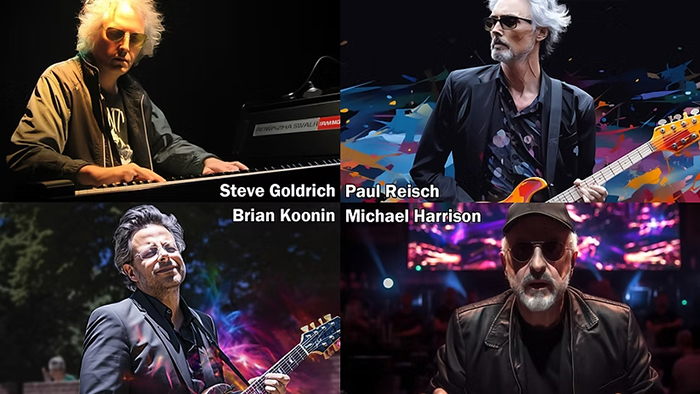

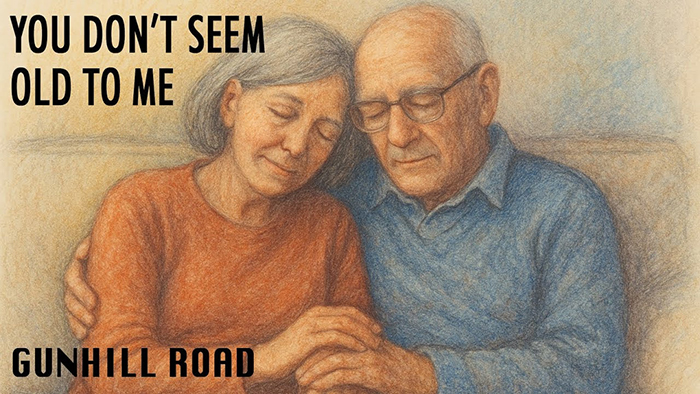
 examining the lifelong love affair of a fictional couple from childhood to old age – an emotional roller coaster ride reflecting the romantic ups and downs of a complex relationship. The tear-jerker is a departure from the heavy-hitting social commentaries that have made Gunhill Road a favorite among talk radio hosts and audiences for the past half decade. The intriguing group, formed in the late 1960s, is still going strong with core members Steve Goldrich, Paul Reisch, Brian Koonin, and Michael Harrison. Matthew B. Harrison produces the ensemble’s videos that employ leading-edge techniques and technology. Ms. Farber, who shares lead vocals on the song with Brian Koonin, is a talented singer, songwriter, and instrumentalist with a number of singles, albums and television commercial soundtracks among her credits. She is presently an advocate for the well-being of nursing home residents and organizer of initiatives to bring live music into their lives.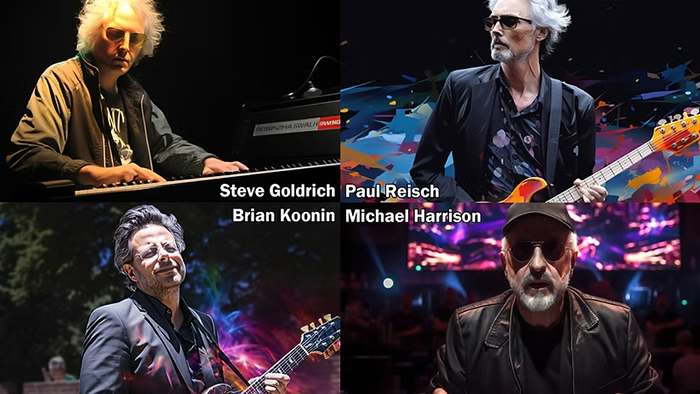
 and the gut-wrenching chaos of informational overload. Non-partisan lyrics cry out: “Too much information clogging up my brain… and I can’t change the station; it’s driving me insane!” Co-written and performed by band members Steve Goldrich, Paul Reisch, Brian Koonin, and Michael Harrison, the dramatic images accompanying the music include a dynamic montage of exasperated people being driven to the brink of madness by the pressure of what feels like non-stop, negative NOISE. Produced by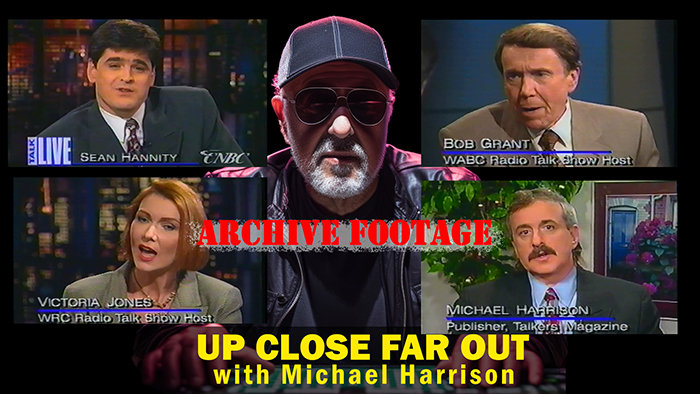


 newsprint tabloid, TALKERS proclaimed that “talk radio” was, indeed, an “industry within an industry” and worthy of its own, unique full-service trade publication. Founded by pioneering radio broadcaster (KMET, WNEW-FM, WLIR-FM, WCBS-FM, WPIX, KPRI, CBS, Westwood One, RKO) Michael Harrison, who also brought his experience with publications including Radio & Records, Goodphone Weekly, and Billboard to the table, the independent journal went on to produce annual conferences, numerous radio shows, and contribute to the ongoing success and influence of a variety of spoken word formats and talk media offshoots.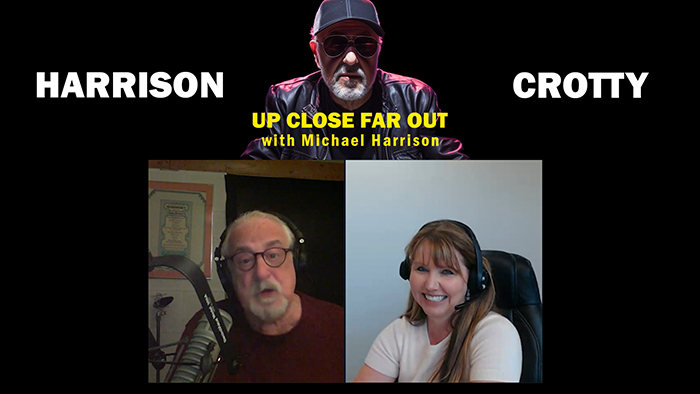
 Music on the weekend provides multiple positive strategic weapons for talk stations. From launch, “New Jersey 101.5” (1,000,000+ cumer); WTKS-FM “Real Radio,” Orlando; WABC, New York; WPHT, Philadelphia; and other major market winners air music all weekend or on dayparted shows.
 made last year’s mingling of student and professional broadcasters such a resounding success. The dates are set for Friday, February 20 and Saturday, February 21. TALKERS founder Michael Harrison states, “There are exciting things happening at the radio stations and communication departments of high school, college, and university campuses across America. These institutions and creative outposts embody a spirit emanating from its practitioners as well as its audiences that bode well for the future of general radio, talk media and digital communications. This tremendous source of talent, ideas and energy has been burgeoning right under the noses of our professional industry for years. It’s time to harness that obvious synergy at this pivotal juncture.” More details including agenda, registration, hotel and sponsorship information will be posted in TALKERS in the coming weeks. Save the dates!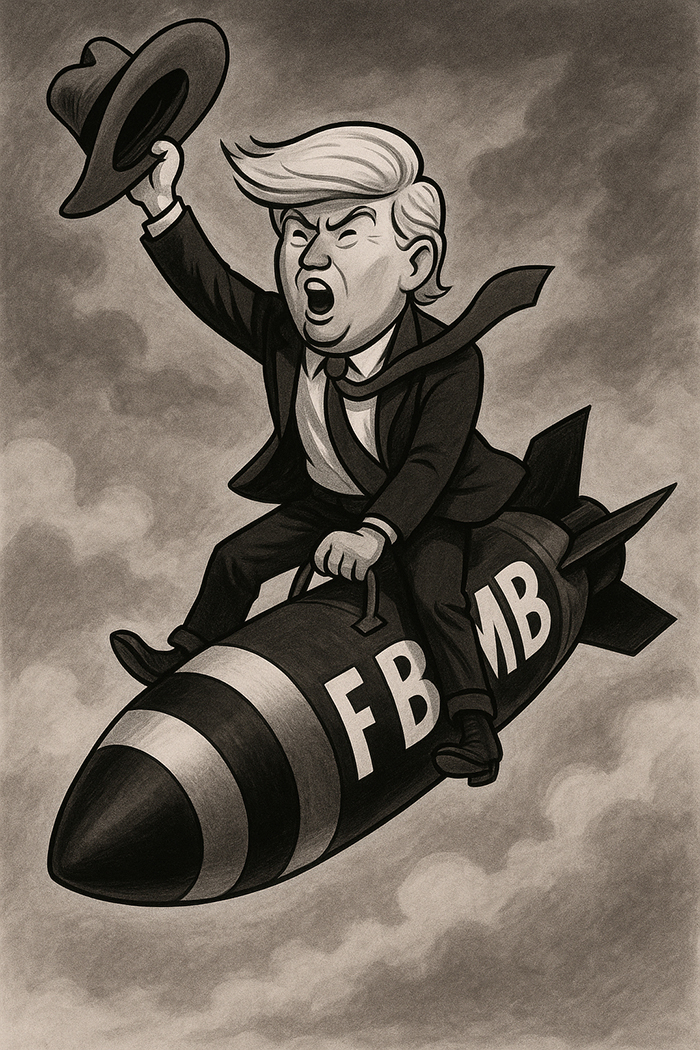
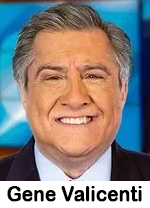 House lawn press conference sparked a wave of on-air and online conversations about the state of the media and appropriate use of the English language in the rapidly changing digital era. TALKERS publisher Michael Harrison appeared as a guest this morning (6/25) on the highly popular Gene Valicenti morning drive show on WPRO-AM, Providence sharing his take on the matter including legal and cultural aspects of whether to bleep or “let it fly.”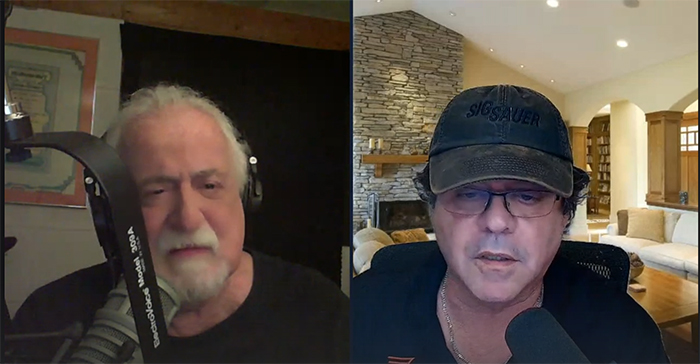
 In a ruling that should catch the attention of every talk host and media creator dabbling in AI, a Georgia court has dismissed “Armed American Radio” syndicated host Mark Walters’ defamation lawsuit against OpenAI. The case revolved around a disturbing but increasingly common glitch: a chatbot “hallucinating” canonically false but believable information.
 TALKERS publisher Michael Harrison introduced the term in the 1990s, inviting us to think-beyond the real-time audio we were sending up those towers. What he described seemed conceptual, even futuristic, back then, when we were still logging-onto AOL via dial-up (screech).
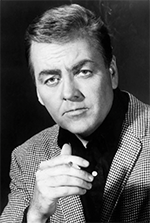 (pictured here) that aired on the program yesterday (3/13). TALKERS publisher Michael Harrison was among those interviewed for the eight-minute segment called Radio Diaries. Pyne began his career as a disc jockey but after injecting political commentary into his show was encouraged to do more talking and that eventually evolved into the Joe Pyne radio show that the NBC Radio Network put into syndication in 1966. Pyne enjoyed bringing controversial guests – including “hippies, women’s libbers, Scientologists, swingers, a snake charmer, members of the Ku Klux Klan and the John Birch Society.” He then segued to television in Los Angeles. Harrison is quoted in the segment saying, “There were a lot of people that didn’t like Pyne, but they watched him anyway because they thought it was — amusing? Entertaining? Sensational? Different? You know, not boring.” Photo: Everett Collection