

LOOKING AHEAD to the Second Half of the Third Decade of the 21st Century
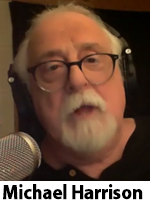
By Michael Harrison
TALKERS
Publisher
 With the conclusion of 2025 at hand, we are entering the second half of the third decade of the 21st century. It will be a remarkably transitional period for the talk radio industry and its closely associated fields in talk media, as well as media-in-general.
Here’s what’s going to happen:
The age old “radio station” paradigm as a brick-and-mortar business/cultural/communications center will disappear. After more than a century, it will be financially and physically impractical to operate the process of “radio” as a federally licensed production company tethered to a broadcast tower that houses programming, sales, and a roster of creative practitioners under one roof on an employee-based payroll. Radio “stations” will be more of an esthetic meme than an actual physical place on a dial coming from a specific business space with desks and “departments.” Programming and sales – local, regional, and national – will be provided by “outside” sources. Most “talent” will operate as either independent contractors or employees (or “partners”) of these outside companies. Local-ness and/or national-ness will not depend upon actual location of sources but rather focus of content. The biggest challenge facing radio station owner/operators will be to transition their “media station” brands from being licensed entities to effectively competing in the “dark jungle” or “high seas” of unlicensed platforms… without going broke.
In the wider world of media:
AI is going to put “Hollywood” out of business. Oh, there will still be a nebulously geographic place in Southern California called “Hollywood” but it will no longer be mythically based on big studios, production companies, and star talent.
And lovers of freedom will come to recognize the communications arm of “Big Tech” as the greatest threat to liberty facing humanity since World War II.
More on the above in 2026.
Happy holidays!
Michael Harrison is the publisher of TALKERS. He can be contacted at michael@talkers.com.
 In the wake of Charlie Kirk’s murder, one would expect every company that owns a talk radio station, every network that syndicates conservative voices, and every corporation that employs talk radio hosts to issue a unified statement of defiance. This was not just an attack on Charlie; it was an attack on the entire industry of talk radio, on the free exchange of ideas, and on the First Amendment itself. Yet, shockingly, most of these companies have remained silent. That silence is unacceptable. At a moment like this, the industry should stand shoulder to shoulder and declare to the world: we will not be intimidated, we will not be silenced, and we will never abandon the microphone.
 Commerce vowed to sue the FTC to block the proposal, calling it ‘an unlawful power grab’ in a statement shortly after the vote. The chamber, as well as the two dissenting [FTC] commissioners, has argued that the FTC doesn’t have the authority to address this issue and that it should be left to the states.” The Times piece notes that the rule becomes law 120 days after being published in the Federal Register – meaning sometime in late August – but that legal challenges could block or delay the change. In the radio industry, most on-air talent, programmers, and sales staff who work under written contracts have a noncompete clause that prevents them from working “across the street” usually for six months. If this new policy stands, it will be a monumental change for radio companies.
  DirecTV and its leadership for working with us to find a mutually beneficial business agreement to bring our programming back to its customers. While we raised the issue of censorship relating to our removal, we now believe in DirecTV’s commitment to distributing diverse viewpoints, including conservative ones. DirecTV has made clear during our negotiations that it has always been focused on protecting its customers from the rising programming costs across the pay TV industry and never intended to limit one perspective or to target conservative voices. We accept their position and believe that our new agreement with DirecTV will allow them to continue to be a go-to-source for one of the most diverse lineups of news programming, now with three conservative news networks including Newsmax.” Newsmax Media CEO Christopher Ruddy will be speaking at TALKERS 2023 on Friday, June 2 at Hofstra University.