By Matthew B. Harrison
TALKERS, VP/Associate Publisher
Harrison Legal Group, Senior Partner
Goodphone Communications, Executive Producer
 Throughout the TALKERS 2026 conference, there was a recurring theme that bears repeating:
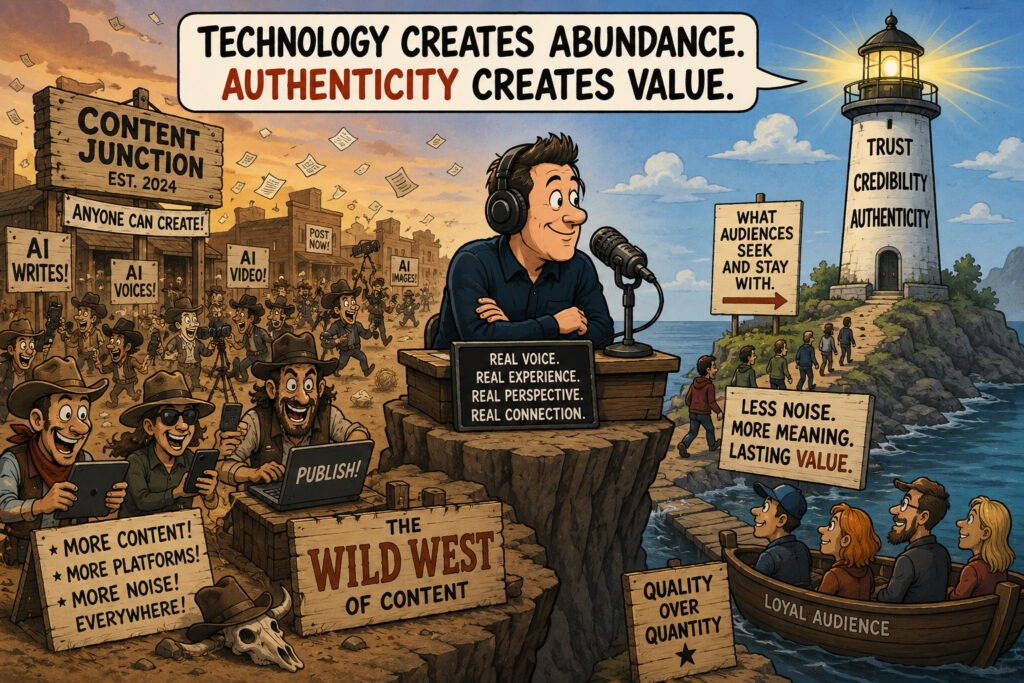
Technology creates abundance. Authenticity creates value.
Throughout human history, creating media required expensive equipment, specialized knowledge, or access to someone willing to open the door. Each technological leap removed another layer of friction. Desktop publishing challenged traditional print. Digital audio transformed radio production. YouTube made anyone with a camera a broadcaster or “content creator.” Podcasting removed the need for a transmitter. Today, generative AI can help write scripts, edit video, compose music, translate languages, and produce polished content in minutes.
That isn’t the end of creativity. It’s the beginning of an era with more creativity than we’ve ever seen.
We should cautiously embrace it.
Every time technology lowers the barrier to creation, more people get the opportunity to tell stories, share ideas, build businesses, and reach audiences that were once inaccessible. That’s a remarkable thing.
Abundance, however, changes the economics.
When content was scarce, simply producing it created value. Today, content is everywhere. Tomorrow, there will be even more. Artificial intelligence isn’t replacing creators nearly as much as it’s multiplying them.
When everyone can create, audiences need a different way to decide what deserves their attention.
They look for authenticity.
Authenticity isn’t about perfection. It isn’t about expensive production. It isn’t even about whether AI helped along the way. It’s about whether audiences believe there is a real person behind the work, someone with genuine experience, judgment, and something worth saying.
That idea also explains why fair use has always mattered.
Fair use protects commentary, criticism, reporting, scholarship, and parody because those activities add something new to the conversation. Copyright law has long recognized that society benefits when creators contribute insight rather than simply repeat what already exists. The principle hasn’t changed. The tools have.
Media has entered another frontier. The rules are still developing. Business models continue to evolve. New voices appear every day. Some will succeed because they mastered the latest technology.
The most enduring voices will succeed because people trust them.
Broadcasters have always understood this, even if we didn’t always describe it that way. Listeners return because they believe the personality behind the microphone.
The same is true for podcasters, streamers, YouTubers, journalists, and creators of every kind.
Technology will continue creating abundance. That’s worth celebrating.
The opportunity now is to create something abundance cannot replace.
Authenticity.
Matthew B. Harrison is a media and intellectual property attorney who advises radio hosts, content creators, and creative entrepreneurs. He has written extensively on fair use, AI law, and the future of digital rights. Reach him at Matthew@HarrisonLegalGroup.com or read more at TALKERS.com.