


FCC’s Simington Targets Reverse Retransmission Fees to Combat “Fake News”
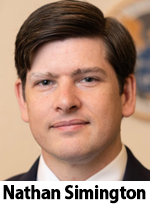
FCC Commissioner Nathan A. Simington and his chief of staff Gavin M. Wax penned ann op-ed published in The National Pulse calling for a cap on reverse retransmission fees as a measure to protect local journalism and rein in corporate media monopolies. Simington and Wax propose limiting reverse retransmission fees to 30%, arguing that such a cap would curb the financial power of legacy media giants, support independent broadcasters, and restore integrity to America’s media landscape. They write in the piece, “These fees (and ad sales) generate revenue for broadcasters that they use to run their operations and produce local journalism. However, media conglomerates like Paramount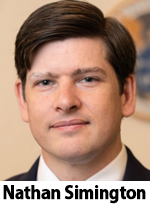 Global, the parent company of CBS, have begun charging what’s known as ‘reverse’ retransmission fees to broadcasters. The networks demand a share of broadcasters’ revenue for the right to use their content. This practice was once unheard of, but some networks now regularly require more than 100% of broadcasters’ retransmission fees as ‘reverse’ fees, leaving broadcasters to sustain themselves solely on whatever ad sales they can make with their limited inventory (also capped by the networks, and often amounts to only a few minutes of airtime per hour). This funnels more and more money out of local markets and local journalism and into the hands of mega media corporations, who threaten broadcasters with content blackouts if they don’t get sky-high payouts.” They go on to argue that the “problem gets even worse with providers like YouTube TV and Hulu Live. Under their affiliate agreements with the networks, local affiliates can’t even negotiate for online providers to carry the content. The networks do it for them and pay the affiliates whatever they deem reasonable (sometimes, nothing). This gives the networks total control over streaming distribution while robbing local stations of revenue and autonomy in the rapidly growing online video space. What was once a mechanism to support hometown news is now a corporate racket. Instead of investing in local reporters, meteorologists, and producers, local broadcasters’ funds are siphoned to bloated national newsrooms that churn out anti-Trump propaganda and woke talking points. Meanwhile, higher cable bills pass the cost to everyday Americans.” Read the full op-ed here.
 lies in its ability to deploy high-end, labor-light, automation-heavy processes at scale. It’s a productivity story now, driven by robotics, industrial AI, and, most crucially, advanced 5G infrastructure deployed as an industrial platform — not just as a consumer gimmick.” He adds, “Compare this with our own policy environment, where even the best private sector players are hamstrung by outdated regulations, capricious permitting processes, and the dogma that government shouldn’t pick winners — especially in telecom or manufacturing. That ideology might have made sense in the 1990s, but it’s lethal to the future of our telecommunications industry now, and in consequence, our manufacturing future.”
 Carr of “illegally targeting broadcast networks and media companies perceived to be unfavorably covering the Trump Administration – wasting critical agency resources on bogus investigations in the process.” The lawmakers are also questioning Carr’s “commitment to his agency’s independence, given his frequent trips with the president to Mar-a-Lago and his targeting of entities that the president has criticized or sued in his personal capacity.” Committee Ranking Members says that “under Carr’s leadership, the FCC has harassed CBS for routine editing practices, reinstated lawfully denied complaints against ABC and NBC, launched a bogus investigation into KCBS-AM in San Jose simply for reporting publicly available information, and directed the FCC’s Enforcement Bureau to launch investigations into NPR and PBS based on false allegations.” The Committee is requesting documents and communications “related to its investigations of media entities,” “all communications between Carr and current White House officials and between Carr and other Trump Administration officials that relate to investigations,” as well as Carr’s travel records.
 fundamental ownership restrictions have remained largely unchanged since the 1990s, imposing undue constraints on broadcasters’ ability to innovate and invest in local content. These regulations are a relic of an era when broadcasters were the only electronic media. Today, any one of the largest Big Tech platforms dwarfs the entire broadcast industry – yet they are held to no similar limitations on their reach. This imbalance places broadcasters at a severe disadvantage in competing for advertising dollars and audience engagement… We urge the FCC to act swiftly in eliminating antiquated ownership restrictions and to embrace a broadcast regulatory framework that reflects the realities of today’s dynamic media ecosystem.”
 making companies think twice about the way they describe internal diversity programs. They’re afraid the government may retaliate against them simply because of actions that are responsive to how consumers use their services or choose to buy their products. Sadly, the hard-fought lessons of the civil rights movement are being erased – or worse, distorted – to claim that fairness for all requires discrimination against some. That could not be further from the truth.” Gomez says she’s concerned about the Commission weaponizing “its regulatory authority to enforce government mandates that seek to eliminate voluntary efforts by private companies to increase fair and equal employment opportunities.”
 networks, developing infrastructure, and offering innovative and advanced capabilities.” The Notice goes on to say, “The Communications Act directs the FCC to regularly review its rules to identify and eliminate those that are unnecessary in light of current circumstances, recognizing that in addition to imposing unnecessary burdens, unnecessary rules may stand in the way of deployment, expansion, competition, and technological innovation in communications that the Commission is directed to advance. Government-wide administrative law requires review of rules to ensure that unnecessary—or affirmatively detrimental—rules are not retained.” The public comment period runs through April 15 and the Commission encourages “commenters to consider certain policy factors including cost-benefit considerations, marketplace and technological changes, barrier to entry, and more, as well as statutory and regulatory retrospective review standards.”
 Day the Music Died, that involves pirates hijacking 100 radio stations in five major U.S. cities and follows one company’s story over the course of 24 hours. Orchard was raised in a radio family that owned and operated stations in the 1980s and 1990s. Her family later launched a consulting business that conducted mock FCC inspections and she says the idea for her novel was born from those experiences.
 impairment charge of $224.5 million compared to a pre-tax non-cash impairment of $65.3 million in 2023, both primarily reflecting FCC-related charges.” Cumulus president and CEO Mary G. Berner states, “Since the pandemic’s onset, the radio industry has experienced tough economic and secular headwinds. In the face of those, we outperformed our peers through the end of 2023 on key metrics including cost takeouts, EBITDA
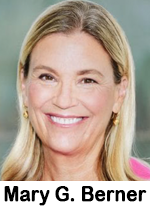 margin recovery, free cash flow generation, net leverage, and liquidity. 2024 brought additional challenges, including accelerated national headwinds as well as an industry-wide slowdown in local radio advertising. In response, we doubled down on investing in growth areas, particularly in our digital marketing services business, which is pacing up 30% in Q1. Additionally, we continued evolving our broadcast go-to-market strategies, including with new offerings that are successfully attracting large new broadcast clients, and we drove additional cost efficiencies with 2024 actions that will result in $43 million of annualized fixed cost savings, of which $15 million benefited 2024 with the balance in 2025. Though the industry environment remains challenging for now, our 2024 refinancing efforts provided us with the time needed to both execute our day-to-day blocking and tackling and, in parallel, continue to reimagine the ways in which we can get the most out of our key assets to create new revenue streams and build additional long-term value.”
 executive branch and must therefore: “(1) submit draft regulations for White House review—with no carve-out for so-called independent agencies, except for the monetary policy functions of the Federal Reserve; and (2) consult with the White House on their priorities and strategic plans, and the White House will set their performance standards. The Office of Management and Budget will adjust so-called independent agencies’ apportionments to ensure tax dollars are spent wisely. The President and the Attorney General (subject to the President’s supervision and control) will interpret the law for the executive branch, instead of having separate agencies adopt conflicting interpretations.” The order also argues that since the president is elected by the people and all agencies are accountable to the American people, therefore the president represents the will of the people. Critics of the move are questioning the constitutionality of the order and some expect this matter will be decided by the courts.
 Commission stated that Hennen was expressing “his own individual opinion on the current state of journalism,” but “even if it was assumed that such an opinion might be expressed on WDAY under BBM’s ownership, that is not a ground for the FCC to deny or withhold consent to the instant assignment.” The Commission further states, “We reject the assertion that Hennen’s social media comments justify a denial of the proposed assignment applications. The Objection does not cite to any provision under the Act or the rules, any cases, or any Commission policy for its argument that Hennen’s social media comments are pertinent to our review of the Applications. We disagree with Wolff’s argument that Hennen’s viewpoint on the state of journalism, as expressed in his social media comments, is in any way relevant to our determination of BBM’s qualifications to hold a license or whether the proposed assignment would serve the public interest. As the Commission has stated, licensees have broad discretion based on their First Amendment right to free speech to choose, in good faith, the programming they believe serves the needs and interests of their communities. Indeed, the Commission does not interfere with the programming decisions of licensees, nor does it consider issues of programming choice when reviewing an application for the assignment or transfer of a broadcast license.”
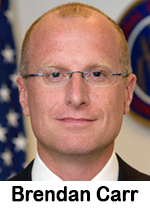 have had the privilege of working at the FCC for over a dozen years now, including serving previously as the agency’s General Counsel, and I am humbled by the opportunity to lead the FCC. The FCC has important work ahead – on issues ranging from tech and media regulation to unleashing new opportunities for jobs and growth through agency actions on spectrum, infrastructure, and the space economy. We will also advance America’s national security interests and protect consumers. I am eager to accelerate the FCC’s work on these and other fronts. I look forward to collaborating with the Trump Administration, my Commission colleagues, and the FCC’s talented staff as well as Congress to deliver great results for the American people.”
 awaiting the FCC’s blessing on the plan to complete reorganization and its Debtor-in-Possession credit facility in the aggregate principal amount of $32 million matures on August 19, 2024. (This DIP Facility allows Audacy to function during the reorganization period.) Audacy is asking the Court to extend the maturation date to September 30, 2024. Audacy stated in its second quarter 2024 financial report that it expects to receive FCC approval in the third quarter of this year.

 Under the Federal Communications Commission’s consideration is a proposal from Commander Communications Corporation that would create an FM broadcasting class known as “A10.” In addition to enhancing coverage in rural and underserved areas, it would grant power upgrades for roughly 1,400 Class A FMs, allowing a maximum of 10,000 watts. Approval would depend on a station’s geographical zone; tower height; and separation requirements. While the National Association of Broadcasters recognizes potential benefits for listeners – especially during emergencies – it urges caution owing to possible negative impacts. The NAB generally supports proposals designed to improve coverage areas, but says the “A10” proposal lacks technical analysis and information on how many stations may be upgradable. An NAB filing notes that, “While this could lead to improved service for additional listeners, it could also further squeeze the band in more markets and impact more FM services.” Also opposed is Cumulus Media, which cites an “unacceptable risk” to stations already competing against streaming services. Conversely, the Multicultural Media, Telecom & Internet Council favors the suggestion, stressing that many stations that would qualify for the upgrade are owned by minority and small-scale operators. This proposal would replace an earlier FCC one for a Class C4 FM station category. More than 100 independent and minority owners backed the idea, but it ran into opposition from larger companies and the NAB.
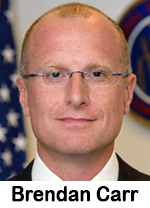 executive-level employee of the FCC to craft and advance a political playbook to influence the presidential election in favor of Donald Trump.” The Democrats say he may have violated ethics laws for federal employees and the Hatch Act. Carr tells Forbes that he sought counsel from FCC ethics officials prior to working on Project 2025 and they “approved of me participating in my personal capacity, which I did.” He also says they approved him using his FCC title in his biography. Forbes reports, “Carr’s chapter on the FCC calls for the agency to ‘change course’ and focus on reining in big tech and promoting national security. The FCC commissioner proposes overhauling legal protections that shield tech companies from liability for content posted on its platforms and supports Congress passing legislation similar to laws in Texas and Florida that punish social media companies for suspending or banning users based on their ‘viewpoints’ – part of broader claims by conservatives that social media companies are biased against them. Project 2025’s FCC agenda also calls for banning TikTok as part of a crackdown on infrastructure from China and calls for tech companies to provide greater transparency.”
 township of Lower Merion with regard to its former headquarters in Bala Cynwyd, Pennsylvania. The original amount to be paid by Audacy was $1.4 million however that figure was later deemed incorrect and now the company agrees to pay the township $2 million. Audacy is still awaiting final approval from the FCC to be able to operate its radio stations as the new Audacy.
 ends Neuhoff’s time in the radio business after almost 70 years. At one time, Neuhoff owned 24 stations – plus digital assets – in five markets. Woodward Communications, Inc operates eight stations – including news/talk WHBY-AM – in Appleton and Green Bay, Wisconsin. Neuhoff family trustee Julian Hickman says, “This final sale is bittersweet for our family, reflecting both a proud legacy and an emotional farewell. Our grandfather, Roger Neuhoff, poured his heart into the broadcast industry since the mid-1950s. The stations have been a vital part of our family and community, and while we cherish the incredible journey, it is time to turn the page.” Trustee Makena Neuhoff adds, “We would like to thank the incredible teams of local broadcasters in Springfield and Bloomington. We will forever cherish the memories and the significant impact our stations had on the local communities.”
 the FCC’s requirement to do a foreign ownership review and Audacy’s request that the FCC grant a limited waiver of that review in order to more speedily exit Chapter 11. This request is under heavy scrutiny due to the political aspects of the case. Carr recently told the Post that the FCC should not allow a “Soros shortcut” – a term used by the Media Research Center in its Petition to Deny filed with the Commission – but must follow FCC procedure. Audacy argued in its opposition to the Petition to Deny that there is nothing unique about this request, saying that the FCC “granting a limited waiver deferring its foreign ownership review to facilitate a licensee’s prompt emergence from bankruptcy is consistent with the Communications Act.” Audacy adds that the notion that the limited waiver is new “completely ignores longstanding precedent establishing the Commission-approved special warrant process used in a number of prior transactions to allow licensees to emerge from bankruptcy promptly, while affording the Commission sufficient opportunity to review foreign ownership issues post-emergence.”
 determined that granting a limited waiver deferring its foreign ownership review to facilitate a licensee’s prompt emergence from bankruptcy is consistent with the Communications Act.” Further, Audacy says, “According to the MRC, Audacy is attempting to employ an ‘entirely new’ and ‘vague and undefined’ special warrant process’ to delay the Commission review of Audacy’s proposed foreign ownership until ‘sometime down the road’ when the company ‘may choose’ to file a petition for declaratory ruling seeking such review. This specious claim not only mischaracterizes the company’s waiver request detailed in the Application, but completely ignores longstanding precedent establishing the Commission-approved special warrant process used in a number of prior transactions to allow licensees to emerge from bankruptcy promptly, while affording the Commission sufficient opportunity to review foreign ownership issues post-emergence.” Separately, FCC Chairwoman Jessica Rosenworcel responded to Congressman Nicolas Langworthy (R-NY) and Congressman Chip Roy (R-TX), who both wrote to her implying that the Commission is not going through “its normal, statutorily required process” and voiced concern over Soros Fund Management’s acquisition of Audacy debt. Langworthy wrote that Audacy being “owned by a deeply partisan individual [George Soros], could have a fundamental impact on the nature of local radio and potentially silence political viewpoints.” Rosenworcel’s response indicates she believes the Commission is handling the matter appropriately, saying, “The Bureau staff will review the record and decide if the transfer is in the public interest pursuant to Section 310(d) of the Communications Act.”
 originate content using FM boosters and is intended to do so without raising the potential for harmful co-channel interference to the reception of the primary station’s signal outside the coverage area of the booster station or to previously authorized secondary stations.” GBS filed a petition on March 13, 2020, proposing to give FM broadcasters the option to use boosters to originate programming to specific zones within their stations’ service area, proposing to allow program origination for a limited period totaling three minutes per hour… During that limited period, GBS proposes that the FCC allow the booster to originate geo-targeted advertisements, promotions for upcoming programs, and other hyper-localized content, suggesting it would benefit small and minority-owned broadcasters, because potential advertisers that currently find it prohibitively expensive to buy spots reaching a radio station’s whole service area might purchase lower-cost airtime reaching a more targeted area, thereby becoming a new source of station revenue.”
 reporting is operating results for 2023 it reveals net revenue of $1.16 billion, a decrease of 6.75% from the full year 2022. The company was hampered by an impairment loss of $1.3 billion in 2023, compared to the impairment loss of $180 million reported in 2022. That and other factors led to total operating expense soaring to $2.5 billion, compared to the total operating expense of $1.32 billion in 2022. The company posted a net loss of $1.13 billion in 2023, compared to the net loss of $140 million reported for 2022.
 February 20.” Audacy awaits FCC approval to complete its restructuring and plans to file its 2023 10-K later this month. The company says it experienced revenue growth of 1% in January, led by a 1% increase in radio revenue and a 7% increase in digital revenue. Audacy chairman, president and CEO David Field comments, “Audacy is off to a strong start in 2024, driving accelerated financial and operating performance, including solid early growth in revenues, key digital metrics, and audience and revenue shares. We look forward to a bright future, capitalizing on our best-in-class balance sheet and our scaled leadership position in the dynamic audio market, distinguished by our exclusive premium content and top positions across the country’s largest markets.”
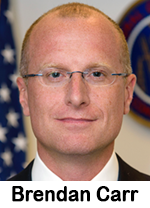 Indeed, TikTok has been caught engaging in a pattern of illicit surveillance and making false statements about personnel in Beijing accessing sensitive U.S. user data. These facts were laid bare for the world to see when the House Energy and Commerce Committee held a TikTok oversight hearing last year. And that is why there is now a broad, bipartisan consensus that TikTok cannot continue to operate in the U.S. in its current form. I want to applaud the strong, bipartisan leadership that Members of Congress have shown in advancing this bill, which would definitively resolve the serious national security threats TikTok poses by banning the app or requiring that it genuinely sever ties to the CCP. This is a smart, threat-specific bill that would address a clear and present danger. I hope that this bill will soon become law.”