The Federal Communications Commission is announcing a new agency proposal that, if adopted, would look into whether the agency should require disclosure when there is AI-generated content in political ads on radio and TV. If adopted, this proposal aims to increase transparency by: 1) Seeking comment on whether to require an on-air disclosure and written disclosure in broadcasters’ political files when there is AI-generated content in political ads; 2) Proposing to apply the disclosure rules to both candidate and issue advertisements; 3) Requesting comment on a specific definition of AI-generated content, and 4) Proposing to apply the disclosure requirements to broadcasters and entities that engage in origination programming, including cable operators, satellite TV and radio providers and section 325(c) permittees. Chairwoman Jessica Rosenworcel says, “As
 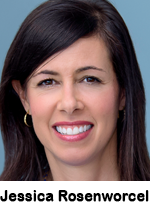 artificial intelligence tools become more accessible, the Commission wants to make sure consumers are fully informed when the technology is used. Today, I’ve shared with my colleagues a proposal that makes clear consumers have a right to know when AI tools are being used in the political ads they see, and I hope they swiftly act on this issue.” However, Republican Commissioner Brendan
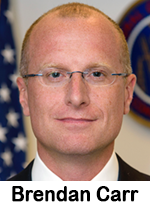 Carr opposes the move, saying, “There is no doubt that the increase in AI-generated political content presents complex questions, and there is bipartisan concern about the potential for misuse. But none of this vests the FCC with the authority it claims here. Indeed, the Federal Election Commission is actively considering these types of issues, and legislators in Congress are as well. But Congress has not given the FCC the type of freewheeling authority over these issues that would be necessary to turn this plan into law. And for good reason. The FCC can only muddy the waters. AI-generated political ads that run on broadcast TV will come with a government-mandated disclaimer but the exact same or similar ad that runs on a streaming service or social media site will not? Consumers don’t think about the content they consume through the lens of regulatory silos. They just view content on screens. Will they conclude that the absence of a government warning on an online ad means that the content must be real? I don’t see how this type of conflicting patchwork could end well. Unlike Congress, the FCC cannot adopt uniform rules.”



 local newsrooms, silence community reporting, and drive-up costs for the American families who depend on local stations for news and emergency alerts. A free and diverse media landscape depends on real limits on how much of the public airwaves any one company can control, and this FCC is now poised to allow local broadcasters to sell those airwaves off to the highest bidder. Congress set the 39 percent national ownership cap in federal law, and only Congress has the authority to raise or eliminate it. The Commission cannot waive away that limit simply because these corporate behemoths want to get out from under it.”
 could not have anticipated today’s streaming options. This resolution reflects growing concern that sports programming is increasingly fragmented across exclusive digital platforms, forcing fans to purchase multiple subscriptions, maintain reliable broadband access and navigate a maze of services just to follow their favorite teams. It calls on congress to assess whether these evolving distribution practices are covered under the law, serve the public interest and preserve broad fan access to sports programming.” NAB president and CEO Curtis LeGeyt says, “We commend the state broadcasters associations for their leadership and engagement on this important issue. Local television remains the only universally available video platform in America, delivering live sports, trusted local news, emergency information and essential public service to every community. Policymakers should put fans first and ensure that the future of sports distribution preserves broad access through free, local broadcast television.”
 radio spots across 192 media markets, generating more than 1 billion impressions and $43 million in airtime from TV and radio stations. NAB president and CEO Curtis LeGeyt says, “Local stations are serving communities with live sports, trusted local news and life-saving emergency coverage – all available for free to every American. But outdated rules are shackling these stations from growing and innovating at a time when Big Tech operates with limitless scale and zero public interest obligations. Consumers deserve more – not fewer – local journalists on the ground and live sporting events accessible without a subscription. The FCC must act quickly to level the playing field so broadcasters can continue investing in the content communities rely on most.”
 “Draft Legislation to Preserve Americans’ Access to AM Radio” is the title of a legislative hearing that House Energy and Commerce Committee chair