

Colbert-Talarico Interview Draws Attention to Equal Time Rule as FCC Commissioners Disagree About its Interpretation
It’s no surprise to regular TALKERS readers that FCC Chairman Brendan Carr and Democratic Commissioner Anna M. Gomez disagree – at least to some degree – on how the equal time rule should be applied to television and radio programming. After the back-and-forth between The Late Show’s Stephen Colbert and CBS attorneys over the interview with U.S. Senate candidate U.S. Rep. James Talarico that did not air on CBS television but was pushed out on the show’s social media accounts instead, broadcasters – including news/talk radio programmers and hosts – may be confused about how the equal time rule is being applied.
For her part, Gomez issued the following statement: “This is yet another troubling example of corporate capitulation in the face of this Administration’s broader campaign to censor and control speech. The 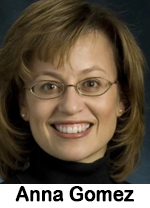 FCC has no lawful authority to pressure broadcasters for political purposes or to create a climate that chills free expression. CBS is fully protected under the First Amendment to determine what interviews it airs, which makes its decision to yield to political pressure all the more disappointing. It is no secret that Paramount, CBS’s parent company, has regulatory matters before the government, but corporate interests cannot justify retreating from airing newsworthy content. The FCC is powerless to impose restrictions on protected speech, and any attempt to intimidate broadcasters into self-censorship undermines both press freedom and public trust. I once again urge broadcasters and their parent companies to stand firm against these unlawful pressures and continue exercising their constitutional right to speak freely and without government interference.”
As far as news/talk radio is concerned, TALKERS editors have pointed out that in most cases, talk radio stations and their hosts are usually happy to have any qualified candidate be interviewed – whether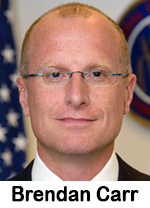 Republican or Democrat. Often, Democratic candidates balk at being interviewed by conservative hosts for fear they will not get a “friendly” interview as their Republican opponent might have. Regardless, the law is about equal time, and the matter late night shows are dealing with is assuming they qualify for the “bona fide news” exemption that excuses them from the equal time rule. Chairman Carr’s position is there is no blanket exemption; it is taken on a case-by-case basis.
 clear on what this is. This is government intimidation, not a legitimate investigation. Like many other so-called ‘investigations’ before it, the FCC will announce an investigation but never carry one out, reach a conclusion, or take any meaningful action. The real purpose is to weaponize the FCC’s regulatory authority to intimidate perceived critics of this Administration and chill protected speech. That is not how a free society operates. The First Amendment protects the right of daytime and late-night programs to cover newsworthy issues and express viewpoints without government interference. I urge broadcasters and their parent networks to stand strong against these unfounded attacks and continue exercising their constitutional rights without fear or favor.”
 fundamentally changed with respect to our political broadcasting rules. The FCC has not adopted any new regulation, interpretation, or Commission-level policy altering the long-standing news exemption or equal time framework. For decades, the Commission has recognized that bona fide news interviews, late-night programs, and daytime news shows are entitled to editorial discretion based on newsworthiness, not political favoritism. That principle has not been repealed, revised, or voted on by the Commission. This announcement therefore does not change the law, but it does represent an escalation in this FCC’s ongoing campaign to censor and control speech.
 the way the commission is operating. She took issue with FCC Chair Brendan Carr’s interpretation of how the Commission should ensure that licensees operate in the public interest. She stated, “For months, this FCC has asserted an apparent roving mandate to police speech that this Administration does not like, invoking an undefined and unchecked concept known as the ‘public interest’ standard.
 Amendment protects journalistic choices from government intimidation. Nevertheless, this FCC has deployed a vague and ineffective News Distortion policy as a weapon to stretch its licensing authority and pressure newsrooms. The First Amendment is a pillar of our democracy. As federal regulators, we must respect the rule of law, uphold the Constitution, and ensure that a free press is never subjected to regulatory interference by the FCC.” The FCC’s News Distortion Policy was created in 1949 and has been criticized from time to time over the years. It has rarely been invoked until now. A Petition for Special Relief before the FCC signed by 11 people, including former FCC Chairman Thomas E. Wheeler, asks that the Commission repeal the news distortion policy. They cite case law, saying, “In Moody v. NetChoice, LLC, the Supreme Court, applying the First Amendment, reaffirmed that the government has no role in ‘un-biasing’ the media. In direct contradiction to that decision, the news distortion policy seeks to mold the speech of private broadcasters to the FCC’s own view of what is correct, complete, and accurate news. The First Amendment forbids the government from embarking on such a project.”
 Federal Communications Commissioner Anna M. Gomez issued a statement criticizing the Commission’s threats against ABC that, in part, led to the suspension of the “Jimmy Kimmel Live!” program. Her statement is as follows: “We cannot allow an inexcusable act of political violence to be twisted into ajustification for government censorship and control. First, an ABC reporter was told that his coverage amounted to hate speech and that he should be prosecuted simply for doing his job. Then, the FCC threatened to go after this same network, seizing on a late-night comedian’s inopportune joke as a pretext to punish speech it disliked. That led to a shameful show of cowardly corporate capitulation by ABC that has put the foundation of the First Amendment in danger.
 pursuit of pure profit. It embraced this Administration’s radical notion that discriminatory behavior should be tolerated and even embraced, while efforts to expand opportunity for everyone should be rejected.
 defund, or threaten news outlets that support the government’s views, and there’s a reason for that. This has never been about saving money. It’s about silencing those who report the news accurately, without fear or favor. The true cost of this one-sided attack on free speech will be felt most by small and rural communities across the country. Much like the disappearance of local newspapers, cutting off support for public stations could create a new kind of ‘news desert.’ In many hard-to-reach areas, these stations may be the only source for the public to receive emergency alerts, traffic updates, and information about local events and ways to stay engaged in their own neighborhoods. Defunding them strips away these essential services and further isolates the very communities these stations seek to serve. The FCC is playing a dangerous game with its own baseless attacks on public broadcast stations. Its role should be to protect and expand the public’s access to timely, accurate news that is free from political interference. I will continue fighting this FCC’s politically motivated efforts to investigate and harass these stations.”
  move to appease the Administration and secure regulatory approval of a major transaction currently pending before the FCC. For months, it has been clear that this lawsuit was entirely meritless, just like the complaint now before the Commission. The transcript and video of the 60 Minutes interview with Vice President Harris show no evidence of wrongdoing, only the standard editorial judgments used across the news industry to ensure clarity and brevity. Had Paramount chosen to fight this in court, they would have prevailed on the facts and the law. But instead of standing on principle, Paramount opted for a payout. That decision now casts a long shadow over the integrity of the transaction pending before the FCC. Given the extraordinary public interest in this deal, the novel legal questions raised by the lawsuit and its resolution, and the repeated calls from lawmakers for transparency, I once again urge the FCC to bring this matter before the full Commission for a vote. Approving this transaction behind closed doors and under the cover of bureaucratic process would be a shameful outcome that denies the American people the transparency and accountability they deserve, especially when press freedom is at stake.”
 provide cultural, social, and political commentary across all FOX News Media platforms. Cooper launched her podcast, “The Brett Cooper Show” in January 2025. From 2022-2024, Cooper hosted “The Comments Section,” a video podcast on The Daily Wire.
 Free Press for the very first stop of our First Amendment Tour outside of Washington. Together, we must continue to stand up for free expression and push back against the Administration’s growing campaign of censorship and control.” Gomez’s office says that as part of her tour, Gomez is partnering with consumer and civil society organizations across the ideological spectrum to participate in speaking engagements and listening sessions focused on protecting the rights and freedoms enshrined in the First Amendment. Most recently, she held an event in partnership with the Center for Democracy and Technology, spoke at the Media Institute, and participated in a workshop held by the Competitive Enterprise Institute and TechFreedom.
 making companies think twice about the way they describe internal diversity programs. They’re afraid the government may retaliate against them simply because of actions that are responsive to how consumers use their services or choose to buy their products. Sadly, the hard-fought lessons of the civil rights movement are being erased – or worse, distorted – to claim that fairness for all requires discrimination against some. That could not be further from the truth.” Gomez says she’s concerned about the Commission weaponizing “its regulatory authority to enforce government mandates that seek to eliminate voluntary efforts by private companies to increase fair and equal employment opportunities.”